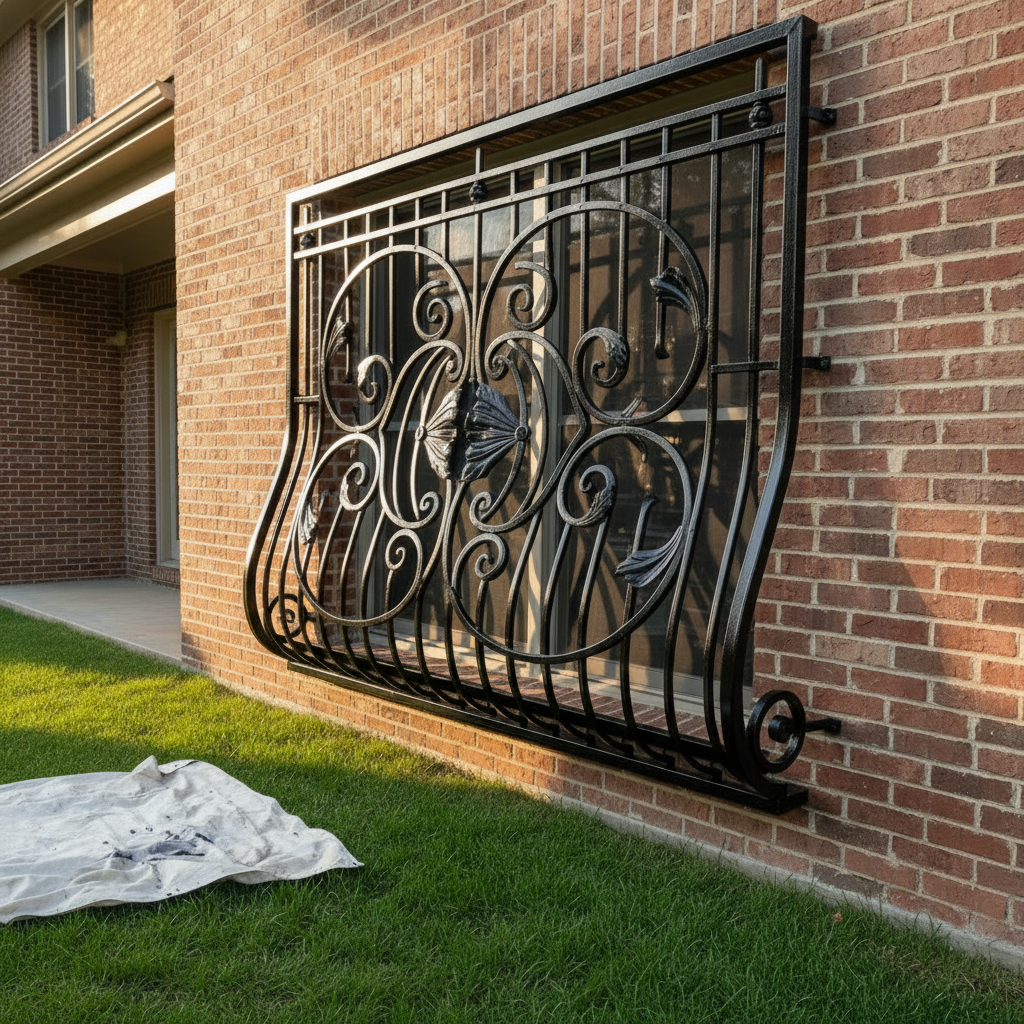
Want to paint your metal grilles? Our pro guide covers rust prep, primers, and costs. Learn the secrets to a flawless, long-lasting finish from our experts.
Key Takeaways
- **Create a Clear Zone:** We need room to work safely. Ten feet around each grille means we're not knocking over your terracotta pots with a ladder or accidentally brushing wet paint on your kids' bikes. More space = faster work = we're out of your hair quicker.
- **Plan for Access:** We're bringing angle grinders, power sanders, maybe an airless sprayer. All that needs electricity. And we'll need water for cleanup and sometimes for thinning primer. Just make sure your outdoor spigot works and isn't connected to a timer that shuts off at noon.
- **Notify Your Neighbors (and your HOA):** Grinders are loud. Like *really* loud. If you're in a condo or townhome situation, your neighbors will appreciate a quick text: "Hey, we're repainting the grilles Thursday morning, might be noisy for a couple hours." Also check if your HOA requires a work permit or advance notice—some do, and you don't want to deal with violation letters.
- **Secure Your Home:** We're gonna mask off everything within 6 feet of each grille, but you should still close and lock nearby windows. Paint overspray is rare with good masking, but wind happens. Better safe than scrubbing Sherwin-Williams off your glass later.
Key Takeaways
Pro Guide: Painting Metal Grilles for a Lasting Finish
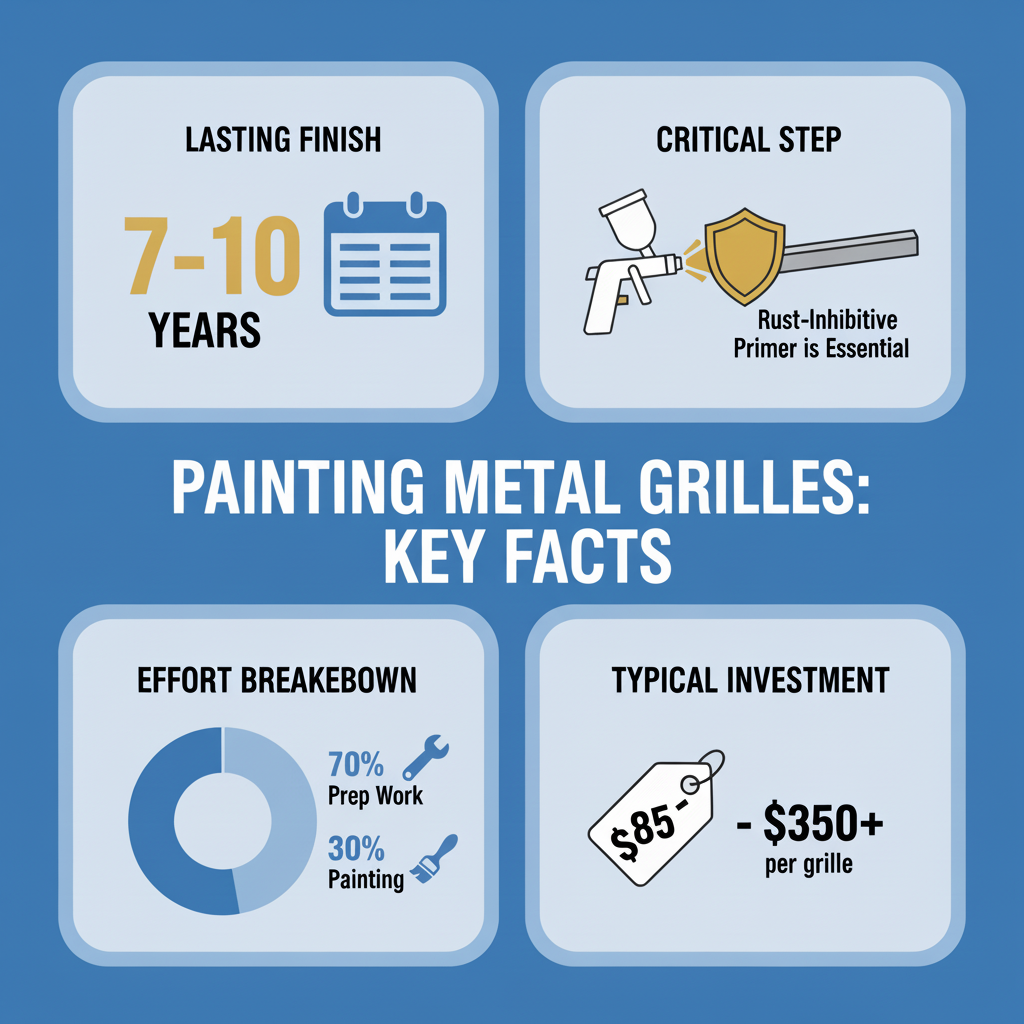
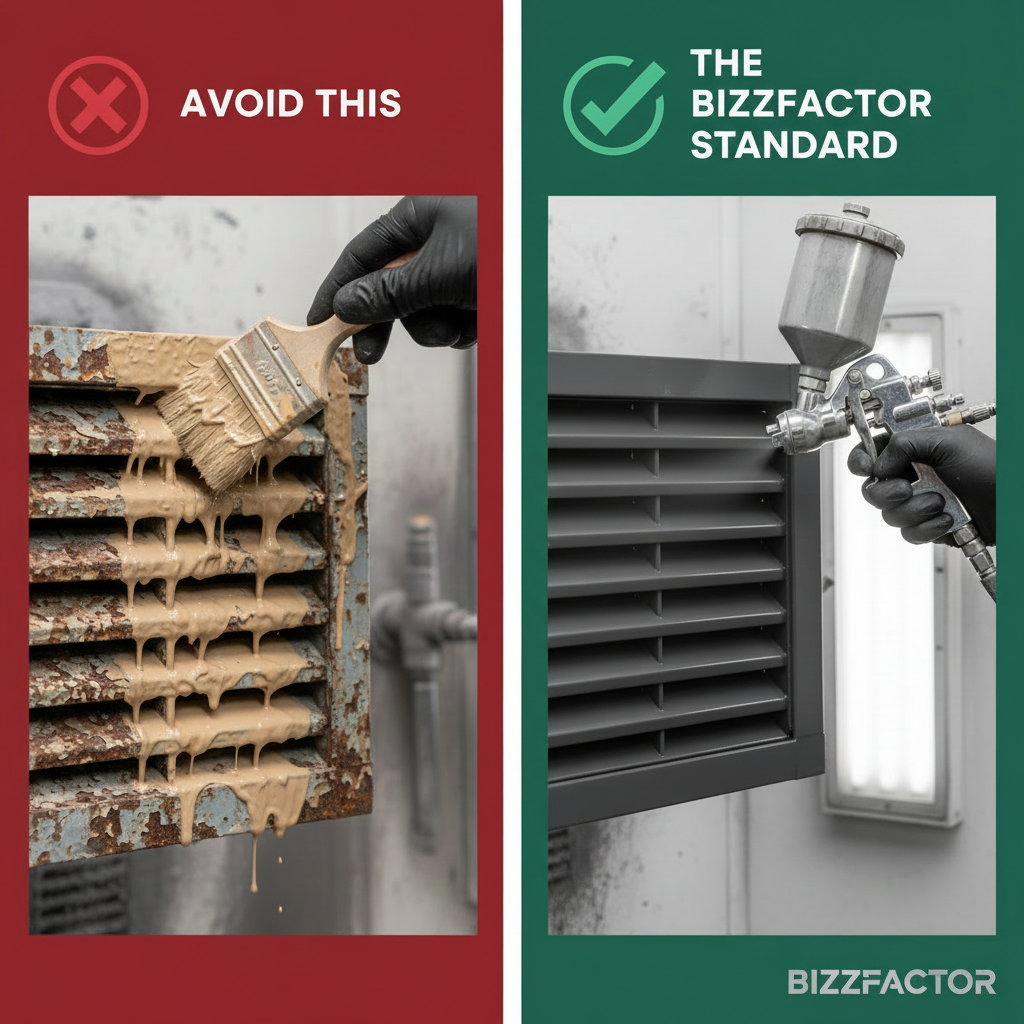
Painting metal grilles isn't just about slapping on a new color—though, honestly, we've seen plenty of homeowners (and even some supposed pros) try that approach. One contractor we work with regularly in South Florida told us he'd seen people use cheap house paint right over flaking rust, and it was always a disaster. A real professional job, one that actually lasts, means you're stripping every speck of rust down to bare metal, hitting it with serious primer made for the job, then laying on two coats of weather-resistant paint. Anything less just won't cut it, often leading to bigger, more expensive problems down the line. That's the real killer.
We've been doing this work across Houston, Dallas, and half the Gulf Coast for years now. Seen the good jobs. Seen the trainwrecks. We know what it takes to get a finish that'll stand up to brutal summers and humidity for *years*, not just till next spring. Our expertise ensures your [metal grilles](https://www.bizzfactor.com/categories/house-painters) not only look fantastic but also provide lasting aesthetics and protection. We don't cut corners; that's just not how we operate.
Why Should I Repaint My Metal Grilles?
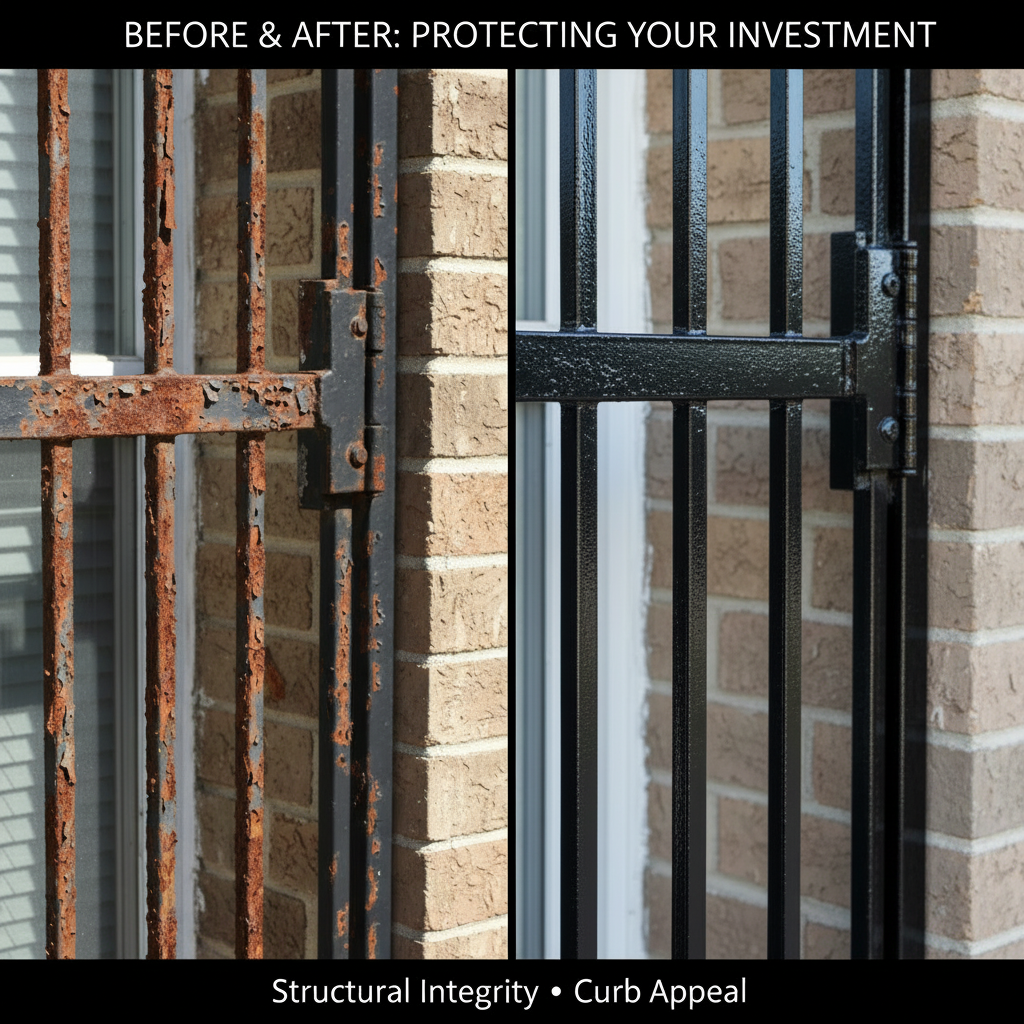
Most people think grille maintenance is about looks. Like you're matching shutters or trying to impress the HOA. Wrong. Repainting is actually the *only thing* standing between your grilles and complete structural failure. Sounds dramatic? I've seen grilles in Galveston that looked fine from 20 feet away—up close, they were so rusted through you could poke a screwdriver straight through. That's not protecting your windows. That's decorative Swiss cheese.
Beyond keeping rust from eating your investment (which alone justifies the cost), a proper paint job preserves your home's security and keeps pests out. Nobody talks about this, but rusted grilles develop gaps. Mice love gaps. We've pulled off grilles in the Garden District that had wasp nests *inside* the hollow tubing because the paint had failed and let moisture seep in. A professional paint job seals everything up, stops corrosion cold, and yeah—makes your house look like you actually care about it. Don't skip this step.
Think it's just a cosmetic touch-up? Think again. Your metal grilles are on the architectural front line, battling relentless humidity, torrential rain, and scorching UV radiation day after day. That factory paint? It's already breaking down. Probably started two summers ago if you're in Miami or New Orleans—saltwater does a number on everything. Once that top layer cracks, rust starts working underneath like cancer. We've watched it happen on probably 200 jobs.
Rust doesn't just stain. It eats.
A real paint job—the kind a certified tech does with actual rust-inhibitive primer—puts up a barrier between the metal and everything trying to destroy it. Moisture can't get through. Oxygen can't oxidize the iron. Your grilles stay strong, they stay secure, and your property value doesn't tank because your house looks like a foreclosure. Worth every dollar.
What Should I Do Before a Painter Arrives?
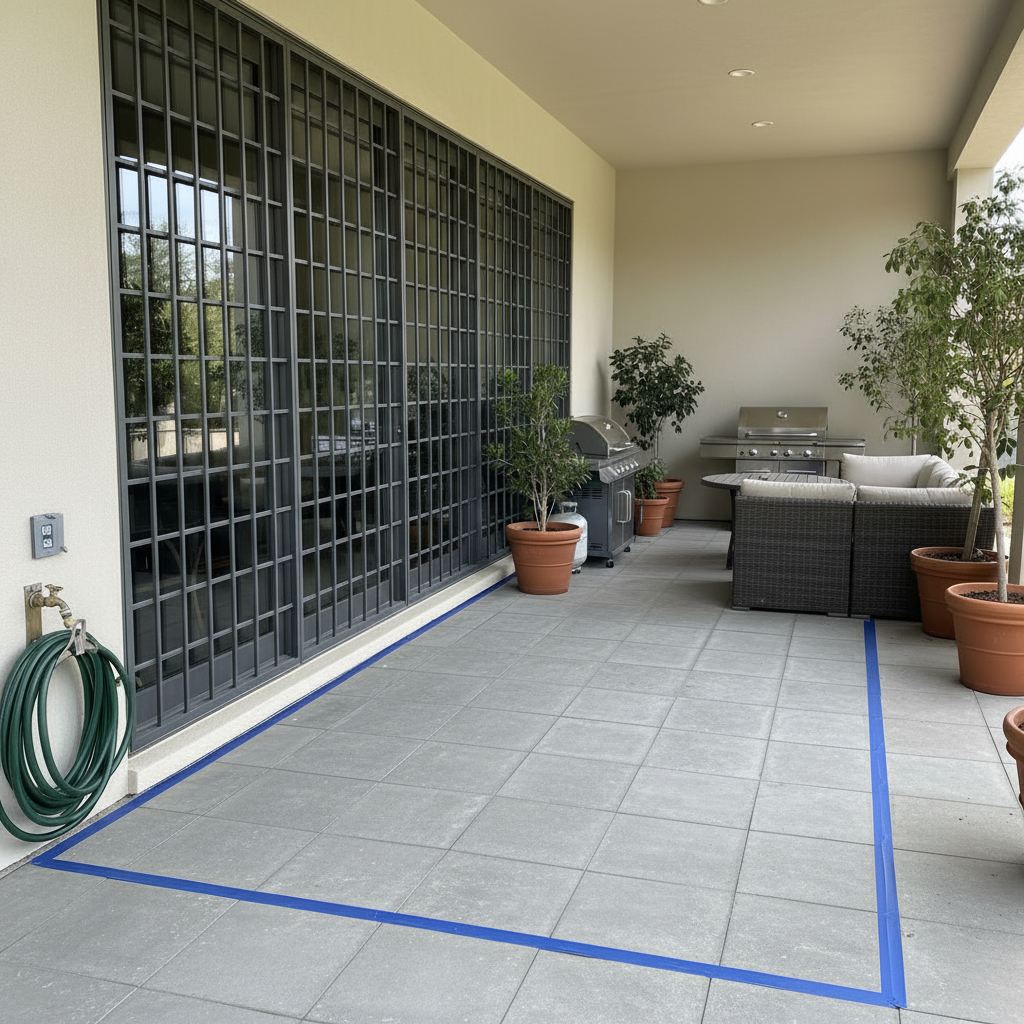
So you've scheduled the job. Now what? Honestly, the biggest favor you can do yourself is clearing a work zone around each grille—at least 10 feet if you've got the space. Move your patio furniture, potted plants, the Weber, your car (yes, people forget this). Our [painters](https://www.bizzfactor.com/categories/house-painters) need room to set up ladders, scaffolding sometimes, and all the masking equipment without playing Tetris around your Adirondack chairs.
Look — look — also—and I can't stress this enough—make sure we can access power and water. A standard outdoor outlet works fine (the same one you use for Christmas lights), and we'll need a garden hose connection for cleanup. If your exterior outlets are on a separate breaker or require some weird adapter situation, just give us a heads-up when we confirm the appointment.
Look — spending 20 minutes prepping your space saves us hours of setup time (and saves you money, since most crews charge hourly). Here's what actually matters:
- **Create a Clear Zone:** We need room to work safely. Ten feet around each grille means we're not knocking over your terracotta pots with a ladder or accidentally brushing wet paint on your kids' bikes. More space = faster work = we're out of your hair quicker.
- **Plan for Access:** We're bringing angle grinders, power sanders, maybe an airless sprayer. All that needs electricity. And we'll need water for cleanup and sometimes for thinning primer. Just make sure your outdoor spigot works and isn't connected to a timer that shuts off at noon.
- **Notify Your Neighbors (and your HOA):** Grinders are loud. Like *really* loud. If you're in a condo or townhome situation, your neighbors will appreciate a quick text: "Hey, we're repainting the grilles Thursday morning, might be noisy for a couple hours." Also check if your HOA requires a work permit or advance notice—some do, and you don't want to deal with violation letters.
- **Secure Your Home:** We're gonna mask off everything within 6 feet of each grille, but you should still close and lock nearby windows. Paint overspray is rare with good masking, but wind happens. Better safe than scrubbing Sherwin-Williams off your glass later.
What's the Pro Process for Painting Metal Grilles?
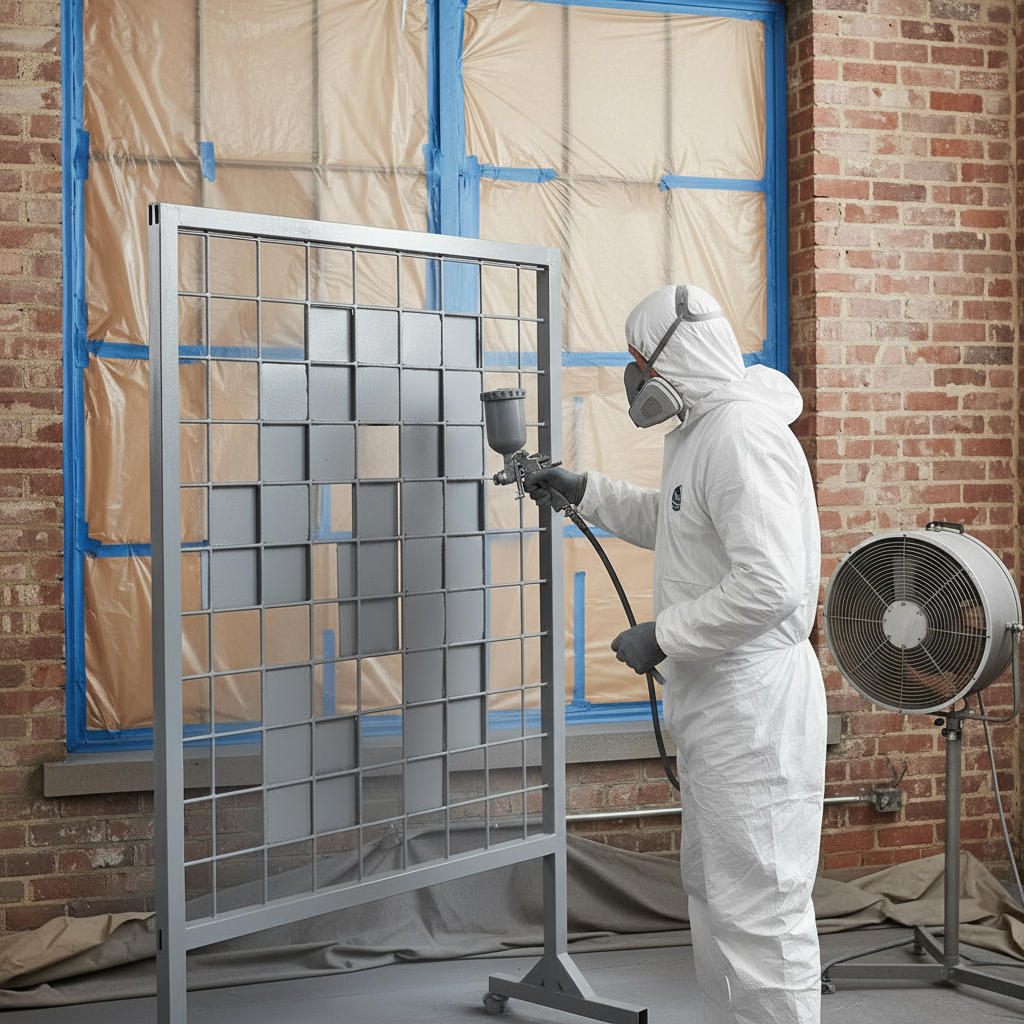
You want a grille paint job that lasts? There's a system. Not like a "do whatever feels right" approach—an actual step-by-step process you can't skip around on. We grind off every trace of rust and dead paint down to bare metal. That's the real issue. Then we clean it with solvents (most DIYers never even think about this part). After that comes rust-inhibitive primer made specifically for metal work. Finally, two topcoats of high-performance exterior paint.
Skip any of this? You're basically flushing money down the toilet.
Real talk — the difference between a paint job that lasts one year and one that lasts ten? It's all in the prep. Not the paint brand (though that matters). Not the weather conditions the day we spray (though that matters too). It's whether the contractor actually does the hard, boring, time-consuming grunt work that most people skip because it's invisible. Here's exactly what we do on every single job:
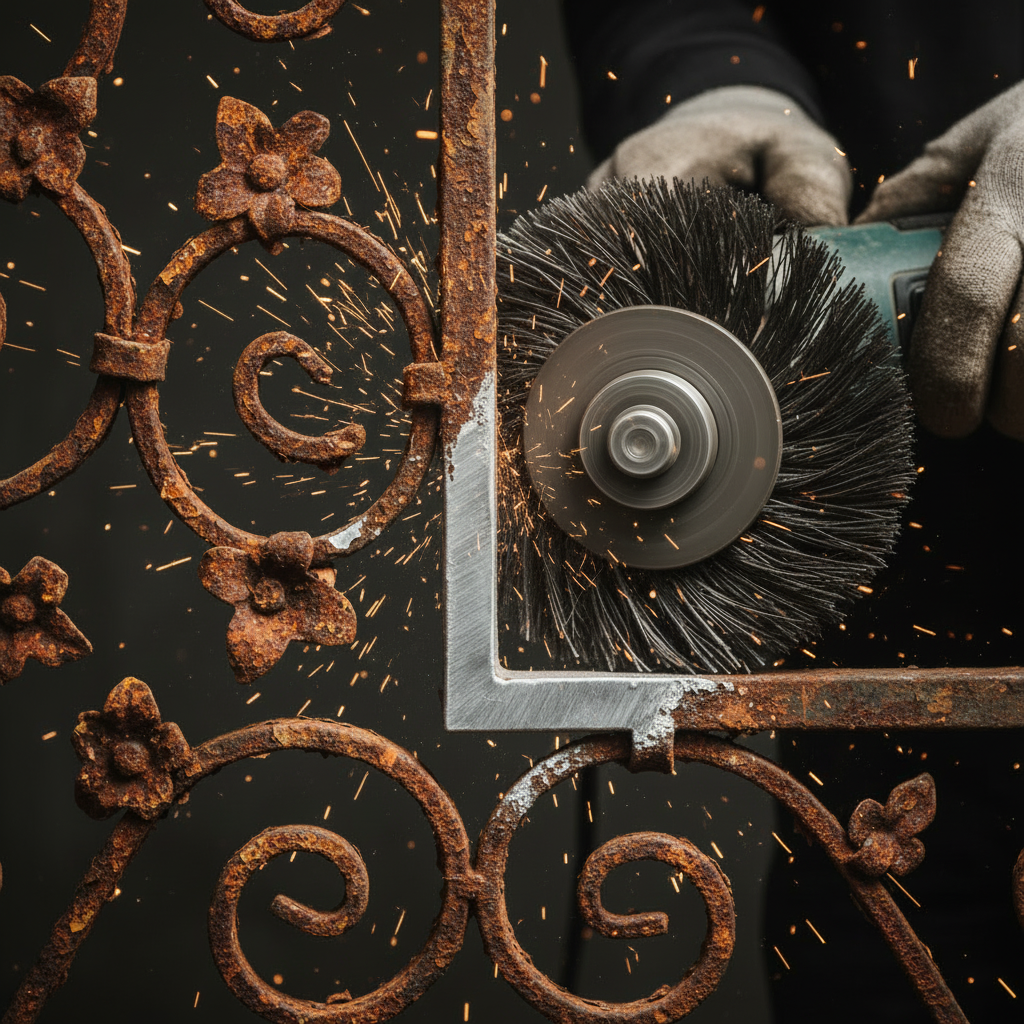
1. **Aggressive Surface Prep:** Hand wire brushes are basically useless on anything worse than surface rust. Our guys show up with angle grinders (usually DeWalt or Makita), 36-grit flap discs, needle scalers for the really stubborn corrosion, and heavy scrapers. The goal? Bare metal. Not "mostly clean" metal. Not "looks okay from 5 feet" metal. Actual bare steel or iron that looks almost white when you're done (in the industry that's called NACE No. 2 or SSPC-SP 10, if you want to get technical about it). That's the real issue. This step alone takes hours per grille depending on how bad the rust is. But if you paint over rust, even a little bit, it'll keep spreading underneath the new paint like mold behind drywall. You won't see it for 6-8 months. Then it'll all peel off at once.
Here's the thing: here's the thing: 2. **Solvent Wipe-Down:** After all the grinding dust settles (literally—we vacuum it up or blow it off with compressed air), we wipe down every square inch with industrial degreaser or denatured alcohol. Why? There's invisible contamination you can't see: oils from your hands, exhaust residue from cars, salt deposits, microscopic dust particles with static cling. Paint won't stick to any of that. This is where probably 60% of DIY jobs fail within the first year—they skip the wipe-down because the metal "looks clean." It's not clean. Not even close.
3. **Metal-Specific Primer:** This is where the magic happens. We use actual rust-inhibitive primers—products like Sherwin-Williams Kem Kromik or Rust-Oleum Rusty Metal Primer—that contain zinc phosphate or other active rust fighters. These primers chemically bond with the metal and create a moisture barrier that stops oxidation before it starts. That's the real issue. You can't substitute regular latex primer and expect the same results (we've seen people try—it peels off in sheets within six months). For galvanized grilles, which have that silvery zinc coating, we need an etching primer or a two-part epoxy system. Otherwise the topcoat just slides right off like it's on Teflon.
4. **Two Topcoats, Minimum:** We usually go with Sherwin-Williams Pro Industrial DTM Acrylic Urethane or PPG Aquapon—both are designed specifically for metal, both handle UV and thermal expansion without cracking. For detailed scrollwork, we brush by hand (Wooster Shortcut brushes are our go-to). For flat surfaces, we'll use an HVLP sprayer to get that smooth factory finish. Seriously. Each coat needs 2-4 hours to dry before the next goes on, sometimes longer if it's humid or cold. We're not rushing this. You're paying for durability, not speed.
5. **Curing & Cleanup:** Here's something most contractors won't tell you—the paint isn't fully cured the second we pack up. It'll be dry to the touch in a few hours, sure. But full chemical cure? That takes 7-30 days depending on the product and weather. We'll tell you exactly when it's safe to touch, when you can clean the grilles, all that. And we'll leave your property cleaner than we found it—all masking removed, drop cloths gone, even the tiny paint flakes swept up. That's just standard practice for us.
Real-World Example: Paying Twice for a Bad Paint Job
We got called out to a storefront in Austin's SoCo district last spring—one of those trendy boutiques on South Congress. The owner was furious. Paint was peeling off his window grilles in massive curling sheets, and it'd only been painted 11 months earlier. Underneath? Rust so bad it looked like the grilles had been sitting in a saltwater marsh.
He showed us the invoice from the previous guy—a handyman he'd found on Craigslist who charged $950, which honestly seemed fair at the time. Our lead tech Sarah took one look and knew exactly what happened. The handyman had used cheap latex "all-in-one" paint straight over dirty, rusty metal. No grinding. No primer. Just rolled it on and called it done.
Here's the thing: that latex actually *trapped* moisture against the metal. Made the rust worse. The paint acted like a greenhouse. Within a year it was peeling, the rust had spread, and now the grilles were so corroded they needed replacing entirely—$3,200 for new custom ironwork. The owner paid $950 to make the problem worse, then another $3,200 to fix what should've cost around $1,400 if done right the first time.
Ask me how common this is. Go ahead
In-Depth Look
Detailed illustration of key concepts
Visual Guide
Infographic illustration for this topic
Side-by-Side Comparison
Visual comparison of options and alternatives
Sources & References
- The Secrets of Pro Painters: Mastering Interior Painting Techniques
- A Pro Painter's Top House Painting Tips and Tricks | HGTV Home Tips
- 10 Tips to Paint Like a Pro - Fine Homebuilding
- Rookie Painting Tips from a Professional Painter - DIY Playbook
- Best Interior & Exterior Paint Buying Guide
- Navigating Painting Rules for Commercial Buildings Made ...
- Building Codes, Standards, and Regulations: Frequently ...
- Best Paint for Commercial Buildings
- Choosing the Right Exterior Paint for Commercial Buildings
Frequently Asked Questions
Need Professional Help?
Find top-rated house painters experts in your area