Air duct cleaning vs. dryer vent cleaning: discover the crucial differences. Learn when each service is necessary to improve air quality, HVAC efficiency, and prevent dryer fires. Essential home maintenance explained.
Key Takeaways
- Supply and return air ducts
- Grilles and diffusers
- Heat exchanges
- Cooling coils (evaporator coils)
- Fan motor assemblies (blower motor and housing)
Key Takeaways
Air Duct vs. Dryer Vent Cleaning: Essential Home Maintenance Explained
Last month, a homeowner in Marietta called me convinced her $400 air duct cleaning had somehow broken her dryer.
Turns out? Two completely different systems. The duct cleaners never touched her dryer vent — which hadn't been cleaned in seven years and was packed with enough lint to fill a garbage bag. That's the confusion we're clearing up today.
The Fundamental Differences: Air Ducts vs. Dryer Vents
So here's the thing about **air duct cleaning** — it's basically housekeeping for your HVAC system. You're dealing with indoor air quality, dust reduction, maybe some allergen control. **Dryer vent cleaning**? That's fire prevention. Full stop.
These are not interchangeable services, no matter what some guy with a van might tell you.
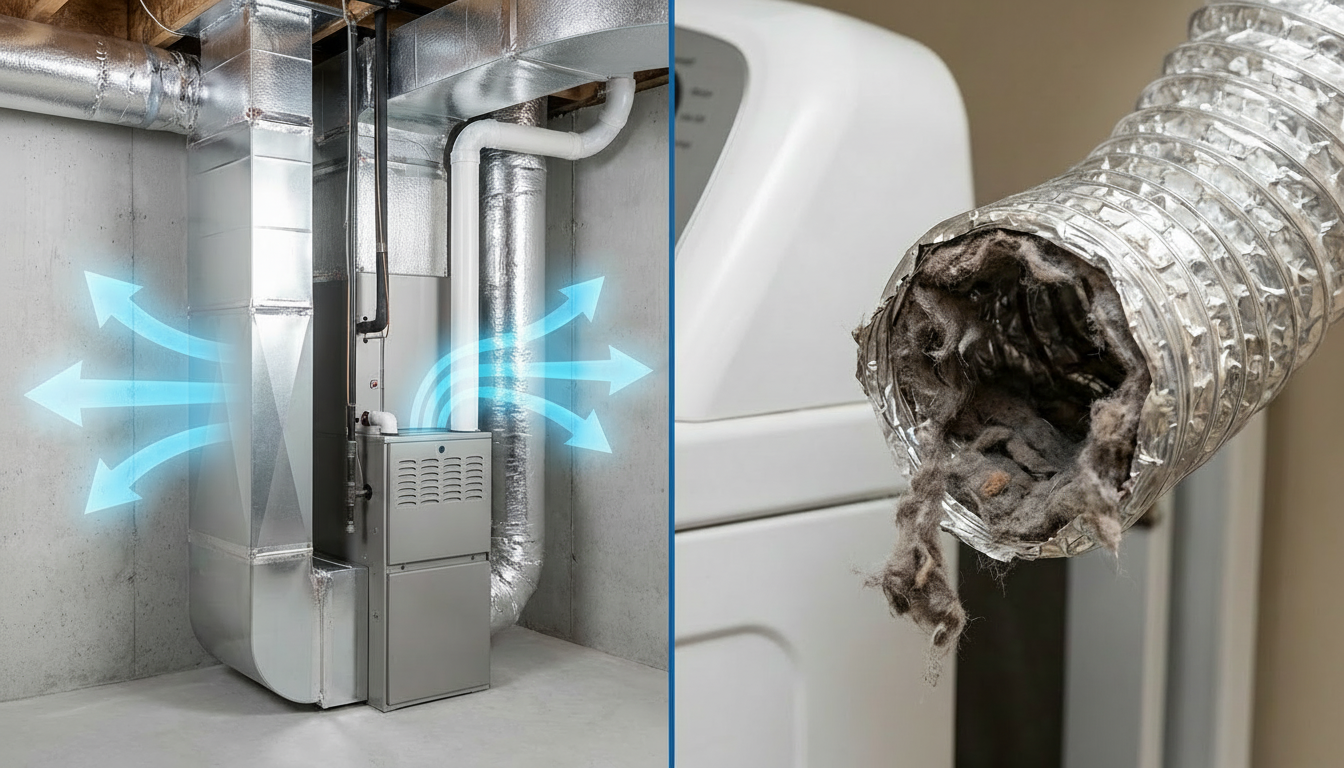
Your HVAC ductwork is the delivery system for heated and cooled air — it moves conditioned air to every room in your house and pulls stale air back to start the cycle again. Your dryer vent? Totally different job. It's a one-way exhaust route that shoves hot, moist, lint-filled air straight outside. The only thing they have in common is that they're both made of metal (usually).
After cleaning ducts in probably 10,000+ homes over the last two decades, I've watched homeowners confuse these two systems constantly. Air ducts recirculate the air you breathe — what goes around comes around. Dryer vents shoot contaminated air outside and never look back. That difference matters when you're deciding which service you actually need.
What Actually Gets Cleaned During HVAC Service
Most duct cleaners will mention they follow **NADCA standards** (that's the National Air Duct Cleaners Association, if you're wondering). Fine. But here's what you should actually demand they clean — because a lot of companies skip half this list:
- Supply and return air ducts
- Grilles and diffusers
- Heat exchanges
- Cooling coils (evaporator coils)
- Fan motor assemblies (blower motor and housing)
- Air handling unit housing
Look — look — I've literally watched "duct cleaning" crews blow some compressed air through your vents, vacuum the visible registers, and pack up their truck. That's maybe 30% of what needs attention. For more detailed information, see our guide on [The Importance of Comprehensive HVAC System Cleaning](https://bizzfactor.com/blog/hvac-system-cleaning-guide).
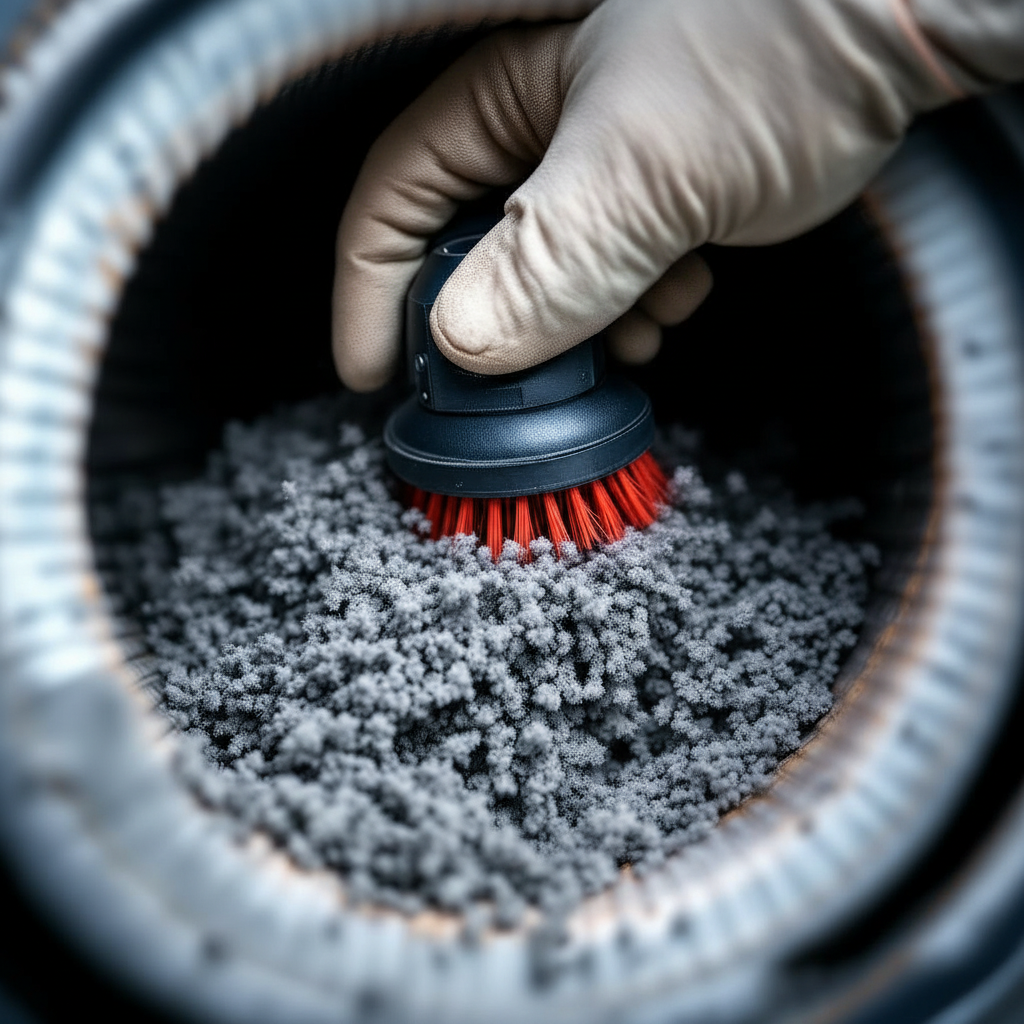
Dryer vent work runs on totally different logic. You need specialized brushes built for narrow, twisty ductwork — stuff that can navigate 90-degree turns and reach 20+ feet. The whole point is yanking out lint before it ignites, not improving what you breathe.
⚠️ A Critical Oversight: Incomplete HVAC Cleaning
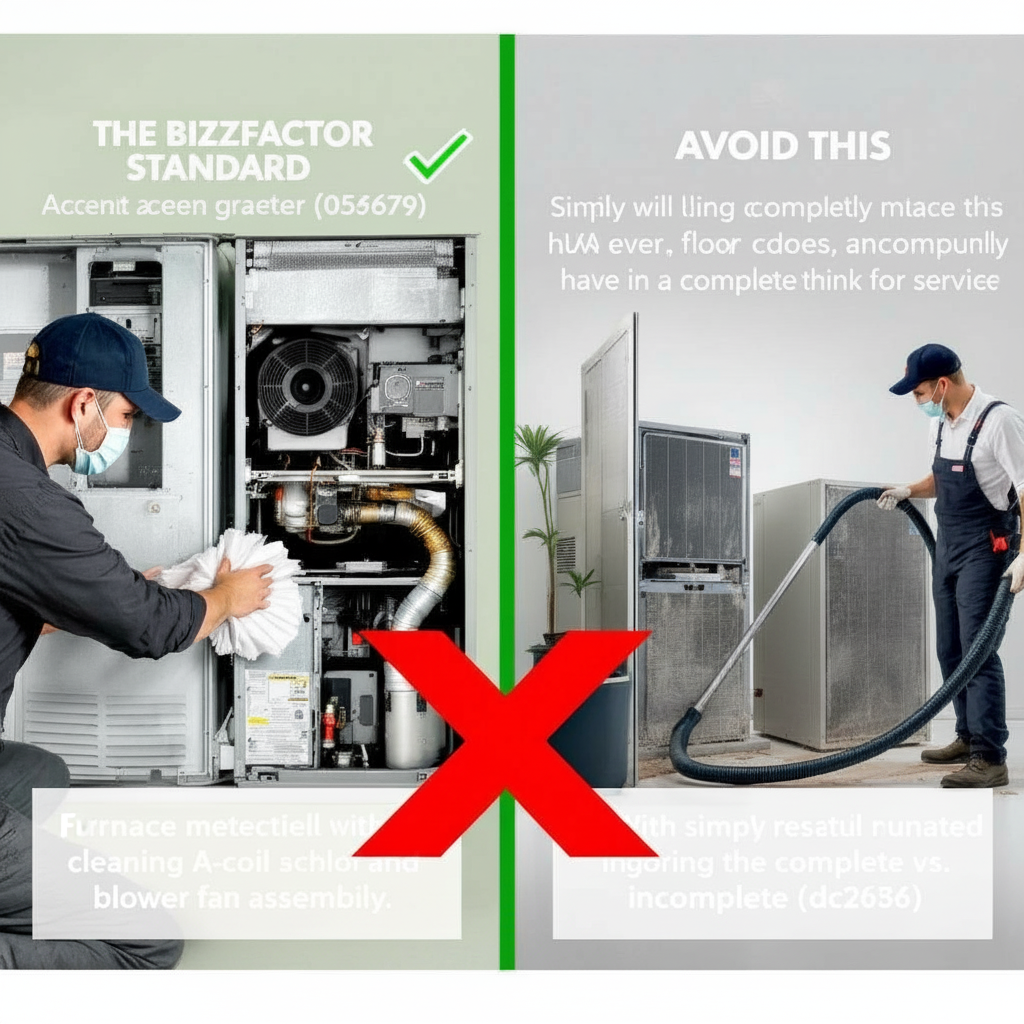
Real talk — most duct cleaning companies won't touch your A-coil or blower motor. Those are the actual spots where mold grows (dark, damp, perfect conditions). They'll clean your visible ductwork and call it a day.
This is like washing your car but skipping the engine. Problems just come back.
Demand photographic proof. I mean photos from INSIDE your furnace — not just shots of them vacuuming your floor vents. You want before-and-after documentation showing the evaporator coil, the blower motor housing, the actual components where contamination hides. If a company refuses? They're probably planning to skip those parts entirely. And yeah, you'll pay full price for half a job, then wonder why your air quality still sucks three months later.
Beyond Industry Guidelines: Practical Tips for Homeowners
Here's what actually works: buy **high-MERV rated furnace filters** (we're talking MERV 11-13) and swap them out every **60-90 days** like clockwork. Set a phone reminder.
Here's the thing: do this religiously and you'll catch the dust, pet dander, pollen, and random crud before it ever gets into your ductwork. It's preventive maintenance that costs you maybe $20 every two months instead of a $600 duct cleaning you probably don't need.
Filters cost around $15-25 each. Compare that to a $400-800 duct cleaning you probably don't need.
When Is Air Duct Cleaning Truly Necessary?
Look — you need duct cleaning when there's actual, visible contamination. Not "it's been five years" or "my neighbor did it." We're talking about three specific scenarios where it genuinely matters.
**Mold growth** inside your ducts is the big one. If you see fuzzy black or green stuff on hard surface ducts (the metal kind), that's when you call in licensed pros. This is where following EPA mold remediation guidelines matters (proper containment, antimicrobial treatment, the whole nine yards). Don't mess around with this yourself. For more on mold, consult our article on [Mold Remediation in HVAC Systems: What You Need to Know](https://bizzfactor.com/blog/mold-remediation-hvac-guide).
**Pest infestations** are the other clear-cut case. Rodent droppings, nests, dead animals — yeah, we've pulled all of that out of return ducts. One house in Roswell had an entire family of squirrels living in their basement return. The smell alone was unbearable, but the health risk from accumulated waste and bacteria made cleaning non-negotiable.
Outside of those situations? Research actually shows that typical dust buildup doesn't significantly harm your air quality or system efficiency. The EPA's take (paraphrasing here): unless there's extreme contamination, routine duct cleaning isn't really necessary. It's needs-based, not calendar-based.
Key Indicators for Professional Air Duct Cleaning:
You definitely need professional help if you're seeing:
**Mold that you can actually see** — not just a musty smell, but visible growth on your ductwork, around registers, or on HVAC components. Black spots, green fuzz, that kind of thing.
**Excessive dust blowing out of vents** even after you've cleaned around them and changed your filter. If your supply vents are spitting visible dust clouds when the system kicks on, something's wrong upstream.
**That smell.** You know the one — persistent musty or stale odors that come out of your vents whenever the heating or cooling runs. Not the normal "first time turning on the heat" smell, but a constant funk.
**Animal evidence.** Droppings near vents, weird scratching sounds in your ductwork, nests you can see through return grilles, or (worst case) finding a dead rodent anywhere near your HVAC system.
**Recent renovation mess.** If you just finished drywall work, sanding, demolition, or any construction project that created serious dust, your ducts probably caught a ton of it. That fine construction dust gets everywhere and your return vents suck it right in.
If any of these signs are present, professional air duct cleaning by a NADCA-certified technician is strongly advisable.
Why Dryer Vent Cleaning is Non-Negotiable for Home Safety
Dryer vent cleaning prevents house fires. Period.
Your dryer produces lint with every single load. Can't be avoided. Most of that lint hits your lint trap, but a surprising amount slips past and heads into the exhaust vent. Over time — months, years if you're really neglecting it — that stuff accumulates. Builds up. Gets compacted. Eventually you've got a dense plug of highly flammable material sitting in a duct that regularly hits 150+ degrees.
This isn't theoretical. A guy in East Cobb ignored his dryer taking twice as long to finish loads — figured the appliance was just getting old. Then one Saturday afternoon, his wife smelled burning plastic. By the time they opened the laundry room door, smoke was already coming from behind the dryer. Fire department showed up, pulled the vent apart, found it 90% blocked with baked-on lint. That's the real issue. Another hour of runtime and that whole back wall probably goes up.
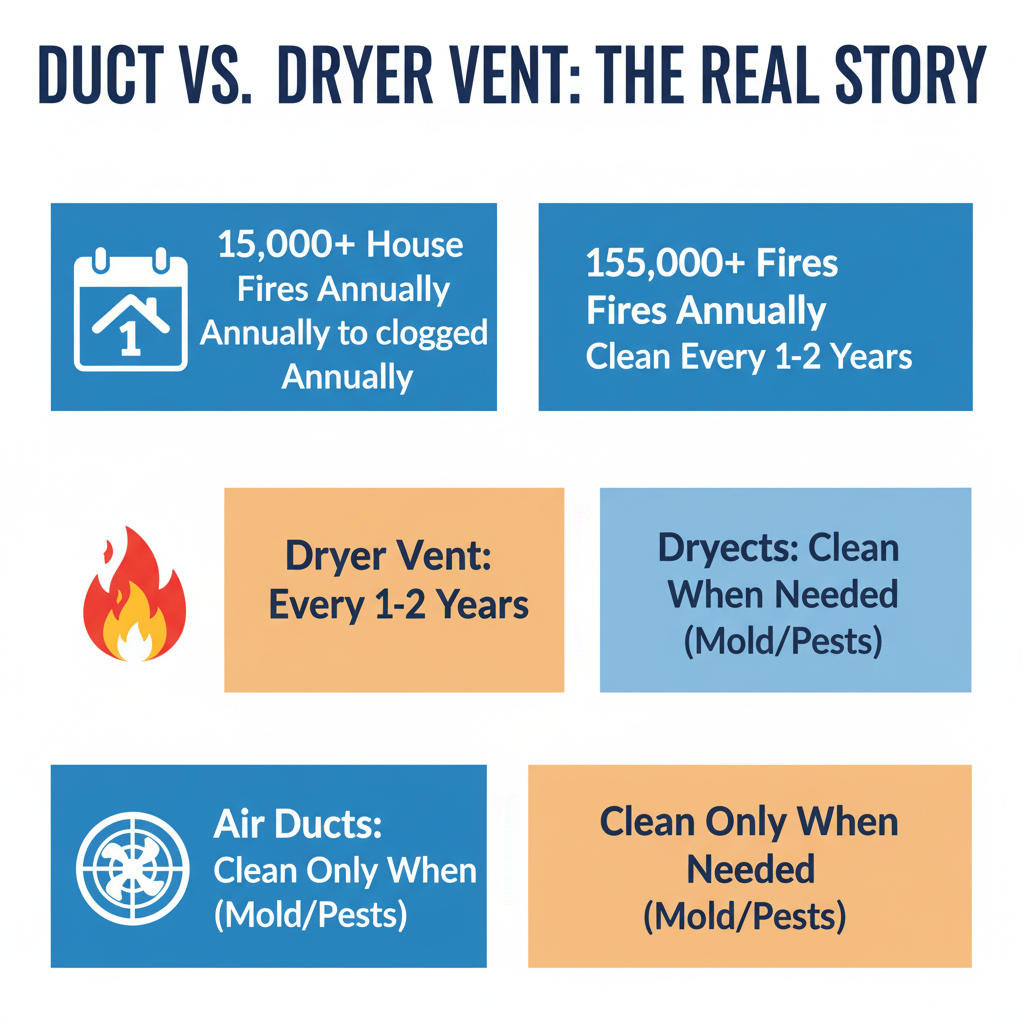
The fire protection folks who track these statistics (NFPA) report over 15,000 dryer fires annually in the U.S. We're talking injuries, deaths, millions in property damage. And the primary cause? Clogged vents that nobody bothered to clean. For more comprehensive safety tips, check out our piece on [Home Appliance Fire Prevention Essentials](https://bizzfactor.com/blog/appliance-fire-prevention-guide).
Lint + 150-degree dryer exhaust = disaster waiting to happen. Unlike air duct cleaning (which is mostly about air quality), dryer vent maintenance directly prevents your house from burning down. That makes it high-priority.
Recognizing Dryer Vent Clog Warning Signs:
You're probably ignoring these red flags right now (most people do):
- Clothes taking significantly longer (multiple cycles) to dry completely.
- The laundry room or the top of the dryer becoming excessively hot and humid during operation.
- A distinct burning smell emanating from the dryer or laundry area.
- Very little or no lint accumulating on the dryer's lint screen, suggesting a blockage further down the vent.
- The outside vent flap not opening properly or at all when the dryer is running, indicating restricted airflow.
These warnings signal dangerous buildup that requires immediate professional attention to prevent a potential fire.
Recommended Dryer Vent Cleaning Frequency:
How often should you clean your dryer vent? Depends on how much laundry you're actually doing:
If you're running **five or more loads every week** (big family, home business, whatever), you should get that vent cleaned **every year**. Maybe even twice yearly if you've got a particularly long vent run.
**Moderate users** — say, 2-4 loads weekly — can usually stretch it to **every 18 months** or so.
**Light use** (just one or two loads a week)? You can probably go **two years** between cleanings, though I wouldn't push it much past that.
We've extracted pounds of packed lint from vents, often from homes where residents thought their short vent run meant no buildup. Don't let your system become a fire hazard; regular cleaning is a small investment for peace of mind.
Case Study: Addressing Both Systems in One Home
Now, last spring, we got a call from a homeowner in Sandy Springs dealing with two problems: weird musty smell in the house, and a dryer that kept overheating and shutting off mid-cycle. Classic case of confusing two separate systems.
Here's the thing: when we inspected the HVAC system, we found mold. Extensive growth in the return plenum and along several duct runs near the attic. Turns out they'd had a roof leak six months earlier that nobody caught right away — the moisture had created perfect conditions for mold to colonize the ductwork.
That required full HVAC system cleaning following NADCA protocols. Antimicrobial treatment, HEPA filtration during the whole process, the works. Not cheap (around $1,800), but necessary to eliminate the mold spores circulating through their air.
Meanwhile, their dryer vent was about 95% blocked. We're talking five years of accumulated lint packed into a 15-foot exhaust run. The homeowner genuinely thought that because the vent was "pretty short" compared to some houses, it didn't need cleaning.
Wrong.
We pulled out over two pounds of lint — enough to stuff a pillow. Their dryer had been working three times harder than it should've for who knows how long, and they were probably six months away from a fire.
Key Takeaways from the Case Study:
So — the duct cleaning solved a health problem. Mold spores gone, air quality back to normal, their teenage daughter's allergies improved within a week. The dryer vent cleaning? That eliminated a fire hazard they didn't even know existed and cut their drying time in half.
So — this happens more than you'd think. Homeowners assume one service covers both, or they prioritize the wrong one because they don't understand what each system actually does. You need different specialists with different equipment for different problems.
Professional Standards You Should Demand
Legitimate professionals should have proper certifications, the right equipment, and stick to established protocols. Our licensed BizzFactor technicians undergo continuous training through recognized organizations like **NADCA** and maintain full insurance coverage for your protection.
Quality air duct cleaning necessitates robust, truck-mounted vacuum systems, specialized rotary brushes, and powerful HEPA-filtered negative air machines to ensure thorough cleaning without recontaminating your home. We strictly follow **International Mechanical Code (IMC)** guidelines for HVAC and ventilation system maintenance.
Expect the following from reputable professionals:
- Detailed before and after documentation (photos/videos) of the cleaned areas.
- Clear, understandable explanations of the cleaning process and scope of work.
- Written guarantees on workmanship and satisfaction.
- Background-checked and certified technicians for your peace of mind.
- Proof of adequate liability and workers' compensation insurance coverage.
Dryer vent specialists utilize different, purpose-built tools for both flexible and rigid ductwork, including rotating
In-Depth Look
Detailed illustration of key concepts
Visual Guide
Infographic illustration for this topic
Side-by-Side Comparison
Visual comparison of options and alternatives
Sources & References
- Differences Between Dryer Vent Cleaning and Air Duct Cleaning
- Should You Have the Air Ducts in Your Home Cleaned? | US EPA
- Proper Cleaning Methods
- The Ultimate Guide to Dryer and Dryer Vent cleaning for a Safer ...
- Building Codes, Standards, and Regulations: Frequently Asked ...
- Building Codes and Standards - 101 Guide | ROCKWOOL Blog
- [PDF] Building Codes Toolkit for Homeowners and Occupants - FEMA
- Amazon Best Sellers: Best Architectural Codes & Standards
- [PDF] Introduction to Model Codes
Frequently Asked Questions
Need Professional Help?
Find top-rated air duct cleaning experts in your area