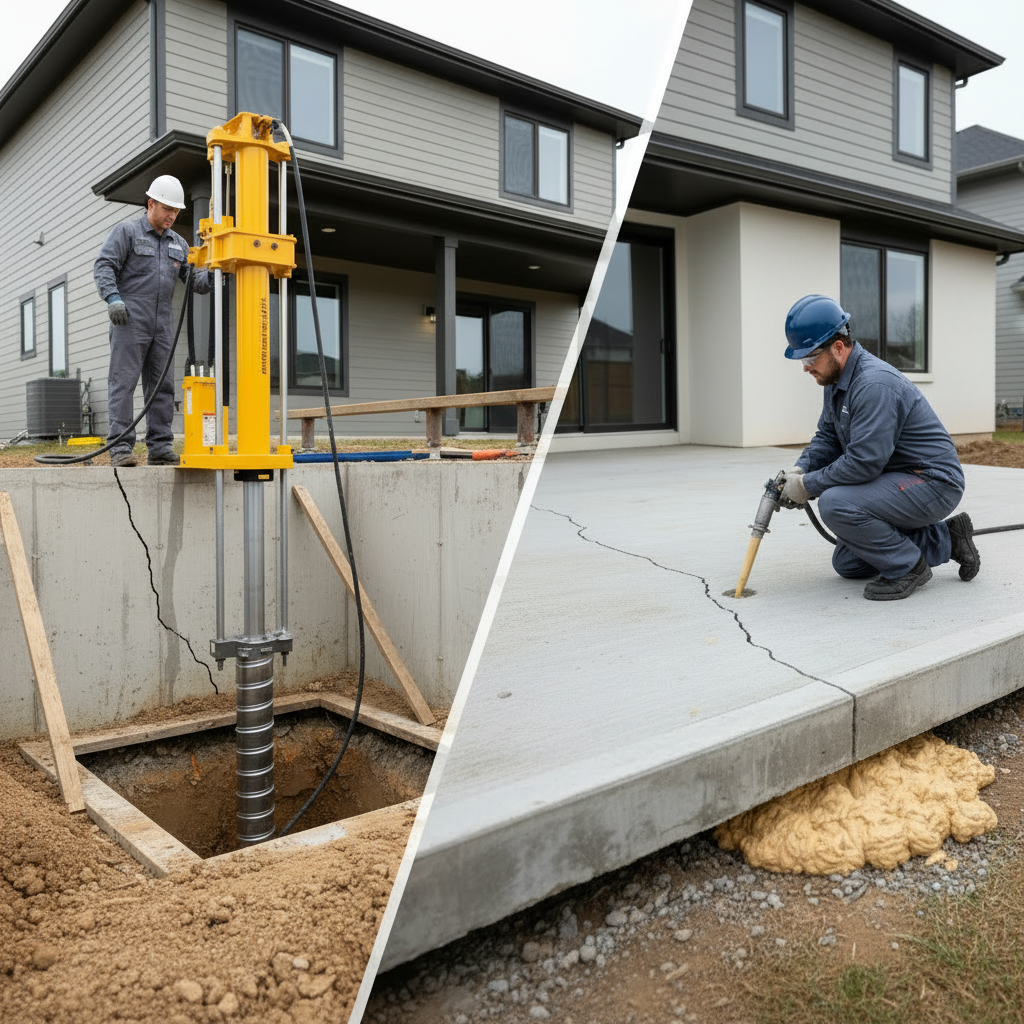
Compare pier systems vs. slab jacking for foundation repair. Learn about steel push piers, helical piers, polyurethane foam, and critical water management.
Key Takeaways
- **Hydrophobic:** It actively repels water and prevents erosion, unlike traditional concrete mixtures that can wash out over time.
- **Lightweight:** Its minimal weight prevents further compression of weak or susceptible underlying soils.
- **Durability:** While it may have a higher upfront cost, we guarantee its longevity and superior performance.
- **Cures fast:** We're talking 15-30 minutes. You can walk on it before we've even loaded the truck.
- **Weighs almost nothing:** Won't compress the soil any further like heavy cement slurry might.
Key Takeaways
Pier Systems vs. Slab Jacking: The Definitive Foundation Repair Guide
Choosing the right foundation repair method – pier systems or slab jacking – is crucial for your home's long-term stability. This comprehensive guide, informed by BizzFactor's 20+ years of expertise, delves into both techniques to help you make an informed decision.
Understanding Pier Systems: Deep Foundation Solutions
Look — look — pier systems are robust, deep foundation supports designed to transfer your home's weight from unstable, shifting soil to bedrock or other firm, load-bearing strata. We utilize steel or concrete piers for homes experiencing significant, ongoing settling that demands a permanent, structural solution.
Here's how we actually install these things: We drive supports deep underground until we hit soil that won't budge — no matter what. Could be 12 feet down. Could be 30. Once they're anchored solid, we use them to lift your foundation back where it belongs.
So we dig down around your footing first — that's the prep work. Then we start driving high-strength steel pier sections hydraulically, straight through all that crappy soil that's been shifting. Keep going until you hit something that won't move. Bedrock, usually. Dense clay sometimes. Once we're anchored solid, we jack the foundation back up with hydraulics. Get it level. Then we bolt everything to the piers with steel brackets that aren't going anywhere.
The whole process? It's loud, it's dirty, and your yard's gonna look like hell for a few days. But it works.
Steel Push Pier Systems: The Gold Standard
Most foundation guys I know won't touch anything but steel push piers for serious work. I've been installing these for over 15 years, and they'll hold loads that'd make your head spin — we're talking 60,000+ pounds per pier, sometimes more depending on the system.
There's this colonial in Brookhaven we did last fall — 1950s build, doors wouldn't close right, classic signs. Homeowner finally called us when she noticed the east side had dropped about 3 inches. We put in eight steel push piers, cost her around $18,000. Checked back six months later? Zero new cracks. Foundation's rock solid now.
We've worked with Ram Jack and Foundation Supportworks systems for years now — both meet the load specs and corrosion standards you actually need for this work to last. Some contractors use cheaper knockoff brackets. We don't.
Helical Pier Applications: Ideal for Specific Soil Conditions
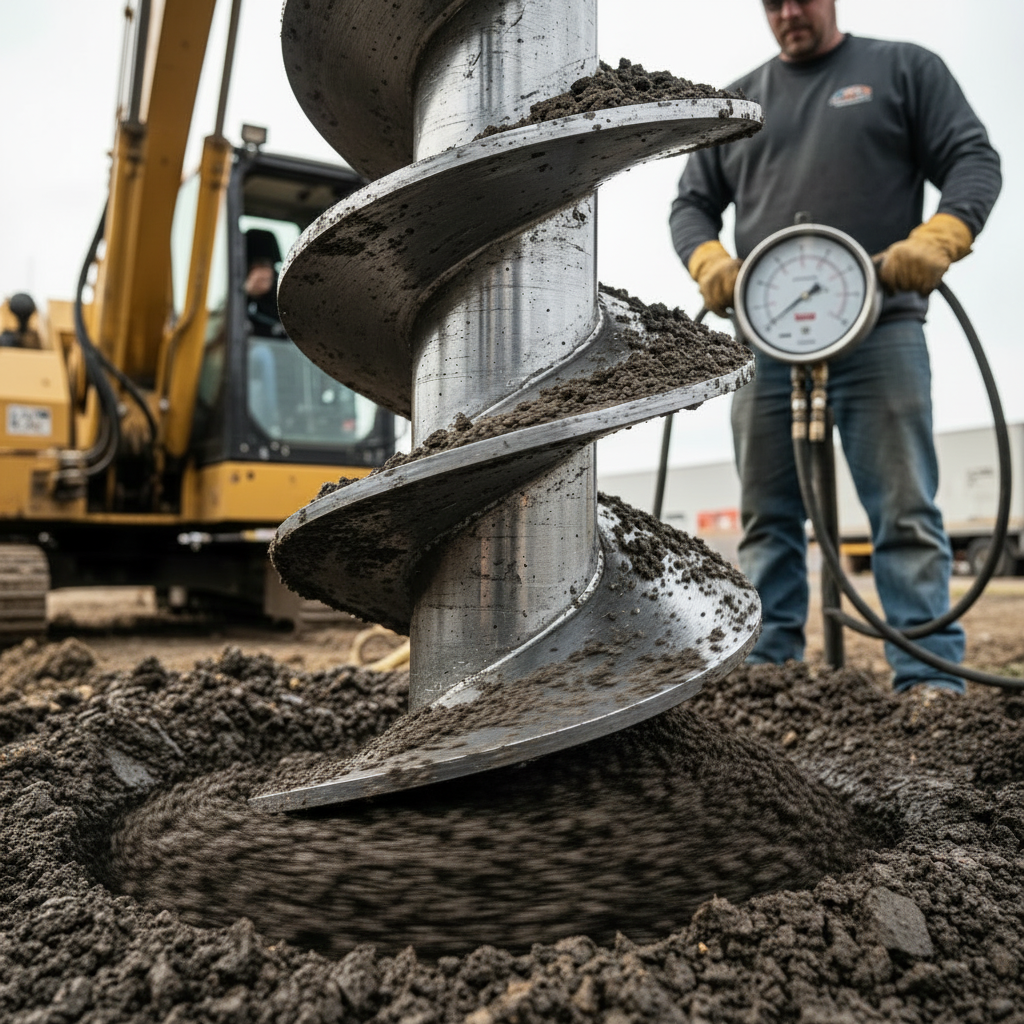
Think of helical piers like giant screws — because that's basically what they're. We twist them down into stable soil instead of hammering them. Works way better in clay-heavy areas where push piers sometimes struggle to get purchase.
The guys installing these watch the torque meter like hawks. Each pier's gotta hit specific torque numbers — usually somewhere between 3,000 and 5,000 foot-pounds, depending on the load — before we'll call it good. Hit that number? You know you're in solid soil. Miss it? Keep twisting deeper.
**What's the key difference between helical and push piers?** Helical piers are rotated into the ground, while push piers are driven down with hydraulic pressure. Both methods effectively reach stable soil, but helical piers offer advantages in certain soil types.
⚠️ Critical Warning: Address Water Management First!
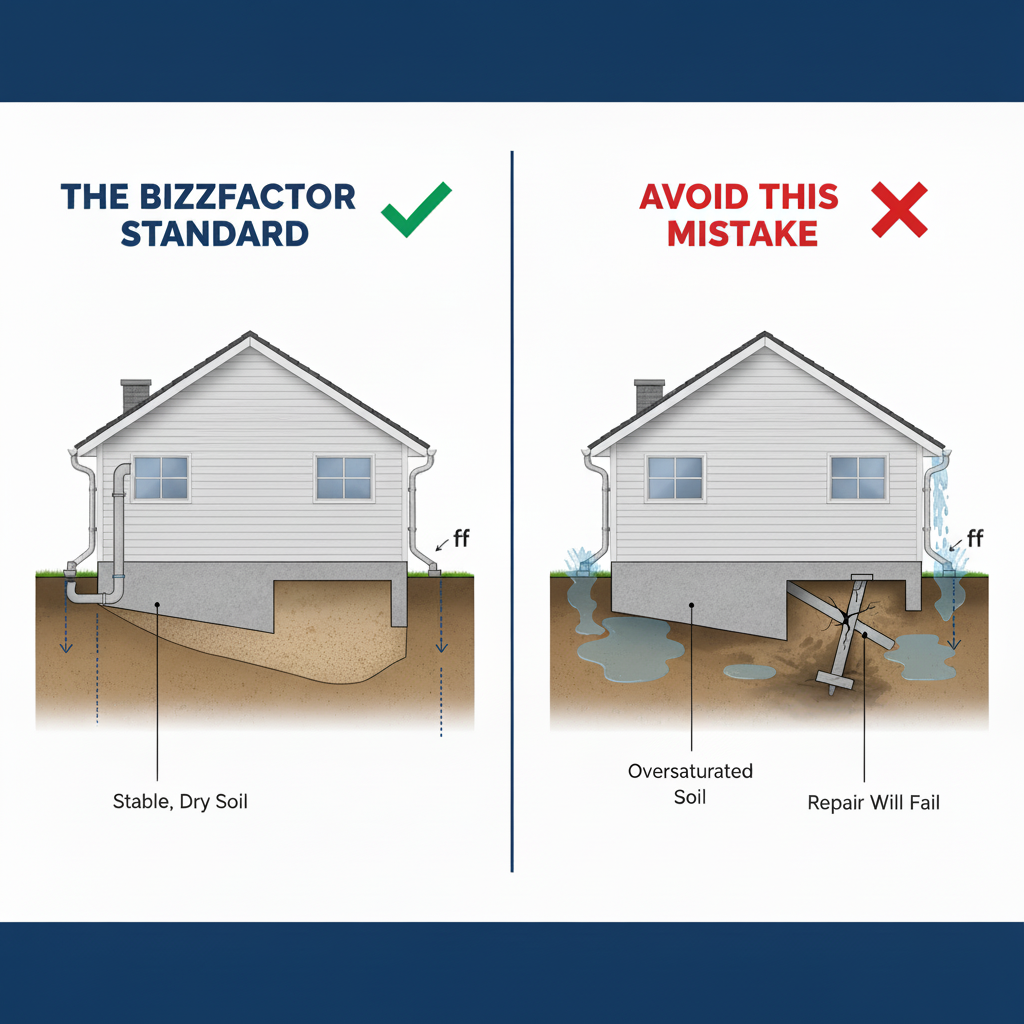
Here's where contractors screw homeowners all the time — they jump straight to pier installation without fixing the water problem that caused the settling in the first place. I've seen $25,000 pier jobs fail in two years because nobody bothered to fix a clogged gutter. The soil stayed saturated. The foundation kept moving. Total waste of money.
**Water is the primary culprit behind most foundation problems.**
We won't even give you a quote until we talk through your drainage situation. You need gutters that work, downspouts that dump water at least 6 feet from the house, and proper grading. Skip that stuff and you're basically lighting money on fire — doesn't matter how good the pier work is.
Our Expert Recommendation: Polyurethane Foam for Slab Jacking
With slab jacking, we push polyurethane foam over the old mudjacking approach every single time. I've watched both methods play out over 15+ years, and foam just holds up better — especially in wet conditions.
**Why choose polyurethane foam?**
- **Hydrophobic:** It actively repels water and prevents erosion, unlike traditional concrete mixtures that can wash out over time.
- **Lightweight:** Its minimal weight prevents further compression of weak or susceptible underlying soils.
- **Durability:** While it may have a higher upfront cost, we guarantee its longevity and superior performance.
We've been running PolyLevel and Concrete Raising Systems foam for years now — both are solid products that'll actually hold up in wet conditions (which matters here). FEMA's approved both for flood zones, so you know they can handle moisture.
Unvarnished Truth: Avoid Over-Lifting
Real talk — some guys will promise to get your floor "perfectly level" because it sounds good. Don't fall for it. I've seen contractors lift too aggressively and crack every wall in the house, bust plumbing connections, jam windows so bad they needed replacing. It's a nightmare.
**What we're trying to do is stop your foundation from moving any further.** That's priority one. Getting it perfectly level? That's nice if we can manage it without breaking stuff, but stability matters way more than perfection. I'd rather you have a floor that's a quarter-inch off than a house full of fresh cracks because somebody got overzealous with the jacks.
When Is Slab Jacking the Right Solution for Foundation Issues?
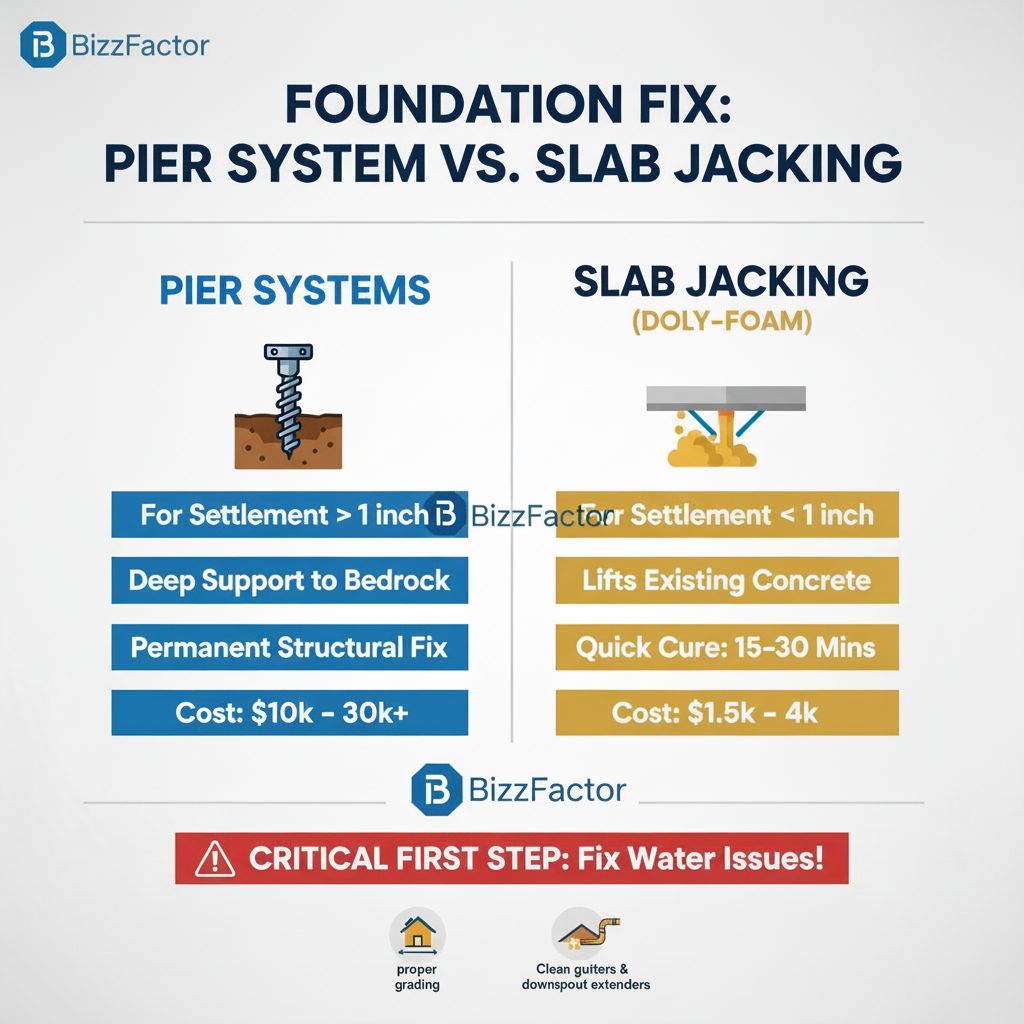
Here's the thing: here's the thing: slab jacking works great for fixing minor concrete settling — we're talking settlement under an inch, mostly on slab foundations, patios, driveways, that kind of thing. The whole idea is pumping material underneath to fill voids and push everything back up where it should be. That's really all there's to it. [Learn more about concrete repair options](/concrete-repair-guide).
We drill these little holes through your concrete — about the size of a penny. Pump the lifting material through (foam or cement slurry, depending). The slab comes up. Fill the holes. Done. Most jobs we finish in three, maybe four hours.
Polyurethane Foam Injection: Advanced Slab Lifting
I've been working with PolyLevel foam for about 5 years now, and honestly? It's changed how we approach lifting work. The stuff just performs better than the old-school methods — not even close.
Here's what makes foam injection worth the extra cost:
- **Cures fast:** We're talking 15-30 minutes. You can walk on it before we've even loaded the truck.
- **Weighs almost nothing:** Won't compress the soil any further like heavy cement slurry might.
- **Handles moisture:** Doesn't break down in wet conditions (huge deal in our climate).
- **Precise as hell:** We can lift to within a sixteenth of an inch if we need to.
Our certified technicians recently elevated a garage floor that had settled 2 inches. The foam injection process was completed in just 3 hours, and the homeowner was able to park their vehicle in the garage the very same day.
Traditional Mudjacking Process: A Budget-Friendly Alternative
Now, now, mudjacking's the old-school approach — you're basically pumping cement slurry under the slab. Mix up Portland cement with sand and water (proportions depend on what you're lifting and what kind of soil you're dealing with). Heavier than foam, sure, but it'll hold if you do it right.
Honestly? We mostly suggest this when someone's on a really tight budget and can't swing the foam pricing. It works. Just not as well long-term.
How to Choose: Pier Systems vs. Slab Jacking
Which repair method you need really depends on how bad things have gotten and what caused it in the first place. After doing this for 20 years, we've developed pretty clear guidelines. [Explore our full range of foundation services](/foundation-repair-services).
When to Opt for Pier Systems
You're probably looking at pier work if you've got:
- **Significant Settlement:** Foundation settlement exceeding 1 inch.
- **Structural Damage:** Visible cracks in interior or exterior walls, or ceilings.
- **Operational Issues:** Doors and windows that persistently stick, jam, or fail to close properly.
- **Visible Movement:** Noticeable movement or bowing in foundation walls.
- **Persistent Settling:** Ongoing settlement, especially prevalent in expansive clay soils.
For instance, we recently inspected a ranch home where minor cracks were ignored for years. By the time we were called, one corner of the foundation had dropped a dramatic 4 inches. Only the deep stabilization provided by pier systems could effectively address this level of structural damage.
When Slab Jacking is the Best Choice
Slab jacking makes sense when you're dealing with:
- **Minor stuff:** Settlement that's less than an inch. Maybe three-quarters if we're being generous.
- **Specific problem spots:** Like that one sunken section of your driveway where water puddles.
- **Trip hazards:** Sidewalk slabs that've settled enough someone might eat pavement.
- **Cosmetic fixes:** It bugs you visually, but your foundation's not actually failing.
- **Recent movement:** Soil that just settled a bit but isn't actively shifting.
A recent client contacted us regarding a sunken sidewalk section that had dropped approximately half an inch, posing a tripping hazard. A precise foam injection resolved the issue in just 2 hours, for under $500, illustrating the efficiency and cost-effectiveness of slab jacking for minor issues.
The Professional Foundation Assessment Process
You need a licensed contractor to look at this before you spend a dime. That's not just our recommendation, it's FEMA building code in most areas. BizzFactor's guys all hold state certifications and we've maintained our A+ BBB rating for over a decade because we don't cut corners on this stuff. [Understand more about foundation repair cost factors](/foundation-repair-cost-guide).
Our comprehensive assessment typically includes:
1. **Detailed Foundation Survey:** Utilizing precision laser levels to map settlement and identify problem areas.
2. **Soil Analysis:** Investigating subsurface conditions to determine the underlying causes of settlement.
3. **Structural Evaluation:** A thorough inspection of foundation walls, beams, and columns for damage.
4. **Drainage Review:** Assessing existing drainage patterns around your home to identify potential water intrusion issues.
5. **Written Recommendation:** Providing a comprehensive report outlining findings and recommended repair strategies.
Keep in mind — a significant percentage of foundation problems we encounter originate from water-related issues, such as poor grading, clogged gutters, or damaged underground pipes.
Material Quality and Warranty Assurance
At BizzFactor, we commit to using only materials that meet or exceed rigorous industry standards. Our steel pier systems feature advanced corrosion-resistant coatings, and our slab jacking materials are selected for their optimal compressive strength and durability.
Warranties cover both the high-quality materials we use and our expert workmanship. Typically, pier systems come with lifetime warranties, while slab jacking services include a 5-year guarantee.
For over a decade, we have forged strong partnerships with trusted suppliers like Foundation Supportworks and CHANCE Civil Construction, whose products consistently deliver superior performance and reliability, especially within our demanding regional climate.
In-Depth Look
Detailed illustration of key concepts
Visual Guide
Infographic illustration for this topic
Side-by-Side Comparison
Visual comparison of options and alternatives
Sources & References
- Understanding Different Types Of Foundation Repair Methods
- A Complete Guide to Foundation Repair
- Your Foundation Repair Options Explained - A-1 Concrete Leveling
- The Ultimate Guide to Foundation Repair in the Southeast USA
- Piering vs. Slabjacking: Which Foundation Repair Method Is Right ...
- Building Codes, Standards, and Regulations: Frequently Asked ...
- Building Codes and Standards - 101 Guide | ROCKWOOL Blog
- [PDF] Building Codes Toolkit for Homeowners and Occupants - FEMA
- ICC - International Code Council - ICC
- [PDF] Introduction to Model Codes - eird.org
Frequently Asked Questions
Need Professional Help?
Find top-rated home services experts in your area