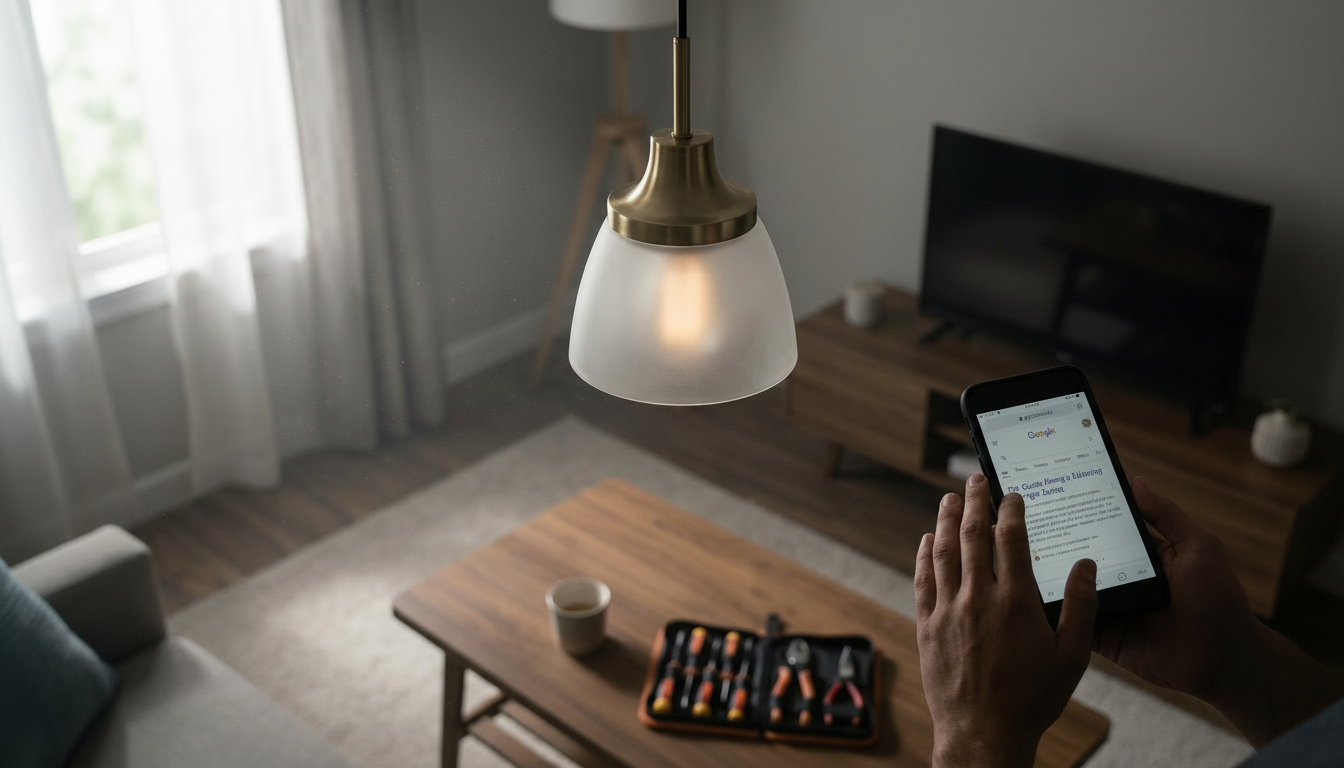
Decide whether to repair or replace your light fixture with our expert 2024 cost guide. Learn when to fix minor issues vs. when replacement offers better value and safety.
Key Takeaways
Light Fixture Repair vs. Replace: The Expert Cost Guide 2024
Here's what nobody tells you about broken light fixtures: the decision isn't really about the light at all.
I talked to a homeowner in Decatur last month who spent $180 fixing a 15-year-old dining room chandelier — only to have the socket fail again eight weeks later. She ended up buying a new fixture anyway. Total cost? Almost $600 when it could've been $280 from the start.
That's what we're really sorting out here.
Understanding the Dilemma: Repair or Replace?
So you've got a fixture acting up. Maybe it's flickering. Maybe it died completely. Before you do anything — and I mean before you even touch a screwdriver — you need to figure out what you're actually dealing with.
Ask yourself:
- **What's broken?** Loose wire you can see? Switch that's clearly worn out? Or something deeper inside you can't identify?
- **How old is this thing?** If it's been hanging there since 2008, that matters. A lot.
- **Do you even like it?** Seriously. If you've hated that fixture for three years, why are we repairing it?
- **What's it costing you to run?** Old incandescent fixtures are basically space heaters that also produce light. Not a great combo.
When to Consider Repairing Your Light Fixture
Look — sometimes a repair just makes sense. If your fixture's relatively new (under 5 years) and the problem's straightforward, you're probably looking at a fix, not a replacement.
Here's when to lean towards a repair:
- **Minor Electrical Issues** — That flickering? Could be a loose connection you can tighten in ten minutes. Or maybe it's the dimmer switch going bad (super common in dining rooms). Sometimes it's just the wire nut that backed off a quarter-turn. Point is, these don't require surgery.
- **Busted socket** — The part where the bulb screws in wears out eventually. Especially if someone's been gorilla-tightening bulbs for years. Socket's usually $8 at the hardware store. Labor runs another hundred or so if you're hiring it out.
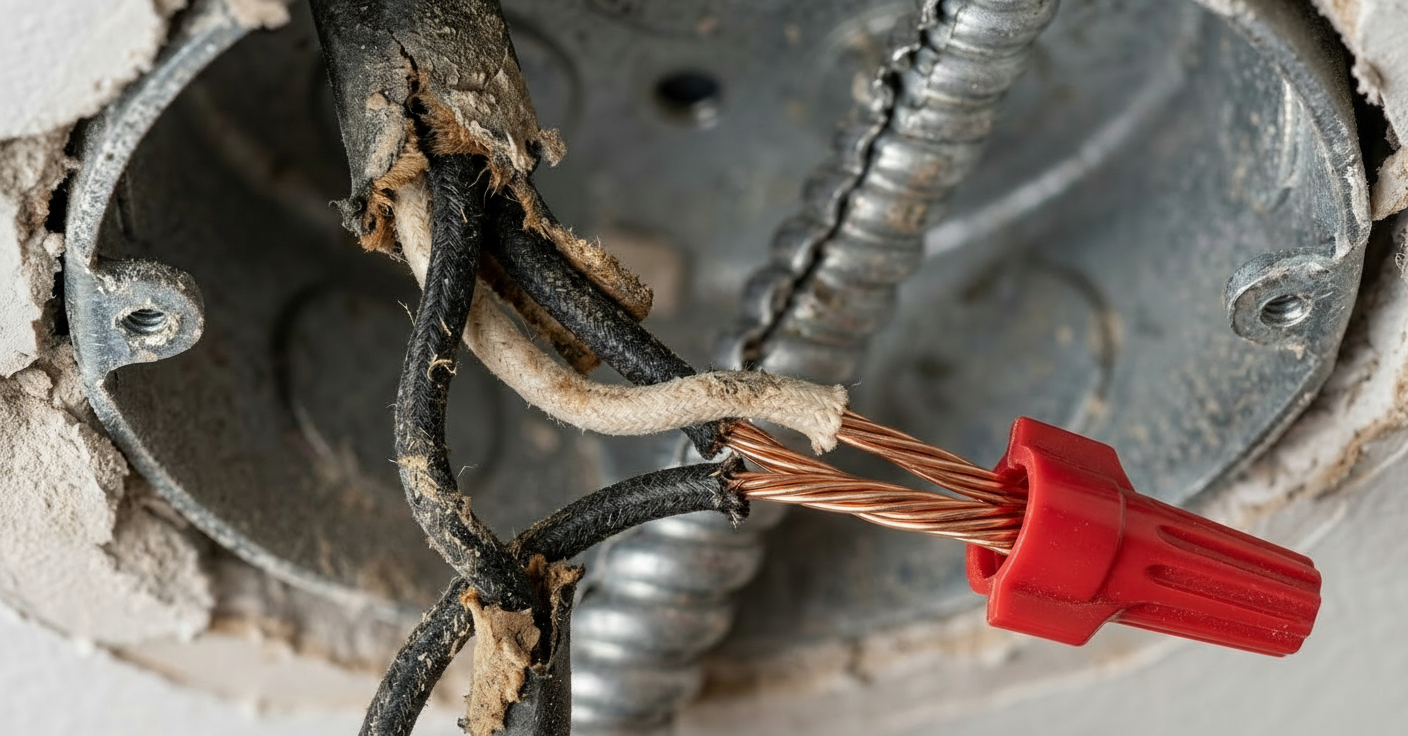
- **Wiring problems you can actually see** — Exposed copper where the insulation cracked? Wire that looks chewed (yeah, mice)? An electrician can fix that pretty quick. Doesn't mean you need a whole new fixture.
- **You've got history with this thing** — Maybe it was your grandmother's. Maybe you spent six months hunting down that exact vintage schoolhouse pendant. Sentimental value counts. Sometimes spending $200 to save a $150 fixture makes perfect sense because you can't replace *that specific one*.
When to Opt for Replacement
Here's the deal: replacement isn't always about "nice to have." Sometimes it's the only move that makes sense.
You're replacing, not repairing, when:
- **The housing's toast.** Cracks in the metal? Corrosion that's eating through? Heavy physical damage from (let's say) someone installing a ceiling fan poorly? Can't repair structural problems. Too dangerous.
- **You're burning money with old bulbs.** An incandescent fixture from 2009 is costing you — literally costing you actual dollars every month. LEDs use 75% less power and you won't change bulbs for the next 20 years. Do the math. Learn more about the benefits of [LED lighting solutions](/blog/led-lighting-benefits).
- **Something's actively trying to kill you.** Frayed wiring, frequent shorts, overheating that you can *feel* standing underneath it — these aren't repair situations. They're "get this out of my house right now" situations.
- **Water got in there.** Bathroom fixture that took on moisture from a leaky roof? Kitchen pendant above where the dishwasher flooded? Water and electricity create corrosion you can't see. Hidden damage is the worst kind.
- **Your home doesn't look like your home anymore.** Did a full kitchen reno but kept that builder-grade fluorescent box? That Edison bulb chandelier doesn't match your new farmhouse vibe? Design matters. You live here.
- **The repair guy's quote made you wince.** If fixing it costs 70% of replacing it with something newer and better, what are we even doing? Buy the new one.
Light Fixture Repair Costs in 2024
What's a repair actually gonna cost you? Depends completely on what's wrong and where you live. Charlotte rates aren't Atlanta rates aren't Nashville rates.
But here's the ballpark:
| Type of Repair | Average Cost Range (USD) | Notes |
| :----------------------- | :----------------------- | :----------------------------------------------- |
| Loose Wiring/Connection | \$75 — \$150 | Simple electrical tightening or re-securing. |
| Switch/Dimmer Replacement | \$100 — \$250 | Includes parts and labor for standard switches. |
| Socket Replacement | \$80 — \$180 | Replacement of a single bulb socket. |
| Ballast Replacement | \$150 — \$350 | Primarily for fluorescent fixtures. |
| Professional Assessment | \$50 — \$120 | Electrician's service call fee for diagnosis. |
*Costs are estimates and can vary based on location, electrician rates, and specific fixture types. For an accurate quote, always consult with a local BizzFactor-vetted electrician.*
A guy in Brookhaven paid $340 last year to replace a ballast in his kitchen fluorescent fixture. Three months later, different ballast failed. That's when older fixtures start nickle-and-diming you to death.
Light Fixture Replacement Costs in 2024
What's a new fixture actually going to run you? Way more variables here than you'd think. Basic flush-mount from Home Depot? Couple hundred bucks installed. That Restoration Hardware chandelier your wife's been eyeing? Try not to faint when you see the number.
You're paying for two things — the fixture itself and someone who knows what they're doing to hang it without burning down your house.
| Type of Fixture | Fixture Cost Range (USD) | Installation Labor (USD) | Total Average Cost (USD) |
| :--------------------- | :----------------------- | :----------------------- | :----------------------- |
| Basic Ceiling Fixture | \$20 — \$100 | \$75 — \$150 | \$95 — \$250 |
| Recessed Lighting | \$30 — \$80 (per can) | \$100 — \$200 (per can) | \$130 — \$280 (per can) |
| Chandelier/Pendant | \$100 — \$1000+ | \$150 — \$400+ | \$250 — \$1400+ |
| Bathroom Vanity Lights | \$50 — \$300 | \$100 — \$200 | \$150 — \$500 |
| Outdoor Lighting | \$40 — \$500 | \$100 — \$250 | \$140 — \$750 |
| Ceiling Fan with Light | \$80 — \$500 | \$150 — \$350 | \$230 — \$850 |
Now, those are your standard straightforward installs.
Look — want to add a dimmer? That's another $50-100. Need new wire run from the panel? Add $200-400 depending on distance. Cutting a bigger hole in the ceiling for that oversized fixture? More money. If your electrician needs to squeeze into a 130-degree attic in July or you're messing with a wonky old junction box, expect the labor to climb. Sometimes by a lot. Explore our guide on [ceiling fan installation costs](/blog/ceiling-fan-installation-cost) for more details.
DIY vs. Hiring a Professional Electrician
There's stuff you can handle yourself. Then there's stuff that'll land you in the ER or worse.
**Go ahead and DIY:** Swapping a bulb. Tightening a screw you can see is loose. Cleaning dust off the glass shade. Wiping down a chandelier. That's all fine.
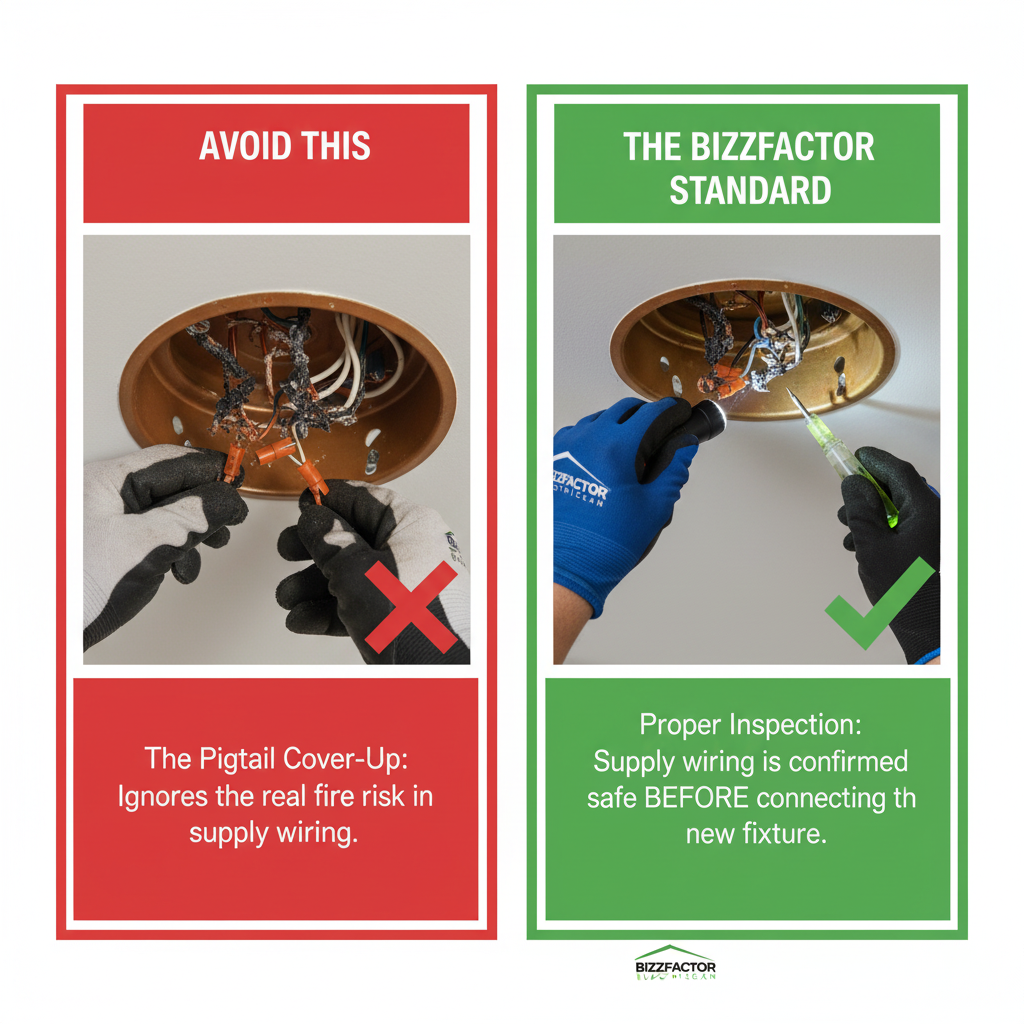
**Call someone who knows what they're doing:** Everything else. Seriously — anything involving wires coming out of your ceiling, anything with the circuit breaker, any weird buzzing or burning smell.
Here's what I tell people: if you have to ask yourself "Should I be doing this?" — the answer's no.
I talked to a contractor in Marietta last year who got called to a house where the homeowner tried to install a ceiling fan himself. Guy wired it backwards, didn't secure the mounting bracket right, and managed to partially short out three other rooms in the process. The repair cost $1,200. The electrician would've charged $300 to do it right the first time.
Also? Licensed electricians warranty their work. You won't. They've got insurance. You don't. They know the electrical code for your county. You probably don't even know your county *has* an electrical code.
Find a qualified electrician through BizzFactor's extensive directory to ensure a safe and proper installation or repair.
Longevity and Energy Efficiency Considerations
Dropping money on a modern LED fixture might feel expensive upfront, but the math works out fast. I've seen utility bills drop $15-20/month just from swapping out six old fixtures in a 2,400 sq ft home in Sandy Springs.
That adds up.
What you're getting with LED:
You're looking at 25,000 to 50,000 hours of life. Run that through normal use patterns and you're talking 15 to 30 years before the thing dies. Most people sell their house before these fixtures quit working.
Energy use drops by about three-quarters compared to those old incandescent bulbs. A 60-watt incandescent pulls (obviously) 60 watts. Same light output from LED? Maybe 8 or 10 watts. Your Georgia Power bill definitely notices.
And maintenance? Basically doesn't exist. When's the last time you changed an LED bulb? Can't remember, right? That's because you haven't needed to.
Here's the thing: an old inefficient fixture costs you money every month it's on. A new LED saves you money every month it's on. The payback period's usually shorter than you'd think — sometimes under two years depending on usage. Consider a [home energy audit](/blog/home-energy-audit-benefits) to identify other areas for efficiency improvement.
Conclusion: Making the Right Choice for Your Home
So what's it gonna be — repair or replace?
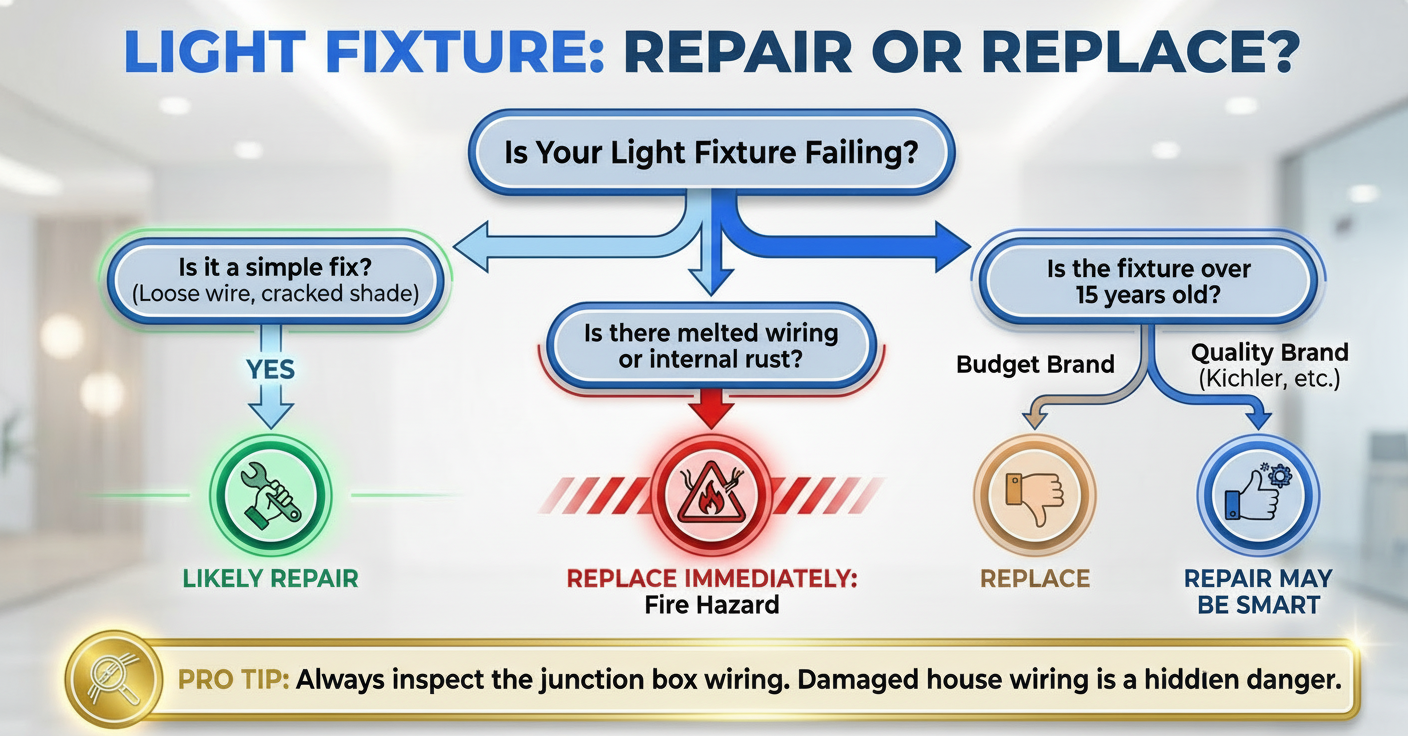
If the fixture's under 7 years old, the problem's minor (loose wire, bad switch), and you actually like how it looks? Yeah, repair it. Anything else — especially if it's showing age, using outdated bulbs, or the repair quote's creeping past $200 — you're probably better off replacing it.
Always prioritize safety. When in doubt, consult with a qualified electrician from BizzFactor to get an accurate diagnosis and expert recommendation tailored to your specific situation.
---
FAQs
**Should I repair or replace a broken light fixture?**
Now, honestly? It depends on what's actually broken and how old the thing is. Minor stuff — loose wires, bad switches, busted sockets — those are usually worth fixing if the fixture's fairly new. But if you're dealing with an old fixture that's inefficient, or the damage is extensive, replacement almost always makes more sense long-term. That's the real issue. You get better safety, way better energy savings, and (let's be real) something that doesn't look like it's from 2003.
**What's the average cost to repair a light fixture in 2024?**
Depends what's wrong and where you live, but figure somewhere between $75 and $350 for most repairs. Something simple like tightening connections might run you $75-150. Replacing a ballast in an old fluorescent fixture could hit $350. Labor rates swing wildly depending on your city too. You won't really know until someone crawls up there and diagnoses it. Get a pro to look at it first.
**When is it more cost-effective to replace a light fixture?**
When the repair quote's getting close to what a new fixture costs — that's your signal. Also if your current fixture's old, sucking down energy with incandescent bulbs, or just doesn't fit your space anymore. New LED fixtures might cost more upfront, but they'll save you money on power bills and you won't be changing bulbs every six months. Better long-term value.
**Can I repair a light fixture myself, or should I hire a professional?**
Changing bulbs? Cleaning the glass? Tightening an obviously loose screw? Sure, do it yourself. But anything involving wires, electrical connections, circuit breakers, or literally anything you're uncertain about — don't mess with it. Call a licensed electrician. Electrical work's one of those things where a DIY mistake can burn your house down or worse.
**How can I tell if my light fixture is unsafe?**
So — flickering that won't stop. Buzzing noises. Burning smell (especially that). Wires that look discolored or charred. Circuit breaker keeps tripping. Fixture gets hot enough to make you pull your hand back. Any of those? Turn off the power to that fixture right now and call an electrician. These aren't "maybe get around to it" problems — they're fire hazards.
**What are the benefits of upgrading to LED light fixtures?**
You'll use about 75% less electricity than old incandescent bulbs (that shows up on your power bill pretty quick). They last forever — like 25,000 to 50,000 hours. You're not climbing ladders to change bulbs every few months. Plus you get way more options for brightness and color temperature. Yeah, they cost more upfront, but they pay for themselves in energy savings within a couple years usually.
In-Depth Look
Detailed illustration of key concepts
Visual Guide
Infographic illustration for this topic
Side-by-Side Comparison
Visual comparison of options and alternatives
Frequently Asked Questions
Need Professional Help?
Find top-rated electrical experts in your area