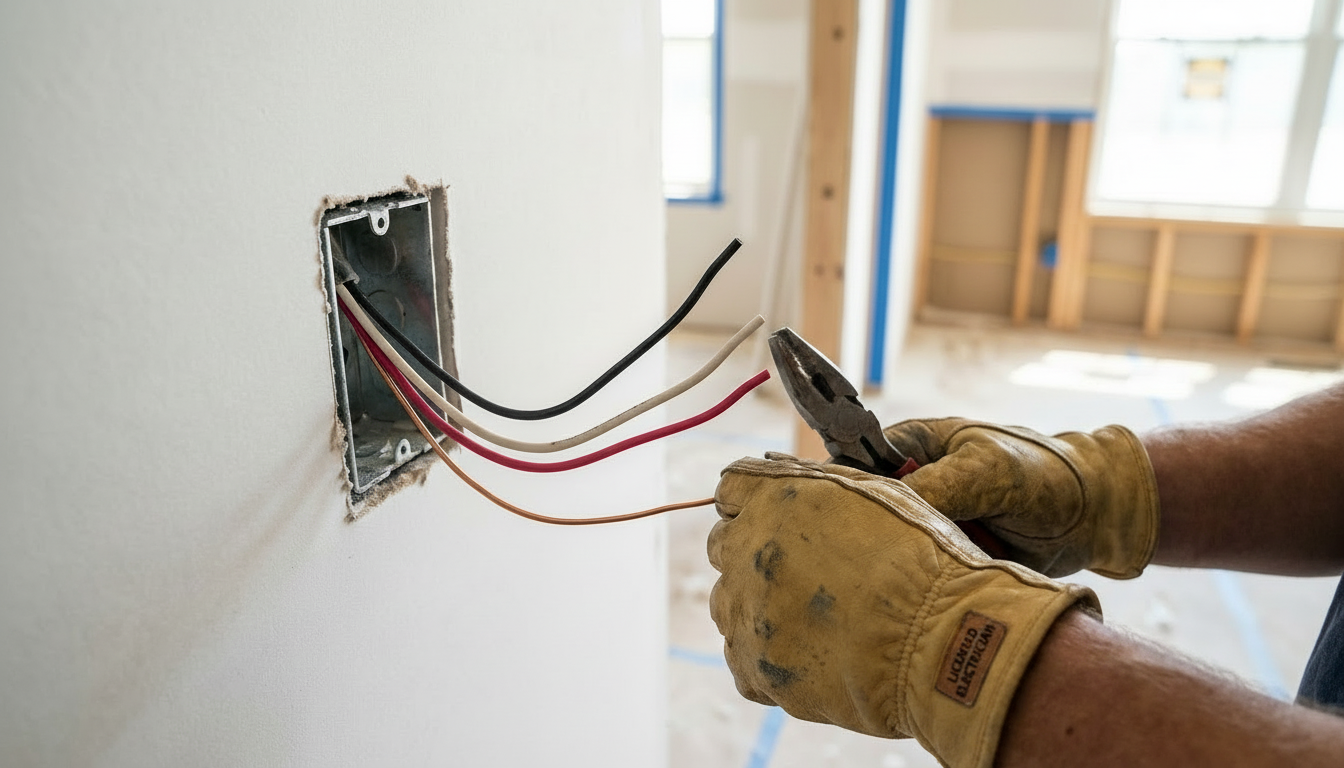
Master electrical wire colors with our expert guide. Understand NEC standards for black, white, green, and red wires, and learn crucial safety tips to prevent hazards in your home.
Key Takeaways
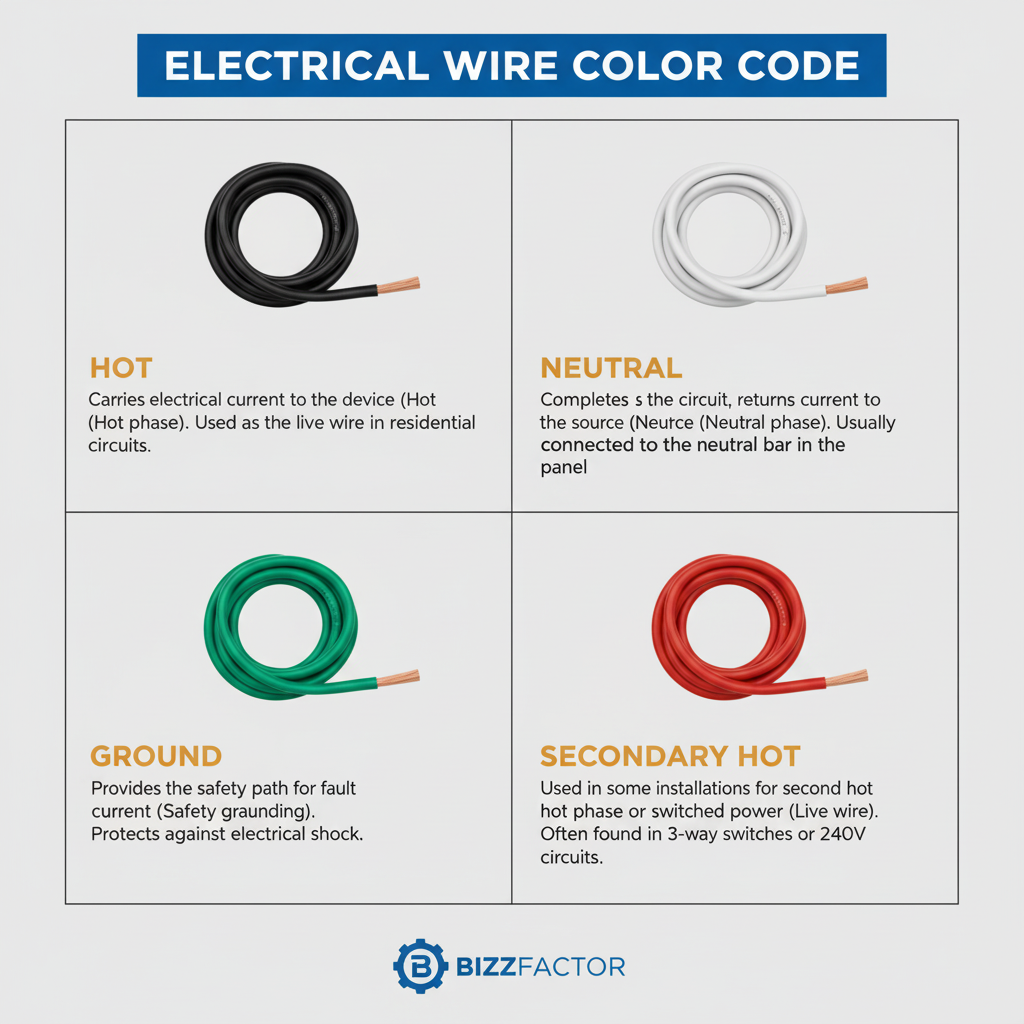
- **Black Wires:** The "hot" wire. Carries live current from your breaker panel to whatever needs power (outlets, lights, appliances). Always energized when the circuit's on.
- **White Wires:** Your neutral conductor. Completes the circuit by carrying unused current back to the panel.
- **Green Wires (or Bare Copper):** The ground. Provides a safety path for fault current so you don't become the path. Absolutely critical for preventing shocks.
- **Red Wires:** Usually a second hot wire for 240V circuits (think electric dryers), switch legs, or interconnected smoke detectors.
- **Blue/Yellow Wires:** More common in commercial work, but you'll occasionally see these in complex residential lighting setups — three-way switches, smart home wiring, that kind of thing.
Key Takeaways
Electrical Wire Color Guide: Safety Tips & NEC Standards for Homeowners
A guy in Buckhead almost burned his house down last year because someone used a white wire as a hot conductor. No warning label. No tape marking. Just a white wire pumping 120 volts into a kitchen outlet that looked completely normal.
That's why wire colors matter.
Look — each color represents a specific job — black typically carries live power, white handles the neutral return path, and green (or bare copper) grounds everything. Mix these up and you're not just breaking code. You're creating conditions for electrical shock, fried appliances, and house fires.
We see this stuff constantly at BizzFactor. Last month, we walked into a kitchen remodel where the previous owner had swapped black and white wires at multiple outlets. The homeowner had no idea they were living with a fire hazard until we tested every circuit during a routine inspection.
Understanding Electrical Wire Colors: The NEC Standard Explained
All electrical wire colors in the U.S. follow National Electrical Code standards. These aren't suggestions — they're a safety system designed to prevent electrocution and fires.
Here's what each color actually does:
- **Black Wires:** The "hot" wire. Carries live current from your breaker panel to whatever needs power (outlets, lights, appliances). Always energized when the circuit's on.
- **White Wires:** Your neutral conductor. Completes the circuit by carrying unused current back to the panel.
- **Green Wires (or Bare Copper):** The ground. Provides a safety path for fault current so you don't become the path. Absolutely critical for preventing shocks.
- **Red Wires:** Usually a second hot wire for 240V circuits (think electric dryers), switch legs, or interconnected smoke detectors.
- **Blue/Yellow Wires:** More common in commercial work, but you'll occasionally see these in complex residential lighting setups — three-way switches, smart home wiring, that kind of thing.
Sounds simple, right?
It's not. Older homes, amateur DIY work, and certain circuit types create all kinds of exceptions. If you're not 100% certain about your wiring, [schedule a BizzFactor electrical inspection](/services/electrical-inspection) before you touch anything.
Why Licensed Electricians Prioritize Wire Color Verification
We test every wire before we work on it. Period.
That's because assuming colors are correct will eventually get someone killed. I've personally opened junction boxes where white wires were carrying live current (switch loops), green grounds had become energized during faults, and "obviously correct" wiring was connected backwards by whoever worked on it last.
The industry rule is simple: trust nothing, verify everything.
Even code-compliant installations can have issues. A white wire in a switch loop legally carries hot current if properly marked — but if the marking's worn off or someone forgot to add it? That's when accidents happen.
Identifying Common Residential Wire Colors
Most modern homes follow the standard color scheme I outlined above. But — and this is crucial — you absolutely can't rely on color alone, especially in:
- Houses built before 1970
- Homes with previous DIY electrical work
- Any situation where you didn't personally install the wiring
Always test. Always.
**Standard Residential Wire Colors:**
1. **Black Wires:** Your primary 120V hot conductor.
2. **White Wires:** Neutral return path.
3. **Green Wires (or Bare Copper):** Equipment ground.
4. **Red Wires:** Secondary hot for 240V circuits, switch legs, or specialized controls.
5. **Blue/Yellow Wires:** Travelers for three-way switches, fan controls, or other multi-switch applications.
Real-World Case Study: Fixing a 1960s Ranch House Rewire Nightmare
We recently rewired a 1960s ranch in East Cobb where the previous owner had done extensive electrical work himself. The entire basement used white wires as hot conductors. No tape. No markings. Nothing.
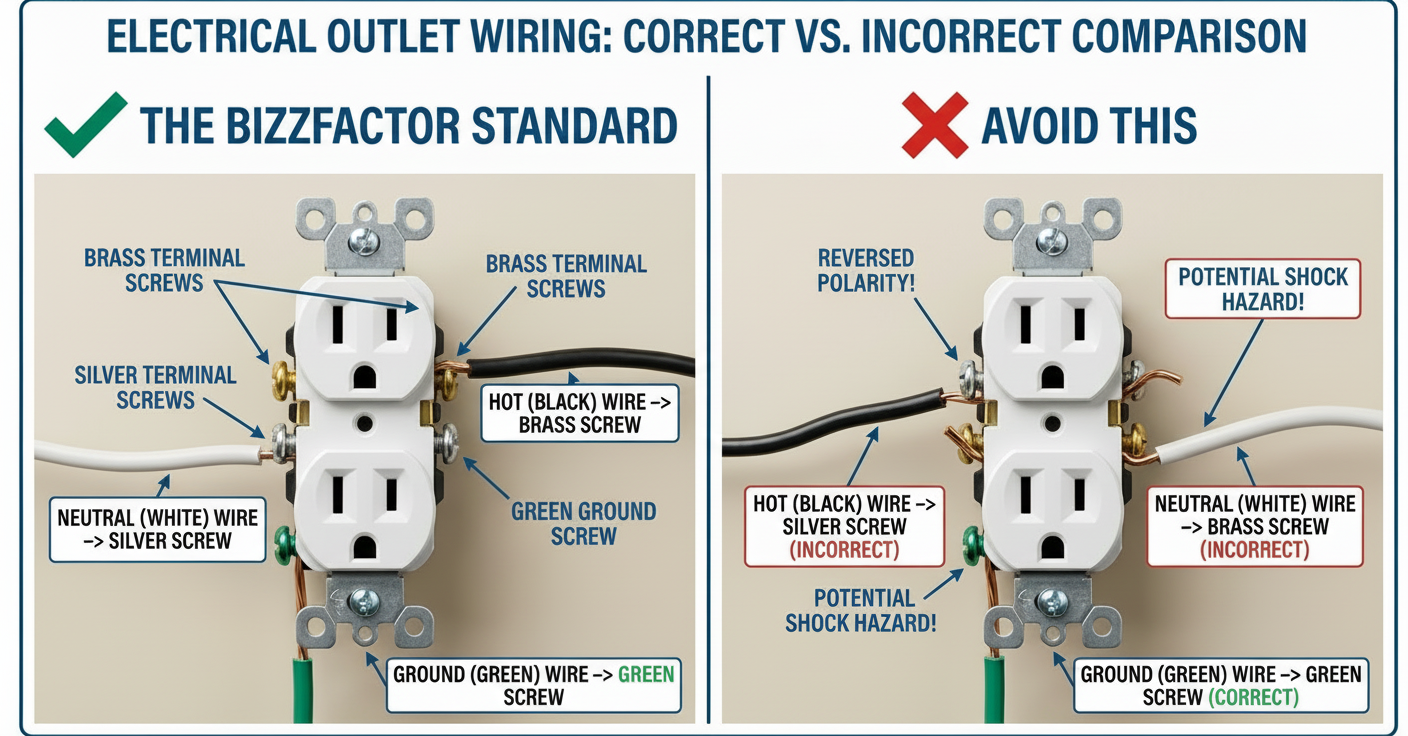
Every single outlet down there had reverse polarity.
You know what that means? Surge protectors don't work. GFCI outlets can't protect you. And anyone working on those circuits would naturally assume the white wire was safe to touch.
It took our team three full days to fix everything. Final bill: $3,200. Compare that to maybe $800 if they'd just hired a licensed electrician the first time. [Learn more about our home rewiring services.](/services/home-rewiring)
The Most Dangerous Wire Color Mistake: Unidentified White Wires
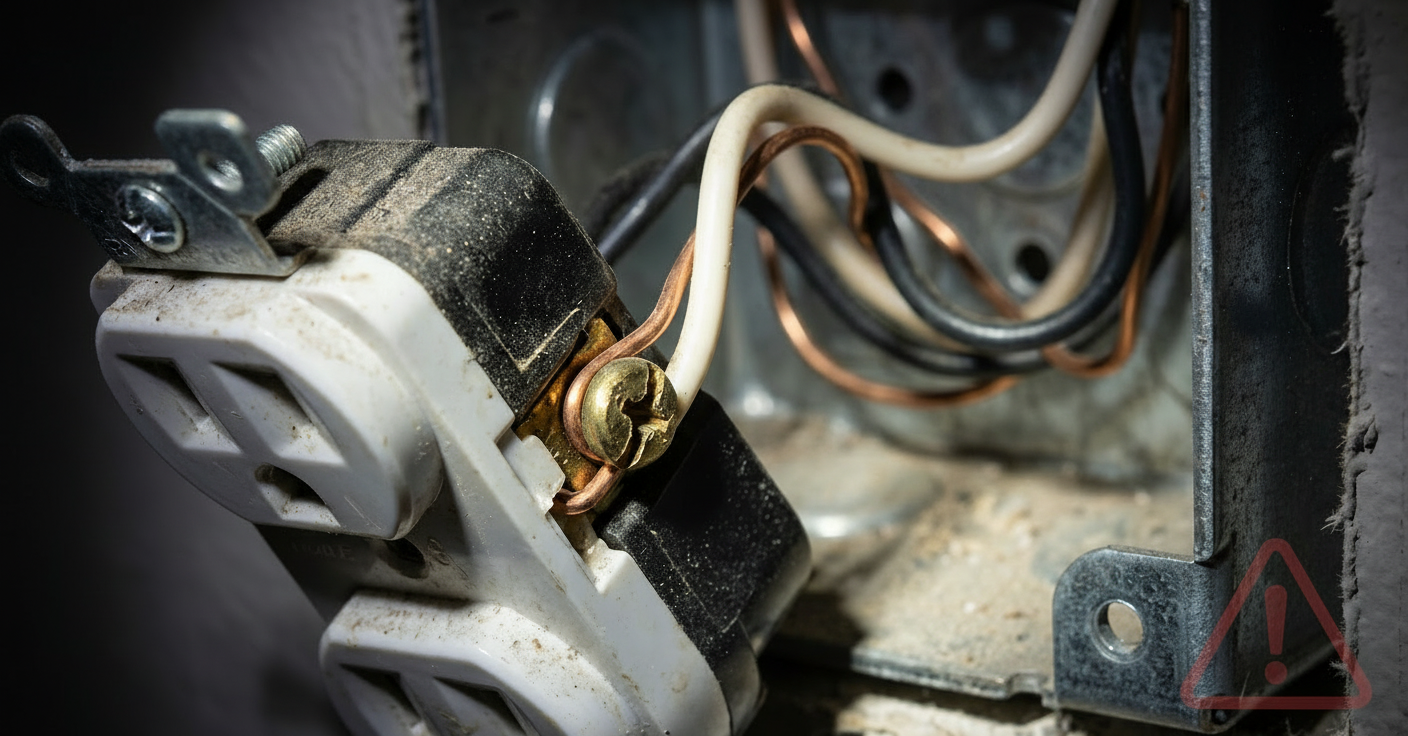
Using a white wire as a hot conductor without re-identifying it (black tape, red tape, permanent marker) is the most common code violation we encounter. It's also one of the deadliest.
Here's what happens: Someone runs out of black wire during a DIY project. They use white instead. They forget to mark it. Ten years later, you're replacing an outlet and grab what looks like a neutral wire.
Except it's pumping 120 volts.
I've responded to two separate incidents where homeowners were hospitalized because of this exact scenario. Both times, the wiring looked completely normal from the outside.
**The Fix:**
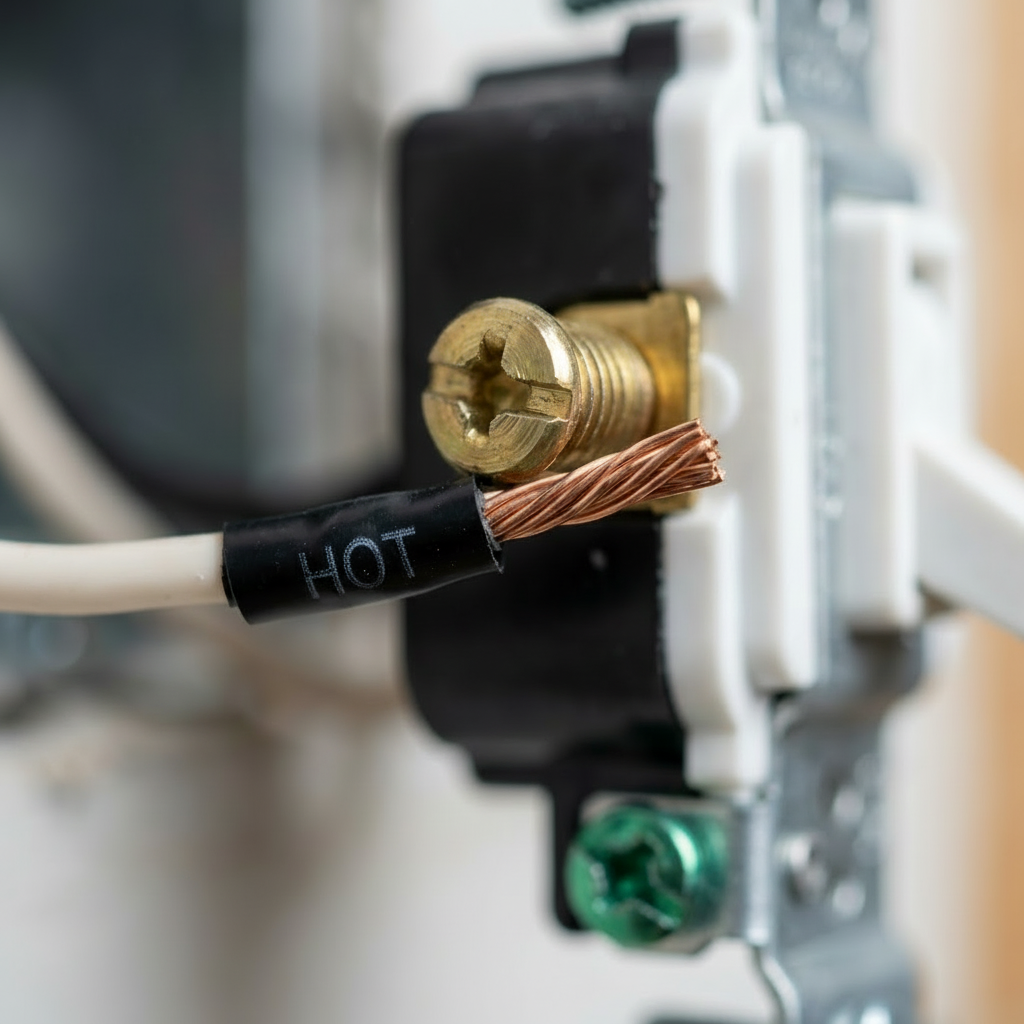
If you *must* use a white wire for hot current (and sometimes that's unavoidable in switch loops), both ends need durable, visible re-identification. We use professional wire markers that won't fade or peel off. Electrical tape works if it's applied correctly, but it degrades over time.
For code-compliant marking techniques, check our guide on [electrical code compliance](/blog/electrical-code-compliance).
How to Safely Test Electrical Wire Colors
Never — and I mean never — assume wire colors are correct based on visual inspection.
I don't care if the insulation looks brand new. Test it.
**Our Testing Protocol:**
1. **Kill the Power:** Flip the breaker. Tag it so nobody turns it back on while you're working.
2. **First Pass:** Use a non-contact voltage tester on every wire in the box. If it beeps, the power's still on.
3. **Confirm with Multimeter:** Test voltage between all wire combinations (black-to-white, black-to-ground, white-to-ground). You should get zero volts on everything.
4. **Test Again Before Touching:** Right before you grab any wire, re-verify it's dead. Breakers can fail. People make mistakes.
5. **Only Then Proceed:** If everything tests dead twice, you're clear to work.
Skipping any of these steps is how electricians end up in the ER.
When to Call Professional Electricians
Call us immediately if you see: weird wire colors that don't match anything standard, multiple colors twisted together randomly, wires that have been painted over, or white wires functioning as hot without identification.
These are giant red flags that someone who didn't know what they were doing worked on your electrical system.
Look — changing a light bulb is fine. Plugging stuff in? Go for it. Anything beyond that? The risk isn't worth it.
**Red Flags That Need Immediate Professional Attention:**
- Wires painted over (obscuring the original color)
- Different colors spliced together in non-standard ways
- White wires carrying hot current without black/red tape
- Cloth-wrapped wiring (common in pre-1940s homes — serious fire hazard)
- Sparking, burning smells, flickering, buzzing, or breakers that trip constantly
The Real Cost of Electrical Wire Color Mistakes: A Costly Lesson
Improper wiring doesn't just risk your safety. It can void your insurance.
We worked with a family whose house burned down due to reversed polarity in a kitchen outlet — $180,000 in damages. Their insurance company investigated, found non-compliant DIY electrical work, and denied the entire claim.
They tried to save $300 by skipping a licensed electrician. They lost everything.
Investing in [professional electrical services](/services) from BizzFactor isn't just about code compliance. It's about protecting your home, your family, and your financial future.
Modern Electrical Codes: Ensuring Your Safety and Compliance
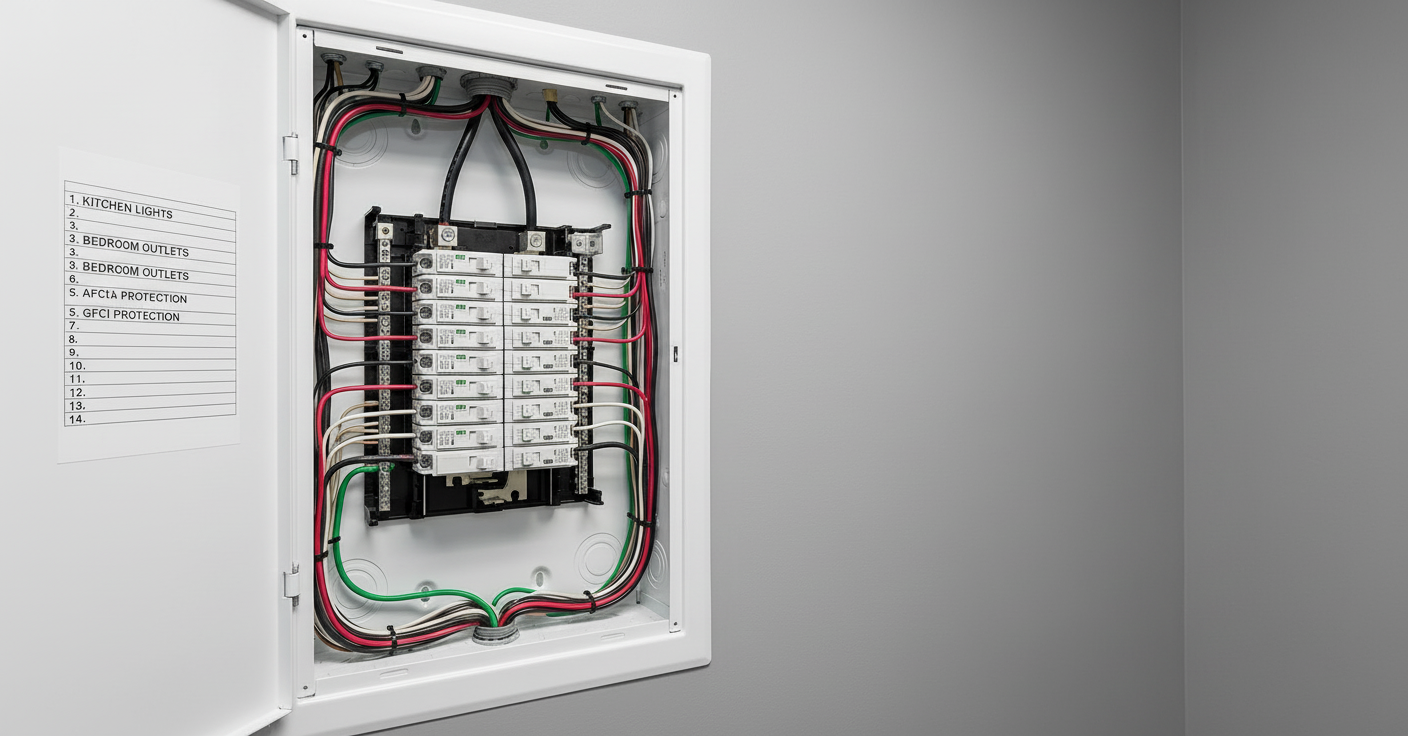
Current NEC standards mandate specific wire colors for each function. This creates consistency nationwide so any electrician (or emergency responder) can walk into your electrical panel and immediately understand what they're looking at.
**Key NEC Requirements:**
- **Grounding Conductors:** Must be green, green with yellow stripe, or bare copper.
- **Neutral Conductors:** Must be white or gray.
- **Hot Conductors:** Can be any color except green, white, or gray (though black and red are standard).
These rules exist because electrical systems need to be predictable. When someone's troubleshooting a fault at 2 AM, they don't have time to trace every wire — they need to trust the color coding.
Local jurisdictions sometimes add requirements beyond the NEC baseline. Before starting any electrical project, verify what's required in your area. BizzFactor stays current on all local amendments so our work passes inspection the first time.
**Compliance protects you legally, too.** If something goes wrong and an investigation reveals code violations, you could face liability issues, insurance problems, or difficulties selling your home.
Don't gamble with electrical work. The code exists for a reason — people died before these standards were written.
In-Depth Look
Detailed illustration of key concepts
Visual Guide
Infographic illustration for this topic
Side-by-Side Comparison
Visual comparison of options and alternatives
Sources & References
- A Guide to Residential Wiring Standards and Best Practices
- Guide to Understanding Wire Color Codes - Creative Safety Supply
- Wiring a House: 5th Edition (For Pros By Pros) - Amazon.com
- Wiring Color Codes - NEC Electrical Standards & 3-Phase
- Wire Color Coding: Improving Electrical Safety, One Wire at a Time
- Building Codes, Standards, and Regulations: Frequently Asked ...
- Building Codes and Standards - 101 Guide | ROCKWOOL Blog
- [PDF] Building Codes Toolkit for Homeowners and Occupants - FEMA
- Amazon Best Sellers: Best Architectural Codes & Standards
- ICC - International Code Council - ICC
Frequently Asked Questions
Need Professional Help?
Find top-rated electrical experts in your area