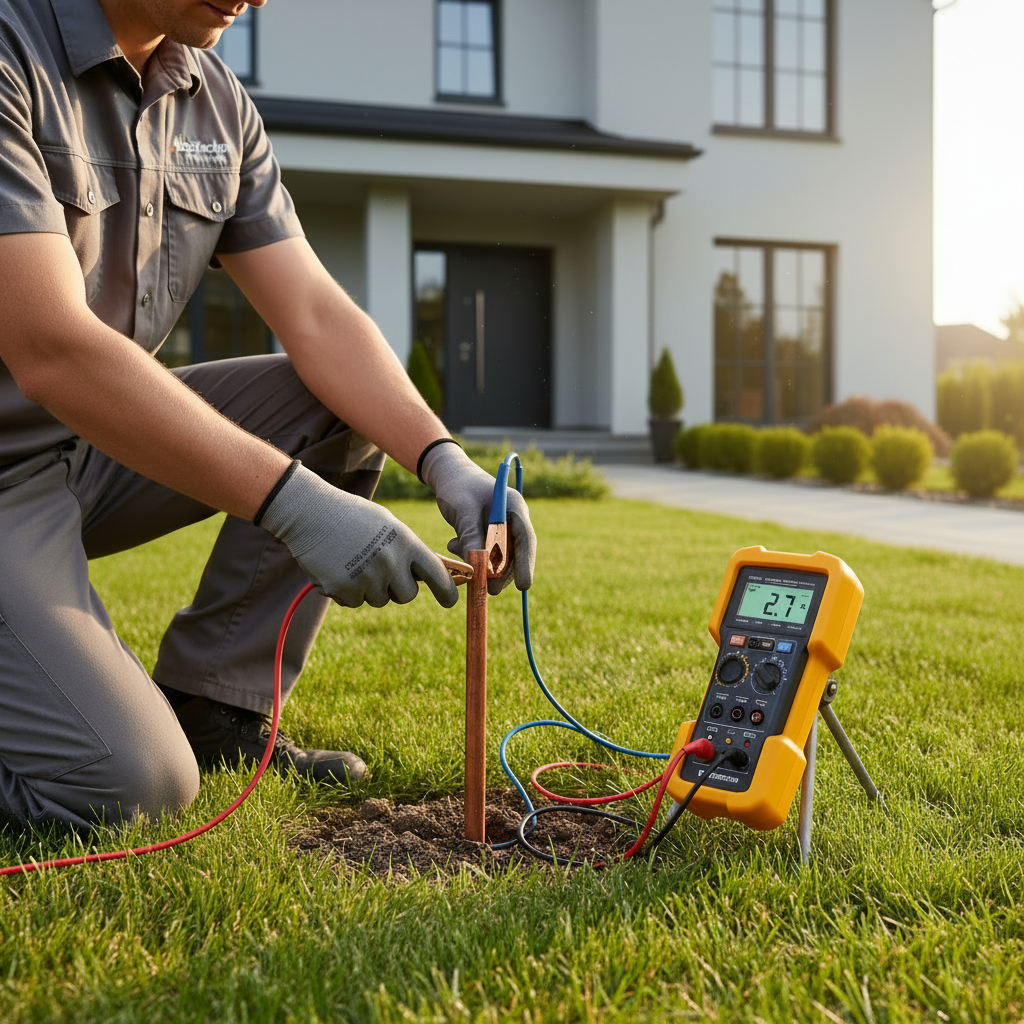
Protect your home from electrical hazards with a comprehensive grounding check. Learn why grounding is crucial and how to prevent dangerous shocks. Get expert tips!
Key Takeaways
- After any flood or major storm
- After plumbing work, especially if they replaced copper pipes with PEX
- Before buying any home (seriously, make this part of your inspection)
- When installing high-draw appliances like EV chargers or hot tubs
- If anyone in the house has felt electrical tingling sensations
Key Takeaways
Electrical Grounding Check: Your Home's Shock Shield Guide
You know that copper rod sticking out of the ground near your meter? Most people walk past it every day without a second thought. But that simple rod — plus everything it connects to inside your walls — is the only thing standing between your family and a fatal electrical shock.
An electrical grounding check confirms this safety system actually works. We test the pathway that diverts stray electricity into the earth before it can flow through you. When it's working right, it prevents shocks and makes sure your GFCIs (those outlets with the test buttons) can do their job.
What's Electrical Grounding and Why Does It Matter?
Think of grounding like a pressure relief valve for electricity. Whenever there's a fault — loose wire, damaged insulation, water getting where it shouldn't — those rogue electrons need somewhere to go. The Electrical Safety Foundation International tracks this stuff, and they figure properly maintained grounding systems prevent over 200 electrocution deaths every year in U.S. homes.
Here's a scenario that'll make your skin crawl: without proper grounding, the metal casing of your dishwasher becomes a shock hazard. If a wire comes loose inside, where does that electricity go? With a working ground, it goes safely into the earth.
Without it? You become the ground.
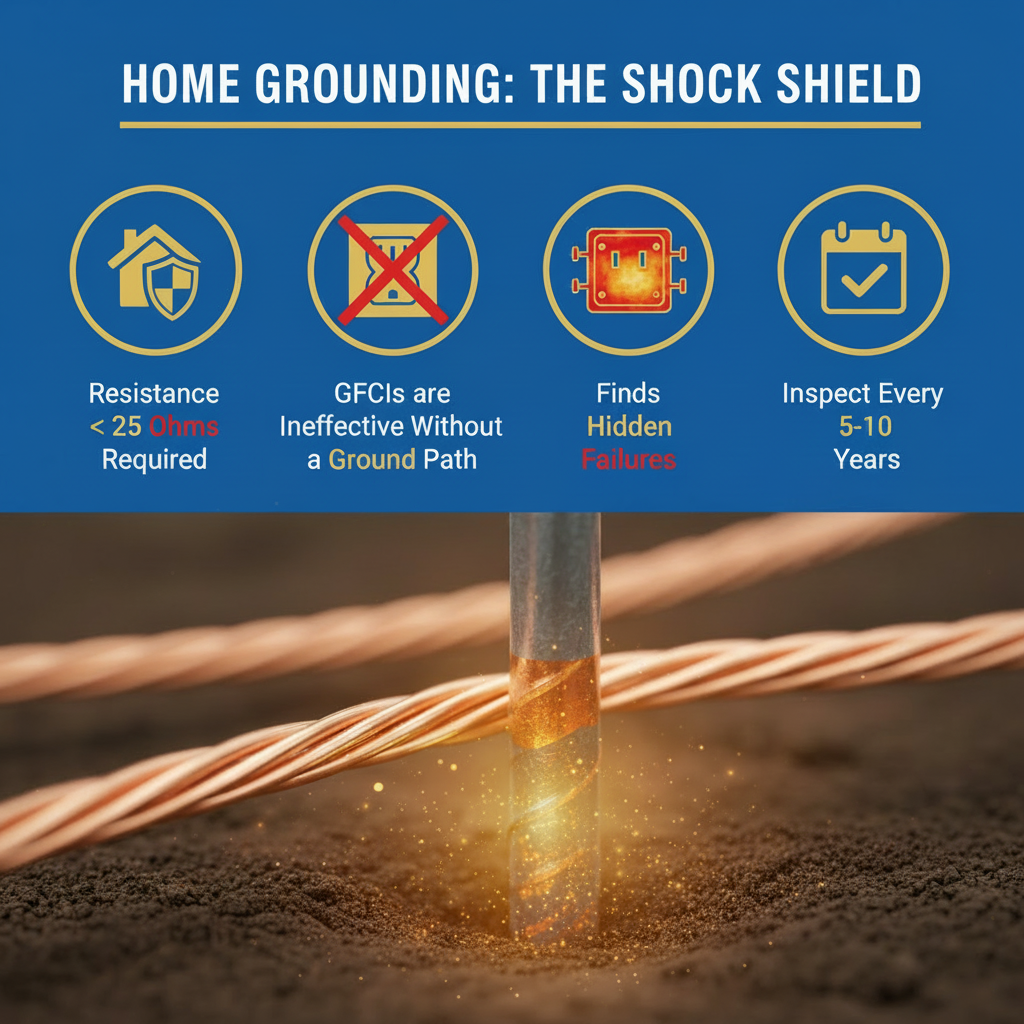
Here's what nobody tells you at the hardware store: those fancy GFCI outlets you paid extra for? Useless without a functional ground. They're built to detect current leaking to ground — if there's no ground path in the first place, they're basically decorative. So you've got those safety outlets, but they're not actually protecting anyone. For more on how GFCIs work, see our article on [GFCI Outlet Installation](article-link-to-gfci-installation).
⚠️ The Critical Mistake Most Professionals Overlook
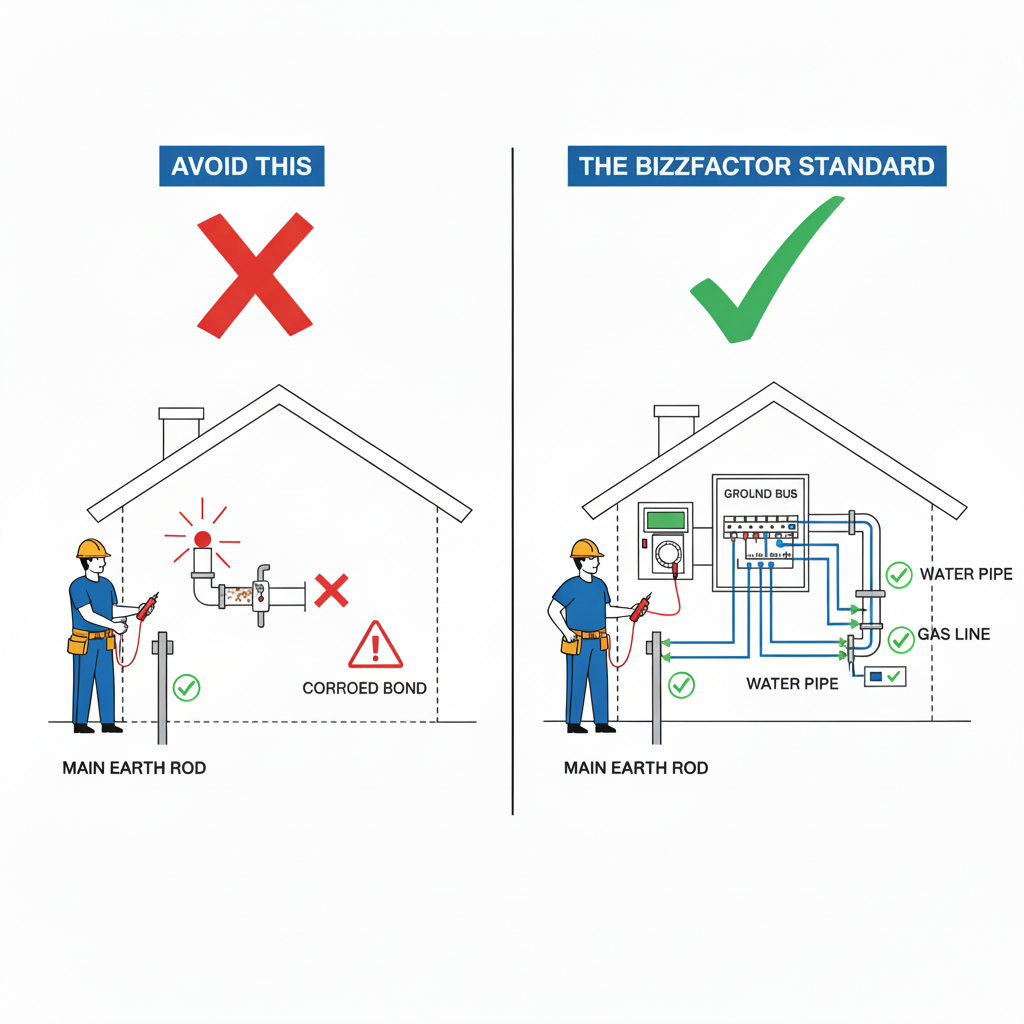
Some electricians just test the main ground rod and call it a day. Sure, your rod might measure 15 ohms (that's good), but it doesn't tell the whole story.
That's the real issue.
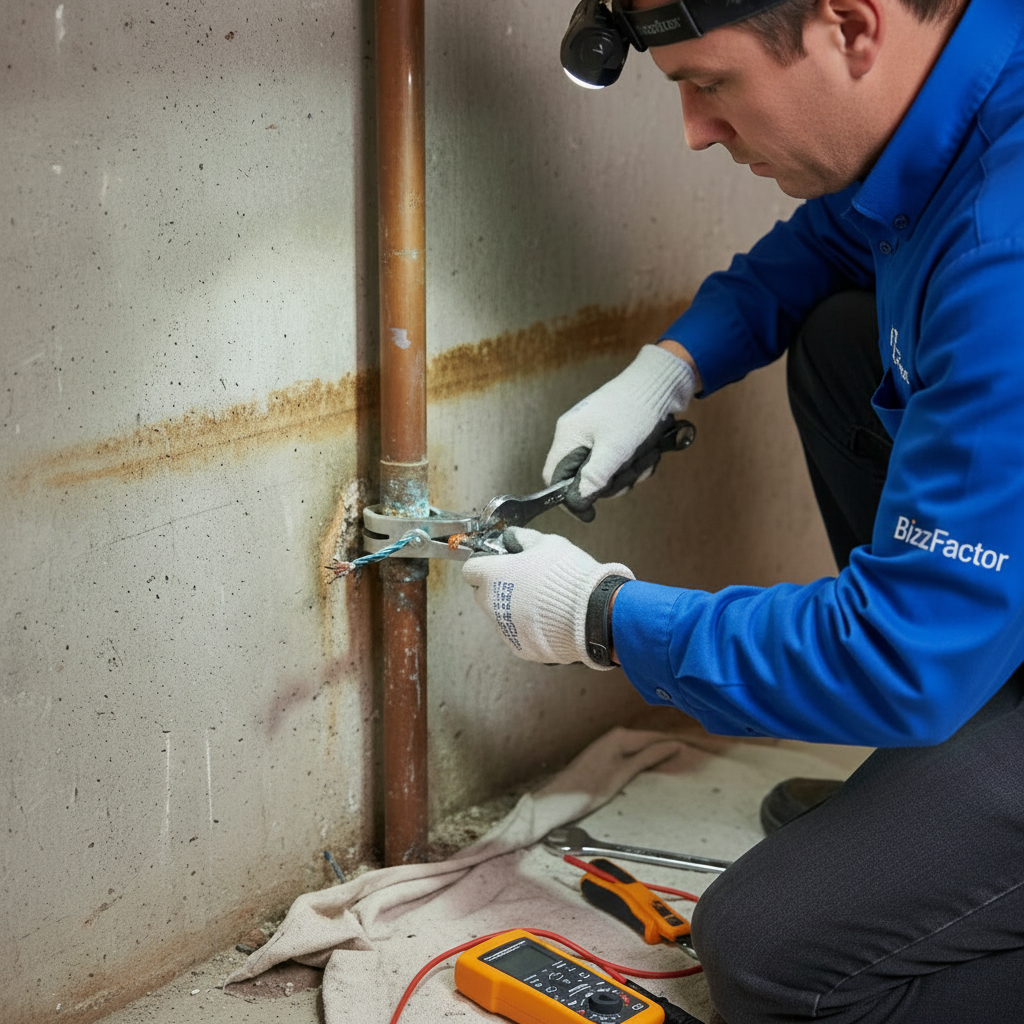
Look — look — what about the bonding wires connected to your water pipes and gas lines? I've seen countless homes where the ground rod passed with flying colors, but corroded connections on the plumbing meant the entire piping system was electrified. Touch the wrong faucet and you're in serious danger.
Last month in Decatur, we found a house where the ground rod tested perfectly — 12 ohms, textbook numbers. But there was a loose wire tucked behind the water heater. Just touching that appliance could've killed someone. The homeowner had been getting minor shocks for weeks and assumed it was static.
Always insist on continuity testing that checks ALL the bonded metal systems in your house. Our comprehensive [electrical safety audits](article-link-to-safety-audits) include these checks because we've seen what happens when they're skipped.
Our Team's Honest Recommendation for Homeowners
Don't waste money on those $20 outlet testers from Home Depot. The Klein or DeWalt plug-in testers? They're basically toys. They'll tell you if you have *a* ground, but they won't tell you if it's actually *effective*.
Seriously.
For actual useful information, download the free inspection checklist from Electrical Safety First. (We're not affiliated with them — we just respect their work.) Knowing what questions to ask when you hire an electrician is worth way more than any gadget.
The Hidden Truth Behind Residential Grounding Failures
Most people focus on that visible copper rod in the yard. Makes sense — you can see it, so you assume it's either working or not.
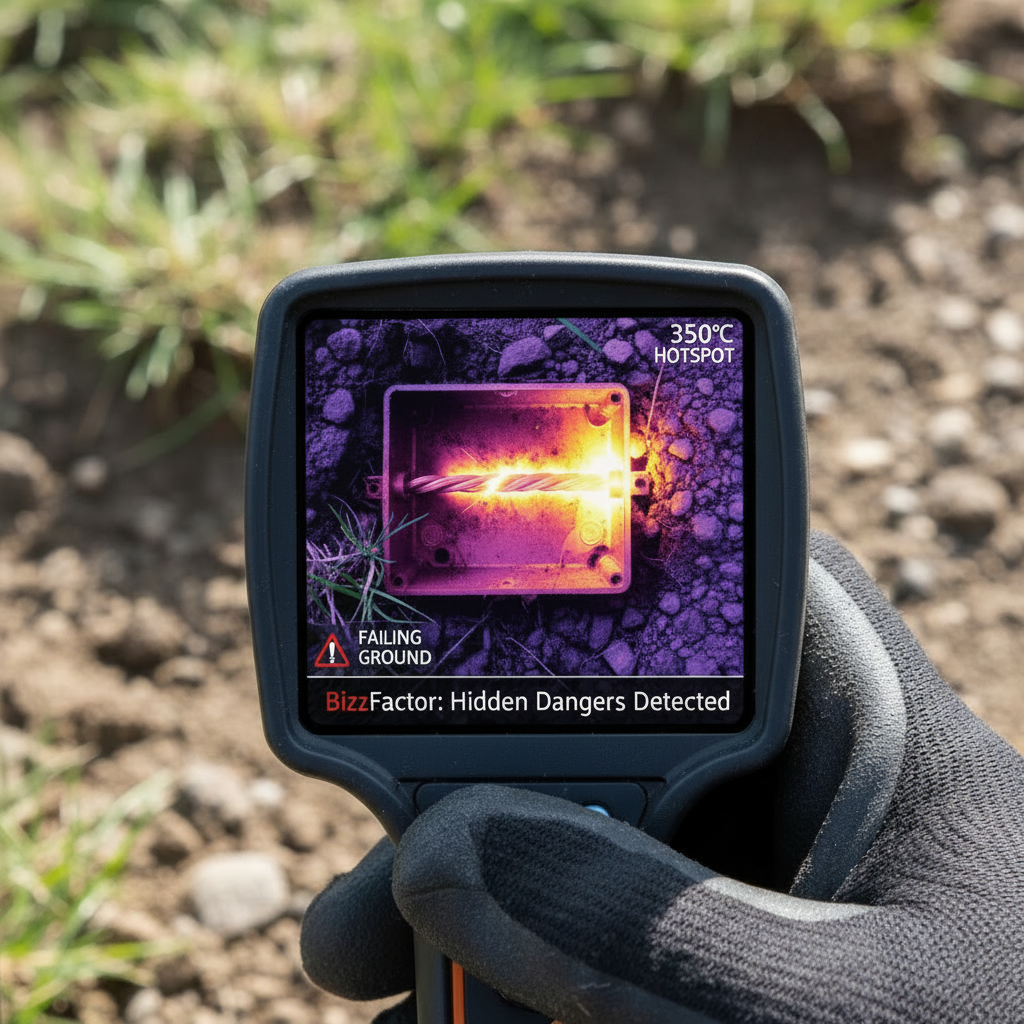
But the real failures happen in buried junction boxes and hidden connections where ground wires vibrate loose or corrode over 20-30 years. We use thermal imaging cameras to find these "hot spots" before they become disasters. A connection that's failing creates heat — it shows up on our camera as a bright spot even though you can't see anything wrong with your eyes.
Ever touch a metal appliance and feel a tingle? That's not static electricity. That's a ground fault trying to kill you.
Don't ignore it.
How Often Should You Schedule a Professional Electrical Grounding Inspection?
Depends on your house. Newer construction from the '90s or later? Usually every **5-10 years** is fine. Older homes with original wiring from the '60s or '70s need checking every **3-5 years** — sooner if you're in an area with acidic soil or constant moisture.
Here's the thing: ground systems don't last forever. NIST published research showing degradation starts kicking in around the 15-year mark. Climate and soil chemistry can speed that up or slow it down.
So when should you actually pick up the phone? Based on 20+ years in metro Atlanta crawl spaces:
- After any flood or major storm
- After plumbing work, especially if they replaced copper pipes with PEX
- Before buying any home (seriously, make this part of your inspection)
- When installing high-draw appliances like EV chargers or hot tubs
- If anyone in the house has felt electrical tingling sensations
Warning Signs Your Grounding System Needs Immediate Professional Attention
Watch for these red flags. **Never try to test these yourself.** Call us immediately.
**Tingling Sensations:** Any buzz or shock when touching metal appliances, plumbing, or damp concrete means there's voltage where it shouldn't be. **Stop using those appliances.**
**Frequent GFCI Tripping:** If your GFCIs keep tripping, they're detecting ground faults your system can't handle properly. This means your grounding isn't doing its job. Learn more about [troubleshooting common electrical problems](article-link-to-troubleshooting-electrical-problems).
**Visible Corrosion on Ground Components:** Check the clamp where the wire connects to your ground rod. Heavy rust here means you basically don't have a ground connection anymore.
**Flickering or Dimming Lights (Beyond Simple Bulb Issues):** Could be lots of things, but a compromised ground can cause voltage instability throughout your whole electrical system.
What scares me most? These symptoms develop slowly. People get used to minor shocks or occasional flickers. They assume it's normal.
It's not normal.
Real-World Case Study: The Hidden Plumbing Danger
A couple in Roswell called us after the wife got shocked touching their dishwasher. Not a big shock — just a tingle. Most people make their first mistake right here: they ignore it.
Here's what we found: their 1985 ranch used the metal water pipes as the ground path. Totally legal back then, dangerous as hell now. When a plumber installed PEX tubing (plastic, doesn't conduct), he cut the electrical ground connection without realizing it.
Our Fluke 1630-2 FC Earth Ground tester read 220 ohms. Safe limit according to NEC? 25 ohms.
This family was living in a death trap.
**The fix:** We installed a new 8-foot copper-clad ground rod, ran dedicated grounding conductors, bonded everything properly, and retested. New reading: 16 ohms. Total cost: $480.
What's that family's lives worth? A hell of a lot more than $480.
This is why we always say: one contractor's innocent repair (in this case, plumbing) can create a lethal electrical hazard if they don't understand how the systems interact.
Why Professional Testing Beats DIY Every Single Time
I'm gonna be blunt here: wiggling some wires and saying "looks good" isn't a grounding test. We're measuring actual resistance — documented numbers that prove your system works or prove it doesn't. There's no middle ground (pun absolutely intended).
Last week a guy in Sandy Springs showed me his "inspection report" from another company. Two paragraphs. No measurements. Just "all connections appear secure." That's not an inspection — that's someone collecting a check and hoping nothing goes wrong before they're out of town.
Here's what a real test looks like:
1. **Visual Assessment:** We check your main grounding electrode conductor, inspect the condition of ground rods, look for corrosion on bonding clamps, and verify panel connections meet current NEC standards. For more on code compliance, check our [NEC compliance guide](article-link-to-nec-compliance).
2. **Resistance Testing:** Using calibrated Fluke meters (not Harbor Freight specials), we measure actual earth resistance values. In grounding, the numbers either pass or fail — there's no gray area.
3. **Continuity Verification:** We test every single outlet in your house with professional circuit analyzers. This ensures the ground path works everywhere, not just at the panel.
4. **Safety Device Testing:** We verify GFCIs and AFCIs trip at the right amperage and timing, exactly as the manufacturer specifies.
Why does this matter? Because a guy with a $30 tester from Amazon can't tell you what we can with $3,000+ worth of calibrated diagnostic equipment.
Don't accept a "quick look" when your family's safety is on the line.
What's peace of mind worth to you?
In-Depth Look
Detailed illustration of key concepts
Visual Guide
Infographic illustration for this topic
Side-by-Side Comparison
Visual comparison of options and alternatives
Sources & References
- Mastering Earth Ground Testing: A Visual Guide for Contractors | Fluke
- Complete Guide to Earthing Installation for Safe Electrical Systems
- 9 Recommended Practices for Grounding
- Ultimate Guide to Earthing and Lightning Protection System Testing
- Best Tool Brand for Electricians 2025: Expert Rankings - Wood Guide
- Top 20 Essential Electrician Tools for Pros (2026 List) - Workiz
- Best Electrician Tools Brand Guide
- Essential 2025 Electrician Tools & Safety Warnings (New & Pro Tips!)
- 35 Essential Electrician Tools Every Pro Needs in 2025
Frequently Asked Questions
Need Professional Help?
Find top-rated electricians experts in your area