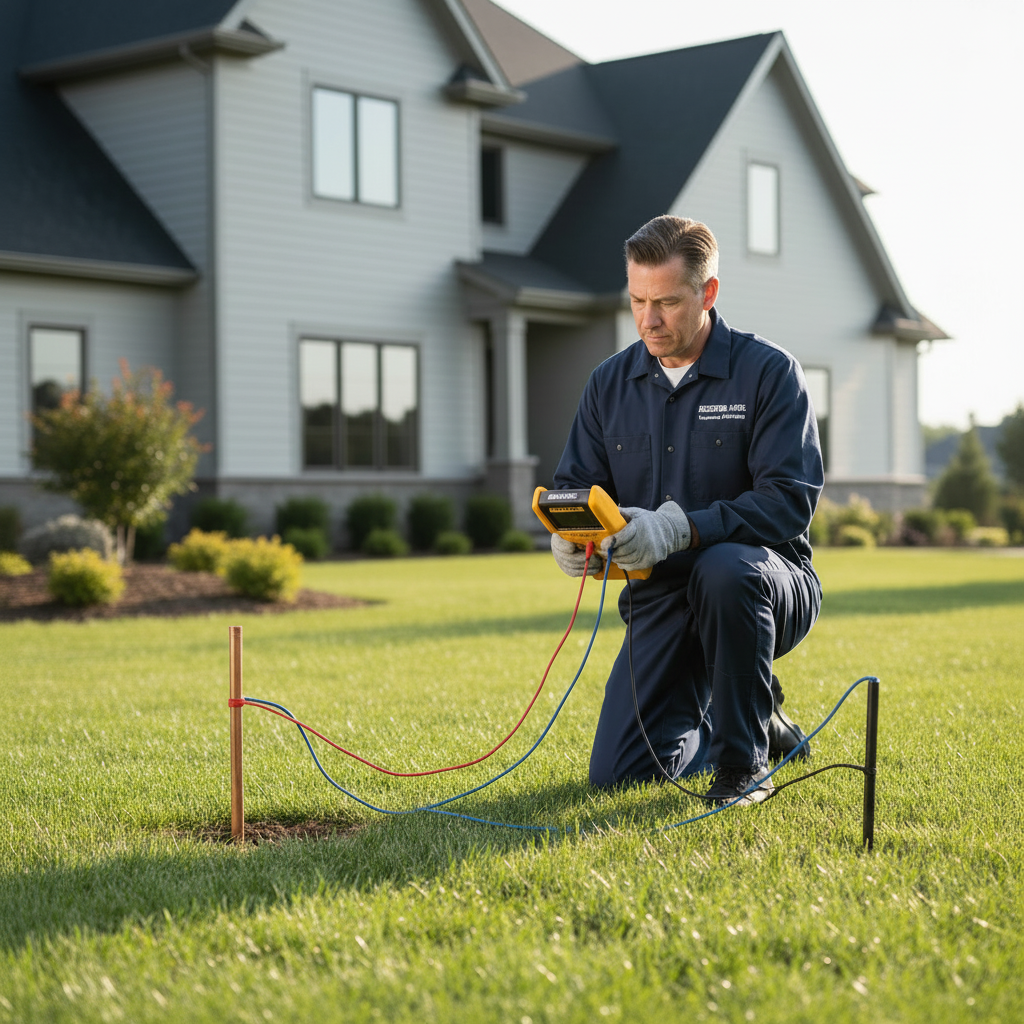
Is your home safe from shocks? Our licensed electricians explain when you need a grounding test, what it costs, and why it's a must-have for home safety.
Key Takeaways
- Not a little tingle — full 120V coursing through him because some hack had never connected the ground wire twenty years ago
- That's what we're talking about here
- An electrical grounding test confirms your home's system can actually shunt dangerous fault currents into the earth instead of through you
- Without a working ground, you're one short circuit away from disaster
Key Takeaways
Electrical Grounding Test: Your Essential Pro Safety Guide
A buddy of mine in Chandler touched his washing machine during a load and got knocked flat on his ass. Not a little tingle — full 120V coursing through him because some hack had never connected the ground wire twenty years ago. That's what we're talking about here.
An electrical grounding test confirms your home's system can actually shunt dangerous fault currents into the earth instead of through you. Without a working ground, you're one short circuit away from disaster. Severe shocks. Electrocution. House fires that start in the walls where you can't see them.
Look — think of your grounding system as the emergency exit for electricity that's gone rogue. When it works, bad stuff gets routed safely into the dirt. When it doesn't? That current finds another path. Maybe your refrigerator case. Maybe your kid grabbing a doorknob.
One contractor I know in Phoenix told me, "It's the stuff you *don't* see that keeps me up at night, especially in older homes." He's right. Most people have no idea their ground is compromised until something terrible happens.
Understanding the Electrical Grounding System: What it's and Why It's Crucial
Look — stray electricity needs somewhere safe to go. Your grounding system gives it that path, straight into the earth, away from you and your stuff.
That's it. No fancy explanation needed.
It protects your family and all those expensive electronics (the latest smart TV, your trusty refrigerator, that gaming PC your kid won't shut up about).
So here's the basic setup. Your electrical panel has three wires doing different jobs. The hot wire — that's bringing power in from the utility. Could be black or red, usually 120V or 240V depending on the circuit. The neutral wire completes the circuit, sends current back. And the ground wire? That's your safety net. Usually green or bare copper, typically 10 AWG to 4 AWG depending on what it's protecting. It's not decorative. This thing diverts hazardous electrical surges away from your living spaces and — more crucially — from *you*.
Real talk — it doesn't work alone. GFCIs (those outlets with the test/reset buttons) and AFCI breakers add layers of protection, sure. But a strong ground is the foundation. Everything else is just backup.
Here's the thing: a working ground sends fault currents harmlessly into the earth. A compromised ground? That current finds another path. Maybe through a person. Maybe it starts a fire. You don't want to be the conductor. Period.
The National Electrical Code (NEC) Article 250 goes on for *pages* about grounding requirements for a reason — these aren't suggestions, they're mandatory safety protocols.
⚠️ Critical Flaws in Common Grounding Practices and Why They're Dangerous
Most DIY videos and (I'm just gonna say it) too many contractors will tell you one ground rod is fine.
It's not. Not even close.
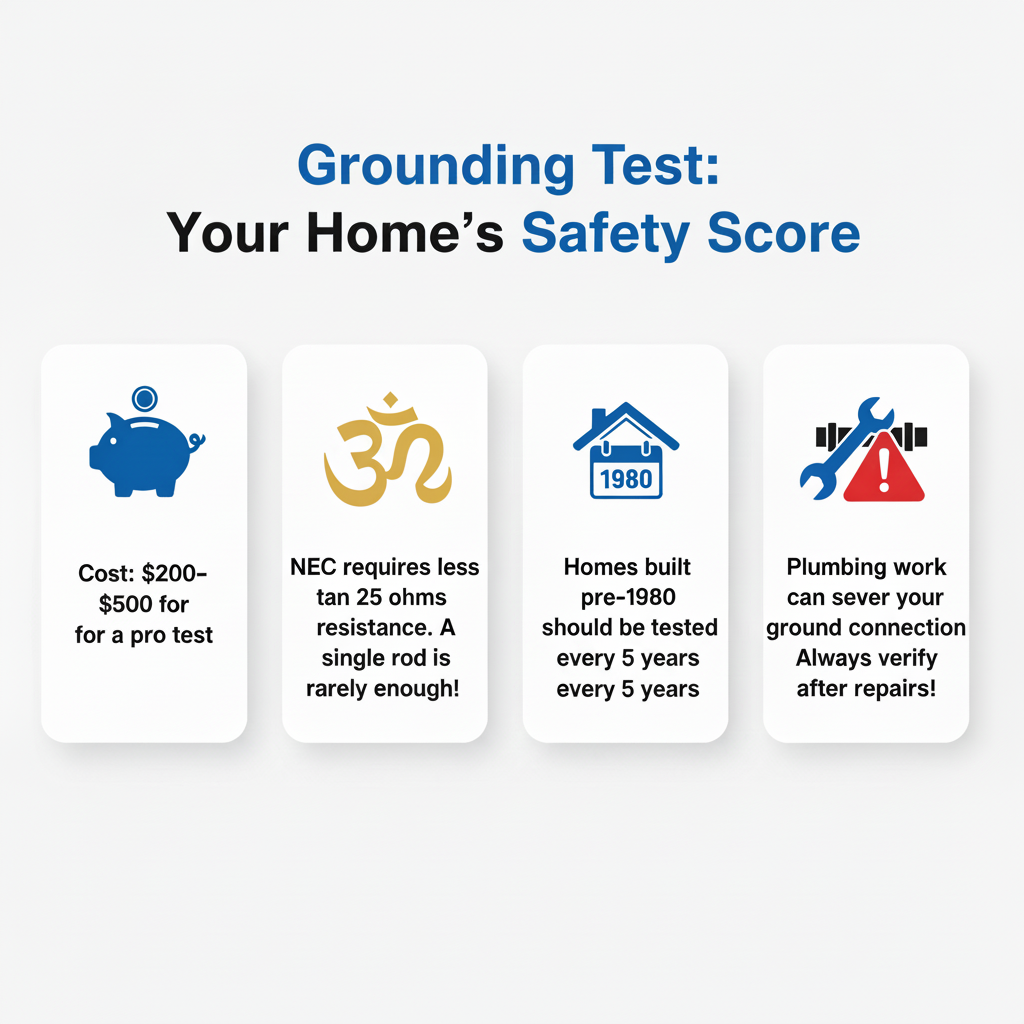
The NEC requires 25 ohms or less resistance (Article 250.56), and you're not hitting that with a single rod — especially not in dry or rocky soil.
I watched a guy in Scottsdale spend $1,800 fixing shock issues because his builder drove in one rod fifteen years ago and called it good. Desert soil, rock-hard caliche underneath. That rod was basically decorative. Measured at 87 ohms. Useless.
And here's what kills me — electricians who skip the resistance test entirely. They see a wire clamped to a rod and assume it's working. Connection doesn't equal protection. You need actual measurements. You need someone who'll test it properly and add a second (or third) rod if the first one doesn't cut it.
Your family's not a guinea pig for someone's shortcut. Always insist on a resistance test with real equipment.
Our Recommended Professional Grounding Test Equipment: The Gold Standard
We use Fluke equipment for ground resistance testing. Always have. There's a reason.
Klein Tools and Milwaukee make excellent multimeters for basic continuity checks — they'll tell you if a wire's connected, sure. But that's not the same thing as measuring whether it's *safely* grounded. A multimeter says electricity can flow. A Fluke unit tells you if it can flow safely, with precision measurements in ohms.
The Fluke 1621 GEO Earth Ground Tester — this thing does a proper three-point fall-of-potential test, not just some beep test. You get actual ground resistance readings accurate to 0.1 Ohm. That's what you need for NEC 250.56 compliance. A continuity tester shows you a wire exists. Fluke verifies it'll actually save your life when things go sideways.
Don't cheap out on the tools, we always say. Your safety deserves precision.
Here's how the three-point method works (sometimes called the '61.8% method' because of where you place the probes): You drive two test stakes into the ground at specific distances from the electrode you're testing. The current probe (C2) and potential probe (P2) create a measurement zone that avoids the resistance areas right near the electrode itself and near the auxiliary current stake. What you get is a true earth resistance reading you can actually trust, not some half-assed approximation. Lesser methods just don't cut it. Accurate data gives you confidence — or tells you exactly how screwed you're, which is also valuable information.
The Overlooked Grounding Electrode: Your Home's Metal Water Pipe
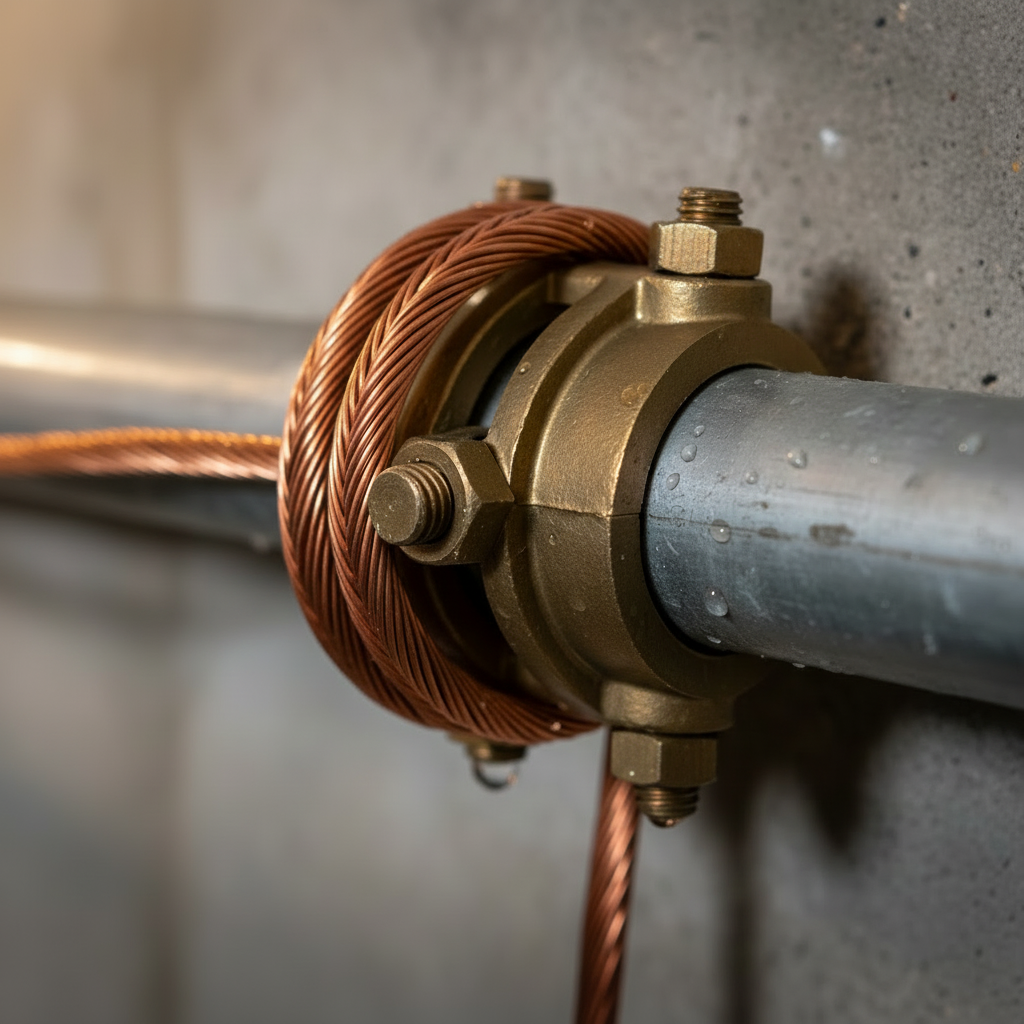
Beyond those 8-foot ground rods (usually 5/8-inch copper-clad steel), there's something most homeowners forget about: the metal water pipe grounding connection.
And plumbers accidentally kill this connection all the time.
What happens is this — guy comes in to replace your water heater, installs a section of PEX, or puts in a water softener. He's focused on plumbing. Not electrical. He doesn't realize (or doesn't care) that he just cut the ground path by introducing a plastic section or not bonding around new equipment.
We got called to a house in Phoenix where the homeowner was getting shocked by her kitchen faucet. Every time. Turns out a plumber had replaced a section of copper with PEX twenty years ago during a remodel, and nobody ever reconnected the #4 AWG ground wire that was supposed to clamp to the metal water service pipe before it enters the street (NEC Table 250.66 for 200A service).
After any plumbing work — water heater, softener, repiping, whatever — check that thick copper ground wire. Make sure it's still clamped tight to the metal water pipe with an approved clamp. Should be before the pipe goes underground. If it's loose or gone? Get an electrician out there immediately. Learn more about the components of a comprehensive grounding system in our [Electrical Panel Upgrades Guide](link-to-electrical-panel-upgrades). This five-minute check could prevent a fatal shock.
Why Professional Grounding Systems Are Indispensable for Home Safety
Nobody thinks about their ground. It just sits there. Doing nothing, supposedly.
Until an appliance shorts out.
Now, then it's the only thing standing between you and 120 volts looking for the fastest path to earth. If your ground's working? That fault current takes the ground wire — low resistance, straight shot to earth — and trips the breaker in milliseconds. Power cuts. Crisis averted. If your ground's compromised or missing? That current goes through whatever it touches next. Maybe a metal appliance case. Maybe a person.
Here's the thing: i'm not exaggerating this. We've seen washing machines, dryers, and refrigerators become "hot" — carrying live current on their metal exteriors — because the ground wire corroded off or was never connected properly. A guy in Mesa thought his washing machine was giving him static shocks every time he touched it during the spin cycle.
Wasn't static. It was 120V. The ground wire had rusted off at the connection point years ago.
NFPA 70 (the National Electrical Code) spells this out in Section 250.4(A)(5) — you need an effective ground-fault current path. Not a theoretical one. Not a "close enough" one. An actual, tested, verified path that'll handle fault current when (not if) something goes wrong. For further reading, see our article on [Circuit Breaker Safety](link-to-circuit-breaker-safety). Without it, you're operating outside code and outside any reasonable definition of safety.
When Is an Electrical Grounding Test Absolutely Necessary?
Get your grounding tested before buying any home — especially older properties built before modern electrical codes kicked in. Lots of homes from the 1960s and earlier had two-prong ungrounded outlets (big red flag). That's the real issue. We also recommend a test after any significant renovation, especially plumbing work. And if you notice warning signs? Don't wait.
Frequent breaker trips? That's not normal.
Scorched or warm outlets? That's a burn hazard waiting to happen.
Shocks or "tingles" from appliances or plumbing fixtures? Stop using them immediately. These aren't minor inconveniences. They're emergencies.
So yeah, you need a professional inspection in these situations:
**Home Purchases:** Older homes — we're talking pre-1970s especially — frequently have outdated or flat-out missing grounding systems. You inherit the previous owner's electrical problems, good or bad. I know a buyer in Tempe who walked away from what seemed like a steal because the inspection revealed the entire house had ungrounded knob-and-tube wiring. Would've cost $18,000 to rewire. Get it checked before you sign.
**Post-Renovations:** Kitchen or bathroom remodels move circuits around, and plumbers swap metal pipes for PEX without thinking about electrical consequences. We see severed ground connections after renovations constantly. Always verify after major work. It's a common oversight that could cost you way more than the inspection fee.
**Lightning-Prone Regions:** Living in Florida? Coastal Texas? Parts of the Midwest with summer storms? Your ground system channels massive current from lightning strikes — either direct hits or induced surges from nearby strikes. That's a hell of a workout. Get it tested every few years, especially if you've got a dedicated lightning protection system (which needs its own robust grounding). Strong storms demand strong grounds, and cumulative damage is real.
**Installing Major Appliances:** Hot tub? That's a dedicated 50A circuit. EV charger? Could be 80A. Heavy workshop equipment like a welder? These high-amperage loads create huge fault current potential if something goes wrong. Test your ground *before* you fire up your new toy. A $200 ground test is a lot cheaper than explaining to your insurance company why your garage burned down.
**Visible Electrical Issues:** Flickering lights (especially when appliances turn on), buzzing outlets, burned receptacles, warm switch plates — these aren't quirks. They're symptoms. Get a professional out there now. Your home is telling you something's wrong, and ignoring electrical warnings has a way of escalating from annoying to catastrophic real fast.
In-Depth Look
Detailed illustration of key concepts
Visual Guide
Infographic illustration for this topic
Side-by-Side Comparison
Visual comparison of options and alternatives

Sources & References
- Mastering Earth Ground Testing: A Visual Guide for Contractors | Fluke
- Understanding Grounding of Electrical Systems | NFPA
- 9 Recommended Practices for Grounding
- Grounding - Safety Fundamentals (1hr:13min:19sec) - YouTube
- Best Tool Brand for Electricians 2025: Expert Rankings - Wood Guide
- Best Electrician Tools Brand Guide
- Top 15 Essential Electrician Tools for Pros - 2025 List - Workiz
- Essential Electrician Tools List For 2025: Guide - Contractor Plus
- Essential 2025 Electrician Tools & Safety Warnings (New & Pro Tips!)
Frequently Asked Questions
Need Professional Help?
Find top-rated electricians experts in your area