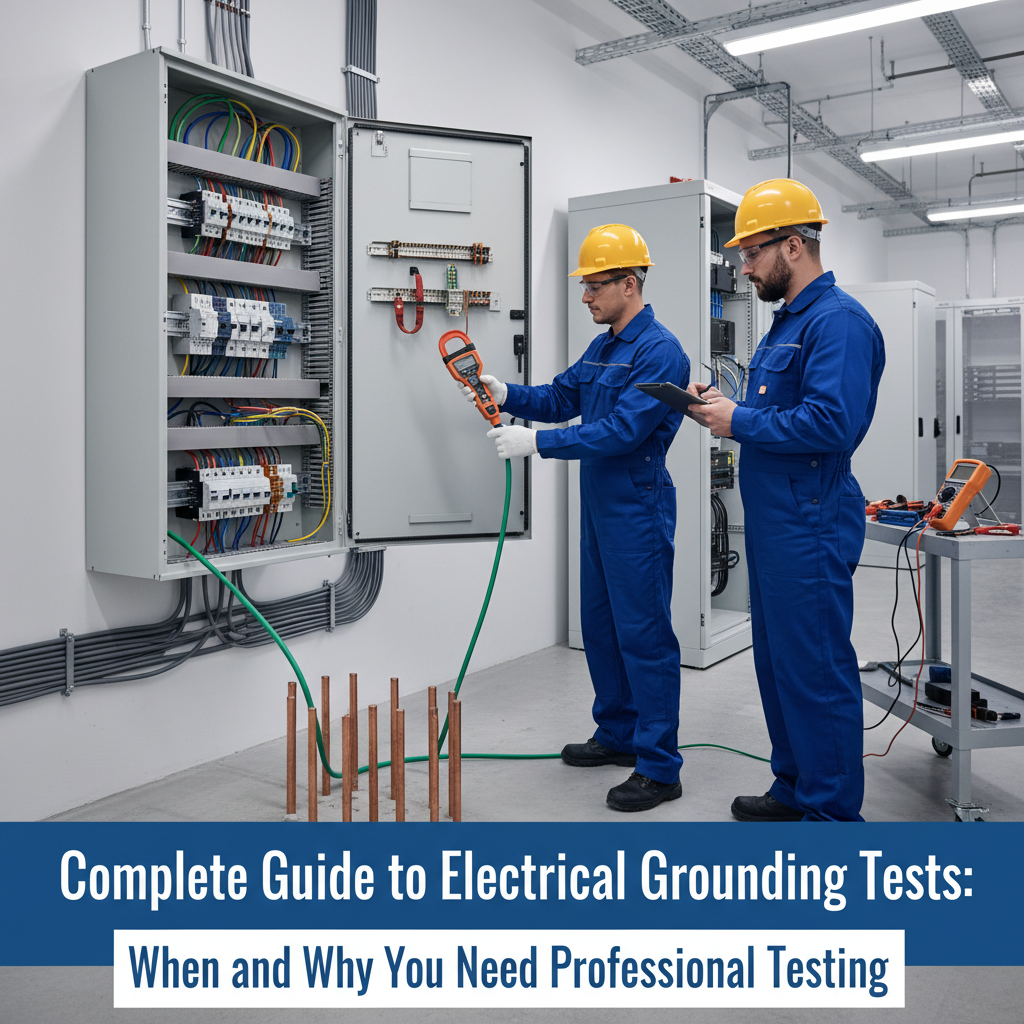
Learn when you need professional electrical grounding tests, what to expect during testing, and how to identify warning signs requiring immediate evaluation.
Key Takeaways
- Professional grounding tests verify your home's electrical safety systems function properly using specialized testing equipment
- Warning signs like appliance shocks or frequent GFCI trips indicate immediate need for professional grounding evaluation
- Regular testing every 5-15 years prevents hidden electrical hazards and ensures continued protection for your family
BizzFactor Quick Guide
The BizzFactor Standard: Always use licensed electricians with proper testing equipment for grounding system evaluation
Key Takeaways
The BizzFactor Standard
3 Non-Negotiable Requirements for Elite Workmanship
Licensed & Properly Equipped Technicians
Qualified electricians must hold current licenses and use calibrated Fluke or equivalent testing equipment for accurate measurements.
Comprehensive Documentation
Professional testing includes written reports with specific resistance measurements, photographs, and clear repair recommendations prioritized by safety.
NFPA Code Compliance Verification
All measurements and recommendations must meet current NFPA 70 electrical code standards for grounding system effectiveness.
Complete Guide to Electrical Grounding Tests: When and Why You Need Professional Electrical Testing in Your Home
A guy in North Raleigh called me last Tuesday saying his dishwasher was "tickling" his fingers. That's not static. That's 120 volts looking for somewhere to go — and finding his hand.
So here's what electrical grounding tests actually do: they tell you if your safety system works when stuff goes wrong. We're checking real numbers—resistance in ohms, verifying fault current has a clear escape route. At BizzFactor, our certified electricians use calibrated Fluke 1623-2 and Megger DET2/2 testers because you need precision down to three decimal places. That's the real issue. We're confirming compliance with NFPA 70 standards (Article 250, specifically) — not just eyeballing connections and hoping for the best.
Understanding Your Home's Critical Electrical Safety Foundation: A Deeper Dive
Look, electrical grounding is basically an emergency exit for electricity.
Think of it like this: during a fault, surge, or lightning strike, you want that current going into the earth — not through your body or your new Samsung TV. Your home's grounding system has three parts: the hot wire (brings power in), the neutral wire (completes the circuit), and the grounding conductor. That last one? Emergency exit only.
This grounding wire — usually yellow-green insulation in newer homes, sometimes bare copper in older ones — connects every outlet and appliance to a grounding electrode system buried outside. Copper rods driven 8+ feet into soil. Sometimes a UFER ground cast into your foundation concrete. Picture a highway straight into the earth with almost zero resistance.
The whole network works with your GFCI and AFCI outlets plus circuit breakers. When it's functioning right, dangerous current gets diverted in milliseconds. Before you can even flinch. This prevents the kind of shock that stops hearts if you touch a faulty appliance.
The Science Behind Grounding: Why Ohms Matter
Current doesn't think. Doesn't make choices.
It just moves — always through whatever path fights it least. A properly installed grounding system offers resistance so low that fault current would rather travel 50 feet through copper and into dirt than take a 6-inch detour through your chest. We're talking physics, not preference.
Look — nFCA 70 (the National Electrical Code) caps grounding electrode resistance at 25 ohms. Most electricians call it good there and move on. We don't. Modern electronics — your OLED TV, gaming PC, that fancy induction cooktop — they're way more sensitive to voltage irregularities than the stuff your parents owned. We target 5 ohms or less. Not because we're perfectionists (okay, maybe a little), but because that margin saves equipment when lightning hits three houses down.
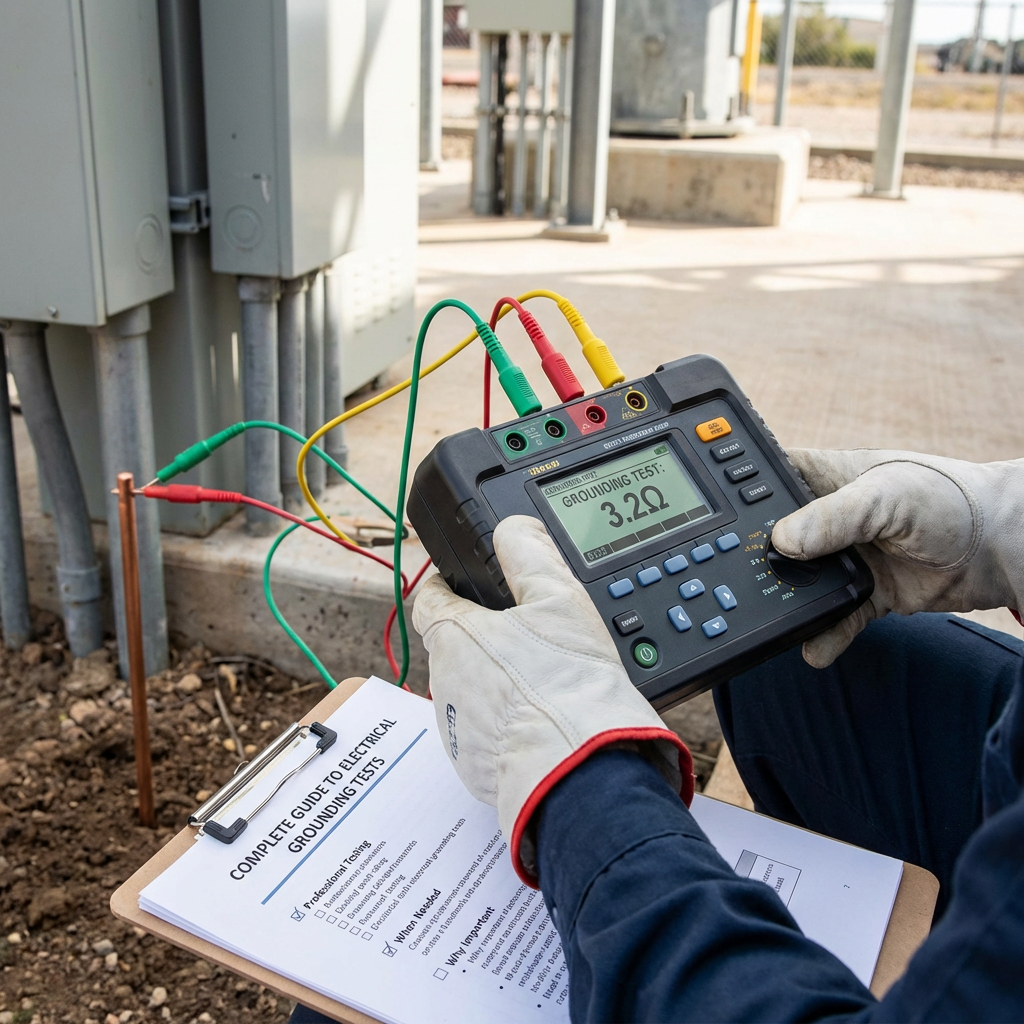
So we use the fall-of-potential method. Sounds fancy. It's actually straightforward — we drive two test stakes into your yard at specific distances from the main ground rod. Could be 20 and 40 feet out, depends on your setup. Then our Fluke tester pumps known current through the circuit and measures voltage drop between the stakes.
The math gives us your actual resistance. Not "looks okay" or "probably fine" — an exact number we can hold up against code.
Why Professional Grounding Tests Are Non-Negotiable for Home Safety
Most homeowners have no idea their grounding failed until someone gets hurt.
These tests identify hidden hazards before they become incidents. We're measuring actual resistance values throughout your entire electrical system — not doing a quick visual check and calling it done. Without proper grounding, a simple appliance malfunction (frayed wire inside your coffee maker) energizes the metal casing. Seriously. Now it's a shock hazard waiting for someone to touch it while standing on a wet floor.
Your home is basically a sophisticated power hub at this point. Energy-efficient lighting, power tools in the garage, smart home devices on every wall — all of it depends on functional grounding for safe operation. When grounding fails, you've got two problems: safety compromised, and (here's the part nobody thinks about) your insurance company might deny claims for electrical fire damage if they find inadequate grounding contributed to the incident.
That leaves you holding a very expensive bag.
Here's the thing: routine inspections turn up critical grounding problems constantly around here. Corroded connections near outdoor elements. Damaged wiring that got nicked during a bathroom remodel three years ago. Installations done by someone's "electrician buddy" who didn't actually know code requirements.
These issues create conditions that circuit breakers can't even see. Your breaker only trips on overcurrent — it has zero awareness that the ground rod connection rotted away last winter. Lights work. Outlets work. Everything seems totally normal. Meanwhile your safety net vanished six months ago.
Case Study: Hidden Grounding Failure Nearly Leads to Disaster in Raleigh
That kitchen I mentioned earlier? 1980s home off Glenwood Avenue.
Homeowner kept getting "mild tingles" from the dishwasher and fridge. Her previous electrician said it was static electricity. (Pro tip: 120-volt shock and static feel very different.) Our Fluke 1625-2 earth ground tester showed the main grounding electrode connection had corroded to hell — turned out a leaky outdoor spigot had been dripping on it for probably six years.
The entire kitchen circuit was virtually ungrounded. She'd been receiving legitimate electrical shocks every time she touched the refrigerator while standing on tile. One good jolt on the wrong day could've stopped her heart.
Resistance readings were over 100 ohms in spots. NFPA 70 requires less than 25 (and we aim for under 5). We traced the problem to a severed grounding conductor in the basement — someone doing plumbing work had cut right through it moving copper lines. Just snipped it without realizing what it was.
The repair meant installing new grounding electrodes, driving them properly, running fresh THHN wire to restore protection. Cost her about $1,800. Her old electrician's "it's just static" diagnosis almost cost her life.
Visual inspections don't cut it. Only testing with calibrated instruments reveals whether your grounding system actually works.
Mandatory Grounding Test Situations for Your Home: Don't Wait!
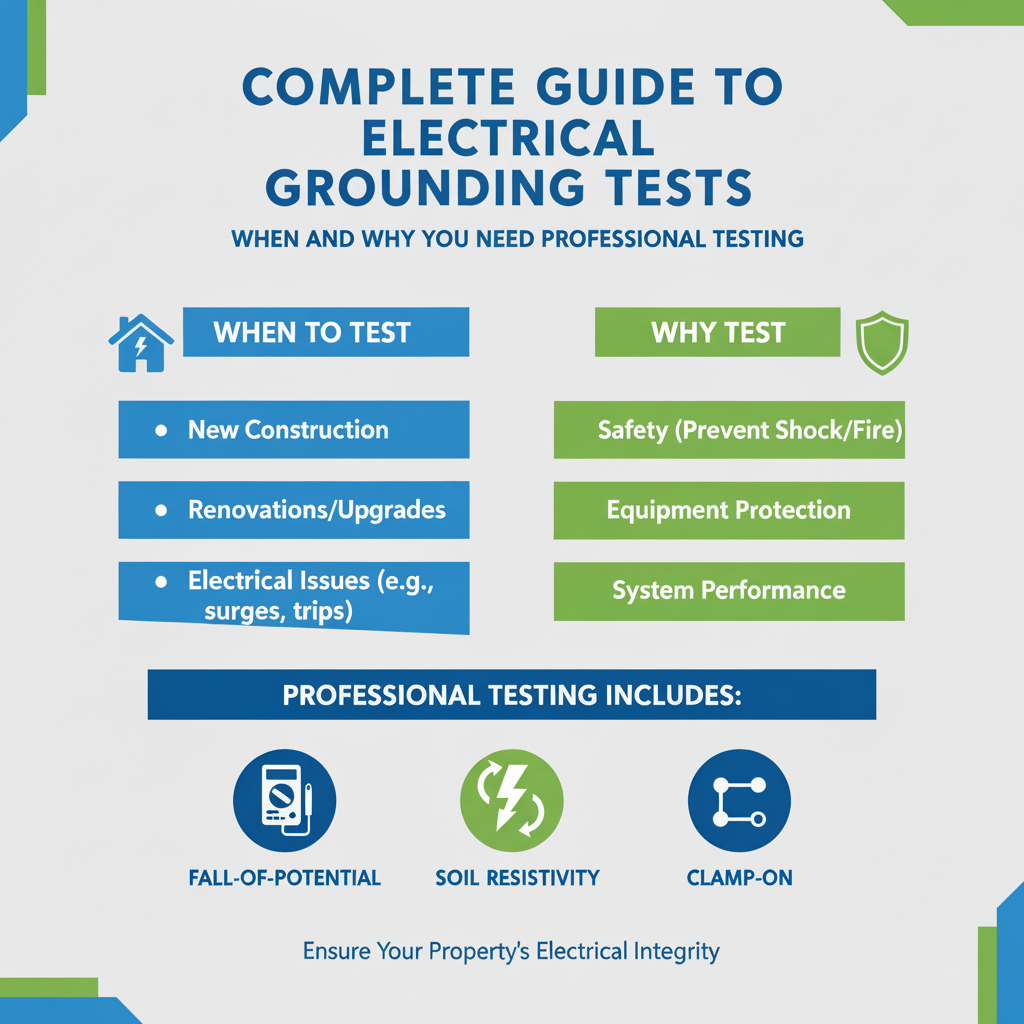
Some situations scream for a professional grounding check this week. Not eventually.
**Before Purchasing Any Property:** Every home purchase should include comprehensive electrical testing, especially for properties built before 1970. Back then, grounding requirements were basically suggestions. Older homes frequently have two-wire systems with zero proper grounding on appliance circuits. That's a lawsuit waiting to happen if you're the new owner. A full [Home Electrical Inspection](/services/home-electrical-inspection) during due diligence isn't optional — it's protecting yourself from inheriting someone else's safety nightmare.
**Following Major Renovations:** Kitchen and bathroom remodels? Notorious for messing with grounding systems. Moving outlets, updating fixtures, relocating plumbing — all of it can damage or disconnect grounding conductors. Sometimes on purpose (contractor doesn't understand what that green wire does), sometimes accidentally. Post-renovation testing verifies nothing got compromised. Don't take the general contractor's word unless their electrician provides documentation. Get the test results in writing.
**After Electrical Panel Upgrades:** New panels need proper bonding to existing grounding electrodes and conductors per NEC Article 250.60. Improper connections during installation create "floating grounds" — a condition where your safety system exists but doesn't actually connect to earth. Our guide on [Electrical Panel Upgrades](/services/electrical-panel-upgrades) explains why this matters. Your entire home's protection depends on that connection being right.
**When Experiencing Unexplained GFCI Trips:** If your GFCI outlets constantly trip and reset, that's not a nuisance — it's a symptom. Could be damaged wiring. Could be moisture intrusion. Could be inadequate grounding affecting the entire circuit. Professional testing identifies the actual problem instead of just replacing the GFCI over and over hoping it stops. (Spoiler: it won't stop until you fix the underlying issue.)
Recommended Testing Schedule for Optimal Safety
Testing before problems show up beats reacting to disasters. Always.
For homes under 20 years old (assuming no renovations or weird issues), we recommend testing every 3-5 years. Connections corrode gradually. Soil conditions shift. Temperature cycles expand and contract materials. Things degrade slowly, then all at once.
Homes over 20 years old? Test every 1-2 years. Older systems use different materials and installation methods that don't hold up as well. We've seen aluminum grounding conductors in 1970s homes that corroded through completely. Ground rods installed too shallow. Connections that were code-compliant in 1965 but wildly insufficient now.
After any electrical work — renovations, panel upgrades, adding circuits, even "minor" repairs — get it tested. I've seen licensed electricians accidentally create grounding problems during routine repairs. It happens. Testing confirms nothing got compromised.
After severe weather? Lightning strikes within a quarter mile, flooding in your area, hurricanes — get tested. Even if your home wasn't directly hit, nearby strikes send massive current through the ground that can damage grounding electrodes and connections. That's the real issue. After Hurricane Florence, we found compromised grounding systems in probably 30% of homes we inspected in affected areas.
The Professional Testing Process: What to Expect
We show up with Fluke testers and a process that catches what visual checks miss.
First 20 minutes? Visual inspection. We're checking your electrical panel, grounding electrode conductors, accessible connections. Looking for obvious corrosion, damaged insulation, improper bonding, wires that got disconnected and nobody noticed. This part catches the easy problems.
Now, then we disconnect your grounding electrode conductor from the panel. Temporarily (don't panic). We need to isolate the grounding system so we can measure its true resistance without interference from utility grounds or neighboring properties.
Next we drive two test stakes into the ground at specific distances from your grounding electrode — usually 20 and 40 feet away, forming a straight line. The distances aren't random. They're based on how current disperses through soil. Our Fluke tester injects known current between these points and measures voltage drop. Math converts that to resistance.
Takes 45-90 minutes depending on property size and how many grounding electrodes you've got. Modern homes often have multiple ground rods plus a UFER ground. We test all of them.
Problems show up? Resistance above 25 ohms, damaged connections, corroded electrodes? You get a detailed report with photos and specific repair recommendations. Not vague "might want to consider eventually" language. Clear priorities: fix this now, monitor this, this can wait.
Common Grounding Problems We Find
**Corroded connections:** The number one issue, especially in coastal areas or homes with irrigation systems. Water and electricity don't play nice. Connections near outdoor faucets, AC condensers, or anywhere moisture accumulates tend to corrode first. Sometimes the corrosion is hidden under insulation or inside junction boxes.
**Inadequate electrode depth:** Code requires ground rods driven at least 8 feet deep. We've found rods installed 3-4 feet deep, sometimes bent over when they hit rock and just left that way. At 3 feet, you're barely making contact with soil that has consistent moisture — the resistance is terrible.
**Disconnected grounding conductors:** Usually from renovation work, sometimes from pest damage (rodents chewing through wires in crawl spaces — yes, really), occasionally from theft (copper is valuable, and grounding wire is easy to access in unfinished basements).
**Improper bonding between systems:** Your electrical system, g
In-Depth Look
Detailed illustration of key concepts
Visual Guide
Infographic illustration for this topic
Side-by-Side Comparison
Visual comparison of options and alternatives
Sources & References
- Mastering Earth Ground Testing: A Visual Guide for Contractors | Fluke
- 9 Recommended Practices for Grounding
- Grounding System Testing: How to Fix Your Concerns
- ground and bond testing - Mike Holt's Forum
- Best Tool Brand for Electricians 2025: Expert Rankings - Wood Guide
- Best Electrician Tools Brand Guide
- Top 20 Essential Electrician Tools for Pros (2026 List) - Workiz
- Essential 2025 Electrician Tools & Safety Warnings (New & Pro Tips!)
- 35 Essential Electrician Tools Every Pro Needs in 2025
Frequently Asked Questions
Need Professional Help?
Find top-rated electricians experts in your area