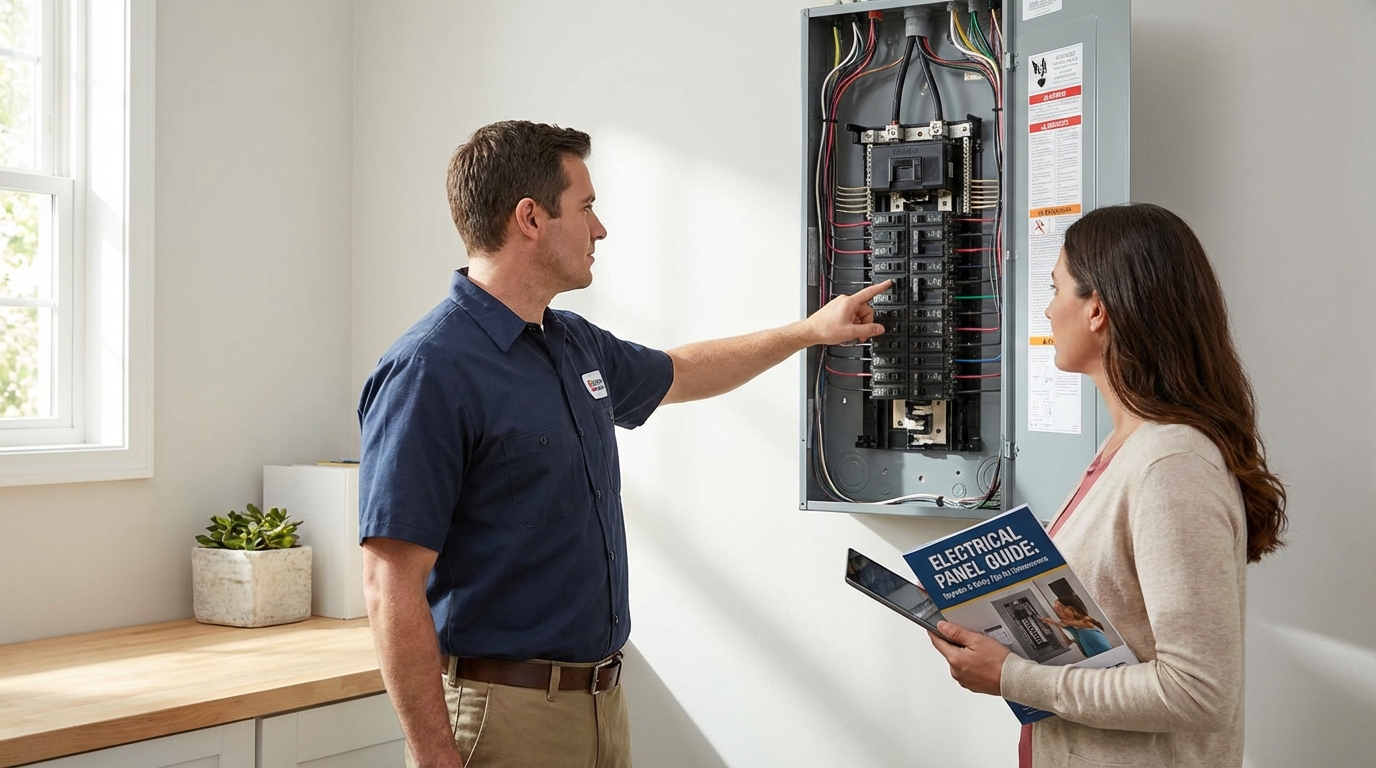
Learn about electrical panel safety, upgrades, and maintenance from licensed professionals. Get expert tips on circuit breakers, smart panels, and when to upgrade.
Key Takeaways
- **Main Breaker:** This is your master shutoff, usually rated at 100, 150, or 200 amps for houses. It controls *all* the power coming in from the utility company. You need to know exactly where it's and how to flip it off during an emergency. I'm serious — go find yours right now if you don't know.
- **Individual Circuit Breakers:** These smaller breakers each protect a specific circuit. Maybe one handles your bedroom outlets, another runs the kitchen countertop plugs, another feeds your AC unit. Standard ones are 15A (lighting and regular outlets), 20A (kitchens and bathrooms), and higher for big stuff like ovens (50A) or HVAC systems (30-60A, depending on the unit).
- **Neutral and Ground Bus Bars:** These aren't sexy, but they're essential — they safely return current back to the source and provide grounding. Without proper grounding, you're risking serious electrical shock. Ask me how I know.
- **Ground Fault Circuit Interrupters (GFCIs):** Required by code in bathrooms, kitchens, laundry rooms, garages, and outdoor outlets. GFCI breakers detect tiny current imbalances (as little as 5 milliamps) and shut off power in about 1/40th of a second — fast enough to save your life if you drop a hairdryer in the sink. You can spot 'em by the "Test" and "Reset" buttons. A contractor buddy in Folsom told me about a homeowner whose GFCI literally saved their teenage daughter's life when she plugged in a damaged phone charger near a wet counter. *That's* why they matter.
- **Arc Fault Circuit Interrupters (AFCIs):** Required in bedrooms, living rooms, dining areas — basically anywhere people hang out. AFCIs detect dangerous electrical arcs caused by damaged wires, loose connections, or frayed insulation. These faults are invisible most of the time, but they're a leading cause of house fires. We typically install Eaton CH series or Square D QO AFCI breakers because they're reliable and we've seen them perform under real-world conditions for years.
Key Takeaways
Electrical Panel Guide: Upgrades & Safety Tips for Homeowners
Guy in Folsom called me last week because his breaker kept tripping every time his kids turned on the Xbox. Turns out his panel was from 1972 — same year as *The Godfather*. Your electrical panel (some people call it the breaker box, service panel, main panel — whatever) is basically the heart of your home's electrical system. It takes power from the utility grid and splits it up to every outlet, every light, every appliance you've got. That's the real issue. Understanding how it works isn't some nerdy electrician thing — it's about keeping your house from burning down. For more on this stuff, check out our [comprehensive electrical services](https://www.bizzfactor.com/electrical-services) or brush up on [electrical safety protocols](https://www.bizzfactor.com/electrical-safety).
What's an Electrical Panel and How Does It Actually Work?
Look — so basically, an electrical panel is a metal box (usually mounted flush against a wall or sometimes surface-mounted in garages or basements) that houses your circuit breakers. After 20+ years inspecting panels across Sacramento, I can tell you it's the safety gatekeeper for your entire electrical system.
That's the real issue.
It prevents overloads and stops electrical fires before they start — protecting your property and (way more important) your family. Most residential panels I see have somewhere between 12 and 40 breakers, though I've installed panels with as few as 8 (tiny condos in Midtown) and as many as 60 (a 6,000-square-foot custom build in Granite Bay that had everything including a Tesla charger, pool equipment, and a woodworking shop). Each **circuit breaker** protects a specific circuit by cutting power instantly when it detects a fault — overloads, short circuits, whatever. Older panels? They can't handle modern electrical demands. You'll get frequent trips, annoying brownouts, and (worst case) hidden fire hazards lurking in your walls. Don't skip this step.
Every panel — whether it's brand new or installed during the Nixon administration — has these three critical parts:
- **Main Breaker:** This is your master shutoff, usually rated at 100, 150, or 200 amps for houses. It controls *all* the power coming in from the utility company. You need to know exactly where it's and how to flip it off during an emergency. I'm serious — go find yours right now if you don't know.
- **Individual Circuit Breakers:** These smaller breakers each protect a specific circuit. Maybe one handles your bedroom outlets, another runs the kitchen countertop plugs, another feeds your AC unit. Standard ones are 15A (lighting and regular outlets), 20A (kitchens and bathrooms), and higher for big stuff like ovens (50A) or HVAC systems (30-60A, depending on the unit).
- **Neutral and Ground Bus Bars:** These aren't sexy, but they're essential — they safely return current back to the source and provide grounding. Without proper grounding, you're risking serious electrical shock. Ask me how I know.
How Do Circuit Breakers Protect Your Home?
Breakers are like bouncers standing guard 24/7, monitoring current flow. They react in milliseconds — faster than you can blink.
Way better than the old fuse boxes. Remember those? You had to keep spare fuses in a junk drawer and fumble around in the dark every time one blew. Now you just flip a switch. Each breaker has an amperage rating (15, 20, 30, 50 amps, whatever). If current exceeds that rating — even for a split second — the breaker trips, cutting power before wires overheat and potentially start a fire.
Types of Specialized Circuit Breakers
- **Ground Fault Circuit Interrupters (GFCIs):** Required by code in bathrooms, kitchens, laundry rooms, garages, and outdoor outlets. GFCI breakers detect tiny current imbalances (as little as 5 milliamps) and shut off power in about 1/40th of a second — fast enough to save your life if you drop a hairdryer in the sink. You can spot 'em by the "Test" and "Reset" buttons. A contractor buddy in Folsom told me about a homeowner whose GFCI literally saved their teenage daughter's life when she plugged in a damaged phone charger near a wet counter. *That's* why they matter.
- **Arc Fault Circuit Interrupters (AFCIs):** Required in bedrooms, living rooms, dining areas — basically anywhere people hang out. AFCIs detect dangerous electrical arcs caused by damaged wires, loose connections, or frayed insulation. These faults are invisible most of the time, but they're a leading cause of house fires. We typically install Eaton CH series or Square D QO AFCI breakers because they're reliable and we've seen them perform under real-world conditions for years.
Single-Phase vs. Three-Phase Power: Which One is Right for You?
Look — 99% of houses in Sacramento run on **single-phase power**. That's standard 240-volt service split into two 120-volt legs (electricians call 'em L1 and L2). It powers your fridge, TV, microwave, air conditioner, washing machine — everything a normal house needs.
**Three-phase power** is for commercial buildings, industrial facilities, or those massive custom homes with crazy electrical demands. We're talking elevator banks, commercial kitchens, server rooms, that kind of thing.
Real talk — unless you're running a restaurant out of your garage, you don't need three-phase. It's total overkill. The only times we recommend considering it for residential properties:
- You've got multiple electric vehicle (EV) charging stations running simultaneously, maybe Level 3 chargers.
- You're operating a serious workshop with industrial-grade equipment — CNC machines, heavy-duty welders, professional woodworking tools.
- You've installed commercial-grade appliances like walk-in freezers, industrial induction ranges, or oversized HVAC systems.
Here's the deal: upgrading to three-phase isn't cheap. You need new service entrance equipment, a specialized panel with three-phase breakers, possibly rewiring half your house. We're usually talking $8,000 to $15,000 depending on your existing setup and what the utility company has available at the street.
That's serious money.
Customer Success Story: The Johnson Family's Modern Panel Upgrade in Roseville
Last month we got called to a 1970s ranch in Roseville — the Johnson family was dealing with constant breaker trips and lights dimming every time their AC kicked on. Classic warning signs. Their 100-amp Federal Pacific Stab-Lok panel was not only outdated but a documented fire hazard (more on that in a sec).
We showed up on a Tuesday afternoon, popped the cover off, and immediately saw problems:
- **Oversized breakers** connected to undersized wiring — which means the wire could melt before the breaker ever tripped. Terrible.
- **Double-tapped breakers** where someone had shoved two wires under one breaker terminal — a common but dangerous shortcut that violates code.
- **Visible scorch marks** around several breakers, clear evidence of overheating and arcing. This always makes my stomach drop.
We pulled out our Fluke thermal camera and found hotspots hitting 180°F (82°C). For context, that's way past safe operating temps — it's a fire waiting to happen. We recommended a new 200-amp Square D QO panel with modern AFCI/GFCI protection, plus relocating it to meet current NEC 2023 code (proper clearances and access). Finished the whole job in two days. Six months later, the Johnsons haven't had a single issue — no trips, no dimming, no worries. They actually sent us a thank-you card (which doesn't happen often in this business, let me tell you).
What Are the Warning Signs Your Electrical Panel Needs Attention?
After 20+ years doing [electrical inspections](https://www.bizzfactor.com/electrical-inspection) across Sacramento, Roseville, Folsom, and the surrounding areas, we've gotten pretty good at spotting trouble. Here's what you should watch for:
**Immediate Danger Signs (Call an electrician NOW):**
- Burning smell (like melting plastic) or visible scorch marks around the panel or outlets. Fire hazard.
- Panel cover feels warm or hot to the touch. It should always be cool.
- Buzzing, crackling, or humming sounds coming from the panel. That's electricity trying to escape.
- Rust, corrosion, or water damage on or inside the panel. Water + electricity = really bad news.
**Performance Issues (Schedule an inspection soon):**
- Frequent breaker trips without obvious cause. Your panel's trying to tell you something.
- Lights dim or flicker when big appliances start up (fridge, AC, microwave). Sign of insufficient capacity.
- You can't run multiple high-power devices at the same time without tripping a breaker. Your panel can't keep up with demand.
- You're constantly using extension cords because you don't have enough outlets — or your panel can't handle adding more circuits.
Here's the thing: if you've got a **Federal Pacific Electric (FPE) Stab-Lok** or **Zinsco** panel, get it replaced.
Period.
These brands are documented fire hazards with design flaws and high failure rates. Many insurance companies won't even cover homes that still have them. I've personally seen FPE breakers that failed to trip during dangerous overloads, leaving wires overheating and sparking inside walls. A house in Elk Grove had an FPE panel that caught fire at 2 AM — family got out safely, but they lost half their house. Don't let that be you.
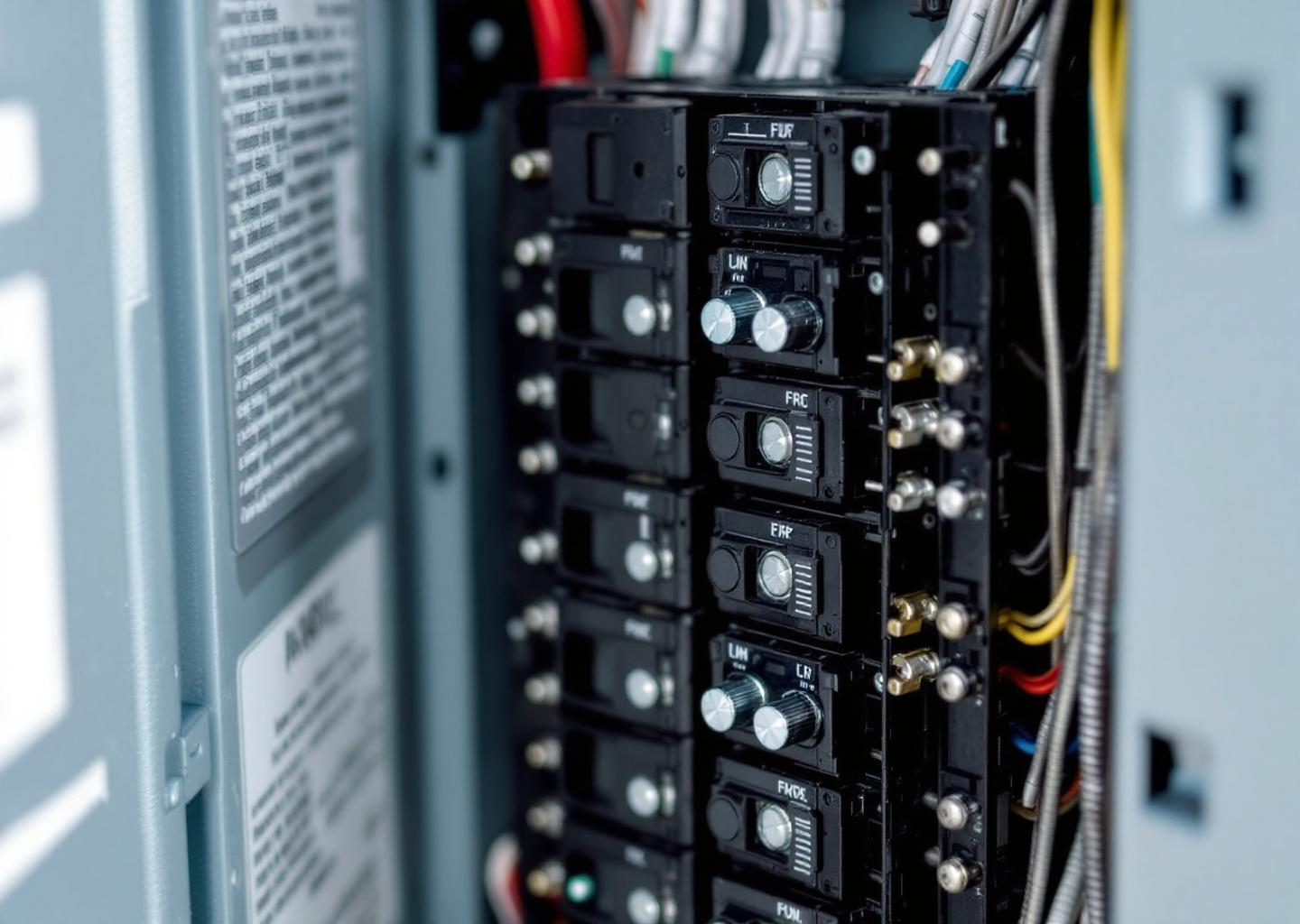
In-Depth Look
Detailed illustration of key concepts
Visual Guide
Infographic illustration for this topic
Sources & References
Frequently Asked Questions
Need Professional Help?
Find top-rated electricians experts in your area