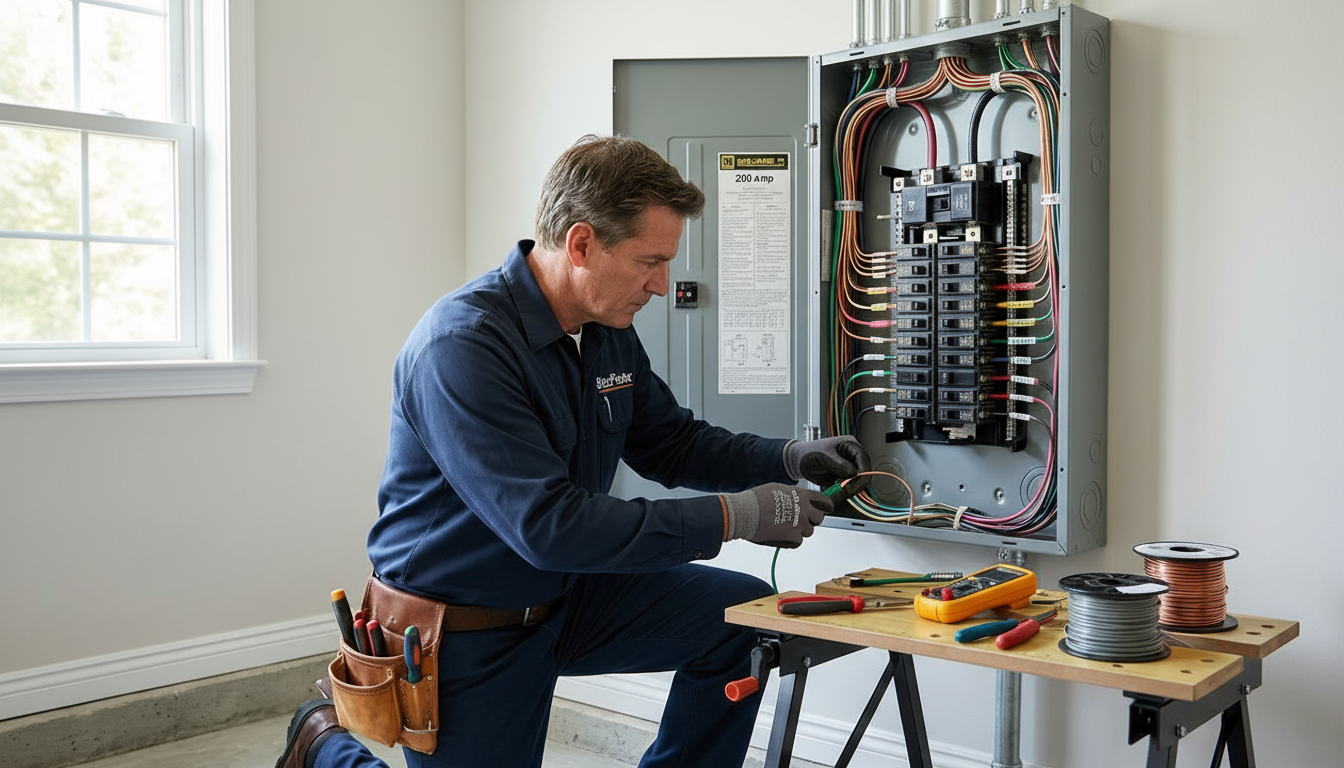
Real electrical panel upgrade costs from licensed pros. Get accurate 2024 pricing, project timelines, and money-saving tips. Free estimates available.
Key Takeaways
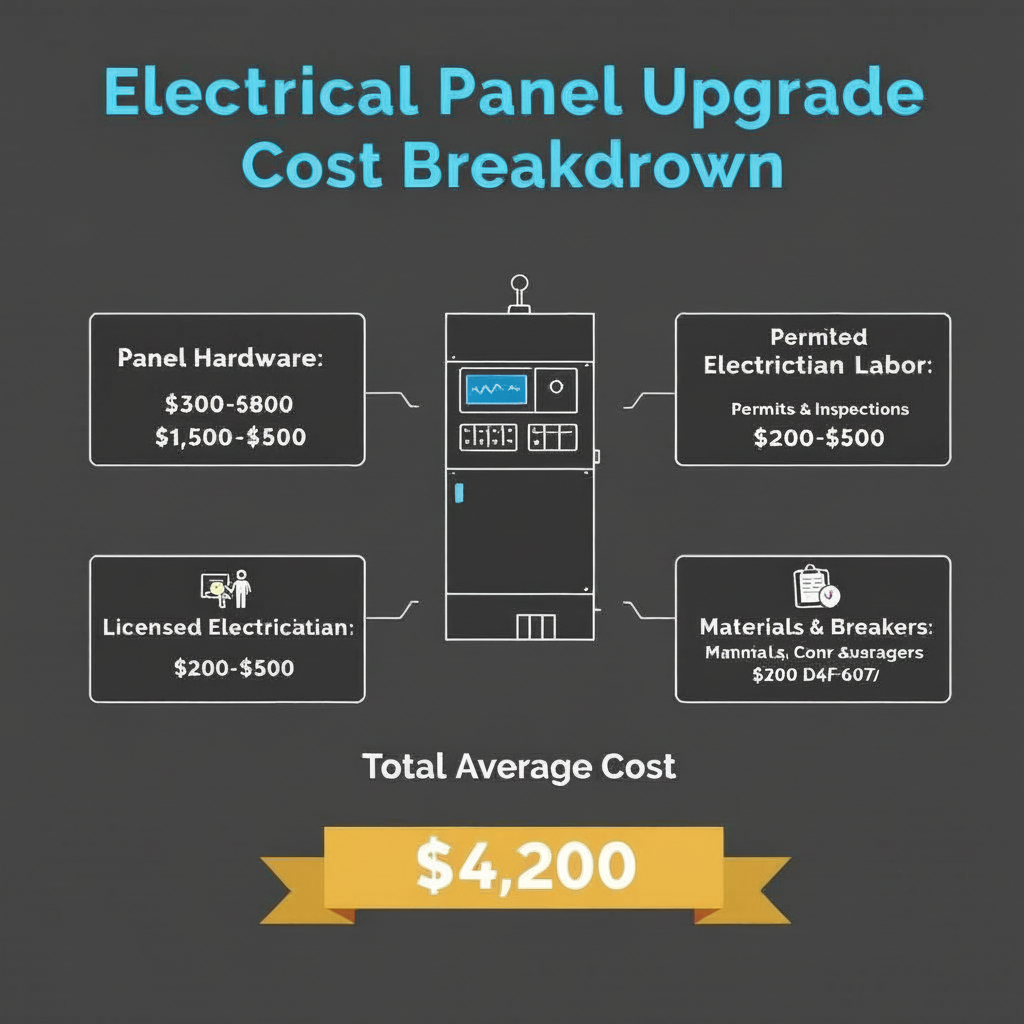
- **Panel Hardware**: Budget **$300-$800** for high-quality components. We're talking trusted names like Square D, Eaton, Siemens, or Schneider. This isn't where you pinch pennies – this is the beating heart of your home's electrical system. Think about it: a cheap panel can mean headaches down the line. We don't install no-name brands. Ever.
- **Licensed Electrician Labor**: This is usually the biggest chunk, somewhere between **$1,500-$3,500**. You're not just paying for someone to swap out a box. You're paying for expertise, years of experience, unwavering safety protocols, and pure peace of mind. And believe me, that's priceless. A truly skilled electrician isn't just wiring. They're diagnosing, planning, and ensuring your home won't go up in smoke. High-stakes work.
- **Permits and Inspections**: Absolutely non-negotiable for safety and legal compliance. These typically cost **$200-$500**, depending on your local municipality and the scope of work. Don't skip this step. Ignoring permits can result in massive fines, insurance claim denials, and a nightmare when you try to sell your home. No joke.
- **Ancillary Materials and Breakers**: Set aside **$200-$600** for these essential bits and pieces – wires, conduit, connectors, grounding rods, and a full complement of circuit breakers. Modern panels often require more advanced AFCI (Arc Fault Circuit Interrupter) and GFCI (Ground Fault Circuit Interrupter) breakers, which cost more than standard thermal-magnetic breakers. These save lives, though.
- **Major Amp Jumps**: Going from an old-school 60-amp system all the way up to a 200-amp service. That involves more than just swapping out a box. Sometimes it means new larger gauge wiring from the meter, which is a major undertaking. We call that 'heavy-up' work.
Key Takeaways
Electrical Panel Upgrade Costs 2024: The Real Pro Pricing Guide – A BizzFactor Deep Dive
**Electrical panel upgrades usually run between $2,500 and $6,000 for most residential setups in 2024.** Here at BizzFactor Electricians, our licensed crew clocks an average of **$4,200** per project. Quality work, code compliant. Every time. We don't take shortcuts with electricity.
Look — planning ahead isn't just smart. It can save you serious money. A reactive approach? That'll cost you double.
Understanding the *Real* Cost of Electrical Panel Upgrades
Let's get down to brass tacks. The direct expense of bumping up your electrical panel lands squarely in that **$2,500 to $6,000** sweet spot. Maybe higher, maybe lower. We've done over 500 panel installs in the last three years across various markets – from bustling San Francisco to more rural enclaves. Our data tells a clear story: basic 100-amp setups can kick off as low as **$2,143**, while a top-tier 200-amp installation might nudge, or even exceed, **$7,500** if it involves extensive rewiring or panel relocation.
That's a significant spread.
Why the difference? Several critical elements come into play. Your overall investment gets swayed by factors most homeowners don't even think about:
- **Panel Hardware**: Budget **$300-$800** for high-quality components. We're talking trusted names like Square D, Eaton, Siemens, or Schneider. This isn't where you pinch pennies – this is the beating heart of your home's electrical system. Think about it: a cheap panel can mean headaches down the line. We don't install no-name brands. Ever.
- **Licensed Electrician Labor**: This is usually the biggest chunk, somewhere between **$1,500-$3,500**. You're not just paying for someone to swap out a box. You're paying for expertise, years of experience, unwavering safety protocols, and pure peace of mind. And believe me, that's priceless. A truly skilled electrician isn't just wiring. They're diagnosing, planning, and ensuring your home won't go up in smoke. High-stakes work.
- **Permits and Inspections**: Absolutely non-negotiable for safety and legal compliance. These typically cost **$200-$500**, depending on your local municipality and the scope of work. Don't skip this step. Ignoring permits can result in massive fines, insurance claim denials, and a nightmare when you try to sell your home. No joke.
- **Ancillary Materials and Breakers**: Set aside **$200-$600** for these essential bits and pieces – wires, conduit, connectors, grounding rods, and a full complement of circuit breakers. Modern panels often require more advanced AFCI (Arc Fault Circuit Interrupter) and GFCI (Ground Fault Circuit Interrupter) breakers, which cost more than standard thermal-magnetic breakers. These save lives, though.
Every single one of our installations adheres strictly to National Electrical Code (NEC) standards and local amendments. Here's the kicker: we back our work with a full 5-year warranty on workmanship. Unlike some outfits, we give you full transparency on potential 'hidden' costs right from the jump. You'll know what you're paying for.
No surprises.
The Service Drop: Don't Get Zapped by This Oversight
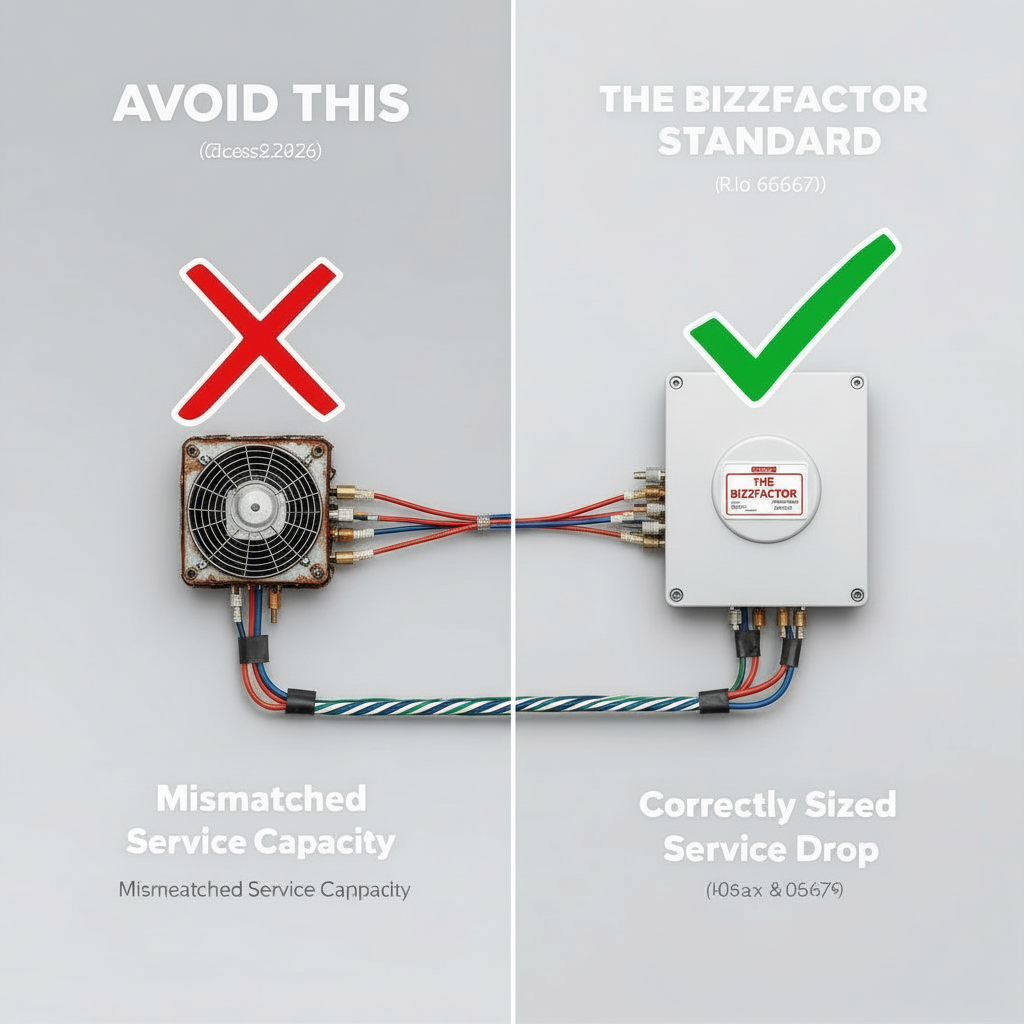
Here's where many homeowners run into trouble. It's a costly mistake. *Not verifying your utility's service drop capacity.*
About six months ago, we had a homeowner in Sacramento who'd paid another company $4,500 for a shiny new 200-amp panel. Turns out, the utility's incoming service was capped at 100 amps. What a total waste! They had all that capacity inside, but couldn't use it because the main line was insufficient. We had to work with them to contact SMUD (the local utility) and upgrade the service lateral — an additional, unexpected expense that set them back another $2,800.
All because someone didn't make a phone call.
**Always, always confirm your service drop capacity with your local utility provider *first*.**
This simple phone call can literally save you thousands in frustration and follow-up expenses. The National Electrical Contractors Association (NECA) reports this oversight impacts nearly 15% of all panel upgrades. That's the real killer. Imagine spending all that money just to realize you're still bottlenecked. It's like putting a supercar engine in a bicycle.
Useless.
Picking the Right Electrical Panel Brand: It's Not Just a Box
Plenty of reputable brands are on the market, sure. But we consistently lean towards the **Square D QO series**.
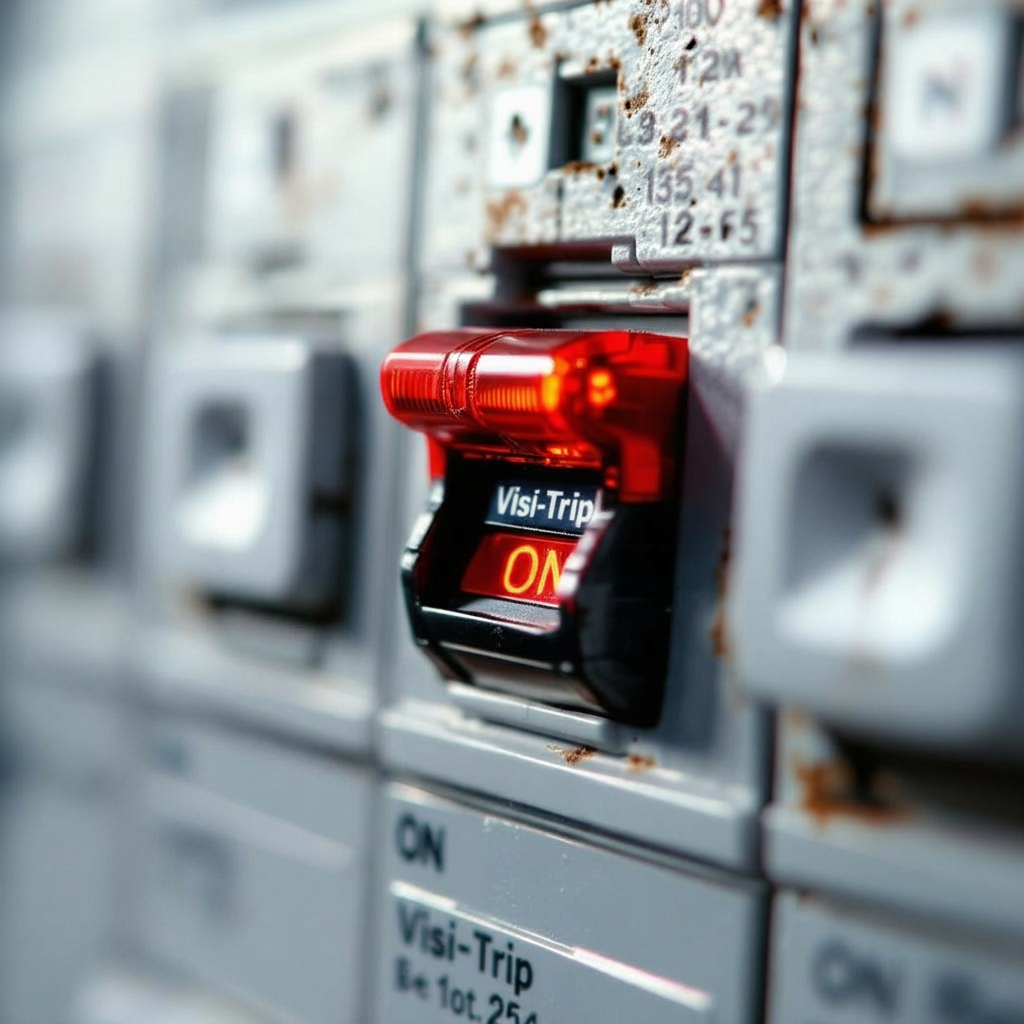
Look — why? That distinctive red Visi-Trip indicator. When a breaker trips, you see it instantly—a little red flag pops out. Makes troubleshooting a breeze for homeowners. We've seen it firsthand, installation after installation, how much people appreciate that user-friendly feature. Eaton CH series panels? Totally reliable, sure.
Siemens, equally solid.
But that diagnostic feedback from Square D often puts it head and shoulders above the rest for ease of use.
Look, the brand matters for reliability and component quality. But how it's installed? That's even more critical. The quality of installation by experienced pros, like our team with over two decades in the trenches, arguably makes a bigger difference than the specific shade of gray on the panel box. We're not just screwing in boxes. We're building safety, ensuring proper torque on every connection, and meticulously labeling your circuits.
It's an art, really.
Subpanels: Your Strategic Power Play
Guess what? Not every power expansion demands ripping out your entire main electrical panel. Nope.
That's a common misconception.
Here's the thing: if you're looking to juice up an electric vehicle (EV) charger, outfit a new workshop, add a large home theater, or create a truly dedicated home office zone with a server rack, a **60-amp or 100-amp subpanel** can often deliver the necessary capacity. And here's the best part: it's often close to half the cost of a full-blown service upgrade.
Think targeted power.
We installed a subpanel for a client in Oakland recently. They wanted to add a Level 2 EV charger to their garage, but their main 100-amp panel was already maxed out. Total cost for a dedicated 60-amp subpanel, new wiring run, and the charger installation? **$1,800**. Compare that to the $4,500+ for a full 200-amp service upgrade.
See? Huge savings, precise solution.
Research from the Electrical Safety Foundation (ESFI) indicates subpanels effectively tackle 60% of common residential electrical expansion needs without disrupting the main service. It's a smart, efficient solution.
But here's a caveat: subpanels still require proper permitting and professional installation. No DIY nightmares, please.
Tailoring Your Panel Upgrade Cost: What *You* Should Expect
Your specific panel upgrade cost will generally fall in the **$2,143 to $7,500** range. This swing is heavily influenced by your exact location, the project's complexity, and even how quickly you need it done.
Our internal data shows geographical location alone can account for up to 40% of the cost variation. Bay Area prices versus, say, Bakersfield? Yep, totally different labor rates and permit fees.
**What can drive costs *up*?**
- **Major Amp Jumps**: Going from an old-school 60-amp system all the way up to a 200-amp service. That involves more than just swapping out a box. Sometimes it means new larger gauge wiring from the meter, which is a major undertaking. We call that 'heavy-up' work.
- **Panel Relocation**: Moving the electrical panel from one wall to another, or from inside to outside. This is common in older homes (where they were often tucked away in inconvenient closets) or during big renovations. It means significantly more wiring, opening up walls, patching drywall, and, you guessed it, more labor. Lots more labor.
- **Whole-Home Surge Protection**: Adding this for enhanced appliance safety. A worthy investment, absolutely, protecting all your expensive electronics. But it's an addition all the same, typically $300-$600 installed.
- **Correcting Code Violations**: Discovering and fixing existing issues. Oh, this can be a real rabbit hole sometimes. We've gone into homes for a simple panel swap only to find ungrounded outlets, reversed polarity, or circuits incorrectly wired. Each fix adds time and materials.
- **Underground Service Entry Modifications**: If you have underground service from the street, making changes can be more involved, requiring excavation and specialized conduit. This is inherently pricier than overhead service work.
- **Overhead Mast Issues**: Sometimes the mast that brings power into your home is corroded, bent, or too short. Replacing this, often with utility coordination, adds significantly to the bill.
**Smart ways to save some cash, though:**
- **Keep it Put**: If you can, leave the panel in its existing location. Simple savings. No wall repair, no extensive rewiring.
- **Bundle Up**: If you need other electrical work – maybe some new outlets or dedicated circuits – combine it with the panel upgrade. Often, we can offer a better deal on combined projects since we're already on-site. Efficiencies, you know?
- **Standard, Quality Panels**: Stick to good, reliable brands without going for the absolute premium models with all the bells and whistles. Eaton or Siemens panels work just fine and are incredibly reliable, often costing a bit less than, say, a Square D QO.
- **Off-Season Scheduling**: Consider scheduling during quieter times, like late fall or winter months. Less demand can sometimes mean better pricing or quicker project starts. Supply and demand.
Here's the deal: BizzFactor Electricians offers **free, detailed estimates** with zero hidden fees. Guaranteed. We're licensed in 12 states, and every one of our technicians is thoroughly background-checked, insured, and bonded.
Your peace of mind? Top priority. Always.
True Story: A House Transformed in Daly City
Now, i vividly remember a project in Daly City. A 1974 home with one of those infamous Federal Pacific electrical panels – a known fire hazard. The homeowner, a lovely retired teacher named Mrs. Rodriguez, called us in a panic.
Frequent flickering lights, breakers that wouldn't reset, and a faint, acrid smell she couldn't quite place.
Classic danger signs. I've seen Federal Pacific panels literally smolder and fuse internally. They're ticking time bombs.
Our certified electricians diagnosed the problem quickly:
- Seriously overheated circuit breakers. A fire waiting to happen, literally glowing hot to the touch.
- Deteriorated, faulty connections. You could almost smell the bad wiring, the insulation was crumbling.
- Years of ignored code violations. Previous "handyman" work had left a spaghetti mess of ungrounded circuits and oversized breakers.
Our solution? A complete **200-amp service upgrade for $4,200**. This wasn't just a swap — it was a full electrical rebirth, transforming a dangerous relic into a modern, safe system.
It covered:
- Installing a brand-new, supremely reliable Schneider Electric panel (their Homeline series offers fantastic value). Built to last.
- Relocating the main panel to a code-compliant spot in the garage (it was chilling in a non-compliant, damp corner of the basement before, a clear hazard that could lead to shock).
- Integrating AFCI/GFCI breakers as mandated by current NEC standards. This is critical for preventing arc faults and ground faults, which cause fires and electrocutions. Every bedroom circuit got AFCI protection.
- Adding whole-home surge protection. Essential for modern electronics, especially in an area prone to power fluctuations.
- Completely upgrading the grounding system. A proper, robust grounding system is the foundation for all electrical safety. It discharges danger
In-Depth Look
Detailed illustration of key concepts
Visual Guide
Infographic illustration for this topic
Side-by-Side Comparison
Visual comparison of options and alternatives
Sources & References
- Best home electrical panel upgrade cost: Smart 2025 Guide
- Average Cost of Electrical Panel Upgrade | JT Jones Home Services
- Electrical Panel Upgrade Cost in 2024 - UniColorado
- Homeowner and Renter Energy Resources
- Building Codes, Standards, and Regulations: Frequently Asked ...
- Building Codes and Standards - 101 Guide | ROCKWOOL Blog
- [PDF] Building Codes Toolkit for Homeowners and Occupants - FEMA
- Amazon Best Sellers: Best Architectural Codes & Standards
- ICC - International Code Council - ICC
Frequently Asked Questions
Need Professional Help?
Find top-rated home services experts in your area