
Optimize new home electrical planning to save thousands. Learn why early decisions on EV chargers, smart circuits, and bedroom layouts prevent costly renovations.
Key Takeaways
- **Tamper-resistant outlets** in every kids' space (NEC requirement since 2008).
- Separate circuits for computers and electronics — prevents overloads when they're gaming and charging simultaneously.
- **GFCI protection** within 6 feet of all sinks, tubs, and showers per **NEC Article 210.8**.
- Bath fan controls with timers to handle moisture and save energy.
- Night lighting automation (especially helpful for younger kids navigating hallways at 2 AM).
Key Takeaways
New Home Electrical Planning Guide (Save $3,500 Fast)
You know what electrical planning actually is? It's figuring out where power needs to go *before* some contractor starts nailing up drywall. Sounds obvious, right? But I've seen homeowners in Denver drop $3,500 because they didn't think about an EV charger until after the walls were up.
Getting this right the first time keeps you from ripping open finished walls six months later. That's real money.
Why Smart Electrical Planning Saves You Thousands

I've watched this same movie play out maybe two hundred times. Somebody decides "we'll figure out the electrical later" — then that later arrives with a $4,000 invoice attached.
Map your power needs when studs are still naked. That's it. That's the whole secret. Our licensed team at BizzFactor routinely saves clients **$2,000 to $5,000** just by asking "what else might you plug in here?" during the rough-in phase instead of after the painters leave.
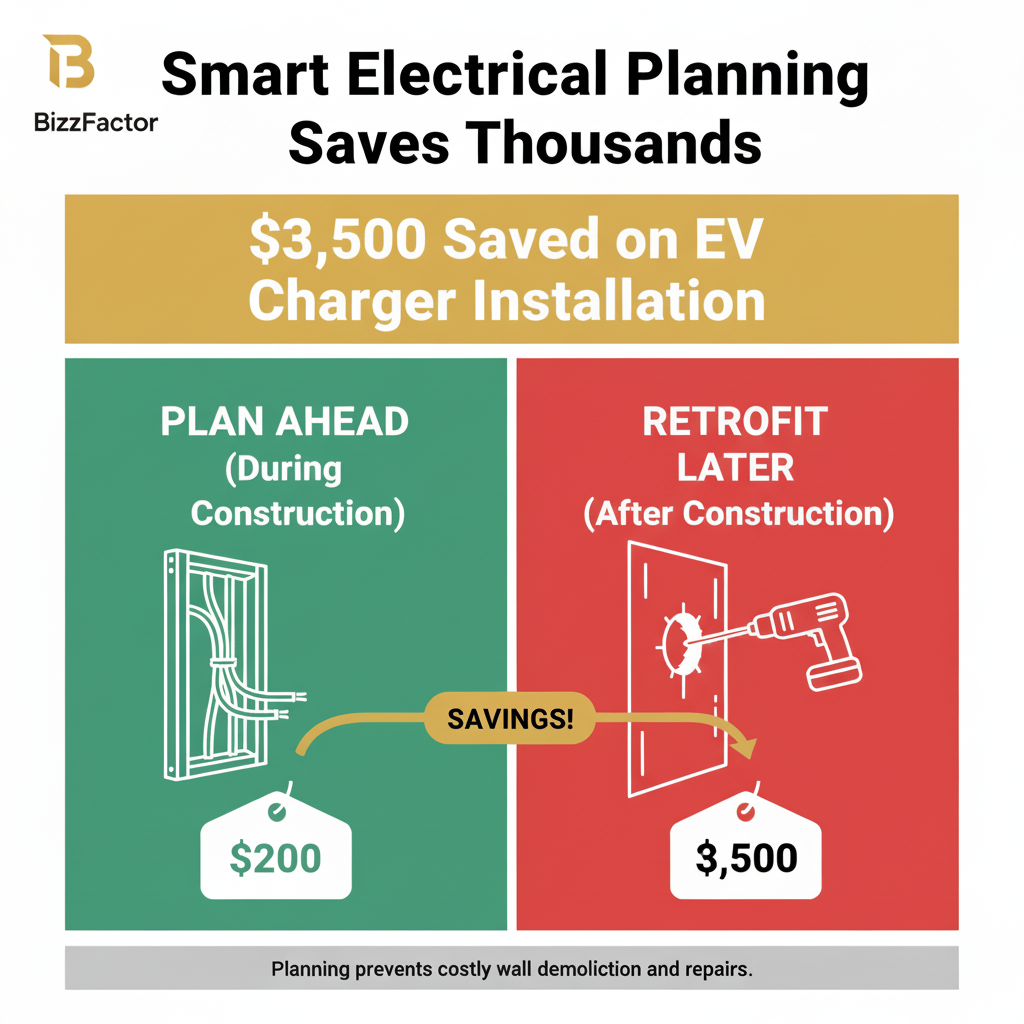
Real example: Guy in Cherry Creek didn't plan for his Tesla charger. Adding that 240V circuit after construction? **$3,500.** Labor, drywall repair, paint matching, the whole mess. If he'd included it during the build? Maybe **$200** worth of wire and a breaker.
That's the real danger.
The best time to make electrical decisions is when your walls are still open. Once that drywall goes up and gets painted, every change costs 10x more. That's the real issue. We've been doing this for **20+ years** — the math doesn't lie. Early planning always wins.
The $3,000 Garage Mistake Most People Make
Here's what happens: people design electrical systems for *right now*. They forget about what's coming in three years.
The garage is where this bites hardest.
Look — bizzFactor always drops a **240V, 50-amp circuit** in new garages, even if you're still driving a gas-powered Accord. Running that heavy wire before the walls close? Cheap. Retrofitting it later when you finally buy that Rivian? We're talking **thousands** because now we're cutting holes, fishing wire through finished spaces, patching, repainting.
Plus (and I can't stress this enough) — that circuit adds resale value. Every buyer under 40 expects EV charging capability. You're either ahead of the curve or you're explaining why your 2024 house doesn't have it.
What Our Certified Pros Tell Clients (Others Won't)
Stop counting outlets. Start designing *smart circuits* that adapt as your needs change.
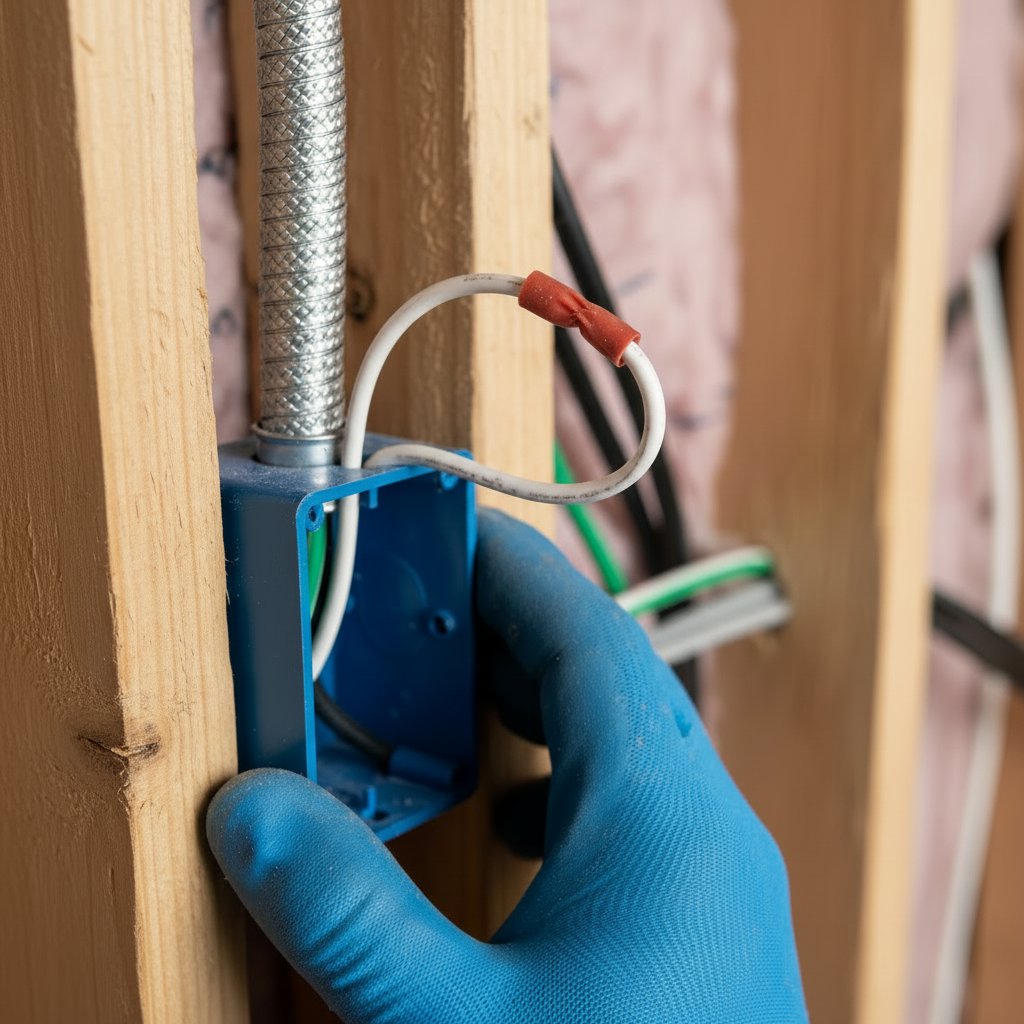
We install conduit to strategic locations with an extra capped neutral wire. This little trick lets us create **Multi-Wire Branch Circuits (MWBCs)** later — basically doubling your circuit capacity without demolishing walls. Costs maybe $50 extra during construction. Saves you $1,200+ if you need it down the road for a home office packed with equipment or a workshop full of power tools.
This one strategy has saved more money and frustration than anything else we do. Ask me how I know.
Bedroom Electrical Layout Strategy
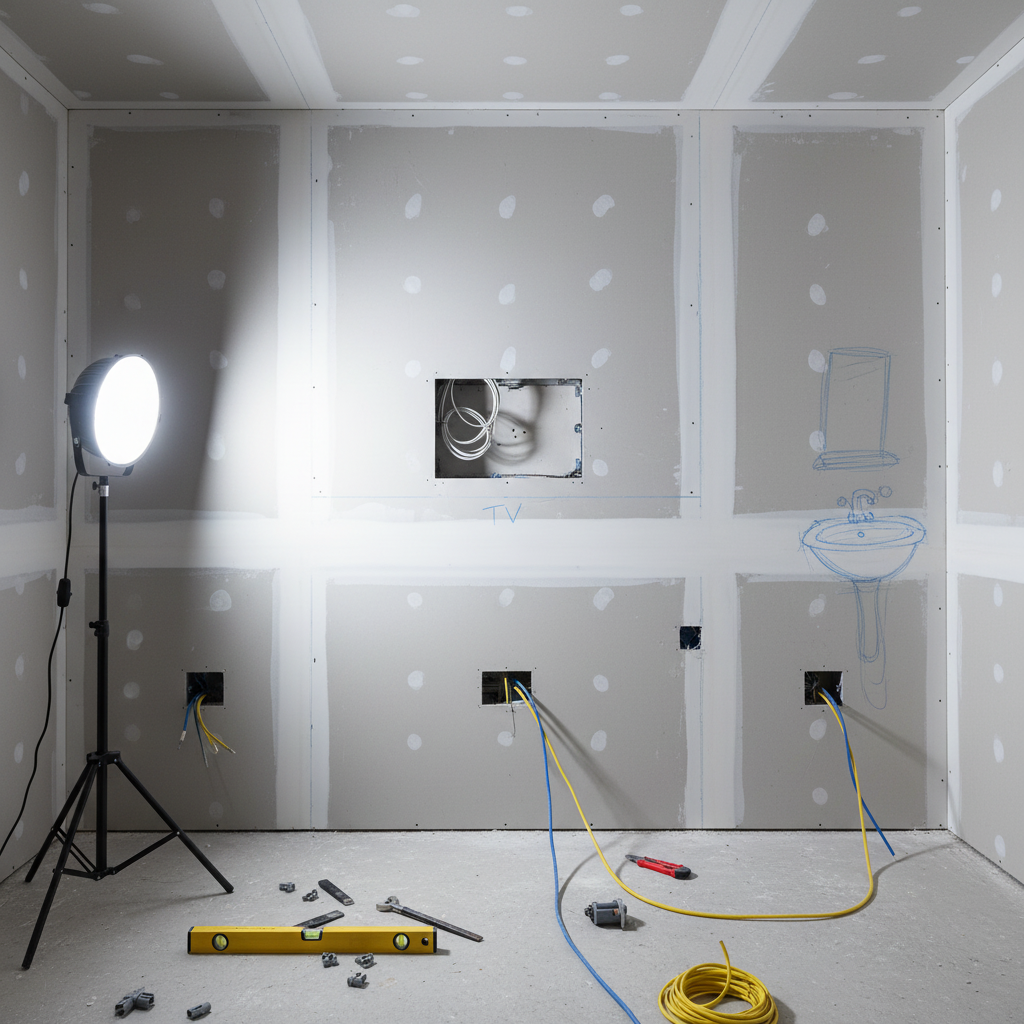
Look — bedrooms need outlets where you'll actually use them, not where some template says they should go. Master bedrooms especially — you're thinking bedside charging, vanity power for hair tools, and probably a whole entertainment wall situation.
Here's the thing: our electricians follow **National Electrical Code (NEC)** requirements religiously — **GFCI-protected outlets** within six feet of any sink or water source. Switches go where you'll naturally reach for them when you walk in half-asleep. That stuff matters more than you think.
**Master bedroom must-haves usually look like this:**
1. Dual bedside outlets with **USB charging ports** built in (because nobody wants to dig for adapters at midnight).
2. Dedicated vanity circuit for high-wattage stuff like hair dryers — prevents breaker trips when both of you're getting ready.
3. Entertainment wall with enough outlets for TV, soundbar, gaming console, streaming boxes, whatever.
4. Ceiling fan rough-in with **remote control capability** wired from day one.
5. Conduit for **automated window treatments** if you're going the smart home route.
Real Project: How We Saved a Client $3,200
During a high-end master suite renovation in Scottsdale, a client asked for "basic bedroom outlets." That's it. But we asked better questions during our walkthrough — turned out they wanted heated bathroom floors, motorized blinds, and a built-in coffee station.
By mapping those needs early, we installed dedicated 20-amp circuits while the walls were still open. Total cost difference versus doing it later? Around **$3,200** saved.
We also ran conduit for future smart home upgrades they weren't even thinking about yet. That's the difference between planning for how you'll *actually* live versus checking boxes on a permit form.
Children's Room & Bathroom Power Planning
Now, kids' rooms? Safety first, everything else second. **Tamper-resistant outlets** (TRRs) go everywhere — it's been code since 2008, not optional. Those spring-loaded shutters prevent curious toddlers from sticking keys or paperclips into receptacles.
Water + electricity = bad news. That's why every bathroom outlet gets **GFCI protection**, usually within 6 feet of sinks or tubs. These things trip in milliseconds if they detect current leakage — fast enough to keep minor mishaps from becoming ER visits.
We usually add dedicated circuits for computer setups and study areas in kids' rooms. Entertainment zones get planned for child-safe access without a rat's nest of extension cords.
**Safety and function checklist:**
- **Tamper-resistant outlets** in every kids' space (NEC requirement since 2008).
- Separate circuits for computers and electronics — prevents overloads when they're gaming and charging simultaneously.
- **GFCI protection** within 6 feet of all sinks, tubs, and showers per **NEC Article 210.8**.
- Bath fan controls with timers to handle moisture and save energy.
- Night lighting automation (especially helpful for younger kids navigating hallways at 2 AM).
Our technicians test every GFCI with specialized voltage testers to verify they're wired correctly and trip within code-required timeframes. We also place outlets at least three feet from bathtubs and add safety covers on unused receptacles in rooms with small children. Our background-checked pros make sure everything meets or exceeds current safety standards.
Kitchen & Living Area Power Distribution
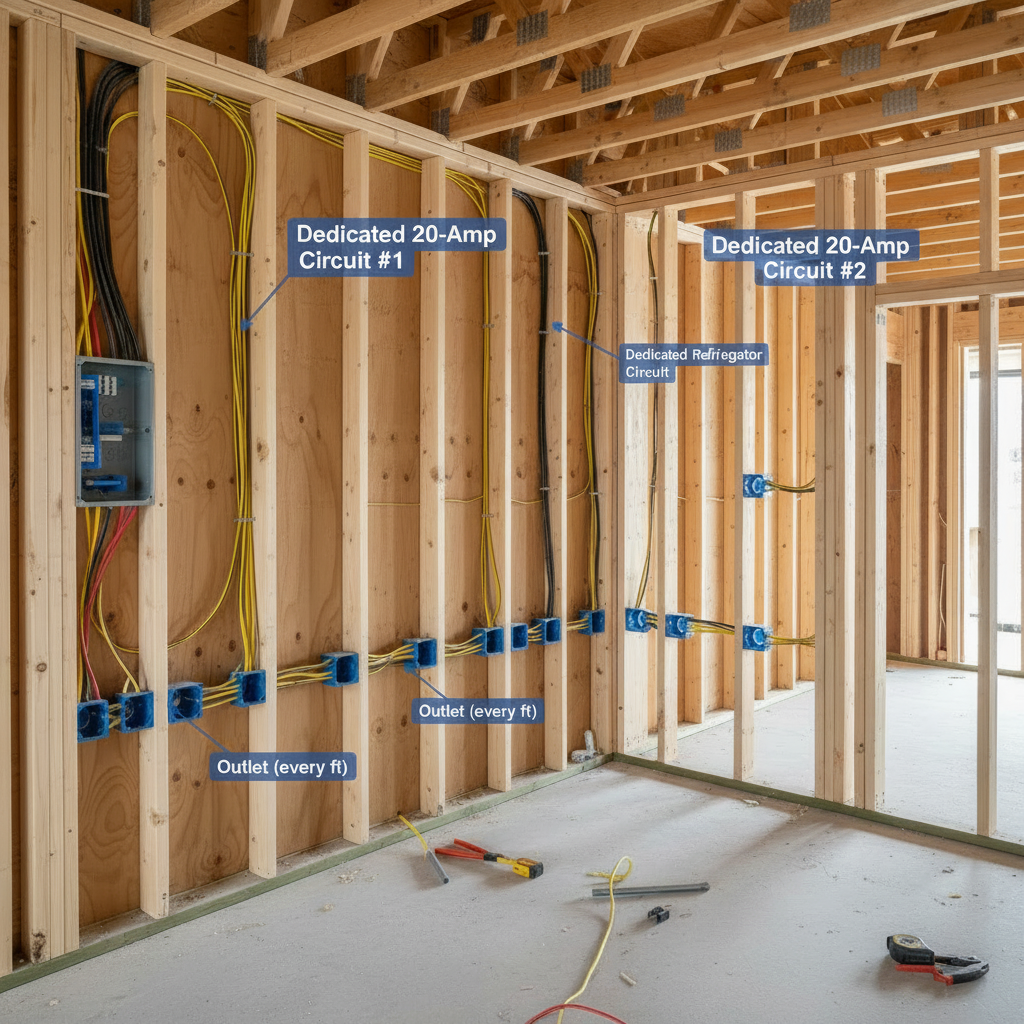
Your kitchen is basically an appliance warzone. Microwave running while the toaster pops and the Keurig heats up? That's when most breakers give up.
We run separate **20-amp circuits** for the fridge, dishwasher, disposal, and microwave. Living rooms need solid entertainment system power, versatile lighting options, and outlets that work with however you arrange furniture (because nobody keeps the same layout forever). For more detailed kitchen-specific wiring advice, check our [Kitchen Wiring Essentials](link-to-kitchen-wiring-essentials-article) article.
**Kitchen circuit breakdown typically includes:**
1. Minimum two **20-amp small appliance circuits** serving countertop outlets (NEC baseline requirement).
2. Dedicated 20-amp circuit for the refrigerator — keeps your food safe if something else trips a breaker.
3. Separate 20-amp circuit for garbage disposal.
4. **GFCI protection** on all countertop receptacles (code requirement for wet locations).
5. Dedicated circuits for under-cabinet lighting if you're doing LED strips or puck lights.
**Living room planning usually covers:**
- Entertainment center with plenty of outlets and data ports for all your media gear.
- Floor outlets for flexible furniture placement and table lamps without cords running along baseboards.
- Dimmer controls for adjustable lighting throughout different zones.
- Ceiling fan rough-ins with light kit capability.
- Smart home pre-wiring for automated lighting and climate control.
Proper kitchen outlet spacing according to code? NEC requires outlets every four feet along countertops — basically, no spot should be more than two feet from a receptacle. BizzFactor typically exceeds this because in kitchens, you genuinely can't have too many outlets.
Advanced Planning Considerations
Here's the thing: so yeah, we're not just running wire for lamps anymore. You've got **smart thermostats** talking to your phone, **EV chargers** pulling serious amps in the garage, maybe **solar panels** feeding power back to the grid. For more on preparing your home's electrical system for emerging tech, see our [Smart Home Wiring Fundamentals](link-to-smart-home-wiring-article) guide.
Homeowners who plan three years out? They're not calling us back for expensive retrofits.
We've seen it play out enough times to know the pattern. The family that drops conduit and overbuilds capacity during construction laughs at their neighbor who's cutting drywall holes two years later to add circuits.
We coordinate with HVAC contractors, security installers, and home automation specialists to make sure everything integrates smoothly. Nobody wants their smart thermostat fighting with their lighting system because two different crews didn't talk to each other.
We run conduit to key locations — attic, garage, utility room — so pulling new cables later takes minutes instead of days. Smart planning means oversizing your electrical panel, adding EV charging circuits even if you don't own an electric car yet, and creating structured wiring pathways for data and communications.
Why oversize the panel? Because you *will* add circuits later. Guaranteed.
New appliances, finished basement, workshop, solar panels — something will require more capacity. Every homeowner we've worked with expands their electrical needs over time. An oversized panel makes that process simple instead of requiring a full service upgrade.
Load Calculation & Panel Sizing
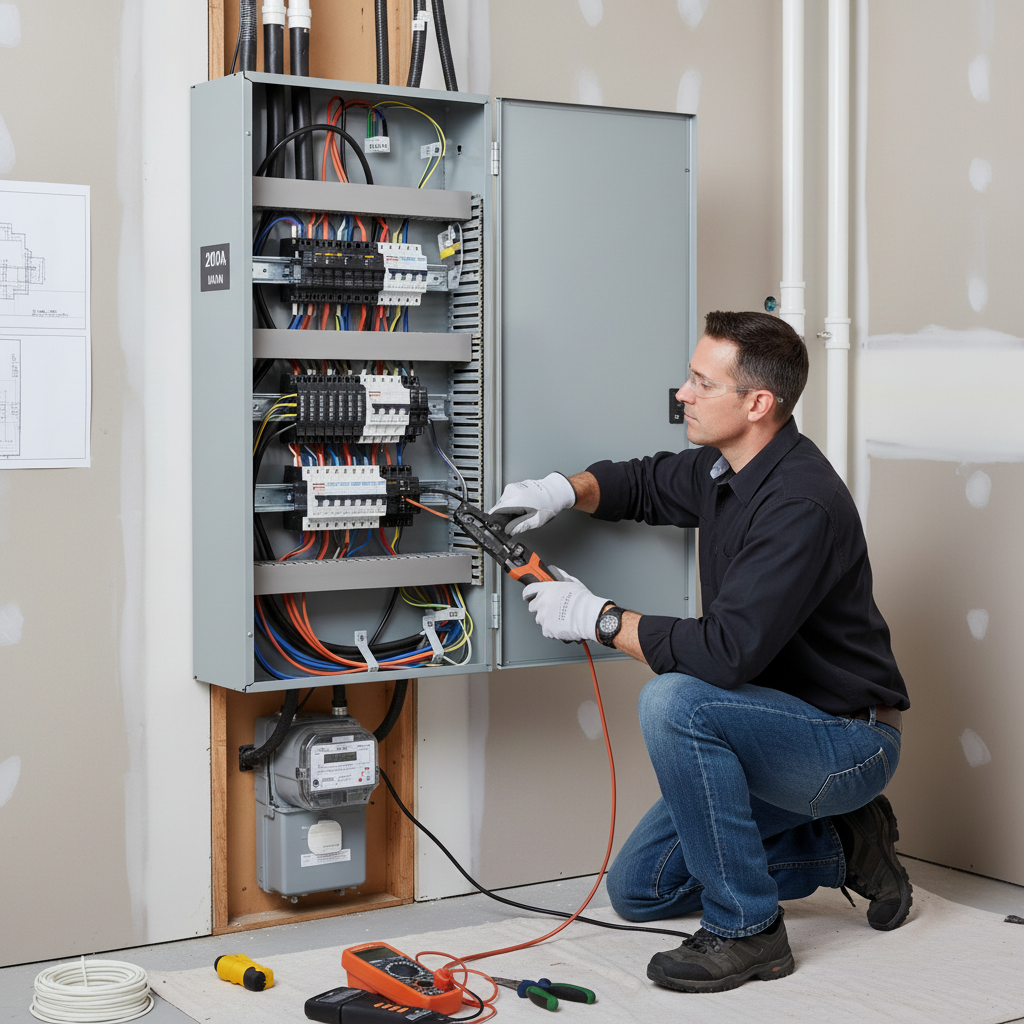
Now, we size your electrical service using **NEC Article 220 formulas** — square footage, planned appliances, heating/cooling loads, the works. This calculation determines whether you need 100, 200, or 400 amps feeding your house.
Get this wrong? You're either dangerously undersized (code violations, fire risk) or you paid $3,000 extra for capacity you'll never use. For comprehensive details on panels and service upgrades, read our [Electrical Panel Upgrade Guide](link-to-electrical-panel-upgrade-article).
Our certified electricians always include a **25% future expansion buffer** in the math. That cushion handles growth in electrical demand without forcing expensive panel upgrades five years down the road when you add that hot tub or finish the basement.
**Standard residential service sizes usually break down like this:**
- **100-amp service:** Works for smaller homes under 2,000 sq ft with minimal appliance loads.
In-Depth Look
Detailed illustration of key concepts
Visual Guide
Infographic illustration for this topic
Side-by-Side Comparison
Visual comparison of options and alternatives

Sources & References
- Electrical Wiring Best Practices: A Comprehensive Guide
- Electrical Wiring Installation: A Comprehensive Guide to Planning ...
- Comprehensive Guide to Electrical Installation Services: Ensure ...
- Your Ultimate Guide to Electrical Wiring - This Old House
- New Home Wiring: A Guide For Homeowners - Happy Hiller
- Best Tool Brand for Electricians 2025: Expert Rankings - Wood Guide
- Best Electrician Tools Brand Guide
- 35 Essential Electrician Tools Every Pro Needs in 2025
- Top 20 Essential Electrician Tools for Pros (2026 List) - Workiz
- 51 Must-Have Electrician Tools for 2025 - FieldEdge
Frequently Asked Questions
Need Professional Help?
Find top-rated electricians experts in your area