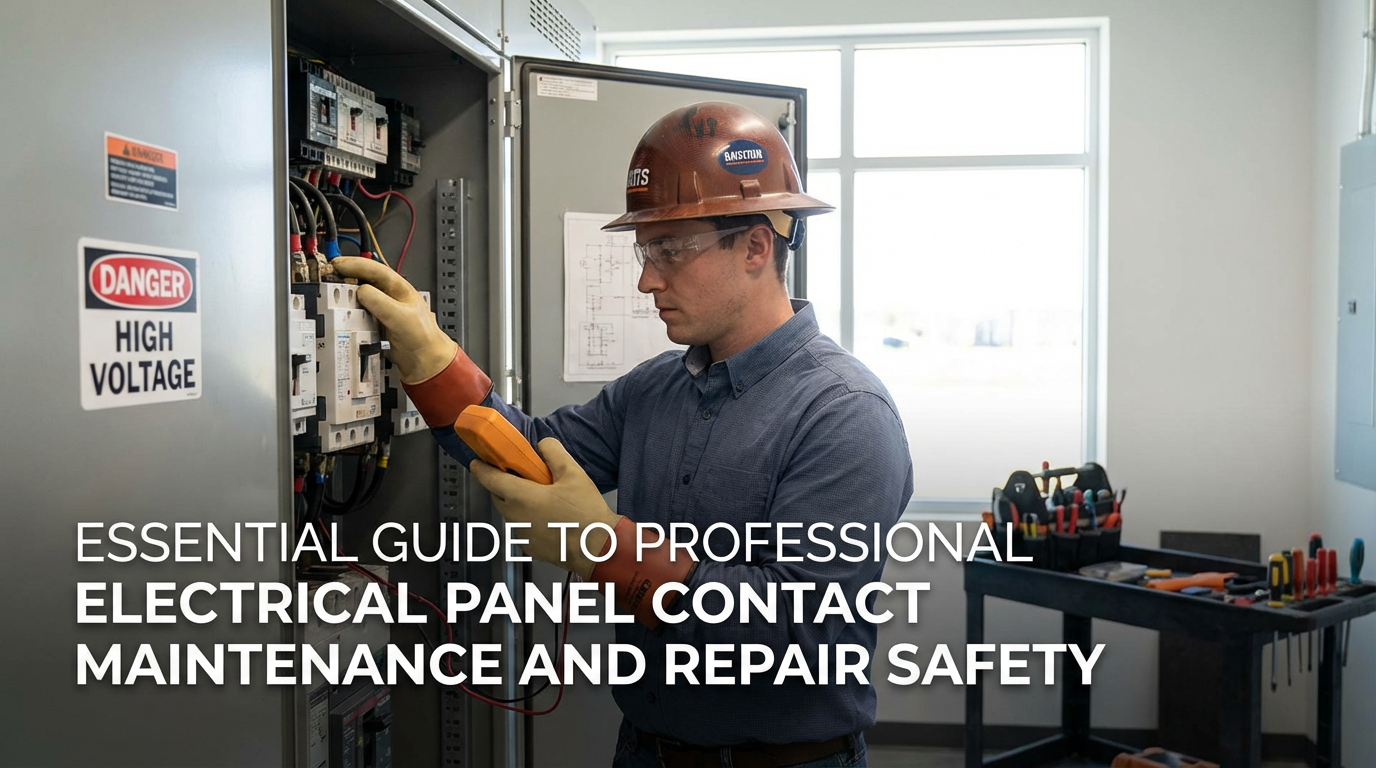
Expert guide to electrical panel contact maintenance and repair safety. Learn warning signs, professional techniques, and why DIY work creates deadly hazards.
Key Takeaways
- Professional panel maintenance prevents dangerous fires caused by loose electrical connections
- Thermal imaging and torque verification identify problems before catastrophic failures occur
- DIY panel work creates deadly hazards requiring specialized training and equipment
BizzFactor Quick Guide
The BizzFactor Standard: Always use licensed electricians with thermal imaging equipment for panel connection maintenance
Key Takeaways
The BizzFactor Standard
3 Non-Negotiable Requirements for Elite Workmanship
Licensed & Insured Professionals Only
Electrical panel work requires specialized training, proper equipment, and liability coverage for safety and code compliance.
Thermal Imaging Diagnostics Required
Professional-grade thermal cameras identify dangerous hot spots and loose connections before they cause fires or failures.
Calibrated Torque Equipment Standards
Proper terminal tightening requires calibrated torque tools following manufacturer specifications to prevent under or over-tightening.
The Ultimate Guide to Professional Electrical Panel Contact Maintenance & Safety
Look — professional electrical panel contact maintenance isn't just some checkbox item on a home inspection form. It's how you actually prevent arcing, stop overheating that'll melt plastic, and keep your house from catching fire. We're talking about electrical fires that destroy thousands of homes every year.
At BizzFactor, I've personally seen this play out too many times. Homeowners don't realize their panel connections are slowly degrading until something goes seriously wrong.
It's completely silent until it isn't.
Here's our approach: Our certified electricians show up with specialized testing equipment — thermal imaging cameras that spot hot connections before they fail, and calibrated torque wrenches that ensure everything's tightened to exact specifications. We find those loose connections before they turn into emergency calls at 2 AM.
Don't skip this maintenance.
Your Electrical Panel: Where Everything Connects
Think of your panel as the distribution center for every amp of electricity in your house. **Reliable electrical connections** inside that gray metal box are what stand between normal operation and a house fire. You've got the main service cables feeding in from the utility, breakers connecting to hot bus bars, and those neutral/ground bars where dozens of wires terminate.
Current flow through these points is substantial.
Like, 200 amps on the main lugs substantial.
Perfect conductivity isn't optional — it's life safety. Resistance at any connection point creates heat. Heat accelerates degradation. Degradation creates more resistance. And eventually, something catastrophic happens at 3 AM on a Tuesday.
Look — look — inside a typical 200-amp residential panel, you're looking at maybe 40-60 individual connection points (more if you've got a lot of circuits). The main service cables — usually thick aluminum or copper — connect to your main breaker through heavy lugs. That's the real issue. Each individual circuit breaker gets its hot wire, usually secured with a terminal screw or (in some newer panels) push-in connectors. Then you've got the neutral bus bar collecting all those white wires, and the grounding bus bar for bare copper and green wires.
Every. Single. One. Matters.
For safe operation? Each connection needs to stay tight and corrosion-free indefinitely. Modern panels sometimes use push-in terminals (I'm not a huge fan, honestly), but those traditional screw terminals — when properly torqued to manufacturer specs — are still the most dependable long-term solution I've seen in 15 years doing this work.
Why Connections Fail Over Time
Temperature swings happen every day in your panel. The metal heats up when you're running the AC and dryer simultaneously, then cools down overnight when everything's off. Do that for five years straight? Even the best installation work starts to give. Screws back themselves out by microscopic amounts. Not enough to notice by looking. Plenty enough to create resistance.
That's how it starts.
You've got four things working against every connection in your panel: thermal stress from daily cycling, oxidation (especially on aluminum), vibration from your HVAC and appliances, and just plain material fatigue. It's not if these connections degrade — it's when. And if you're not checking them regularly, you won't know until something fails spectacularly. Usually at the worst possible moment.
- **Daily Heat Cycles Wreck Everything**: Here's what happens in real life — morning comes, you make coffee, run the dishwasher, maybe turn on the space heater. Your panel's connections heat up, metal expands a tiny bit. Evening hits, everything shuts off, metal contracts. Multiply that by 1,825 cycles (that's five years) and even connections torqued perfectly at installation have loosened up. The resistance creeps up slowly. You won't notice it until your thermal camera does.
- **Oxidation Creates Problems**: Moisture and air combine to create oxidation on copper and aluminum wires. That oxidation layer creates unwanted resistance at connection points, generating more heat. Higher heat accelerates more degradation. It's a vicious cycle you can't stop without intervention. I've pulled panels where the copper looked like it had green fur growing on it.
- **Vibration Loosens Everything**: Your home vibrates constantly. HVAC systems running, washing machines spinning, even normal settling creates tiny tremors. These aren't just background noise — they gradually loosen electrical connections over years. Same as a screw coming loose on something that vibrates constantly. This is why **professional electrical services** matter. We check for this stuff.
- **Installation Quality Matters From Day One**: A poorly done installation with improperly torqued connections? Those are weak points from the start. They'll fail prematurely, even under normal loads. They become hot spots. Always choose a [licensed electrician](https://www.bizzfactor.com/electricians) for installations. Non-negotiable.
- **Aluminum Wiring Needs Special Attention**: Got an older home with aluminum branch wiring? You're dealing with additional challenges. Aluminum expands and contracts significantly more than copper. It oxidizes faster too. This means it requires special connection methods — CO/ALR rated devices, anti-oxidant compounds. It's definitely not DIY territory. Our experts handle [aluminum wiring solutions](https://www.bizzfactor.com/electrical-services/aluminum-wiring-replacement) safely because one wrong move and you've created a fire hazard that'll sit there waiting for years.
How We Actually Diagnose Problems
We measure everything. We scan with thermal imaging. Then we verify with meters that cost more than most people's car payments. There's no guessing involved — either the connection is within spec or it isn't.
I've got a Fluke thermal camera that cost $3,400. Worth every penny. Point it at an energized panel and connections running 30+ degrees hotter than their neighbors light up like Christmas. That orange glow? That's a loose terminal cooking itself, probably been degrading for months. Your eyes can't see it. The camera doesn't lie.
So yeah, we pull out the thermal imager first, then verify everything with voltage drop testing. Our Klein digital multimeters can measure down to 0.01 volts, which matters when you're looking for resistance across a connection that should have basically zero voltage drop. Healthy connection under load? You're seeing maybe 0.2 volts, 0.3 tops. Start seeing 2-3 volts across a terminal? That connection's already failed, just hasn't caught fire yet.
That needs immediate attention.
The tightening part? That's where most electricians screw up (pun intended). You can't just reef on terminal screws until they feel tight. Square D breakers spec 10 inch-pounds on their terminals. Siemens specs 12. We use calibrated Milwaukee torque drivers that click at exactly the right value. Too loose and you've got a fire hazard. Too tight and you're stripping threads or crushing wire strands. Either way, you've failed.
And honestly? Insulation resistance testing is where we catch problems before they become emergencies. We use megohmmeters to find deteriorating wire insulation that could compromise connections. This helps prevent future failures. For complete safety assessment, you need our [electrical safety inspections](https://www.bizzfactor.com/electrical-safety-inspection).
Worth every penny.
Real Example: Phoenix House We Saved Last Month
Just last month in a Chandler neighborhood, our BizzFactor crew got an urgent call. Homeowner reported flickering lights and a burning smell from their 20-year-old panel.
Not good.
We brought thermal imaging equipment out. What did we find? Multiple loose connections running over 140°F. Way above safe temperatures. The main breaker's input terminals were so loose they'd started arcing and had carbonized the surrounding plastic. Total disaster waiting to happen. Several branch circuit connections were also overheating — clear evidence of inadequate tightening during previous work, probably by a handyman who thought "tight enough" was good enough.
We didn't hesitate. Immediate controlled shutdown. Replaced the main breaker ($380 for the part alone), torqued everything to precise specifications. Re-tightened every branch circuit connection to manufacturer standards.
After repairs, another thermal scan showed everything running cool.
That intervention saved the house from burning down. And saved the homeowner probably $450,000 in fire damage and displacement costs. It shows powerfully why annual professional inspections aren't just suggestions — they're essential preventive maintenance that costs maybe $200 but prevents catastrophic loss.
Don't wait until you smell smoke.
What BizzFactor Does Differently
Here's our deal: every single panel we touch gets inspected completely, not selectively. You hired us to check your electrical system? We're checking every connection point, every terminal, every bus bar. Not the ones that "probably need it." All of them. This takes us maybe 40 minutes longer per job than our competitors spend. Costs us labor. Cuts into our efficiency metrics. But I'd rather spend an extra hour than explain to someone why we missed the one loose connection that burned their house down.
Our certified electricians don't skip connections because "they look fine."
Yeah, we follow NFPA 70B maintenance standards, but we've gone beyond that internally. We've created our own checklist that's more thorough than what the code requires, because code is the minimum, not the target. Learn more about our commitment to [electrical safety](https://www.bizzfactor.com/electrical-safety). Most companies might check 15-20% of your connections during a "panel inspection." We're checking 100%. Every time. It takes longer. Costs us labor hours. But I sleep better knowing we didn't miss the one loose connection that would've burned someone's house down three months later.
Warning Signs You Can't Ignore
Think these warning signs are minor annoyances you can put off? You're playing with fire.
Literally.
Look — these symptoms show up before electrical fires, not after. If you're seeing any of this stuff, professional evaluation isn't recommended, it's mandatory. Like, call-today mandatory.
- **Burning Smell**: Any acrid, burning odor from or near your panel means overheating happening right now. It's an electrical emergency. Get out, call the fire department, call us. You might need power shut off immediately. That smell is plastic insulation melting. I've arrived at houses where the smell hit me in the driveway.
- **Flickering Lights**: Lights flickering, especially when big appliances cycle on? That often indicates loose connections in the panel or service entrance. You probably need [electrical troubleshooting](https://www.bizzfactor.com/electrical-troubleshooting). Don't ignore it. A guy in Scottsdale ignored it for six months — ended up with $12,000 in panel replacement and rewiring.
- **Warm Components**: Simple test — touch your panel cover, circuit breakers, the wall around it. None of it should feel warm. Ever. Warmth means dangerous resistance from loose connections. That's the real problem. I've touched panels that were legitimately hot to the touch. How that house didn't burn down, I'll never know.
- **Scorch Marks**: Dark marks, discoloration, or melting plastic around breakers or in the panel? That's evidence of arcing or severe overheating. It's already happened. You need immediate professional repair. This isn't a "call next week" situation.
- **Buzzing Sounds**: Buzzing, hissing, or crackling from your panel? That's arcing. Electricity jumping an air gap it shouldn't be jumping. Severe fire hazard. No debate on this one. Real talk: if your panel sounds like it's frying bacon, you've got maybe days before something fails catastrophically.
- **Frequent Trips**: A breaker tripping occasionally means circuit overload. But constant tripping for no clear reason? That's a "nuisance trip" pointing to connection problems with the breaker or wire. Consider [circuit breaker repair services](https://www.bizzfactor.com/circuit-breaker-repair).
In-Depth Look
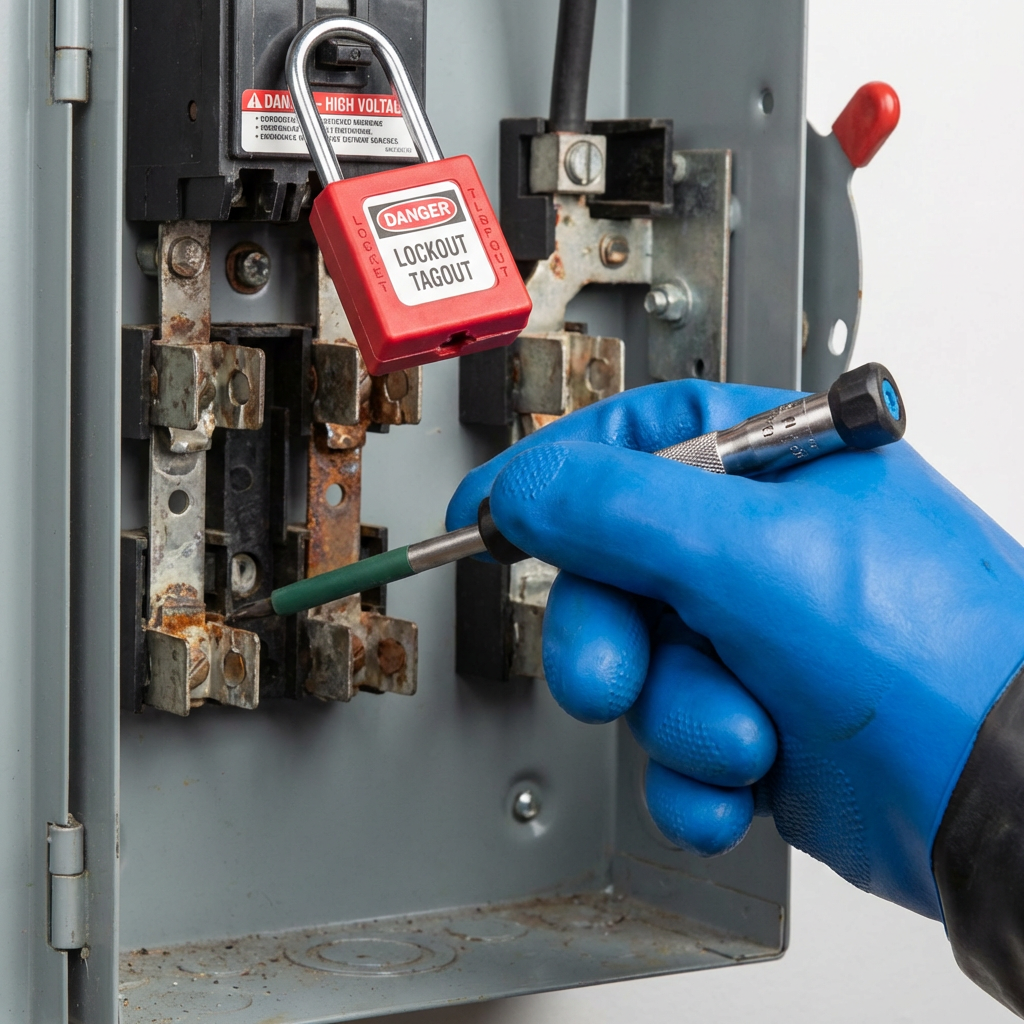
Detailed illustration of key concepts
Visual Guide
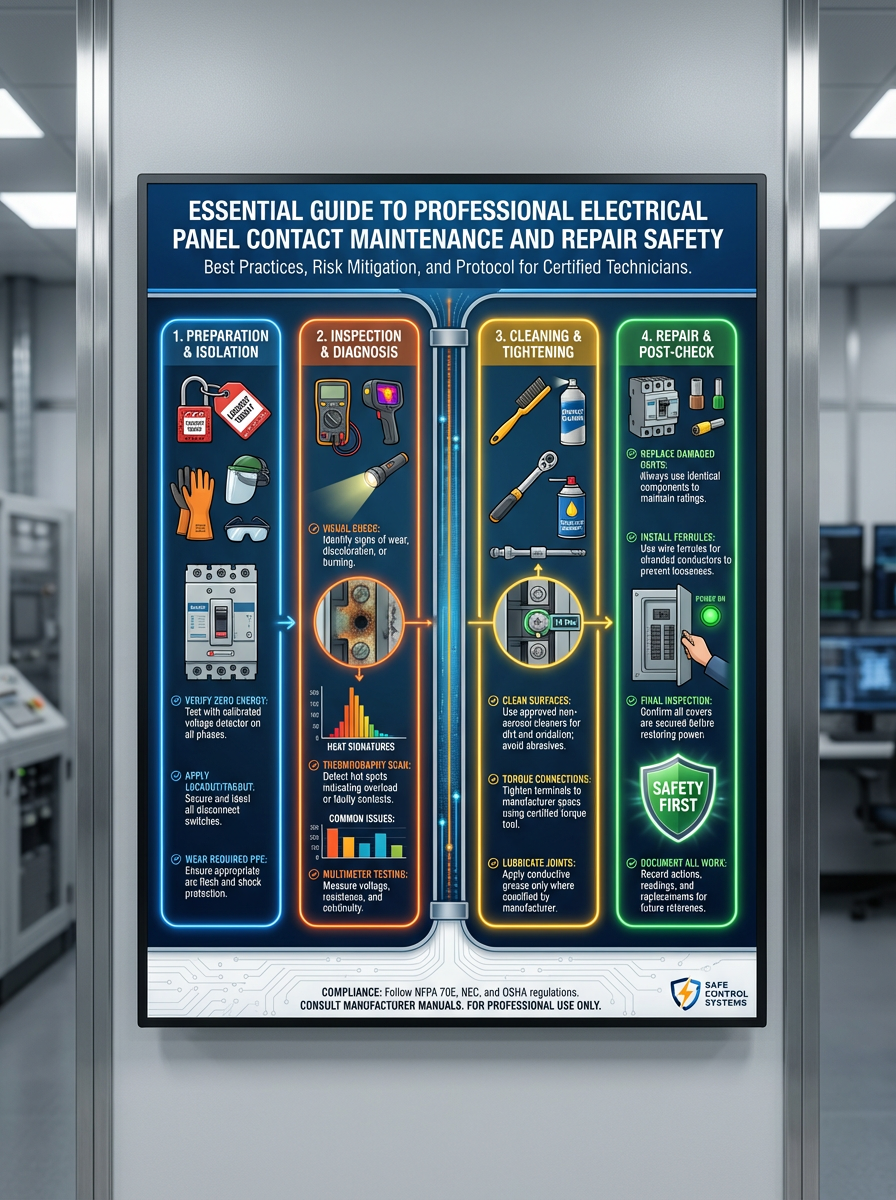
Infographic illustration for this topic
Sources & References
- A Guide to a Safe Electrical Panel Board Layout
- The DIY Guide to Electrical Panel Parts & Safety - YouTube
- Your Home's Electrical Panel Explained – Easy Guide | Ontime Electric
- Comprehensive Guide to Electrical Troubleshooting and Repairs
- Best Tool Brand for Electricians 2025: Expert Rankings
- Best Electrician Tools Brand Guide
- Top 15 Essential Electrician Tools for Pros - 2026 List
- 35 Essential Electrician Tools Every Pro Needs in 2025
- Essential 2025 Electrician Tools & Safety Warnings (New ...
Frequently Asked Questions
Need Professional Help?
Find top-rated electricians experts in your area