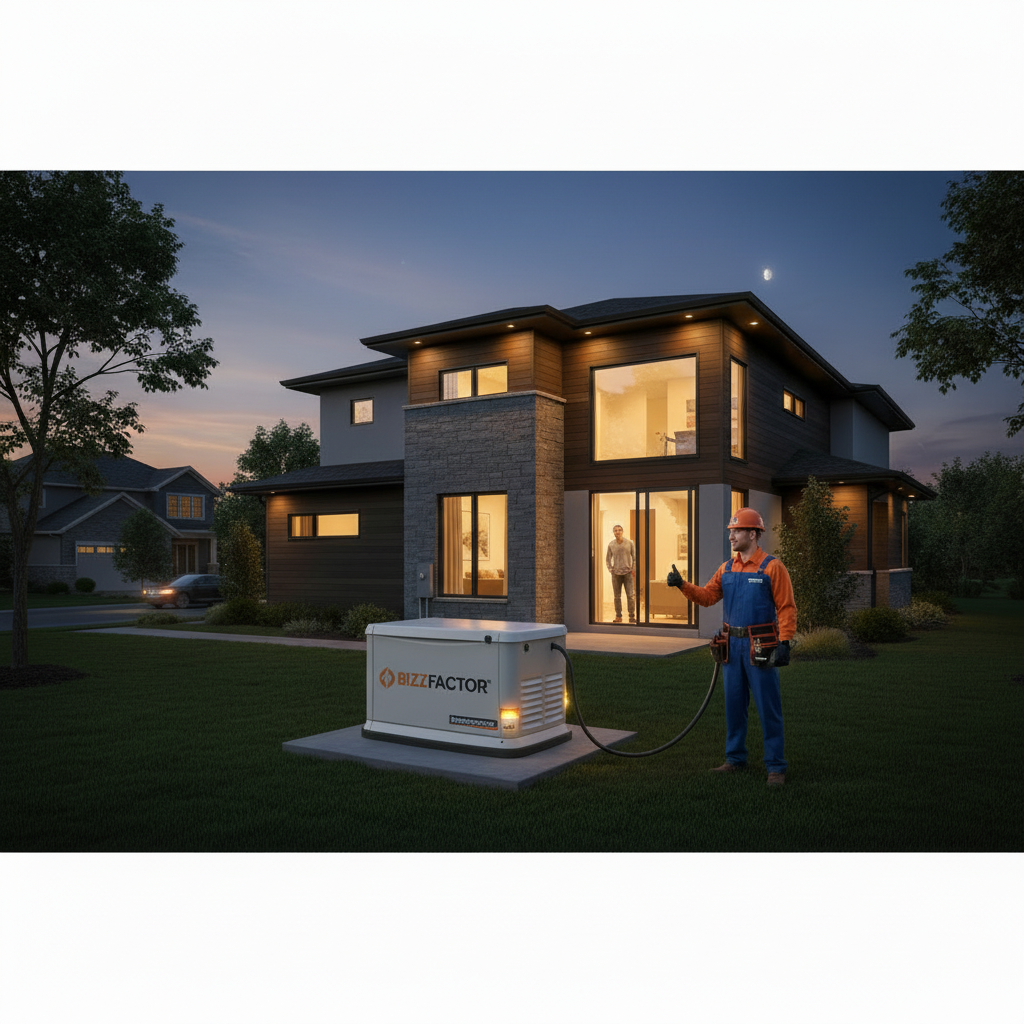
Our licensed pros guide you through choosing a home generator, sizing it right, and understanding transfer switch safety. Avoid costly mistakes and stay safe.
Key Takeaways
- **Portable Generators: The Manual Workhorse**
- **Real Talk from a Scottsdale Electrician:** "I've seen portable generator owners try to skirt the 20-foot rule, especially in cramped suburban lots," says Michael, one of our lead electricians who's worked the Valley for 12 years. "They position it right outside a window or in the garage with the door cracked. That's just asking for trouble with carbon monoxide. We educate every client about adequate ventilation and safe placement." He's not exaggerating. It truly is life or death.
- **Standby (Whole-House) Generators: The Automatic Fortress**
- **Optimal & Code-Compliant Placement:** The generator isn't just plopped down anywhere. It *must* be installed on a stable, level pad—typically a professionally poured concrete slab, capable of supporting significant weight and vibration. We strategically position the unit to meet *all* local code clearances from windows, doors, and vents.
Key Takeaways
Is a Home Generator Really Worth It? Your Ultimate Guide to Uninterrupted Power
Here's what nobody tells you about generators until it's too late: they're not about convenience. They're about the refrigerator full of groceries spoiling while your neighbor's lights are on. About your kid's insulin staying cold. About not evacuating your own house in July because the AC died and you've got elderly parents upstairs.
When the grid goes down, you get electricity. That's it. That's the whole point.
Look — look — it connects directly to your home's electrical panel via an [automatic transfer switch](/services/electrical/transfer-switch-installation). Not some fiddly setup you cobble together at Home Depot. Depending on what you buy, it can power your essentials — fridge, furnace, medical equipment — or run the whole house like nothing happened. For most homeowners, that's not a luxury. It's insurance against the chaos that comes when the power stays off for three days in August.
Don't let an extended blackout disrupt your life or create hazardous conditions.
Get a dependable backup power solution.
You won't regret it.
What Are My Home Generator Options? Portable vs. Standby
You've basically got two choices here: portables and whole-house standby systems. Different budgets, different headaches.
- **Portable Generators: The Manual Workhorse**
These gasoline-powered units are the 'storm chaser's friend.' They offer mobility and a hands-on approach to backup power. Models like the Honda EU3000iS (I've seen guys swear by these for their quiet operation) can easily run a refrigerator, essential lighting, and charge mobile devices during a nasty storm. But they demand your active management.
Fill 'er up, start 'er up, keep an eye on the fuel gauge.
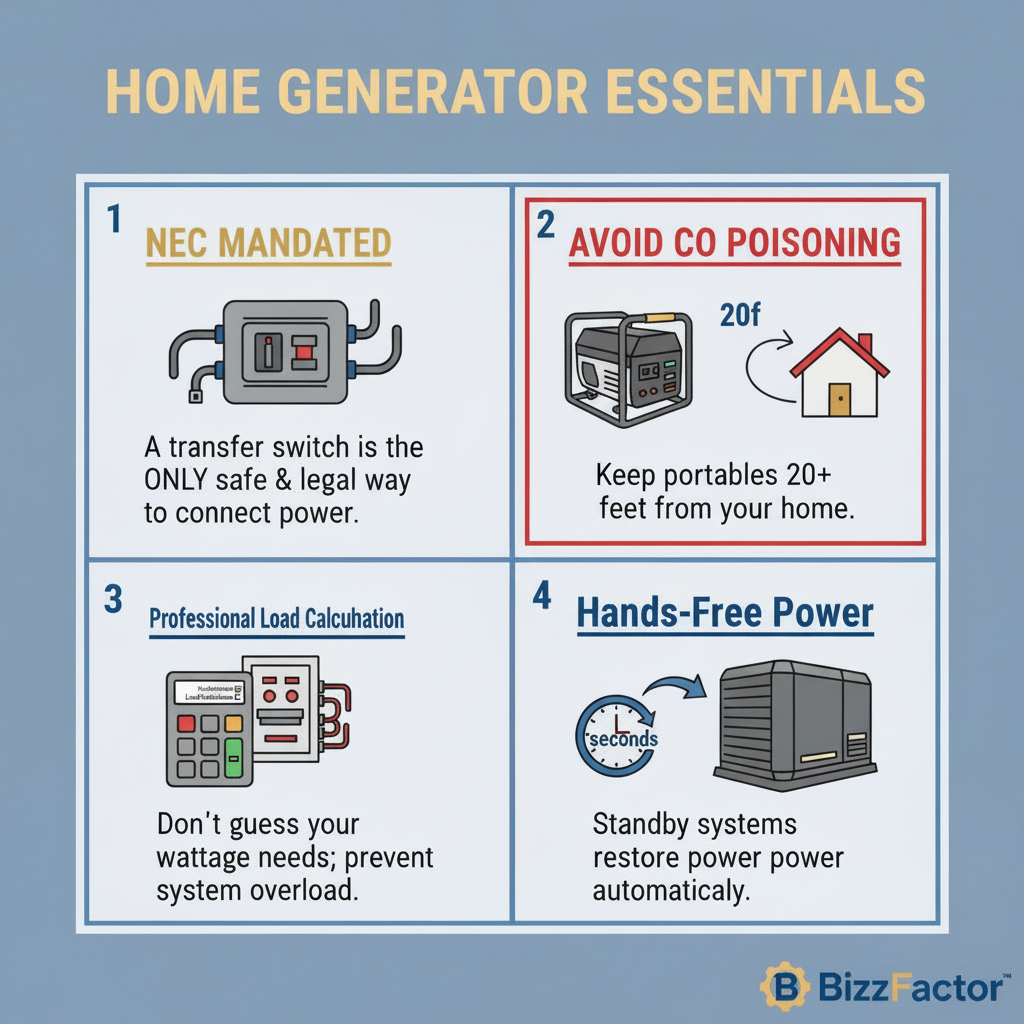
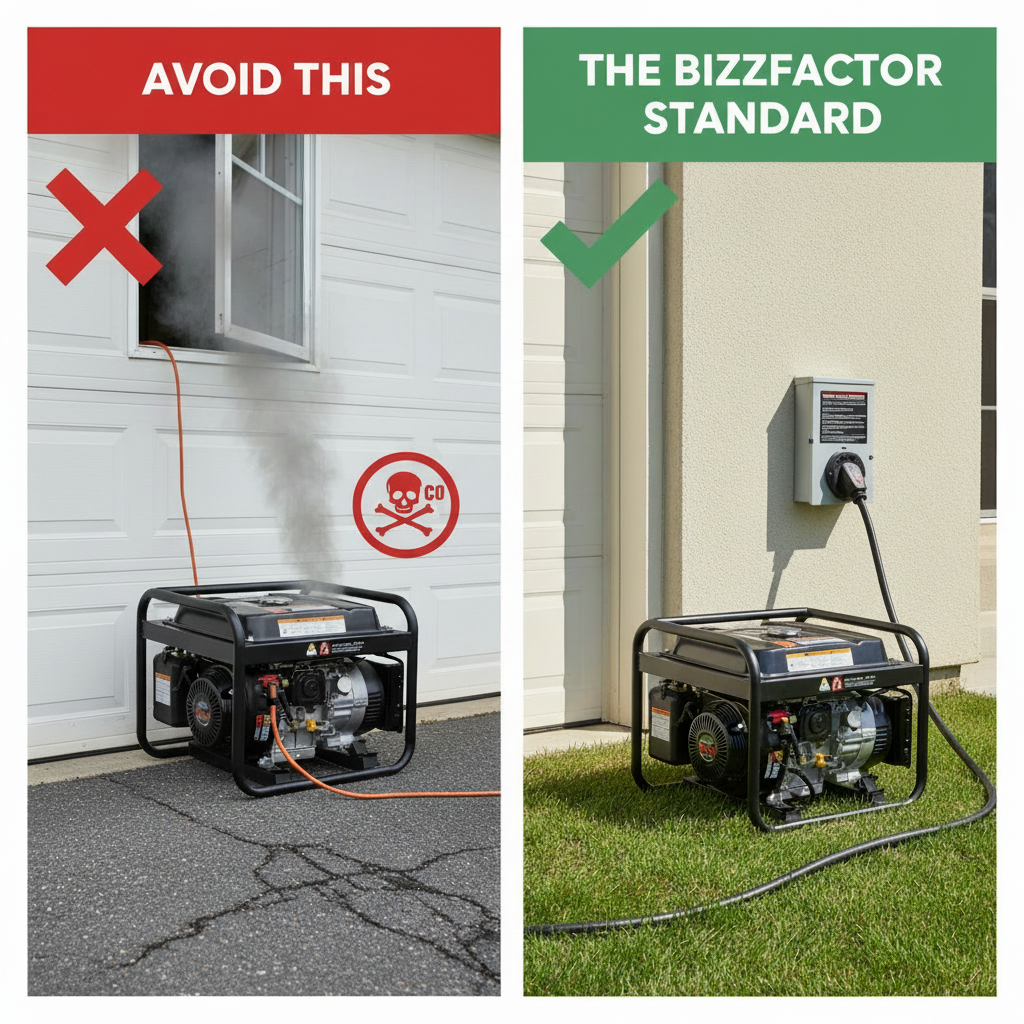
Here's the thing: Key drawbacks are numerous: manual starting (sometimes a real chore in the dark and rain), the absolute necessity for heavy-duty, outdoor-rated extension cords (and correctly sized ones — don't skimp!), and—this is critical—placement at least 20 feet from your home.
Why 20 feet?
Deadly carbon monoxide poisoning. It's an invisible killer. These units provide power, sure, but they require your direct, ongoing involvement and meticulous operational safety. Forget 'set it and forget it.' With a portable, you're the operator.
Every single time.
- **Real Talk from a Scottsdale Electrician:** "I've seen portable generator owners try to skirt the 20-foot rule, especially in cramped suburban lots," says Michael, one of our lead electricians who's worked the Valley for 12 years. "They position it right outside a window or in the garage with the door cracked. That's just asking for trouble with carbon monoxide. We educate every client about adequate ventilation and safe placement." He's not exaggerating. It truly is life or death.
- **Standby (Whole-House) Generators: The Automatic Fortress**
Now, this is where convenience meets serious capability. Picture your AC condenser unit — that's basically what these look like. They sit outside on a concrete pad, hardwired into your electrical system. We typically spec Generac (probably 70% of our installs), Kohler if you've got the budget, or Cummins for commercial-grade reliability.
They run on natural gas from your existing line or liquid propane if you're rural.
Now, here's the difference: your standby unit gets wired straight into your electrical system through an [Automatic Transfer Switch (ATS)](#the-critical-role-of-a-transfer-switch-in-generator-safety). Power goes out? The ATS catches it — usually in under five seconds — fires up the generator, and swaps your home over to backup power. Whole thing happens before your WiFi router even realizes there's a problem.
It's buttery smooth.
You install one of these, you're basically done worrying. The lights flicker, then go out. Five seconds later? Back on. You didn't touch anything. Didn't check the fuel. Didn't drag extension cords through the rain. That's what standby means — the system handles everything while you stay on the couch.
Perfect for keeping your whole house running during extended outages.
How Do I Correctly Size a Generator for My Home? It's More Than Just Guesswork
Don't guess. Ever.
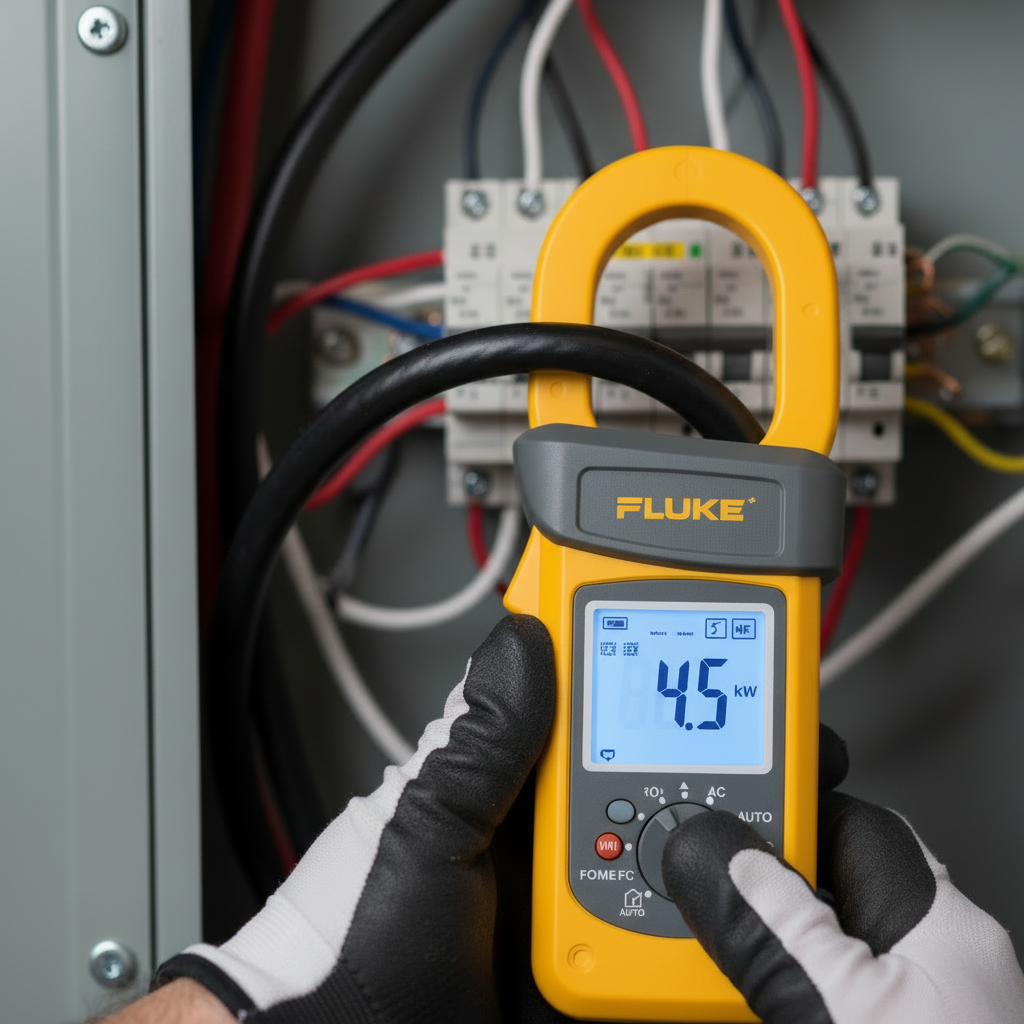
You need a licensed electrician running actual load calculations before you buy anything. We pull out our Fluke meters and literally measure every circuit you want backed up. Not estimates from some website. Actual amperage readings while your stuff is running.
Because here's what most people miss: starting watts versus running watts.
Think about it: an AC unit might run at 3,500 watts, but its compressor could momentarily spike to 10,000 watts on startup.
Ignore that, and you're in for trouble.
We measure everything — the fridge (with that compressor surge), the well pump if you've got one, your furnace blower, the garage door opener, even your wife's hair dryer if she's adamant about it. This stops your generator from tripping breakers, struggling under load, or burning out prematurely because it's working too hard. It's smart engineering.
Here's the thing: an undersized generator is a homeowner's nightmare. It'll frequently trip its internal breaker, sputter under load, or outright fail to energize high-demand appliances like well pumps, clothes dryers, or—the big one—your central air conditioner.
So we actually bring diagnostic equipment to your house. Fluke 376 FC clamp meter — that's our standard. We clamp onto each circuit you care about while it's running normally. Fridge, freezer, furnace blower, medical stuff like CPAPs, garage door, sump pump. We write down the exact amps each one pulls. Then we add probably 25-30% overhead for surge capacity.
Not padding numbers. Your AC compressor doesn't negotiate when it needs 8,000 starting watts.
I've personally seen guys buy a 12kW unit off Amazon, try installing it themselves, then call us three days later because it won't run their house. Turns out their well pump alone pulls 9kW on startup. They wasted $3,200 on equipment that's too small.
Don't be that guy.
This whole process — the measuring, the calculating, the right-sizing — that's what keeps your power on when you actually need it. Not guesswork. Real numbers.
The Critical Role of a Transfer Switch in Generator Safety: Don't Compromise
Transfer switches aren't optional. They're required. NEC Article 702 — that's electrical code — mandates them for a reason that has nothing to do with bureaucracy and everything to do with people not dying.
Here's what it does: disconnects your home from the utility grid before your generator powers anything. Complete isolation. Why? Because without that disconnect, you create backfeeding — electricity flowing backward through your meter into the neighborhood lines.
Picture this: lineman up on a pole two blocks away, restoring power after the storm. He thinks those lines are dead. Your incorrectly wired generator sends voltage straight back at him. That lineman could die. You'd face criminal negligence charges, wrongful death lawsuits, potentially prison. This isn't theoretical — OSHA documents fatalities from this every year. People have gone to jail.
Don't risk it.
You've got two main types of transfer switches, each serving a different generator type:
Here's the thing: 1. **Manual Transfer Switch (MTS):** This is the go-to for portable generators. During an outage, you manually start your portable generator. Then, you head to the MTS panel (usually installed neatly next to your main electrical panel) to physically flip a sturdy switch. This action disconnects your home from grid power and simultaneously connects it to generator power.
You're in control.
You flip the switch, power flows. Pretty straightforward. But yeah — you've gotta actually do it. Every time the power drops. Some folks like that hands-on approach. Others? Not so much.
2. **Automatic Transfer Switch (ATS):** This is the brains for standby systems. The ATS constantly watches incoming utility power. The second it detects an outage (or even a serious voltage drop), it tells your standby generator to fire up. Once the generator's running stable, the ATS handles the entire power transfer within seconds.
No manual intervention. No fumbling in the dark.
You're probably asleep when it happens. System just handles it.
#### Real-World Disaster: What Happened in Cedar Park Last Month
Guy in Cedar Park tried saving money with a DIY setup. Used a homemade jumper cord — they call 'em "suicide cords" for a reason — plugged his portable straight into his dryer outlet.
Thought he was being clever.
Now, power went backward through his panel. Fried his Nest thermostat instantly ($250). But it didn't stop there. That reverse current jumped to his neighbor's line (they share a transformer), surged through their panel, cooked the control board on a two-year-old Trane HVAC. Another $1,800. And here's the scary part: it energized the street's utility lines while the crew was responding. One tech caught the voltage on his tester right before climbing the pole.
Could've killed him.
The homeowner? Over $2,500 in fines, equipment damage, and repairs. A professional MTS installation would've cost him around $700.
Look, this story isn't unique. But it starkly illustrates why professional installation and adherence to electrical codes are non-negotiable for generator safety. Your life, and your neighbors' lives, depend on it.
What Defines a Professional Generator Installation? Expertise and Safety
So what separates a pro installation from some weekend warrior setup? More than you'd think. It's about following codes to the letter, doing quality work that'll last twenty years, and prioritizing safety above convenience or cost-cutting. Our guys have specialized generator training — not just standard residential electrical licensing.
They've installed hundreds of these systems.
Here's the thing: they know the quirks of Generac's Evolution controllers versus Kohler's Decision-Maker. They understand fuel pressure requirements, how to properly flash firmware, what transfer switch response times actually mean in real-world conditions. That's the real issue. We use premium tools from Milwaukee and Klein because cheap equipment creates inconsistent connections. Every wire gets torqued to spec. Every termination gets checked twice.
We stand by our work because we never compromise on quality or safety.
Ever.
This guarantees you a reliable, secure backup power system that performs exactly when you need it most.
Here's what our BizzFactor professionals consistently provide:
- **Optimal & Code-Compliant Placement:** The generator isn't just plopped down anywhere. It *must* be installed on a stable, level pad—typically a professionally poured concrete slab, capable of supporting significant weight and vibration. We strategically position the unit to meet *all* local code clearances from windows, doors, and vents.
Why?
To prevent carbon m
In-Depth Look
Detailed illustration of key concepts
Visual Guide
Infographic illustration for this topic
Side-by-Side Comparison
Visual comparison of options and alternatives
Sources & References
- Your Ultimate Guide to Home Generator Installation
- Generator Installation Guide: Your Complete Resource for Power ...
- Tips for Ensuring Generator Safety, Nationwide - Provident Electric
- Electric Generators: The Ultimate Guide
- The safest way to use a generator at home - Hanover Insurance
- Best Tool Brand for Electricians 2025: Expert Rankings - Wood Guide
- Best Electrician Tools Brand Guide
- 35 Essential Electrician Tools Every Pro Needs in 2025
- Top 20 Essential Electrician Tools for Pros (2026 List) - Workiz
- Top 10 National Electrical Code Revisions Impacting Electrical Safety
Frequently Asked Questions
Need Professional Help?
Find top-rated electricians experts in your area