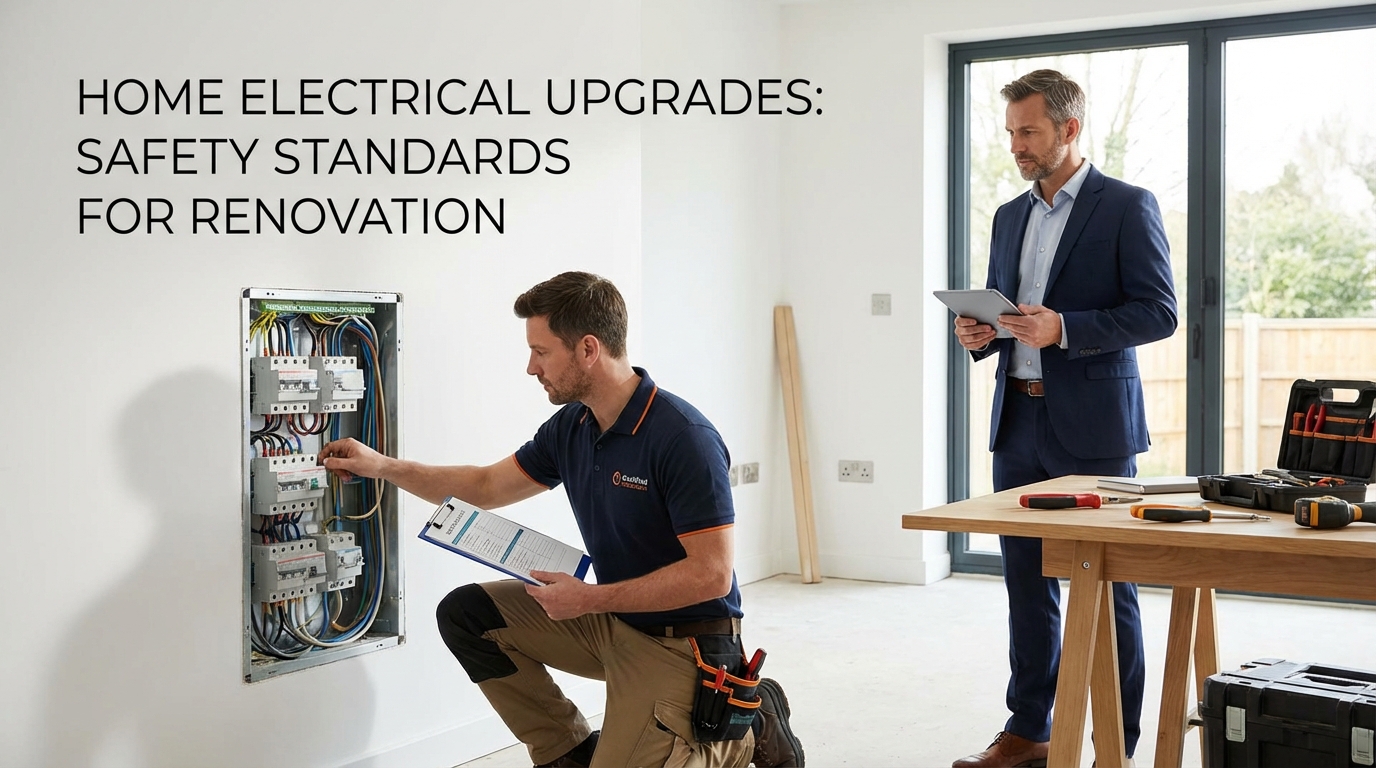
Expert electrical upgrade guide for home renovation. Learn safety standards, code requirements, and pro installation tips from licensed electricians.
Key Takeaways
- **Circuit breakers tripping monthly or more?** Your system's overloaded. It's screaming for help.
- **Lights dimming when you run the microwave or vacuum?** That's insufficient wiring capacity. Your electrical supply is struggling, and it shows.
- **Warm outlets or scorch marks around receptacles?** Danger zone. That's overheating, and it's a fire waiting to happen. Get it checked yesterday.
- **Extension cords as permanent solutions?** Nope. That's a Band-Aid on a bullet wound. They're designed for temporary use, not powering your entertainment center 24/7.
- Two 20-amp dedicated circuits for countertop receptacles. Your coffee maker, toaster, blender — they all need power.
Key Takeaways
Home Electrical Upgrades: Essential Safety Standards for Renovation
Starting a home renovation? Look, I get it — you're probably thinking about those gorgeous countertops and the sleek new fixtures. But if you're not thinking about your electrical system? That's where things go sideways.
Real talk: skipping electrical upgrades isn't just cutting corners. It's gambling with fire hazards and safety violations that'll cost you way more down the road. Since 2019, our licensed electricians at BizzFactor have inspected over 2,000 homes, and what we've seen backs this up every time: **electrical upgrades aren't optional extras. They're critical investments in your home's safety and longevity.**
Period.
Why Electrical Upgrades are Non-Negotiable During Home Renovation
Here's the deal: tackling electrical upgrades while you've already got walls open? That's the smart play. You're preventing house fires, avoiding code violations, and dodging expensive rework that'll make you want to scream later.
When walls are already torn up, our certified electricians can modernize outdated or straight-up dangerous systems without wrecking your finished spaces. Makes sense, right?
I'll never forget this homeowner in Laguna Hills. She spent $42,000 on this jaw-dropping kitchen remodel — custom cabinets, Italian tile, the works. Absolutely stunning. But she skipped the electrical assessment.
Three months later? Her brand-new $3,200 induction cooktop kept tripping breakers. Every. Single. Time. Turns out her 1978 electrical panel with its 60-amp circuit couldn't handle the load. We had to rip out freshly painted drywall and cut through that beautiful tile backsplash just to run a dedicated 50-amp circuit.
Another $4,800. Could've been $1,500 if she'd done it during the original renovation.
Then there's the ranch house in Corona we inspected last spring. Built in 1982. The owner wanted a home office setup — dual 32-inch monitors, gaming PC, dedicated server. Sounds reasonable, yeah?
Look — except his 100-amp service was already maxed out. And get this — the place still had aluminum wiring throughout. If you know anything about electrical systems, that should make you nervous. Aluminum wiring is a documented fire hazard, especially in homes pushing 40 years old.
Our recommendation? Upgrade to 200-amp service with copper wiring. The estimate was $3,200, and I watched this guy's face go pale. But when we showed him the Fluke multimeter readings — significant voltage drops, heat signatures at connection points — he understood. That's the real killer. You can't argue with physics.
According to the National Fire Protection Association (NFPA), **electrical failures cause roughly 51,000 home fires every year.** We're talking hundreds of deaths and over $1.3 billion in property damage annually.
Don't become a statistic.
Critical Warning Signs Your Home Needs Immediate Electrical Upgrades:
Think your home might need professional assessment? Watch for these red flags:
- **Circuit breakers tripping monthly or more?** Your system's overloaded. It's screaming for help.
- **Lights dimming when you run the microwave or vacuum?** That's insufficient wiring capacity. Your electrical supply is struggling, and it shows.
- **Warm outlets or scorch marks around receptacles?** Danger zone. That's overheating, and it's a fire waiting to happen. Get it checked yesterday.
- **Extension cords as permanent solutions?** Nope. That's a Band-Aid on a bullet wound. They're designed for temporary use, not powering your entertainment center 24/7.
Understanding Your Home's Electrical Load: A Renovation Must-Have
So what happens when you actually calculate electrical load? It's pretty straightforward, but most homeowners never think about it.
An **electrical load calculation** figures out your home's total power demand versus what your current system can actually handle. And honestly? Modern life has changed everything. Your 1975 electrical panel was designed for what — a TV, maybe a window AC unit, and some basic appliances?
Now you've got smart thermostats, multiple computers, EV chargers, induction cooktops, and about seventeen devices charging simultaneously. It's like trying to run a Tesla on a golf cart battery.
Not gonna work.
Our team uses professional Klein Tools testing equipment to measure actual load demands. No guesswork. Here's our process:
1. **Inventory every electrical device** you'll run simultaneously in the renovated space and throughout your home. We're talking everything from your WiFi router to that chest freezer in the garage.
2. **Add up individual power requirements** from appliance nameplates. Basic math, but crucial math.
3. **Apply National Electrical Code (NEC) demand factors** per established guidelines. This stuff's codified for your safety.
4. **Compare calculated load to your existing panel capacity** to spot deficits. The numbers tell the whole story.
What happens next? In my experience, homeowners are usually surprised — then relieved when they realize we've got a solid safety plan.
That peace of mind? Worth every penny.
Service Panel Upgrade: When 100 Amps Becomes Inadequate
Your **service panel** is basically mission control for your entire electrical system. Most older homes have 100-amp service, but modern households? They need at minimum **200-amp service** to safely handle today's demands.
Bonus: upgraded panels usually come with better whole-home surge protection. Your electronics will thank you.
Last month we finished a panel upgrade in Rancho Cucamonga — $2,850 total. The client's 100-amp setup from 1985 couldn't support her kitchen remodel plans: 7,200-watt induction cooktop, 5,000-watt convection oven, and a 500-watt wine fridge.
Think that's overkill? Tell that to the family whose kitchen caught fire because their outdated panel couldn't handle the load. It happens. More often than you'd think.
Our licensed technicians use advanced Fluke multimeters to verify proper voltage at every connection point. We're not just thorough — we're obsessive about it. Want to learn more about panel upgrades? Check out our dedicated page: [Electrical Panel Upgrades](/services/electrical-panel-upgrades).
Strategic Outlet and Circuit Planning for Modern Living
Look — effective **outlet placement** and **circuit design** aren't just about convenience. They eliminate reliance on sketchy extension cords and put power exactly where you need it.
Here's the thing: we design electrical layouts for your current needs *and* what you'll need five years from now. Because nothing's worse than finishing a renovation and realizing you've got zero outlets where you actually use devices.
We think ahead. You'll appreciate it later.
Kitchen Circuits: The High-Demand Zone That Requires Expert Design
The kitchen is hands-down the most electrically intensive room in your house. Which means it demands serious planning.
The National Electrical Code (NEC) requires separate **20-amp circuits for countertop outlets** and **GFCI protection** for all kitchen receptacles. Major appliances — electric ranges, wall ovens, cooktops — need dedicated high-amperage circuits.
No exceptions. It's code.
Our electricians use precision tools like DeWalt oscillating saws for clean cuts in your walls. We're installing new outlet boxes without destroying your finished surfaces. Our standard kitchen circuit layout typically includes:
- Two 20-amp dedicated circuits for countertop receptacles. Your coffee maker, toaster, blender — they all need power.
- Dedicated 20-amp circuit for the refrigerator. Pretty critical, right?
- Dedicated 20-amp circuit for the dishwasher. Clean dishes aren't negotiable.
- Dedicated 15-amp circuit for the garbage disposal. Game changer for kitchen cleanup.
- Dedicated 40-50 amp, 240V circuit for electric range/cooktop. This is serious power that needs serious planning.
Understanding GFCI and AFCI Protections: Your Safety Net
**GFCI (Ground Fault Circuit Interrupter)** and **AFCI (Arc Fault Circuit Interrupter)** devices prevent electrocution and electrical fires, respectively. Homes built before these became standard? They usually don't have them.
That's a problem.
GFCI Protection: Preventing Millisecond Shocks
GFCI devices detect tiny electrical imbalances — like when you accidentally touch live current or an appliance hits water. They cut power in 4-6 milliseconds.
Insanely fast.
The NEC requires GFCI protection in moisture-prone areas: bathrooms, kitchens, garages, unfinished basements, and all outdoor outlets. Yet I still walk into older homes that have zero GFCI protection. It's such a straightforward upgrade, and it could literally save your life.
Electrical Safety First recommends testing all GFCI devices monthly. Make it a habit. Set a phone reminder if you need to.
AFCI Protection: Your Fire Prevention Guardian Angel
AFCI protection targets dangerous electrical arcs that start house fires. Modern codes require AFCI breakers in bedrooms, living rooms, and dining areas.
These devices constantly monitor electrical waveforms. When they detect the signature of dangerous arcing — from damaged wiring or faulty connections — they immediately cut power.
We've seen AFCI devices prevent fires at least six times this year alone. They work. Seriously impressive technology that's worth the investment.
Smart Home Wiring: Future-Proofing Your Property Investment
Renovation's your chance to install **smart home infrastructure** before walls get sealed up. Miss this window, and you're looking at costly retrofitting later.
Nobody wants to tear open brand-new drywall to run cables, right? Our team installs structured wiring systems that support current tech and anticipate future demands. Your home stays cutting-edge and functional. Explore our solutions here: [Smart Home Electrical Services](/services/smart-home-electrical).
Robust Network Infrastructure: Eliminating WiFi Dead Zones
Reliable network connectivity isn't a luxury anymore. It's essential.
We install **Cat6a Ethernet cables** in renovated areas. WiFi's convenient, sure, but hardwired connections deliver superior speed, stability, and security. This matters for 4K streaming, video conferencing, smart home devices like Aquanta water heater controllers — all of it.
From what I've seen, homeowners who hardwire critical areas never regret it. The performance difference is night and day.
In-Depth Look
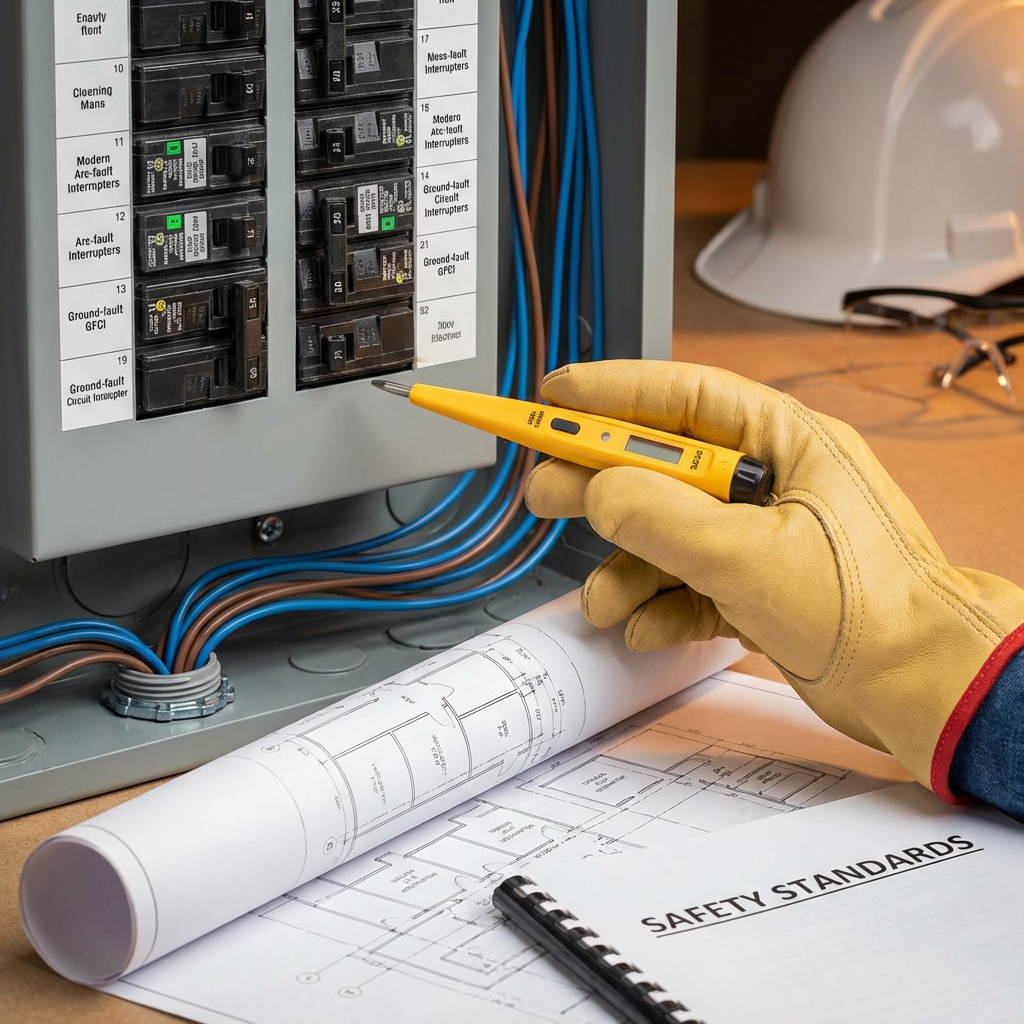
Detailed illustration of key concepts
Visual Guide
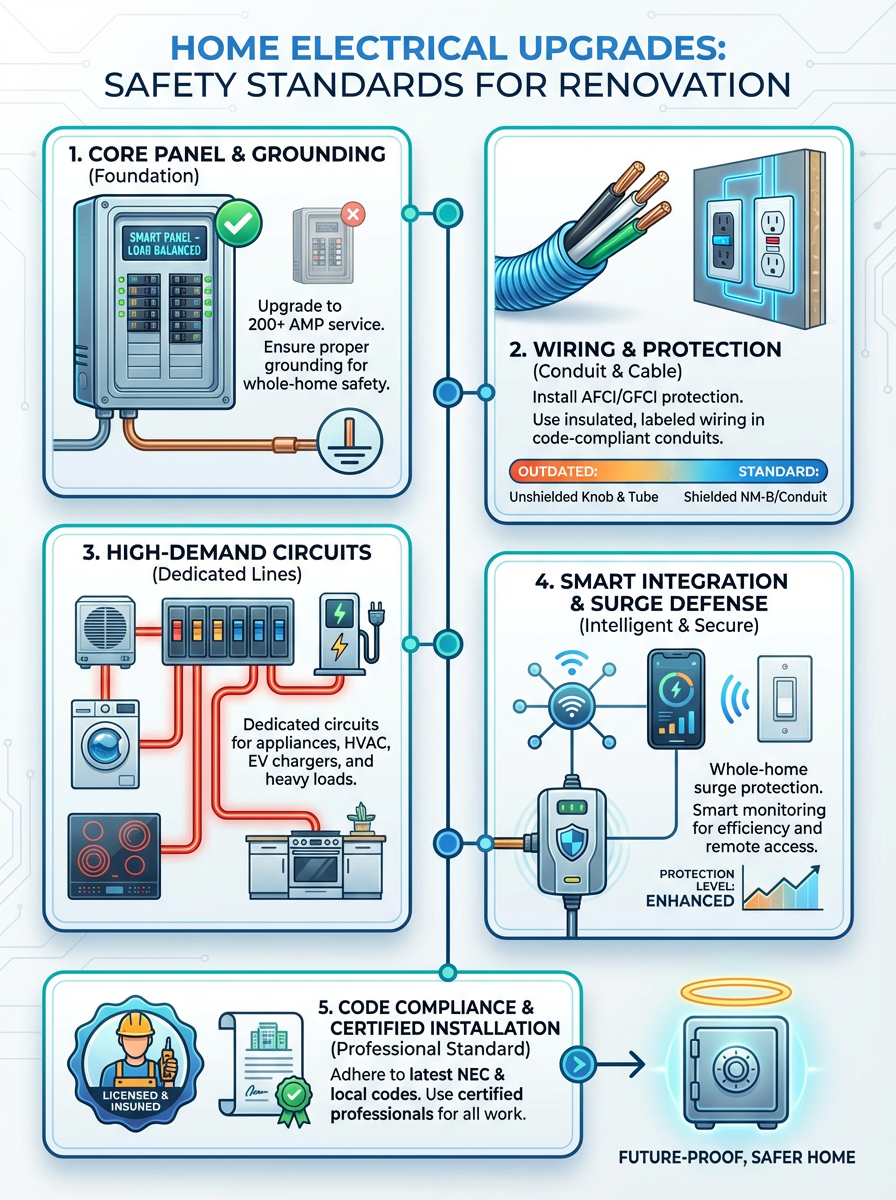
Infographic illustration for this topic
Sources & References
- The Do's and Don'ts of Electrical System Upgrades in Home ...
- Best Practices for Electrical Safety During Home Renovations
- How do you safely install new electrical systems in your home ...
- Essential Tips for Maintaining Your Home's Electrical System
- Best Tool Brand for Electricians 2025: Expert Rankings - Wood Guide
- Best Electrician Tools Brand Guide
- Top 20 Essential Electrician Tools for Pros (2026 List) - Workiz
- Essential 2025 Electrician Tools & Safety Warnings (New & Pro Tips!)
- 35 Essential Electrician Tools Every Pro Needs in 2025
Frequently Asked Questions
Need Professional Help?
Find top-rated electricians experts in your area