
Thinking about new lights? Our pro guide covers recessed vs. surface-mount fixtures, installation costs ($150-$500+), and why professional help from a licensed electrician is a must.
Key Takeaways
- **General Ambient Light:** These lights flood a whole room with light, chasing away those annoying shadows. Result? A comfy, inviting space.
- **Decorative Impact:** Chandeliers and intricate fixtures really crank up the style. They make a statement. They're basically functional art for your ceiling.
- **Utility & Task Lighting:** Perfect for brightening up utility rooms, hallways, or closets. They just work.
- **Rental-Friendly:** Often, they're easier to install without making big holes in the ceiling. Less drywall repair means everyone's happier. For sure.
- **Accessibility:** Changing bulbs or cleaning these types of fixtures is usually a breeze. No need for acrobatics.
Key Takeaways
Light Fixture Installation: A Pro's Guide to Safe & Stylish Lighting
Installing new lighting fixtures in your home — it's way more than just screwing in a bulb, isn't it? It's a careful dance between looking good, working well, and, most critically, keeping your family safe. From the soft glow of ambient lights to pinpoint task lighting, or even those fancy accent pieces, getting a professional to install your light fixtures is absolutely crucial. They make sure everything's up to code, boost your home's vibe, and guarantee your lights will work for years to come. Seriously, trust a licensed electrician with your lighting project. You'll get a brilliant outcome. They'll get it right, every single time. It's their job.
Understanding Different Light Fixture Installation Types for Your Home: Beyond the Basics
Look — look — modern homes use all sorts of lights, and each one needs a specific way of being installed, plus careful electrical planning. We don't just put things up; we're here to guide you. Our expert team helps you pick the perfect fixture. Something that not only matches your decor – giving that amazing 'wow' factor – but also performs great, saves energy, and fits perfectly into your home's structure. This isn't guesswork at all. It's a blend of science and art, a real craft.
Surface-Mounted Ceiling Fixtures: Versatile, Visible, and Vetted
Surface-mounted fixtures? They're a staple in pretty much every home. These visible lights attach directly to an electrical box right on your ceiling. Often, they become the room's main focus. Think about those grand chandeliers, sleek flush mounts, or elegant semi-flush mounts you see. We often point clients towards top-notch brands. Why? Because they're reliable, they look good, and — here's the kicker — they're easy to keep clean. Reliability matters. So much.
**Key benefits of surface-mounted fixtures:**
- **General Ambient Light:** These lights flood a whole room with light, chasing away those annoying shadows. Result? A comfy, inviting space.
- **Decorative Impact:** Chandeliers and intricate fixtures really crank up the style. They make a statement. They're basically functional art for your ceiling.
- **Utility & Task Lighting:** Perfect for brightening up utility rooms, hallways, or closets. They just work.
- **Rental-Friendly:** Often, they're easier to install without making big holes in the ceiling. Less drywall repair means everyone's happier. For sure.
- **Accessibility:** Changing bulbs or cleaning these types of fixtures is usually a breeze. No need for acrobatics.
Recessed Downlight Installation: Achieving a Clean, Modern Aesthetic with Precision
Want a super sleek, almost invisible lighting solution? Recessed lights are where it's at. These clever fixtures disappear into your ceiling, so all you see is the light itself. To get this minimalist look just right, though, you need serious planning and execution. We're talking enough ceiling depth (usually 6-8 inches for standard remodels, but low-profile options exist for tighter spots) and good ventilation to handle the heat. This isn't a DIY job. It's precision work, pure and simple.
**Critical considerations for recessed lighting, according to NEC 410.111:**
- **Ceiling Depth & Structure:** You absolutely need enough space between the ceiling joists. We check clearances well before we start cutting. No surprises.
- **Insulation Contact (IC) Ratings:** These are non-negotiable for safety. They prevent fire hazards if the fixture touches insulation. (For more info, check out our guide on IC-rated vs. Non-IC rated recessed lights). Always, always IC-rated in insulated ceilings. It's the law, and it's just plain smart.
- **Beam Angle & Spread:** Picking the right beam angle (a narrow spot for art, a wide flood for general wash) directs light exactly where you want it. This changes the whole feel of a room.
- **Dimmer Compatibility:** We make sure your dimmers integrate smoothly. Silky smooth dimming? That's luxury.
- **Air-Tight (AT) Rated:** Many IC-rated fixtures are also AT-rated. This means less air leakage, better energy efficiency. We always push for these for our clients. They save money.
⚠️ A Common & Costly Recessed Lighting Mistake to Avoid (and how we fix it)
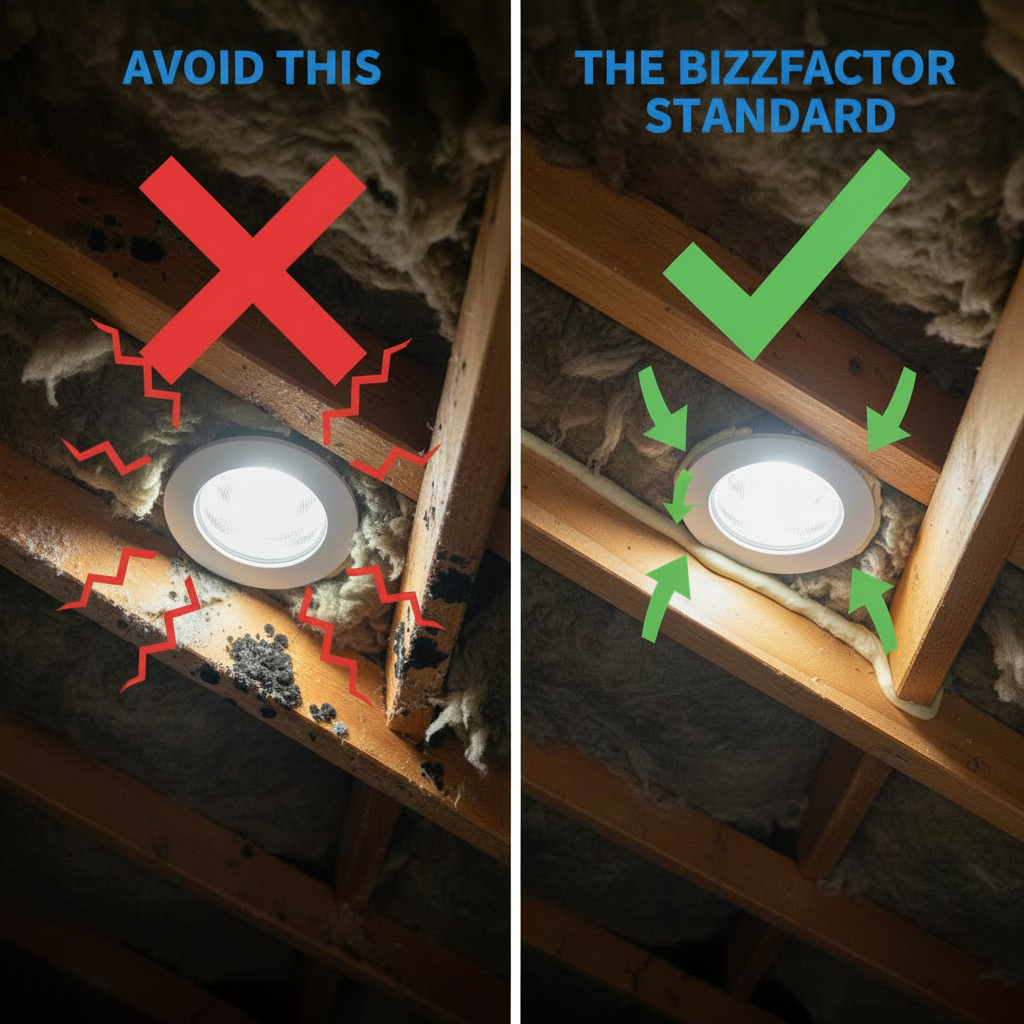
Even experienced installers can miss a big one: properly air-sealing IC-rated recessed light fixtures. If there's no good air seal around the fixture's housing, you end up with a thermal bypass. What happens then? Warm, moist indoor air gets sucked right up into unconditioned spaces like attics, or cold air gets pulled in. This leads to condensation, frost, mold growth (a huge health risk!), and even wood rot. I once saw a homeowner in Scottsdale whose gorgeous new custom kitchen started showing black streaks on the ceiling just months after a shoddy install. That's the real killer. It wasn't the fixture itself; it was the *seal*. Our certified technicians meticulously air-seal every recessed fixture. We use high-quality, fire-rated sealants. This prevents nasty moisture problems, makes your home more energy-efficient, and really protects your investment. Don't skip it.
Track Lighting for Adaptable Illumination
Track lighting? It's all about flexibility. You can direct the light exactly where you need it, even after it's installed. The individual lights, or 'heads,' slide along the track and can be aimed to showcase artwork, light up a workspace, or just provide general ambience. It's a supremely versatile solution. Perfect for art galleries, busy kitchens, or any space where your lighting needs might change. This system needs a dedicated electrical box for power. Often, we add a dimmer switch so you have ultimate control over the mood. Track lights come in all sorts of styles – classic, industrial, modern – so they'll fit right in with your decor. They're a favorite because they're so dynamic. Don't underestimate their power. Seriously.
Under Cabinet Lighting: Task-Specific Brilliance
Under cabinet lighting is a specific kind of task lighting. You'll find it mostly in kitchens, workshops, and home offices. It shines directly onto your countertops. This gets rid of those annoying shadows from overhead lights, making meal prep or reading so much easier. LED strip lights or puck lights are common choices here. Installation usually means hardwiring it straight to an electrical source, or using plug-in options with really well-hidden cords. Hardwiring is hands down cleaner and always preferred. It gives you a smooth, continuous line of light. It's subtle, but incredibly effective. Getting the placement right is key for even light distribution. We make sure you get maximum coverage and minimal glare. Every time.
Specialty and Decorative Lighting: Adding Flair and Function
Here's the thing: here's the thing: beyond the usual, specialty lighting offers some truly unique solutions. Think **cove lighting** for a soft, diffused glow around the wall perimeter. It gives off that upscale hotel vibe, doesn't it? Or **picture lights** – built specifically to illuminate your art without any annoying glare. Then there's **pathway and step lighting** outside, which makes things safer and boosts your home's curb appeal. Each type needs special thought for mounting, wiring, and weatherproofing. Picking the *right* fixture for the job is crucial. We integrate these seamlessly into your existing systems to get the biggest impact. That's our promise.
Our BizzFactor Pro Recommendation on Fixture Selection
Here's the deal: some commercial-grade fixtures are tough as nails, but they're often overkill and too expensive for homes. For most residential applications, we recommend residential-specific lines. They offer fantastic color accuracy (we aim for a high CRI of 90+), solid performance, and a much more reasonable price tag. We prioritize fixtures that give you great light quality and last a long time, without breaking the bank. Think value, not just cost. You want light that endures and looks brilliant, day in, day out.
For precision and reliability, our electricians consistently use professional-grade tools. We're talking Fluke multimeters for spot-on voltage readings and Klein Tools wire strippers and drivers. This ensures every single connection is secure, properly torqued, and totally up to code. Don't skip this step. It's a non-negotiable.
What Most Lighting Guides Won't Tell You: The Art of Layered Lighting & Intentional Focus
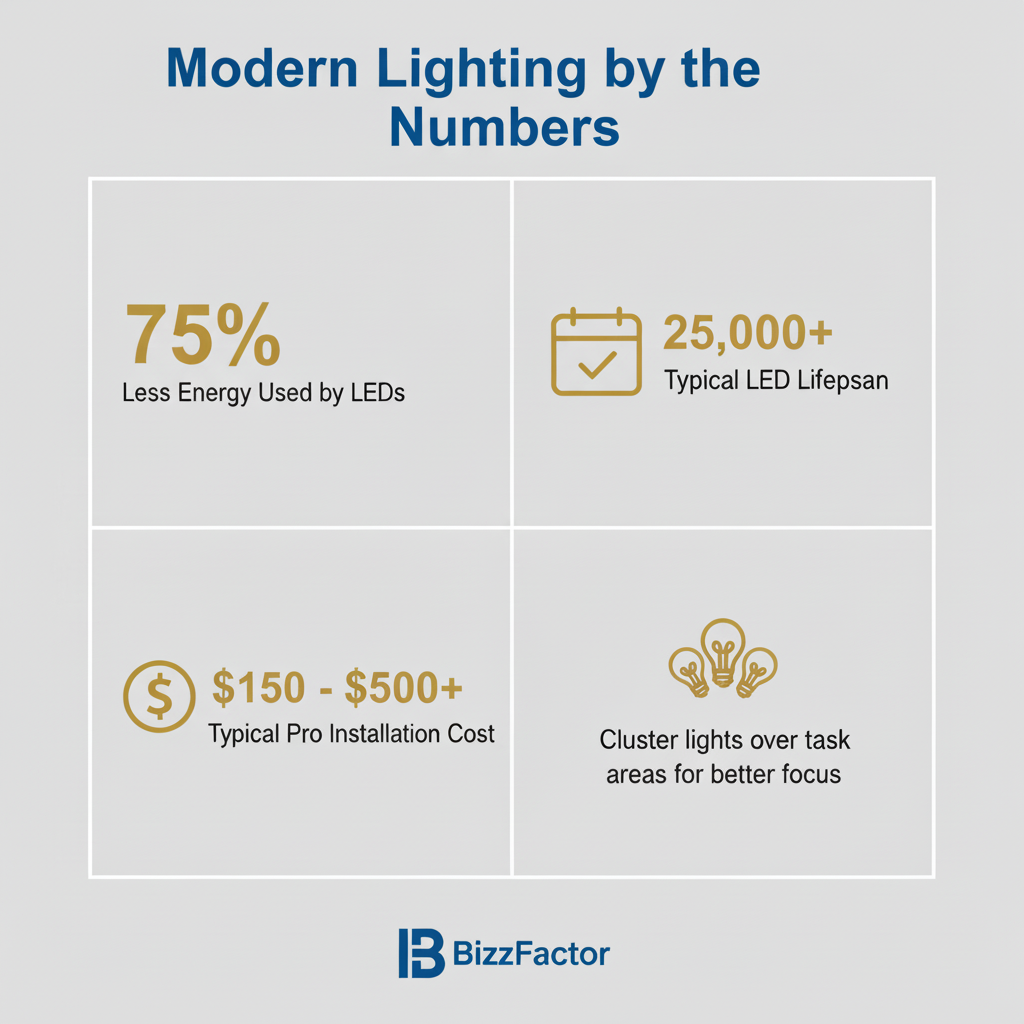
Most traditional recessed lighting layouts just follow a rigid grid. The result? Flat, boring, and often inefficient light. It's like trying to paint a masterpiece with just one color, right? Our lighting designers take a much smarter approach: **clustering** and **layering**. This means we combine ambient lighting (general fill), task lighting (for specific activities), and accent lighting (to highlight features). This method ensures every space is lit not just so you can see, but for mood, function, and pure aesthetic appeal. It's truly transformative. It really changes everything.
By grouping two or three recessed lights in key spots – say, above a kitchen island, a cozy reading nook, or to show off a prized piece of art – we create deliberate pockets of light. This technique adds architectural interest, depth, and drama to a room. It gives you superior functionality and a more inviting atmosphere, often with fewer fixtures. It's about lighting *moments*, not just spaces. We call it "painting with light." It's an art.
Why a Licensed Electrician is Essential for Light Fixture Installation: Beyond Mere Compliance
Now, now, any electrical work beyond changing a bulb legally (and safely!) requires a licensed electrician. This isn't just about red tape; it makes sure everything complies with the National Electrical Code (NEC) 2023 edition and all local rules. Those rules? They're there to protect your life and your property. Professional installation doesn't just look pretty; it protects against huge hazards like fire, electric shock, and really expensive property damage. Seriously — it matters. Big time. (Want to know more? Check out the benefits of hiring a licensed electrician).
Professional Light Fixture Installation is Non-Negotiable: Safety First
Look — electrical systems come with inherent risks. Mess up the wiring, and you're looking at serious stuff: house fires, electrocution, or permanent damage to your appliances. Think about it: 120 volts is no laughing matter. And here's another thing – if you do unpermitted electrical work, it can void your homeowner's insurance policy. That leaves you totally exposed if something goes wrong. Our licensed electricians, with decades of experience, really understand complex electrical stuff. They know about wire sizing specified in NEC Table 310.15(B)(16) for ampacities, and circuit load calculations from NEC Article 220. They understand proper grounding and bonding techniques in NEC Article 250. All of it's vital for your family's safety. They've seen everything, and they know *exactly* what to do. One contractor recently told me, "The moment electricity leaves the panel, it becomes an art. You can make it beautiful and safe, or a dangerous mess." That really sticks with me.
**Our professional installation protocols, guided by NEC 2023 standards, include:**
- **Comprehensive Circuit Analysis:** This stops dangerous overloads and makes sure you have enough power. We use clamp meters to check existing capacity. Every time.
- **Correct Junction Box Selection:** We guarantee the box can hold the fixture's weight and has enough space for wiring, as per NEC Article 314. Sometimes, bigger boxes are needed. Don't crowd those wires.
- **GFCI Protection:** We install these in kitchens, bathrooms, and outdoors to prevent electric shock, following NEC 210.8. It's life-saving technology. Absolutely.
- **Secure & Grounded Connections:** Every connection is meticulously made, tightened to manufacturer specs, and tested for safety and performance (NEC 250.4). No exceptions.
- **Proper Luminaire Support:** We ensure fixtures are securely fastened to structural parts or the right electrical boxes (NEC 410.36). Nothing loose, nothing wobbly.
Real-World Scenario: A DIY Disaster Averted by Pros in Phoenix
Our team recently got a frantic call in Phoenix. A homeowner had tried to install recessed lights himself in his newly renovated basement. He'd watched a YouTube video, but he missed some really critical code requirements. What happened? A hazardous mess: junction boxes that were too small (a huge fire risk because conductors overheated), non-IC rated fixtures jammed against insulation, and a seriously overloaded circuit that kept tripping the breaker. The lights flickered constantly and got so hot they scorched the drywall around the trim. He was incredibly lucky it didn't catch fire. We systematically rewired the whole thing. We put in proper IC-rated, AT-rated fixtures, correctly sized the junction boxes, and safely spread the load across new dedicated lighting circuits. This intervention stopped a potential electrical fire, saved his insurance policy, and made his home safe and energy-efficient. It was a seriously close call. Look — sometimes, you just need to call a pro. Don't take chances.
Expert Planning: The Indispensable Foundation of a Successful Lighting Project
So — so — a great lighting project doesn't start with buying fixtures; it starts with a thorough, professional plan. Before any installation begins, our team does a detailed assessment. We look at the room's purpose, your ceiling's structure, your home's current electrical capacity, and what you want to achieve with your lighting. This careful planning avoids expensive mistakes, unexpected problems, and makes sure you're totally happy with the final result. We map it all out precisely.
The Pre-Installation Assessment: Ensuring Compatibility and Safety First
Our electricians perform vital load calculations. This tells us if your current electrical panel and circuits can handle new lighting without needing an upgrade (NEC 220.87 for existing installations). We carefully check ceiling structures. We find joist locations, existing wiring paths, and potential obstacles like plumbing or HVAC ducts. We also strategically plan where switches go for maximum convenience and accessibility, thinking about three-way or four-way switching if you need it. (You can learn more about electrical panel upgrades here). This attention to detail means no nasty surprises. It's about being prepared.
The BizzFactor Standard for Lighting Design & Planning: Transparency and Precision
Our commitment, what we call the BizzFactor Standard, means we won't start any work until you've thoroughly approved a detailed installation plan. This comprehensive plan spells out the exact placement of every fixture and switch, the circuit layouts, estimated energy use, and timelines. This guarantees a transparent process and the exact results you've pictured. No hidden fees. No unexpected placements. We really believe in clear communication. Always.
The Advantages of Modern LED Lighting Technology: Efficiency & Innovation
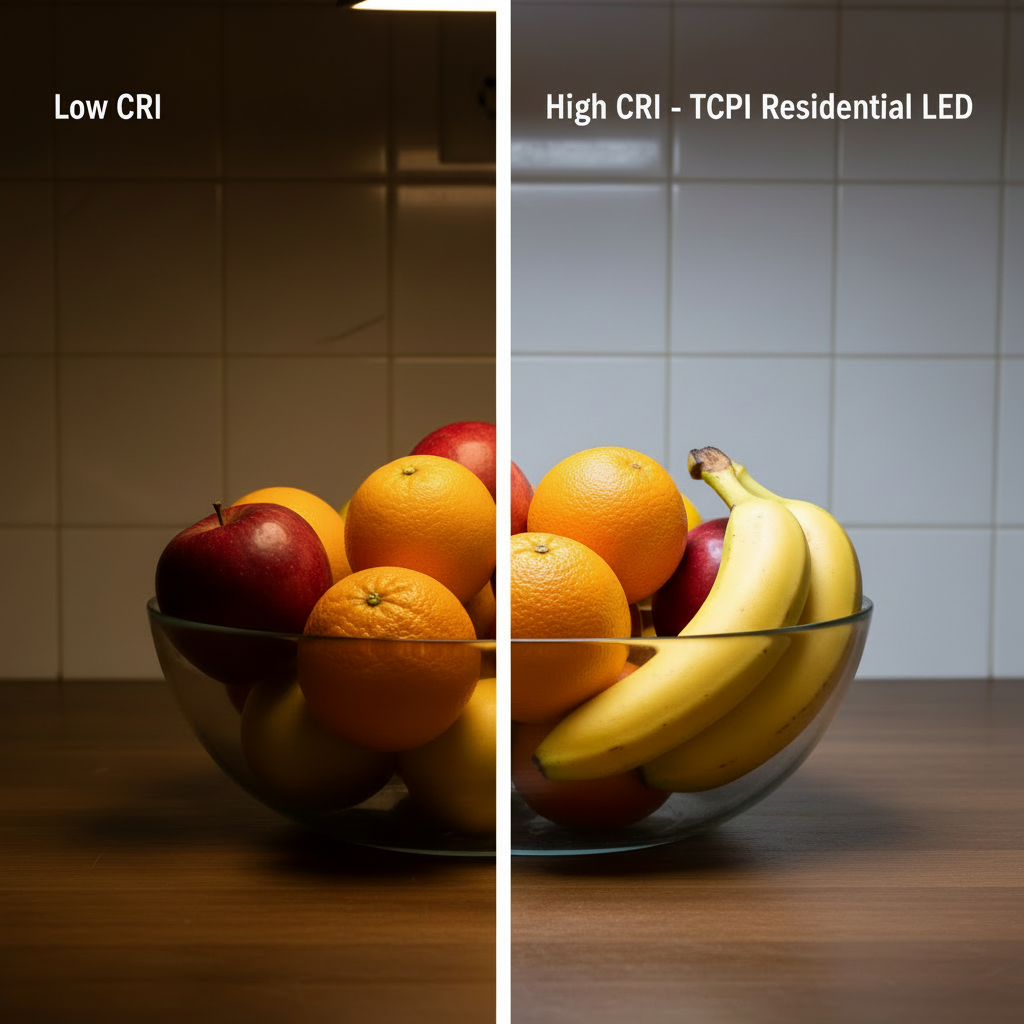
LED fixtures are absolutely the pinnacle of modern lighting. Compared to old incandescents or fluorescents, LEDs offer crazy energy efficiency, last a super long time, provide amazing light quality, and boast advanced control options. This makes them the smartest choice for any new lighting installation or upgrade. They're incredibly smart. (Fancy learning more? Dive into our guide on LED lighting retrofits).
Significant Energy Savings & Enhanced Longevity: Your Wallet Thanks You
Look — look — LED lighting uses up to 75% less energy than old incandescent bulbs to give you the same amount of light. That means substantial cuts to your monthly electricity bills. Imagine the savings piling up! High-quality LED products live incredibly long lives, often 25,000 to 50,000 operating hours or more. That's years of not having to worry about maintenance. Plus, LEDs put out hardly any heat, which means less work for your AC. They turn on instantly, and they dim beautifully when paired with the right controls. This is efficiency personified. What's not to love?
Superior Light Quality & Color Rendition: See Your Home in a New Light
Beyond just being efficient, LEDs deliver superior light quality. We always prioritize fixtures with a high Color Rendering Index (CRI), usually 90 or above. What does that mean? Colors look more vibrant and true-to-life under LED light. Your artwork pops. Your finishes look richer. Correlated Color Temperature (CCT), measured in Kelvin, lets us pick warm light (2700K-3000K) or cool light (4000K+) to perfectly match your home's aesthetic and mood. It's light, tailored just for you. It really transforms a space.
Seamless Smart Lighting Integration: Control at Your Fingertips
Modern lighting goes way beyond just on/off switches. We specialize in putting in smart switches and automated control systems. These give you a personalized lighting experience like no other. Picture this: lights turning on as you walk in the door, dimming automatically for movie night, or adjusting based on how much natural daylight there's. Systems like Lutron Caséta, Legrand Adorne, or even Wi-Fi-enabled options offer amazing convenience, boost your security, and further cut down on energy use by making sure lights are never left on by mistake. Control everything right from your phone. It's futuristic, but it's here now.
Our Step-by-Step Light Fixture Installation Process: Precision and Peace of Mind
Our licensed electricians follow a rigorous, systematic process for every single installation. This ensures top-notch safety, code compliance, and flawless performance. We really pride ourselves on our meticulous approach, from cutting the power at the start to testing the final connection. We simply don't cut corners. Ever.
For Surface-Mount Fixtures: A Solid Connection Every Time
Here's the thing:
1. **Safety First & Power Disconnection:** We always pinpoint and confirm the correct circuit breaker at the electrical panel. Then, we kill the power to that circuit. Before touching *anything*, we grab our professional Fluke multimeter to verify zero voltage at the fixture spot. Safety is absolutely paramount. No shortcuts.
2. **Existing Fixture Removal:** We carefully take down the old fixture. While it's off, we inspect the wiring and junction box for any damage or code violations. Sometimes, an old box just needs an upgrade. It happens.
3. **Secure Junction Box Inspection/Upgrade:** We confirm the existing ceiling box is firmly attached to a joist or blocking. It needs to safely support the weight of the new fixture (plus any dynamic weight, like a slow-spinning fan, if applicable), as per NEC 314.27. If it's not up to snuff, we replace it or reinforce it, especially for heavier fixtures. For huge, heavy fixtures like large chandeliers, we often put in a separate, dedicated brace. This ensures the structural integrity is way beyond code minimums. No sag here.
4. **Precise Wire Connections:** We use specialized tools – wire strippers, insulated connectors – to make clean, secure, and code-compliant wire connections. We meticulously follow the National Electrical Code for grounding, neutral, and hot conductors. Every termination gets a thorough check. Loose wires? Not on our watch. We also make sure the wire gauge is correct for the fixture's wattage and circuit amperage. One contractor once told me, "A good connection isn't just about making it work; it's about making it last and staying safe." That's the mindset we carry.
5. **Fixture Mounting & Dressing:** The new fixture is carefully mounted. We ensure it's perfectly level and flush with the ceiling. Wires are neatly tucked inside the box, so there's no pinching or strain. Looks and function go hand-in-hand, always.
6. **Power Restoration & Testing:** Power goes back on gently at the breaker. Then, we thoroughly test the full capabilities of the new fixture. Dimmers, fan speeds, smart controls – we check it all to make sure it runs problem-free. We don't leave until it's perfect. Not a chance.
For Recessed Fixtures: Seamless Integration and Hidden Power
Recessed lighting installation? It needs serious precision and a deep understanding of how ceilings work. It's way more than just cutting a hole. It really is.
1. **Layout & Planning:** Based on our detailed design, we use laser levels and precise measurements to mark the exact spots for each recessed light. This guarantees a symmetrical and effective lighting pattern. We also think about where your furniture will go and how the light will spread. We're thinking about how the light *interacts* with your space. It's important.
2. **Ceiling Opening Creation:** We use professional-grade hole saws, often from brands like Milwaukee or Lenox. This makes perfectly accurate and clean ceiling openings, keeping dust and damage to a minimum. Clean cuts? That's everything. We always use dust shrouds whenever possible to keep your home tidy.
3. **Housing Unit Installation:** Recessed housing units (IC-rated, AT-rated, remember?) are carefully installed through the ceiling openings. They’re securely fastened to joists or strapping. We make sure there's proper clearance from joists and insulation, and we verify it all before any wiring starts. We double-check manufacturer specifications for any clearances to combustible materials. It's critical.
4. **Wiring & Connections:** Wiring runs meticulously from the power source to each fixture's junction box. We stick to maximum wire fill capacities (NEC 314.16). All connections are made secure, grounded, and inside the fixture's listed wire nuts or terminals. We don't play guessing games with wire length, ever. We also use plenum-rated cabling if we're working in air-handling spaces. This is for fire safety codes.
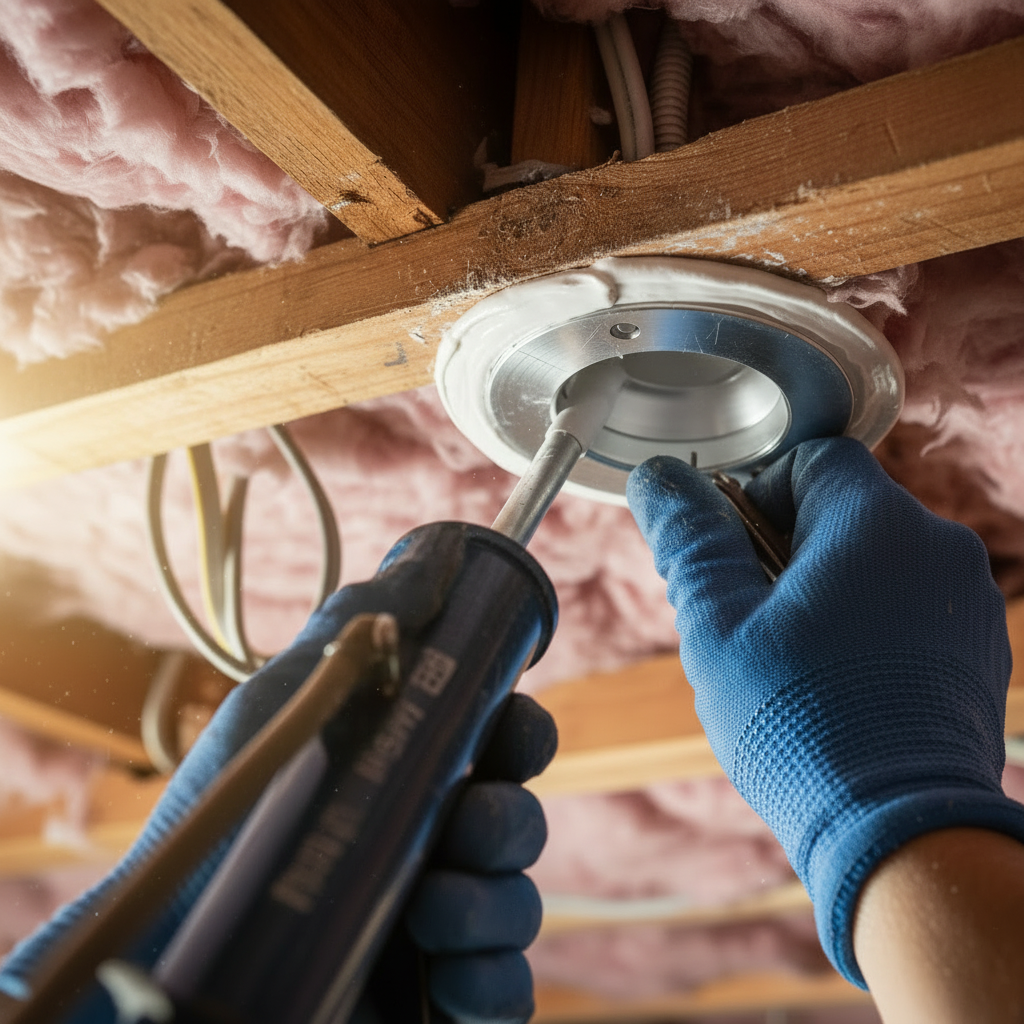
5. **Air Sealing:** This one's crucial. Each fixture's housing is meticulously air-sealed to the drywall/ceiling. We use the right caulk or gaskets. This stops energy loss and moisture from getting in, just like we talked about earlier. This is our signature touch. It hugely improves your energy efficiency. It really does.
6. **Trim Installation & Final Testing:** Once the main work is done, the decorative trims get professionally installed. The result? A seamless, integrated look. Power goes back on, and we test all fixtures for proper function, dimming, and uniformity. We make sure everything glows just right. Absolutely perfect.
Lighting Installation Costs & Smart Budgeting: Investing in Your Home
The cost of light fixture installation can swing quite a bit. It might be around $150 for a simple fixture swap, but it could easily go over $500 per light for tricky recessed installations, especially if you need new wiring or dedicated circuits. The total cost depends on the type of fixture, how complex your home's current wiring is, and how accessible the installation area is (think ceiling height, attic access, plaster vs. drywall). Expect some variation. There's no single price tag for everyone. Never.
Factors Influencing the Final Price: What You're Really Paying For
Here's the thing: key things that affect the cost of recessed lighting projects include whether you need new dedicated circuits (which means more wiring work and possibly even panel upgrades). Ceiling height also plays a role. Installations on 15-foot ceilings or cathedral ceilings mean higher labor costs – you need specialized equipment and more safety measures, after all. And sometimes, the project size or scope requires a municipal electrical permit and inspection. Older homes with tricky knob-and-tube or aluminum wiring? They'll almost certainly need more extensive, and thus more expensive, upgrades to meet safety and code. The only way to get a truly accurate, firm quote for you is with a professional on-site estimate. It's an investment, after all. Make it count.
Maximizing Value: Bundling Your Lighting Installations
Here's the deal. To get the most bang for your buck, think about having several fixtures installed during one service visit. Doing multiple installations at once is way more cost-effective than scheduling individual appointments weeks or months apart. This saves you on extra trip charges, cuts down on overall labor hours because we work more efficiently, and ensures consistent, high-quality work throughout your entire home. Plus, it's less disruptive for you. Plan ahead. Save big. It's worth it.
Adhering to Safety Standards: Protecting Your Most Precious Assets
Every professional lighting installation our team does strictly follows the latest National Electrical Code (NEC) requirements (that's the 2023 edition, with any local changes). And all relevant local building codes too. This commitment isn't just about ticking boxes; it guarantees your electrical system is safe, reliable, and keeps your property's insurance coverage valid. We don't compromise on safety. Not ever. Seriously.
The Non-Negotiable Rules of Electrical Safety: It's Law for a Reason
Proper grounding, picking the right circuit breaker, and correctly sizing your wires – these are the absolute basics of electrical safety. Our licensed professionals are rigorously trained in all these critical areas, and they keep learning to stay current with new codes. We make sure essential safety measures are in place. Things like GFCI outlets in wet areas (think kitchen sinks, bathroom vanity, outdoor patios), location-specific fixture ratings (like damp-rated for bathrooms, wet-rated for exposed outdoor spots), and absolutely, under no circumstances, overloading electrical circuits. That's how fires begin. Our installations are inspected and approved. Peace of mind? You bet. Totally.
Common Code Violations We Rectify (and You Should Absolutely Avoid)
Look — sadly, we sometimes run into dangerous installations done by less-than-reputable sources or DIY attempts gone wrong. These common code violations pose huge safety risks:
- **Undersized Wiring for Load:** Using a 14 AWG wire when a 12 AWG is needed for a heavier load. This leads to overheating and potential fire (NEC 210.19(A)). Seriously dangerous. Don't risk it.
- **Improper Grounding:** Skipping or wrongly connecting the equipment grounding conductor. This leaves open paths for electrocution (NEC 250.4).
- **Overfilled Junction Boxes:** Too many wires crammed into a box? That stops heat from escaping and creates fire hazards (NEC 314.16). We've actually seen fires start because of this.
- **Non-IC Rated Fixtures in Insulated Ceilings:** Putting non-Insulation Contact rated fixtures directly against insulation. They overheat (NEC 410.111). A recipe for disaster. No good.
- **Unsecured Fixtures:** Fixtures not properly supported to a junction box or structural element. They risk falling and exposing live wires (NEC 410.36). Dangerous on multiple levels.
One time, in a home near Scottsdale, we discovered a chandelier a homeowner had tried to hang themselves. They'd used a plastic junction box meant for much lighter fixtures and hadn't secured it to a joist at all. The box was literally cracking under the weight, hanging barely by its wire nuts! We immediately secured it to a proper metal box and blocking. This averted a falling hazard and a serious electrical mess. Seriously, safety isn't optional. It's the law, and it's common sense.
Minimal Maintenance for Long-Term Performance: Set It and Forget It
A lighting system installed by our expert professionals – using quality parts and precise techniques – needs remarkably little maintenance. We build systems that are designed to run reliably and trouble-free for years. We want you to just enjoy your light, not constantly fuss over it. That's the ideal.
Simple Tips for Optimal Longevity: Keep the Glow Going
To keep your lights performing their best, we suggest a gentle, annual wipe-down of fixtures. Dust accumulation can actually reduce light output by up to 30%. For older homes, getting a professional electrical inspection every few years is a smart preventative move. It catches potential problems before they become serious headaches. Otherwise, just relax. Enjoy the beauty, safety, and efficiency of your new lighting for decades. That's the real payoff. It's what you deserve.
Conclusion: Illuminate Your Home with Confidence
Now, investing in professional light fixture installation means investing in your home's safety, its beauty, and its long-term value. From careful planning and code-compliant work to integrating cutting-edge LED and smart home technologies, a licensed electrician makes sure your lighting dreams shine brightly. Don't leave your electrical work to chance. Trust the experts. Trust BizzFactor Pros. We make your home absolutely brilliant. Let us handle it.
Advanced Lighting Solutions and Controls: Beyond Basic Illumination
Modern lighting systems go far beyond simple on/off switches. We specialize in designing and installing advanced lighting controls that offer incredible convenience, energy efficiency, and options for truly custom atmospheres. Imagine setting different 'scenes' for entertaining, relaxing, or working, all with a single touch or even a voice command. It's truly personalized living. What a difference.
Smart Dimming & Dynamic CCT Lighting
**Dimming capabilities** are fundamental for setting the perfect mood and saving energy. We integrate top-quality dimmers designed for LED technology, ensuring smooth, flicker-free operation across the entire dimming range. More advanced systems now offer **dynamic CCT (Correlated Color Temperature) lighting**. This lets you adjust how warm or cool your lights are throughout the day. Start with cooler, energizing light in the morning for productivity. Gradually shift to warmer, more relaxing tones in the evening to mimic natural light cycles. This isn't just a fancy trick; it can actually improve your sleep patterns and overall well-being. It's biophilic design in actual practice. Seriously groundbreaking.
Motion Sensors and Occupancy Sensors
For spots like hallways, pantries, bathrooms, or closets, **motion sensors** or **occupancy sensors** provide incredibly practical, hands-free lighting. A motion sensor turns lights on when it detects movement. An occupancy sensor keeps them on as long as someone is in the room. They automatically switch off when the space is empty, stopping wasted energy. It's smart, easy energy saving. We often put these in basements and garages. No more fumbling for light switches. Pure convenience.
Astronomical Timers and Automated Scheduling
**Astronomical timers** can automate your outdoor and indoor lighting. They're based on the official sunrise and sunset times for your exact location. This means your porch lights can turn on automatically when it gets dark and turn off when the sun comes up, without you ever having to adjust them for seasonal changes. We can also program **custom schedules** for lights to turn on and off at specific times. This boosts security by making your home look occupied, even when you're gone. Convenience and security, all in one package. Genius.
Integration with Whole-Home Automation Systems
For the ultimate control, we can seamlessly integrate your lighting into any existing or new whole-home automation platform. Think Control4, Savant, or even more accessible systems like Apple HomeKit, Google Home, or Amazon Alexa. This lets you manage every aspect of your home – lights, climate, security, entertainment – from one single interface or with voice commands. Imagine saying, "Alexa, goodnight," and all the lights go off, doors lock, and the thermostat adjusts. Total control. It's truly a smarter home experience. And with the right pros, it's simpler to set up than you might think.
The Electrical Panel: Your Home's Beating Heart of Power
Every lighting upgrade relies on a properly functioning and adequately sized electrical panel. This is especially true for projects involving multiple new circuits or high-power fixtures. This panel? It's literally the distribution center for *all* the electricity in your home. An outdated or too-small panel simply can't handle modern electrical demands safely or efficiently. You need enough juice for everything to run smoothly. Period.
When to Consider an Electrical Panel Upgrade
Signs you might need a panel upgrade include frequently tripping breakers, lights flickering when big appliances kick on, not enough outlets for your needs, or if your home still uses an old fuse box. Our electricians always check your current panel's capacity during the initial consultation. If an upgrade is necessary, we'll give you a comprehensive plan and a transparent quote. This ensures your entire electrical system can support your new lighting without any strain or hazard. Don't compromise on this one. It's the absolutely fundamental foundation of your home's electrical health. We assess load calculations strictly according to NEC 220.87 for existing residential properties.
The Importance of Proper Grounding & Bonding
So — we talked about grounding a bit earlier, but it's important enough to really stress. Per NEC Article 250, proper **grounding** and **bonding** are non-negotiable safety components. Grounding provides a safe path for fault current to return to its source, which stops dangerous voltage from building up. Bonding makes sure all metal parts of an electrical system are connected and at the same electrical potential, reducing the risk of shock. Without these, even a simple electrical fault can turn lethal. Our technicians meticulously verify these connections during every installation. We even use impedance testers to confirm low resistance paths. It's complex work, needing real expert knowledge. Don't try this at home. Seriously, don't.
AFCI and GFCI Protection: Modern Essentials
Arc Fault Circuit Interrupters (AFCIs) and Ground Fault Circuit Interrupters (GFCIs) are absolutely critical for modern electrical safety. **GFCIs** protect people from severe electrical shocks by quickly cutting power if they detect a current imbalance. You'll find these commonly in wet places like bathrooms and kitchens (NEC 210.8). **AFCIs** protect against electrical fires. They do this by detecting dangerous electrical arcs in wiring and rapidly interrupting the circuit. These are often required in bedrooms and other living areas (NEC 210.12). Our installations always include these life-saving devices where the code mandates them. They're a must.
Our Commitment to Customer Satisfaction
At BizzFactor Pros, our mission isn't just about putting up light fixtures. We're dedicated to giving you a transparent, efficient, and truly satisfying experience. From that very first consultation to the final flick of the switch, we're with you. Our licensed and insured electricians aren't just skilled technicians; they're genuine professionals who respect your home and your time. We promise clear communication, detailed estimates, and we always stand by the quality of our work. Your peace of mind and your satisfaction? Those are our brightest benchmarks. We promise a dazzling difference. Every time.
In-Depth Look
Detailed illustration of key concepts
Visual Guide
Infographic illustration for this topic
Side-by-Side Comparison
Visual comparison of options and alternatives
Sources & References
- Lighting Installation Tips & Best Practices
- The Do's and Don'ts of Installing lights fixtures - PacLights
- How to Install a Light Fixture: A Comprehensive Step-by-Step Guide
- 10 Essential Tips for Installing Electrical Fixtures
- Best Practices for Installing and Maintaining Industrial & Factory ...
- Best Tool Brand for Electricians 2025: Expert Rankings - Wood Guide
- Best Electrician Tools Brand Guide
- Top 15 Essential Electrician Tools for Pros - 2025 List - Workiz
- Essential 2025 Electrician Tools & Safety Warnings (New & Pro Tips!)
- Essential Electrician Tools List For 2025: Guide - Contractor Plus
Frequently Asked Questions
Need Professional Help?
Find top-rated electricians experts in your area