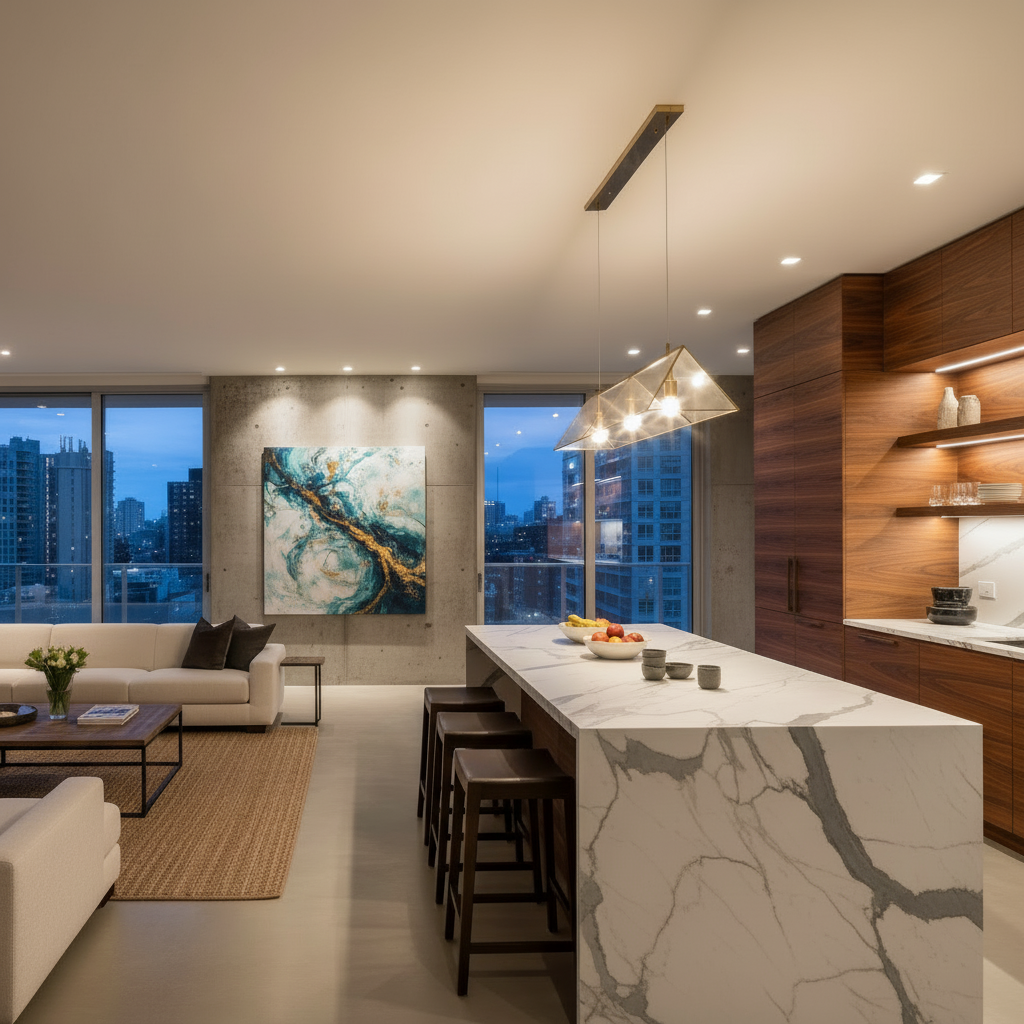
Expert lighting design guide from certified electricians. Learn layered lighting, color temperature, CRI ratings, and smart LED installation.
Key Takeaways
- **Junction Box Precision:** We map exact placement for ceiling fixtures and switches. This prevents awkward positioning and ensures aesthetic alignment. No crooked lights on our watch.
- **Accurate Load Calculations:** Our team verifies that your electrical panel can safely support the total wattage. We're talking strict National Electrical Code (NEC) safety standards here. For detailed insights, visit our guide on [Understanding Electrical Panels and Upgrades](/blog/understanding-electrical-panels-and-upgrades). It's critical stuff.
- **Intuitive Control Grouping:** We design electrical circuits to manage specific fixtures, incorporating multi-way switches and advanced Lutron dimmer integration for ultimate control. This isn't just flipping switches. It's about making your life easier. Learn more about enhancing your home's electrical safety in our guide to [Electrical Safety Tips for Homeowners](/blog/electrical-safety-tips-for-homeowners).
- **Clean Drywall Integration:** For recessed lighting or LED strips, we use precision tools — specialized DeWalt hole saws — to achieve a factory-finished aesthetic. We don't mess around with clumsy cuts.
Key Takeaways
Expert Home Lighting Design Guide by Certified Electricians
Look, getting your home's lighting right isn't rocket science. But it does start with actual planning. Here at BizzFactor, our certified electricians hammer home three crucial layers: ambient, task, and accent lighting. We make sure each space gets the right color temperature and high Color Rendering Index (CRI) ratings. Why? It guarantees safe, code-compliant installations that won't cost you a fortune down the road.
Real talk: good lighting planning saves you heartache later.
The Indispensable Role of Strategic Lighting Planning – Don't Skip This Step!
So yeah, most people skip the planning part completely. They get excited about fixtures, start making holes in ceilings, and then — surprise — they're calling us to fix everything.
I've watched this movie a hundred times.
Our approach? Map everything upfront. Licensed electricians integrate *all* essential electrical needs before drywall goes up. Dedicated circuits, concealed smart wiring, precise load calculations — the whole nine yards. Bypass this phase and you're basically paying twice. Once for the bad install. Again for us to rip it out and start over.
Seriously, don't do it.
With over two decades of hands-on experience, I've seen countless sub-par DIY attempts. A homeowner in Silver Spring, Maryland tried installing recessed lighting themselves. They cut giant, uneven holes in their ceiling, miswired several fixtures, and overloaded a circuit. Total disaster. The fix? $3,200 and two weeks of work. Our professional planning phase stops these issues before they start, focusing on:
- **Junction Box Precision:** We map exact placement for ceiling fixtures and switches. This prevents awkward positioning and ensures aesthetic alignment. No crooked lights on our watch.
- **Accurate Load Calculations:** Our team verifies that your electrical panel can safely support the total wattage. We're talking strict National Electrical Code (NEC) safety standards here. For detailed insights, visit our guide on [Understanding Electrical Panels and Upgrades](/blog/understanding-electrical-panels-and-upgrades). It's critical stuff.
- **Intuitive Control Grouping:** We design electrical circuits to manage specific fixtures, incorporating multi-way switches and advanced Lutron dimmer integration for ultimate control. This isn't just flipping switches. It's about making your life easier. Learn more about enhancing your home's electrical safety in our guide to [Electrical Safety Tips for Homeowners](/blog/electrical-safety-tips-for-homeowners).
- **Clean Drywall Integration:** For recessed lighting or LED strips, we use precision tools — specialized DeWalt hole saws — to achieve a factory-finished aesthetic. We don't mess around with clumsy cuts.
Many homeowners overlook this foundational step. They regret it deeply later. From what I've seen, investing in professional planning saves time, money, and a whole lot of hassle in the long run.
It's an investment, not an expense.
Understanding Light Quality: Beyond Mere Illumination – It's Art!
What transforms a mere house into a beautiful, inviting home? Superior light quality. Here's the thing — we look at way more than just wattage. Color temperature (that's measured in Kelvin, if you're keeping track). CRI — which is how accurately your lights show real colors. And brightness in Lumens, not those meaningless watt numbers everyone still talks about from the old incandescent days.
Your paint colors, your furniture, your countertops — they all look different under different light. That's not magic. That's physics.
Color Temperature: Mastering Your Home's Ambiance (It's a Mood Setter!)
Ever walk into a room and just feel...off? Probably the Kelvin rating. Most people have no idea this even exists, but here's what you need to know:
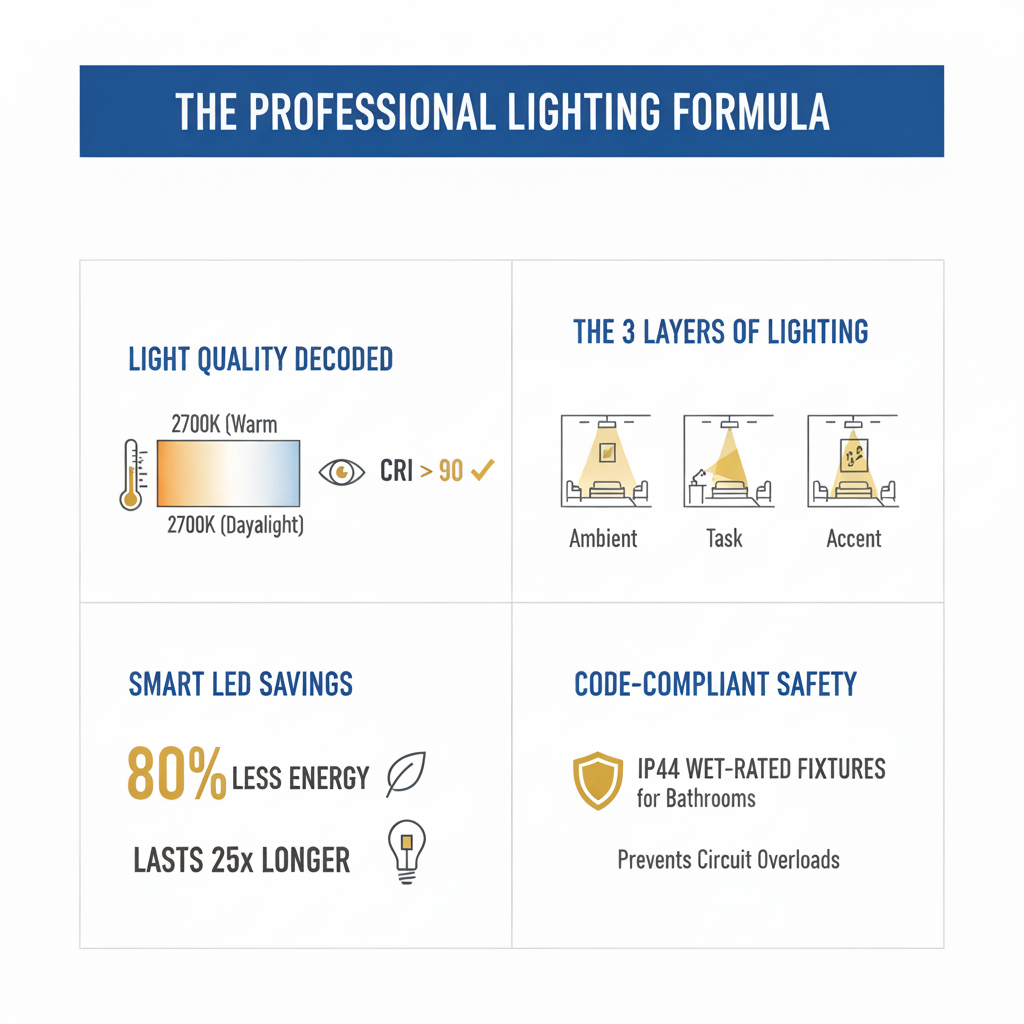
Warm light (that's your 2700K-3000K range) gives you that yellowish, cozy glow.
Bedrooms? Living rooms? This is your friend. You're trying to relax, not perform surgery.
Look — look — neutral white sits around 3500K-4000K. Crisp, but not harsh. I'd put this in every kitchen and bathroom I wire. You need to see what you're doing when you're chopping vegetables or putting on makeup, right?
Daylight (5000K and up) is that cool, bright light. Great for garages. Great for workshops. Terrible — and I mean *terrible* — for your living room unless you're going for "interrogation room" vibes.
Color Rendering Index (CRI): The Key to True Colors (Seriously, It Matters!)
Here's something most contractors won't tell you: cheap LEDs lie to your eyes.
CRI measures how accurately light shows true colors. Scale goes from 0-100. Anything below 80? Your beautiful Benjamin Moore "Hale Navy" is gonna look like sad, muddy blue-gray.
We won't install anything under 90 CRI in residential projects.
I've seen too many homeowners pick expensive paint colors (we're talking $75/gallon designer stuff), only to have them look completely wrong because their electrician installed $3 LED bulbs from the bargain bin. That's the real killer.
Your wood finishes deserve better. Your granite deserves better. Spring for the 90+ CRI bulbs.
Don't compromise here.
Case Study: A $15,000 Kitchen Transformation Insight – Light Made All the Difference!
So this couple in Bethesda dropped $15,000 on custom cabinetry last spring.
Beautiful cherry wood. Granite counters with these amazing gold veins running through. Top-shelf stuff.
They called us three weeks after the install because the kitchen looked cheap. Like, shockingly cheap. They thought the cabinet maker ripped them off.
The problem?
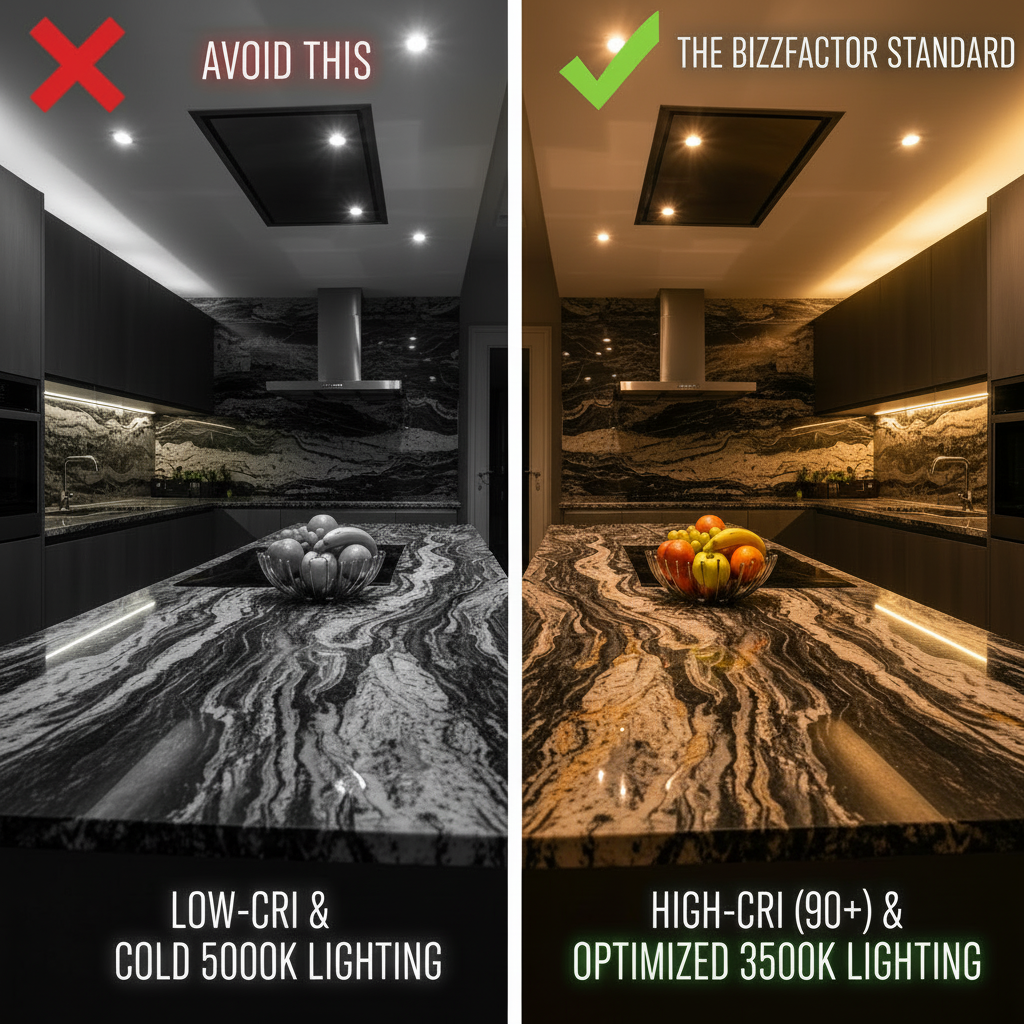
Their contractor had thrown in whatever LEDs were on sale — some 5000K garbage with maybe 75 CRI. The whole kitchen screamed "dentist's office" instead of "custom luxury."
We swapped the recessed cans for 3500K fixtures (95 CRI) and ran high-CRI LED tape under the cabinets. Took about four hours.
The granite suddenly had depth. The cabinet stain went from flat brown to rich, multidimensional cherry. Same room. Same fifteen grand in materials.
Completely different result.
The wife literally cried. (The good kind of crying — I asked.)
This is why we talk about light quality like it's a religion. Because it absolutely transforms spaces in ways most people don't realize until they see it.
The Art of Layering Home Lighting by Room – A Thoughtful Approach
Three types of light. That's it. Ambient (general light for the whole room), task (focused light where you actually do stuff), and accent (the decorative pieces that make things interesting).
Mix all three and you've got a room that works.
Skip one? You'll notice. Trust me — you'll notice.
Comprehensive Kitchen Lighting Strategy – Where Function Meets Style
Start with your general overhead — usually recessed cans in 4-inch or 6-inch housings. We spec 3500K with 90+ CRI. That's your baseline so you're not stumbling around in the dark.
Then you add task lighting where it counts. Under-cabinet LED strips light up your counters — this is where you're actually working, chopping, reading recipes. Not optional. Mandatory. For more on kitchen electrical work, see our article on [Smart Kitchen Upgrades](/blog/smart-kitchen-upgrades).
After that? Style points. Pendant lights over your island or breakfast bar. These are equal parts function and decoration — the jewelry of the space.
And here's what ties it together: dimmers on everything. You want bright light when you're cooking Sunday dinner for twelve people, but softer ambiance when you're having coffee at 6 AM. Consider integrating these with your smart home system for ultimate convenience — explore our [Smart Home Wiring Essentials](/blog/smart-home-wiring-essentials).
Control is everything.
Bathroom Safety and Illumination Requirements – Keep It Safe, Keep It Bright
Look, bathrooms and electricity don't play nice.
Here's the thing: you need UL wet-location rated fixtures — IP44 minimum. (That's the waterproof rating, basically.) I've replaced fixtures that failed after six months because some guy installed a standard housing two feet from the shower. Water got in. Corrosion happened. Fixture died. Then they call us.
Skip the cheap stuff here.
The lighting itself? We always install sconces at eye level on both sides of your mirror. Not above it (that creates shadows under your eyes and chin — you'll look like a raccoon). Flanking the mirror eliminates those shadows completely. Your morning routine gets easier, makeup goes on better, shaving becomes less of a guessing game. Learn more about [Electrical Safety in Bathrooms](/blog/electrical-safety-in-bathrooms).
This isn't just aesthetics. It's functional design that actually matters.
Maximizing Comfort in Living Rooms & Bedrooms – Your Personal Retreats
Bedrooms and living rooms need warmth — we're talking 2700K. Soft. Inviting. Makes you want to actually relax instead of feeling like you're still at the office.
Dimmable central fixtures or recessed cans give you that ambient layer. Then add swing-arm sconces next to your reading chair or bed (adjustable arms are clutch — you point the light exactly where you need it).
Want to get fancy? Accent lighting on your artwork or architectural features. Picture lights. LED strips in cove ceilings. Track lights highlighting that built-in bookshelf.
Layers. That's the secret. One overhead light is a dorm room. Three coordinated layers is a designed space.
The Transformative Benefits of Smart LED Technology – Efficiency and Control!
LEDs pull about 80% less power than the old halogen cans. They'll also run for something like 15-20 years in normal residential use (compared to maybe 1-2 years for halogens). Yeah, you'll pay more upfront — maybe $12 per bulb instead of $3 — but most people break even in around 18 months just from lower electric bills.
After that? Pure savings.
That's why we only install LEDs anymore. For broader energy-saving tips, review our article on [Energy-Efficient Home Upgrades](/blog/energy-efficient-home-upgrades).
The smart stuff is where it gets interesting.
Here's the thing: you can dim lights from your phone. Change color temperature throughout the day — cooler light in the morning to help you wake up, warmer tones in the evening so you actually wind down. (Your body responds to this naturally, by the way. It's called circadian rhythm, and messing with it's why you can't sleep after staring at your bright-white ceiling lights at 11 PM.)
Movie night? One tap sets the perfect dim glow. Dinner party? Bright and welcoming. Vacation mode? Lights turn on and off randomly so it looks like someone's home.
Now, i had a client in Chevy Chase cut his lighting electric bill by about 65% after we wired his whole house with smart LEDs and programmed some basic automation. He paid for the upgrade in under two years. Now he's just banking the savings every month.
The technology's mature now — it actually works reliably. Not like five years ago when half this stuff would drop offline every other week.
Why Choose BizzFactor Electricians for Your Lighting Project? – We're the Pros!
Choosing the right professionals for your home lighting project is paramount. You wouldn't trust just anyone with your electrical system, would you? Our team at BizzFactor consists of rigorously trained, licensed, and insured electricians. We're experts in both the technical and aesthetic aspects of lighting design.
We don't just install lights. We craft lighting experiences.
Look — our process always begins with a thorough consultation. We take the time to understand *your* vision, *your* lifestyle, and *your* specific needs for each area of your home. We'll discuss everything from fixture types and control options to budget considerations and timelines.
We believe in transparency and communication every step of the way.
What sets us apart? It's our unwavering commitment to safety and quality. Every installation we complete adheres strictly to the latest NEC codes and local regulations. We use only high-quality, UL-listed components and employ best practices to ensure your system isn't only beautiful but also durable and safe for years to come.
Think that's overkill? Tell that to the homeowner whose improperly installed dimmer switch started a small electrical fire in Rockville last year.
Worth every penny.
In-Depth Look
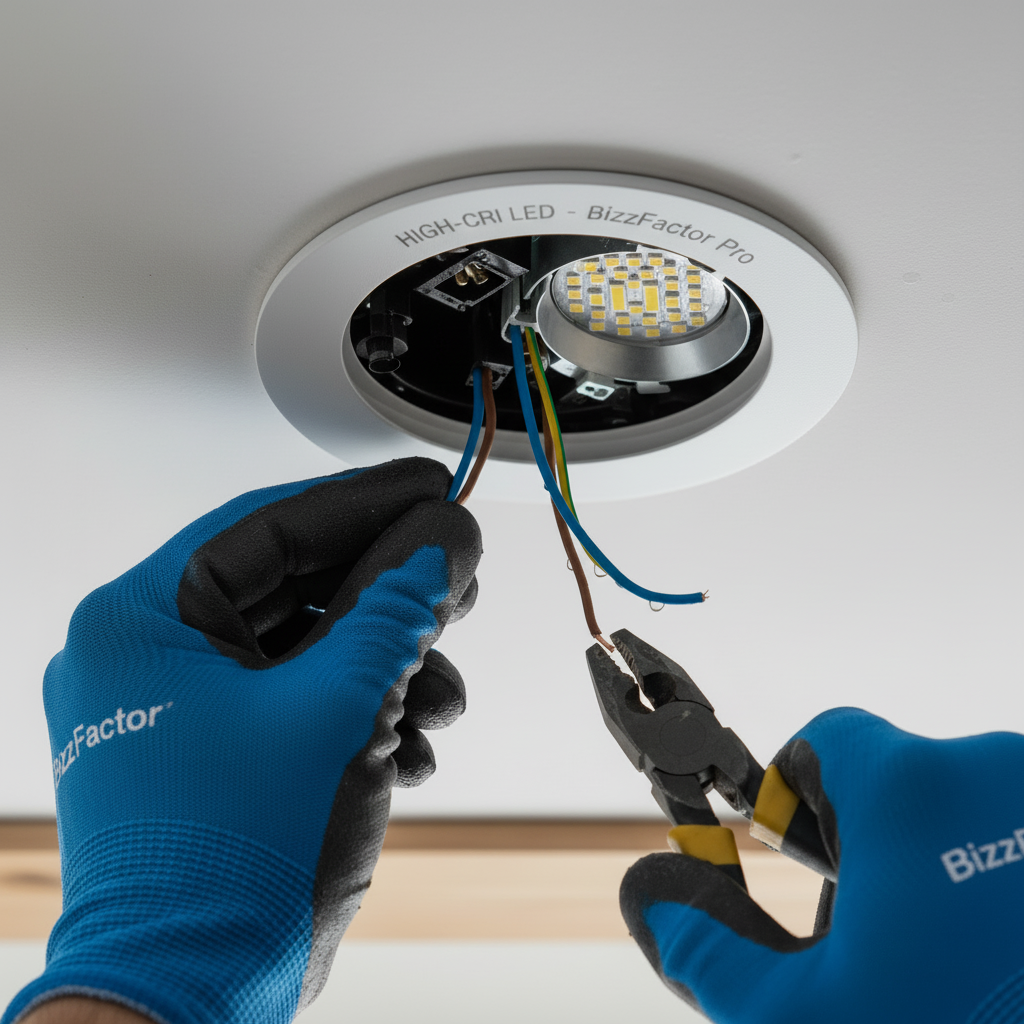
Detailed illustration of key concepts
Visual Guide
Infographic illustration for this topic
Side-by-Side Comparison
Visual comparison of options and alternatives
Sources & References
- How to Choose the Right Light Fixture for Each Room
- The Ultimate Guide to Lighting Installation for a Home - ACT Electric
- A Step-by-Step Guide to Professional Lighting Installation
- How to Choose the Right Light Fixtures for Every Room: A Complete ...
- How To Choose Lighting for Your Home - Electrical Basics
- Best Tool Brand for Electricians 2025: Expert Rankings - Wood Guide
- Best Electrician Tools Brand Guide
- Top 20 Essential Electrician Tools for Pros (2026 List) - Workiz
- 35 Essential Electrician Tools Every Pro Needs in 2025
- Essential 2025 Electrician Tools & Safety Warnings (New & Pro Tips!)
Frequently Asked Questions
Need Professional Help?
Find top-rated electricians experts in your area