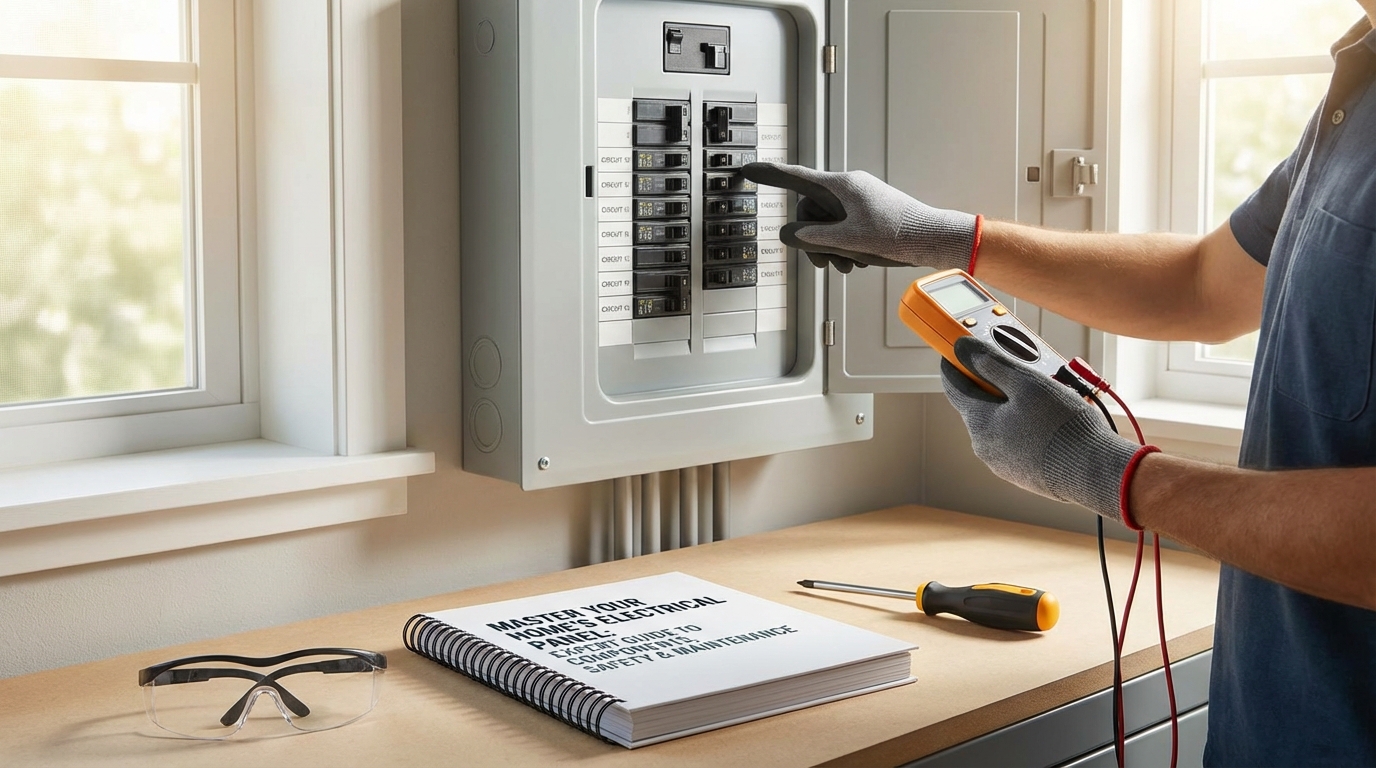
Expert guide to electrical panel components, safety standards & maintenance. Learn panel placement, breaker types, common problems & professional inspection tips.
Key Takeaways
- Strategic indoor panel placement prevents weather damage and unauthorized access
- Main breakers, branch circuits, and GFCI/AFCI devices provide comprehensive electrical protection
- Professional inspections using thermal imaging identify problems before they cause fires
BizzFactor Quick Guide
The BizzFactor Standard: Always use a licensed electrician for panel work and insist on NEC-compliant installations with proper documentation
Key Takeaways
The BizzFactor Standard
3 Non-Negotiable Requirements for Elite Workmanship
Licensed & Fully Insured
Master electricians carry proper licensing and comprehensive insurance to protect your property during electrical work.
NEC Code Compliance
All installations must meet current National Electrical Code standards for safety and legal compliance.
Professional Testing Equipment
Quality contractors use calibrated Fluke meters and thermal imaging to ensure accurate diagnostics and safety verification.
Master Your Home's Electrical Panel: Expert Guide to Components, Safety & Maintenance
Ever thought about what keeps your lights on, your fridge cold, and your devices charged? It's your home's electrical panel — the unsung hero, really. Think of it as the central nervous system, safely zapping power to every corner of your house, all while standing guard against potential hazards. Understanding what's inside and how to look after it? That's not just trivia. It could literally save your home from burning down.
Look — I've been in this business long enough to see what happens when people ignore their panels. Not pretty. This guide's gonna walk you through everything you need to know, from placement basics to the maintenance stuff most homeowners skip. Don't be one of those people.
Where Should Your Panel Actually Live? (And Why It Matters)
Back in the day, folks just slapped electrical panels wherever. Outside? Sure. Damp basement corner? Why not. Times have changed, thank God. Your panel needs to be inside your home now. Period.
Why the big shift?
Security, mostly. Access too. And honestly, panels last way longer when they're not getting hammered by weather. I talked to an electrician in Old Fourth Ward Atlanta last month — he said he still sees exterior panels from the '70s, and nine times out of ten they're a disaster waiting to happen. Weather damage, rust, unauthorized access. The whole mess.
Older homes are the worst offenders here. Pre-1980s construction? Your panel's probably in some nightmare location. Could be an exterior wall, unfinished basement, maybe a garage with zero climate control. These spots create vulnerabilities you wouldn't believe. Rain seeps in. Snow does its thing. Moisture plus electricity? That's the real killer.
Here's what we recommend: interior installation, every single time. This lines up with current National Electrical Code requirements, and it just makes sense. Newer homes typically have panels in dedicated utility spaces — garage, conditioned basement, proper utility room. Easy access when *you* need it, protected from everything else.
When we upgrade older systems, we move that panel inside whenever possible. The meter stays outside (utility company needs that), but all the important switching and distribution stuff? That comes into a controlled environment. This one change cuts maintenance way down and extends your equipment's life by years. Want more on safe installations? Check out our guide on [Residential Electrical Services](https://bizzfactor.com/residential-electrical-services).
What's Actually Inside That Metal Box?
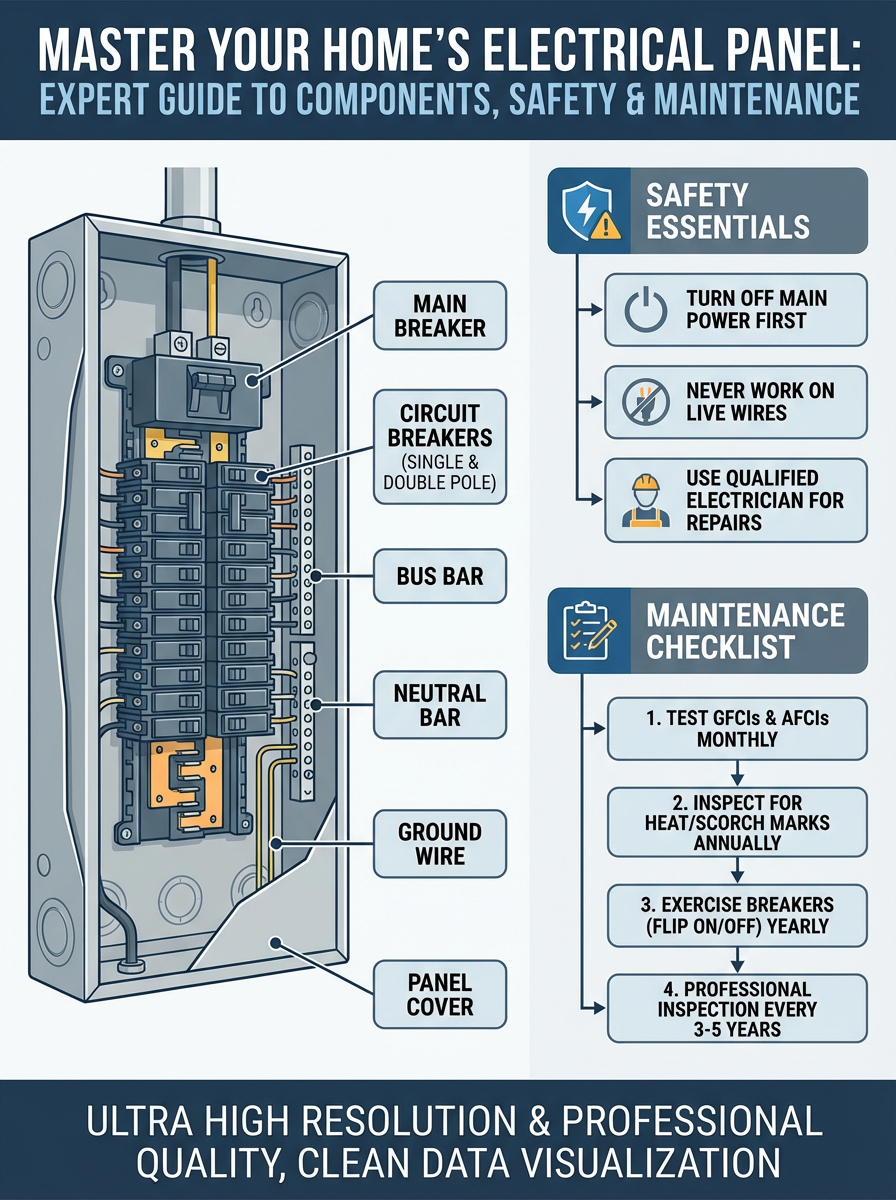
Look — let's crack it open. Modern electrical panels have three critical protection layers: main breaker, branch circuit breakers, and GFCI/AFCI devices. They work together to keep your house from becoming a statistic.
Main Circuit Breakers: The Master Switch
This is the boss of your whole system. Usually rated at 100, 150, or 200 amps depending on your home's size.
One flip and your entire house goes dark.
Quality main breakers from brands like Square D or Eaton? Those things are built like tanks. Designed for thousands of operations over decades. Emergency situation or major electrical work — you want that switch to work. Every single time.
Branch Circuit Protection: The Individual Guards
While the main breaker controls everything, branch breakers protect specific circuits. They're constantly monitoring current flow. Too much current or a sudden surge? They trip, killing power to just that circuit.
Most homes use 15-amp and 20-amp breakers for regular outlets and lighting. Big appliances are different. Your oven, AC unit, or EV charger? Those need 30-amp or 40-amp breakers minimum. Wondering why your breaker keeps tripping? Our article on [Circuit Breaker Replacement](https://bizzfactor.com/circuit-breaker-replacement) breaks it down.
GFCI and AFCI Protection: The Actual Lifesavers
These are the devices that prevent deaths and fires. Real talk.
Look — GFCI (Ground Fault Circuit Interrupter) devices stop electrocution. They detect tiny imbalances in current between hot and neutral wires — like if current's traveling through *you* into the ground. They trip in milliseconds. You'll find these anywhere water's present: bathrooms, kitchens, outdoor outlets. Code requires them.
AFCI (Arc Fault Circuit Interrupter) breakers prevent fires. They identify dangerous electrical arcing — those tiny sparks from damaged wiring or loose connections. Arcing causes thousands of house fires every year, so AFCIs detecting and stopping it?
That's huge.
NEC mandates these in most living areas now.
Our Testing Equipment: Why It Matters
Our techs use professional-grade Fluke multimeters and Klein Tools testing equipment. Not the cheap stuff from the hardware store. These provide accurate readings that are absolutely essential for proper safety assessments. This equipment isn't optional — it's how we maintain high standards and catch problems before they become emergencies.
The Montrose Panel That Almost Burned Down a House
A homeowner in Montrose called us about six months ago. Her 1970s home still had the original Zinsco panel — if you know electrical history, you just winced. She was getting frequent tripping, flickering lights, and a weird burning smell after using her hairdryer.
"Just an old house thing," she figured.
Wrong.
Our team opened that panel and found a disaster. The Zinsco panel (already notorious for design flaws) showed severe thermal damage and corrosion. The aluminum wiring connections were heavily oxidized. The main breaker had visible burn marks around its terminals. Zero GFCI protection in bathrooms or kitchen.
Here's the thing: we used a Fluke thermal imaging camera and found multiple hot spots — areas of extreme heat from loose connections. That burning smell? The insulation was literally cooking. This setup was maybe weeks from an electrical fire.
We replaced the entire system. New 200-amp Square D panel, upgraded all aluminum connections to copper, installed required AFCI/GFCI protection throughout. Total job ran her about $3,200, and she couldn't believe the difference. Brighter lights, no flickering, burning smell gone.
She had no idea her panel was struggling that badly.
Here's the thing: in my experience, that's pretty common — people don't think about their panels until something goes seriously wrong. Don't wait that long. If your home's showing warning signs, get it checked. Learn more about [Upgrading Electrical Service](https://bizzfactor.com/upgrading-electrical-service).
Warning Signs Your Panel's in Trouble
Electrical panels wear out. Over time they develop safety issues that need immediate professional attention. Corrosion, thermal damage, failing protection devices — catch these early and you avoid bigger problems.
Corrosion: The Silent Destroyer
Moisture and electricity don't mix. When moisture gets into your panel, metal components oxidize. That creates high-resistance connections, which generate dangerous heat.
We constantly find rust around panel edges and connection points during inspections. Especially in humid basements or older exterior units.
This isn't cosmetic damage — it's a fire hazard.
Overheating: The Vicious Cycle
Now, electricity generates heat. That's normal. But excessive heat from overloaded circuits weakens connections. Those weakened connections increase resistance, generating *more* heat. Round and round it goes.
We use Milwaukee thermal imaging tools to identify hot spots before they cause equipment failure or fires. Think that's overkill? Tell that to the guy whose panel melted down and took out his whole kitchen. Preventative maintenance beats emergency repairs every time.
Aging Breakers: When Protection Fails
Circuit breakers are supposed to trip when there's a fault. But they wear out.
An aging breaker might not trip when it should, leaving your home vulnerable to fires or appliance damage.
We don't just look at breakers — we test them. Professional testing reveals breakers that aren't providing adequate protection anymore. If they're failing, replacement isn't optional. It's necessary.
Voltage Fluctuations: The Flickering Problem
Lights flickering? Appliances acting weird? That's probably voltage fluctuation, and it's telling you something's wrong. Could be loose panel connections, failing breakers, or overloaded circuits trying to keep up with demand they weren't designed to handle.
So — a contractor I know in Decatur had a customer whose lights dimmed every time the AC kicked on. Turned out the main panel connections had loosened over twenty years, creating resistance that caused voltage drops under heavy load. $850 repair saved them from eventually needing a $4,000+ panel replacement.
So what happens next? You notice these signs and call someone qualified. Or you ignore them and roll the dice. I'd rather not gamble with my house, personally.
How Often Should You Actually Check This Thing?
And honestly? Most people never look at their panel until something's already gone wrong. That's backwards.
Professional inspections should happen every 3-5 years minimum. Older homes or places with known issues? Annually. Yeah, I know that sounds like a lot, but consider what you're protecting here. Your home. Your family. Everything you own.
What We Look For During Inspections
Our techs check voltage levels at main and branch circuits. We test individual breakers under load conditions. We use thermal imaging to spot heat problems you can't see with your eyes. We inspect all connections for tightness and signs of arcing or burning.
We also verify your GFCI and AFCI devices are actually working — you'd be surprised how many aren't. A homeowner in Virginia Highland found out the hard way last spring when her bathroom GFCI didn't trip during a fault. Lucky she wasn't standing in water.
Testing takes about 45 minutes to an hour for a standard panel. For that small time investment, you get peace of mind that your electrical system's doing its job properly.
Can You DIY Any of This?
Short answer: not really.
You can (and should) test your GFCI outlets monthly using the test button. That's about it. Everything else? Leave it to licensed electricians with proper equipment and training.
I've seen too many DIY disasters. Guy in Brookhaven decided to "just swap out a breaker" himself — turned out he bought the wrong brand that didn't fit his panel properly. Created an arcing hazard that nearly started a fire. The $200 he saved turned into a $1,400 emergency service call.
Working inside electrical panels is genuinely dangerous. You're dealing with live electricity that can kill you or burn your house down. Not worth the risk.
When Do You Need a Full Panel Upgrade?
Sometimes maintenance isn't enough. Your panel's either too old, too small, or too damaged to keep using safely.
Age: The 25-Year Rule
If your panel's over 25 years old, it's probably time for replacement. Electrical codes have changed. Safety standards have improved. And older panels just wear out. Federal Pacific and Zinsco panels from the '70s and '80s? Those need to go immediately — they're known fire hazards.
Capacity: When 100 Amps Isn't Enough Anymore
Homes built before 1980 usually have 100-amp service. That was fine back then. Now? With central AC, electric vehicles, multiple computers, and modern appliances, you're probably maxing out that capacity regularly.
Signs you need more capacity: frequently tripped breakers, dimming lights when appliances run, having to carefully manage what's on at the same time. Upgrading to 200-amp service solves these problems and adds serious value to your home.
From what I've seen, the average panel upgrade runs between $2,500 and $4,500 depending on your home's specifics and local permit requirements. That includes the new panel, installation, permits, and inspection. Worth every penny for the safety and functionality improvements.
Safety Code Compliance: The Legal Stuff
Building codes evolve for good reasons — usually because people got hurt or property got damaged. If you're selling your home, buyers' inspectors will flag outdated panels. Even if you're not selling, bringing your system up to current code protects your family and probably lowers your insurance premiums.
Look — modern code requires AFCI protection in bedrooms and living areas, GFCI protection near water sources, proper grounding, and tamper-resistant outlets in certain locations. Older panels can't always accommodate these requirements without major modifications.
Trust Me: Professional Installation Matters
Here's the deal: electrical work isn't the place to cut corners or try to save a few bucks going with the cheapest quote.
Licensed Electricians: What You're Actually Paying For
When you hire a licensed electrician, you're getting someone who's completed years of training and apprenticeship. Someone who knows current code requirements. Someone who carries proper insurance if something goes wrong. Someone who pulls permits and schedules inspections so your work is legal and documented.
We've corrected so many botched DIY jobs and hack installations from unlicensed "electricians." Usually costs more to fix than doing it right the first time would've cost. Big mistake.
Our Quality Standards: Why We're Different
Every installation we do follows NEC standards at minimum. We use quality components from trusted manufacturers — Square D, Eaton, Siemens, Leviton. Not generic knockoffs that might fail when you need them most.
Here's the thing: our work gets inspected by local authorities. We provide detailed documentation of everything we do. And we warranty our installations because we stand behind our work. That's how professional electrical service should work.
Need panel work done? Check out our [Electrical Panel Upgrade services](https://bizzfactor.com/electrical-panel-upgrade) for more information on our process and standards.
The Bottom Line on Panel Safety
Your electrical panel isn't sexy. Nobody shows it off to dinner guests. But it's maybe the most important safety device in your entire home, working 24/7 to protect you from fire and electrocution.
Understanding what's inside that gray box, where it should be located, and what warning signs mean trouble — that's valuable knowledge. Regular professional inspections catch small problems before they become expensive emergencies or dangerous situations.
Think your panel might need attention? Don't put it off. The inconvenience of scheduling an inspection is nothing compared to dealing with an electrical fire or complete system failure. Trust me on this.
Modern electrical systems are incredibly safe when properly installed and maintained. Keep yours that way, and it'll keep your home powered safely for decades to come.
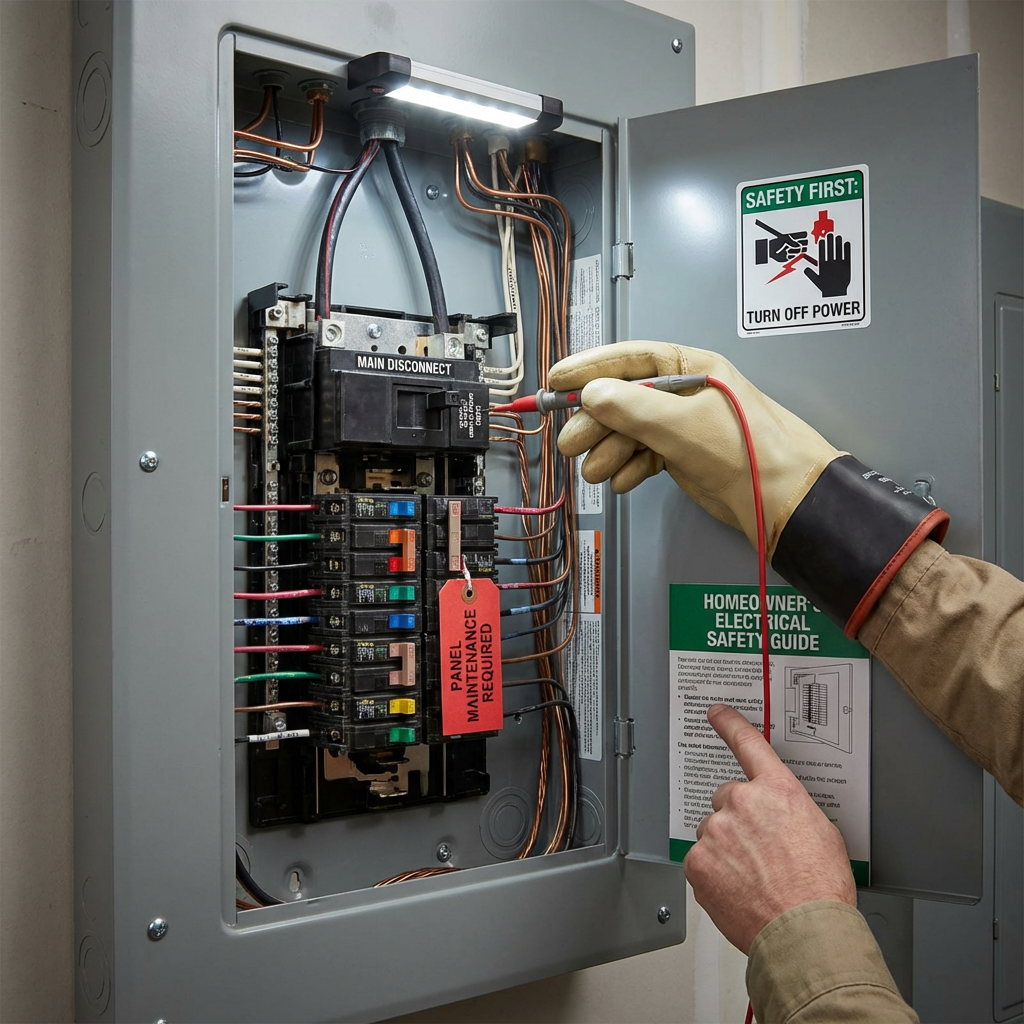
In-Depth Look
Detailed illustration of key concepts
Visual Guide
Infographic illustration for this topic
Sources & References
- A Guide to a Safe Electrical Panel Board Layout
- Electrical Wiring Best Practices: A Comprehensive Guide
- The DIY Guide to Electrical Panel Parts & Safety - YouTube
- A Comprehensive Guide to Types of Electrical Panels
- Essential Electrical Panel Safety Standards Codes NEC Guidelines
- Best Tool Brand for Electricians 2025: Expert Rankings - Wood Guide
- Best Electrician Tools Brand Guide
- Top 20 Essential Electrician Tools for Pros (2026 List) - Workiz
- Essential 2025 Electrician Tools & Safety Warnings (New & Pro Tips!)
- 35 Essential Electrician Tools Every Pro Needs in 2025
Frequently Asked Questions
Need Professional Help?
Find top-rated electricians experts in your area