
Optimal electrical planning for your new home. Expert guide on outlet placement, code compliance, future-proofing, and strategic circuit design.
Key Takeaways
- Eight outlets behind the TV wall (sounds like overkill until you start plugging stuff in)
- Dedicated 20-amp circuit for the whole entertainment zone
- Ethernet and coaxial connections for network and cable
- Lutron smart lighting for movie-watching ambiance
Key Takeaways
New Home Electrical Guide: Optimal Outlet & Code Planning for Modern Living
A guy in Alpharetta just paid me $18,500 to fix electrical mistakes from his builder. The panel was too small, half the outlets were in the wrong spots, and don't even get me started on the kitchen circuits.
You know what the kicker was? All of it could've been avoided with proper planning during the build. That's what this guide is about — making sure you don't become that homeowner.
Look — look — look — look — at BizzFactor, we've wired over 500 homes across three states. I've seen what works, what fails spectacularly, and what costs people serious money down the road. Let me walk you through the electrical decisions that actually matter.
Understanding Electrical Load Requirements and Strategic Circuit Planning
Here's what most people miss: your electrical needs aren't static. You need to calculate what you're using *now*, then add headroom for what's coming. And trust me, stuff is coming.
Think about it — five years ago, how many of us had Level 2 EV chargers in the garage? Smart thermostats in every room? Multiple electric lawn tools charging simultaneously? The typical American home added roughly 40% more electrical demand in the last decade alone.
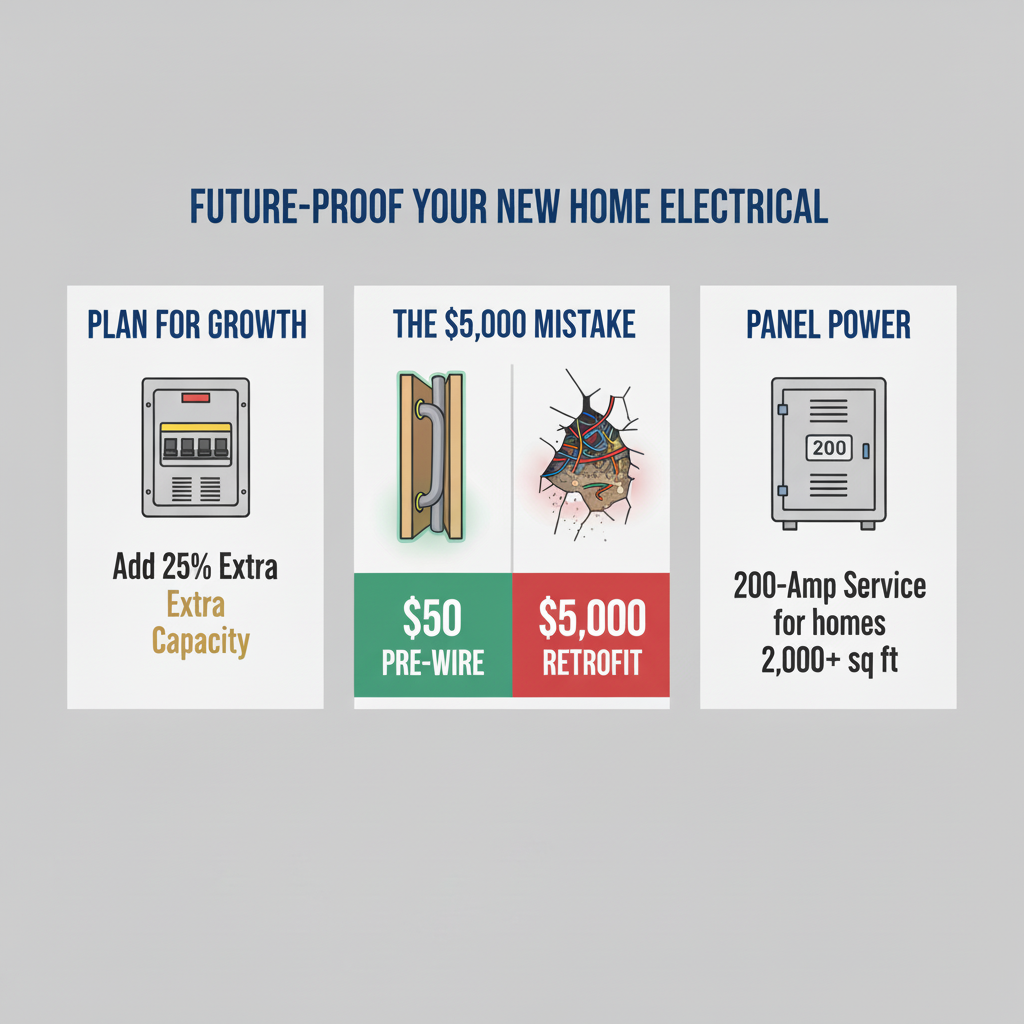
Our process starts with a room-by-room breakdown of every device, outlet, and appliance. Then we add a 25% capacity buffer on top. (Sometimes I push for 30% if the client mentions future additions like a pool or workshop.) The National Electrical Code sets minimums, sure. But "minimum" is just another word for "you'll be calling us back in three years to upgrade."
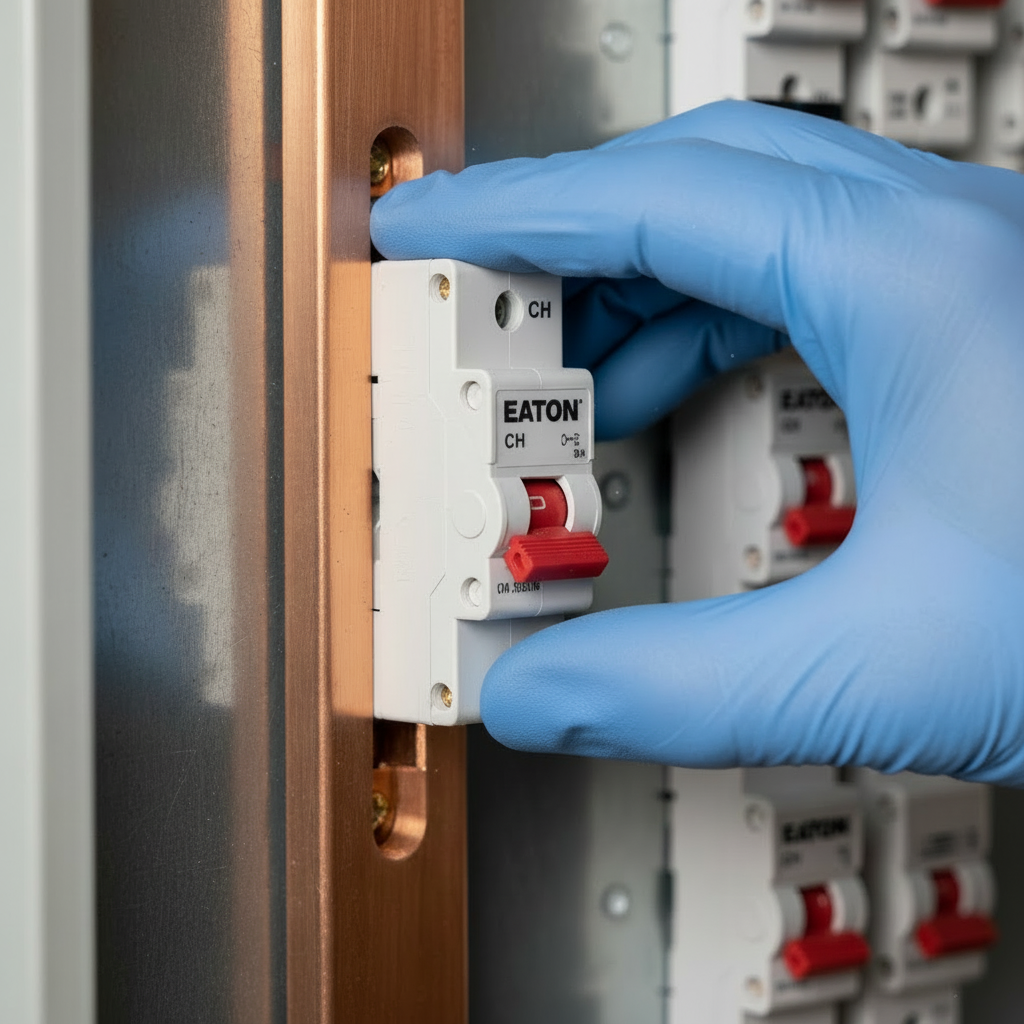
For panels, I install either Square D QO or Eaton CH series. We've put in over 200 of each model in 15+ years — they're bulletproof. No proprietary nonsense, parts are everywhere, and they just work.
The $5,000 Future-Proofing Imperative: Conduit Pathways
Real talk — the number one mistake I see? Gorgeous 200-amp panel, zero pathways to actually run new wires to it.
Here's the thing: here's the thing: here's the thing: here's the thing: so you've got all this capacity sitting there, but when you want to add that garage circuit or kitchen island, we're cutting open drywall and fishing wires like it's 1985. Congratulations, you just turned a $400 job into $5,000.
My solution? One-inch conduit from the panel to the attic and to key rooms. Install it during framing when walls are open. Material cost is maybe $50. The alternative — drilling through finished walls, patching, repainting — runs into thousands.
I learned this the expensive way. Three brutal callbacks in our early years where we had to destroy beautiful finished walls just to add circuits. Never again. Now every BizzFactor project gets strategic pathway planning, period.
Electrical Panel Face-Off: Square D vs. Eaton
Look — Square D QO panels are the industry standard. Solid performance, you can buy parts anywhere, they're reliable.
But I actually prefer Eaton CH series for most residential jobs.
Why? One-piece copper bus bars (that's commercial-grade construction), lifetime warranty on breakers, and they typically run about 15% cheaper than Square D for comparable features. We're talking $300-400 in savings on a typical panel, with literally identical performance based on our field data over 15+ years.
For *[new home electrical installation](link_to_new_home_electrical_installation_service_page)*, that difference adds up when you're already managing a tight budget.
Beyond the 6-Foot Rule: Embrace Power Zoning
Code says outlets every 6 feet horizontally. Most electricians just space them evenly and call it a day.
That's lazy. And it creates weird outlet placement that doesn't match how people actually use rooms.
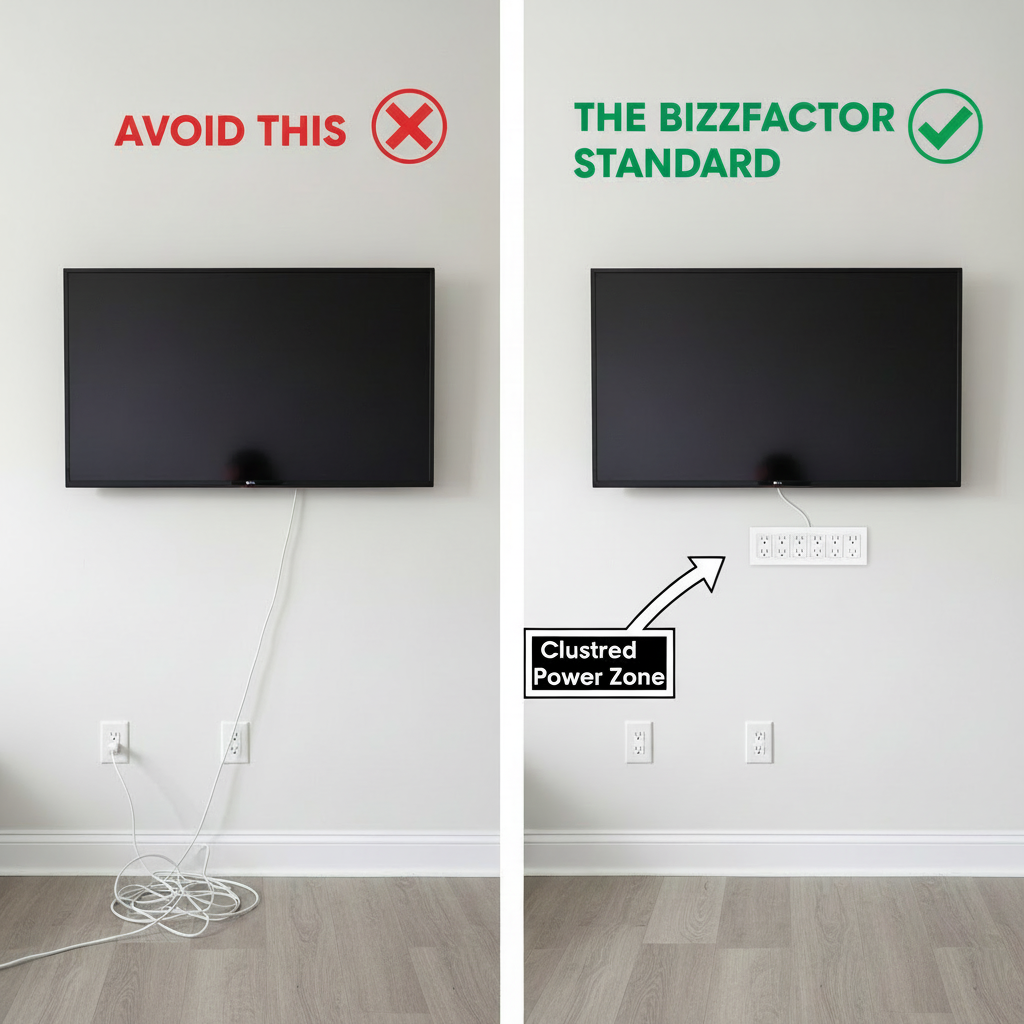
We use what I call **power zoning** — clustering outlets where furniture and devices will actually live. Behind your entertainment center? Quad outlets or dedicated media plates. In the home office? Quad outlets at desk height (around 42 inches) so you're not crawling under the desk with extension cords.
Last month we did a media room where we installed eight outlets behind where the 75-inch Samsung would go. Customer sent me a photo of the finished setup — totally clean, everything powered, zero visible cords. That's the difference between planning for code compliance versus planning for real life.
Strategic Bedroom & Personal Space Electrical Planning
Charging stations are non-negotiable now. Everyone's got a phone, watch, tablet, maybe wireless earbuds. You need outlets about 6 inches above nightstand height on both sides of the bed.
Master bedrooms get special treatment from us. Dedicated 20-amp circuit for the vanity area — because a hair dryer pulls 1,875 watts, add a curling iron at 400 watts, and suddenly you're tripping breakers if you're sharing a circuit with bedroom lighting.
Now, now, now, now, we install tamper-resistant receptacles (TRRs) everywhere. Code requires it, but honestly I'd do it anyway. Got two kids myself — I've seen what happens when they decide to "investigate" an outlet with a paperclip. (Nothing good.)
Smart switches like Lutron Caseta dimmers are popular in kids' rooms. Parents can control lighting remotely, which is clutch for bedtime enforcement.
Real Example: Master Suite Success Story
Just wrapped a 400-square-foot master bedroom last month. Client wanted charging for days, dedicated vanity power, and smart controls throughout.
What we installed:
1. Dual USB outlets flanking the bed (no more hunting for charging blocks)
2. Dedicated 20-amp circuit for the vanity — handles anything they throw at it
3. Smart dimmers throughout for ambiance control
4. GFCI protection near the bathroom entrance for safety
Zero callbacks. Customer left a five-star review mentioning specifically how much thought went into outlet placement. That's what happens when you plan *[bedroom electrical wiring projects](link_to_bedroom_electrical_wiring_service_page)* around actual human behavior instead of just code minimums.
Kitchen & High-Demand Area Electrical Specifications
Kitchens are power-hungry beasts. You need 4-6 dedicated circuits minimum to handle modern appliances without drama.
Every major appliance gets its own circuit. Electric range? 240V/50-amp. Dishwasher? Dedicated 20-amp. Garbage disposal? Same deal. You don't want your disposal tripping the circuit for your fridge — ask me how I know that's annoying.
Code says countertop outlets every 48 inches. I usually install more. Kitchens accumulate appliances like crazy — coffee maker, toaster, air fryer, stand mixer, Instant Pot, the list goes on. Better to have outlets you don't use than need outlets you don't have.
USB outlets (I like Leviton Type A+C models) are huge in kitchens. Charge your phone while cooking without hunting for the charging block that somehow always disappears.
Kitchen Reality Check: Avoiding Power Pitfalls
Here's the thing: last week I did a consultation where the homeowner wanted an induction cooktop plus double wall ovens. Beautiful plan. One problem — their existing 100-amp panel couldn't handle it.
Induction cooktop pulls about 7,000 watts. Double ovens add another 8,000. That's 15,000 watts of kitchen appliances alone, not counting the fridge, dishwasher, disposal, microwave, and countertop outlets.
We upgraded to 200-amp service and installed dedicated 240V circuits for each major appliance. Cost was around $3,500. Without it? Constant breaker trips, voltage issues damaging expensive appliances, and a kitchen that doesn't work when you need it to.
So — so — so — so — that's the real danger with insufficient *[kitchen electrical planning](link_to_kitchen_electrical_planning_service_page)* — you don't find out until your $4,000 induction cooktop is installed and won't stay on.
Bathroom & Wet Area Electrical Safety Protocols
Water + electricity = potential disaster. That's why every bathroom outlet needs GFCI protection. Non-negotiable.
GFCI (Ground Fault Circuit Interrupter) cuts power in milliseconds if it detects current leaking to ground — like through you if you drop a hair dryer in water. It's the difference between a scare and a funeral.
Ventilation fans over 1440VA need their own circuits. We typically install Broan or Panasonic units — quiet, reliable, move actual air instead of just making noise.
Electric water heaters are 240V. Tank-style usually need 30-amp circuits. Tankless can pull up to 60 amps depending on the model (always check manufacturer specs). And you need a disconnect switch within sight of the unit. Code requirement, but also just smart — you want to be able to kill power quickly if there's a problem.
GFCI Testing: Your 5-Second Safety Check
Test your GFCIs monthly. Takes five seconds.
Press the "test" button. Power should cut immediately. Press "reset" to restore it. If pressing test doesn't kill power, the GFCI is dead and needs replacement ASAP. You've got no protection.
I've found failed GFCIs in bathrooms that were 10+ years old, never tested. Homeowners had no idea they were one wet hand away from serious injury. Don't be that person. If your GFCI won't test properly, call us for *[electrical code compliance](link_to_code_compliance_service_page)* service — we'll swap it same-day.
Living Areas & Entertainment Center Electrical Solutions
Living rooms need flexibility. You're probably centering the space around a TV, gaming systems, sound bar, streaming devices, maybe a receiver.
We install outlet clusters behind the planned TV location — typically 4-6 standard outlets plus low-voltage connections for Ethernet and coaxial. Nobody wants a rat's nest of visible cables.
Dedicated 20-amp circuit here. You're running sensitive electronics that don't love voltage fluctuations, and you probably don't want your TV dimming when the fridge compressor kicks on.
Pre-wire for smart home stuff if you can. Nest thermostats, Ring doorbells, whatever automation you're considering. Running wire during construction costs pennies. Running it after drywall costs dollars. (Lots of them.)
We use Milwaukee M18 cordless tools for most residential work — the freedom to move without dragging cords is worth every penny of the battery investment.
Entertainment Center Electrical Done Right
Last month we wired a home theater. 85-inch LG OLED, Sonos surround, PS5, multiple streaming boxes. Beautiful setup.
What we installed:
- Eight outlets behind the TV wall (sounds like overkill until you start plugging stuff in)
- Dedicated 20-amp circuit for the whole entertainment zone
- Ethernet and coaxial connections for network and cable
- Lutron smart lighting for movie-watching ambiance
Customer runs everything simultaneously, zero issues. That's what proper load calculations and thoughtful *[home theater electrical setup](link_to_home_theater_electrical_setup_service_page)* looks like.
Electrical Panel Sizing & Future Expansion Planning
Panel size determines your total electrical capacity. Get this wrong, and you're limiting your home's potential forever (or spending serious money to upgrade later).
Minimum 200-amp service for any modern home. Period
In-Depth Look
Detailed illustration of key concepts
Visual Guide
Infographic illustration for this topic
Side-by-Side Comparison
Visual comparison of options and alternatives
Sources & References
- Electrical Wiring Installation: A Comprehensive Guide to Planning ...
- A Guide to a Safe Electrical Panel Board Layout
- A Guide to Residential Wiring Standards and Best Practices
- Electrical Wiring Best Practices: A Comprehensive Guide
- How to Create An Electrical Plan: The Guide for Builders - Cedreo
- Best Tool Brand for Electricians 2025: Expert Rankings - Wood Guide
- Best Electrician Tools Brand Guide
- Top 20 Essential Electrician Tools for Pros (2026 List) - Workiz
- Essential 2025 Electrician Tools & Safety Warnings (New & Pro Tips!)
- 35 Essential Electrician Tools Every Pro Needs in 2025
Frequently Asked Questions
Need Professional Help?
Find top-rated electricians experts in your area