Prevent power strip fires and electrical hazards with expert tips. Learn what appliances to avoid, the difference between power strips and surge protectors, and essential cord safety for your home.
Key Takeaways
Power Strip Fire Safety: An Expert Electrician's Guide to Preventing Electrical and Fire Hazards
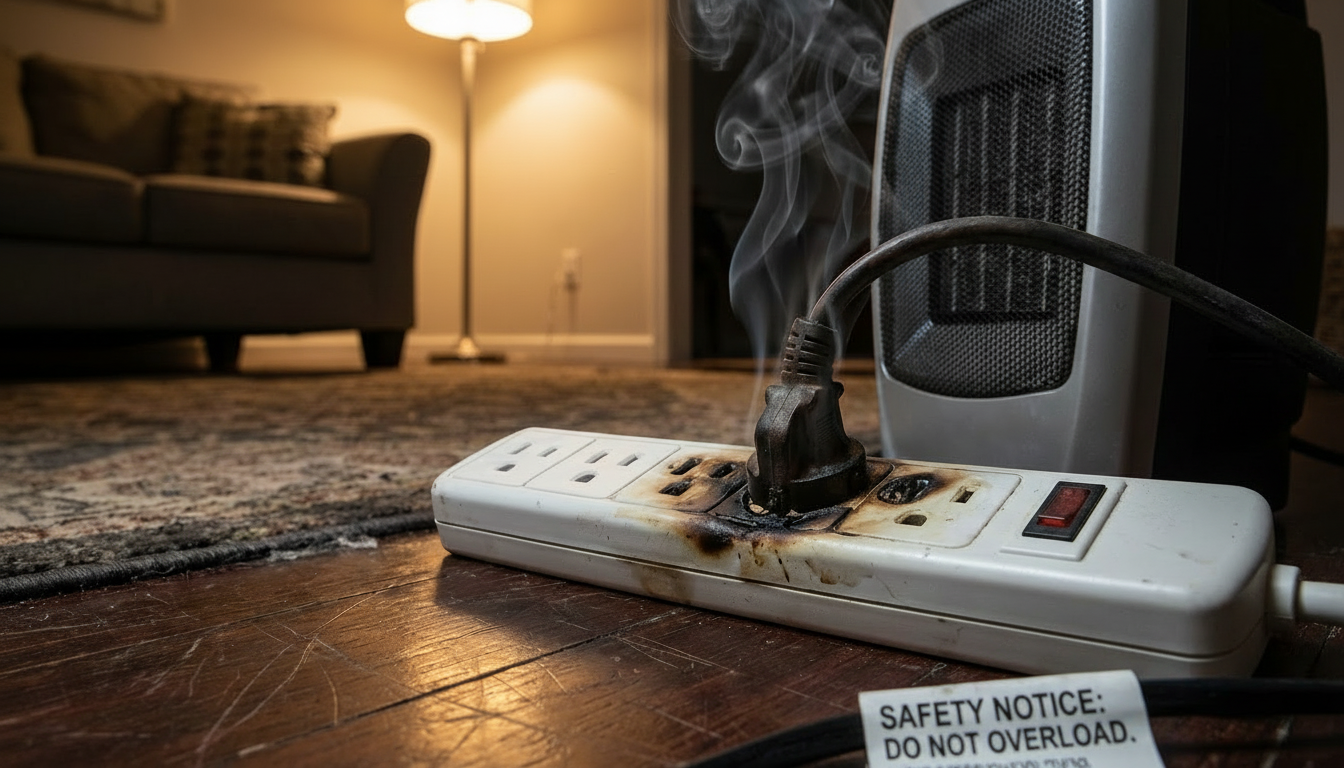
Last month, I got called to a house in Dunwoody where a $14 power strip from a big-box store had melted into the carpet behind a home office desk. The homeowner had plugged in a space heater—just for "a few minutes" while working. Those few minutes cost him $8,200 in repairs and three weeks in a hotel.
You know how many times I've seen this exact scenario? More than I can count. The pattern's always the same — someone thinks a power strip is basically indestructible, tosses a space heater on it, and walks away. What they don't realize is that cheap power strips weren't designed for high-draw appliances. They're meant for your phone charger and maybe a lamp. That's it.
Look — the good news? Most of these fires never had to happen. Understanding what separates a basic power strip from an actual surge protector — and knowing what belongs where — could've saved that Dunwoody homeowner eight grand.
The Unseen Danger: High-Current Appliances and Power Strips Can Cause Fires
Here's what keeps happening—homeowners plug high-wattage heating appliances into cheap power strips. Every. Single. Time.
The usual suspects:
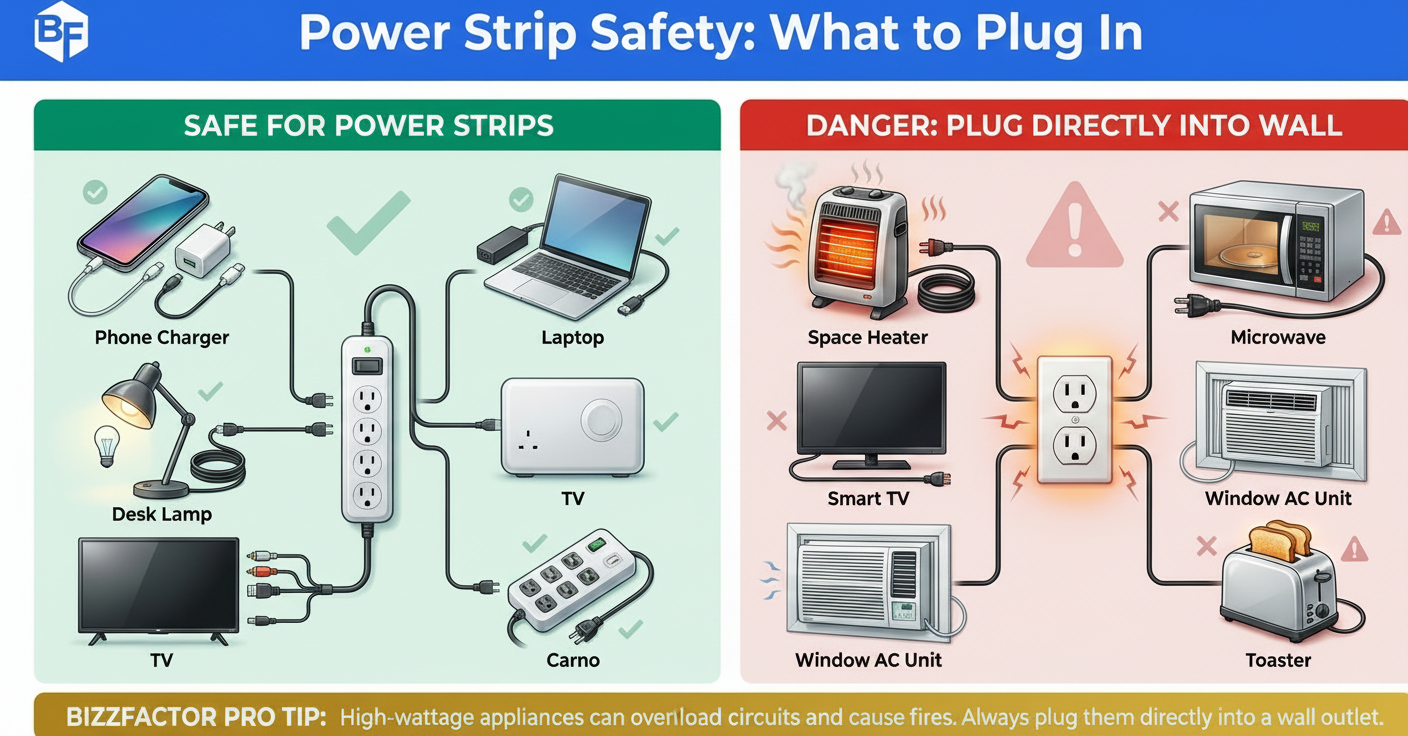
- **Space heaters:** Pull 1,500 watts, sometimes more. That's about 12.5 amps on a typical 120V circuit.
- **Window air conditioning units:** Their compressor motors cycle constantly, demanding serious current.
- **Microwave ovens:** 1,000-1,800 watts is standard, though some commercial-style units pull even more.
- **Toasters and toaster ovens:** Those glowing heating coils? They're current hogs.
- **Hair dryers and curling irons:** Anything that gets hot enough to dry hair or style it draws major power.
Look, these devices aren't trying to burn your house down — they just need more juice than a flimsy power strip can handle. Your phone [charger](/guides/electricians/ev-charger-installation-guide) or desk lamp? Sure, go ahead. But anything with a heating element or a motor that cycles on and off (like a mini-fridge or window AC unit) can easily overwhelm a standard strip.
I was in Sandy Springs last year where someone had daisy-chained three power strips together and plugged a 1,500-watt space heater into the end. The middle strip literally melted through the carpet and into the subfloor before the breaker finally tripped. Cost them probably $4,000 to fix (and they got lucky — no actual flames).
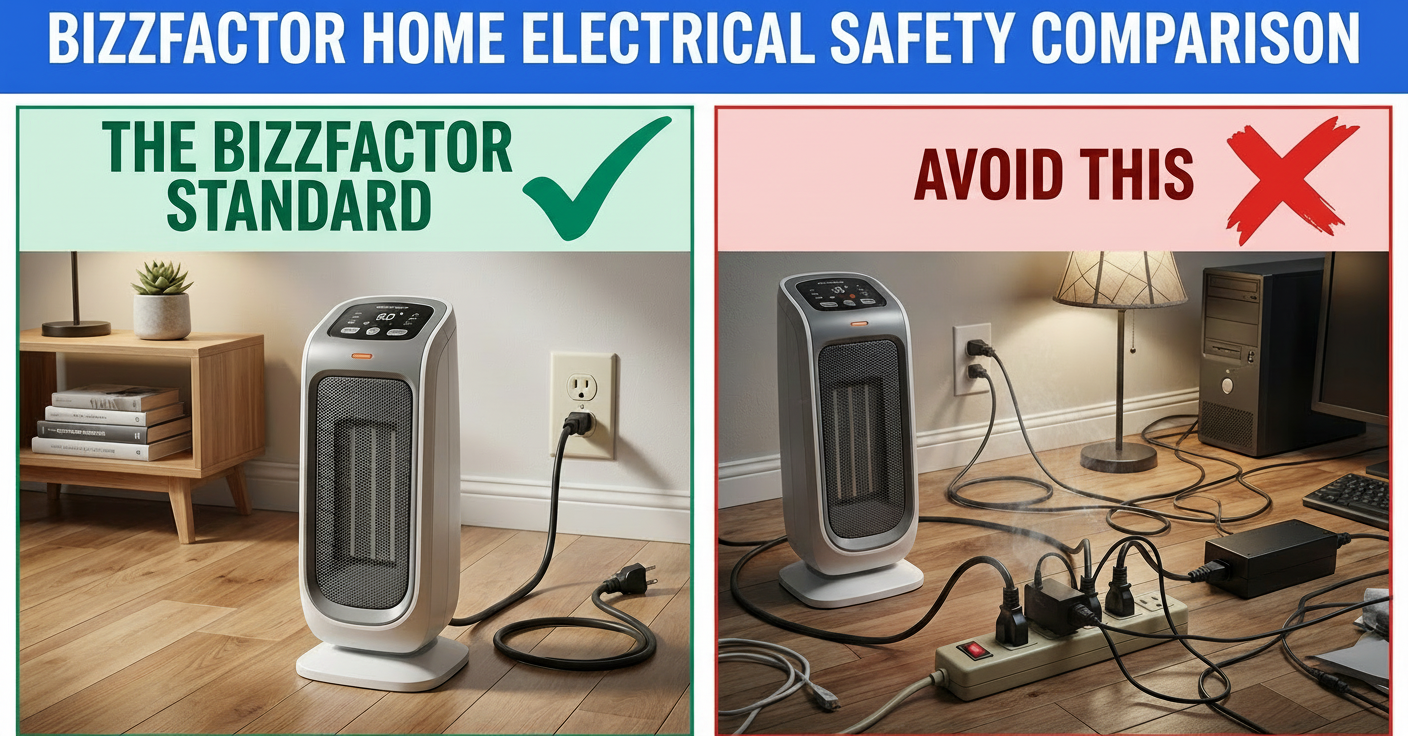
**The Golden Rule for Electrical Safety: Always plug major appliances directly into a wall outlet.** Their high power draw necessitates a direct, dedicated connection to your home's [electrical system](/guides/electricians/electrical-grounding-test-guide), bypassing any power strips or extension cords to prevent circuit overload and fire.
Extension Cord Quality: A Critical Safety Factor for Preventing Electrical Hazards
Look — with extension cords, quality isn't a luxury—it's an absolute necessity for preventing electrical hazards. Many professional electricians, myself included, rely on trusted brands like Klein Tools, Milwaukee, DeWalt, and Fluke. These brands are industry staples because they consistently perform under demanding conditions, where equipment failure can lead to severe injury or fire.
Cheap cords? They fail fast.
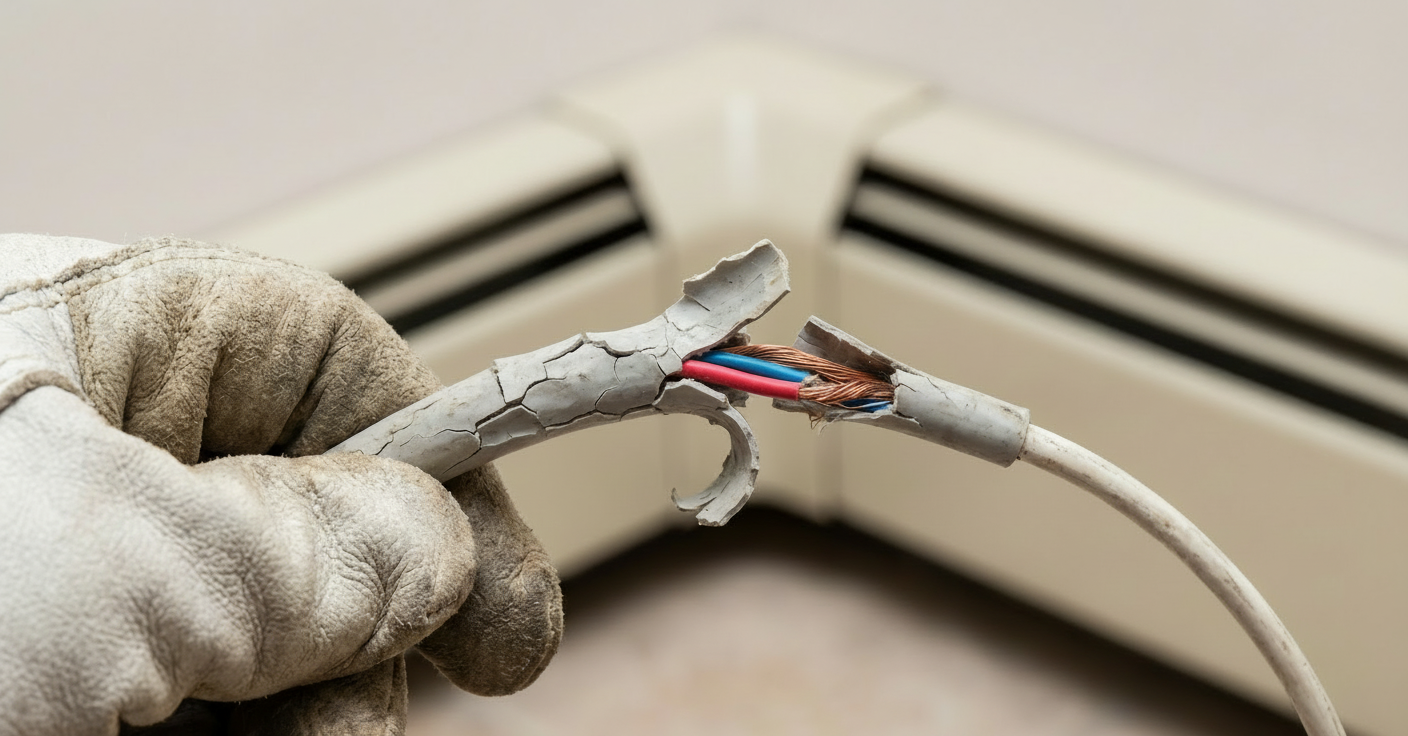
Heat, direct sunlight (UV exposure), and moisture are the primary culprits. Heat can break down a cord's insulation, making the cord brittle and prone to cracking. UV exposure from sunlight can cause the plastic sheathing to crack and fray, sometimes within months. That's the real issue. Moisture ingress through tiny, unnoticeable imperfections further compromises safety, increasing the risk of short circuits or electric shock.
Real talk—exposure to these environmental factors dramatically increases the risk of insulation fraying, which in turn elevates the potential for electrical shock and fire. A well-maintained, high-quality cord can last five to six years, whereas a poorly cared-for or cheap cord might only last a year, significantly increasing fire risk.
⚠️ Understanding Surge Protection: More Than Just Extra Outlets
Here's what trips people up constantly — they think every power strip protects against power surges.
Not even close.
Here's the thing: a basic power strip? All it does is give you more holes to plug stuff into. No voltage spike protection. No lightning strike safeguard. Nothing. According to UL Solutions (the folks who actually certify this stuff), the confusion between power strips and surge protectors is one of their most common questions — because the two look nearly identical on the shelf.
A true surge protector has internal components (metal oxide varistors, usually) specifically designed to absorb sudden voltage spikes. Lightning strikes, transformer failures, grid fluctuations — all that gets diverted away from your electronics. That's the real issue. I've seen a $40 surge protector save a $3,200 home theater setup during a storm in Alpharetta. The protector itself got fried (RIP), but everything plugged into it survived.
So here's the deal: if you've got electronics you'd be upset to replace — computers, TVs, gaming consoles, audio equipment — don't cheap out. Spend the extra $25-50 on actual surge protection.
Avoiding [Electrical Hazards](/guides/electricians/electrical-grounding-test-guide) with Cords and Power Strips
So yeah, here's what I tell every homeowner who asks about extension cord safety:
**Check the rating first.** Every cord and power strip has an amperage limit printed somewhere on it (usually near the plug). Add up everything you're planning to plug in. If the total exceeds the cord's capacity, you're asking for trouble. Don't guess — do the actual math.
**Inspect your cords regularly.** I mean actually look at them. Frayed spots? Cracks near the plug? Discoloration from heat? Any exposed copper wire showing through? Toss it. Don't try to tape it. Don't think "I'll replace it next month." Replace it now. A guy in Marietta ignored a small fray for "maybe two weeks" and ended up with $1,800 in drywall repairs after an arc started behind his entertainment center.
**Keep cords away from heat.** This seems obvious, but I can't tell you how many times I've found extension cords running behind refrigerators, next to baseboard heaters, or — worst of all — under area rugs. Heat destroys insulation. Period. It doesn't matter if the cord "seems fine" when you check it. The damage happens internally, where you can't see it, until suddenly you've got a problem.
**Use outdoor cords outdoors.** Indoor extension cords aren't waterproof. They're not UV-resistant. Sunlight and moisture will wreck them in months (sometimes weeks). If you need power outside for landscaping, holiday lights, or power tools, spend the extra $12 on a cord rated for outdoor use. The heavy-duty insulation actually matters.
Optimizing Your Safe Home Office Electrical Setup
So yeah, everyone's working from home now. Which means home offices are overloaded with gear—and the electrical systems weren't designed for it.
A safe and efficient home office [electrical setup](/guides/electricians/ceiling-fan-installation-guide) requires some planning:
- **Distribute Your Electrical Load:** Avoid plugging all your office equipment (computer, multiple monitors, printer, space heater, phone charger, desk lamp) into a single power strip or wall outlet. Distribute these devices across multiple outlets, ideally on different electrical circuits, to prevent overloading any single circuit and tripping breakers or, worse, causing a fire.
- **Invest in Quality Surge Protection Thoughtfully:** Your home office likely contains valuable and sensitive electronics. Protect them with a high-quality surge protector, *not* a basic power strip. A modest investment of $40-$60 can prevent thousands of dollars in replacement costs for essential equipment.
- **Organize and Ventilate Cords Properly:** Keep cords tidy, untangled, and visible. Never run cords under carpets, rugs, or furniture (a known fire hazard due to trapped heat, potential damage from foot traffic, and difficulty in inspection). Proper cord management not only helps you identify potential problems quickly but also ensures adequate ventilation around connections, preventing dangerous heat buildup.
⚠️ The Overlooked Outlet Hazard: Faulty Wall Receptacles
Want to know what nobody thinks about until it's too late? The outlet itself.
Everyone obsesses over the power strip rating. They check the cord. They count the watts. Then they plug everything into an outlet that's been loose for three years and wonder why there's a burning smell.
Now, a worn-out wall receptacle creates arcing and heat *behind the wall* — and no power strip on earth can fix that. I opened up a wall in Brookhaven last summer where the homeowner "kept smelling something funny" for weeks. Seriously. The outlet had been loose for so long that the connections inside had literally melted. The scorch marks went six inches into the drywall. They're extremely lucky the whole wall didn't catch.
Here's the test: plug something in. Does it slide in easily with almost no resistance? Does the outlet feel warm when you touch it? Can you see any discoloration or scorch marks around the holes? If yes to any of those, you need that outlet replaced before you plug anything else into it.
Don't mess around with this one.
Pro Recommendation: Enhanced Surge Protection for Sensitive Electronics
While consumer guides often lump together brands like Belkin, APC, and CyberPower (which are decent for general electronics use), for highly sensitive and valuable electronics, we recommend a more robust solution. The Tripp Lite Isobar series stands out for its superior protection and reliability.
Look—unlike an average surge protector, which might offer basic clamping protection, a Tripp Lite Isobar provides enhanced safeguarding with isolated filter banks. These banks prevent electrical "noise" (electromagnetic interference from motors, transformers, etc.) from one device (e.g., a laser printer) from interfering with the performance and longevity of another (e.g., high-fidelity audio equipment or sensitive computer components). For valuable home office or AV setups, the Isobar, despite its higher initial cost, is the professional's choice. In my experience, installations of these units have never resulted in equipment damage callbacks.
What Most Guides Miss: The Single-Point Grounding Advantage for Electronics
Contrary to popular belief, especially for complex electronic systems, it's often safer and significantly more effective to consolidate your computer, monitor, printer, and other interconnected peripherals into a *single, high-quality surge protector*. This approach ensures all devices share a common ground path, effectively protecting sensitive electronics from internal ground-loop surges. Ground loops, difficult to explain in brief, essentially involve voltage differences between different ground points that can cause significant damage to equipment, data corruption, and even audible hum in audio systems. A single surge protector with isolated outlets acts as a critical hub for stable grounding.
The Bottom Line: Vigilance, Education, and Professional Guidance are Key to Electrical Safety
Power strip safety isn't complicated. It just requires you to pay attention and not assume everything's fine because it's worked so far.
Know the difference between a basic power strip and a surge protector. Keep high-wattage stuff plugged directly into the wall. Check your cords every few months. Replace worn-out outlets. That's probably 95% of what you need to remember.
If you're not sure whether something's safe — if an outlet feels warm, or a cord looks questionable, or you've got so much stuff plugged in you can't keep track anymore — call someone who does this for a living. A $150 service call beats an $8,000 insurance deductible every time.
Trust me on this one.
In-Depth Look
Detailed illustration of key concepts
Visual Guide
Infographic illustration for this topic
Side-by-Side Comparison
Visual comparison of options and alternatives
Sources & References
- Guide to Power Strips and Surge Protectors | UL Solutions
- Home Office Electrical Setup Tips - Socket Doctors
- Electrical Cord Safety [A Comprehensive Guide] - High 5 Plumbing
- Safe Use of Extension Cords and Power Strips in Your Home
- Best Tool Brand for Electricians 2025: Expert Rankings
- Top 15 Essential Electrician Tools for Pros - 2026 List
- Best Electrician Tools Brand Guide
- Essential 2025 Electrician Tools & Safety Warnings (New ...
- 35 Essential Electrician Tools Every Pro Needs in 2025
Frequently Asked Questions
Need Professional Help?
Find top-rated electricians experts in your area