
Learn when RCDs are legally required in your home. Expert electricians explain safety switch installation rules, testing requirements, and costs.
Key Takeaways
- # When Are RCDs Required
- "The breaker won't reset," she said
- Turns out her new RCD (she called it a safety switch) wasn't broken — it had just detected a microwave leaking 40 milliamps through a frayed cord
- The device did exactly what it was supposed to do: cut power before someone got hurt
Key Takeaways
When Are RCDs Required? Essential Safety Switch Installation Rules Explained
Last month, a customer in Bethesda called me at 11 PM because her kitchen outlets suddenly went dead. "The breaker won't reset," she said. Turns out her new RCD (she called it a safety switch) wasn't broken — it had just detected a microwave leaking 40 milliamps through a frayed cord. The device did exactly what it was supposed to do: cut power before someone got hurt.
That's what RCDs are for.
Understanding RCDs: What They Do and Their Indispensable Role
Safety switches watch your electrical system like a hawk. They're monitoring current flow constantly, looking for anything weird. When they spot an imbalance — could be as small as 30 milliamperes (mA), way less than what it takes to stop your heart — they kill power to that circuit. Fast.
How fast? We're talking 40 milliseconds or less. That's quicker than you can blink.
So here's what's happening inside the device. Current's flowing out through your live wire to whatever appliance or outlet needs it. Normally, that same current comes right back through the neutral. Perfect balance. But say you touch something live, or your coffee maker's got a short to its metal housing — suddenly some current's taking a detour to ground instead of coming back where it should.
The RCD catches this instantly. There's a mismatch. Could be 30mA sneaking out somewhere. Device trips before you even feel a shock.
Whole thing happens in less than 40 milliseconds. Think about that for a second.
The Mechanics: How RCDs Actually Work
Here's the deal: modern RCDs use electromagnetic coils that react insanely fast. They're basically a continuous watchdog for your wiring, making sure all the electricity that leaves comes back. When we install these things, we test them with professional-grade equipment (I use a Fluke 1663 installation tester) to verify they'll trip within that critical 40-millisecond window. Standard multimeters? They can't measure this stuff accurately. You need the right tools.
Look — the technical bit — RCDs operate on Kirchhoff's current law. Basically, what goes out should come back in equal measure. Current flows to your appliances through the live wire, then returns through the neutral. Inside the RCD, a differential transformer compares these two currents constantly.
If there's a mismatch — even just 30mA leaking to ground (maybe through a person touching something live, or through a faulty appliance casing) — the magnetic field in that transformer gets unbalanced. This triggers a sensing coil, which activates a solenoid, and BAM — contacts open, power's cut.
Almost instantaneously.
It's honestly pretty brilliant engineering (the device acts like an early warning system, catching problems before they turn deadly).
Different Types: Which RCD Do You Actually Need?
Not all RCDs are created equal. After 20+ years in the field, I've seen how each type performs in real-world conditions:
**Type A units** — standard residential protection. They'll catch pulsating DC faults (your washing machine's variable-speed motor) plus regular AC currents. Most household appliances fall into this category. Dishwasher, fridge, general outlets — Type A's got you covered. Trip point's usually 30mA for protecting people, though higher ratings exist for equipment. Meet IEC 61008-1 or IEC 61009-1 if you care about standards.
**Type AC models** — older technology that's honestly outdated now. Only catch smooth sinusoidal AC currents, which means modern electronics can produce faults these things completely miss. Your LED dimmers, washing machine with that fancy inverter motor, induction cooktop — they can generate pulsating DC leakage that Type AC won't detect. I've seen houses still running these from the '90s. If you've got Type AC protection, upgrade. Seriously.
**Type B protection** — the heavy hitters. Detect smooth DC residual currents on top of AC and pulsating DC. You need these for EV chargers, solar inverters, variable frequency drives, high-end induction cooking — anywhere smooth DC fault currents show up. Cost more (sometimes 3-4x a Type A) but there's no alternative for specialized gear.
Real talk — a contractor friend in Baltimore installed a Type A RCD on a solar inverter circuit, and it kept nuisance tripping. Swapped it for a Type B and problem solved. The inverter was producing smooth DC leakage that the Type A couldn't handle properly.
Look — current electrical standards mostly require Type A or Type B for new work, reflecting how our appliances have changed. (For more background, check out our guide on [Understanding Circuit Breakers and Fuses](/articles/understanding-circuit-breakers-and-fuses).)
"My RCD Keeps Tripping" — That's Usually GOOD News
Common misconception: if your RCD trips a lot, it's oversensitive or broken.
Wrong.
An RCD that trips is doing its job — it found a real electrical fault. Last year, I met a homeowner in Alexandria who swore his "new RCD was defective" because it kept cutting power. That's the real issue. We ran insulation resistance tests and found his 20-year-old dishwasher cable was degraded to hell, leaking current constantly. The RCD wasn't the problem. It was preventing a potential fire or electrocution.
Think of it like this: if your car's airbag deploys during a crash, you don't blame the airbag for "nuisance deployment," right? Same logic. When an RCD trips, it's screaming "Danger!" and demanding attention.
Here's the thing: i once encountered a guy in Richmond who'd actually taped a tripped RCD to keep it from cutting power. Couple weeks later? Small electrical fire from the exact fault the RCD originally detected. Don't be that guy. Professional diagnosis means finding what's causing the leakage, not just resetting the device over and over.
Why Professional Testing Equipment Matters
You can't test RCDs properly with a basic multimeter. Period.
We use dedicated testers — I'm partial to the Fluke 1663, though the Megger MFT1835 works great too — because you've gotta inject specific fault currents and measure trip times down to the millisecond. Standard test goes like this: hit it with half the rated current (15mA for a 30mA device), then full rated current, then 5x rated (150mA). Different phase angles too. Does it trip within spec every time? Good. Trip times creeping up? That unit's wearing out.
In Australia and New Zealand, they follow AS/NZS 3760 which spells out exact testing protocols. We don't have that same standard here in the US, but the principles don't change. You need calibrated equipment that can inject controlled fault currents and measure response times accurately.
If an electrician shows up without calibrated RCD testing equipment, they can't actually verify your safety. Send them packing.
Legal Requirements: When You're Required to Have RCDs
The National Electrical Code lays out requirements in Article 210.8 (that's where GFCI requirements live — they overlap with RCD function but aren't exactly the same thing). Article 210.12 covers AFCIs, which protect against arc faults that cause fires.
Now, now here's where it gets messy. Local jurisdictions add their own amendments. Colorado Springs might interpret the code differently than Jacksonville. And requirements change based on when your house was built — nobody's forcing you to rip out all the wiring in a 1965 ranch just because the 2023 NEC says something new. Grandfather clauses exist for a reason.
Always consult a local licensed electrician for specifics. Don't guess on this stuff.
So where do you need GFCI/RCD protection? Code generally requires it for:
**Bathrooms and kitchens** — any 120V, single-phase, 15- or 20-amp receptacle near sinks or counters needs GFCI. Water plus electricity is how people die.
**Every outdoor outlet.** Doesn't matter if it's 120V or 240V, 15 amps or 50 amps. Weather, moisture, people standing on wet ground — you need ground fault protection outside.
**Basements, garages, crawl spaces** — damp concrete floors, metal fixtures, unfinished spaces where you're likely to contact ground while using power tools. Recipe for disaster without protection.
**Pool equipment, hot tubs, spa circuits** — pumps, heaters, underwater lighting. Rules here are strict and specific. Pool installations require dedicated GFCI breakers rated for that environment.
**Workshop areas and temporary construction wiring** — circular saw plus metal workbench equals serious shock hazard. Temporary circuits need portable GFCIs at minimum.
So — quick clarification: GFCIs typically trip at 5mA (very sensitive, personal protection), whereas standard RCDs trip at 30mA. Both detect ground faults, but GFCIs are more sensitive because they're specifically designed to prevent electrocution rather than just equipment damage or fire.
The NEC gets updated every three years. Recent editions expanded AFCI requirements to basically every room in a dwelling, protecting against arc faults that standard breakers and RCDs won't catch.
It's complex (keeping up with code changes is literally part of our job).
Older Homes: Why You Should Upgrade Anyway
Look — older homes might not be legally required to upgrade immediately, but waiting is a bad idea from a safety standpoint.
We recommend whole-house RCD protection. Electrical hazards don't care how old your wiring is.
In-Depth Look
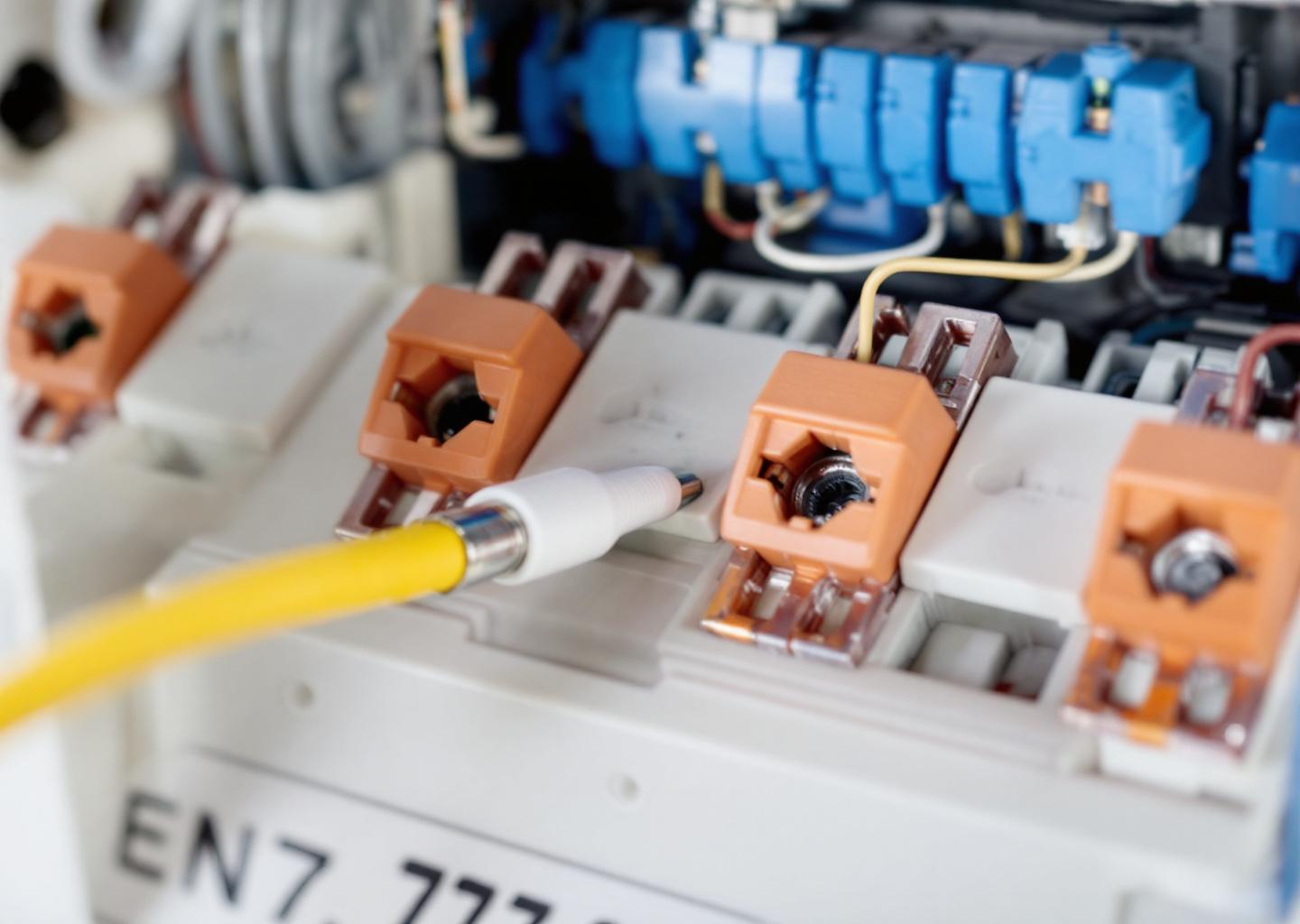
Detailed illustration of key concepts
Visual Guide
Infographic illustration for this topic
Sources & References
- The Complete Guide To RCDs - Residual Current Devices - YouTube
- Residual Current Device (RCD) - Essential Guide - Kmelectric
- RCDs Explained | Electrical Safety First
- What Is a Residual Current Device? Essential Safety Guide
- Residual Current Devices - Where Should They Be Used?
- Best Tool Brand for Electricians 2025: Expert Rankings - Wood Guide
- Top 20 Essential Electrician Tools for Pros (2026 List) - Workiz
- Best Electrician Tools Brand Guide
- Essential 2025 Electrician Tools & Safety Warnings (New & Pro Tips!)
- 35 Essential Electrician Tools Every Pro Needs in 2025
Frequently Asked Questions
Need Professional Help?
Find top-rated electricians experts in your area