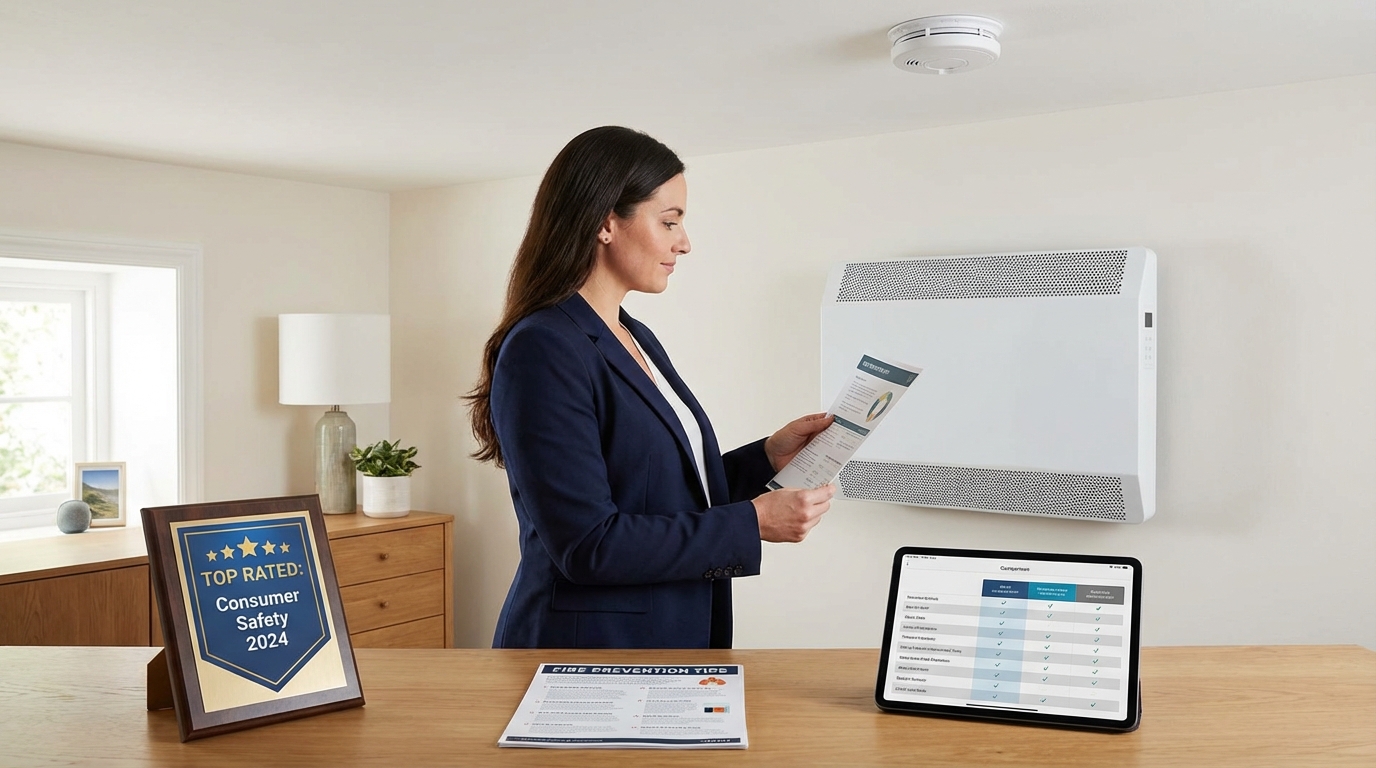
Licensed electricians rank the safest electric heating methods. Avoid fire hazards with our expert safety tips and professional installation guide.
Key Takeaways
- **Never — and I mean never — use extension cords with space heaters.** They're not rated for sustained high-amperage loads. The connection points overheat.
- **Three feet clearance around any heater. Minimum.** No exceptions for "just storing stuff temporarily."
- **Get heaters with auto-shutoff.** If this unit had tip-over or overheat protection, the fire probably wouldn't have started.
- **Don't run heaters overnight.** Just don't.
- **Get your electrical system inspected by a professional.** Especially if your house was built before 1985.
Key Takeaways
Safe Electric Heating: Expert Rankings & Fire Prevention by BizzFactor
Winter hits hard. You need heat that works — and won't burn your house down.
Look, comfort matters. But for plenty of folks, safe heating is literally life or death. The BizzFactor crew? We're licensed electricians who've been crawling through attics and investigating fire scenes for decades. We put together these rankings because we're tired of seeing preventable disasters. Our mission's simple: arm you with real knowledge about **safe electric heating options**, help you actually understand **electrical heating safety**, and nail down **fire prevention strategies** that work.
Don't mess around here.
Why BizzFactor's Heating Safety Rankings Actually Matter
We're not pulling this stuff from manufacturer brochures. These rankings come from two decades in the field — basement installations, emergency calls at 3 AM, and yeah, the grim work of figuring out what went wrong after the fire trucks leave.
I've personally walked through homes where you can still smell the smoke three weeks later.
Every winter, the same pattern repeats: temps drop, everyone cranks their heaters, and electrical systems get hammered. The cheap uncertified solutions? They lead to **electrical fires**, massive property damage, and deaths that never should've happened. Our professionals stick to rigorous safety standards because we've seen what happens when people don't. That's the real issue. **Licensed electrician services** aren't a luxury — they're the difference between staying warm and losing everything.
Trust me, you'll regret cheaping out.
Heat Pumps: BizzFactor's #1 Safety Pick for Home Heating
So why do heat pumps top our list?
Look — it's not because we get kickbacks from manufacturers (we don't). It's because in 20 years, I've never — not once — been called to a house fire started by a properly installed heat pump. They're essentially air conditioners running backward, moving heat around instead of creating it with those sketchy resistance coils that glow red-hot.
Zero exposed fire hazards. That's the whole point.
We install Carrier, Lennox, and Trane systems because those are what don't come back to haunt us. The units never reach temperatures that could ignite anything — not your drapes, not the leaves that blow against them, nothing. That's what makes them our gold standard for **residential heating safety** and the first thing we recommend when someone asks about **safe home heating options**.
Last year we installed a heat pump for the Millers in North Seattle. Three curious kids under age six. My crew chief, Mike, demonstrated that the outdoor unit's external surfaces — even on brutal January days when it's working hardest — stay cool enough to touch. No burn risk for little hands, zero chance of igniting curtains or leaves.
Unparalleled peace of mind.
What makes these things actually safer (not just marketing fluff):
The temperature controls are tight. Like, within a degree or two. No wild swings that stress your electrical system. They've got built-in sensors that shut everything down before trouble starts — usually before you'd even notice anything's wrong.
And here's what matters most: nothing glows red. Nothing gets hot enough to burn skin on contact. The whole system runs cool by design.
Here's the thing: the efficiency part? Look, you're getting three or four units of heat for every one unit of electricity you pay for. Sometimes better. That means lower **energy bills** and way less strain on your wiring. Less load equals less fire risk. Physics, not sales pitch.
Now, you'll typically need a dedicated 240V circuit — anywhere from 30A to 60A depending on BTU rating. That upfront investment, though? Nothing compared to the safety and efficiency you get. Trust me on this.
Want more info? Check out our [Heat Pump Installation Guide](/heat-pump-installation-guide) for comprehensive details on **benefits of heat pump systems**.
Oil-Filled Radiators: A Solid Runner-Up for Safe Space Heating
You know those old-school radiators your grandma had? This is the modern version, except all the hot stuff is sealed inside. Can't touch it, can't burn yourself, can't stick anything into it.
That's the entire safety advantage right there.
At BizzFactor, we recommend these for bedrooms, home offices — any living space needing extra warmth. Top choice for **safe space heaters**. Our electricians love how these work: oil heats internally (safely sealed!), then circulates through metal fins. No internal fans means less dust circulation — hello, allergy sufferers — and significantly reduced fire risk compared to forced-air heaters with their notorious blocked vents.
We see way fewer service calls with these. Big relief.
Here's what actually protects you:
First, the heating elements stay completely locked away. You'd have to disassemble the entire unit to get near anything hot — which dramatically cuts **burn risks**, especially with kids around. Most decent models have tip-over switches that kill power instantly if they get knocked over. Critical feature if you've got pets or toddlers.
The outer surface? Stays under 150°F usually. That's warm enough you'll pull your hand back, but not hot enough to ignite paper or fabric on contact (I've tested this — don't try it at home). And because there's no fan, there's literally nothing to break or malfunction.
The heat spreads gradually. Doesn't blast you. Doesn't dry out the air. Your skin will thank you.
Here's the thing: when buying an oil-filled radiator, always prioritize models with **UL certification** and built-in thermostats. Based on our field experience, models with 7-12 fins and 1000-1500W power draw are spot-on for heating standard rooms (150-250 sq ft) efficiently and safely.
Want more details? Our guide on [choosing safe space heaters](/choosing-safe-space-heaters) breaks it all down.
Infrared Panels: Professional-Grade Targeted Heating Solutions
Think of infrared panels like indoor sunshine. They skip the whole "heat the air" step and go straight to warming up objects and people using electromagnetic waves — same principle as standing in sunlight on a cold day. You feel warm even though the air temperature hasn't changed much.
Totally different safety profile than traditional heaters.
Now, we're not talking about wobbly portable space heaters you plug in anywhere. BizzFactor permanently mounts these panels on walls or ceilings. What's that mean for you? No tripping hazards from cords snaking across floors, no accidental tipping — just clean, efficient heat that blends right in. Excellent option for **efficient zone heating** and **discreet heating solutions**.
I remember an installation in a sprawling workshop out in Kent (guy was restoring classic motorcycles). Huge space, high ceilings — forced-air just wasn't cutting it. My team installed several 750W infrared panels strategically above workstations. They radiated heat directly onto workers and tools rather than trying to warm the entire cavernous air volume.
Client was thrilled. Remarkably intelligent, silent, and wonderfully **energy-efficient heating solution**. Especially for tricky spaces.
Why these work better in certain spaces:
No exposed coils whatsoever. The panel surface gets warm — typically hitting 160-200°F — but that's nowhere near the glowing-red temperatures that ignite stuff. Being permanently mounted means you can't accidentally shove them against curtains or park them on carpet (the two biggest space heater mistakes we see).
You heat the zone you're actually using instead of the whole house. That cuts your electrical load substantially, which means less stress on your circuits. Less stress equals safer operation overall.
They shine in garages, workshops, basements, or when you need focused warmth in a larger room. Feels like sunshine warming your shoulders. And because there's no fan, people with dust allergies or respiratory issues actually request these specifically.
Now, here's the catch (small one): installing infrared panels absolutely requires a qualified electrician. Someone like our BizzFactor team. We handle proper circuit sizing (often needing dedicated 15A or 20A circuit), mounting, and ensure necessary GFCI protection for wet areas.
Crucially, we make sure everything adheres to current **electrical codes** — specifically NEC Article 424. This ensures optimal performance and highest **electrical safety standards**.
Don't skimp on expert installation.
Real-World Fire Investigation: The Devastating Cost of Unsafe Heating Choices
Last winter we got called out to a house fire in Bellevue. Family of five — mom, dad, three kids ages 8, 11, and 13. Their entire upstairs was gutted. They barely made it out alive.
Still keeps me up some nights.
Now, the cause? Guy had daisy-chained three space heaters through extension cords because "the outlets were in inconvenient spots." One of those heaters was a cheap fan unit he'd bought at a big-box store for $19.99. It had a blocked intake (laundry basket shoved against it), and around 2:30 AM the internal temperature climbed past 700°F before igniting nearby cardboard boxes.
The family escaped through a second-story window. Their 8-year-old daughter suffered smoke inhalation and spent four days in the hospital.
$340,000 in damages. Completely preventable.
Our investigation using thermal imaging and circuit analysis showed the extension cord's insulation had melted at the connection point — that's what happens when you run 12.5 amps continuously through a cord rated for "light duty." We also found their home had original 1970s aluminum wiring, which was already a fire hazard before they added three space heaters to the load.
Real talk — memorize these rules:
- **Never — and I mean never — use extension cords with space heaters.** They're not rated for sustained high-amperage loads. The connection points overheat.
- **Three feet clearance around any heater. Minimum.** No exceptions for "just storing stuff temporarily."
- **Get heaters with auto-shutoff.** If this unit had tip-over or overheat protection, the fire probably wouldn't have started.
- **Don't run heaters overnight.** Just don't.
- **Get your electrical system inspected by a professional.** Especially if your house was built before 1985.
Most heating-related fires? They stem from three things: improper equipment selection, user error, and inadequate electrical infrastructure. Nine times out of ten, they're preventable with proper planning and professional guidance.
Don't become another statistic.
BizzFactor's Essential Fire Prevention Checklist for Electric Heating
Preventing heating fires isn't complicated, but it does require you to actually do the work. Our team's developed this checklist from decades of installations and investigations.
Use it. Seriously.
**Before heating season:**
- **Schedule professional electrical inspection:** Have a licensed electrician (like BizzFactor) evaluate your home's capacity. We check panel load, circuit integrity, outlet condition, and grounding systems. In older homes (pre-1985), this is absolutely critical.
- **Test smoke and CO detectors:** Replace batteries, test monthly, replace units over 10 years old. Install them on every level and outside sleeping areas.
- **Inspect all heating equipment:** Check cords for damage, test safety features, clean units thoroughly. Dust buildup is a real fire hazard.
- **Clear combustibles:** Remove anything flammable within three feet of heating equipment or outlets.
Think that's overkill? Tell that to the Bellevue family.
**During heating season:**
- **Monitor electrical panels:** Feel your breaker panel occasionally. If it's warm or you smell burning plastic, shut it down and call us immediately.
- **Never overload circuits:** Most
In-Depth Look
Detailed illustration of key concepts
Visual Guide
Infographic illustration for this topic
Sources & References
- 13 Ways to Keep Your House Warm This Winter
- Winter Electrical Safety Tips: Keep Your Home Safe & Warm
- Simple Steps to Keep Your Home Warmer This Winter
- How to Keep Your House Warm in 2025 - Popular Mechanics
- Best Tool Brand for Electricians 2025: Expert Rankings - Wood Guide
- Best Electrician Tools Brand Guide
- Top 20 Essential Electrician Tools for Pros (2026 List) - Workiz
- 35 Essential Electrician Tools Every Pro Needs in 2025
- Essential 2025 Electrician Tools & Safety Warnings (New & Pro Tips!)
Frequently Asked Questions
Need Professional Help?
Find top-rated electricians experts in your area