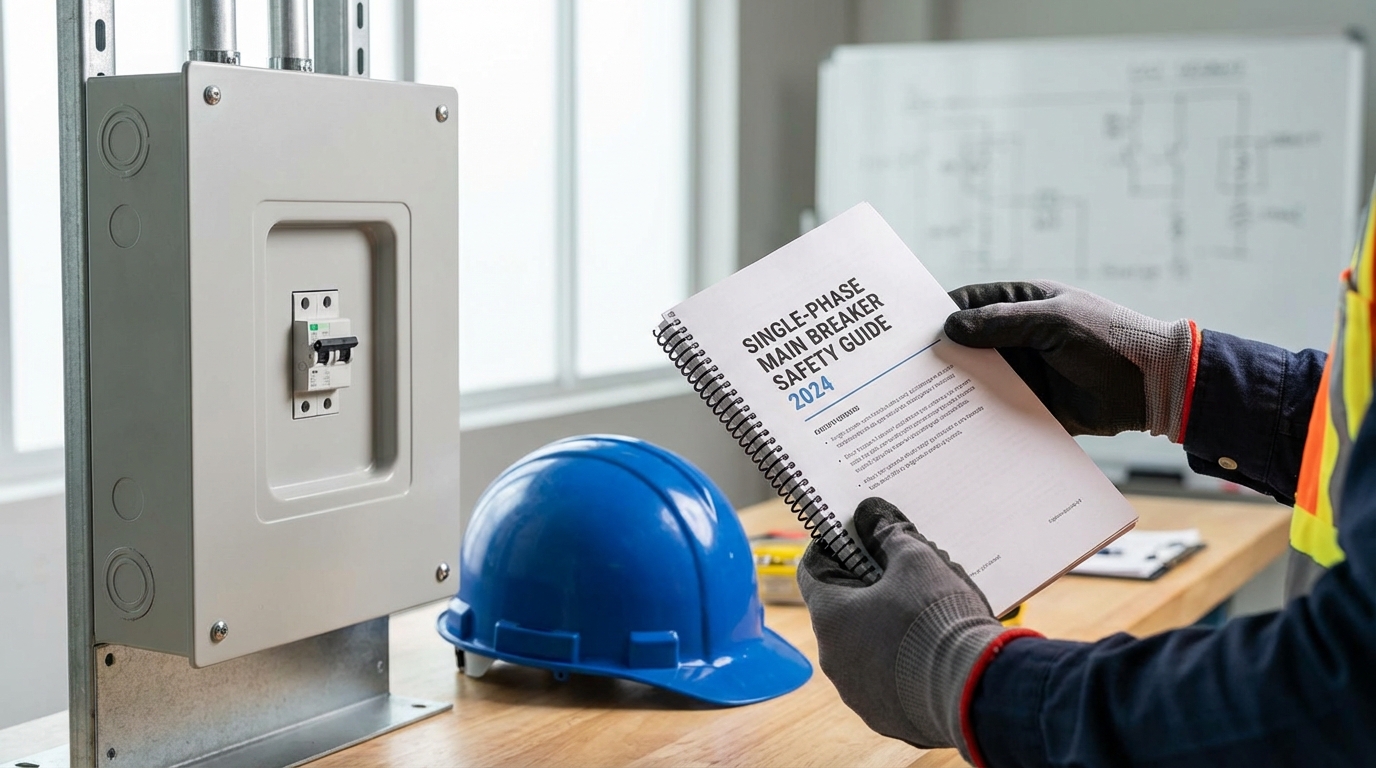
Expert guide to single-phase main breakers. Get professional installation tips, troubleshooting advice, and cost info from certified electricians.
Key Takeaways
- **120V circuits:** These are your everyday workhorses. Think standard outlets, lighting, and smaller appliances throughout your home. They use one 'hot' wire and a neutral conductor.
- **240V circuits:** Now we're talking power. These are for the big guns like electric dryers, ranges, water heaters, and your central air conditioning unit. They use two hot wires to deliver higher voltage and current. More efficient too.
- **Voltage Fluctuation Management:** Today's main breakers are smart. They're designed to roll with common voltage changes, avoiding those annoying 'nuisance trips' while still protecting you from genuinely dangerous power spikes.
- **Arc-Fault Circuit Interrupters (AFCI):** While you often see these on individual branch circuits, some cutting-edge main panels *can* support AFCI protection for dangerous electrical arcing conditions. Arcing? That's what causes fires. Check out our detailed guide on [AFCI breakers](/blog/afci-breakers-guide) to understand how they snuff out fire risks.
- **Ground-Fault Circuit Interrupters (GFCI):** GFCI protection is non-negotiable, especially in wet spots like bathrooms, kitchens, and outside. They spot tiny imbalances in current and trip fast, preventing electrocution. Our guide on [GFCI outlet installation](/blog/gfci-outlet-installation) gives you the lowdown on these life-saving gadgets. Don't skip this step.
Key Takeaways
Single-Phase Main Breaker Safety Guide 2024: Your Home's Electrical Powerhouse
Ever stare at that big, chunky switch in your electrical panel? That's your home's single-phase main circuit breaker. It's not just some random lever you ignore.
It's the master safety switch for your entire residential 120V/240V electrical system.
Look — here at BizzFactor, we've put together this guide covering everything from what it actually does to professional installation, upkeep, and the problems homeowners run into. This thing's serious business.
What Does a Single-Phase Main Breaker Actually Do? Your Home's Unsung Electrical Hero
Look — your single-phase main breaker is the absolute foundation of your home's electrical safety. Think of it as the primary gateway between the roaring utility power grid and every single wire inside your house.
When dangerous stuff happens—like sustained overloads, a nasty short circuit, or a hazardous ground fault—it **instantly cuts power** to *every* circuit. Just like that.
Why's this so important? Well, it prevents electrical fires. Protects your pricey appliances from getting fried. And most critically, it keeps your family safe from electric shocks. This little hero works tirelessly.
You'll find it sitting at the very top of your main electrical service panel. Usually the biggest, most obvious switch there. Now, you might hear about 'three-phase systems' in commercial buildings—forget 'em for your home. Single-phase setups are what nearly all residential houses use. They're efficient, reliable, and typically handle service capacities from 100 to 200 amps.
Real talk: most homeowners don't grasp how vital this thing is until something goes wrong.
These units connect directly to the utility service entrance, making their reliability utterly paramount for your home's overall safety and power delivery.
Here's the thing: at BizzFactor, we don't just recommend any brand. We stick to the titans: Eaton, Square D, and Siemens. Why? Because they meet—and often exceed—the strict safety rules set by the **National Electrical Code (NEC) Article 230**. Modern main breakers? They're packed with advanced thermal-magnetic trip mechanisms. This means they can react in milliseconds to electrical faults, stopping catastrophic damage before it starts.
Pretty impressive engineering.
A Quick Look at Your Single-Phase Electrical System:
- **120V circuits:** These are your everyday workhorses. Think standard outlets, lighting, and smaller appliances throughout your home. They use one 'hot' wire and a neutral conductor.
- **240V circuits:** Now we're talking power. These are for the big guns like electric dryers, ranges, water heaters, and your central air conditioning unit. They use two hot wires to deliver higher voltage and current. More efficient too.
- **Voltage Fluctuation Management:** Today's main breakers are smart. They're designed to roll with common voltage changes, avoiding those annoying 'nuisance trips' while still protecting you from genuinely dangerous power spikes.
- **Arc-Fault Circuit Interrupters (AFCI):** While you often see these on individual branch circuits, some cutting-edge main panels *can* support AFCI protection for dangerous electrical arcing conditions. Arcing? That's what causes fires. Check out our detailed guide on [AFCI breakers](/blog/afci-breakers-guide) to understand how they snuff out fire risks.
- **Ground-Fault Circuit Interrupters (GFCI):** GFCI protection is non-negotiable, especially in wet spots like bathrooms, kitchens, and outside. They spot tiny imbalances in current and trip fast, preventing electrocution. Our guide on [GFCI outlet installation](/blog/gfci-outlet-installation) gives you the lowdown on these life-saving gadgets. Don't skip this step.
Good manufacturers, like Eaton, often bake in enhanced features and rock-solid build quality. They can detect issues traditional breakers would miss, boosting your home's electrical safety for years to come.
Peace of mind wrapped in metal.
How Exactly Do Single-Phase Breakers Protect You? It's a Triple Defense
Here's the deal: your single-phase main breaker is on duty 24/7, constantly scanning the electrical current flowing into your home. It's your **first line of defense** against electrical fires and electrocution.
What does it do? It automatically, instantaneously, and totally cuts power during a few critical fault conditions:
- **Overloads:** This happens when your home tries to pull too much juice. Maybe you've got too many appliances running, or a faulty one is hogging power. When the demand goes beyond what the breaker's rated for, its guts get hot real fast. Trip! This stops wires from overheating, melting, and starting a fire.
- **Short Circuits:** This is when a hot wire accidentally touches a neutral or ground wire. It creates a super-low resistance path, leading to a massive, instant surge of electricity. The main breaker's magnetic trip mechanism spots this surge and *boom*—power's off in milliseconds. Fast reaction is key here.
- **Ground Faults:** These are super dangerous, especially where water is involved—bathrooms, kitchens, outdoors. Electricity finds an unintended path to the ground, maybe through a person. GFCI-equipped main breakers (or sub-panel GFCIs) catch these subtle current imbalances and trip lightning fast to prevent electrocution. Your life matters.
I remember a homeowner in the Travis Heights neighborhood of Austin who called us about their 100A main breaker constantly tripping. It was driving them nuts!
When we checked it out, we found the family was consistently pulling over 85 amps with their appliances—sometimes hitting 92 or 93 amps during peak hours. Classic case of an overloaded system for an older home. This is so common in homes that haven't kept up with modern electrical demands.
Our BizzFactor solution? We upgraded them to a 200A Eaton breaker with a full panel swap—ran them about $2,800 installed. We even threw in our 5-year warranty. It totally resolved their power problems safely and efficiently, and they've got plenty of capacity for future electrical needs now.
Good outcome.
Common Scenarios Where Your Main Breaker Jumps In:
1. **Overloaded circuits:** Stops power hogs from causing trouble. Preventative.
2. **Short circuits:** Prevents damage and fires from bad wiring or faulty appliances. A real hero.
3. **Ground faults:** Life-saving protection in wet areas. No shocking surprises.
4. **Arc faults:** (If integrated or supported) Catches dangerous arcing from loose connections that spark fires. Silent threats.
5. **Lightning surge protection:** Not its main job, but a healthy main breaker helps your whole system handle surges, especially when paired with a [whole-house surge protector](/blog/whole-house-surge-protector-guide). Smart defense.
Now, the National Fire Protection Association (NFPA) keeps telling us: properly working circuit breakers prevent *tons* of electrical fires every year. This really hammers home how critical they're for home safety.
That's worth a lot.
When Do You Need Professional Help? It's Not a Weekend Project
Look, installing or replacing a main breaker isn't something you learn from a YouTube video.
It's a highly specialized job that needs serious expertise, strict adherence to safety rules, and proper electrical licensing. Let me be super clear: this is **not a DIY project**. You're playing with literally lethal 240V systems and huge currents. Mess it up, and you're looking at severe injury, electrocution, or burning your house down.
Seriously, don't.
Now, our BizzFactor certified electricians? They live and breathe safety. They use proper lockout/tagout procedures, insulated tools, and calibrated testing equipment when they're anywhere near high-voltage electrical panels. Pros know that *precision* is everything, especially with tightening electrical connections.
A loose connection is a disaster waiting to happen—it generates crazy amounts of heat, leading to early breaker failure, wire damage, and serious fire risks. We use industry-standard tools like Klein Tools and Fluke equipment to make sure every single connection is rock-solid, reliable, and compliant with *all* local safety standards and the National Electrical Code.
Meticulous work.
And here's the kicker: Utility coordination is a must. Main breaker replacements almost always mean temporarily cutting power to your entire home. We handle all that, working with your local power company to ensure it's safe, compliant, and doesn't completely mess up your day.
We take care of the details.
**Case Study:** A BizzFactor team recently got a call from a property over in the Lakewood neighborhood of Dallas. They were having frequent, unexplained power outages—sometimes three or four times a week.
When we investigated, we found a 30-year-old 100-amp main breaker that was showing serious contact deterioration *and* was totally undersized for the home's modern demands. HVAC upgrades, new kitchen appliances, home office setups—it was just too much for that old breaker.
We recommended and installed a brand-new 200A Eaton breaker. This also meant we had to update the service entrance conductors and the meter base. Total project cost them $3,200, but that included everything—permits, inspections, the works.
The result? Reliable power, much better safety, increased home value, and full compliance, all backed by our written guarantee.
Happy customers.
What Happens During Our Professional Installation?
1. **Initial Assessment & Load Calculation:** We start with a full check-up of your electrical system. How much power are you using *now*? What do you *plan* to add? This tells us exactly what amperage and panel size you need. No guessing games.
2. **Utility Coordination:** We contact the power company. We schedule the safe and temporary disconnection of your service. We handle the red tape.
3. **Safe Removal:** Out with the old! We carefully and safely remove the old breaker and its wiring, using only insulated tools and strict safety rules. Safety first, always.
4. **Precision Installation:** The new breaker goes in. Think precise torque specifications, secure wiring, every single bit done to NEC standards. Accuracy is paramount.
5. **Thorough Testing:** We don't just flip the switch. We test *everything*. Connections, voltage, ground continuity, overall system integrity. We use calibrated diagnostic gear.
6. **Power Restoration & Inspection:** Power's back on! We confirm it's all working perfectly and handle all the necessary inspections with local authorities. Full code compliance.
Every piece of electrical work BizzFactor does meets or beats local codes. And, just like the International Association of Electrical Inspectors (IAEI) suggests, everything passes inspection.
For more depth on electrical code stuff, peek at our resource on [understanding the NEC](/blog/understanding-national-electrical-code).
What Kind of Problems Do Main Breakers Have? Spot the Red Flags
Your main breaker keeps tripping?
That's a huge flashing sign. It's telling you there's an electrical problem brewing in your home, and you shouldn't ever ignore it.
What could be causing it? Could be a constant overload, an old or corroded breaker, faulty wiring somewhere, or even a legitimate short circuit that needs immediate attention. From what I've seen, homeowners tend to reset the breaker a few times hoping it'll magically fix itself.
Big mistake.
So what happens next? You call a professional. An electrician in Buckhead told me he sees this every spring when people fire up their AC units for the first time—average repair runs about $2,400, and half the time it's preventable with proper maintenance.
Think that's overkill? Tell that to the guy whose basement flooded twice because his sump pump lost power from a bad breaker.
Common Main Breaker Issues You'll Probably Encounter:
- **Frequent Tripping:** Usually means overload or a short circuit. Could also be the breaker itself is worn out. Nine times out of ten, it's one of those three.
- **Won't Reset:** The breaker trips and won't stay in the 'on' position? That's a mechanical failure or there's still an active fault in your system. Not good.
- **Burning Smell or Visible Damage:** You smell burning plastic or see scorch marks near the breaker? Shut everything down immediately and call us. That's an emergency. Every single time.
- **Buzzing or Humming Sounds:** Loose connections or internal arcing. This generates heat and is a fire hazard waiting to happen. Get it checked.
- **Hot to the Touch:** Breakers get warm during normal operation, but if yours is hot enough you can't hold your hand on the panel near it? That's a problem. Loose connection or it's overloaded.
- **Age-Related Wear:** Most breakers last 25-40 years, but that doesn't mean they'll work perfectly that whole time. In my experience, after 25 years, you should at least get an inspection.
And honestly? A lot of homeowners don't realize that even if the breaker *seems* fine, internal components can degrade over time. Contacts wear out. Springs weaken. The thermal trip mechanism gets less accurate.
An electrician over in Scottsdale showed me a breaker from a 1985 panel that looked perfect on the outside—opened it up and the contacts were completely pitted and corroded. Scary stuff.
When Should You Definitely Call a Professional?
- Your breaker trips more than once a month
- You've added major appliances or done home renovations in the last few years
- Your home is over 25 years old and still has the original panel
- You're planning to sell (buyers' inspectors will flag old panels)
- You smell anything burning or see any discoloration
- Your lights flicker when major appliances kick on
Worth every penny to get it checked out properly.
How Do You Maintain Your Main Breaker? It's Simpler Than You Think
Here's the thing: your main breaker doesn't need constant babysitting, but it does need some attention. Regular maintenance can extend its life and catch problems before they become expensive emergencies.
What should you do?
**Visual Inspections (Every 6 Months):**
- Open your panel (with the power on, don't touch anything!)
- Look for any signs of rust, corrosion, or discoloration
- Check for any burning smells
- Listen for buzzing or humming
- Make sure nothing looks melted or scorched
That's it. Takes five minutes.
**Professional Inspections (Every 3-5 Years):**
In most cases, you'll want a licensed electrician to do a thorough inspection every few years. They've got the tools and expertise to:
- Test the breaker's trip sensitivity
- Check all connections with thermal imaging
- Verify proper grounding
- Measure voltage and current under load
- Tighten any loose connections
So — a contractor I know in Charlotte runs thermal imaging on every panel he inspects—usually finds at least two or three hot spots in older homes. Tightens 'em up, problem solved. Costs about $200-300 for the inspection, could save you thousands in repairs down the road.
**What You Should Never Do:**
- Don't ever work inside the panel with the power on (unless you're qualified)
- Don't paint over the breaker or panel
- Don't store stuff against the panel (it needs clearance)
- Don't ignore warning signs
- Don't try to "fix" a breaker yourself
The Cost of Neglect
Look — a new main breaker installation typically runs $800-$3,500 depending on amperage and whether you need panel upgrades. That seems like a lot until you consider what an electrical fire costs.
The National Fire Protection Association says electrical fires cause over $1.3 billion in property damage every year.
Not even close to worth the risk.
Upgrading Your Main Breaker: When Is It Time?
So when do you actually *need* to upgrade? There's a few telltale signs:
**Your Home's Electrical Demands Have Grown:**
Added a hot tub? Electric car charger? New HVAC system? Finished basement with a home theater? All of these pull serious amperage. If you're still running on a 100A service and you've added major appliances, you're probably pushing the limits.
Real talk: most modern homes need 200A service minimum.
**You're Doing Major Renovations:**
Kitchen remodel? Room addition? This is the perfect time to upgrade. It's way easier (and cheaper) to do it when walls are already open and you've got contractors on site anyway.
**Your Panel Is Outdated or Dangerous:**
Some older panels—Federal Pacific, Zinsco, Challenger—are known fire hazards. If you've got one of these, upgrade immediately. Not eventually. Immediately.
**You're Selling Your Home:**
Buyers are smart these days. They bring inspectors who know what to look for. An old, undersized panel can kill a sale or knock thousands off your price. A property in Tempe sat on the market for 87 days until the owners finally upgraded their 1970s panel—sold in 12 days after that.
What an Upgrade Actually Involves
Upgrading from 100A to 200A service isn't just swapping the breaker. It usually means:
- New service entrance cables from the utility
- New meter base
- New main breaker and possibly entire panel
- Updated grounding system
- Utility coordination and inspection
- Possible trenching if your service is underground
Costs typically run $2,000-$5,000 for a complete upgrade. In some areas with difficult access or long runs from the street, I've seen it go as high as $8,000.
Look — but think about it this way: you're not just buying a new breaker. You're buying safety, capacity for future needs, peace of mind, and probably boosting your home's resale value by more than the upgrade cost.
Pretty good deal when you look at it like that.
The Bottom Line: Your Main Breaker Deserves Respect
Your single-phase main breaker is probably the most important electrical component in your home that you never think about. It's protecting you right now, as you read this, from fires and electrocution.
It deserves some respect.
Don't ignore warning signs. Don't put off maintenance. And for the love of all that's holy, don't try to DIY your way through a main breaker installation or repair.
At BizzFactor, we've seen it all—from minor issues caught early that cost a couple hundred bucks to fix, to complete electrical disasters that could've been prevented with a simple inspection. The difference? Usually just whether the homeowner paid attention to the warning signs.
Get your panel inspected if it's been a few years. Call a professional if you're seeing any of the problems we talked about. And if you're planning any major electrical work, talk to someone about whether your current main breaker can handle it.
Your home's electrical powerhouse is working hard for you. Make sure you're taking care of it too.
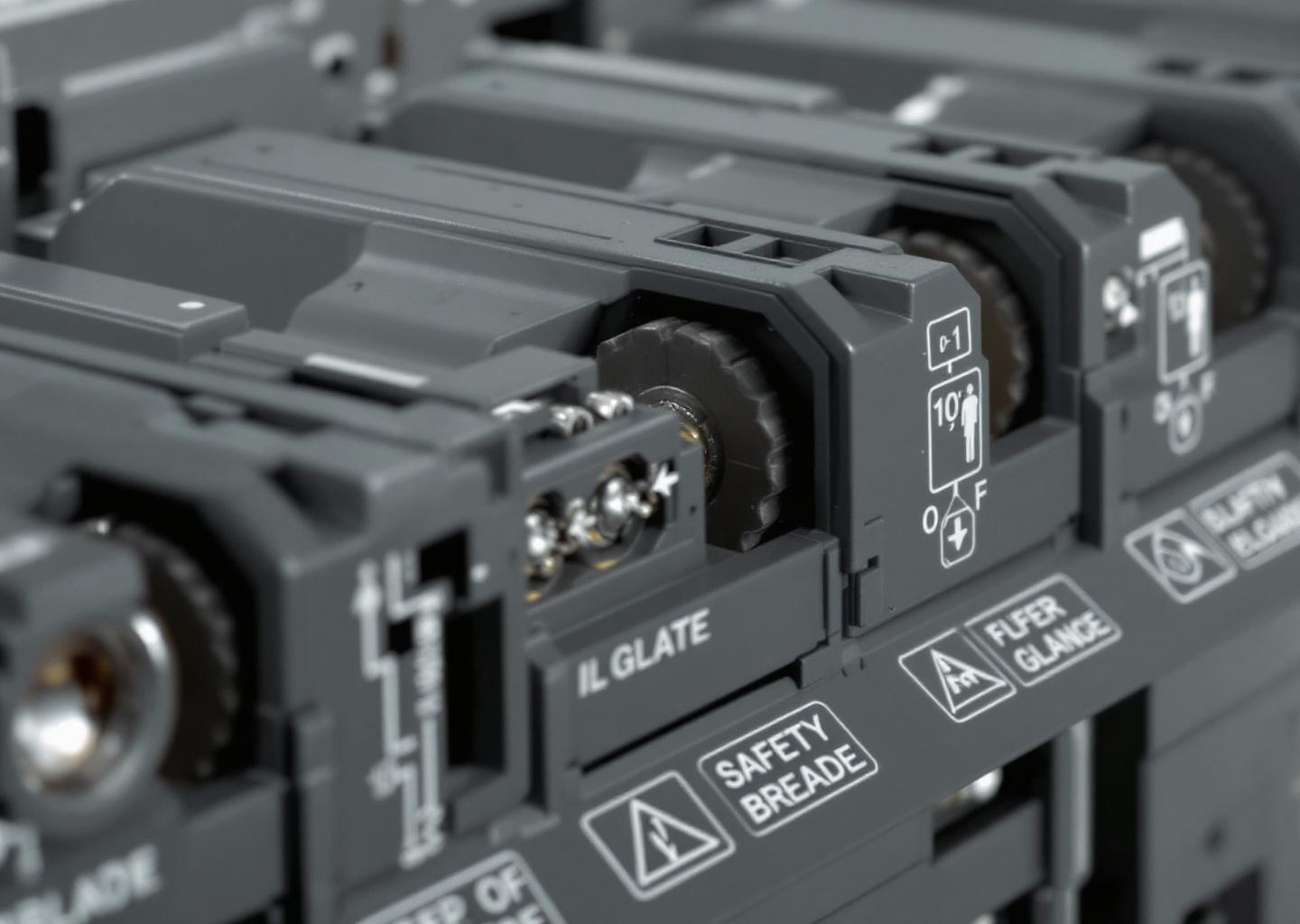
In-Depth Look
Detailed illustration of key concepts
Visual Guide
Infographic illustration for this topic
Sources & References
- Circuit breakers fundamentals - Eaton
- Residential electrical procedures and PPE - Mike Holt's Forum
- Circuit Breakers Installation - Relectric
- Single Phase Electrical Wiring Installation in Home – NEC & IEC
- Best Tool Brand for Electricians 2025: Expert Rankings - Wood Guide
- Best Electrician Tools Brand Guide
- Top 20 Essential Electrician Tools for Pros (2026 List) - Workiz
- Essential 2025 Electrician Tools & Safety Warnings (New & Pro Tips!)
- 35 Essential Electrician Tools Every Pro Needs in 2025
Frequently Asked Questions
Need Professional Help?
Find top-rated electricians experts in your area