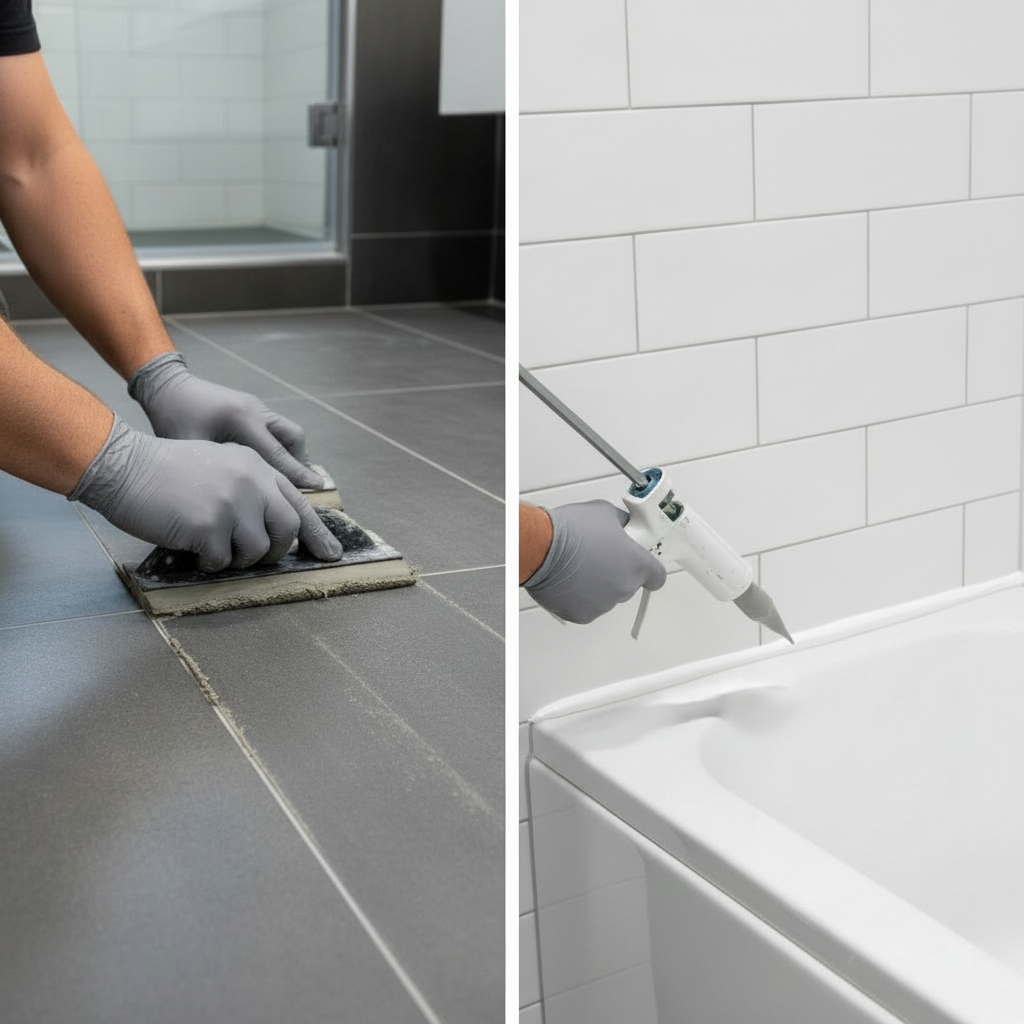
Master the difference between grout and caulk. Learn when to use each for durable tile, prevent leaks, and avoid costly repairs.
Key Takeaways
- **Sanded Grout**: For wider joints (1/8 inch or more). The sand gives it bulk, reduces shrinkage, keeps it from cracking.
- **Unsanded Grout**: Narrow joints (under 1/8 inch). Won't scratch delicate tile surfaces.
- **Epoxy Grout**: Stain-resistant, waterproof, chemically resistant. Pain in the ass to apply, but lasts forever in high-traffic or commercial settings.
- Tile-to-tub
- Tile-to-shower pan
Key Takeaways
Grout vs Caulk: When to Use Each for Lasting Tile (Pro Guide)
Here's what nobody tells you about tiling projects until it's too late: the difference between grout and caulk isn't just technical — it's the difference between a renovation that lasts 20 years and one that starts leaking in six months. I've seen it happen in a $15,000 Buckhead bathroom where the contractor used grout everywhere (including around the tub), and within half a year, water had rotted through the subfloor. **Grout** locks tiles together. It's rigid. Structural. Permanent. **Caulk**? That stuff stays flexible, moves with the building, seals the gaps where different materials meet. Get this wrong, and you're not just redoing tile. You're replacing studs. At BizzFactor, we've fixed enough of these disasters to know: use the right material in the right place, or prepare to pay for it twice. (This isn't just best practice — it's embedded in moisture management requirements throughout the [International Residential Code](/resources/irc-guidelines).)
Grout vs. Caulk: The Fundamental Differences
The core difference? Flexibility and purpose.
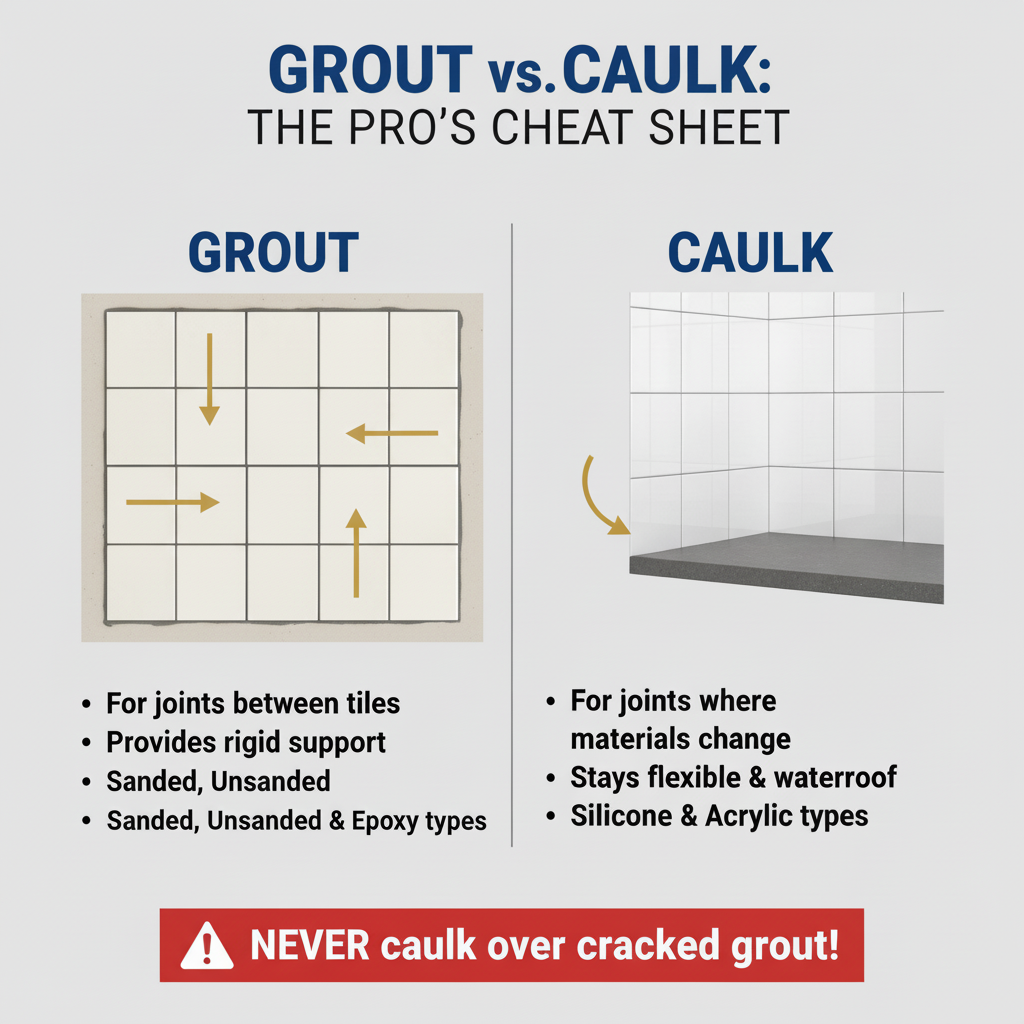
Grout's job is to lock everything down — it's cement or epoxy, and once it cures, it doesn't move. That's the point. You want those tiles held tight, not shifting around every time someone walks across the floor. Caulk does the opposite — it *needs* to flex. Usually silicone or acrylic-based, it's engineered to stretch and compress while keeping water out.
We see the consequences of mixing these up constantly. That Buckhead bathroom I mentioned? The guy paid an extra $3,800 to fix subfloor damage because someone used grout at the tub-tile junction instead of caulk. The grout cracked (because of course it did — tubs flex when you fill them), water seeped behind the tile, and by the time he called us, mold had spread to two wall cavities. Building codes don't always spell out "use caulk here, grout there," but the performance standards around moisture control make it pretty damn clear what happens when you don't. (See our breakdown of [local building codes](/resources/building-codes) if you want the technical language.)
How Do Grout and Caulk Function?
**Grout** creates a permanent, solid bond — it's basically cement, water, and sand mixed together, though these days you'll see polymer modifiers thrown in for better performance. Epoxy grout swaps the cement for resin and a hardener. Way tougher. But you've got to work fast because it sets quick. Key types:
- **Sanded Grout**: For wider joints (1/8 inch or more). The sand gives it bulk, reduces shrinkage, keeps it from cracking.
- **Unsanded Grout**: Narrow joints (under 1/8 inch). Won't scratch delicate tile surfaces.
- **Epoxy Grout**: Stain-resistant, waterproof, chemically resistant. Pain in the ass to apply, but lasts forever in high-traffic or commercial settings.
**Caulk** stays elastic. That's the whole point. High-quality brands like Mapei or Custom Building Products will give you 20-year warranties (when installed correctly — and that's a big "when"). This flexibility matters anywhere movement happens — and movement happens everywhere. Corners. Tubs. Countertops. Temperature changes. Settling. [Durable tile installations](/services/tile-installation) depend on caulk doing its job.
The Cardinal Sin of Tiling: Caulking Over Grout
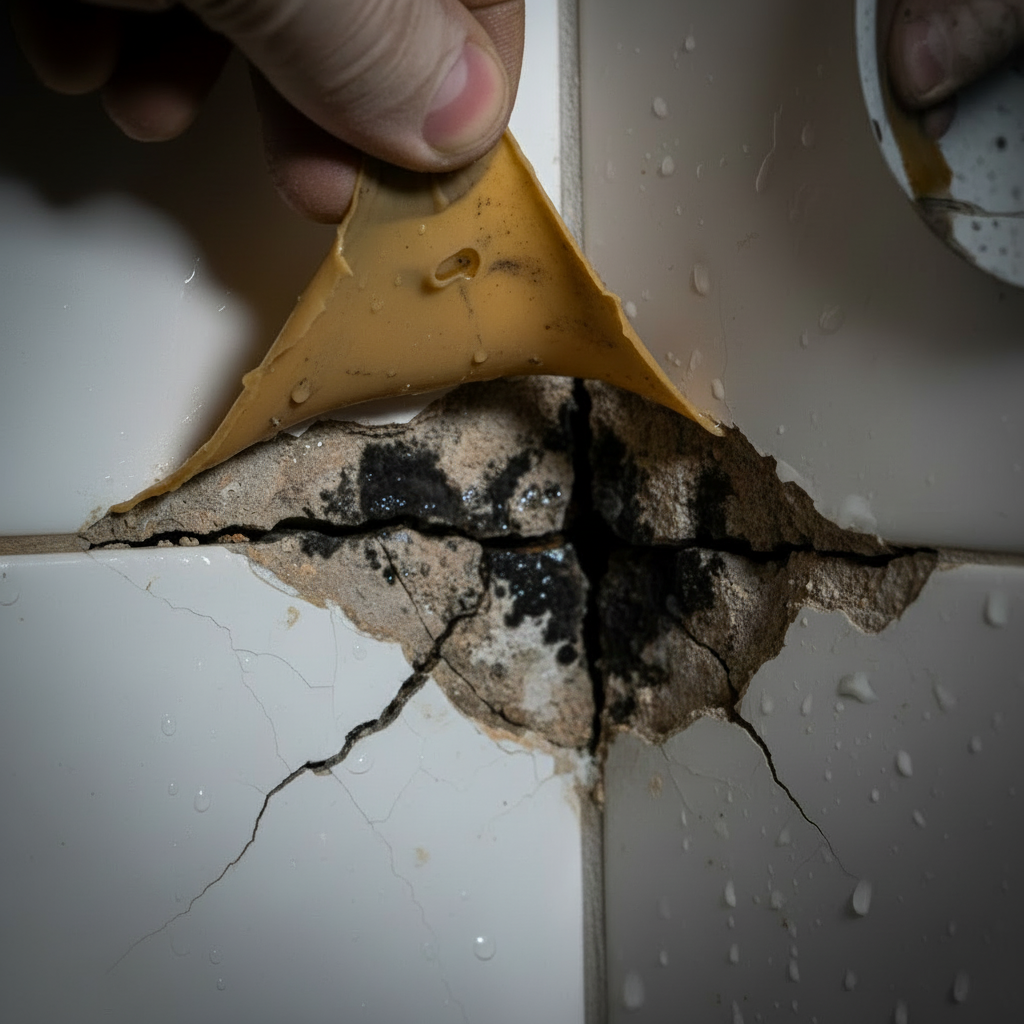
Worst thing you can do? Slap caulk over cracked grout.
We see this constantly. Someone notices a crack in the corner grout, grabs a tube of caulk from Home Depot, squeezes it over the top, and calls it fixed. Six months later, there's black mold creeping out from under the "repair." Why? Because the crack happened for a reason — that joint needed to flex, grout can't flex, so it failed. Adding caulk on top just traps moisture underneath. Now you've got a breeding ground for mold and a hidden moisture problem that's eating through your drywall.
If a joint was supposed to be caulked, you need to remove all the old grout, clean it down to bare substrate, and apply flexible sealant from scratch. No shortcuts.
BizzFactor Pro-Approved Products & Brands
We use Mapei systems for probably 80% of our jobs. Their Ultracolor Plus FA grout is fast-setting, works for most joint sizes, and holds up beautifully. But here's the kicker: their Mapesil T silicone caulk matches the grout colors perfectly. Sounds like a small thing, right?
It's not.
Mismatched colors scream "amateur job." I've walked into $40,000 bathroom renovations where someone used white caulk next to charcoal grout, and it looks like someone drew white lines through the tile. Color-matched systems matter if you want a professional finish.
Silicone vs. Acrylic Latex Caulk: Knowing the Difference
Look — real talk — **100% silicone** is what you want in showers, around tubs, basically anywhere water pools or sprays. Insane flexibility. Doesn't break down. Lasts decades if you apply it right. But sometimes it's overkill.
Take a backsplash meeting a countertop. You need *some* flex, but you're not dealing with standing water or major movement. That's where high-quality **acrylic latex sealant** (sometimes siliconized) makes more sense. Easier to apply, usually paintable, and plenty flexible for minimal movement areas.
Knowing which to use where? That's the difference between a pro and someone who just watched a YouTube video.
Where and When to Use Grout
So grout goes between your tiles — floors, walls, backsplashes, wherever you've got ceramic or porcelain laid out. It's there to keep tiles from shifting around, fill the gaps, and make everything look tight and finished. Pretty straightforward, right? Mostly.
For floors, think about traffic. High-traffic areas (or commercial spaces) need polymer-modified cement grout or epoxy — better compression strength, stain resistance, durability. Standard residential bathroom floors? Regular cement-based grout works fine if you seal it and maintain it. (More details in our [Comprehensive Guide to Grout Types](/blog/grout-types).)
For walls — especially in areas where settling might occur — we usually recommend polymer-modified grouts. They flex slightly more than traditional cement grout without losing strength, which means fewer cracks down the road.
Grout for Heavy Traffic Areas: The Epoxy Advantage
Commercial kitchens, large entryways, bathrooms that see heavy use — these need **epoxy grout**. Period.
It's non-porous, so it resists stains, chemicals, water, and bacteria like nothing else. We installed epoxy in a restaurant kitchen in Midtown five years ago, and it still looks pristine despite daily abuse from commercial cleaning chemicals and constant foot traffic. The upfront cost is higher (maybe 3x standard grout), but you'll never have to regrout it. For most homeowners, though, a well-sealed cement-based grout is perfectly fine and way more budget-friendly.
Where and When to Use Caulk
Caulk goes where movement happens. Where different materials meet. Where flexibility matters more than rigidity.
Think:
- Tile-to-tub
- Tile-to-shower pan
- Tile-to-countertop
- Tile-to-cabinetry
- Wall corners in showers
These joints move. Temperature changes, building settlement, direct pressure (like stepping into a full tub) — all of it creates differential movement. Rigid grout can't handle it. It'll crack, shrink, or fail completely.
More importantly, caulk creates a watertight seal. In wet areas, 100% silicone is non-negotiable. Water behind tile is how you end up with $5,000 repair bills. Building codes (check your [local plumbing codes](/resources/building-codes)) often require flexible materials in expansion joints for this exact reason.
How to Identify Movement Joints for Caulk
Look — different materials? Caulk it. Could they expand or contract at different rates? Caulk it. Pretty simple once you know what to look for.
Real examples:
- **Tile meets bathtub/shower pan** — Tubs flex when filled. That's 40-50 gallons of water adding weight.
- **Tile meets countertop** — Stone, wood, and tile expand at different rates with temperature and humidity.
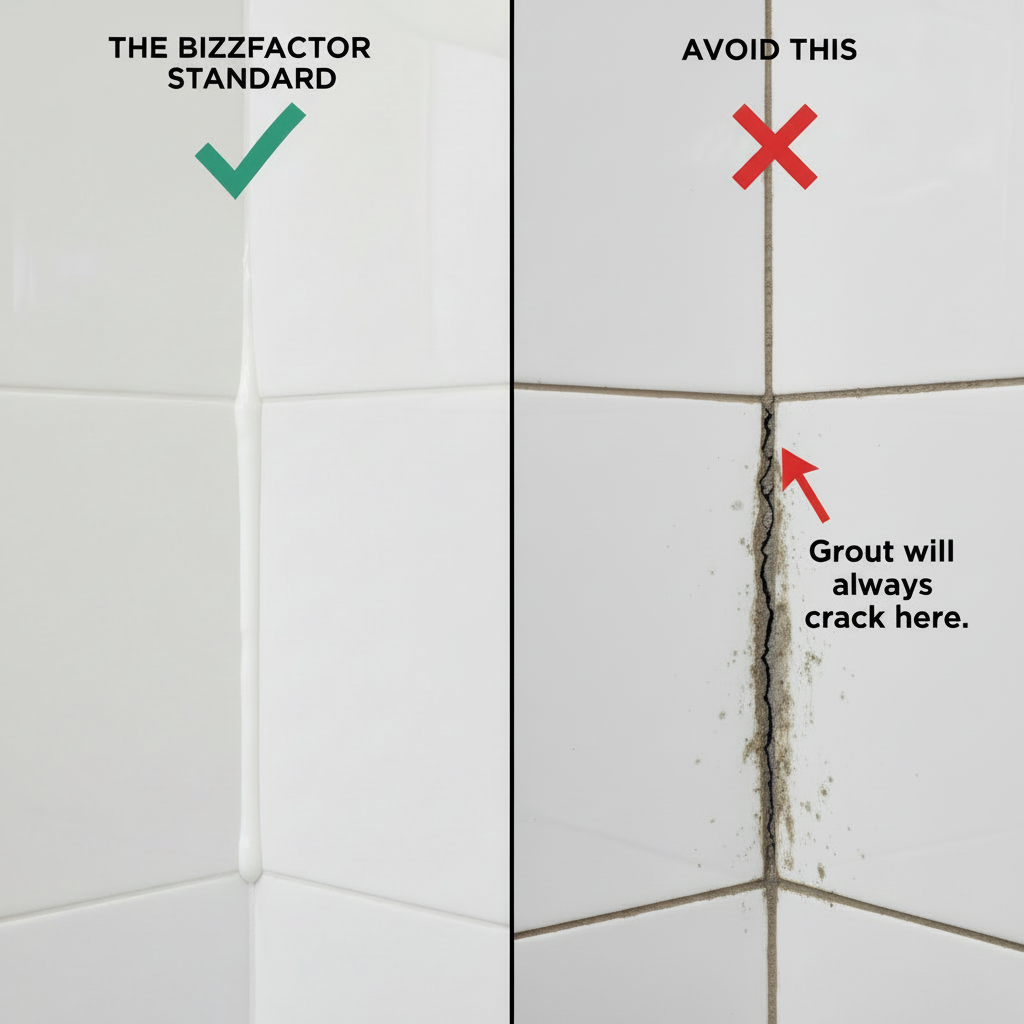
- **Inside corners of showers** — Corner joints accumulate stress from multiple directions.
- **Tile meets door/window trim** — Wood and PVC expand way more than ceramic tile.
- **Changes of plane** — Floor to wall? That's a movement joint.
Ask yourself: could these two surfaces move independently? If yes, use caulk. Learning to spot these joints is half the battle — and it's why [certified tiling services](/services/tiling-installation) exist in the first place.
Real Job Example: Preventing a Bathroom Disaster
Last year we got called to a house in Vinings. The homeowner had hired a contractor off Craigslist (first mistake) who grouted every joint in a master bath remodel. Including around the tub. Including inside corners. Including where tile met the countertop.
Six months later, hairline cracks everywhere.
Water was seeping behind the tile, and by the time we opened up the walls, we found rotted drywall, soaked insulation, and mold spreading through two wall cavities. Two studs needed replacing. Total damage? $3,500 on top of the original install cost.
Here's the thing: look — our fix: rip out all the failed grout, clean everything down to bare substrate, then reinstall with the correct materials — 100% silicone caulk for all transition joints, premium epoxy grout for tile-to-tile fields. Two years later? Still perfect. No cracks, no water intrusion, no callbacks. That's the value of doing it right the first time. (And yeah, we do [professional tile repair](/services/tile-repair) for situations exactly like this.)
The Missed Principle: Differential Movement
The original installer didn't understand (or didn't care about) differential movement. Different materials expand and contract at different rates with temperature and humidity changes. A fiberglass tub flexes. Ceramic tile doesn't. When you lock them together with rigid grout, something has to give — and it's always the grout.
That crack isn't cosmetic. It's a failure of material selection. And once water gets behind tile, the clock starts ticking on how expensive the fix will be. The guy saved maybe $50 in materials by using grout everywhere. Cost his client $3,500 to fix.
Professional Installation: The BizzFactor Standard
We don't take shortcuts. Ever. Our installation process follows industry standards because we've seen what happens when you don't. The BizzFactor Standard starts with surface prep — and I mean real prep, not just a quick wipedown.
**Surface preparation is non-negotiable.** Everything needs to be clean, dry, and free of old adhesive, debris, or moisture. Skip this, and your bond strength is compromised before you even start. We've pulled apart "repairs" where someone tiled over dusty concrete or damp
In-Depth Look
Detailed illustration of key concepts
Visual Guide
Infographic illustration for this topic
Side-by-Side Comparison
Visual comparison of options and alternatives
Sources & References
- Grout vs. Caulk: Which One to Use and When | Angi
- Grout vs. Caulk: What's the Difference? - The Spruce
- Grout vs Caulk: Key Differences - Lowe's
- Grout vs caulk - Homeaglow
- Building Codes, Standards, and Regulations: Frequently Asked ...
- Building Codes and Standards - 101 Guide | ROCKWOOL Blog
- [PDF] Building Codes Toolkit for Homeowners and Occupants - FEMA
- 5 Reasons Building Codes Should Matter to You
- Residential Electrical Code Requirements - The Home Depot
Frequently Asked Questions
Need Professional Help?
Find top-rated flooring & tile experts in your area