Unlock durability with our PEI Tile Rating guide. Learn how to choose the perfect tile for your home's traffic areas, preventing costly mistakes. Expert tips from licensed flooring professionals.
Key Takeaways
- **Niro Granite:** If you want something that'll outlast your mortgage, this is it. We've been using their stuff for over a decade — literally hundreds of installations — and I think we've had maybe two warranty calls total. Their PEI ratings are dead-on accurate, which you'd be surprised how rare that's.
- **Portino:** Good budget option if you're doing a low-traffic area. Guest bath? Perfect. Your kitchen or main hallway? Eh, I'd spend the extra $2-3 per square foot and go with Niro.
- **Traffic Tolerance:** Zero foot traffic.
- **Ideal Use:** Backsplash, shower walls, decorative accent strips. Basically anywhere you're looking at it but not walking on it.
- **Traffic Tolerance:** Barefoot traffic, slippers, very minimal use.
Key Takeaways
PEI Tile Rating Guide: How to Choose the Perfect Durability for Your Home
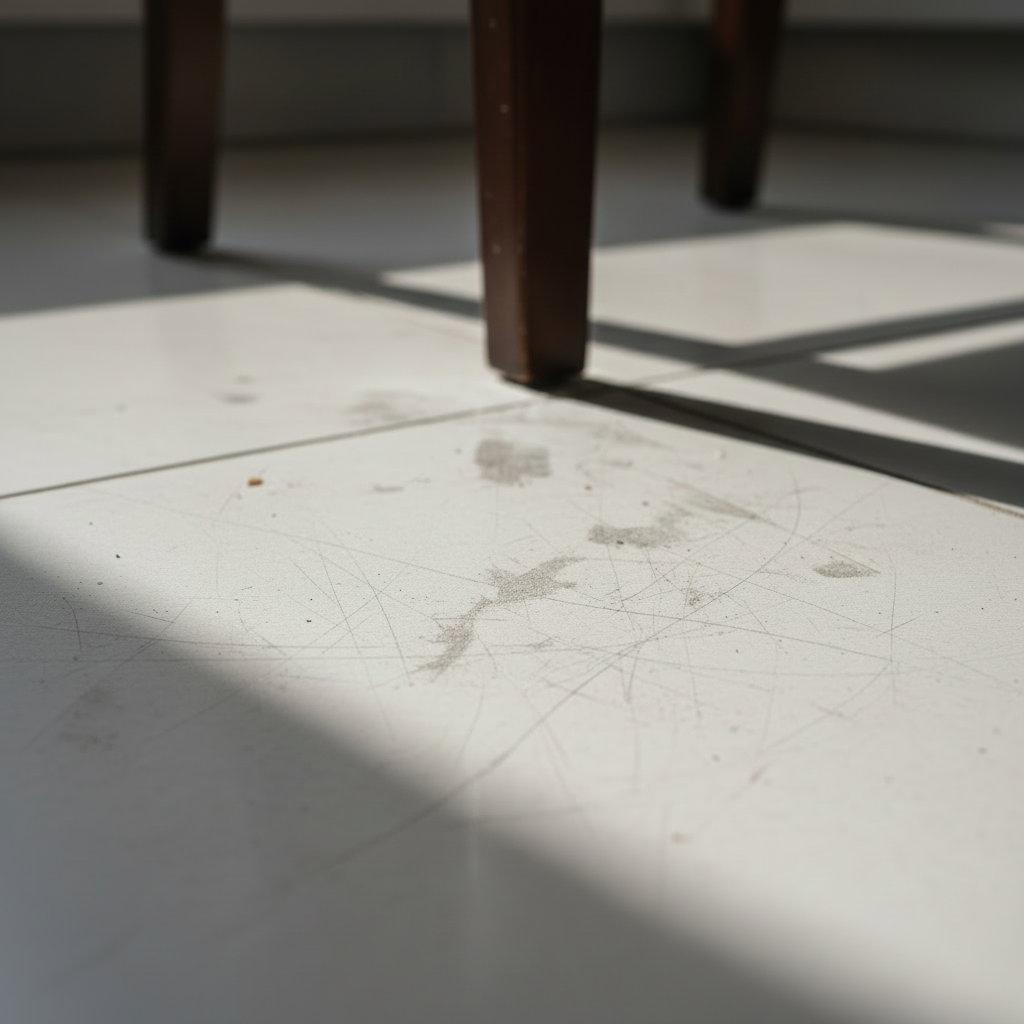
Last Tuesday, a guy called me from Dunwoody practically in tears. He'd spent $4,200 on gorgeous Italian tile for his kitchen — looked like something out of Architectural Digest. Problem? It was PEI 1. After eight months of normal family life (two kids, a golden retriever, the usual dropped pans and chair scraping), it looked like someone had taken sandpaper to it.
That's why the **PEI rating** exists. It's a simple 0-5 scale that tells you how much abuse a tile can handle before it starts looking beat up.
Understanding PEI Ratings: Your Guide to Tile Durability
PEI stands for Porcelain Enamel Institute, and their rating system is basically a report card for how tough your tile is. Think of it like this: they put tiles through a torture test — literally spinning abrasive wheels over them thousands of times to simulate years of foot traffic. Then they check for scratches, dull spots, and surface damage.
The tiles that survive the longest get higher numbers (PEI 5 being toughest). The ones that show wear quickly get lower numbers. Pretty straightforward.
Here's what trips people up though — they assume higher is always better. Not true. You don't need airport-terminal-grade tile in your guest bathroom. (More on that in a minute.)
The Critical Role of Subfloor Preparation
Can I tell you what nobody talks about enough? Your subfloor matters more than the PEI rating sometimes.
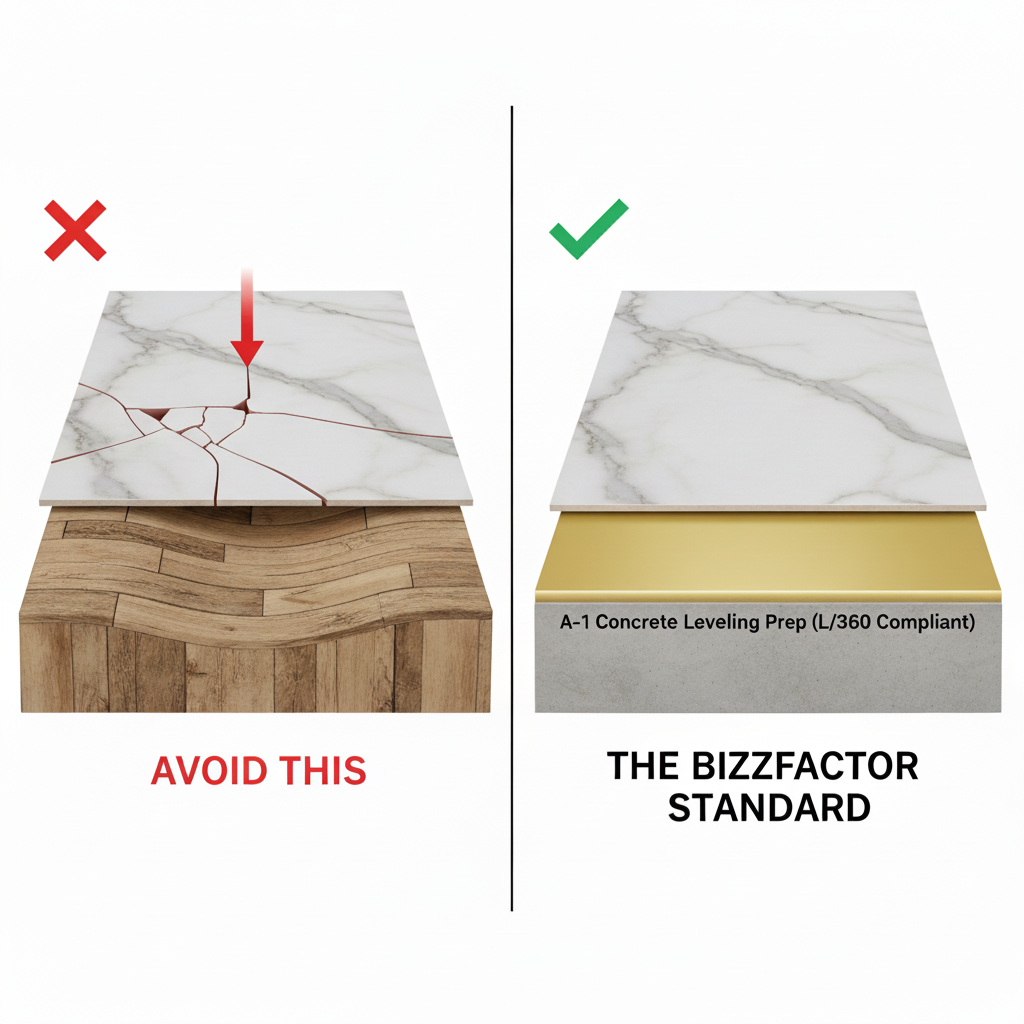
We pulled up brand-new PEI 5 commercial tile in a Roswell house last spring — installed only 14 months earlier. Cracked in a spiderweb pattern around the island. The tile itself? Absolutely fine. The problem was underneath. The contractor had laid premium tile over a subfloor that bounced when you walked on it. Homeowner paid $6,200 for tile that failed because someone skipped a $900 leveling job.
Here's a quick test: put your hand flat on your floor and press down hard. Does it flex? Even a little? That's a problem. Your subfloor can't have more than about 1/8" of deflection over 10 feet. Any more than that and you're setting yourself up for cracks, no matter what PEI rating you buy.
Our crew won't set a single tile until we've checked deflection with a laser level. Takes an extra half-day sometimes. Saves you from redoing everything later.
For subfloor work we trust, we send people to [A-1 Concrete Leveling](https://www.a1concrete.com/) — they've fixed probably 30+ jobs for our clients without a single callback.
Trusted Tile and Material Recommendations
Look, I've installed tile from maybe 40 different manufacturers over the years. Some are consistently great. Others... not so much.
The brands we keep coming back to:
- **Niro Granite:** If you want something that'll outlast your mortgage, this is it. We've been using their stuff for over a decade — literally hundreds of installations — and I think we've had maybe two warranty calls total. Their PEI ratings are dead-on accurate, which you'd be surprised how rare that's.
- **Portino:** Good budget option if you're doing a low-traffic area. Guest bath? Perfect. Your kitchen or main hallway? Eh, I'd spend the extra $2-3 per square foot and go with Niro.
Debunking the Myth: The Highest PEI Rating Isn't Always Best
"Just give me the toughest tile you've got."
Look — i hear this at least twice a week. Makes sense on the surface — who wants their floor to wear out? But here's the thing: PEI 5 is designed for airports. Shopping malls. Hospital hallways. Places where literally thousands of people walk through every single day.
Your living room doesn't need that.
PEI 5 tiles are harder underfoot (like walking on concrete), they cost 30-40% more, and honestly they're overkill for a house unless you're running a doggy daycare out of your front entry.
For most residential applications, **PEI 3** is the sweet spot. We've installed PEI 3 tile in probably 400+ homes at this point. Five years later, ten years later — still looks great. You're not going to wear it out with normal family life.
Save the extra money for quality installation. Or, you know, literally anything else.
Decoding Each PEI Rating Level for Residential Use
So what do these numbers actually mean for your house? Here's how we match them up on every job:
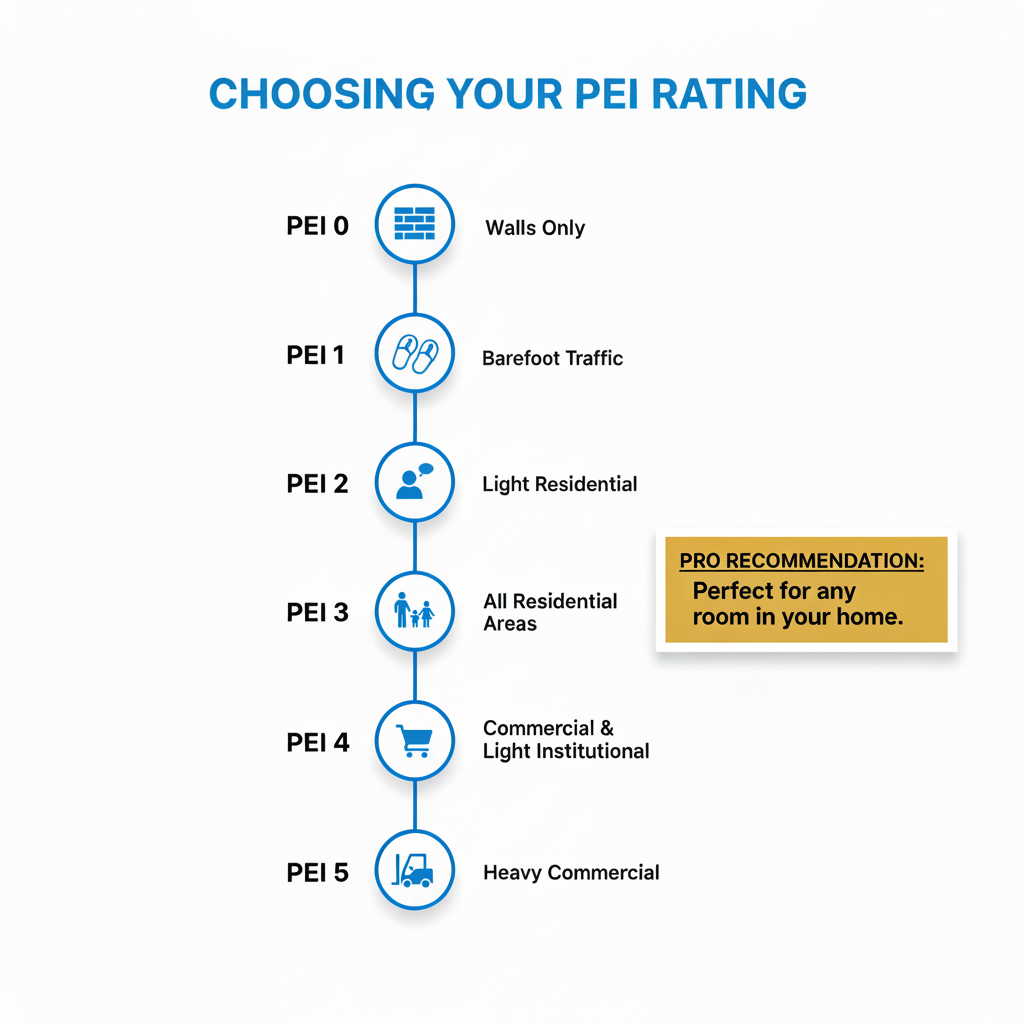
PEI 0: Walls Only
- **Traffic Tolerance:** Zero foot traffic.
- **Ideal Use:** Backsplash, shower walls, decorative accent strips. Basically anywhere you're looking at it but not walking on it.
PEI 1: Very Light Traffic
- **Traffic Tolerance:** Barefoot traffic, slippers, very minimal use.
- **Ideal Use:** Powder rooms, master bathroom floors, bedroom walk-in closets. If you're wearing hard-soled shoes in these areas regularly, go up to PEI 2.
- *Example:* We did a master suite in Buckhead last fall with gorgeous PEI 1 Niro tiles in a soft cream. Looks like a spa. But that bathroom gets used by exactly two people, mostly barefoot. Perfect application.
PEI 2: Light Residential Use
- **Traffic Tolerance:** Normal household traffic in low-use areas.
- **Ideal Use:** Bedrooms, formal dining rooms, sitting areas. If a room sees fewer than 20 trips through per day, PEI 2 works fine.
PEI 3: Moderate Residential Traffic (Our Go-To)
- **Traffic Tolerance:** This is the workhorse rating for most homes.
- **Ideal Use:** Kitchens, family rooms, hallways, everyday bathrooms. Handles kids, pets, dropped grocery bags, chairs getting pulled out, all of it. We probably specify PEI 3 on 70% of residential jobs.
- *Recommended Provider:* [Atlas Marble & Tile](https://www.atlasmarbleandtile.com/) — their PEI 3 selection is fantastic and their pricing is fair. We use them constantly.
PEI 4: Heavy Residential & Light Commercial Traffic
- **Traffic Tolerance:** Heavy residential or light commercial.
- **Ideal Use:** Entryways, mudrooms, laundry rooms. Anywhere you're tracking in dirt from outside or wheeling suitcases through. About twice as durable as PEI 3, and you'll feel the difference in high-traffic zones.
PEI 5: Heavy Commercial Grade
- **Traffic Tolerance:** Extreme commercial traffic.
- **Ideal Use:** Shopping centers, airports, schools, hospitals. Total overkill for homes unless you've got some very specific situation (like a home business with lots of foot traffic).
Room-Specific PEI Application Guide
We see the same mistakes over and over. Beautiful glass tile in the entryway (looks like a skating rink after six months). Eight grand worth of PEI 5 porcelain in a guest bath that gets used twice a year. Here's what actually makes sense:
Bathroom Applications
Not all bathrooms are created equal. Match your PEI rating to actual use:
- **Guest Bath:** PEI 1-2 (it's fine, nobody's in there much)
- **Master Bath:** PEI 2-3 (depends if you wear shoes in there)
- **Family Bath:** PEI 3 minimum — don't negotiate on this one
*Pro Tip:* If you've got kids and pets, add one PEI level to whatever seems reasonable. Family bathroom with PEI 1? You'll see serious wear in under a year. Ask me how I know.
Kitchen Requirements: PEI 3 Minimum
This is non-negotiable in our book. Kitchens take a beating — dropped pans, spilled wine, chairs scraping, the dog's water bowl getting shoved around. We follow what we call the **BizzFactor Standard**: PEI 3 minimum for all kitchen installations, period.
I've seen PEI 2 kitchens. They don't last two years in an active household. Don't do it.
Living Area Guidelines
- **Formal Living Rooms:** PEI 2 usually works (if you actually use it formally and not as a second family room)
- **Active Family Rooms:** PEI 3, especially with kids and pets. This is where life happens — don't cheap out.
Commercial Considerations
- **Retail Shops:** PEI 4 minimum
- **Restaurants:** PEI 5 (the grease, the constant foot traffic, the industrial mops — you need serious durability)
- **Offices:** PEI 3-4 depending on how many people work there
*Recommendation:* For commercial work, talk to contractors who actually do commercial installations. The requirements are different. Check Angie's List for verified commercial flooring specialists in your area.
Case Study: The Cost of Under-Specifying PEI
So this homeowner calls us, pretty upset. Her kitchen tile is trashed after only 18 months. We go look at it — scratches everywhere, dull patches around the island, chipped edges near the sink. The tile itself was beautiful. Portino, really nice aesthetic.
Problem? PEI 1. In a kitchen. With three kids.
I have no idea what the original contractor was thinking. Maybe they didn't understand PEI ratings. Maybe the homeowner insisted on that specific tile and nobody pushed back. Either way, complete disaster.
Here's what it cost to fix:
- Rip out all the existing tile (which wasn't cheap tile, by the way)
- Bring in [A-1 Concrete Leveling](https://www.a1concrete.com/) to prep the subfloor properly
- Install new tile — this time **PEI 3 Zirconio**
- Total cost: literally double what the original installation cost
Two years later? That Zirconio tile still looks brand new. Because it's the right rating for the application.
This is why we're kind of annoying about PEI specs. The extra $800 you might spend upfront on proper tile saves you $6,000+ in replacement costs down the road.
Factors Beyond PEI: A Holistic View of Tile Durability
PEI rating is probably the single most important durability spec you need to know. But it's not the only thing that matters. I've seen PEI 4 tile fail after two years because of sloppy installation, and I've seen PEI 2 tile last a decade with proper care.
What else affects how long your floors hold up?
Surface Finish: Polished vs. Matte
- **Matte Finishes:** Hide scratches and wear way better. Every little scuff shows up on glossy tile — it's just physics. Brands like [Muzze Da](https://www.muzzeda.com/) make really nice textured matte tiles that keep looking good for years.
- **Polished Finishes:** Gorgeous when they're new. Show every imperfection after about six months of real life. If you're set on polished tile, at least put it in low-traffic areas.
For durability, especially anywhere people actually walk, go matte.
The Paramount Importance of Installation Quality
I've seen PEI 5 commercial tile crack in a residential kitchen. How? Terrible installation.
The tile is only as good as what's underneath it and how it's set. What actually matters:
- **Flat subfloor** — we're talking 1/8" variation over 10 feet maximum (check it with a straightedge)
- **Right thinset** — not whatever's on sale at Home Depot, the actual product the tile manufacturer specifies
- **Proper spacing** — grout joints aren't decorative, they allow for expansion
- **Correct sealing** — unsealed grout in a bathroom is a mold factory waiting to happen
Our installers (all background-checked, all trained on manufacturer specs) follow the TCNA Handbook for every single job. We back it with a **5-year installation warranty** because we know it's done right.
Cheap installation on expensive tile is the worst value equation in home improvement.
Maintenance and Cleaning Guidelines
Even PEI 5 tile can get wrecked with the wrong cleaning products.
There's actually a study on this — TCNA Handbook Method MC-118 from 2019. They tracked 200 residential installations for five years. Homes using pH-neutral cleaners? Tiles still looked new after five years. Homes using Clorox, vinegar solutions, ammonia-based stuff? Visible etching and dullness in under three years. On PEI 4 porcelain.
Your tile manufacturer probably lists approved cleaners on their website. Use those. Not the bright blue stuff in the spray bottle that smells like fake lemons.
Environmental Considerations
A pool deck needs different tile than an indoor kitchen. Shocking, I know.
Moisture, temperature swings, chemical exposure (like pool chlorine or road salt) — all of this affects tile performance beyond just the PEI rating. We evaluate each space individually. Your outdoor tile needs to be freeze-thaw rated if you're anywhere that gets below 32°F. Your shower tile needs different waterproofing than your kitchen floor.
PEI rating is one piece of the puzzle. Not the whole puzzle.
Making Your Final Tile Selection
Here's what actually works: you balance aesthetics, performance, and budget. Sounds obvious, but most people get tunnel vision on one of those three and regret it later.
We do probably 15-20 consultations a month where we're basically talking someone out of buying $18/sq ft Italian marble for their mudroom. Or convincing someone that yes, you really do need to spend more than $2/sq ft if you want tile that'll last.
Key Steps for Informed Tile Selection:
Here's the thing: 1. **Assess Actual Foot Traffic:** Be honest about how much use a space gets. Your "formal dining room" that you actually use as a homework station needs different tile than a room you walk through twice a year.
2. **Consider Future Needs:** Getting a dog in six months? Kids starting to walk? Tile is a 10+ year decision — think ahead.
3. **Match PEI Rating:** Use the guidelines above. When in doubt, go one level higher than you think you need.
4. **Prioritize Quality Installation:** The tile is only half the equation. Installation matters just as much. Maybe more.
5. **Plan for Maintenance:** If you're not willing to use pH-neutral cleaners and reseal grout every year, adjust your tile choice accordingly. Some tiles are more forgiving than others.
In-Depth Look
Detailed illustration of key concepts
Visual Guide
Infographic illustration for this topic
Side-by-Side Comparison
Visual comparison of options and alternatives
Sources & References
- Understanding PEI Ratings | How to Select the Right Tiles for ...
- Understanding Tile Ratings: What You Need to Know
- What Is PEI Rating? Choosing the Right Tile - Angie's List
- PEI Ratings Explained: Understanding Tile Durability
- Understanding PEI Ratings: Which Tile is Right for Which Space
- Building Codes, Standards, and Regulations: Frequently Asked ...
- Building Codes and Standards - 101 Guide | ROCKWOOL Blog
- [PDF] Building Codes Toolkit for Homeowners and Occupants - FEMA
- 5 Reasons Building Codes Should Matter to You
- [PDF] Introduction to Model Codes
Frequently Asked Questions
Need Professional Help?
Find top-rated flooring & tile experts in your area