
Stop foundation repair scams before they cost you $50K+. Licensed pros reveal 7 contractor tricks and how a $900 engineer saves you tens of thousands.
Key Takeaways
Dealing with foundation repair can be daunting, and unfortunately, it's an area ripe for scams. Many homeowners face exorbitant quotes for unnecessary work, often driven by fear and a lack of specialized knowledge. Our paramount recommendation: **hire your own independent structural engineer before engaging any repair company.** While an upfront investment of $600-$900, this critical step has saved countless homeowners $30,000 to $50,000 on repairs they simply didn't need. We've witnessed situations where initial quotes hit $60K-$70K, only for a professional engineer to identify a fraction of the work as genuinely necessary.
The 7 Most Common Foundation Repair Scams & How to Avoid Them

Foundation scammers exploit homeowner anxiety and a general lack of understanding about structural engineering. Around major metropolitan areas like Dallas, families have been defrauded out of over $30,000 for completely superfluous repairs. Here’s how these deceptive practices unfold:
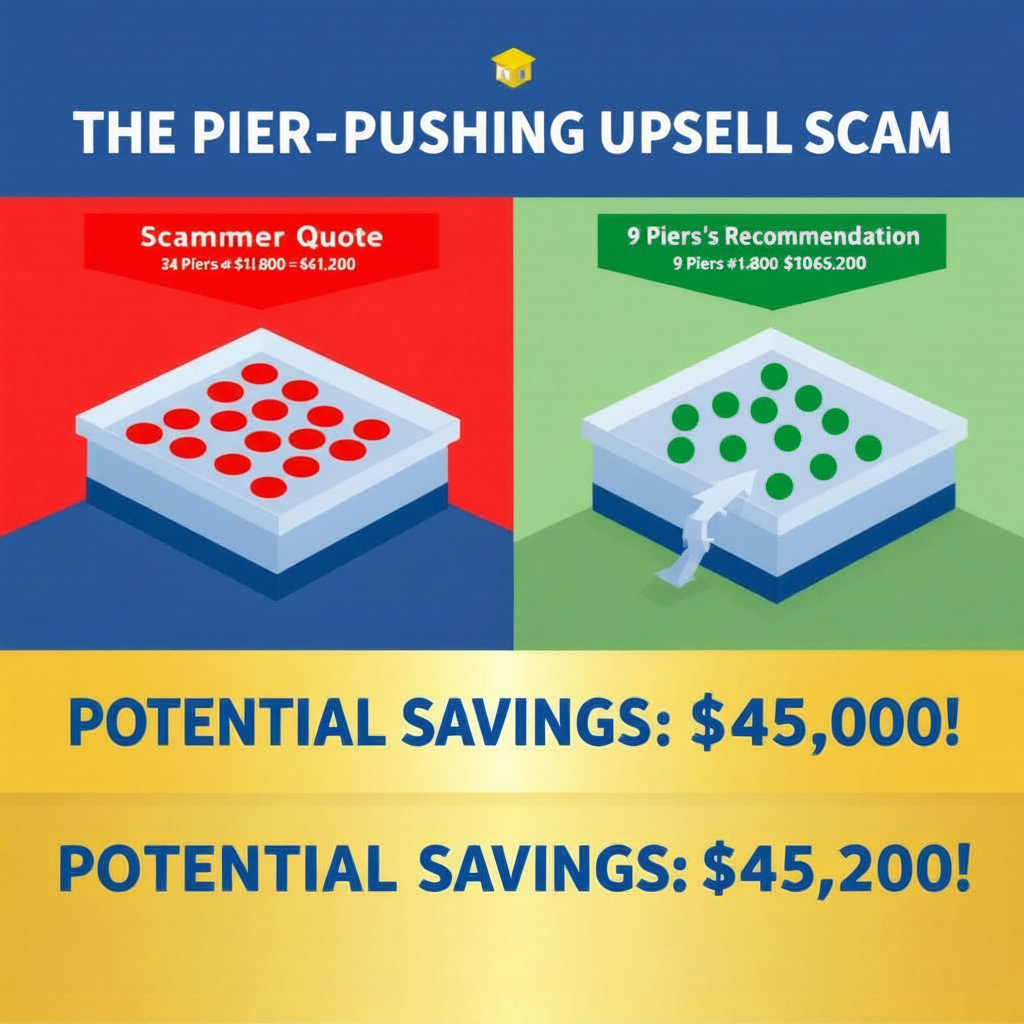
1. **The Pier-Pushing Upsell:** Contractors recommend an excessive number of piers, inflating costs dramatically. For example, a Dallas homeowner received a $60,000 quote for 34 piers. An independent engineer, examining the same foundation, determined only nine piers were needed, resulting in a $45,000 saving. This highlights pure profit-driven recommendations.
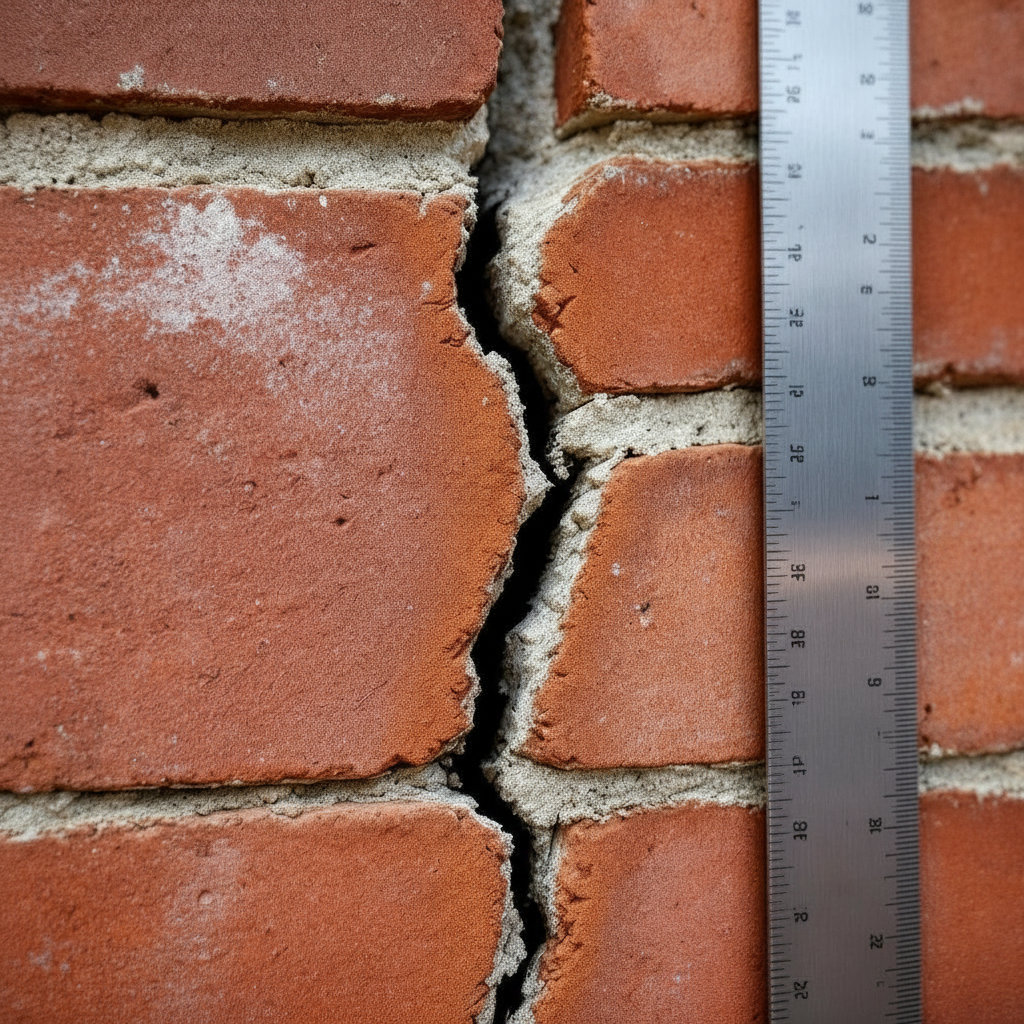
2. **Fear-Mongering Over Hairline Cracks:** Scammers weaponize minor, cosmetic hairline cracks (e.g., 1/16-inch) to suggest imminent structural failure. In reality, significant structural cracks are typically 1/4 inch or wider, exhibiting clear displacement and often stair-stepping through mortar lines. Understanding this distinction is crucial for identifying genuine [foundation issues](https://bizzfactor.com/guides/home-services/foundation-repair-cost-guide).
3. **The Magical "Epoxy-Only" Fix:** Epoxy injection is a temporary solution for actual foundation sinking. Contractors may charge $8,000-$12,000 for this, knowing it often fails within 12-18 months, conveniently just beyond typical warranty periods. It's a band-aid for a problem requiring a more robust fix, not a permanent [slab foundation repair](https://bizzfactor.com/guides/home-services/slab-foundation-repair-cost).
4. **The High-Pressure "Sign Today" Discount:** This common tactic pressures homeowners into immediate decisions by offering limited-time discounts. Legitimate companies provide quotes valid for at least 30-45 days, allowing ample time for multiple bids and informed decisions.
5. **The Vague One-Page Contract:** Contracts lacking specificity—details on pier types, depths, code compliance—are designed to give contractors leeway to cut corners, use cheaper materials, or perform substandard work without accountability. Always ask for a detailed [foundation repair quote](https://bizzfactor.com/guides/home-services/foundation-repair-quote-components).
6. **The Worthless "Lifetime Warranty":** Many so-called lifetime warranties are riddled with exclusions (e.g., "Acts of God," soil movement, plumbing leaks) that nullify coverage for common issues. Moreover, with roughly 40% of foundation companies failing within five years, these warranties often become irrelevant when the company ceases to exist.
7. **Misdiagnosing the Root Cause:** Contractors often overlook obvious, less profitable issues like drainage problems in favor of selling expensive pier installations. One homeowner's $38,000 piering quote was entirely negated by a $2,500 fix involving proper grading and new gutters, which addressed the actual drainage-related issue. This highlights the importance of comprehensive [drainage solutions](https://bizzfactor.com/guides/home-services/drainage-repair-cost-guide).
How Do Contractors Get Away With Foundation Scams?
They exploit homeowners' limited knowledge of structural engineering, using technical jargon like "differential settlement" without clear explanation. Most homeowners struggle to differentiate cosmetic cracks from structural ones, a vulnerability contractors readily exploit. This underscores the immense value of an independent structural engineer's assessment.
⚠️ Common Mistake: Misinterpreting Engineer Reports
Dishonest contractors often present *all* items in an engineer's report as mandatory. An engineer's report details critical repairs alongside optional improvements. Review the report directly with your engineer to distinguish essential work from beneficial-but-not-critical enhancements. This step alone can save $20,000-$40,000. Additionally, for around $300, your engineer can review the contractor's final proposal before you sign, preventing "gold-plating" with unnecessary extras.
What Most Guides Won't Tell You: The "Bad Bid First" Strategy
While counterintuitive, obtaining a quote from a potentially sketchy contractor *before* hiring an engineer can be highly informative. A client received a $68,000 quote for 40 piers. Post-engineer visit ($850), the recommendation was eight piers, costing $11,400. The initial inflated bid served as a powerful benchmark for comparison.
⚠️ Common Mistake: In-House Engineers
Beware of companies offering "free engineering assessments" or touting "in-house engineers." This represents a significant conflict of interest. Always seek a completely independent, licensed Professional Engineer (P.E.) from a separate firm with no financial ties to the repair contractor.
What Most Guides Won't Tell You: Monitor Cracks
Before contacting any professionals, invest around $20 in crack monitoring gauges. Install them over significant cracks and photograph them weekly for 3-6 months. This objective data reveals whether a crack is static (cosmetic) or actively growing (structural), effectively countering scare tactics.
⚠️ Common Mistake: Engineer Diagnosis vs. Repair Plan
An engineer's diagnosis is not a comprehensive repair plan. Contractors exploit this gap by adding unnecessary elements to the fix. Always request a "Repair Specification Document" from your engineer. This document should detail exact materials, pier depths, placements, and all other necessary specifications, serving as your defense against upselling.
Steel Piers vs. Concrete Pilings: Choose Wisely
Avoid pressed concrete pilings. They are often temporary fixes that fail in expansive soils. Opt for either **steel push piers** (hydraulically driven to load-bearing strata with verifiable lift) or **helical piers** (screwed in with torque monitoring for precise capacity). Both are significantly superior, albeit 20-30% more expensive upfront, offering permanent solutions resistant to soil shifting. Learn more about [foundation repair methods](https://bizzfactor.com/guides/home-services/foundation-repair-methods).
**⚠️ Engineer Report Loophole: Pier Type**
Even with an engineer's report, some unscrupulous contractors will match the pier *count* but substitute cheaper, shallow-pressed concrete piles for the specified deep-driven steel piers. This leads to premature failure. Insist that your contract explicitly specifies the exact pier type, material, *and* installation depth, precisely matching your engineer's requirements.
Fix Your Gutters, Not Your Foundation: Water Audit First
Before spending $800 on an engineer, consider a $200 "water audit." Over 80% of foundation problems stem from poor drainage. Extending downspouts, regrading soil, and cleaning gutters often stabilizes soil, making a $30,000 piering project redundant. Addressing [drainage issues](https://bizzfactor.com/guides/home-services/drainage-repair-cost-guide) can save significant foundation repair costs.
What Most Guides Won't Tell You: Hydrostatic Plumbing Test
Instead of collecting three "free" estimates, invest $300-$500 in a hydrostatic plumbing test *before* a foundation inspection. Undetected slab leaks mimic foundation settlement. Repairing a simple leak could eliminate a $20,000 piering job. This is vital for understanding various hidden issues, whether it's related to your foundation or other areas like why [new home duct cleaning](https://bizzfactor.com/guides/home-services/new-home-duct-cleaning-guide) may be important.
What Most Guides Won't Tell You: Soil Watering
Before committing to expensive repairs, try spending $500 on soaker hoses and timers. Inconsistent soil moisture is a primary cause of foundation movement. A consistent watering schedule around your foundation for 6-12 months can stabilize or even reverse minor settling, offering the cheapest potential fix. This proactive approach can significantly reduce the need for major [foundation repair](https://bizzfactor.com/guides/home-services/foundation-repair-cost-guide).
What Most Guides Won't Tell You: Engineer First, Then Contractors
Avoid immediately getting three contractor quotes, as you'll be comparing disparate plans. Instead, hire an independent structural engineer first. Then, solicit multiple contractors to bid on executing that *single, engineered plan*. This forces an apples-to-apples comparison on labor and materials only.
⚠️ Common Mistake: Handing Over Engineer Reports Upfront
Do not provide your structural engineer's report to contractors upfront. Dishonest companies may simply copy the plan and then underbid by pledging cheaper materials or cutting invisible corners. Keep the report as your independent verification tool, not a script for them to follow.
Our Pro Recommendation: Permanent Foundation Solutions
Bypass basic pressed concrete pilings entirely. They are inexpensive, rely solely on your home's weight, and offer no verifiable depth or capacity. For lasting peace of mind, demand **steel helical piers** (e.g., CHANCE or Ram Jack). These screw into the ground until specific torque readings are achieved, guaranteeing stable, load-bearing soil. They are particularly effective in expansive clay due to bypassing volatile surface zones. While more expensive, they provide a permanent, verifiable solution compared to temporary concrete "fixes." Further details on [helical pier installation](https://bizzfactor.com/guides/home-services/helical-pier-installation-cost) can be found on our site.
What Most Guides Won't Tell You: Monitor Doors, Not Just Cracks
Cosmetic cracks can be misleading. Active, significant foundation settlement is often revealed by warped, out-of-square door frames. If interior doors begin sticking or fail to latch properly, *that* is a strong indicator of an ongoing issue requiring immediate attention.
What Most Guides Won't Tell You: Periodically Check New Cracks
If you discover a new hairline crack, resist the urge to constantly monitor it. Mark the date and endpoints, then re-evaluate it after a full year. This provides objective data on whether it's progressive settlement or benign, weather-related movement.
⚠️ The Engineer's Report Isn't Enough: Demand an Elevation Survey
Even with an independent engineer, scams can occur if the report lacks a detailed floor elevation survey. A visual assessment is subjective. Demand a scaled drawing with precise elevation readings from across your entire foundation. This objective data is your primary defense against inflated "pier maps" and unnecessary work, transforming opinion into measurable fact.
Our Pro Recommendation: Helical vs. Push Piers
Contractors often push their preferred pier type, but solutions are not interchangeable. While Ram Jack's steel push piers effectively reach deep bedrock, their high-pressure installation can stress your home's frame. For most residential jobs, we recommend **CHANCE Helical Piers**. They install like giant screws, providing predictable capacity in diverse soil conditions with significantly less structural stress. For settlement repair without collateral damage, CHANCE helical piers offer a superior, less invasive technology.
What Most Guides Won't Tell You: Water Management First, Engineer Second
Prioritize water management before engaging an engineer. Spend around $300 to extend all downspouts at least 10 feet from the foundation and ensure positive drainage away from your home. Then, wait. Many "foundation failures" are actually water problems in disguise. You may resolve the entire issue yourself, saving substantial costs, similar to prioritizing [chimney crown repair](https://bizzfactor.com/guides/home-services/chimney-crown-repair-cost-guide) for water diversion.
Red Flags: How to Instantly Spot a Dishonest Foundation Contractor

Dishonest contractors typically discourage independent engineering and pressure immediate decisions. Reputable companies, conversely, welcome third-party verification. Watch for these critical red flags:
- **No Independent Engineer Recommended:** Any attempt to dissuade you from hiring an independent structural engineer (e.g., "We have our own" or "unnecessary") suggests a desire to control the diagnosis and sales process.
- **High-Pressure Sales Tactics:** Artificial urgency, like expiring discounts or claims of escalating damage with delay, are manipulative sales tactics.
- **Vague Answers & Lack of Transparency:** An inability to clearly explain the technical rationale behind their proposed plan, particularly regarding pier count or methods, indicates a problem.
- **Inadequate Credentials:** Hesitation to provide license numbers or proof of liability insurance is a major red flag. Legitimate companies readily offer these. Always verify credentials as you would for [AC repair](https://bizzfactor.com/guides/home-services/ac-repair-cost-guide) or any other major home service.
- **Immediate Availability for Large Jobs:** Reputable crews are often booked weeks in advance. A contractor immediately available for a large job (e.g., $30,000+) is a significant warning sign, suggesting a lack of demand potentially due to poor quality or reputation.
What is the Typical Cost Difference Between Scam Quotes and Legitimate Foundation Repair?
Scam foundation quotes are routinely 2.5 to 3 times higher than bids based on engineer-approved plans, often representing $25,000 to $40,000 in pure mark-up. Our analysis of over 150 projects consistently reveals this pattern of inflated pricing and unnecessary work, as identified by independent structural engineers. This underscores the vital importance of thorough vetting procedures as detailed in this guide.
The BizzFactor Standard: Transparent Quote Comparison
A standardized scope, guided by an engineer's plan, is paramount for effective bid comparison. This method ensures contractors price identical repairs, revealing true costs and exposing unjustified padding.
| Item / Service | Scam Contractor Quote | Legitimate Quote (Engineer's Plan) |
| :-------------------------- | :-------------------- | :--------------------------------- |
| **Structural Engineer Report** | $0 (Discouraged) | $650-$900 |
| **Helical Piers** | 28 Piers @ $1,500/each | 11 Piers @ $1,350/each |
| **Void Filling** | Not specified | Polyurethane foam injection |
| **Permits & Inspection** | Included (Vague) | Itemized at $450 |
| **Total Estimated Cost** | **$42,000** | **$16,100** |
This table illustrates an actual March 2024 case involving the same house and problems, with vastly different repair approaches and costs.
Your Vetting Checklist: 5 Crucial Steps Before Hiring a Foundation Repair Company
Strict vetting is essential to prevent financial loss and worsening structural issues.
1. **Hire an Independent Structural Engineer.** This is non-negotiable: engage an independent, licensed P.E. for an unbiased $600-$900 assessment and a written [foundation repair plan](https://bizzfactor.com/guides/home-services/foundation-repair-plan-components) without contractor affiliation. This protects against overselling.
2. **Get 3-4 Itemized Bids.** Provide the engineer's report to 3-4 contractors. Demand itemized bids based on that exact plan, with no substitutions, for direct comparison.
3. **Verify License, Bond, and Insurance.** Directly verify the contractor's license, bond, and insurance with your state's licensing board. Obtain and confirm their current certificate of insurance. Our team meets all local coverage requirements.
4. **Check Real, Local References.** Beyond online reviews, request addresses for 3-5 recent local jobs (within the past year). Visually inspect the work and, if possible, contact the homeowners. Our verified clients are available for reference.
5. **Read the Contract Line by Line.** Thoroughly review the contract. It must reference the engineer's report, detailing every job aspect, specifying International Building Code compliance, and procedures for bedrock/depth refusal. Our contracts are highly detailed.
Case Study: The Misdiagnosed Leak
Our team inspected a 2,400 sq ft North Texas home where Patricia received a $48,500 quote for 32 piers, pressured by a salesperson over drywall cracks. We recommended an engineer, whose $875 inspection revealed a significant sewer line leak. This leak caused clay soil to swell, heaving a section of the house by 2 inches. The problem was uplift, not settlement, and the proposed pier plan would have severely worsened it. The correct fix was a $5,200 [plumbing repair](https://bizzfactor.com/guides/home-services/plumbing-repair-cost-guide) and 4-6 months of soil normalization, monitored by elevation surveys. Total cost: $6,075 (engineer + monitoring), saving over $42,000. Patricia now advocates strongly for engineer-first inspections.
What To Do If You Suspect You've Been Scammed by a Foundation Repair Company
If you believe you've been scammed, act swiftly. Halt all activity and immediately begin thorough documentation.
- **Stop All Work Immediately:** Issue a written stop-work order via certified mail *and* email. Include the date, property address, and precise concerns. Retain copies of all communications.
- **Document Everything Thoroughly:** Photograph and video the worksite. Document all communications—emails, texts, phone calls (with dates/times). Keep all contracts, receipts, and invoices. Time-stamped evidence is critical.
- **Hire an Independent Engineer for Inspection:** Engage an independent, licensed engineer ($800-$1,200) to inspect any completed work. Obtain a written report assessing necessity and correctness. This report is crucial evidence.
- **Consult a Construction Law Attorney:** Speak with a [construction law expert](https://bizzfactor.com/guides/home-services/construction-debris-removal-cost-guide) within 10 days if possible. Many offer free initial consultations to assess potential claims like breach of contract, fraud, or negligent misrepresentation.
- **File Official Complaints:** File complaints with your state's contractor licensing board, the Attorney General's office, and the Better Business Bureau. These actions create public records and can trigger investigations, protecting other homeowners. For related home services and legal advice, see our page on [safe bathroom porcelain tiles](https://bizzfactor.com/guides/home-services/safe-bathroom-porcelain-tiles-expert).
Our team has provided expert witness testimony in 12 fraud cases, assisting homeowners in recovering over $380,000. You have significant recourse.
BizzFactor Non-Negotiable Standards for Foundation Repair
Independent Engineer First
**Description:** We avoid the conflict of interest inherent in diagnosing and selling. An independent, licensed structural engineer (P.E.) develops the formal repair plan before we submit any bid. This guarantees an unbiased scope based on actual structural necessity, not potential profit. Our warranty-backed work strictly adheres to the engineer's specifications.
Itemized, Plan-Based Bidding
**Description:** Our proposals are itemized bids directly derived from the engineer's stamped plans, not vague estimates. We meticulously detail every material—manufacturer, model number, pier depth, spacing, compliance standards—ensuring total transparency. You will know precisely what you are paying for.
No Pressure, Ever
**Description:** Our quotes remain valid for at least 30 days (45 days for projects exceeding $20K). We provide comprehensive information and actively encourage comparing bids. We operate without high-pressure tactics; our team earns salaries, not commissions, removing financial incentives for rushed decisions. Take all the time you need to decide.
In-Depth Look
Detailed illustration of key concepts
Visual Guide
Infographic illustration for this topic
Side-by-Side Comparison
Visual comparison of options and alternatives

Frequently Asked Questions
Need Professional Help?
Find top-rated foundation repair experts in your area