
Protect your construction projects with Builder's Risk Insurance. Our 2025 contractor guide covers what's covered, who needs it, and essential tips for contractors.
Key Takeaways
- The building itself while it's under construction – foundation to roof deck.
- Materials stored on-site that are destined for the project (not your general inventory).
- Construction equipment and tools crucial for the job. Scaffolding, generators, those expensive laser levels.
- Temporary structures — fencing, shoring, protective barriers.
- Landscaping materials and supplies. Even the sod and trees waiting to go in.
Key Takeaways
Builder's Risk Insurance 2025: Your Complete Contractor Guide
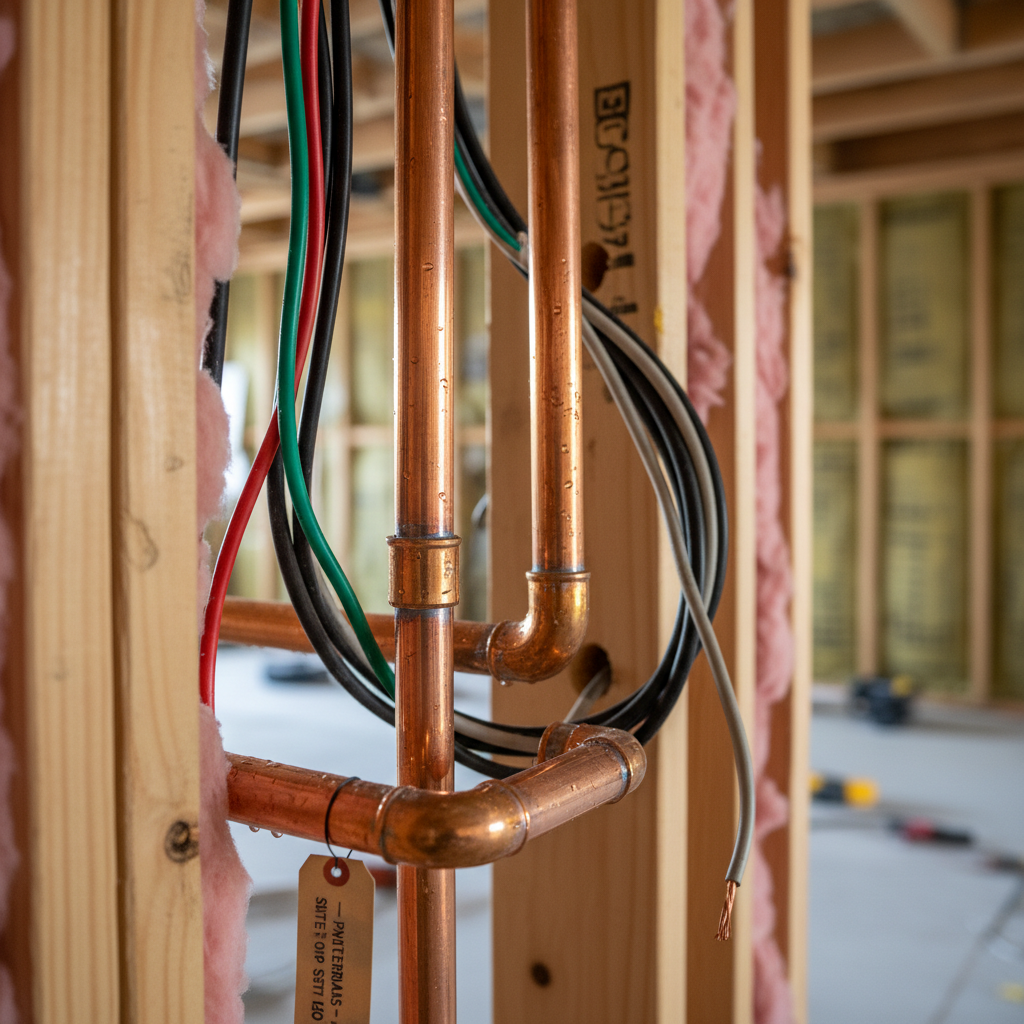
A guy in Buckhead lost $47,000 worth of copper piping in one night. Just — gone. Thieves hit his site sometime between Friday evening and Monday morning. You know what saved him? Builder's risk insurance through Liberty Mutual. Every penny covered. His competitor down the street? Different story. Same theft happened six months earlier, no coverage, ate the whole loss out of pocket.
Building anything — a tract home in Glendale, a strip mall in Phoenix, even a high-end kitchen remodel — means exposure. Weather doesn't care about your timeline. Thieves don't check your profit margins. Accidents happen when you're three weeks from substantial completion and the owner's breathing down your neck.
That's where builder's risk insurance comes in.
Here at BizzFactor, our licensed team has been in the trenches for over two decades, helping contractors navigate more than $2.8 million in claims. We've seen it all. This isn't some dry legal document. This is your practical guide to understanding, using, and protecting your bottom line in 2025 and beyond.
Don't skip this.
What Does Builder's Risk Insurance *Actually* Cover?
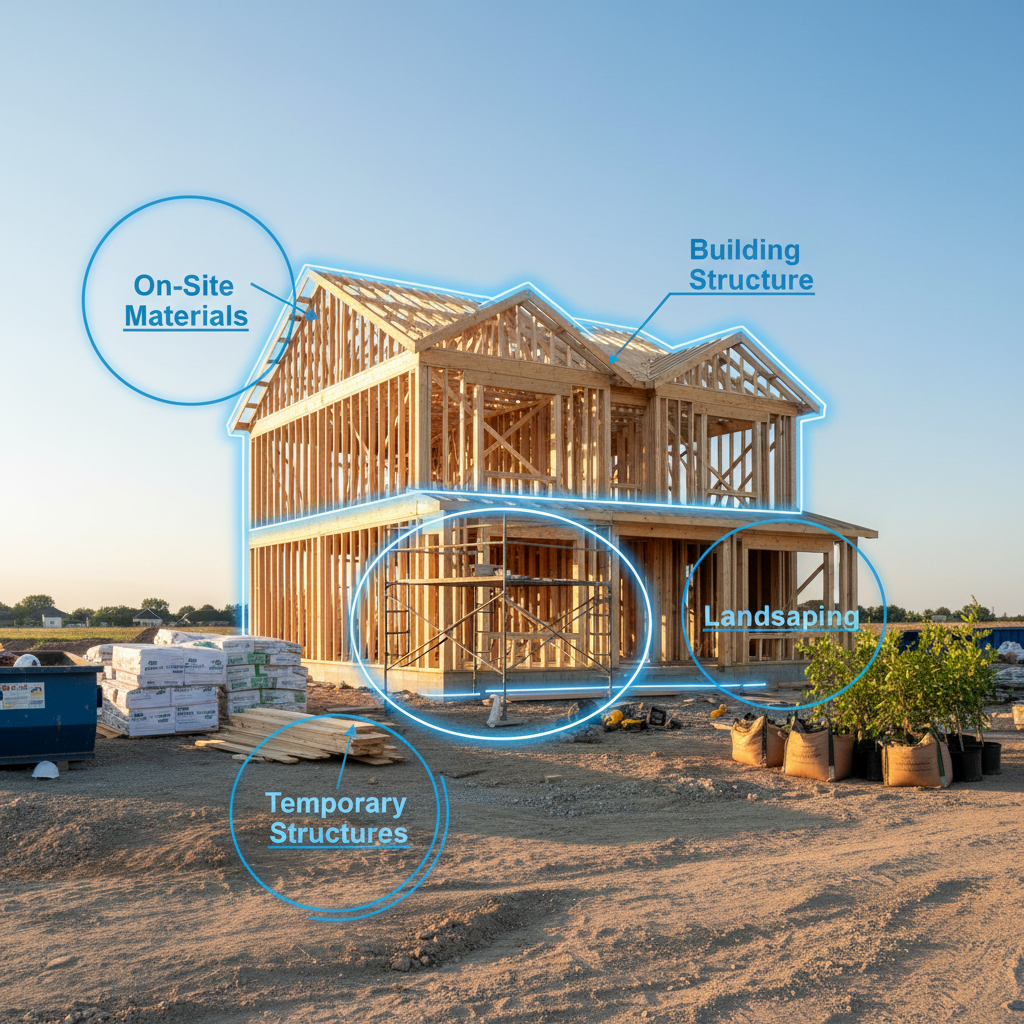
It's insurance for buildings that aren't buildings yet.
Think of it this way: you've got a foundation you poured last Tuesday. Those HVAC units still sitting in their crates. The lumber stack under a tarp waiting for framing. All of it vulnerable — theft, weather damage (the brutal kind), fires, vandalism. Builder's risk steps in from groundbreaking until you hand over the keys.
You know your regular commercial property policy? Useless here. That covers buildings with roofs and walls and people working inside them. Your half-framed house sitting there in the rain? The policy company will literally laugh at your claim. They insure *completed* structures, not construction zones.
Here's the deal: coverage amount changes as you build. It's not some fixed number you pick in January and stick with all year.
Look — so maybe Week One you've got thirty grand in concrete and rebar sitting there. Fast forward ninety days — you've added framing, rough plumbing, electrical runs, that fancy $8,000 subfloor the architect insisted on. Policy climbs right alongside your investment. The system tracks what's actually there at any moment, whether it's bolted down permanent or just stacked in a job box waiting for installation.
"Just last month, I was out in Phoenix inspecting a commercial job site," explains Maria Rodriguez, one of BizzFactor's veteran insurance experts. "Thieves made off with around $47,000 worth of copper piping and electrical equipment. The contractor had solid builder's risk coverage through Liberty Mutual."
Every penny was covered.
Without it? He would've been eating those costs himself. That's the real killer — not the theft itself, but the financial gut punch that follows when you're uninsured.
And it's not just stuff already bolted down. Protection extends to materials whether they're installed or just sitting in storage. Even if that storage is a temporary job box or an off-site warehouse. That's the real issue. We're talking everything from pallets of drywall to those custom HVAC units waiting for their installation window.
**So, what's typically in the basket?**
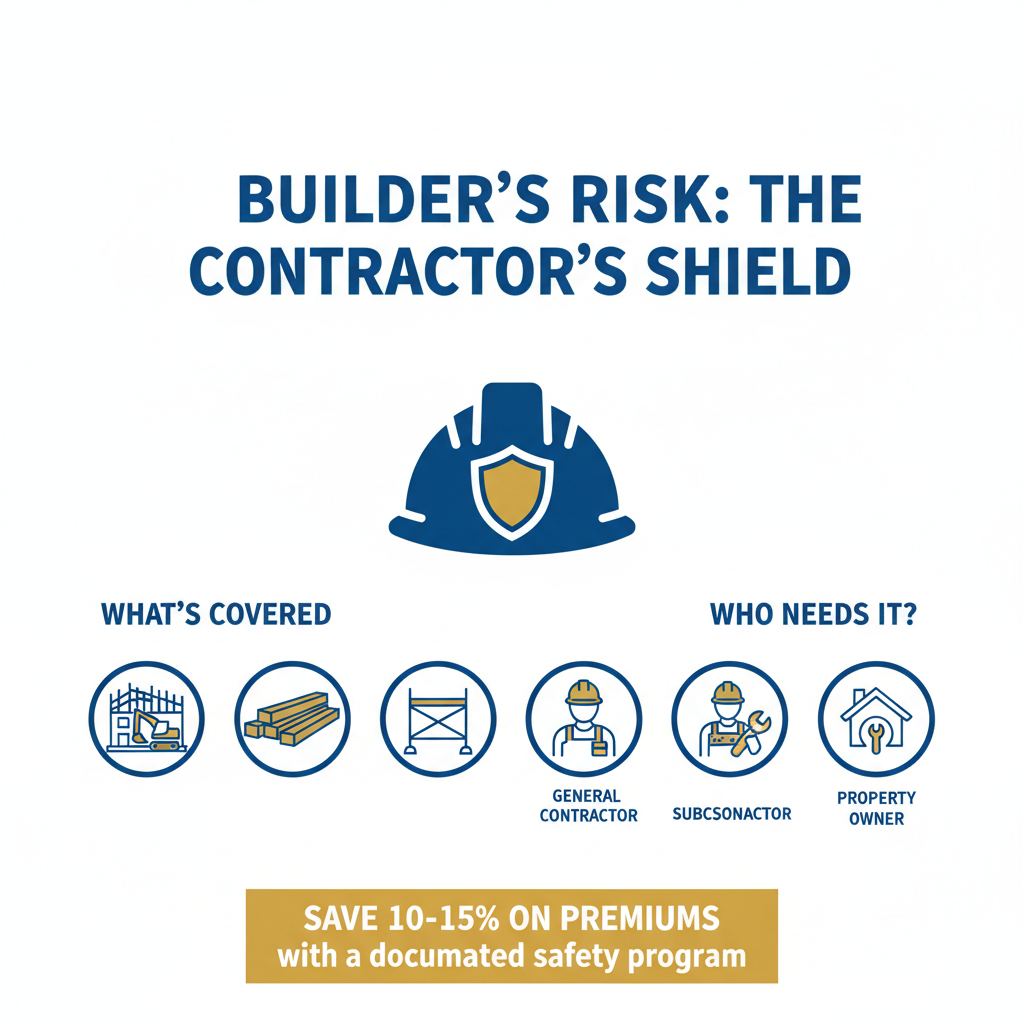
- The building itself while it's under construction – foundation to roof deck.
- Materials stored on-site that are destined for the project (not your general inventory).
- Construction equipment and tools crucial for the job. Scaffolding, generators, those expensive laser levels.
- Temporary structures — fencing, shoring, protective barriers.
- Landscaping materials and supplies. Even the sod and trees waiting to go in.
Here's a quick war story: We once worked with a residential builder in San Diego who was using specialized concrete leveling gear (cost him $11,000 to rent for the month). A freak downpour — and I mean freak, because it's San Diego — ruined the whole setup. His general liability didn't touch it.
His builder's risk policy? Covered the entire replacement cost.
Here's the thing: here's the thing: here's the thing: our experience consistently shows that contractors using specialized equipment often find out the hard way that typical policies just aren't enough. Unexpected weather can wipe out your budget in a flash.
Does this sound familiar?
Who Actually Needs This Coverage? Everyone with Skin in the Game.
So general contractors need it, obviously. Subcontractors too. Property owners. Basically anyone writing checks or swinging hammers on a construction project needs builder's risk protection. If you've got money or time invested, you need coverage.
Problem is, figuring out *who* actually buys the policy gets tangled up real fast.
It really boils down to your contract terms. Some agreements explicitly state the GC must secure it. Others push that responsibility onto the property owner. I've seen contracts where the developer buys it, and I've seen contracts where everyone assumed someone else was handling it (spoiler: nobody was).
Read those contracts carefully!
A casual glance could cost you a fortune.
Now, here's where subs get burned constantly — they assume the GC's policy covers them automatically. Dead wrong. I can't tell you how many times we've dealt with subcontractors in Austin who got hammered because they thought protection rolled downhill from the general. It doesn't work that way. When a claim hits and your company isn't explicitly named on that policy? You're paying out of pocket. Period.
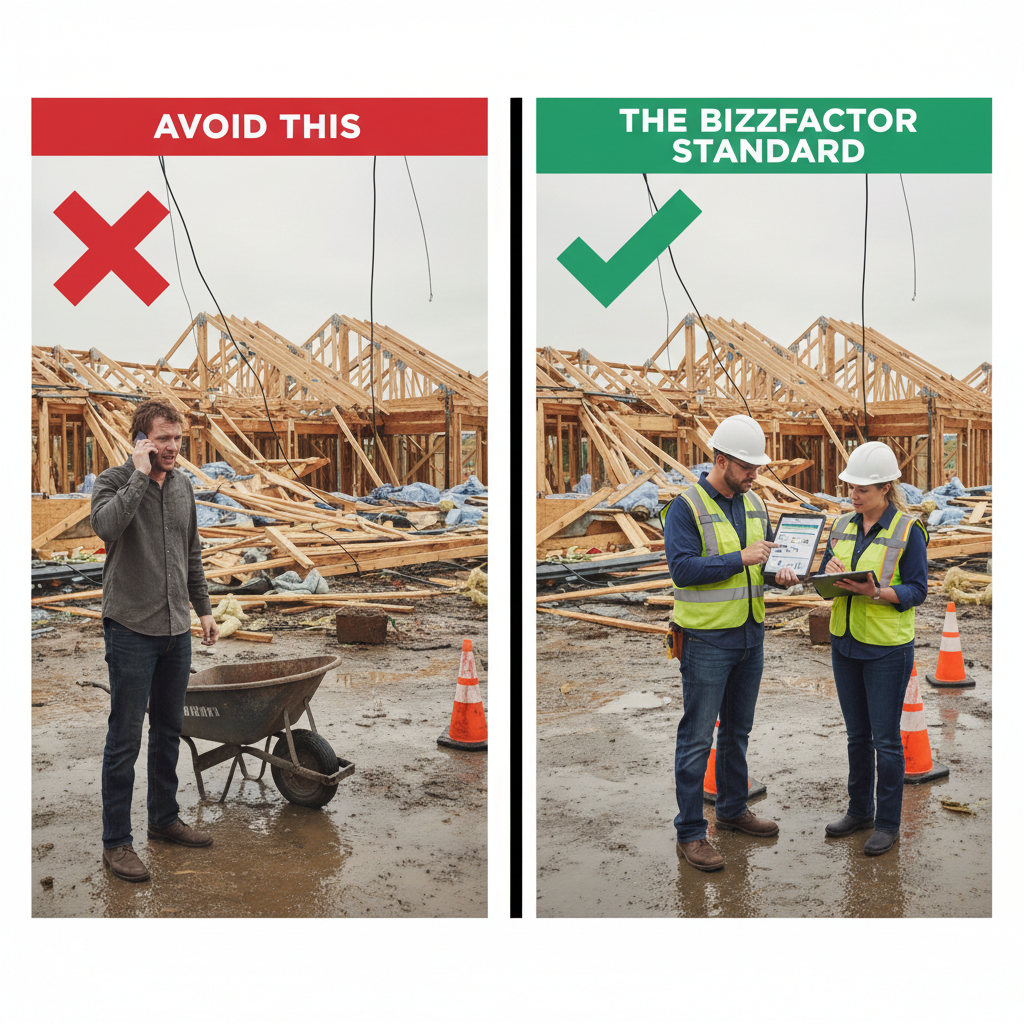
**A pro tip from our BizzFactor team:** Always — and I mean *always* — get written confirmation. Demand to see the coverage limits and definitive clarity on your company's inclusion within the policy *before* you lift a hammer or sign anything. This clear documentation is your best defense against future disputes and soul-crushing financial setbacks. For more details on contractor responsibilities, check out our guide on [General Contractor Responsibilities](link-to-gc-responsibilities-article).
How Is Builder's Risk Different from Regular Insurance? It's Niche, It's Specific.
Your standard commercial policy covers buildings that are done. Occupied. Stable.
Builder's risk covers the chaos of active construction — which is a completely different animal. Regular property insurance has massive gaps with building sites. Ask me how I know.
The value thing? Changes everything. You don't pick some arbitrary number in March when you've only got a hole in the ground and then get stuck with it. Say you start with a hundred-grand foundation. By September you're doing finish work and the structure's worth half a million. Your builder's risk adjusts upward automatically — tracking materials deliveries, wall installation, mechanical systems. That's the real issue. Most insurance makes you lock in a number and live with it.
Also — timeline's different. Coverage kicks in when materials show up or when you break ground (whichever comes first), then runs until you get that certificate of occupancy. Could be six months. Could be eighteen. Doesn't matter — the policy follows your actual construction schedule, not some arbitrary calendar year.
Premiums reflect this flexibility — you're paying for specialized, evolving protection. But when you're talking about a $300,000+ project that could get totaled by one severe storm? Worth it.
What Won't Get Covered? The Sneaky Exclusions.
No policy covers everything — builder's risk definitely doesn't. I've watched contractors stumble into these gaps thinking they're protected. They're not.
Design errors? Forget it. Architect screwed up the load calculations, engineer botched the drainage — that's professional liability territory, completely separate insurance. Faulty workmanship won't help you either. You installed flashing backwards and now water's cascading into the walls? That's on you. Insurance adjusters call that quality control failure, not a covered peril.
Materials sitting outside for months that warp from weather exposure — normal wear and tear gets excluded. Equipment breakdown needs separate coverage. Your eight-thousand-dollar generator seizes up mid-project? Builder's risk typically ignores it (you need inland marine or mechanical breakdown insurance instead).
Employee theft trips people up constantly. Site foreman walking off with tools every Friday — I know a contractor in Tempe where this happened for three months — standard builder's risk specifically excludes it. You'd need a crime policy endorsement.
"Weather damage can vary drastically by region and carrier," warns Sarah Chen, a BizzFactor underwriter based in Miami. "Colorado policies look nothing like what we write down here in hurricane country. Totally different rules."
Most claim denials? Contractors didn't understand the exclusions. Probably more than half.
Read your policy!
Or better yet, have an expert explain it to you. Thirty minutes with someone who knows this stuff will save you tens of thousands down the road.
**Quick rundown of common exclusions:**
- **Design defects** — Architect botched the blueprints? That's E&O territory, not builder's risk.
- **Poor workmanship** — You built it wrong, you fix it on your dime.
- **Normal deterioration** — Six months of UV beating down on unprotected lumber does what it does. Not covered.
- **Mechanical/equipment failure** — Compressor dies, mixer breaks down, you're probably out of luck without separate equipment coverage.
- **Your own employees stealing** — Need a specific crime endorsement for that one.
The Soft Costs Trap (This One's Seriously Expensive).
So you've got a covered loss. Fire, theft, tornado — whatever. Your builder's risk pays for the damaged materials and you rebuild. Problem solved, right?
Not even close.
Here's what most contractors miss completely: basic policies cover the stuff that got destroyed — the lumber, the drywall, the equipment. They won't cover the financial bleeding that happens while your project sits dead in the water. I'm talking construction loan interest piling up month after month. Architect fees for redesigns. Equipment rentals you're still paying for but can't use. Lost rental income on those spec homes you can't finish.
The industry calls these "soft costs," and they'll absolutely wreck your profit margin if you're not protected. Probably the biggest blind spot in builder's risk coverage.
You need what's called a "Delay in Completion" endorsement (sometimes listed as "Soft Cost" coverage). If you're working on financed projects or anything with tight timelines, this is totally non-negotiable. I've watched contractors skip this to save maybe $400 on premiums, then get hammered with $15,000 in soft costs after a three-month delay from a covered loss.
You saved $400 and lost $15,000.
Real smart.
"Our team worked with a residential contractor in Portland whose project got slammed by storm damage, delaying it four months," recalls David Lee, a senior BizzFactor case analyst. "His builder's risk policy *did* cover $52,000 for materials replacement, which was great."
So — but it didn't touch the $18,500 in extra construction loan interest that piled up during those four months. He ate that cost personally — straight out of his profit margin, which basically evaporated. Could've been avoided with a $450 endorsement.
Real-World Example: When Coverage Saves the Day (And Your Business).
Our certified inspectors recently evaluated a high-end luxury home renovation project in Naples, Florida. They always say it's sunny down there, right?
Well, a severe hailstorm unexpectedly walloped the job site in mid-July (not exactly hurricane season, so nobody saw it coming). The storm inflicted ex
In-Depth Look
Detailed illustration of key concepts
Visual Guide
Infographic illustration for this topic
Side-by-Side Comparison
Visual comparison of options and alternatives
Sources & References
- What Is Builder's Risk Insurance?
- What is builder's risk: Essential Safeguard 2025
- Builder's Risk for Homeowners: A Full Broker Guide
- Builders Risk Insurance What It Is and How It Works
- Builder's Risk Insurance Explained
- Building Codes, Standards, and Regulations: Frequently Asked ...
- Building Codes and Standards - 101 Guide | ROCKWOOL Blog
- [PDF] Building Codes Toolkit for Homeowners and Occupants - FEMA
- [PDF] Introduction to Model Codes
- 5 Reasons Building Codes Should Matter to You
Frequently Asked Questions
Need Professional Help?
Find top-rated general contractors experts in your area