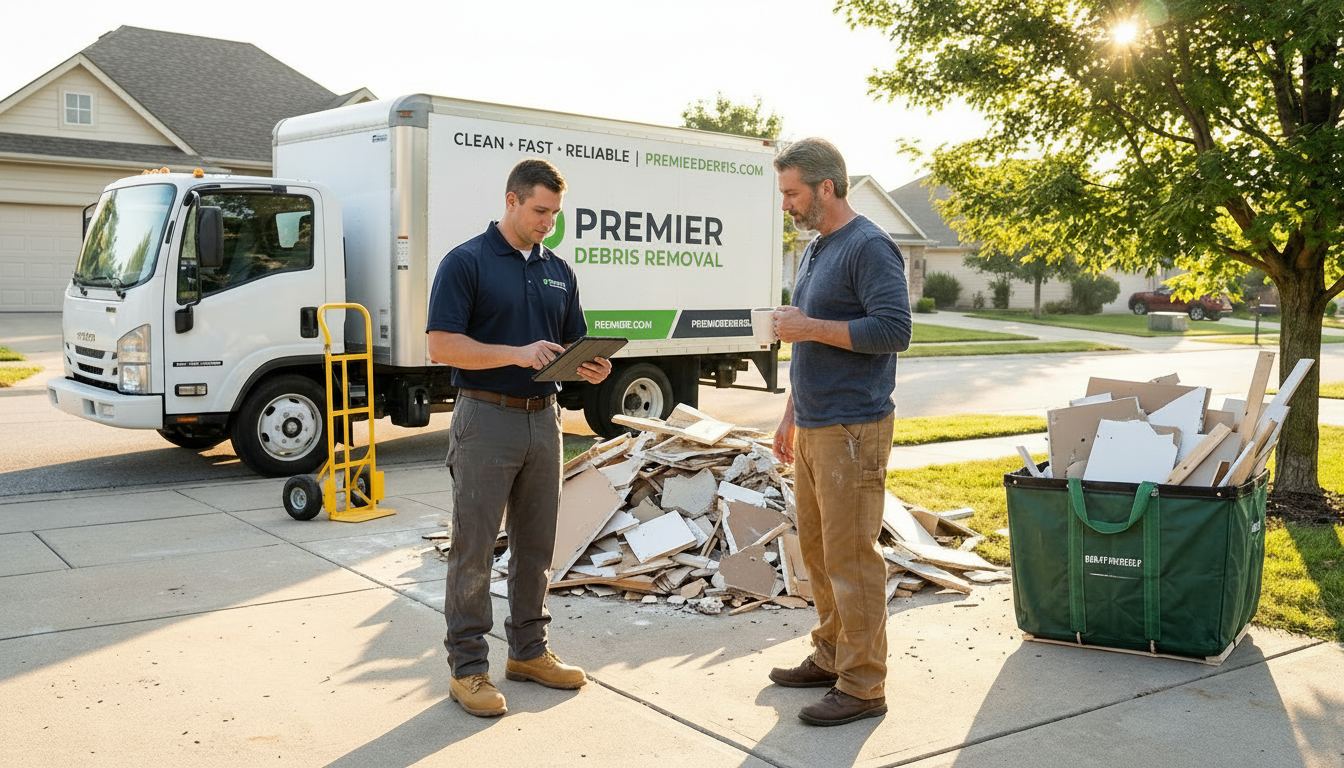
Navigate construction debris removal like a pro. This 2024 guide covers DIY vs. professional services, hazardous waste, hidden costs, and smart disposal tips to avoid EPA fines.
Key Takeaways
- Asbestos-containing tiles, insulation, and piping
- Lead-based paint chips and surfaces (especially in pre-1978 homes)
- Chemical residues from solvents, adhesives, and cleaners
- Pressure-treated lumber (often contains arsenic or other nasty chemicals)
- **Small bathroom remodel:** 10-15 yards
Key Takeaways
Construction Debris Removal: DIY vs Pro Guide 2024
Ever watch someone rent a dumpster without checking the weight limit? I watched a Decatur contractor blow through his 2-ton allowance with half a concrete patio. Cost him an extra $680 in overage fees. That's $680 he could've spent on literally anything else.
Look — construction debris removal isn't just "throw it in a bin and call it done." You're dealing with materials that can trigger EPA violations (starting at $25,000, by the way), plus local codes that change by county. The home remodeling market hit $472 billion in 2022. Know what that generated? Mountains of waste that most homeowners have zero clue how to handle legally.
Look — look — look — look — this guide walks through what actually works — DIY approaches that won't wreck your back, when professionals are worth the premium, and the regulatory landmines that'll cost you five figures if you're not careful.
What Types of Construction Waste Need Special Handling?

Certain materials will absolutely get you fined if you chuck them in a regular dumpster. Asbestos, lead paint, treated lumber, chemical residues — these require certified disposal through EPA-approved facilities.
We once showed up to a 1950s kitchen renovation in Brookhaven where the homeowners were *this close* to tossing asbestos tiles in their regular dumpster. Would've been a $15,000 EPA violation. They had no idea.
From handling thousands of renovation cleanups, here's what I've learned: most people underestimate how complicated waste disposal gets once demolition starts. Not trying to scare you — just being real about what's at stake.
Hazardous Materials Requiring Professional Certification
Before you dispose of anything, you need to identify hazardous materials. Period.
Materials that **must** be handled by certified professionals:
- Asbestos-containing tiles, insulation, and piping
- Lead-based paint chips and surfaces (especially in pre-1978 homes)
- Chemical residues from solvents, adhesives, and cleaners
- Pressure-treated lumber (often contains arsenic or other nasty chemicals)
Don't gamble with this stuff.
The Weight Trap: Unexpected Costs of Overfilling
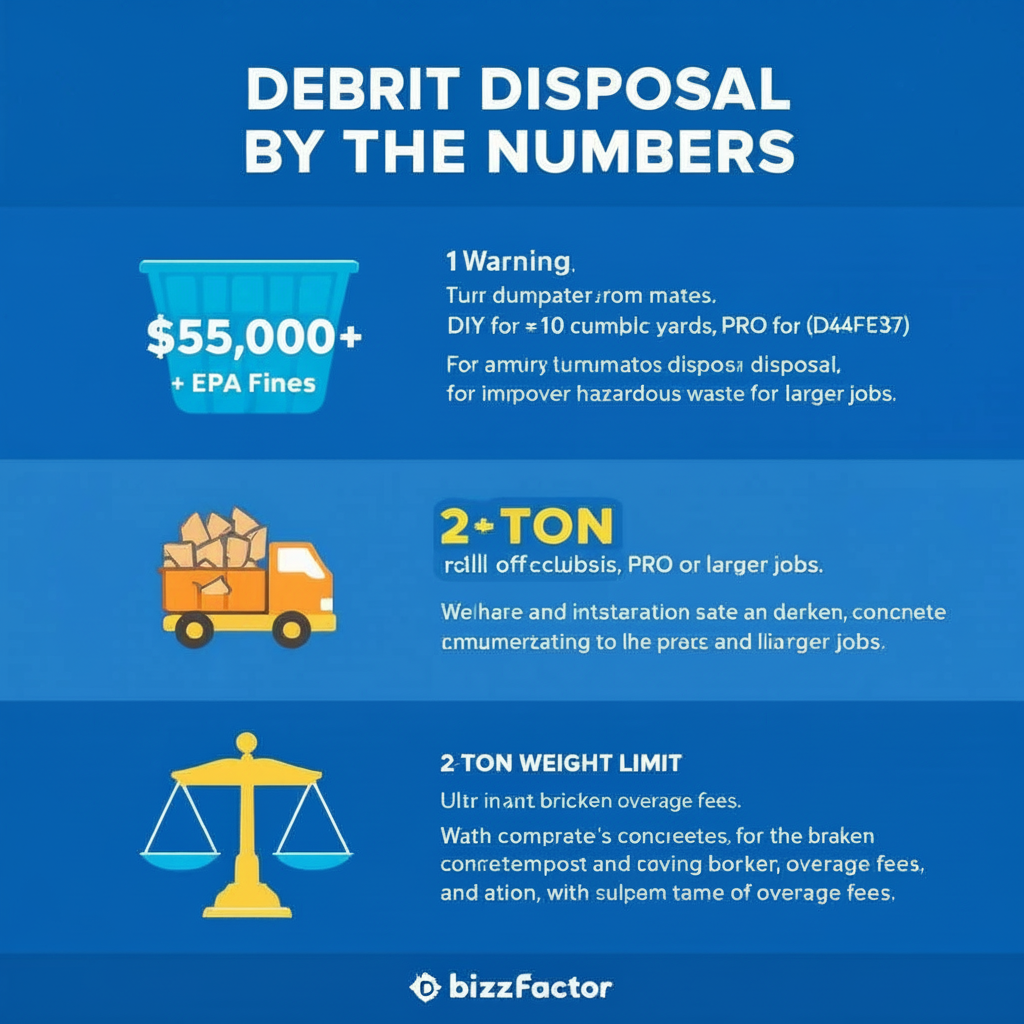
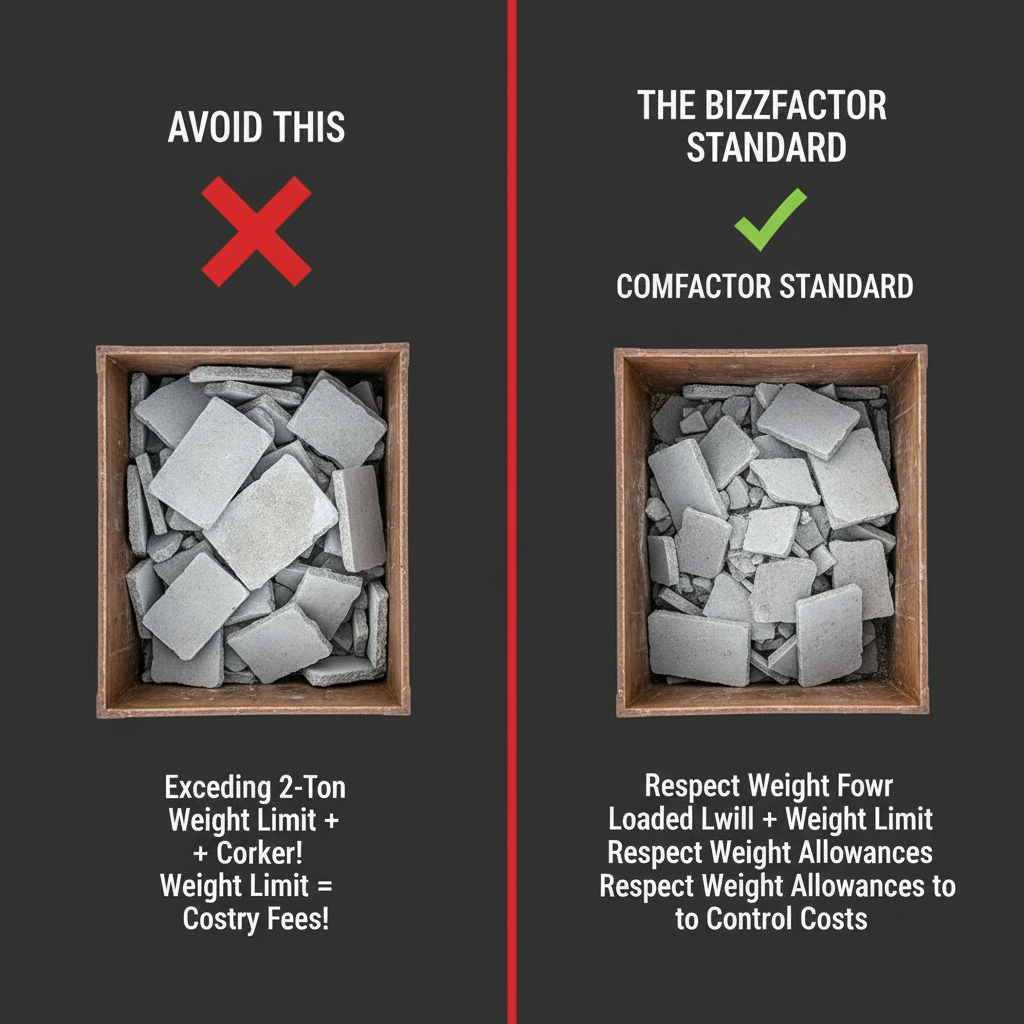
Here's what trips people up — a 10-yard dumpster looks huge. But fill it with concrete? You'll blow past the 2-ton weight limit before it's half full.
Overage fees can double your disposal bill overnight. Always ask about weight allowances before you rent. A guy in Sandy Springs learned this the hard way with a patio demo — thought he was paying $350, ended up with a $780 invoice.
For more on avoiding dumpster rental disasters, check our detailed guide on [choosing the right dumpster rental service](link-to-dumpster-rental-guide).
Smart Material Choices for Easier Disposal
Picking materials with disposal in mind saves you headaches later. Take insulation — ROCKWOOL (made from basalt rock) beats fiberglass for disposal. It's inert, many facilities accept it as clean fill, and you're not dealing with skin irritation.
That's the real issue with fiberglass. Sure, it works, but disposal gets expensive and handling it sucks.
Our certified team consistently recommends ROCKWOOL. Not sponsored (I wish), just practical.
The "Free" Disposal Method Nobody Considers
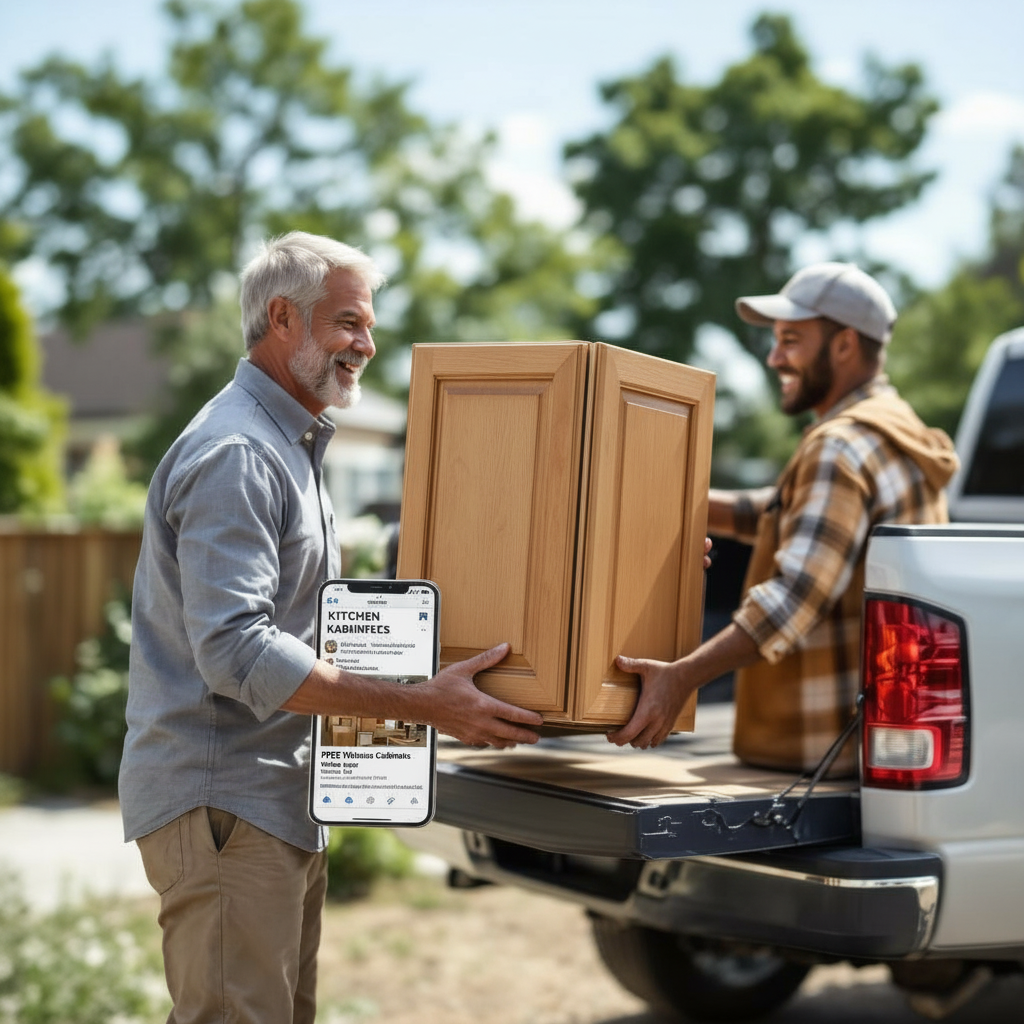
Before you rent that dumpster, try this: post usable stuff on Facebook Marketplace. Old cabinets, doors, clean lumber — people will literally come haul it away for free.
I've seen homeowners save $800+ using this method. The trade-off? You're coordinating multiple pickups instead of one big haul. Worth it if you've got the time.
How Do You Handle DIY Debris Removal for Small Projects?
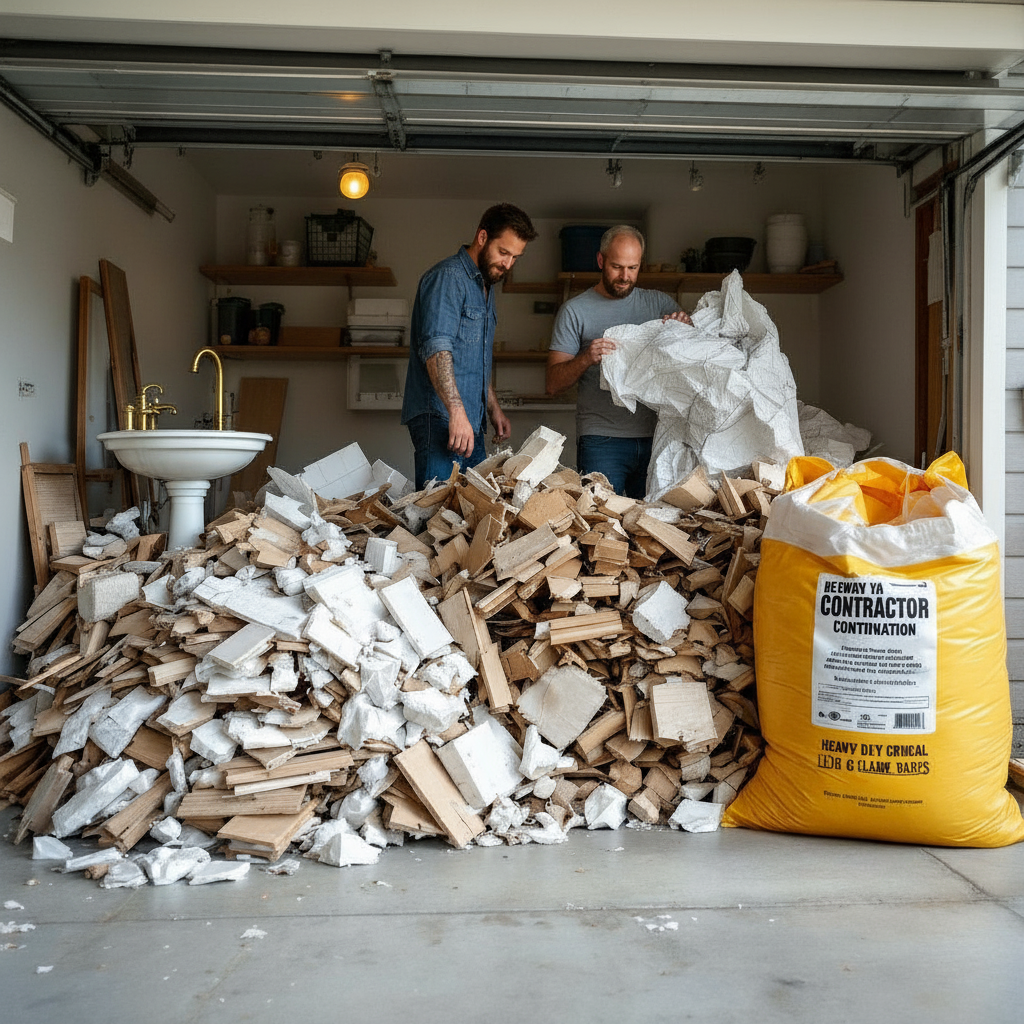
DIY makes sense for smaller projects — typically under 10 cubic yards of waste. Start by separating recyclables from trash. This isn't some eco-warrior thing (though good for you if that's your motivation). It's about cutting disposal costs by 30-40%.
A small bathroom reno? Usually manageable DIY. Complete kitchen gut? You probably want professional help.
For more on waste segregation, check our article on [sustainable construction practices](link-to-sustainable-construction-article).
Material Sorting That Generates Revenue
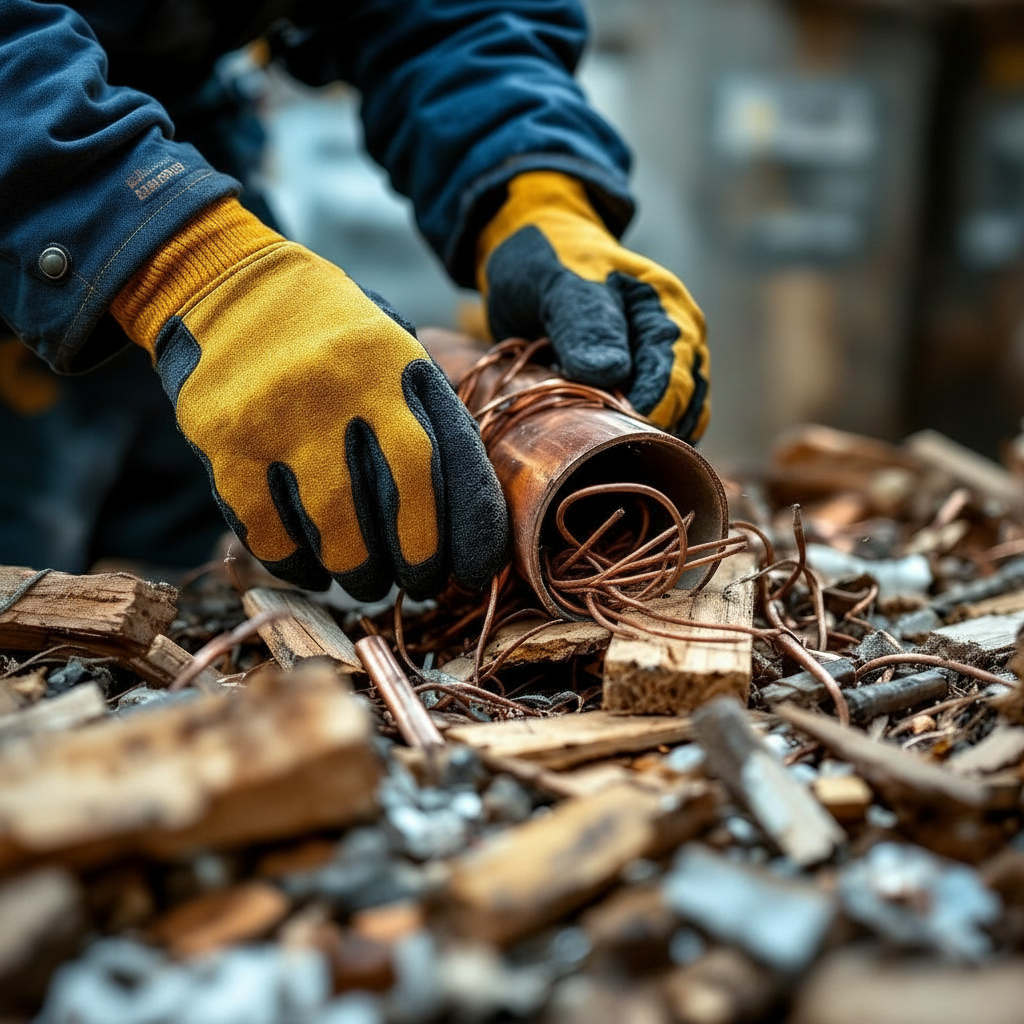
Real talk — some of your "trash" is worth actual money. Local lumber yards sometimes buy clean dimensional lumber. Scrap yards pay cash for metal components.
Here's what pays the most (current market rates):
1. **Copper pipes:** $3-4 per pound
2. **Brass fixtures:** $2-3 per pound
3. **Clean aluminum:** $0.50-0.80 per pound
4. **Steel beams:** $0.10-0.15 per pound
Suppliers like Kurtz Bros. often accept clean concrete for fill. But call ahead — they're picky about contamination.
Dumpster Sizing That Makes Financial Sense
Getting the size wrong costs you money. Too small? You're paying for a second pickup. Too big? You're paying for air.
Here's our quick reference:
- **Small bathroom remodel:** 10-15 yards
- **Kitchen remodel:** 20-30 yards
- **Whole house gut:** 40 yards minimum
- **Roofing project:** 30-40 yards (shingles are deceptively heavy)
Also — check if you need permits for dumpster placement. Some cities require permits for street containers. Getting caught without one can cost $200+ in fines.
When Should You Hire Professional Debris Removal Services?
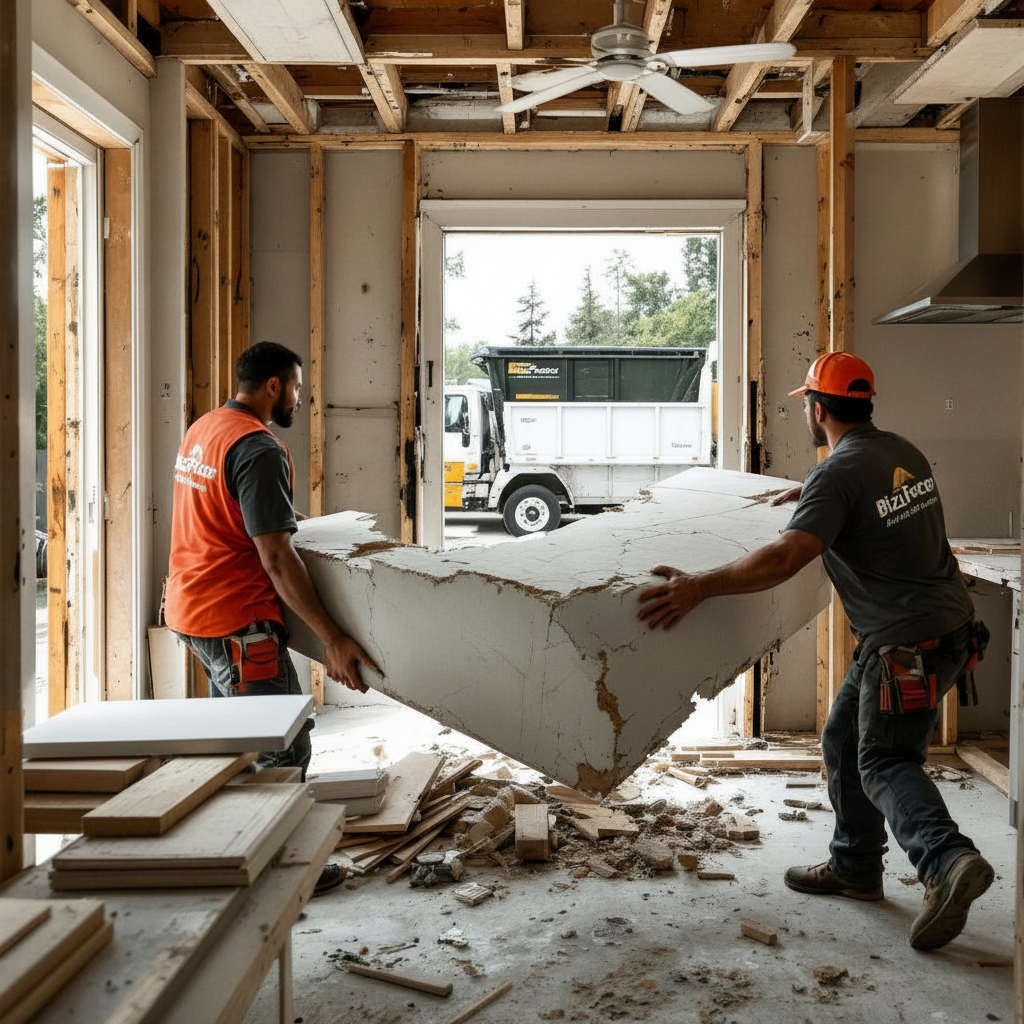
Once you're past 15 cubic yards of waste, or dealing with hazardous materials, or working under tight deadlines — that's when professionals make sense. Licensed companies (1-800-GOT-JUNK, LoadUp, others) provide proper disposal documentation and warranty-backed service.
What's the tipping point? If your project generates more than three pickup truck loads, call the pros. The math usually works out in your favor.
How to Select a Reputable Removal Service
The waste removal industry has its share of sketchy operators. Don't be the person who hires the cheap guy who dumps your stuff illegally — *you* can still be held liable.
Legitimate services must have:
- Valid waste hauling license (ask to see it)
- Comprehensive liability insurance
- Partnerships with certified disposal facilities
- Background-checked, uniformed crews
Most homeowners skip this vetting. Don't. Our verified partners meet International Residential Code requirements. It's not overkill — it's covering your ass.
Real-World Professional Removal Costs
Services typically charge by volume or weight. Here's what you're looking at in 2024:
- **Small load (truck bed equivalent):** $150-300
- **Medium load (10-yard equivalent):** $400-600
- **Large load (whole room demo):** $600-1,200
- **Hazardous material surcharge:** $50-200 extra per item
Sorting adds about 20-30% to base costs but ensures higher recycling rates and proper documentation. Worth it for peace of mind.
When DIY Debris Removal Goes Horribly Wrong
We recently worked with homeowners who tackled a kitchen and two bathrooms simultaneously. Their remodeling plan was solid. Their debris strategy? Non-existent.
The result? Eight tons of mixed materials. Their F-150 couldn't handle it. After three dump trips, they were only halfway done. (This happens more than you'd think.)
They called LoadUp. Professionals sorted everything, identified lead-containing fixtures (which could've triggered major EPA violations), and hauled all of it in one day.
Their DIY estimate was $600. Professional cost? $1,400. But they avoided potential $5,000+ fines and got liability coverage. Sometimes paying more costs less.
What Regulations Must You Follow for Debris Disposal?
Debris disposal is governed by local waste ordinances and International Building Code standards. Violations — especially for improper hazardous waste disposal — start at $25,000 in fines, according to EPA guidelines.
Don't test this. Our licensed professionals stay updated on all rules. It's literally their job to know what you can and can't do.
Permit Requirements for Large Containers
Most jurisdictions require permits for large waste containers. Cities typically mandate permits for:
- Containers over 20 yards
- Street placement over 72 hours
- Commercial equipment in residential zones
Permits usually run $50-200. Getting caught without one? $300+ in fines, plus container removal fees. Not worth the risk.
Environmental Rules You Can't Ignore
Proper disposal protects groundwater and air quality. Always separate hazardous materials immediately:
1. **Paint and solvents:** Use household hazardous waste programs
2. **Treated lumber:** Goes in special landfill sections
3. **Electronics (e-waste):** Requires certified e-waste recyclers
4. **Appliances with refrigerants:** Needs EPA-certified removal
Many areas offer free household hazardous waste collection days. Check your city or county website for schedules.
Money-Saving Strategies That Actually Work
Plan debris disposal *during* the renovation's initial phase, not as an afterthought. That's when you maximize savings and avoid last-minute premium pricing.
For more planning tips, read our article on [pre-construction planning essentials](link-to-planning-essentials).
Salvage Items That Retain Value
High-quality fixtures and architectural elements can be worth serious money. I've seen homeowners earn $2,000+ by selling:
- Vintage clawfoot tubs and pedestal sinks
- Solid wood cabinets (even painted ones)
- Refinishable hardwood flooring
- Period-specific millwork and trim
- Working appliances under 10 years old
Architectural salvage companies are your friend here. "This Old House" once featured a project where salvage sales covered 40% of new materials. That's real money.
Perfect Timing for Debris Removal
Timing debris removal to project phases matters. Demolition creates a huge initial volume. Finish work generates smaller, ongoing amounts.
What pros know about timing:
1. **Schedule large pickup after main demolition**
2. **Use smaller containers for ongoing debris during finish work**
3. **Arrange final cleanup pickup right before project completion**
4. **Don't let debris accumulate — it's a safety hazard**
Multiple smaller removals often cost less than one massive pickup. Plus you maintain a safer, cleaner job site.
What's the Real Cost of Construction Debris Removal?
DIY for small projects typically runs $200-500. Professional services range from $400-1,200, depending on volume, materials, and location. Hazardous waste disposal adds roughly $100-300 extra per load.
Which Materials Can't Go in Regular Dumpsters?
Asbestos, lead paint, chemical residues, electronics (e-waste), appliances with refrigerants — these require specialized disposal. Toss them in a regular dumpster and you're looking at serious fines.
In-Depth Look
Detailed illustration of key concepts
Visual Guide
Infographic illustration for this topic
Side-by-Side Comparison
Visual comparison of options and alternatives
Sources & References
- How to handle construction debris removal responsibly
- Dust to Debris: How to Clean Up After a Renovation | LoadUp
- A Practical Guide on How to Handle Construction Debris Removal ...
- Safety, Standards, and Best Practices for Pennsylvania Projects
- This Is How to Clean Up After Home Renovation Projects
- Building Codes, Standards, and Regulations: Frequently Asked ...
- Building Codes and Standards - 101 Guide | ROCKWOOL Blog
- [PDF] Building Codes Toolkit for Homeowners and Occupants - FEMA
- Industry Quality Standards - Wisconsin Builders Association
- ICC - International Code Council - ICC
Frequently Asked Questions
Need Professional Help?
Find top-rated general contractors experts in your area