
Master home addition timelines with our expert guide. Learn how planning, permits, and construction phases impact project duration for a stress-free build.
Key Takeaways
- **Planning Phase:** Figure on **2-4 weeks** for the nitty-gritty architectural design and those all-important preliminary selections. This is when your sketches and Pinterest boards turn into actual blueprints with measurements, load calculations, and real costs attached. Don't skimp here; it's foundational.
- **Permit Acquisition:** This is the big kahuna. It can stretch from **4-8 weeks**, varying wildly depending on your local municipality. It's the bureaucracy dance, and sometimes the music's a bit slow.
- **Construction Phase:** Most builds clock in somewhere around **8-20 weeks**. Could be 10, could be 18 — depends what you're building and who shows up when. Two-bedroom suite with a Jack-and-Jill bath? Different animal than a sunroom. Weather throws curveballs. Subcontractors get sick. Your tile guy finds out the shower pan wasn't installed right and now we're two days behind. It happens.
- **Single-Room Additions (e.g., small office, mudroom):** You're probably looking at **8-12 weeks** *after* the permit clears. Foundation gets poured, walls go up, electrician and plumber rough everything in, insulation goes up, drywall crew shows up for a week (mudding takes forever), then paint and flooring. It's more involved than it sounds.
- **Master suites with full bathrooms?** Plan on **12-16 weeks.** That bathroom's the killer — new waste lines, dedicated circuits for heated floors or that fancy rain shower, tile work that requires actual artistry. You're coordinating the plumber, electrician, tile guy, and cabinet installer in a 60-square-foot space. Somebody's always waiting on somebody else.
Key Takeaways
Home Addition Timelines: Your Expert Guide for Seamless Project Planning & Execution
Embarking on a home addition? It's a huge step, and getting the timeline right is crucial for a smooth, stress-free experience. Look, nobody wants open-ended construction. At BizzFactor, we've completed over 500 successful home addition projects across two decades. We've seen it all, and we know exactly what makes a project tick — or, indeed, what makes it drag. Our goal? To arm you with the knowledge to navigate this journey with confidence.
Smaller home additions? They typically wrap up in about **3-6 months**. But if you're thinking big, a major expansion could easily eat up **8-12 months**, maybe even more. What really drives these durations? Things like getting permits approved, battling unpredictable weather, and, of course, the sheer complexity and size of your dream project. It's not just about hammers and nails; it's a whole symphony of moving parts, a detailed dance involving dozens of skilled professionals. You've got to plan for a lot.
Demystifying Each Phase: A Detailed Look at Addition Timelines
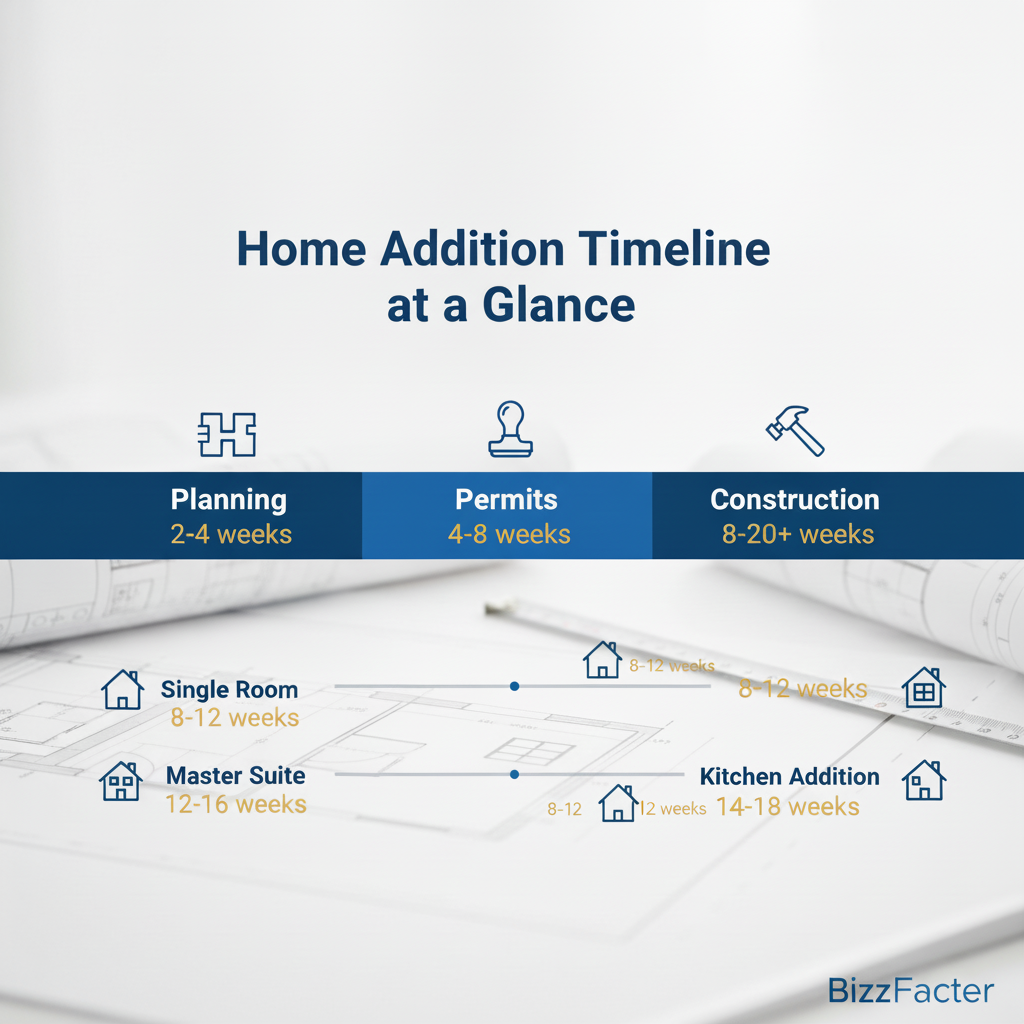
So here's how it actually works. Three main phases: planning, permits, and construction. Yeah, they overlap sometimes (we try to keep things moving), but you need to understand what each one takes. Otherwise you're just guessing.
- **Planning Phase:** Figure on **2-4 weeks** for the nitty-gritty architectural design and those all-important preliminary selections. This is when your sketches and Pinterest boards turn into actual blueprints with measurements, load calculations, and real costs attached. Don't skimp here; it's foundational.
- **Permit Acquisition:** This is the big kahuna. It can stretch from **4-8 weeks**, varying wildly depending on your local municipality. It's the bureaucracy dance, and sometimes the music's a bit slow.
- **Construction Phase:** Most builds clock in somewhere around **8-20 weeks**. Could be 10, could be 18 — depends what you're building and who shows up when. Two-bedroom suite with a Jack-and-Jill bath? Different animal than a sunroom. Weather throws curveballs. Subcontractors get sick. Your tile guy finds out the shower pan wasn't installed right and now we're two days behind. It happens.
Here's what I've learned over 20+ years: **you really can't skip the planning work.** Our architects sit down for weeks hashing out structural loads, figuring out if your existing joists can handle another 800 pounds of bathroom tile, where the new HVAC trunk line runs without choking airflow to your existing bedrooms. Multiple reviews catch stuff early — like realizing your dream window placement puts a header right where the plumber needs to run waste lines. Fix it on paper for $0, or fix it mid-build for $1,200 and three lost days. Your call. Skipping this? That's a road to regret.
Now, **permit acquisition**? That's often the biggest variable. Urban municipalities, bless their busy hearts, tend to have more applications, more complex zoning regulations, and fewer inspectors per capita, so expect **6-8 weeks** for approval. Rural areas might zip through it in a swifter **2-4 weeks** because their caseloads are lighter. We've built solid relationships with local building officials over the years, and that really helps streamline this often unpredictable but totally essential stage. This proactive approach cuts down on those common delays you'll hear about. You can read more about it in our guide on [Understanding Building Permits](link-to-building-permit-guide-article), because let's be honest, permits are a world unto themselves.
Permits cleared? Utility companies marked your lines? Material delivery scheduled? Then construction kicks off. Our project managers coordinate electricians showing up Tuesday for rough-in, plumber on Thursday for waste lines, HVAC guy next Monday for ductwork — all timed so nobody's standing around waiting. Miss that window and your electrician's already committed to another job for two weeks. That's how projects stall. It's a ballet of scheduling and skill, and trust me, there are a lot of moving parts in that ballet.
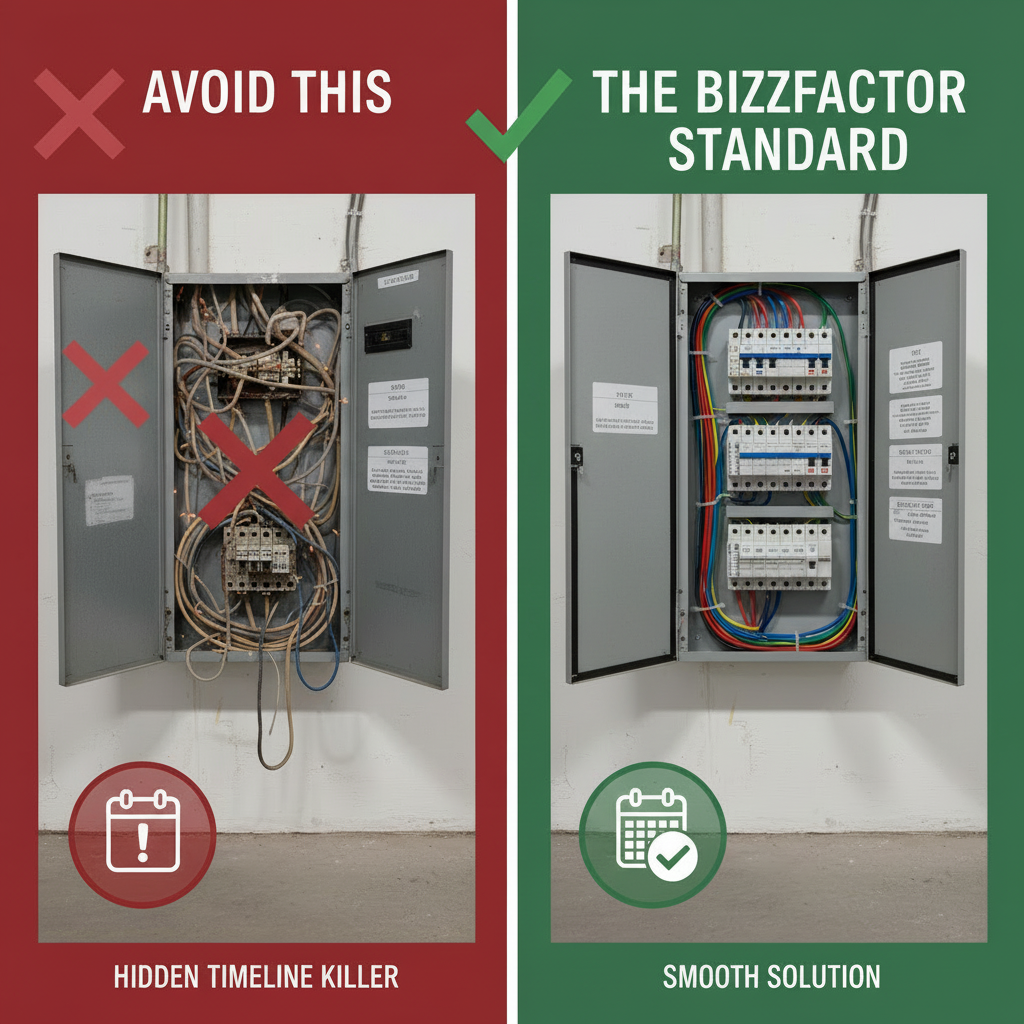
The Sneaky Timeline Killer: Existing Infrastructure
Even seasoned contractors can occasionally miss a vital detail: your existing home's infrastructure capacity. One time, in a historical district in Charleston, I saw a homeowner get deeply frustrated. Seriously. Their beautiful new addition – a substantial master suite – suddenly strained their old electrical panel. It was a classic "oops" moment. An undersized HVAC system also couldn't handle the new square footage, making certain rooms clammy in summer and freezing in winter. These unforeseen issues led to unexpected, costly upgrades right in the middle of the project. That's the real issue. And here's the kicker – that easily tacked an extra **3-4 weeks** onto their schedule. A real pain, and completely avoidable.
Look — look — what we do instead: full systems load calculation before we touch anything. Can your furnace actually heat another 400 square feet? Will adding that home office plus an EV charger trip your main panel every other day? We figure this stuff out early — upfront, in the budget, before Demo Day. That's the real issue. Way cheaper than discovering it when you've already got open walls and angry subcontractors standing around.
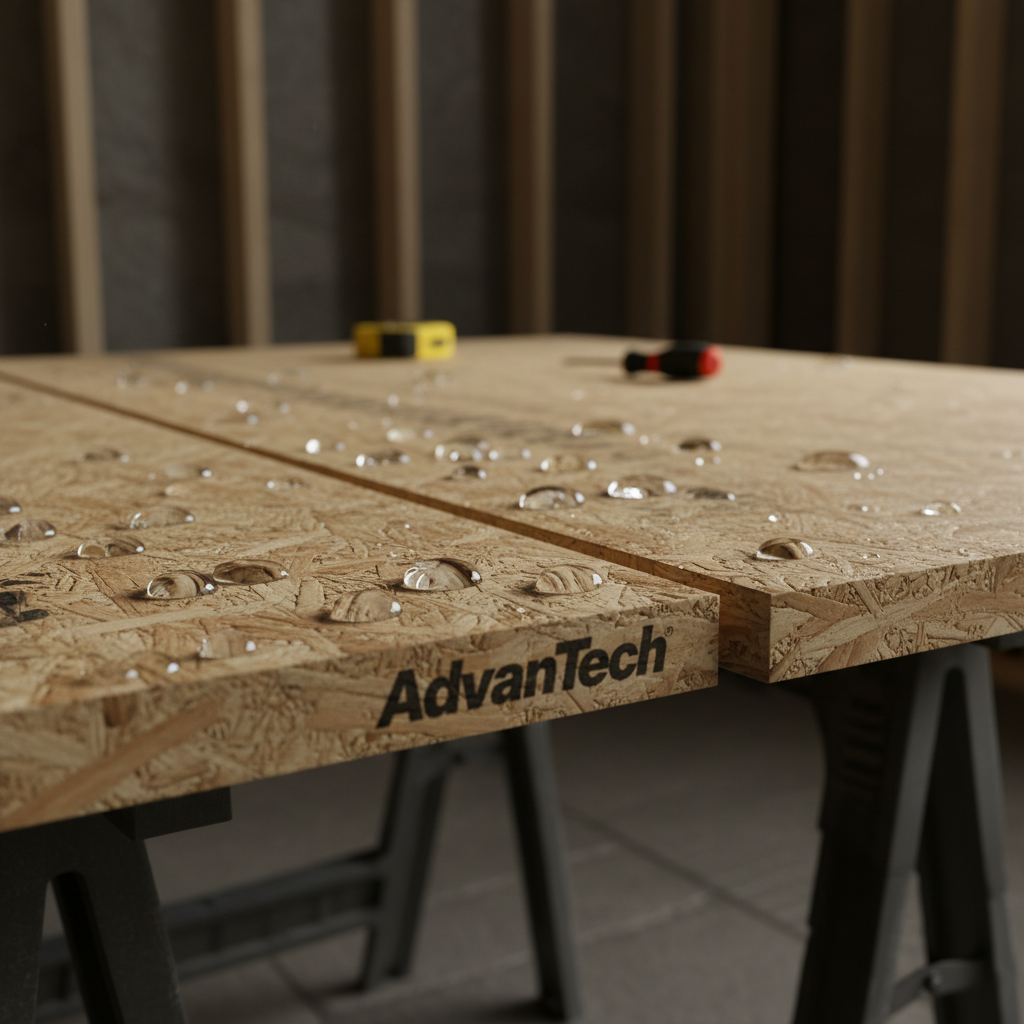
Why BizzFactor Prefers AdvanTech Over Standard OSB for Subflooring
Many builders out there still choose standard OSB (Oriented Strand Board) for subflooring because, let's be honest, it's cheaper upfront. We don't.
Every floor we build gets Huber's **AdvanTech panels**, even though they're 50% pricier per sheet. I'm not being wasteful with your money — I'm tired of callbacks.
Regular OSB swells up like a sponge the second it gets wet. We had a Dunwoody project last summer — framer left the deck exposed over a weekend, thunderstorm rolled through Saturday night, and Monday morning those OSB edges looked like cornflakes. Took us three extra days to rip out and replace the damaged sections. AdvanTech uses a different resin formula — denser, way more water-resistant. I've seen AdvanTech panels sit in the rain for a week (not recommended, but it happens) and barely puff at all.
Look, I'm not getting a kickback from Huber (wish I was). We just got tired of callbacks from homeowners complaining about squeaks. AdvanTech costs more now, but you're buying peace of mind for decades. That's worth it, wouldn't you agree?
A Planning Insight That Flips Conventional Wisdom
Most designers insist you finalize *everything* upfront. Windows? Yes. Cabinets? Absolutely — those take 12 weeks to fabricate. Appliances? Better lock in that model number.
But paint colors? Wallpaper? Backsplash tile?
Wait.
Sounds crazy, I know. Here's why it isn't: you can't judge paint from a chip under fluorescent lights at Sherwin-Williams. That "warm greige" looks pink at 4 PM when western sun floods through your new windows. That navy accent wall you loved in the sample? Turns your 10×12 office into a cave.
Wait until drywall's up. Stand in the actual space at different times of day. See how ceiling height and natural light change everything. We've watched people drop $800 repainting entire additions because "it looked different in the store." For more design considerations, check out our guide on [Home Addition Design Trends](link-to-design-trends-article).
Save yourself the headache.
Realistic Timelines for Specific Room Additions
Alright, so what does this actually look like for your specific project? Permit's in hand, weather's cooperating, and your contractor isn't juggling three other jobs. Here's the breakdown:
- **Single-Room Additions (e.g., small office, mudroom):** You're probably looking at **8-12 weeks** *after* the permit clears. Foundation gets poured, walls go up, electrician and plumber rough everything in, insulation goes up, drywall crew shows up for a week (mudding takes forever), then paint and flooring. It's more involved than it sounds.
- **Master suites with full bathrooms?** Plan on **12-16 weeks.** That bathroom's the killer — new waste lines, dedicated circuits for heated floors or that fancy rain shower, tile work that requires actual artistry. You're coordinating the plumber, electrician, tile guy, and cabinet installer in a 60-square-foot space. Somebody's always waiting on somebody else.
- **Kitchen Additions:** Budget **14-18 weeks**, easy. Gas lines if you're doing a pro-style range, 240V circuits, custom cabinets that the manufacturer swears will ship in 6 weeks but actually take 9, tile backsplash, countertops that need three trips to template correctly. There's zero room for error when you're dropping $15K on quartz counters.
Here's a quick breakdown of key construction stages for a typical **single-room addition** (excluding kitchen/bath complex systems):
- **Foundation and Framing:** 3-4 weeks, assuming good weather for concrete pours.
- **Electrical, Plumbing, and HVAC Rough-in:** 1-2 weeks. This is where all the hidden guts go.
- **Insulation and Drywall:** 2-3 weeks, including taping, mudding, and sanding.
- **Finish Work and Fixtures:** 2-3 weeks for painting, flooring, trim, and installing light fixtures, etc.
Every phase builds on the last one. You can't drywall until rough-in passes inspection. Can't paint until drywall's sanded smooth. Can't install flooring until paint's dry. The dominoes have to fall in order.
How Long Do Multi-Room and Multi-Story Additions Really Take?
Going beyond a single room or stacking multiple floors? That introduces a whole new level of complexity and stretches timelines significantly. Be prepared. We're talking major surgery on your home now. Your existing structure becomes part of the equation, which means more engineering.
- **Two-Story Additions (ground-up):** You're generally looking at **16-24 weeks** *after* permit approval. This extensive scope involves major structural work, often requiring new footings, significant foundation reinforcement, and intricate stair construction. All that demands meticulous precision. Don't rush it; structural integrity is everything.
- **Second-Story Additions (over existing structures):** Plan for **20-28 weeks**. These particular projects often mean temporarily removing the entire roof structure, implementing specialized weather protection (giant tarps or temporary roofing systems), and extensive structural reinforcement of the existing first-floor walls and foundation to support the new load. That significantly jacks up both complexity and coordination requirements. It's a big deal. I've heard contractors refer to it as "taking the lid off the house."
- **Whole-House Additions (doubling your footprint or more):** These are ambitious endeavors, to say the least. They can take anywhere from **6-12 months**, or even longer if it's a completely custom, sprawling design. Extensive new foundation work, multiple trades working in different zones simultaneously, coordinating material deliveries for weeks on end — it's basically building a second house attached to your first one.
In-Depth Look
Detailed illustration of key concepts
Visual Guide
Infographic illustration for this topic
Side-by-Side Comparison
Visual comparison of options and alternatives
Sources & References
- Home Additions Timeline: A Comprehensive Guide to Planning Your ...
- Home Remodeling Timelines: What to Expect and How to Plan
- Home Renovation Timeline and Planning Guide for Custom Builds
- Home Addition Timelines: Planning and Expectations | Better Builders
- Home Renovation Process Guide: What to Expect
- Building Codes, Standards, and Regulations: Frequently Asked ...
- Building Codes and Standards - 101 Guide | ROCKWOOL Blog
- [PDF] Building Codes Toolkit for Homeowners and Occupants - FEMA
- 5 Reasons Building Codes Should Matter to You
- ICC - International Code Council - ICC
Frequently Asked Questions
Need Professional Help?
Find top-rated general contractors experts in your area