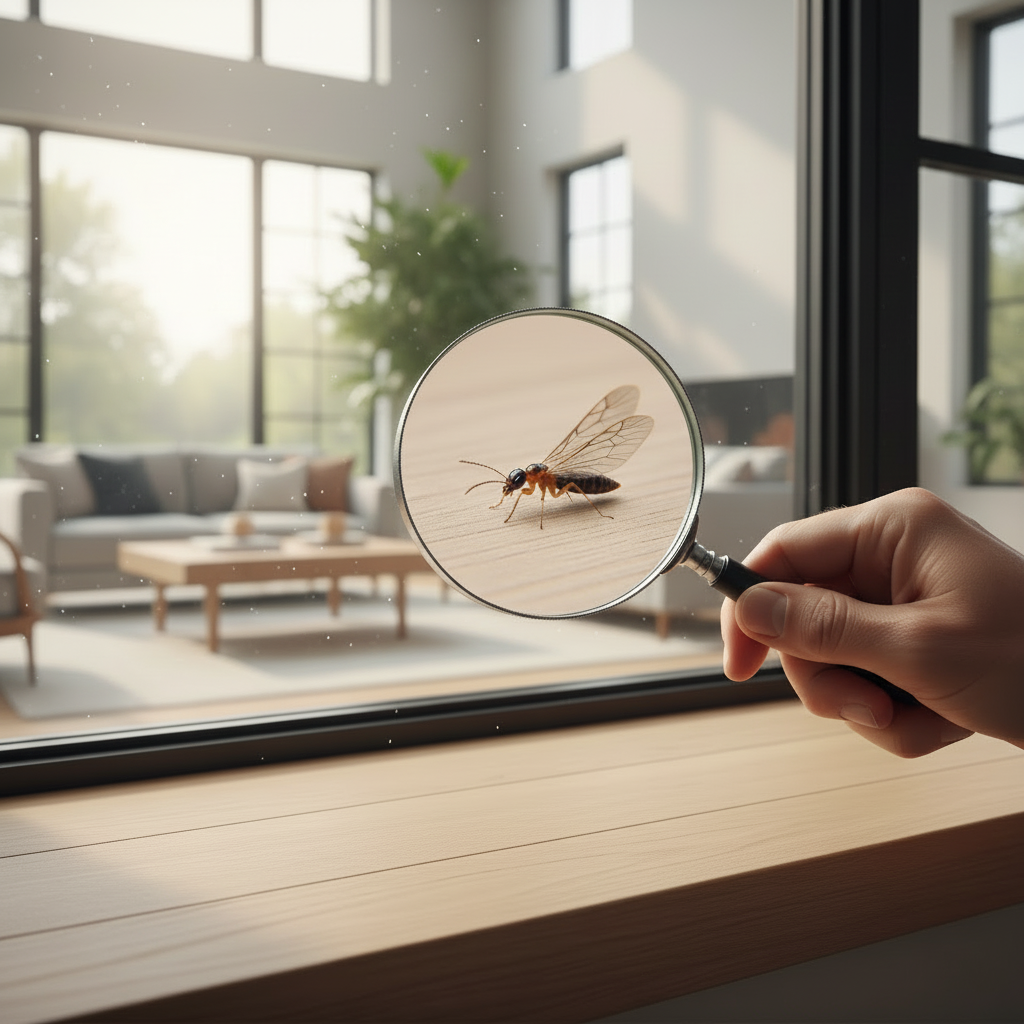
Learn to identify termites vs flying ants instantly. Our experts prevent $18K+ damage with proven ID techniques. Same-day service available.
Key Takeaways
- # Termite vs Flying Ant ID: Stop $18K+ Home Damage Fast Spotting winged insects around your home
- Most homeowners can't tell termites from flying ants—that mistake costs them big time
- We're talking $15,000 to $25,000 in structural damage
- But you don't have to be one of them
Key Takeaways
Termite vs Flying Ant ID: Stop $18K+ Home Damage Fast
Spotting winged insects around your home? Here's the deal. Most homeowners can't tell termites from flying ants—that mistake costs them big time. We're talking $15,000 to $25,000 in structural damage.
But you don't have to be one of them.
What's the Fastest Way to Tell Termites from Flying Ants?
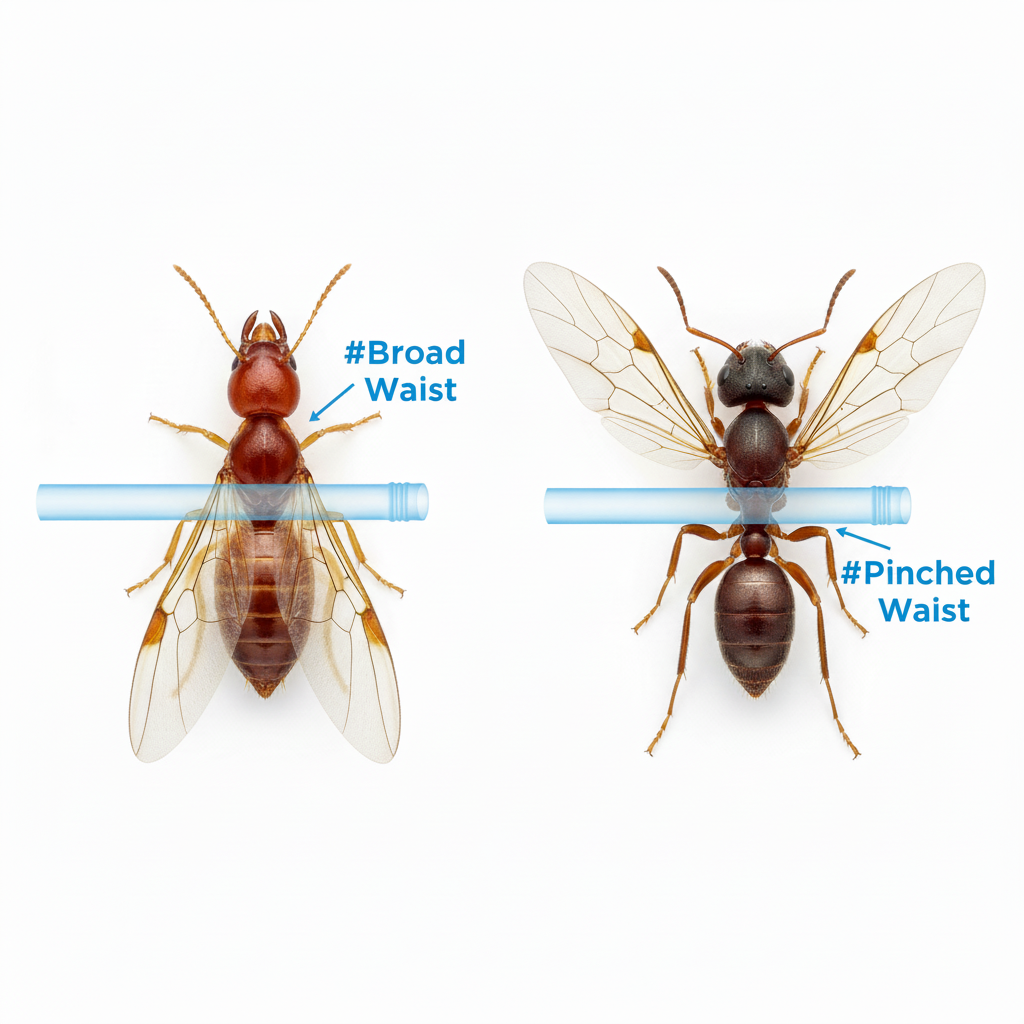
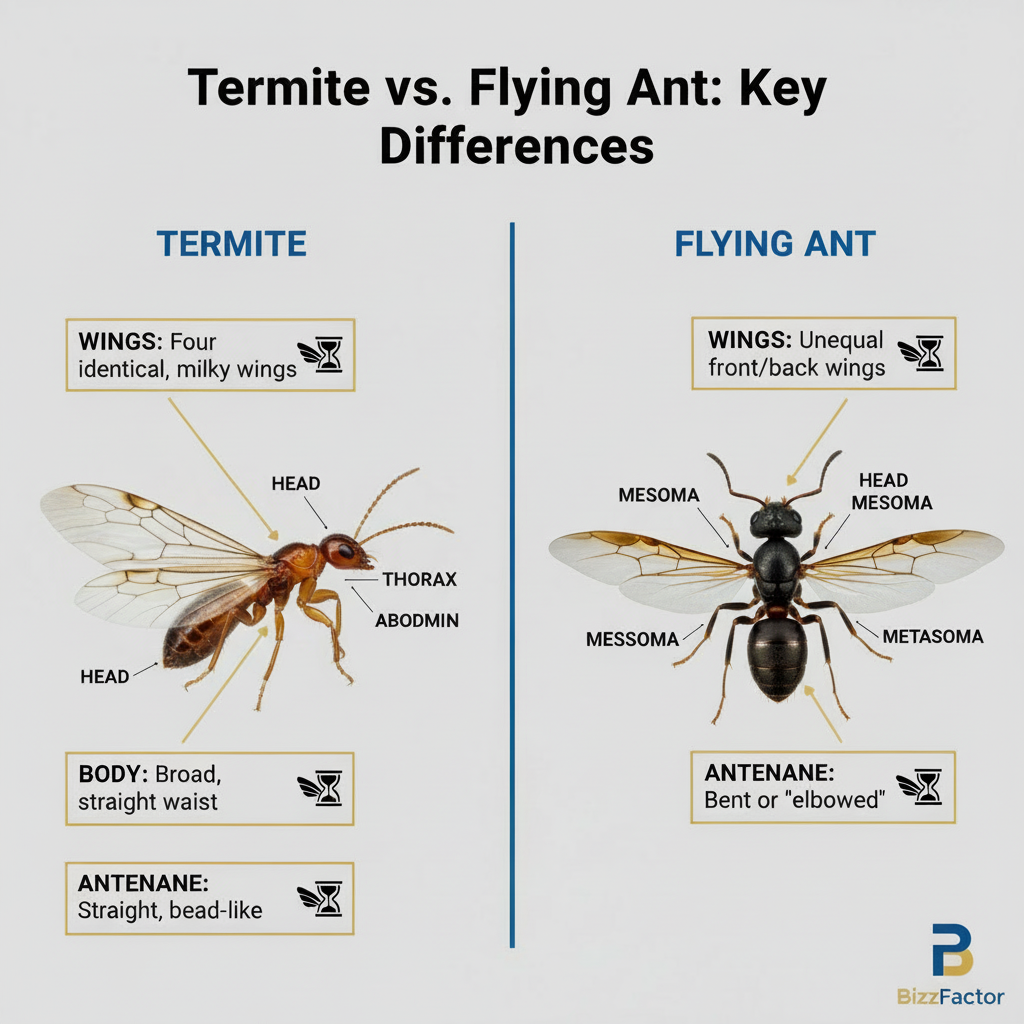
Wing shape and body structure tell the story. Termites have four identical wings that look like tiny glass panels. Flying ants? Their front wings are way bigger than their back wings. Plus, termites have thick, straight bodies while ants have that pinched "wasp waist."
Our certified team has inspected over 2,000 homes in the last five years. We've seen this confusion destroy budgets and wreck foundations—here's what 20+ years in the field taught us:
Wing Structure: The #1 Tell-Tale Sign
Termite wings are dead giveaways. All four wings measure exactly the same length, almost see-through with a milky white color. Flying ant wings? Completely different story.
Front pair stretches much longer than the back pair. Think of it like this—if termite wings are four identical playing cards, ant wings look like two credit cards attached to two business cards.
Body Shape: Thick vs Thin
We tell our clients to look for the "tube test." Could you slide the insect's body through a drinking straw? If yes, it's probably a termite. Their bodies stay the same width from head to tail.
Flying ants won't pass this test. They've got that classic hourglass figure—wide chest, narrow waist, wide rear end.
Antennae: Straight Lines vs Elbows
Simple enough—termite antennae look like tiny fishing lines, perfectly straight. Ant antennae bend at sharp angles, creating clear elbow joints.
How Do Termites and Flying Ants Behave Differently?

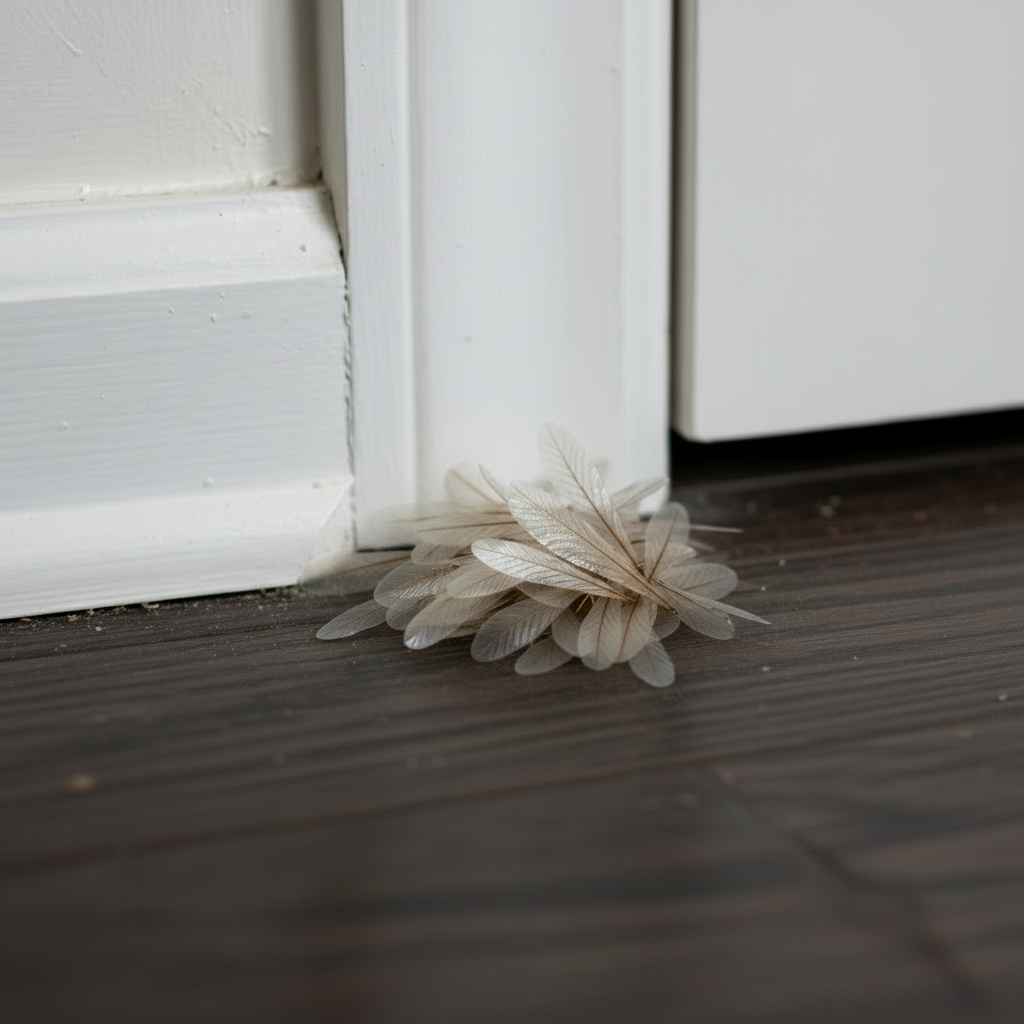
Behavior patterns reveal everything. Honestly? Termites are terrible fliers—they look drunk in the air, crashing into lights, windows, and walls constantly. Most shed their wings within hours of swarming.
Flying ants? They're aerial athletes with strong, purposeful flight patterns. They keep their wings for life and rarely drop them indoors.
We inspected a Plano home last spring where the owner found hundreds of wings near the back door. "Must be ants," he thought. Wrong. Those shed wings screamed "TERMITES!" Our team found a massive colony attacking his floor joists.
What Time of Year Do These Pests Swarm?
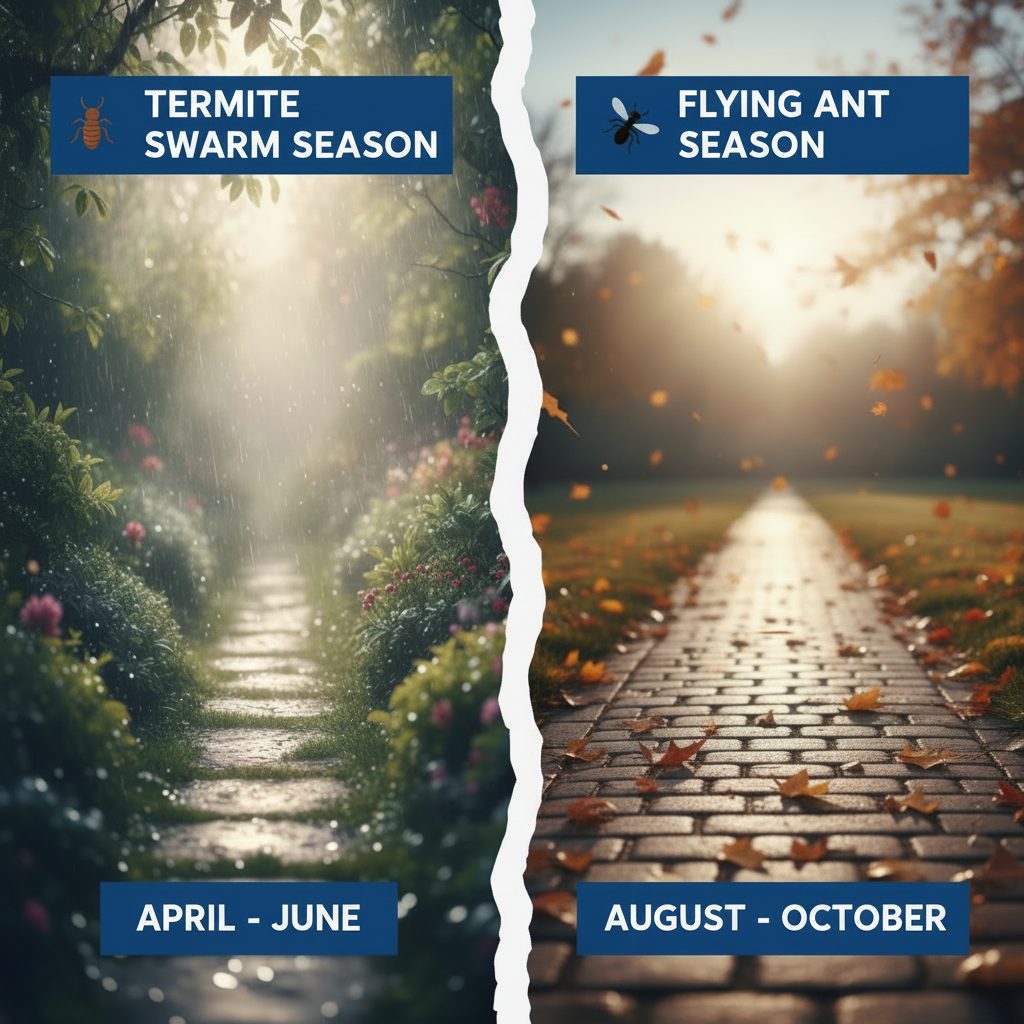
Timing tells the whole story. Termites love warm, muggy weather right after rain—peak season runs late spring through early summer. Some species swarm in fall, but spring's the danger zone.
Flying ants prefer cooler temps. Late summer and early fall are their prime time. They'll emerge after rain too, but don't need the humidity termites crave.
Real Case Study: The $18,000 Austin Disaster
Here's what happens when you guess wrong. Our licensed technicians got called to an Austin property last year—the homeowners spotted winged insects around their patio lights in March. "Just carpenter ants," they figured.
Six months later? We found Formosan termites had devoured their foundation sill plates. Damage was massive:
• Floor joist replacement: $8,500
• Foundation repairs: $6,200
• Structural reinforcement: $2,800
• Professional treatment: $1,200
Total cost: $18,700
The kicker? A $400 treatment in March would've stopped everything.
How Much Damage Can Termites Actually Cause?
Numbers don't lie. A mature termite colony houses 300,000 to 1 million hungry insects—they'll munch through 2-3 pounds of wood monthly. That's structural damage in just 3-6 months.
Flying ants? Mostly harmless. Carpenter ants hollow out galleries but don't eat wood. It's cosmetic damage, not structural collapse.
⚠️ Common Mistake That Costs Big
Ignoring swarmers outside your home is a massive blunder. Homeowners panic over indoor flyers but dismiss outdoor ones—don't make this mistake.
External swarms mean active colonies are already on your property, likely probing your foundation right now. We can't stress this enough—outdoor swarmers aren't a near-miss. They're a direct warning.
Our Pro Recommendation: ROCKWOOL Insulation
FEMA suggests borate-treated wood for termite prevention. That's decent chemical protection, but we recommend ROCKWOOL insulation instead. Why? Termites literally can't eat stone-based materials.
This stuff creates permanent dead zones in your walls. It's moisture-resistant, fire-proof, and mold-resistant. While treated wood offers one defense layer, ROCKWOOL builds an impenetrable fortress.
What Most Guides Won't Tell You
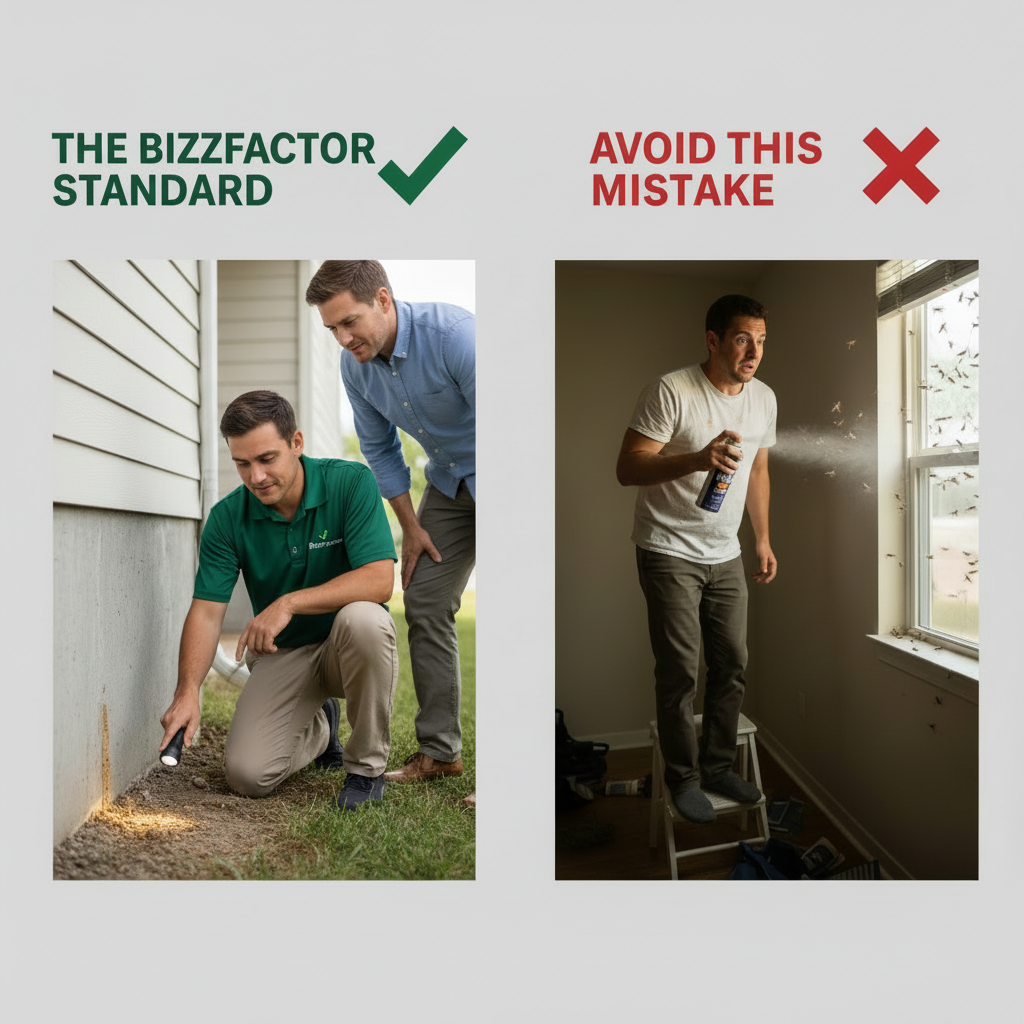
Your first instinct is swatting these insects. Don't do it. Crushed bugs are impossible to identify—even for certified pros like us.
Instead, collect intact specimens in sealed containers. Perfect samples guarantee accurate diagnosis, and this simple step could save you thousands.
What Should You Do When You Find Winged Insects?
Spot winged insects? Here's your emergency protocol:
1. **Collect specimens immediately** - Use jars or plastic bags
2. **Document everything** - Location, timing, weather conditions
3. **Take macro photos** - Focus on wings and body structure
4. **Call licensed professionals** - Within 24-48 hours maximum
5. **Don't spray anything** - Chemicals destroy identification markers
Our team responds to emergency calls within same-day. We use professional magnification equipment and species-specific ID keys for definitive answers.
How Much Does Professional Assessment Cost?
Professional identification runs $150-300. Sounds expensive? Consider this—our certified inspectors prevent thousands in unnecessary treatments or missed infestations.
Many homeowners try DIY identification using online photos. This approach fails constantly (we've seen too many expensive mistakes from amateur diagnosis).
Prevention Strategies That Actually Work
Moisture control beats everything else. Here's what our 20+ years of experience taught us:
• **Fix plumbing leaks instantly** - Even tiny drips attract termites
• **Improve ventilation** - Crawl spaces and basements need airflow
• **Remove wood-soil contact** - Maintain 6-inch clearance minimum
• **Schedule annual inspections** - $150-200 prevents $15,000+ disasters
According to the International Residential Code, these steps are mandatory in high-risk areas. Our background-checked technicians follow these protocols religiously.
Are There Legal Requirements for Treatment?
California's Title 24 Code mandates specific termite treatment protocols. Licensed operators must document everything for permanent property records.
International Building Code requires immediate treatment when active infestations are discovered—our certified team handles all compliance paperwork automatically.
What's the Bottom Line?
Don't gamble with insect identification. We've seen too many $15,000+ disasters from simple mistakes. Our expert team offers same-day identification with 100% accuracy guarantee.
Remember—termites have identical wings and straight bodies. Flying ants have unequal wings and pinched waists. When in doubt, call the pros. Your wallet will thank you.
In-Depth Look
Detailed illustration of key concepts
Visual Guide
Infographic illustration for this topic
Side-by-Side Comparison
Visual comparison of options and alternatives
Sources & References
- What's the importance of regular pest control services for ... - Quora
- [PDF] An offer you can't pass up. So snow won't slow you down.
- [PDF] World Wildlife Crime Report - Unodc
- Building Codes, Standards, Regulations: FAQs
- [PDF] CHAPTER 10 BUILDING-RELATED CODES - City of San Antonio
- Building Codes and Standards - 101 Guide | ROCKWOOL Blog
- [PDF] Building Codes Toolkit for Homeowners and Occupants - FEMA
- Codes & Ordinances - City of San Antonio
Need Professional Help?
Find top-rated home services experts in your area