
Discover 3 common house painting myths that limit your design options. Learn why dark colors, colored ceilings, and black walls can work beautifully.
Key Takeaways
- Dark paint colors enhance depth rather than shrink rooms when professionally applied
- Colored ceilings create dramatic custom effects that surpass traditional white limitations
- Black accent walls provide sophisticated backdrops when executed with proper techniques
BizzFactor Quick Guide
The BizzFactor Standard: Always use licensed painters who provide color consultation and sample applications before full project commitment
Key Takeaways
The BizzFactor Standard
3 Non-Negotiable Requirements for Elite Workmanship
Licensed & Insured with Color Expertise
Professional painters carry proper licensing, insurance, and provide expert color consultation to prevent costly design mistakes.
Premium Paint & Primer Systems
Elite painters use high-quality products like BEHR PRO or Benjamin Moore to ensure rich, even coverage regardless of color choice.
Sample Applications & Visualization
Top contractors provide test patches and digital tools to help clients confidently choose bold colors before full application.
Debunking 3 Critical House Painting Myths to Avoid Project Ruin — Expert Guide 2025
Ever stare at a paint swatch, heart pounding, convinced that bold color will swallow your room whole?
You're not alone.
Look — look — lots of homeowners still cling to outdated painting beliefs. These old notions can really cramp your style — limiting your creative freedom and often leading to genuinely disappointing results. That's the real issue. Think dark colors 'shrinking rooms,' mandatory white ceilings, or the outright avoidance of black walls. These persistent myths? They're roadblocks. They stop you from getting the dream interiors you deserve.
So let's clear this up. We're going to demolish these myths — show you what actually works, backed by real projects and contractor experience — so you can make confident decisions on your next paint job. Maybe even nail that BizzFactor Standard finish everyone talks about.
Seriously, it's easier than you think.
Myth #1: Dark Paint Colors Always Make Rooms Look Smaller
This one's a real Goliath in interior design. It's led to countless beige-and-white palettes when vibrant energy was just waiting to burst out.
Here's what nobody tells you: dark paint doesn't shrink a room any more than a black T-shirt adds 10 pounds. You know what actually matters? Natural light. Room proportions. Where you put that color. A friend of mine in Lakewood painted her 10x12 bedroom Sherwin-Williams Tricorn Black — walls, not just an accent — and the space feels twice the size it did when it was builder beige.
Sounds backwards, I know.
But dark colors, when you place them right, create depth you can't get with pastels. They pull the walls back. Make the room feel more expansive and dramatic, or intimately cozy, depending on your design goals.
It's all about how you use them.
This "dark makes small" myth often comes from poorly executed projects. I've seen it myself in North Dallas — a homeowner back in '19 had painted their entire living room a deep navy, but used a matte finish and had zero accent lighting. The result was, well, kinda gloomy and cramped. But here's the thing: The problem wasn't the dark color. It was the *application*. Bad painting makes good colors look bad every single time.
A skilled painter understands light physics. They know navy walls work best with satin sheen in north-facing rooms (bounces more light). They'd spec charcoal grays in spaces with big windows, rich greens where you've got warm afternoon sun. That's the real issue. It's not rocket science, but it ain't slapping paint on drywall either. You're working with how light hits surfaces, how the human eye processes receding tones. For more details, explore our guide on [how paint color affects room perception](/blog/how-paint-color-affects-room-perception).
Look — in my experience, most homeowners are genuinely surprised by what dark colors can achieve. We recently toured a 1,200 square foot condo in Uptown Dallas. The client had painted their living room in BEHR's Cracked Pepper (a seriously deep charcoal). Instead of feeling tight, the space appeared much larger.
How?
The dark walls receded, creating an illusion of infinite depth. The secret sauce? Maintaining bright white trim and making sure there was adequate, layered lighting throughout the room.
That's the real killer combo.
When you're tackling dark colors, elite painters don't cut corners. They ensure proper primer coverage. They use high-quality, deeply pigmented paints—think BEHR PRO or Benjamin Moore Advance—to get that rich, even coverage without any streaking. You want that smooth, luxurious finish. For more on selecting the right colors for your space, see our guide on [choosing interior paint colors wisely](/blog/choosing-interior-paint-colors-wisely).
The Science Behind Dark Colors and Space Perception
White walls bounce light around. They push surfaces forward in your field of vision, making boundaries feel closer than they're.
Dark colors? Complete opposite. They swallow light — in a good way. Your eye can't pin down exactly where the wall ends, so your brain reads it as deeper space. Same principle as looking up at a night sky. Feels infinite, right? That's what a well-executed dark wall does.
This works best in rooms with decent natural light. The contrast between incoming brightness and that deep wall color? Chef's kiss. Or you can fake it with layered artificial lighting — uplights, picture lights, strategically placed lamps.
A matte finish amplifies this. No glare, no visual interruption. Just pure, receding color. But (and this is critical) only if the application is flawless. Any streaking, any thin spots, any visible brush marks — they destroy the illusion instantly. That's where most DIY jobs fall apart.
Good painters earn their money here. They're not just covering drywall — they're controlling how your brain processes space. Two coats of Benjamin Moore Regal Select in Hale Navy, properly primed, cut perfectly at the corners? That's architecture. That's why you're paying someone $2,400 for a living room instead of buying six gallons and wrecking your weekend.
Worth every penny.
Myth #2: Ceilings Must Always Be Painted White for Brightness
Ceiling color restrictions?
Please.
That's an outdated design rule. It keeps homeowners from achieving truly custom, sophisticated looks. Professional painters? They're regularly using colored ceilings now, and it's transformative. They create dramatic effects, subtly define spaces, and enhance room proportions. And yes, it's all about doing it right. A colored ceiling can be your "fifth wall," pulling together all the elements of a room and creating a cohesive, polished aesthetic.
The whole white-ceiling obsession probably dates back to when getting up there required scaffolding, a Chiropractic appointment, and half your weekend. Back then, you painted it white once and prayed you'd never have to do it again. These days? We've got 16-foot extension poles. Airless sprayers. My buddy runs a crew in Fort Worth — they knocked out a 2,400 square foot ceiling in Benjamin Moore Silver Satin in about four hours, including prep. The homeowner cried (happy tears, I'm pretty sure). Modern equipment has changed everything. This opens up a world of creative color choices that actually complement your overall design scheme. Discover more about [modern painting techniques](/blog/modern-painting-techniques) that can transform your home.
I was talking to a painter in Southlake last month — guy's been doing this for 18 years. He told me his favorite reveal is always the ceiling. Homeowners walk in expecting disaster, and instead they see their bedroom in this soft pewter that makes the whole space feel like a boutique hotel. Or dining rooms with a warm taupe ceiling that picks up the undertones from the hardwood floors below.
The trick? Usually pick something 2-3 shades lighter than your walls. Keeps things balanced. Or flip the script entirely — go bold with a high-contrast ceiling if you're feeling brave.
For further inspiration and ideas, check out our article on [creative ceiling paint ideas to transform your home](/blog/creative-ceiling-paint_ideas).
Real pros use ceiling-specific paints. Always flat finish — hides texture inconsistencies, kills glare from overhead lights. Then they'll spend forever on the cut-in work, getting those edges between ceiling and wall laser-sharp. Seriously. You want people squinting at your corners wondering if you used tape or if your painter's just got surgeon hands.
That's the difference between "we painted our ceiling" and "holy crap, who did your ceiling?"
This ensures a flawless transition. It's the kind of finish that makes a room feel finished, not just painted.
Elevating Your Interiors with the 'Fifth Wall' Concept
Most people ignore their ceiling. Just slap white up there and call it done.
Interior designers in Austin have been calling it the "fifth wall" for years now. And they're onto something — it's probably 20% of your visual field when you're in a room. Treating it like an afterthought is like buying a nice car and never washing the roof.
White ceilings reflect light, sure. They feel open. But they can also feel like... nothing. Like you ran out of steam (or budget) before you made it to the top.
Bring color into that space and suddenly the whole room shifts. A dining room with terracotta walls and a slightly lighter peachy ceiling? That's not a room anymore, that's a vibe. An experience. Or a kid's playroom — yellow walls, sky blue ceiling — and boom, you've transported them somewhere.
A really skilled painter makes those transitions seamless. The line where wall meets ceiling isn't just clean, it's architectural. They're not slapping paint around, they're building atmosphere.
You're paying for someone who understands that your ceiling affects how you feel in a space every single day. Don't waste that real estate.
This is where subtle genius lives.
Myth #3: Black Walls Are Too Bold or Impractical for Residential Use
Black paint scares people.
I get it. But here's what most folks don't realize: black walls, done right, become the most sophisticated element in a room. They make artwork explode off the surface. They highlight crown molding, built-ins, architectural details that disappear against builder white. And yeah, they create intimacy and drama — especially when you've got the lighting dialed in.
This misconception sticks around because people have seen bad black paint jobs. I once toured a house in Plano where the homeowner tried a black accent wall — looked like a streaky chalkboard someone had half-erased. Uneven coverage, visible roller marks, the whole disaster. *Quality* black paint demands specific application techniques. It needs premium products to achieve that smooth, rich, uniform finish that defines The BizzFactor Standard. Learn more about [achieving a professional paint finish](/blog/achieving-professional-paint-finish) with dark colors.
**Case Study: The Black Beauty of Houston Heights**
We recently consulted on a master bedroom renovation in Houston Heights — total cost was around $3,200 for the full room. A truly professional painting corporation had perfectly executed a black accent wall *behind the headboard* using Benjamin Moore's Black Beauty.
The result?
Absolutely breathtaking. The wall didn't just add depth; it created immense depth. It made the crisp white bedding and the metallic light fixtures appear more vibrant, more luxurious.
It was a masterclass in elegant drama.
Professional painters—the ones who really know their stuff—understand that a flawless black wall needs a few things:
- **High-quality, tinted primer:** This isn't optional. It's specifically designed for dark colors. We recommend something like Benjamin Moore's Fresh Start High-Hiding All-Purpose Primer, tinted to a dark gray, for optimal results. This ensures even absorption and a consistent base coat. Without it, you're asking for trouble.
- **Premium paint:** Look for excellent coverage properties and deep pigmentation. For black, a high-quality acrylic latex, like Sherwin-Williams Emerald Interior Acrylic Latex or Behr Marquee, offers superior hide and durability. This means fewer coats, richer color, and a truly professional look.
- **Strategic lighting placement:** You need both natural and artificial light. This stops the space from feeling like a cave. It also highlights the wall's texture and any decor against it. Think about it: a spotlight on a piece of art against a black wall? Incredible.
- **Careful consideration of the wall's location:** Ideally, choose walls that get decent natural or artificial light. This maximizes impact and prevents the room from feeling closed in. Learn more about [choosing paint for high-traffic areas](/blog/choosing-paint-for-high-traffic-areas) and how paint finishes affect durability.
The Versatile Elegance of Black: From Accent to Total Immersion
Black is mor
In-Depth Look
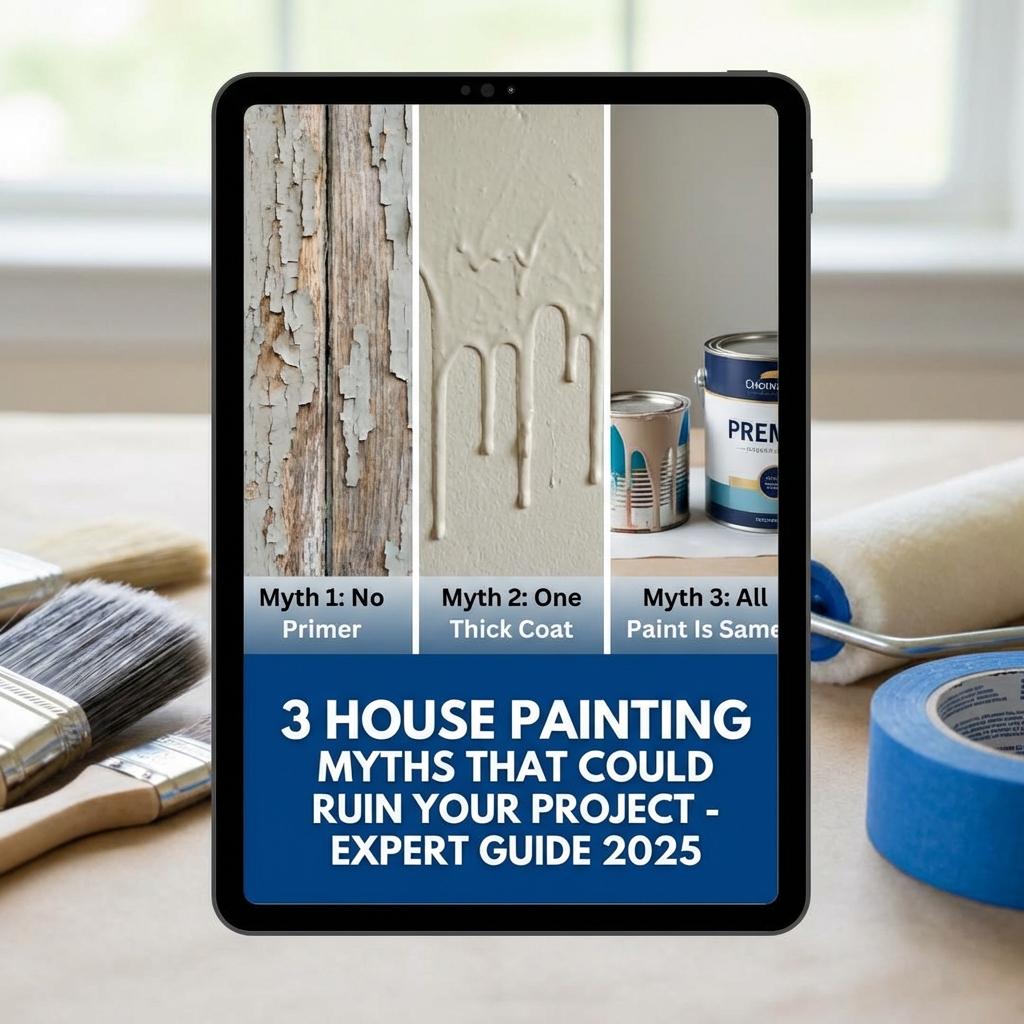
Detailed illustration of key concepts
Visual Guide
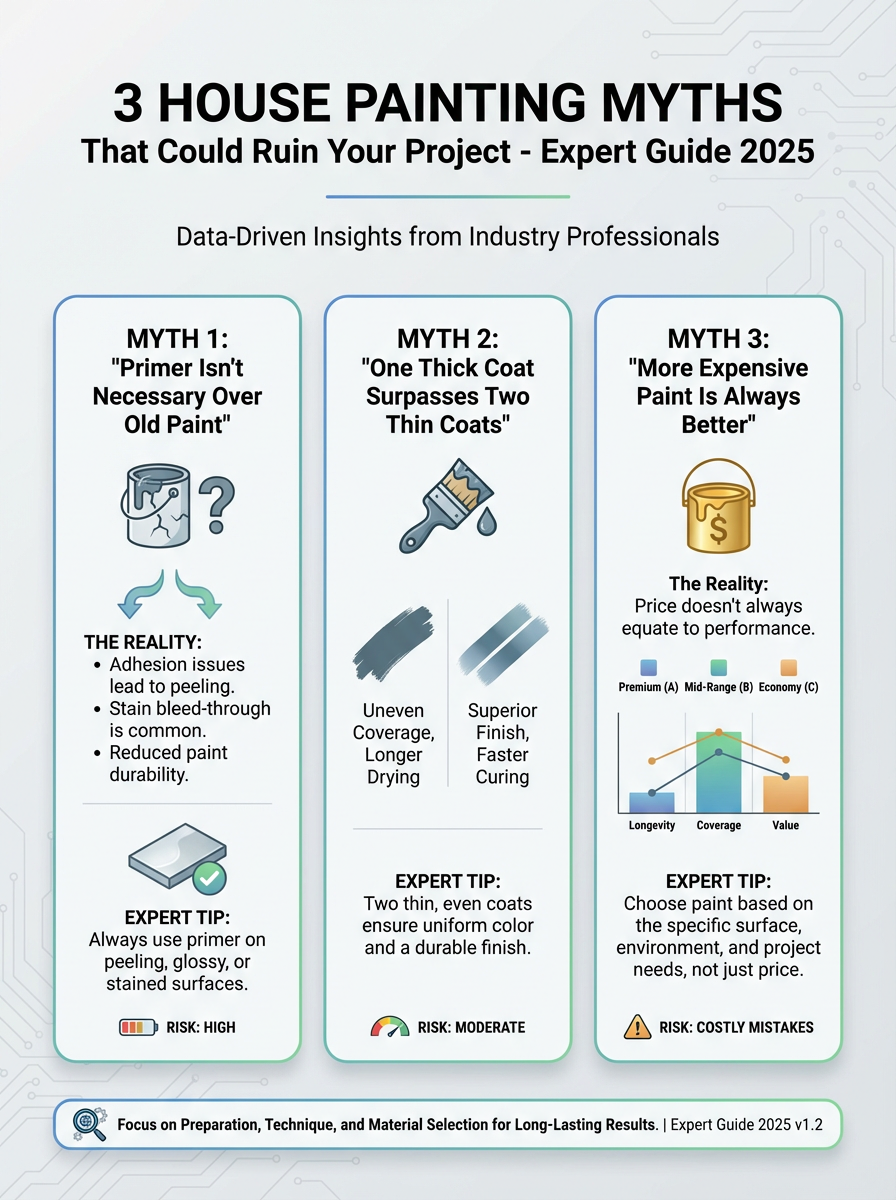
Infographic illustration for this topic
Sources & References
- 7 Common Myths About House Painting Contractors Near Me
- Painting Myths Debunked: What to Know Before Your Next Project
- 4 Things to Consider Before Painting a Room Yourself - Realtor.com
- The Secrets of Pro Painters: Mastering Interior Painting Techniques
- Best Interior & Exterior Paint Buying Guide - Consumer Reports
- Best Paint for Commercial Buildings - Miko LLC
- Building Codes, Standards, and Regulations: Frequently Asked ...
- Choosing the Right Exterior Paint for Commercial Buildings
Frequently Asked Questions
Need Professional Help?
Find top-rated house painters experts in your area