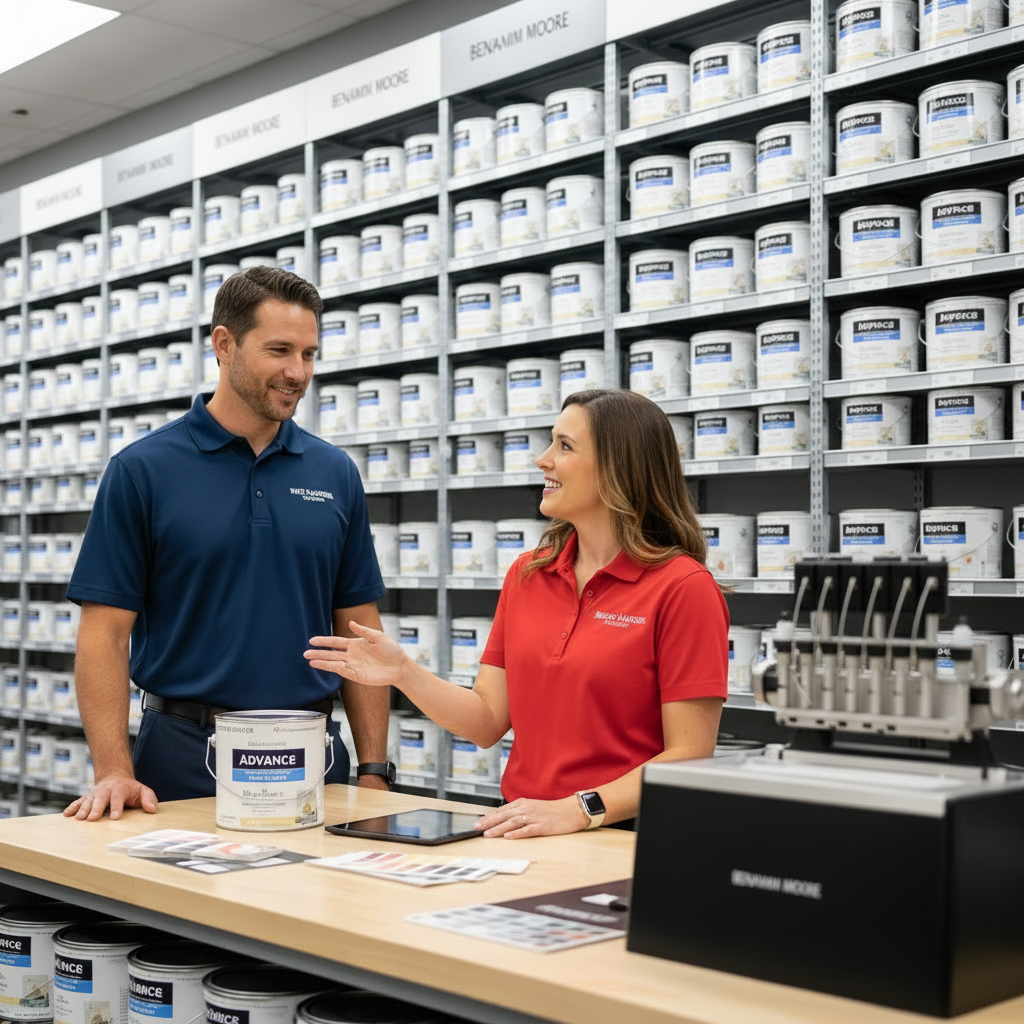
Discover where professional painters buy paint. Learn about top suppliers like Sherwin-Williams, Benjamin Moore, and strategic use of big-box stores and online retailers.
Key Takeaways
- **Staff Who Actually Know Things:** A lot of these folks are certified. They'll look at your project photos and recommend a specific bonding primer for that weird glossy paneling from the '70s. That's a $400 mistake you just avoided, plus half a day of labor.
- **Lines You Can't Get Elsewhere:** Contractor-exclusive formulations. Higher solids content (the actual stuff that stays on the wall). Better coverage, more durable, sprays smoother.
- **Color Matching That Works:** Spectrophotometers that can match a chip the size of your thumbnail. Good luck getting that accuracy at Lowe's.
- **They'll Deliver:** On a 4,000-square-foot house, having 50 gallons show up at the job site instead of making three trips? Worth the account relationship right there.
Key Takeaways
Where Do Professional Painters Buy Paint? An Insider's Guide to Top Suppliers
A contractor in Alpharetta just spent $3,200 repainting a kitchen because the first guy bought paint from the wrong place. Six months. That's how long the original job lasted before the cabinets started looking like they'd been attacked with a cheese grater.
Here's what most people don't get — it's not just *where* you buy paint. It's knowing which product lines to ask for, which rep actually knows their chemistry, and when a big-box store is perfectly fine versus when you need the specialty counter. For BizzFactor's network of painters (guys who've been doing this 15-20 years), it usually means hitting three different sources depending on the job. Sometimes that's Sherwin-Williams. Sometimes it's Home Depot at 6 AM. And yeah, sometimes it's ordering obscure stains online because nobody stocks them locally.
Professional Paint Supply Stores: The Foundation of Quality
Dedicated paint stores — that's where I go for anything I actually care about. The person behind the counter has seen every weird substrate problem you can imagine. Twice.
Real talk — Sherwin-Williams and Benjamin Moore aren't retail stores in the normal sense. You can walk in with photos of some glossy 1960s tile in a bathroom and they'll tell you exactly which primer to use. The big-box "paint expert" who started two weeks ago? Not so much.
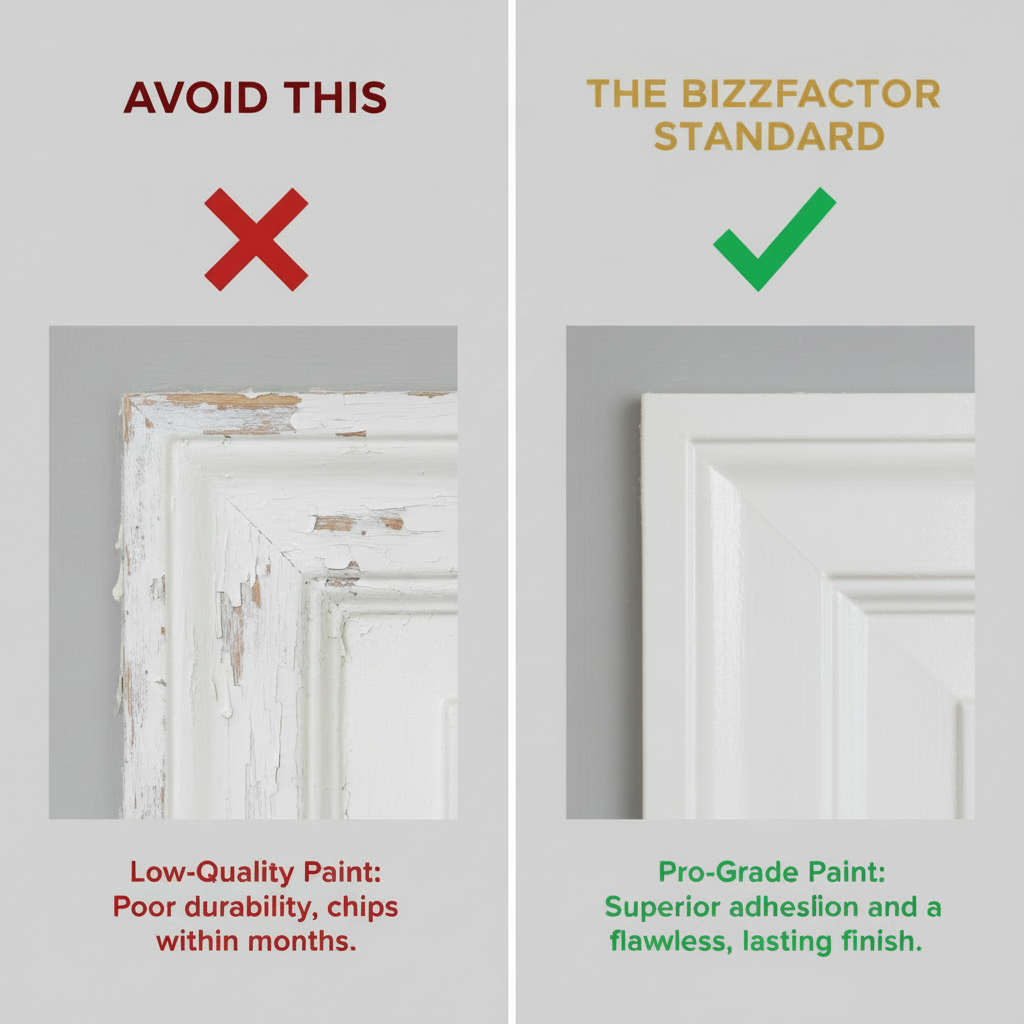
And you can't get the contractor lines anywhere else. ProClassic. Advance. Duration. These aren't the same formulations sitting on Home Depot shelves — they're engineered for people who paint 40+ hours a week. Last spring in Vinings, we dealt with a homeowner whose previous painter (probably some Craigslist guy) used cheap trim paint from a big-box. Chipping within six months. We stripped everything, prepped it properly, rolled Benjamin Moore Advance from our Piedmont Road supplier. Three years later? Still perfect.
That's not luck.
What You Actually Get at Pro Paint Stores:
Walking into these places is a different experience. Most homeowners have no idea this world exists:
- **Staff Who Actually Know Things:** A lot of these folks are certified. They'll look at your project photos and recommend a specific bonding primer for that weird glossy paneling from the '70s. That's a $400 mistake you just avoided, plus half a day of labor.
- **Lines You Can't Get Elsewhere:** Contractor-exclusive formulations. Higher solids content (the actual stuff that stays on the wall). Better coverage, more durable, sprays smoother.
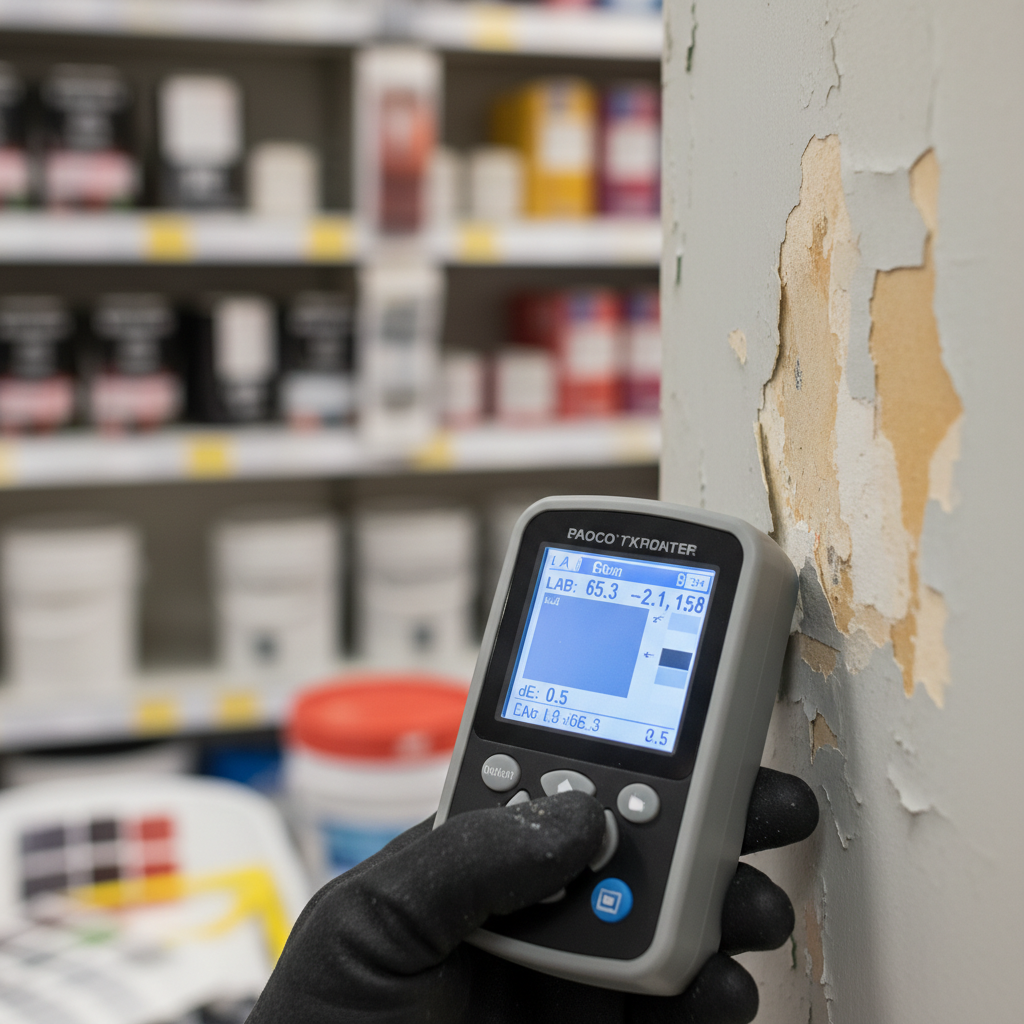
- **Color Matching That Works:** Spectrophotometers that can match a chip the size of your thumbnail. Good luck getting that accuracy at Lowe's.
- **They'll Deliver:** On a 4,000-square-foot house, having 50 gallons show up at the job site instead of making three trips? Worth the account relationship right there.
Home Improvement Centers: Strategic Convenience
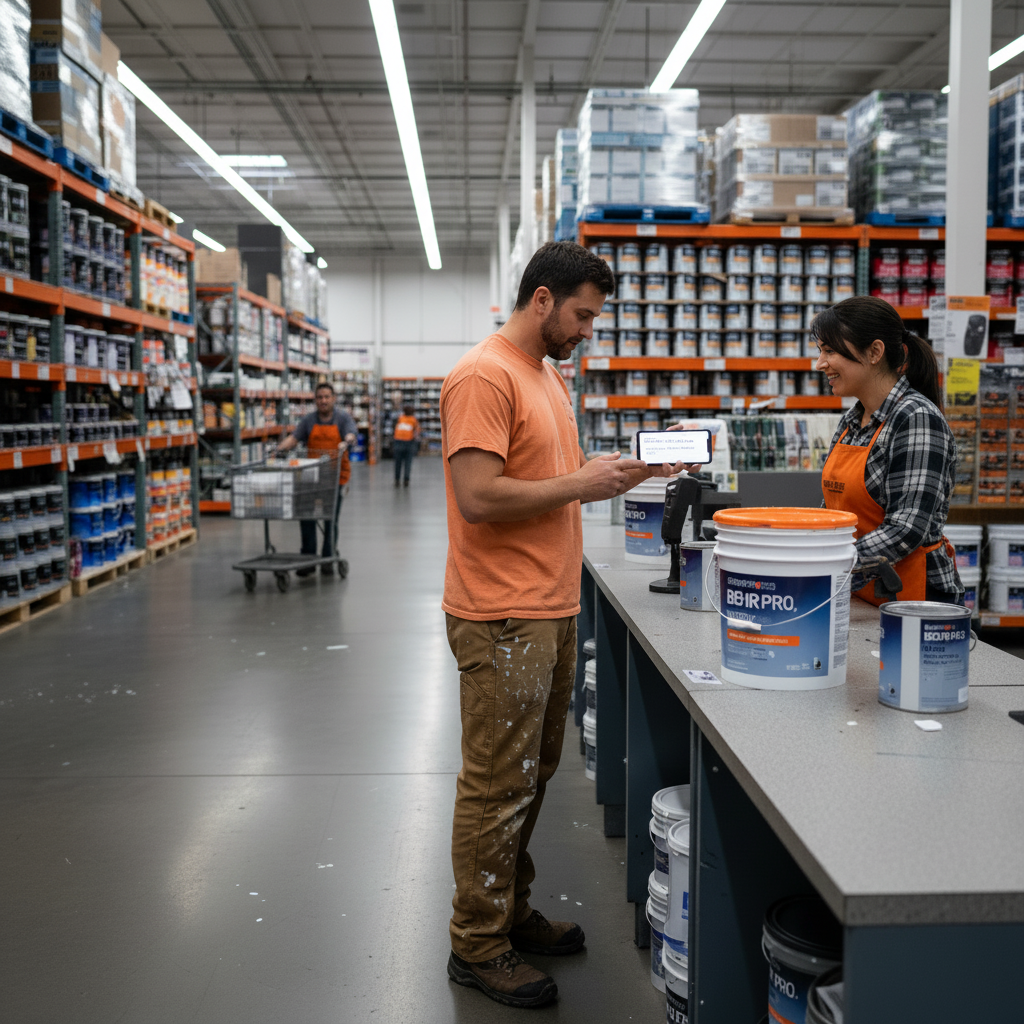
Let's be honest — a lot of pros trash-talk big-box stores. But they're not useless, you just need to know what you're doing.
Home Depot and Lowe's are perfect for one-stop shopping when you need paint, tape, brushes, and sandpaper at 7 AM on a Saturday. Their pro lines (BEHR PRO, Glidden Pro) have gotten way better over the past decade. They're not Aura, but for a rental property interior or a garage? Totally fine.
The trick is timing and who you talk to. We send guys during contractor hours (6-8 AM usually) when the paint desk isn't slammed. And never, ever ask the 19-year-old part-timer for advice. Find the department manager who's been there 10+ years. That person knows which products actually work.
For straightforward interior jobs — say, a 3-bedroom townhouse getting painted before sale — BEHR PREMIUM PLUS does the job. Grab that, grab your supplies, get to work. Efficiency matters.
Online Paint Retailers: The Modern Sourcing Solution

Five years ago, ordering paint online sounded insane. Now? It's how we source half our specialty products.
Sites like PPG Direct let you order contractor-grade paint and have it show up at your door in 3-5 days. This is perfect for planned projects where you're not scrambling last-minute. Specialty wood stains that nobody stocks locally? Order online. Specific color matches that your usual store doesn't carry? Online.
Look — we did a 50,000-square-foot office renovation in Sandy Springs last year. The sourcing strategy looked like this: PPG ProLuxe wood stain for the lobby feature wall (ordered online, $800 worth, arrived on schedule). BEHR PRO from Home Depot for the standard office walls (bought in bulk, negotiated a discount). Specialized concrete primer for problem areas from our Sherwin-Williams rep.
That hybrid approach? Saved the client about 15% on materials. Around $4,300 on a $28,000 material budget.
Regional Paint Distributors: Unearthing Local Expertise
Here's a secret — some of the best paint sources aren't national chains. They're regional distributors that nobody's heard of unless you're in the business.
These independent shops buy direct from manufacturers and sell to pros. Lower overhead than a retail store, better pricing than Sherwin-Williams, and insanely good technical knowledge. They've got to compete with the big guys somehow, so they compete on expertise and service.
We've got a distributor off Howell Mill Road that's been around since the '80s. The owner, Mike, knows more about how Atlanta's humidity affects exterior paint than anyone I've ever met. That's the real issue. He'll tell you exactly which formulations hold up in full sun exposure on south-facing brick. You won't get that at a chain store where the manager rotates every 18 months.
Plus, these shops are flexible. Need 30 gallons delivered tomorrow? They'll make it happen. Have a weird technical question at 4 PM on a Friday? They'll stay on the phone with you.
Finding a good local distributor is like finding a good mechanic. Once you have one, you never let go.
Manufacturer Direct Programs: Exclusive Access for Pros
You're painting professionally? Get into a manufacturer direct program. Seriously.
Sherwin-Williams Pro, Benjamin Moore's Contractor Program — they give licensed contractors better pricing, dedicated reps, and product lines that regular customers can't touch. It's not some secret handshake thing. You just need to qualify.
You'll need your contractor license, proof of insurance, business tax ID. Most programs want around $5,000 annually in purchases — which for any legit painting operation is like... two months. Not a high bar.
The perks go way beyond discounts, though. You get a dedicated rep who actually knows your name and your usual orders. Pricing that matters on big jobs (we're talking 20-30% off retail on some lines). Access to contractor-only products that legitimately perform better.
And it signals something. When a homeowner asks where we get our paint and we say "through our Benjamin Moore contractor account," that carries weight. It means we're not some guy with a truck and a ladder.
Discerning Paint Quality: Beyond the Price Tag
Paint isn't just paint. I don't care what the guy at the hardware store says.
Three things separate the good from the garbage.
**Solids content** — basically, what percentage of the paint doesn't evaporate after it dries. Builder-grade paint? Maybe 30% solids. Benjamin Moore Aura? Over 50%. That's not marketing fluff — it's literally more coverage and durability per gallon.
**Scrub resistance** gets measured by the ASTM D2486 test (how many times you can wipe it before the finish degrades). Crucial for kitchens, hallways, anywhere kids exist. Cheap paint might fail at 500 cycles. Good paint handles thousands.
**VOC levels** — Volatile Organic Compounds. The stuff that makes paint smell and messes with your air quality. We won't use anything above 50 g/L anymore. Our guys breathe this all day. Your family lives with it.
So yeah — Benjamin Moore Aura costs around $75-85 a gallon. Sometimes it covers in one coat. Actually one coat. Five years later? Still looks fresh. That $22-a-gallon builder-grade paint at the big-box? You'll be repainting in 18 months. Do the math.
The Indispensable Role of Quality Tools and Supplies
You can buy Benjamin Moore Aura all day long. If you're using a $3 roller from the bargain bin, you're going to get lint in your finish, streaky coverage, and a job that looks DIY. Don't do it.
Our trucks stock Purdy brushes and Wooster rollers. Not because we're brand snobs, but because they work. A Purdy brush that costs $18 will last 50+ jobs if you clean it properly. A $4 brush will shed bristles, hold less paint, and end up in the trash after three uses.
Here's the thing: here's the thing: we probably overstock supplies, but here's what's always in the truck: TSP cleaner (the real stuff, not that worthless "TSP substitute"). Sandpaper in probably too many grits — 80 for heavy stuff, 120 for general prep, 220 for finish work. DAP DryDex spackling compound because you can actually see when it's dry.
For primers, we're talking Zinsser BIN when you need to block stains (water damage, smoke, crayon art from the kids), and a bonding primer like STIX for anything glossy that normal paint won't stick to. Skip the primer and you're basically scheduling your redo for next year.
Brushes and rollers — Purdy XL series for trim (the angled ones), Wooster roller frames with both 9" and 18" covers depending on the job, extension poles that don't feel like they're about to snap. 3M blue tape only (seriously, off-brand tape bleeds). Canvas drop cloths instead of those stupid plastic tarps that just slide everywhere.
How Professional Painters Optimize Paint Costs
Here's the math nobody wants to do: cheap paint costs more.
A $25 gallon that requires three coats to cover? That's $75 in materials plus the extra labor. A $70 gallon of Sherwin-Williams Emerald that covers in two coats? That's $140 in materials but way less labor.
Here's the thing: and that's before we talk about longevity. The cheap paint starts looking rough in 12-18 months (especially in high-traffic areas or on trim). The premium paint? Five years minimum, often closer to ten.
Here's the thing: we maximize value through contractor accounts (volume discounts add up fast), timing purchases around manufacturer promotions (typically spring and fall), and being strategic about product selection. An accent wall in a dining room? That gets the good stuff. A basement storage room? BEHR PRO is fine.
Our manufacturer programs also offer rebates on big projects — typically 10-15% back when you hit certain volume thresholds. We pass those savings directly to clients. Transparency matters.
Making the Final Sourcing Decision
So where should *you* buy paint?
For professional results that last, a dedicated paint store wins almost every time. The expertise alone is worth the slightly higher cost.
Our network typically maintains relationships with 2-3 suppliers: a national brand (Sherwin-Williams or Benjamin Moore) for premium work, a regional distributor for competitive pricing on mid-grade products, and a big-box pro account for convenience and supplies.
This hybrid approach ensures we always have access to the right product at the right price.
In-Depth Look
Detailed illustration of key concepts
Visual Guide
Infographic illustration for this topic
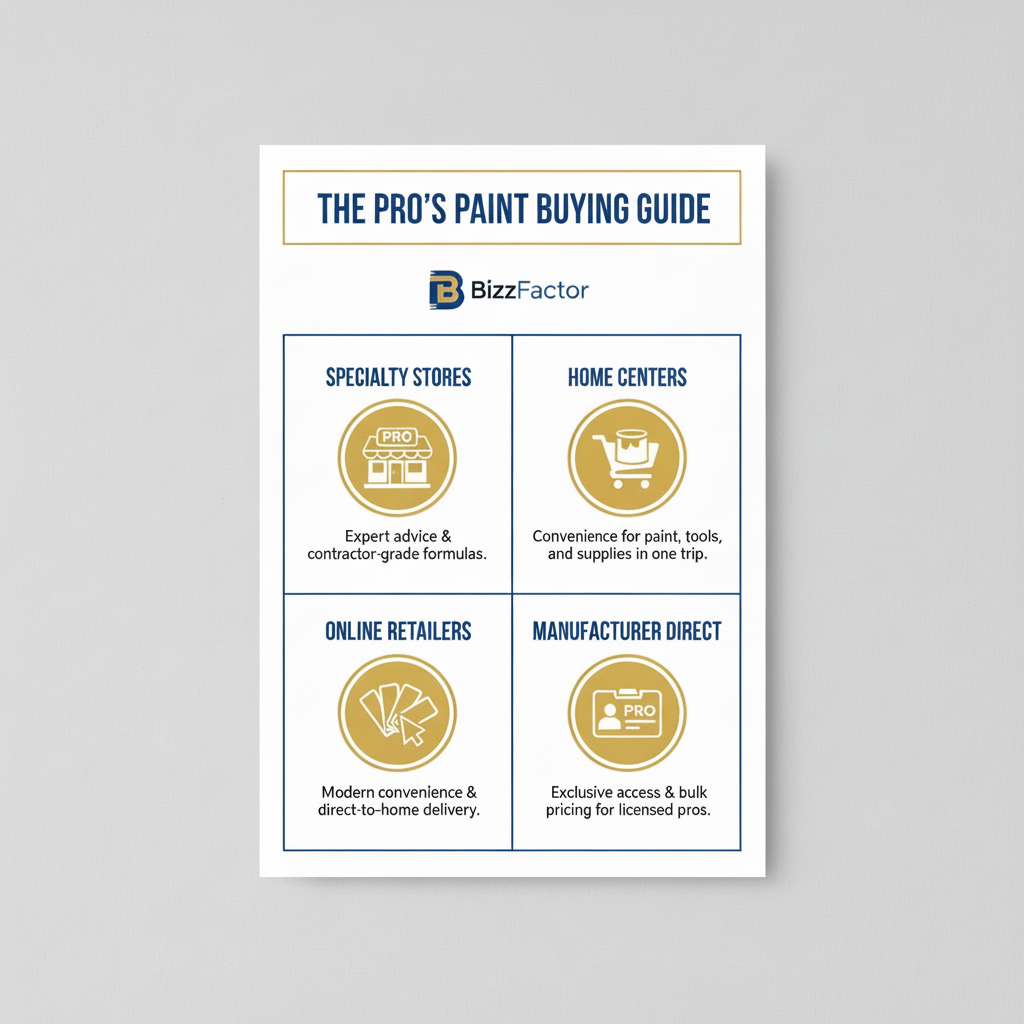
Side-by-Side Comparison
Visual comparison of options and alternatives
Sources & References
- Interior Painting Tips: Best Practices From an Expert - This Old House
- Products, Services, & More For Pro Painters - PPG Paints
- Interior Painting Tips: Best Practices From an Expert - Trade Medics
- 10 Tips to Paint Like a Pro - Fine Homebuilding
- Best Interior & Exterior Paint Buying Guide
- Best Paint for Commercial Buildings
- Best Industrial Painting Brands: A 2025 Comparison Guide
- Choosing the Right Exterior Paint for Commercial Buildings
- Explore Best Paint Brands in the US for Your Next Project
Frequently Asked Questions
Need Professional Help?
Find top-rated house painters experts in your area