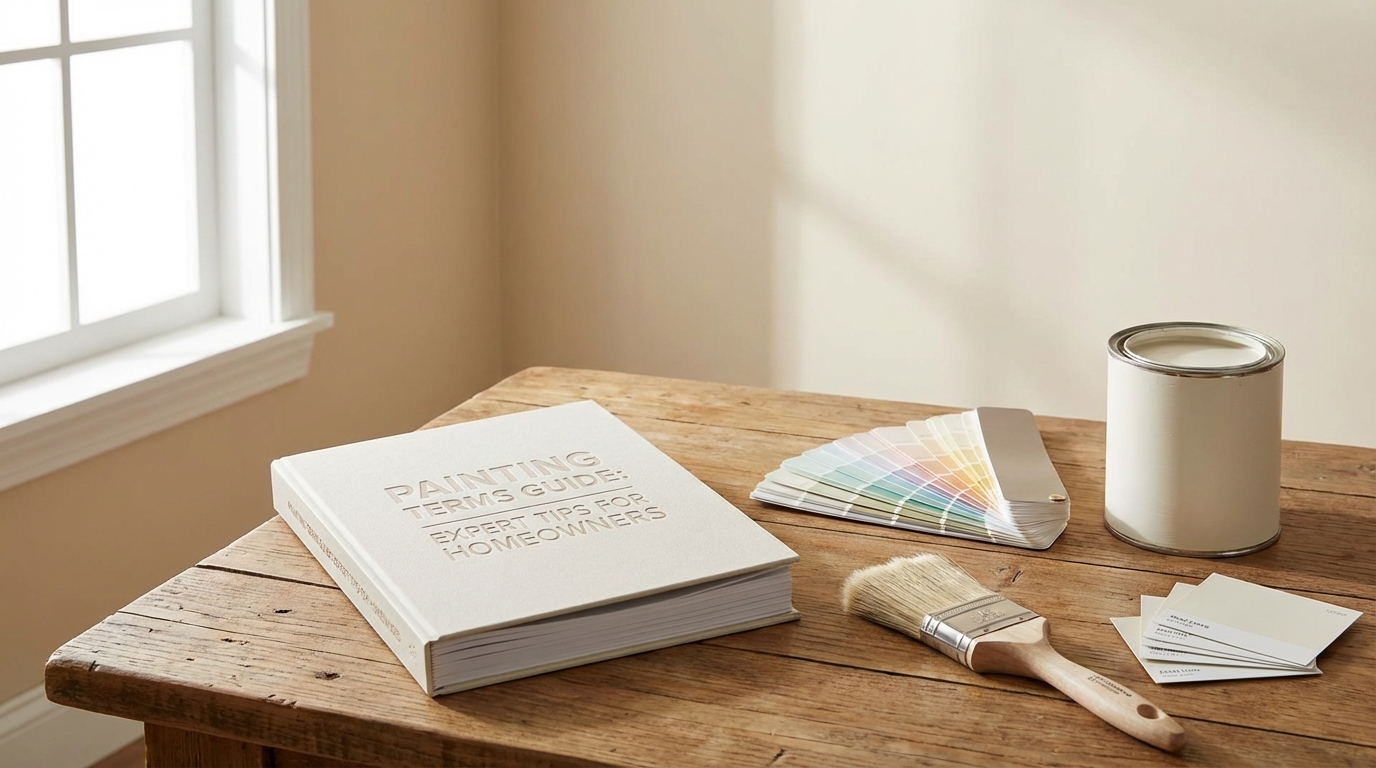
Master painting terms with expert tips from licensed professionals. Learn paint types, tools, and techniques for successful home projects.
Key Takeaways
- **Water-Based Paints (Latex/Acrylic):** So the main deal here is water makes up most of the formula. That's why cleanup takes like thirty seconds with a wet rag instead of hauling out special solvents. Touch-dry in maybe 2-4 hours, sometimes you're recoating by lunchtime. No weekend-killing wait times. And the flexibility? Premium stuff stretches up to 200% before it'll crack on you. Won't yellow over time either (thank god we're past the '80s beige-turned-mustard era). These cover probably 85% of what we do on interior walls and ceilings nowadays.
- **Oil-Based Paints (Alkyd):** Mineral spirits or alkyd resins replace the water component. You're waiting 6-8 hours minimum before you even touch it — full cure takes a week, easy. What you get for that patience is this rock-hard surface (they measure it with pencil hardness tests — 2H if you're curious) that handles abuse like nothing else. Used to be the only option for trim work. Now though? These new waterborne alkyds give you oil toughness with soap-and-water cleanup. Pretty wild.
- **Cleanup Ease:** This is a big one. Water-based paints practically vanish with simple soap and water. Oil-based paints, though? You'll be reaching for mineral spirits or paint thinner. That's a hassle difference right there. Plus, proper disposal of solvent-soaked rags is another consideration.
- **Durability and Application:** So yeah, oil-based paints still win on pure hardness — they take a beating better, especially on trim and cabinets where doors slam and hands grab constantly. That blocking problem (where painted surfaces stick together)? Oil paints handle it better. But here's where it gets interesting: water-based acrylics absolutely dominate for walls. They move with your house instead of cracking when temperatures shift. Colors stay true for years (oil yellows over time, we've all seen it). And those modern acrylic-alkyd hybrids I mentioned? They're basically giving you an oil-hard finish without the solvent headache. The lines are blurring fast.
- **Odor and VOCs (Volatile Organic Compounds):** Walk into a room we just painted with quality latex and you'll barely smell anything — we're talking under 50g/L of VOCs usually. Your kids can sleep there that night without you worrying. Traditional alkyds though? They'll hit you with 250g/L or more of fumes that hang around for days. You need windows open, fans running, sometimes we tell people to stay at their in-laws for the weekend. Not kidding. The smell difference alone converts most homeowners to water-based products.
Key Takeaways
Mastering Painting Terminology: A BizzFactor Guide for Homeowners and Savvy DIYers
Ever felt completely adrift in a sea of jargon when talking to a painter? Look, it's pretty common. Here at BizzFactor, we really get that clear, crisp communication is the absolute bedrock of any successful painting project. Frankly, knowing your stuff – a solid grasp of key paint terminology – empowers you. That's the real issue. It lets you chat confidently with pros, articulate your vision clearly, and make smarter choices for your home's look and its long-term resilience. This isn't just about paint, it's about investment. This guide brings you expert insights, grounded in decades of real-world application, to ensure you get the top-tier results you're after. No more guessing games. We're pulling back the curtain on what really matters.
Deciphering Paint Types: Water-Based (Latex/Acrylic) vs. Oil-Based (Alkyd) — Why It Matters More Than You Think
Look — look — let's cut to the chase: The foundational choice in paint almost always boils down to its base. Understanding the stark distinctions between water-based (often called [latex paint](/blog/latex-paint-vs-oil-paint) or acrylic) and oil-based (alkyd) paints isn't just academic. Seriously. Pick the wrong one and you'll see it in your wallet and your walls within six months. Your paint's lifespan, the finish quality, how much scrubbing it'll take before looking ratty — all of that hinges on this one decision upfront.
- **Water-Based Paints (Latex/Acrylic):** So the main deal here is water makes up most of the formula. That's why cleanup takes like thirty seconds with a wet rag instead of hauling out special solvents. Touch-dry in maybe 2-4 hours, sometimes you're recoating by lunchtime. No weekend-killing wait times. And the flexibility? Premium stuff stretches up to 200% before it'll crack on you. Won't yellow over time either (thank god we're past the '80s beige-turned-mustard era). These cover probably 85% of what we do on interior walls and ceilings nowadays.
- **Oil-Based Paints (Alkyd):** Mineral spirits or alkyd resins replace the water component. You're waiting 6-8 hours minimum before you even touch it — full cure takes a week, easy. What you get for that patience is this rock-hard surface (they measure it with pencil hardness tests — 2H if you're curious) that handles abuse like nothing else. Used to be the only option for trim work. Now though? These new waterborne alkyds give you oil toughness with soap-and-water cleanup. Pretty wild.
I've been doing this since 2003, and I can tell you the performance gap between these two categories has narrowed like crazy. But there are still places where one absolutely dominates the other:
- **Cleanup Ease:** This is a big one. Water-based paints practically vanish with simple soap and water. Oil-based paints, though? You'll be reaching for mineral spirits or paint thinner. That's a hassle difference right there. Plus, proper disposal of solvent-soaked rags is another consideration.
- **Durability and Application:** So yeah, oil-based paints still win on pure hardness — they take a beating better, especially on trim and cabinets where doors slam and hands grab constantly. That blocking problem (where painted surfaces stick together)? Oil paints handle it better. But here's where it gets interesting: water-based acrylics absolutely dominate for walls. They move with your house instead of cracking when temperatures shift. Colors stay true for years (oil yellows over time, we've all seen it). And those modern acrylic-alkyd hybrids I mentioned? They're basically giving you an oil-hard finish without the solvent headache. The lines are blurring fast.
- **Odor and VOCs (Volatile Organic Compounds):** Walk into a room we just painted with quality latex and you'll barely smell anything — we're talking under 50g/L of VOCs usually. Your kids can sleep there that night without you worrying. Traditional alkyds though? They'll hit you with 250g/L or more of fumes that hang around for days. You need windows open, fans running, sometimes we tell people to stay at their in-laws for the weekend. Not kidding. The smell difference alone converts most homeowners to water-based products.
- **Cost Efficiency:** Money talks. Water-based paints typically present a 20-30% cost saving per gallon for product, and often offer reduced labor costs due to faster recoat times. This efficiency stems from needing fewer coats in some scenarios and quicker job completion overall. That adds up and definitely helps optimize your overall project budget.
Acrylic Latex Paint: The Modern, Versatile, and *Smart* Choice for Interiors That Counts
Nine times out of ten, when we're doing interior walls, we're using acrylic latex. No contest. It handles the scrubbing test (we're talking 500+ cycles in controlled testing), dries before you've finished cleaning your brushes, and the color stays put instead of yellowing out like oil paints from the '90s. Modern formulas bond at around 150 psi on properly prepped surfaces. The polymer technology's gotten scary good — it creates this flexible film (think of it like a skin) that expands and contracts with your walls instead of cracking.
- **BizzFactor Pro-Tip:** Had a family in the North End last year — two kids under five, light gray walls they wanted to keep pristine (yeah, good luck with that). We put down Sherwin-Williams ProClassic, which is this acrylic-alkyd hybrid that basically combines the best of both worlds. Six months later? Crayon marks wiped right off. No lingering paint smell after day one. The mom actually sent us cookies. Sometimes the fancy stuff's worth it.
- **Industry Standards:** Here's what you'll find if you dig into the warranties — BEHR Premium Plus backs their premium acrylics for 15 years. Sherwin-Williams does similar. Consumer Reports keeps ranking acrylic latex as their top pick for interior walls, and honestly I can't argue with them. The performance-to-price ratio beats everything else we've tested over the years. (Does that mean the cheaper stuff's garbage? Not necessarily, but you get what you pay for.)
Alkyd Paint: Unrivaled for Hard, Smooth Finishes – The Cabinet King
Here's the thing: alkyd paint's basically the evolved version of old-school oil-based formulas, and it does one thing better than anything else: self-levels as it cures. Brush marks and roller stipple just... melt away. You end up with this glassy finish maybe half a mil thick. Honestly pretty satisfying to watch if you're into that sort of thing.
We save alkyd for the spots where durability trumps everything else:
- **Kitchen Cabinets:** This is where alkyd truly shines. It provides a resilient, chip-resistant, and easily cleanable surface engineered to withstand daily abuse (often resisting impact better than acrylics). If you want results that last, this is it. Explore our [cabinet painting services](/services/cabinet-painting) for an in-depth look.
- **Front Doors:** For curb appeal and durability against the elements, alkyd offers unparalleled weather resistance and that luxurious, tough finish that makes a statement. Its excellent block resistance also prevents sticking.
- **Interior Trim Work:** Achieving those crisp, razor-sharp lines and that super-smooth finish essential for a truly high-end interior aesthetic? Alkyd is your secret weapon. It produces a hard, mar-resistant surface that holds up beautifully to everyday wear and tear.
Sure, alkyd paints involve longer dry times, and yes, they have a higher initial cost (often 10-20% more per gallon). But the results – a truly professional, incredibly long-lasting finish on *specific* surfaces – undeniably justify every single penny of that investment. It's a strategic spend.
**⚠️ BizzFactor Pro Warning:** You need to be incredibly wary of any contractor claiming that water-based paint is "good enough" for *all* applications, especially kitchen cabinets. We've seen countless failed [cabinet painting](/services/cabinet-painting) projects in the Boston area where contractors skimped, neglecting to use appropriate alkyd or hybrid products. The outcome? Premature chipping, peeling, and a very unhappy homeowner. Don't fall for it.
The Non-Negotiable Imperative of Paint Primer – Your Project's Insurance Policy
Primer isn't optional.
Don't care what the can says. "Paint and primer in one" is marketing copy, not actual chemistry. When we do quality inspections on callback jobs, probably half the failures trace back to either no primer or the wrong primer. It's honestly that predictable.
Now, real talk — we got called out to a place in Cambridge last spring. Guy paid some contractor $5,000 for a full repaint. Six months later? Peeling everywhere. The contractor blamed the paint (naturally). We scraped a section and found the problem immediately: cheap latex primer over knotty pine. The tannins in that wood will bleed through water-based primer every single time. It's not rocket science, it's basic chemistry. You need shellac or oil-based for that substrate.
Here's the thing: for problem surfaces (and there are always problem surfaces), BizzFactor uses shellac-based primers like Zinsser B-I-N or quality oil-based bonding primers. Cost more? Yeah, sometimes double what basic latex runs. But they stick to anything — glossy cabinets, old oil paint, smoke-damaged ceilings — and they block stains that would bleed right through cheaper products. We've sealed everything from nicotine stains to pet odors with the right primer. Any painter who says you can skip this step or that a budget primer works on everything? They're setting you up for problems six months down the road.
Surface Preparation: The Unsung Hero – Why it's 80% of a Flawless Paint Job
Twenty-plus years in this trade, and I'll tell you something most DIYers miss: the actual paint application? That's maybe 20% of what makes a job look good five years later. That's the real issue. The Painting Contractors Association backs this up — proper prep represents roughly 80% of your final outcome. Not half. Eighty percent. Our licensed pros at BizzFactor get this in their bones. We've fixed enough rushed jobs to know that skipping prep steps doesn't save time — it creates callbacks, unhappy clients, and ultimately a reputation you can't fix.
Our rigorous surface preparation process isn't rushed. It's a multi-step routine:
1. **Thorough Cleaning:** This goes beyond a quick wipe. We use specialized degreasing agents (e.g., TSP-substitute for kitchens to tackle grease; often a 1:16 solution) and industrial-grade, general-purpose cleaners to ruthlessly eliminate every speck of dirt, grime (including oily fingerprints and cooking residue), and contaminant from other surfaces. Cleanliness is next to godliness in painting. A clean surface ensures proper adhesion of subsequent coatings. We sometimes even test surface cleanliness with a water break test.
2. **Filling Imperfections:** We don't just slop spackle on. Our experts meticulously repair holes (up to 3/4" for wood filler), hairline cracks (up to 1/8" for standard spackle), and gouges using the precisely appropriate patching materials. It's about invisibility. For major issues like large drywall
In-Depth Look
Detailed illustration of key concepts

Visual Guide
Infographic illustration for this topic

Sources & References
- Interior Painting Tips: Best Practices From an Expert - This Old House
- Painting 101: The Complete Guide On How To Paint A Room
- Painting for Beginners - A 7 Step Guide to Get You Started
- Best Interior & Exterior Paint Buying Guide - Consumer Reports
- Best Paint for Commercial Buildings - Miko LLC
- Best Industrial Painting Brands: A 2025 Comparison Guide
- Building Codes, Standards, and Regulations: Frequently Asked ...
Frequently Asked Questions
Need Professional Help?
Find top-rated house painters experts in your area