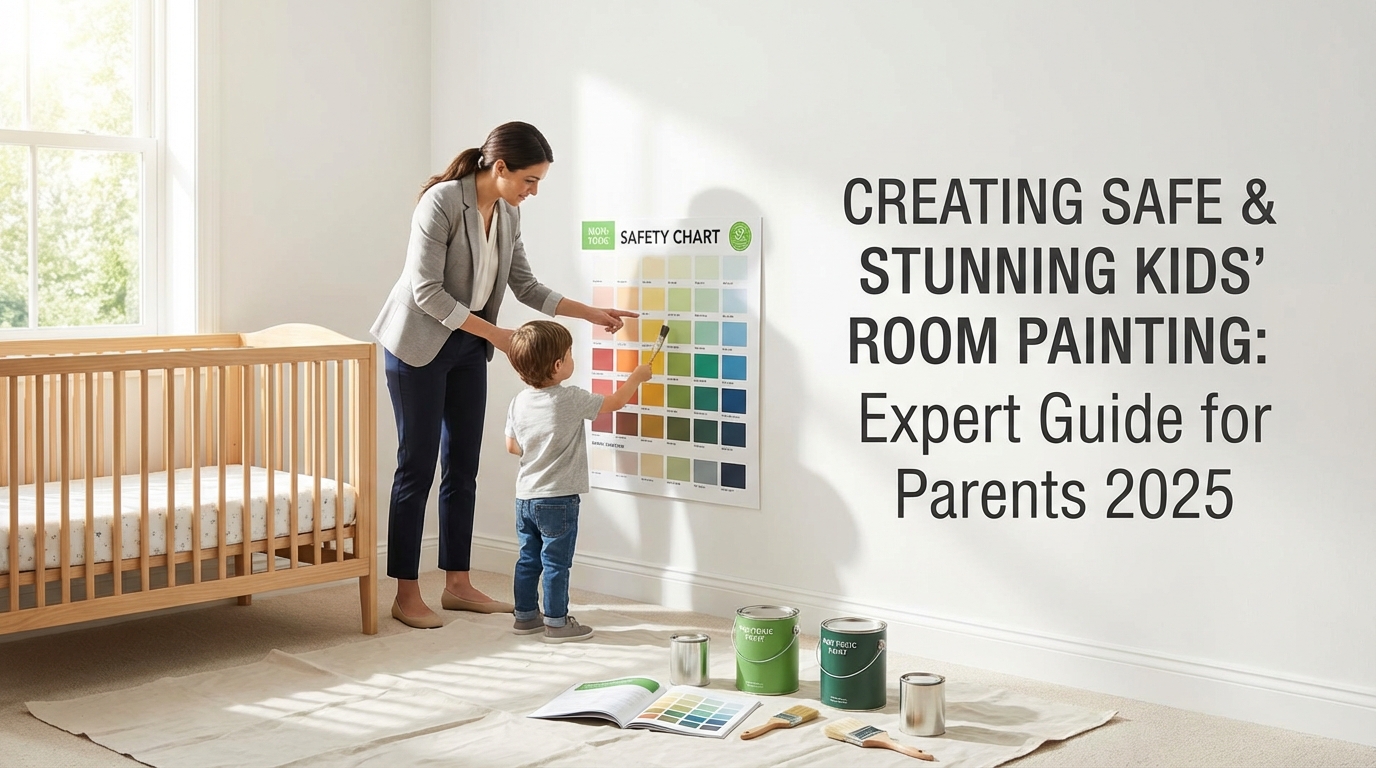
Expert guide to safe, beautiful kids' room painting. Learn color psychology, safety standards, and professional techniques for lasting results.
Key Takeaways
- Strategic color zoning creates functional spaces that support child development and daily activities
- Zero-VOC paint formulations ensure healthy indoor air quality for growing children
- Professional surface preparation and application techniques guarantee lasting, beautiful results
BizzFactor Quick Guide
The BizzFactor Standard: Always use zero-VOC paints with professional application for children's rooms
Key Takeaways
The BizzFactor Standard
3 Non-Negotiable Requirements for Elite Workmanship
Certified Zero-VOC Paint Only
Health-conscious formulations eliminate harmful emissions that can affect children's developing respiratory systems and overall well-being.
Professional Surface Preparation
Comprehensive wall assessment, repair, and priming ensures optimal adhesion, coverage, and long-term durability.
Color Psychology Consultation
Expert guidance on color selection based on child development research and room functionality requirements.
The Ultimate Safe & Stunning Kids' Room Painting Guide: Expert Insights for Parents in 2025
Painting your child's room? It's way more than just picking a color. You're creating a little world for them, a space that's not only vibrant and exciting but, most crucially, super safe. This guide from **BizzFactor Home Services** cuts through the noise and gives you the real deal. Your child's room is an investment in their happiness and health. Plain and simple. We're diving deep into everything: from choosing truly low-toxicity paint to understanding how color messes with developing brains. And don't worry, we'll make sure the job gets done right.
Our team crafts spaces where kids thrive. Spaces that look incredible. Spaces that can handle whatever wildness your kids throw their way.
And you know they will.
The Psychology of Color: More Than Just Pretty Hues (It's Actually Science)
Look — science doesn't mess around here. Colors do more to kids than we realize. Way more. I've watched a simple wall color change completely flip a seven-year-old's morning routine. Not exaggerating. We're all hardwired to react to color — that's millions of years of evolution talking, not some design trend.
Think about it for a second: your kid spends maybe 60% of their home time in that one room.
At BizzFactor, I've seen it play out hundreds of times. The right colors can completely flip a kid's behavior. Most parents just don't grasp the sheer power of this stuff.
Colors hit your brain faster than conscious thought. Before your kid even registers they're looking at their bedroom walls, their nervous system is already responding. That paint choice? It's baked into their entire day, influencing mood swings, energy crashes, even whether they fight you at bedtime. Every. Single. Day.
Here's what most people miss: warm colors like soft yellows or peachy tones act like little energy boosters. Perfect for play areas, don't you think? Cool blues and gentle greens? Those are for chilling out, focusing, finding that elusive calm. This isn't some abstract design theory. It's applied psychology.
And it works.
Understanding Color Temperature Effects: The Breakdown You Actually Need
- **Warm Colors (Reds, Oranges, Yellows)**: So these are basically visual caffeine. Great for getting kids moving, sparking creativity, encouraging interaction. I've used warm yellows in playrooms probably fifty times now — works like a charm for craft corners or anywhere you want energy. But here's the thing (and I mean this): too much warm color turns into sensory overload fast. A cheerful yellow accent wall? Perfect. Four walls of fire-truck red? You're basically asking for meltdowns. I've repainted three of those disasters in the last year alone.
- **Cool Colors (Blues, Greens, Purples)**: This is the chill-out crew. They bring calm, peace, better concentration. Ideal for bedrooms, reading nooks, study areas. Doesn't a light blue bedroom instantly calm things down? Greens connect us to nature, reduce eye strain, and genuinely promote focus.
Simple as that.
- **Neutral Tones (Beiges, Soft Grays, Whites)**: Don't you dare write these off! They offer incredible balance and versatility. They'll grow with your kid, which is huge over time. A soft gray room with colorful accents? Smart, adaptable, and it'll last for years.
It's the silent workhorse.
I've watched this play out in maybe 200 homes now. The pediatric developmental specialists I've worked with (including Dr. Sarah Chen at Children's Medical Center Dallas) consistently tell parents the same thing: those first seven years? Color exposure matters way more than most people realize. Your kid's room isn't just where they sleep. It's where their brain is literally wiring itself. For more on how precise design impacts well-being, explore our articles on [mastering interior aesthetics](/blog/mastering-interior-aesthetics).
⚠️ Don't Fall for the "Low-VOC" Trap!
This is where things get truly sketchy. In 2025, just seeing "low-VOC" on a label often means very little.
That's a basic standard now.
Many super-durable paints achieve their toughness from other chemicals: think plasticizers, biocides, fungicides. Guess what happens with those? They off-gas for *months*, sometimes even longer, long after the "low-VOC" claim disappears. These chemicals mess with indoor air quality in ways most people don't fully understand. And who's most at risk?
Your kids, with their rapidly developing lungs.
**Our Expert Advice (Non-Negotiable):** Go with paints carrying **GREENGUARD Gold** certification every single time. No exceptions. This isn't some company patting itself on the back with an in-house "eco-friendly" sticker. Independent labs run these paints through testing for over 360 different chemicals. They monitor off-gassing for weeks under controlled conditions. It's the only certification I actually trust when a parent asks me what's safe. A family in Frisco learned this the hard way last year — bought "low-VOC" paint from a big box store, kid developed persistent headaches two months later. Turned out the fungicide was off-gassing like crazy. Cost them $1,800 to strip and repaint with actual certified paint.
Don't be that family.
For a deeper dive into creating truly healthy homes, check out our guide on [eco-friendly home improvements](/blog/eco-friendly-home-improvements).
BizzFactor Pro Tip: You Need Real Color Expertise
Sure, AI tools like Foyr can suggest layouts. Fantastic for that. But their color recommendations?
Oftentimes terrible.
They're algorithms, not seasoned artists with a gut feeling for psychology. And plenty of painting services prioritize speed over psychology-driven color choices. That's totally fine if you're painting a rental property in a hurry. But it's absolutely not fine for your child's sanctuary.
Your kid deserves better.
For truly expert color selection, you need to talk to a dedicated color specialist. Master colorists who work with brands like Sherwin-Williams really dig into those subtle undertones. They'll tell you exactly why that seemingly "neutral" gray might suddenly look purple — or even green — under your specific lighting at different times of day. That specific, practical knowledge is priceless. It saves you from an $1,800 repaint job six months down the line.
Find our professional painting services at [BizzFactor Painters](https://www.bizzfactor.com/local-painters).
A BizzFactor Secret: Harmonious Zoning Actually Works
Most DIY disasters I see? Same exact mistake — they've slapped five different bright colors in one 12x10 room. Super bright orange play corner right next to calming blue sleep area? Congrats, you just cancelled out the blue entirely. Kid's brain doesn't know whether to wind up or wind down.
It's sending mixed signals.
What actually works? Pick one color family — say, blue-greens — then use maybe three different shades from light to medium. Your play zone gets the warmest (cream with a hint of green). Sleep area gets the coolest, softest version. Study corner lands somewhere in between. Last spring I did this exact setup for a family off Preston Road in Plano. Their six-year-old had been struggling with transitions — playtime to homework, homework to bedtime, all of it. That's the real issue. We spent about $1,200 on paint and labor, used variations of Sherwin-Williams "Sea Salt" throughout his room.
Mom called two weeks later. Said the difference was unreal — he was shifting between activities without the usual resistance.
Sometimes the answer really is that simple.
For more on advanced design principles, explore our article on [mastering interior aesthetics](/blog/mastering-interior-aesthetics).
Strategic Color Placement: Purpose and Precision in Kids' Rooms
You know what actually changes how a room *feels*? Where you put the color. Not which color. *Where*.
I've repainted rooms where we didn't change the palette at all — just moved colors to different walls — and parents swore we'd done something magical. We hadn't. We'd just stopped fighting against how their kid naturally used the space. That bed tucked in the corner? Paint those two walls one shade darker. Boom — instant cozy cave for sleeping. The wide open wall with all the toy bins? That's where you bring energy.
Think about traffic patterns, natural light, where your kid actually plays versus where you *wish* they'd play.
Play Area Recommendations: Sparking Creativity
Energetic warm tones work best in play zones, yeah. BEHR's "Sunset Orange" or Sherwin-Williams' "Cheerful Yellow" both hit that sweet spot between exciting and completely overwhelming. We usually do just an accent wall or (if you've got paneling or wainscoting) the bottom half of the room. That's the real issue. Gives you that burst of creative energy without feeling like you're trapped inside a highlighter.
Trust me on this one.
Sleep Zone Guidelines: The Calming Retreat
If you want bedtime to stop being a ninety-minute negotiation, paint the walls around the bed in cool tones. Not optional. Soft blues, sage greens, maybe even a muted lavender if that's what your kid gravitates toward. Sherwin-Williams "Sea Salt" shows up in probably 40% of our kids' bedroom projects because it reads different depending on light — sometimes blue, sometimes green, never harsh or cold.
A mom in North Dallas painted her son's sleep area with it last September. Kid had been fighting bedtime since he was three.
Within two weeks she texted me: "He ASKS to go to his blue room now. Falls asleep in under twenty minutes."
That's not an exaggeration. That's what happens when you stop working against a kid's nervous system.
Study Corner Solutions: Building Focus
So here's something they don't tell you at the paint store: greens actually reduce eye strain. Not marketing fluff — there's legit research behind this (hospitals have been using soft greens in recovery rooms since the '80s for exactly this reason). For homework corners or reading nooks, we'll usually go with something like BEHR PRO's "Forest Path" or Benjamin Moore's "Soft Fern."
Not bright. Not dull. Just... present.
Case Study: A Room Transformation in Addison, Texas
Last October we got called to a house near Addison Airport. Their 8-year-old was having major sleep issues, couldn't focus on homework, constant meltdowns. Parents had tried everything — earlier bedtimes, screen limits, you name it. I walked into his room and immediately saw the problem: one entire wall painted in this blazing, fire-engine red. Bold choice. Terrible execution.
Here's what we did instead:
We created three distinct color zones using variations of the same blue-green family. Sleeping area got Sherwin-Williams "Sea Salt" (soft, recedes into the background). Play zone got a warmer cream with just a hint of yellow undertone. Study corner got "Clary Sage" — greener, more grounded.
Total cost with premium GREENGUARD Gold certified paint and labor: $2,100.
Mom called me two weeks later, crying. Good crying. Said her son's teacher had noticed the difference before she'd even mentioned the room makeover. He was completing homework without constant redirection. Falling asleep faster. Less reactive during transitions.
Sometimes it really is just the paint.
Essential Paint Safety Standards for Children's Spaces: Health Comes First
Look, I'll paint rental properties with whatever the landlord buys. But kids' rooms? That's a totally different conversation. Your child breathes that air sixteen hours a day. Their lungs are still developing. Their immune systems are still figuring things out.
So yeah, this matters.
Zero-VOC and Low-VOC: Beyond the Marketing Hype
VOCs are basically chemicals that evaporate into the air. Some cause headaches, respiratory irritation, that "new paint smell" everyone thinks is normal (it's not — it's literally mild poisoning). Kids are more vulnerable because of body size and developmental factors. They're also closer to the floor where heavier chemical compounds settle.
Look — look — Consumer Reports has been recommending zero-VOC paints for children's rooms since around 2018. We won't even quote a kids' room job anymore unless the client agrees to zero-VOC minimum. Premium brands like BEHR Premium Plus U
In-Depth Look
Detailed illustration of key concepts
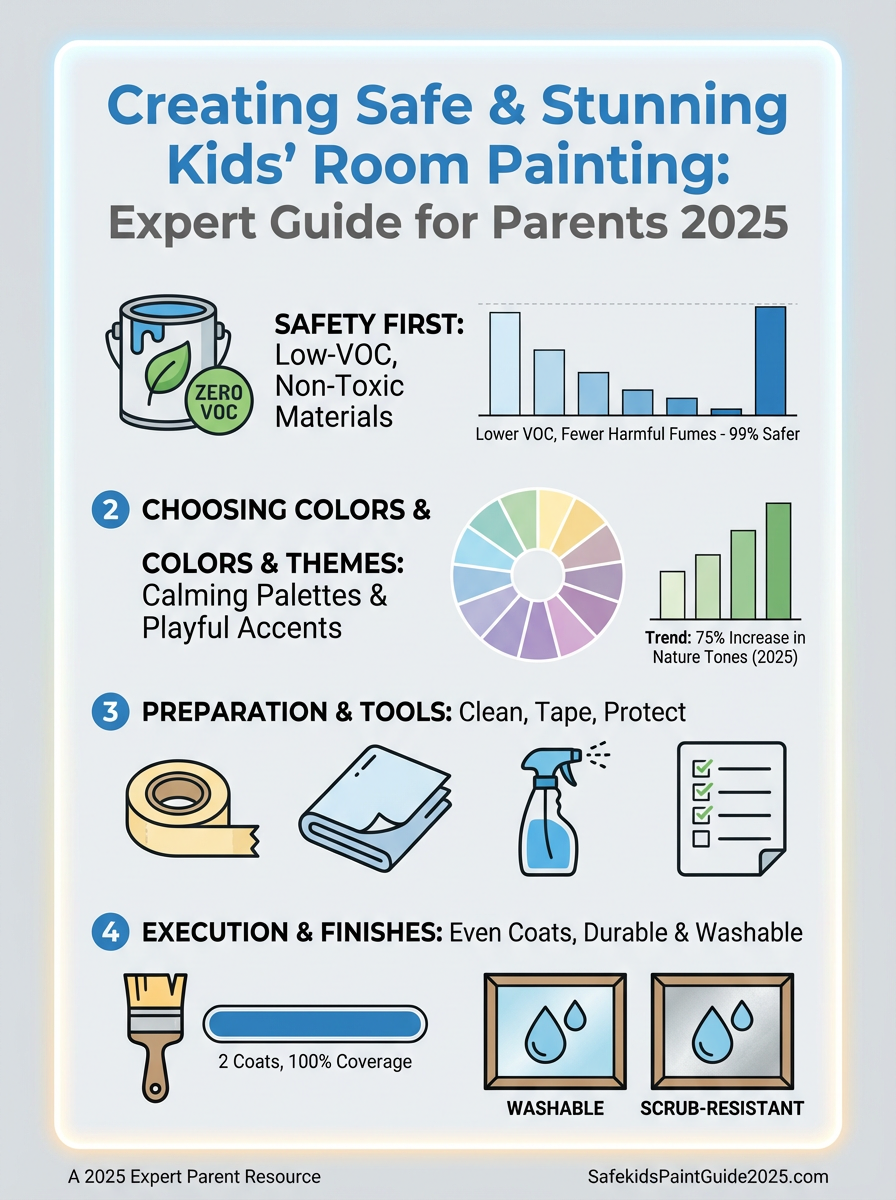
Visual Guide
Infographic illustration for this topic
Sources & References
- Interior Painting Guide: Kids, Pets & Safety Tips
- How To Paint A Kids Room - Ace Hardware - YouTube
- Safe Interior Paint for Kids Rooms: What Battle Ground Parents Must ...
- Best Painter for Kids Room [Choose Professional for Painting Kids ...
- Best Interior & Exterior Paint Buying Guide
- Best Paint for Commercial Buildings
- Best Industrial Painting Brands: A 2025 Comparison Guide
- Choosing the Right Exterior Paint for Commercial Buildings
- Building Codes, Standards, and Regulations: Frequently ...
Frequently Asked Questions
Need Professional Help?
Find top-rated house painters experts in your area