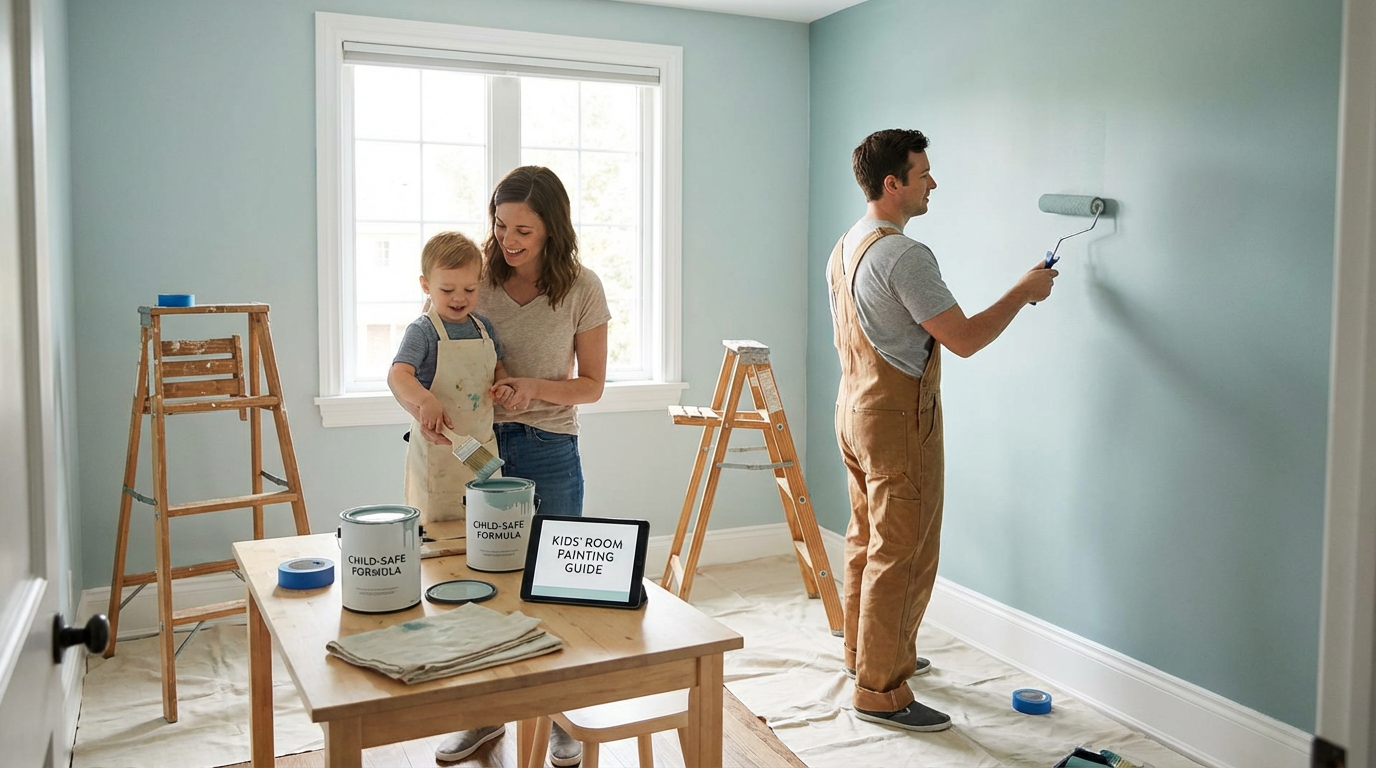
Expert guide to kids' room painting: child-safe paints, color psychology, and professional techniques for healthy, beautiful spaces that grow with your family.
Key Takeaways
- Child-safe, zero-VOC paints protect health while providing superior durability and washability
- Strategic color placement using psychology principles enhances sleep, focus, and creativity
- Professional preparation and application techniques ensure lasting beauty despite active childhood wear
BizzFactor Quick Guide
The BizzFactor Standard: Always use GREENGUARD Gold certified, zero-VOC paints with professional surface preparation for children's spaces
Key Takeaways
The BizzFactor Standard
3 Non-Negotiable Requirements for Elite Workmanship
GREENGUARD Gold Certified Paints Only
Zero-VOC formulations that meet strictest indoor air quality standards for children's health and development
Professional Surface Preparation
Comprehensive cleaning, repair, and priming ensures maximum paint adhesion and longevity in active spaces
Child Psychology Color Planning
Strategic color placement based on developmental needs to enhance sleep, focus, and emotional well-being
Kids' Room Painting Guide: Child-Safe Colors & Professional Techniques for Growing Families
Here's what nobody tells you about painting a kids' room: picking a cute color is maybe 20% of the job. The rest? Understanding which paints won't poison your kid, how colors actually mess with their brain chemistry, and whether your "adorable" design choice will cause bedtime meltdowns for the next three years.
Ask me how I know.
The Impact of Paint Colors on Child Development and Behavior
So there's this whole science behind why certain colors make your kid act like they chugged a gallon of Mountain Dew at 8 PM. Consumer Reports has documented this repeatedly — certain paint colors literally change how kids sleep, focus, and behave. We're talking measurable brain chemistry stuff here, especially for infants. Their developing brains are basically sponges, soaking up environmental cues. Including the color of the walls they stare at for 12 hours a day.
Yeah, that includes wall colors.
**Warm colors work like caffeine for kids' brains.** Soft orange? Boosts energy. Mellow yellow? Sparks creativity. But here's where people screw up — they paint the entire room in these colors and wonder why bedtime becomes a cage match. Cool blues and greens do the opposite. They dial down the mental noise. Create calm. Which is exactly what you want around the bed. (Want a deeper dive into how color impacts your entire home? Check out our guide on [choosing interior paint colors](/blog/choosing-interior-paint-colors).)
Real talk — we've worked with hundreds of families across Charlotte, from South End townhomes to Myers Park estates. The pattern is always the same: parents who nail the color psychology see immediate behavioral changes. Parents who don't? They call us back in six months, frustrated and confused.
Our approach isn't about overwhelming young minds with a chaotic mix of bright colors. Instead, we advocate for strategic, thoughtful color placement. This makes all the difference.
Strategic Color Placement for Optimal Development:
- **Play Areas**: You want energy here. We usually go with warm tones — maybe a vibrant coral (Pantone Living Coral works great) or sunny yellow (Benjamin Moore's 'Happy Yellow 2021-30' is a favorite). This sparks creativity and gets them moving. An active zone needs active colors.
- **Sleep Zones**: Calm is the name of the game. We've had insane success with Benjamin Moore's 'Palladian Blue HC-144' — it's this soft, dreamy color that just melts tension. Sherwin-Williams 'Sea Salt SW 6204' works too (though it can read slightly green depending on your light). Gentle lavenders promote rest. Sleep is vital for growing bodies. Don't mess this up.
- **Study Nooks**: For concentration, we stick with subdued sage green (Sherwin-Williams 'Clary Sage SW 6178' is bulletproof) or a sophisticated soft gray. Benjamin Moore 'Revere Pewter HC-172' is probably the most popular choice we install. No flashy stuff here. Keep it mellow.
- **Reading Corners**: Cozy and inviting means earthy tones. Warm browns, muted terracotta, deep forest greens. These colors create a sanctuary for stories — hopefully building a lifelong love for reading. Start that early.
Look — look — a contractor buddy told me about a client in Ballantyne who painted their toddler's room this shockingly bright red. Fire engine red. Within weeks, the kid was having major sleep issues, waking up multiple times, fighting bedtime like it was a punishment. They called us in, we repainted the sleep zone with a soft blue, and the parents emailed a month later practically in tears. "Our lives are different now," they wrote. Color matters. A lot. Never underestimate its power.
Selecting Child-Safe Paint Products and Formulations
So yeah, when you're painting a room where your kid sleeps, breathes, and inevitably licks the walls (don't pretend yours doesn't) — paint selection becomes way more complicated than picking something that matches the bedspread.
Not all paints are remotely equivalent.
Here's our rule at BizzFactor: we won't touch a kids' room without zero-VOC or low-VOC paints carrying GREENGUARD Gold certification. That Gold designation? It's the same certification hospitals and schools require — meaning it's been tested for the most vulnerable populations. Sick kids. Newborns. Immune-compromised patients. We typically use BEHR PRO i300 Series (VOC levels usually under 5 g/L, which is basically nothing) or Benjamin Moore Advance (around 10 g/L, with washability that's borderline magical).
**Low-VOC paint costs maybe $5-8 more per gallon.** Your kid's lungs? Probably worth it. Plus the stuff actually survives the daily abuse — marker attacks, juice explosions, that weird sticky handprint phenomenon that appears overnight.
Want to learn more about environmentally conscious choices? Check out our guide to [eco-friendly painting options](/blog/eco-friendly-paint-options). It's enlightening.
Essential Paint Features for Kids' Rooms: Non-Negotiables
**Washable Formulations**
Kids' rooms get destroyed. Daily. You need paint that survives frequent cleaning and resists the truly impressive array of stains your child will introduce to those walls. Look for products explicitly labeled "scrubbable" or "washable" — premium options include BEHR Premium Plus Ultra or Sherwin-Williams ProClassic. That's the real issue. We won't use anything with a scrub rating below 3,000 cycles (ASTM D2486 standard), because anything less just... doesn't last.
That's the real killer.
**Low-VOC Content**
VOCs off-gas chemicals into the air your kid breathes while sleeping. We're talking potential respiratory issues, headaches, developmental problems that hit growing bodies harder than adult ones. A guy I worked with in Ballantyne — his daughter had persistent headaches for months until they realized it was the paint in her bedroom. The EPA classifies many VOCs as probable carcinogens (fancy speak for "maybe causes cancer"), so why risk it when safer options exist at basically the same price?
Always choose paints under 50 g/L. Zero-VOC is better. This isn't being precious — it's just basic common sense.
**Antimicrobial Properties**
Here's the deal: some paints now have silver ions mixed into the formula. Sounds fancy, but what it actually does is kill mold and mildew spores on contact. In Charlotte's humidity — or anywhere near the coast — this stuff saves you from that musty smell and black spots that love to grow behind furniture. We've seen it prevent problems in dozens of rooms, especially ones with poor air circulation or that face north and stay damp.
**Stain Resistance & Priming**
You're covering bright pink with beige? Or dealing with walls that look like a Jackson Pollock made of mystery stains? **Use a stain-blocking primer. Period.** Products like KILZ 3 Premium or Benjamin Moore Fresh Start create a barrier that prevents old colors from bleeding through your new paint job. I've seen homeowners skip this step to save forty bucks, then have to repaint the entire room six months later when the old color ghosts through. Primer isn't optional — it's what makes the difference between a two-coat job and a five-coat nightmare.
Case Study: Transforming a Toddler's Room with Smart Color Psychology and Durable Finishes
Last spring, we got called to a house in Dilworth where the parents were losing their minds. Their toddler's nursery still had these aggressive primary colors — fire engine red, electric blue, the works. The kid wouldn't sleep. Bedtime was a two-hour wrestling match. And they couldn't figure out why their sweet child was bouncing off the walls until 10 PM every night.
The walls were literally overstimulating their kid's brain.
Here's the thing: we took a zoned approach with BEHR PRO i300 Series (both for the low VOCs and because it holds up to actual use). The sleep area got 'Misty Coast' blue-gray — a shade that reads almost meditative in evening light. The play corner got a 'Sunset Hill' coral accent wall that's energizing without being aggressive. And the new study nook? 'Sage Wisdom' green, which every teacher I've ever talked to swears promotes focus better than blues.
Each zone had a purpose. A clear purpose.
Remarkable Results and Lasting Durability:
Here's the thing: two weeks later, the mom called us almost crying. Her kid was sleeping through the night. Just like that. During the day, she noticed he'd actually sit still with books in the reading corner for 15-20 minutes at a time — something that never happened before. Six months later? The paint still looks perfect despite the daily crayon attacks and juice box incidents. That's what quality materials and smart color choices get you — not just a pretty room, but an environment that actually supports your kid's development. This is exactly why hiring pros matters ([Benefits of Hiring Professional Painters](/blog/benefits-of-hiring-professional-painters)). We're not just slapping paint on walls.
Professional Surface Preparation Techniques for Lasting Results
Look — wall prep is the difference between a paint job that lasts two years and one that lasts ten. Period. And in kids' rooms, where walls take daily abuse from thrown toys, scribbling, and the inexplicable stickiness that just... appears, proper prep isn't optional.
**Most DIY jobs fail at the prep stage.** People skip steps they don't know exist. They don't catch the problems that show up after the paint goes on. We walk every room with a utility light held at an angle — this exposes nail pops, hairline cracks, that dent where a Tonka truck made contact at velocity. Then we fix each one individually before touching a paint can.
Wall Assessment and Meticulous Repair: The Foundation
We start by hitting every wall with a utility light at an angle. Sounds simple, but this technique reveals everything — nail pops you'd never spot in normal light, hairline cracks, scuff marks, weird dents. For smaller holes (dime-sized or less), we use DAP Alex Plus spackling. Dries in maybe 30 minutes. Anything bigger than a quarter gets Benjamin Moore Stay-Clear filler, which handles deeper damage without shrinking.
No shortcuts. You can't hide bad prep with good paint.
Surface Cleaning and Decontamination: Beyond Wiping Down
Now, kids' rooms accumulate invisible residues — sticky finger smudges, food particles ground into texture, crayon wax, mystery substances we don't ask about. We use TSP-substitute cleaners (effective but safe, unlike actual TSP which is nasty stuff) to decontaminate every surface before paint touches it.
Why does this matter? Paint is essentially liquid plastic. It needs molecular-level contact with the wall to form proper bonds. Any barrier — even invisible oils from hands — compromises adhesion. You'll get peeling, bubbling, or that weird thing where the paint pulls away in sheets when you scrub it.
Strategic Priming Applications: The Unsung Hero
Using high-quality primers like BEHR PRO i300 Series Primer is absolutely non-negotiable. Why? It creates a uniform surface, effectively prevents color bleeding (especially when transitioning from dark to light walls), and ensures true color representation. For more essential insights into preparing your surfaces, consult our comprehensive [guide to interior painting prep](/blog/interior-painting-preparation). Primer isn't just paint; it's insurance. Good insurance too.
Advanced Painting Techniques for Enhanced Durability and Style
Professional painting techniques extend far beyond basic roller application. They incorporate specialized methods that significantly enhance both the aesthetic appeal and the crucial practical dur
In-Depth Look
Detailed illustration of key concepts
Visual Guide
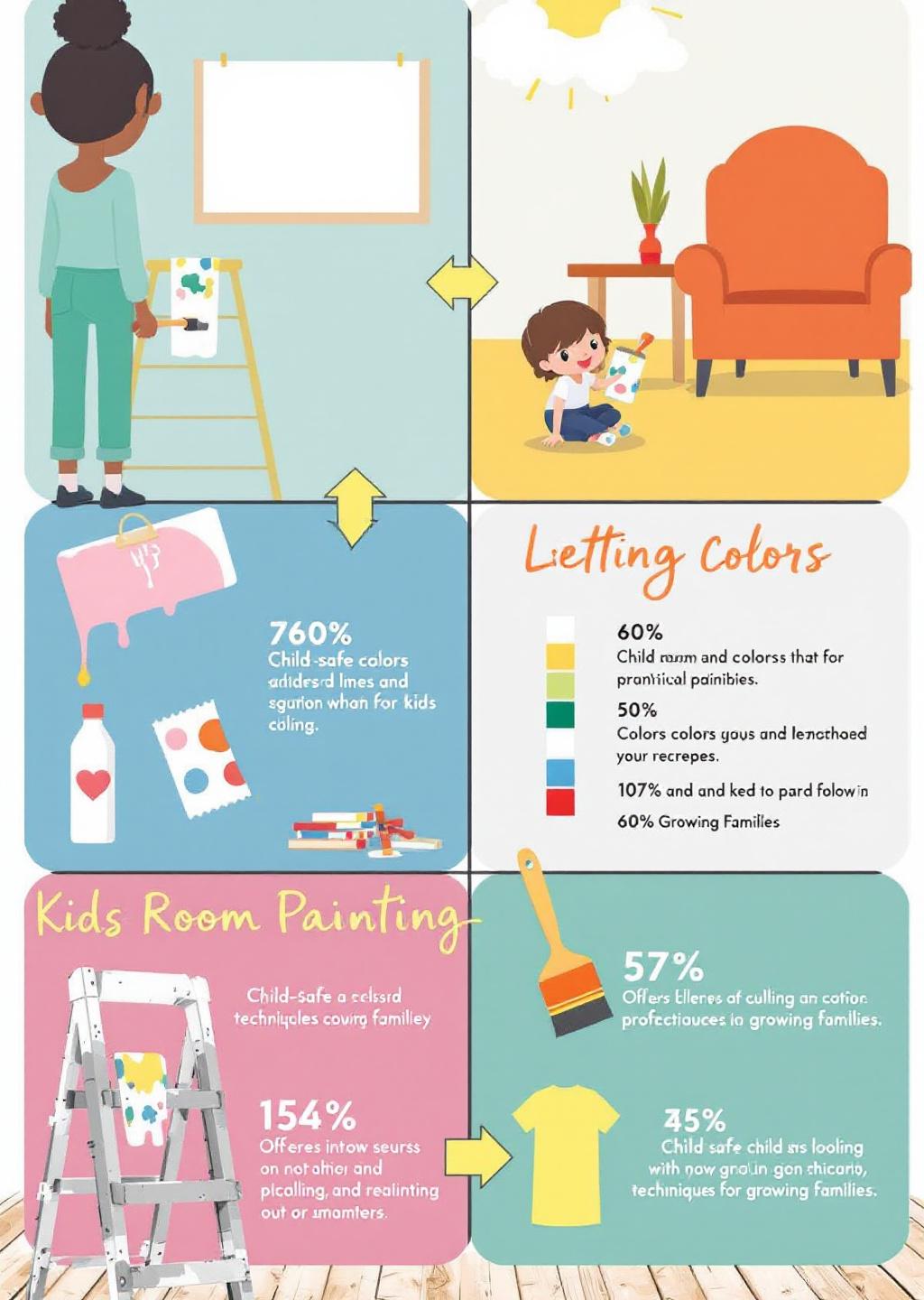
Infographic illustration for this topic
Sources & References
- Interior Painting Guide: Kids, Pets & Safety Tips
- How To Paint A Kids Room - Ace Hardware - YouTube
- Best Painter for Kids Room [Choose Professional for Painting Kids ...
- Safe Interior Paint for Kids Rooms: What Battle Ground Parents Must ...
- Painting 101: The Complete Guide On How To Paint A Room
- Best Interior & Exterior Paint Buying Guide - Consumer Reports
- Best Paint for Commercial Buildings - Miko LLC
- Building Codes, Standards, and Regulations: Frequently Asked ...
- Choosing the Right Exterior Paint for Commercial Buildings
Frequently Asked Questions
Need Professional Help?
Find top-rated house painters experts in your area