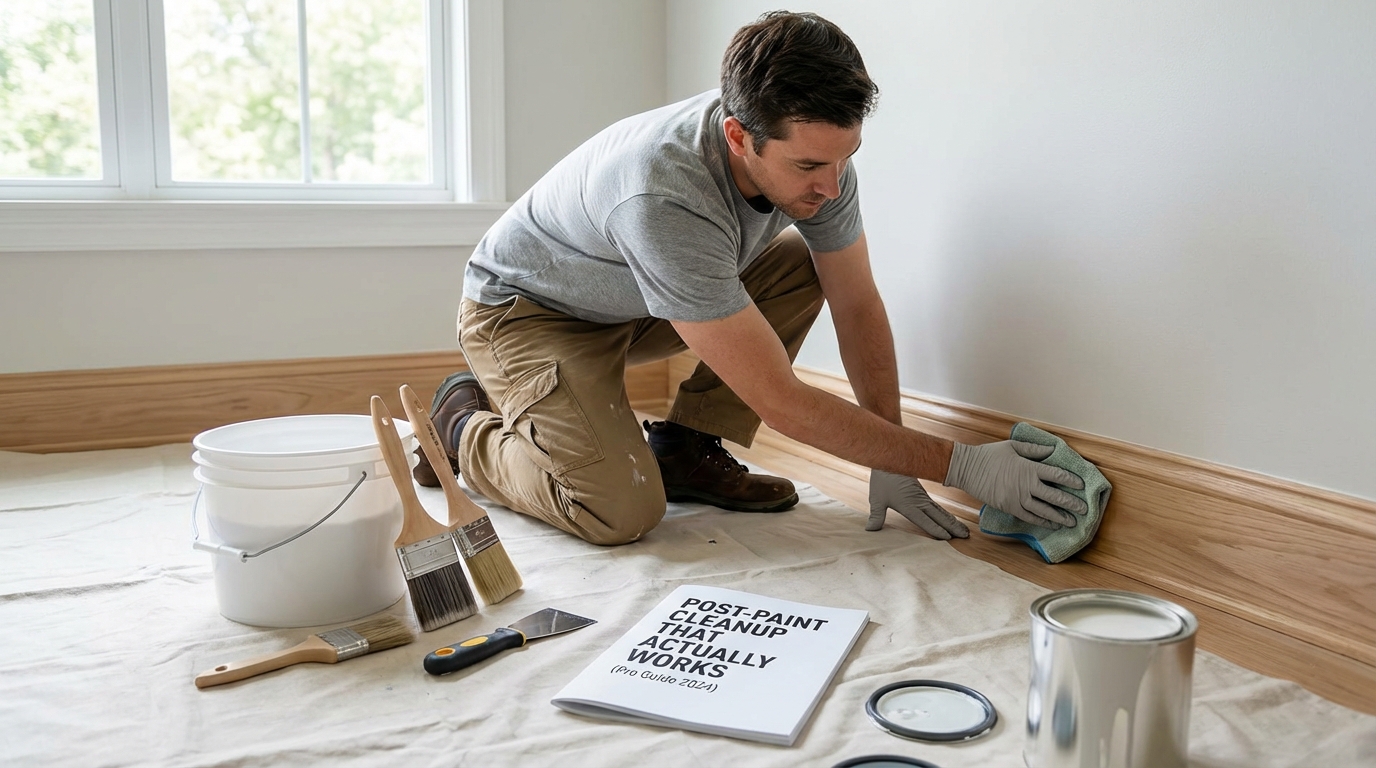
Professional post-paint cleanup guide from certified experts. Learn proven techniques for tool care, surface protection, and pristine results that last.
Key Takeaways
- **Canvas Drop Cloths (`10 oz. minimum`):** Way better than plastic sheets. Plastic slips around, tears if you breathe on it wrong, and offers basically zero protection against real spills. Canvas absorbs. Stays put. You can reuse it for years. Plus the woven texture provides friction — which means fewer slips (OSHA loves this, and so do our insurance rates). Expect around 95% spill retention.
- **3M Hand-Masker Plastic Sheeting (`0.7 mil thickness minimum`):** Perfect for wrapping furniture and covering large areas fast. The static cling creates a sealed zone around whatever you're protecting — absolutely critical for spray applications where overspray gets *everywhere*.
- [FrogTape Multi-Surface Painter's Tape (`24mm width`)]("https://www.frogtape.com/products/frogtape-multi-surface-painters-tape-24mm-x-411m-245842"): Delivers razor-sharp paint lines and removes clean. A crisp line makes all the difference (it just does). The PaintBlock® Technology is basically a polymer that gels when it touches water-based paint, stopping bleed-through cold. Nothing beats it for precision.
- **Pre-taped Masking Film (`Blue Dolphin brand preferred`):** Saves massive time on windows and trim. The integrated tape-and-film design cuts masking time by half on some projects. You want efficient? This is efficient.
Key Takeaways
Post-Painting Cleanup That Actually Works: A Pro's Guide (2024)
Look, painting is messy business. But the *cleanup*? That's where amateur projects go sideways and professional jobs shine.
Here's what most people get wrong: they treat cleanup like an afterthought. Toss down some newspaper, hope for the best. Then three hours later they're scraping dried latex off hardwood with a butter knife.
Don't be that person.
We've spent two decades at BizzFactor figuring out what actually works (and what's a complete waste of time). Our certified painting team follows protocols that sound boring on paper but save your ass when things go wrong. And things *will* go wrong. That's the real differentiator — how you handle the inevitable disasters.
Most DIY guides? They tell you to wipe up spills and call it a day. What they don't tell you: that latex drip you ignored for 45 minutes while you finished the trim? It's now bonded to your oak floor at a molecular level. I've watched homeowners in Decatur spend an entire Saturday with razor blades and Goo Gone trying to fix a problem that would've taken 30 seconds to prevent. This guide shows you exactly what our licensed crews do on *every* job — the stuff we learned after fixing thousands of other people's screw-ups. For more insights into planning your project, check out our deep dive on [estimating painting costs](https://www.bizzfactor.com/blog/how-to-estimate-painting-costs). Seriously, don't skip that one. It can save you massive headaches.
How to Prevent Messy Paint Cleanup: Proactive Strategies You Can't Ignore
Real talk — good prep work kills about 80% of cleanup problems before they start.
I'm not exaggerating. Get your protective barriers right *before* you crack open a paint can, and you'll spend cleanup day drinking coffee instead of scrubbing baseboards. We use the same commercial-grade stuff on a $2,000 job that we use on a $20,000 job. Why? Because replacing a client's hardwood costs the same either way, and our insurance company has opinions about cut corners. (Strong opinions. With premium adjustments attached.)
_Proper preparation isn't just about efficiency; it saves cold, hard cash._
A guy in Oakland hired a bargain contractor who skipped the protection step. Used newspaper. *Newspaper*. Didn't even spring for plastic sheeting. Paint seeped straight through onto his hardwood floors. Cost him $400 in repairs just to get back to square one. Don't let this happen to you – invest in prevention from the get-go (it's way cheaper). Seriously. Learn more about selecting professional painting services in our [ultimate guide to hiring house painters](https://www.bizzfactor.com/blog/ultimate-guide-hiring-house-painters). It's crucial.
Essential Cleanup Prevention Materials (No Cheap Substitutes Allowed)
Look, I'm gonna tell you exactly what we use on BizzFactor projects. Not because we're getting kickbacks (we're not), but because we've tried damn near everything and watched most of it fail when things get messy.
- **Canvas Drop Cloths (`10 oz. minimum`):** Way better than plastic sheets. Plastic slips around, tears if you breathe on it wrong, and offers basically zero protection against real spills. Canvas absorbs. Stays put. You can reuse it for years. Plus the woven texture provides friction — which means fewer slips (OSHA loves this, and so do our insurance rates). Expect around 95% spill retention.
- **3M Hand-Masker Plastic Sheeting (`0.7 mil thickness minimum`):** Perfect for wrapping furniture and covering large areas fast. The static cling creates a sealed zone around whatever you're protecting — absolutely critical for spray applications where overspray gets *everywhere*.
- [FrogTape Multi-Surface Painter's Tape (`24mm width`)]("https://www.frogtape.com/products/frogtape-multi-surface-painters-tape-24mm-x-411m-245842"): Delivers razor-sharp paint lines and removes clean. A crisp line makes all the difference (it just does). The PaintBlock® Technology is basically a polymer that gels when it touches water-based paint, stopping bleed-through cold. Nothing beats it for precision.
- **Pre-taped Masking Film (`Blue Dolphin brand preferred`):** Saves massive time on windows and trim. The integrated tape-and-film design cuts masking time by half on some projects. You want efficient? This is efficient.
Budget options look tempting. They always cost more.
A contractor using old newspaper instead of canvas drop cloths ruined a Persian rug in Pacific Heights. Paint bled straight through. Thousands of dollars in damage because he saved thirty bucks on materials. Don't penny-pinch on protection — it's the worst place to cut corners.
Immediate Action: What to Do When Paint Spills Happen
Even seasoned pros spill paint. It happens.
What separates us from the guy who panics and makes it worse? We keep clean microfiber cloths everywhere — hung on ladders, stuffed in pockets, stacked on the work table. That's the real issue. Paint hits the floor, you've got maybe 2-3 minutes max before it starts setting up. Clock's ticking.
**Blot** the spill immediately.
Never wipe.
Wiping spreads paint outward and pushes it deeper into porous materials. Small problem becomes exponentially bigger.
**Pro Tip from Our Certified Team:** We carry a "spill kit" on every job — clean rags (lots of 'em), a spray bottle of appropriate cleaner (water for latex, mineral spirits for oil), and a plastic scraper. The EPA studied this stuff, and their data shows quick action stops permanent staining about 90% of the time. You've got one shot at this. Miss that window and you're looking at refinishing work that costs ten times what prevention would've run you.
Common Post-Painting Cleanup Mistakes to Avoid (Seriously, Don't Do These)
The biggest mistake we see? Pouring latex paint down drains.
The acrylic binders solidify in your pipes. Creates blockages that'll cost you thousands to clear. We've watched homeowners in suburban Chicago pay plumbers $2,400 to snake out main lines because they dumped a gallon of leftover paint down the basement sink. A small amount accumulates over time and creates a dam in your plumbing system.
Instead, let paint sediment settle in buckets. Pour off the clear water outdoors (away from drains and groundwater). Let the remaining sludge dry completely until it forms a peelable film, then toss it in regular trash.
This simple step prevents massive plumbing issues. Costs nothing but patience.
Why Professional Contractor Experience is Crucial for Cleanup
So yeah, here's the pattern we've spotted after working alongside (and cleaning up after) probably a hundred different painting outfits: The established companies — your [CertaPro Painters](https://www.certapro.com/) types — they've got cleanup systems that border on obsessive. Checklists. Dedicated cleanup crews. The whole nine yards. Not because they're control freaks, but because one viral photo of a trashed job site costs them more in lost business than they'd make in a month.
Meanwhile, the new guy who undercut everyone's bid by 40%? He's learning these lessons in real-time. On your property. With your hardwood.
I'm not saying small outfits can't do quality work — some of the best painters I know run two-person crews. But ask them about their cleanup process *before* they start. If they shrug and say "oh, we'll tidy up at the end," that's your red flag. You're paying for a professional service, not just paint on walls. Peace of mind is worth the extra cost.
The Expert Tape Removal Technique You Need to Know (It's a Game Changer)
Pulling painter's tape while paint is wet? That's outdated advice that ruins your hard work.
Wet paint bonds with the tape. Pull too early and you get smears, fuzzy lines, or paint tearing away from the surface. Incredibly frustrating. Completely avoidable.
Look — look — we do it differently. Let the paint cure all the way — usually 24-48 hours for latex, sometimes longer in humid weather. Then grab a hairdryer (low heat setting), warm up the tape gently for about 10 seconds per section, and peel at a 45-degree angle. Seriously. The heat reactivates the adhesive just enough so it releases cleanly without taking your beautiful paint line with it.
This method delivers sharp edges every time. For perfectly crisp lines, check out our guide on [how to cut in paint like a pro](https://www.bizzfactor.com/blog/how-to-cut-in-paint-like-a-pro). Small step, big results.
Optimal Tool Cleaning Practices for Longevity and Performance (Don't Skimp Here)
Treat your tools right and they'll outlast cheaper replacements by years. Maybe a decade if you're religious about it.
We've got Purdy brushes that are five years old, still performing like new — because we follow manufacturer specs religiously. High-quality brushes cost $30-50 each. Protecting that investment through proper cleaning isn't optional. It's basic economics.
Clean your brushes immediately after you're done. Use the right solvent — water and dish soap for latex, mineral spirits for oil-based. Sounds simple, right? But I've seen $45 Purdy brushes turn into crusty bricks because someone got lazy and "let them soak overnight" in the wrong cleaner. (Spoiler: overnight became three days, and the brush became landfill material.) A ruined brush isn't just a monetary loss; it kills productivity when you're mid-project and realize your main brush is basically a stiff brick.
Step-by-Step Brush and Roller Maintenance (The BizzFactor Way)
1. **Remove Excess Paint:** Scrape off as much paint as possible onto cardboard immediately after use. Get every bit. This reduces the amount you'll need to wash, making everything faster and easier.
2. **Initial Rinse/Wash:** Rinse water-based paints thoroughly in warm, soapy water. Just keep rinsing. For oil-based paints, use mineral spirits with proper ventilation (wear a respirator — seriously). This removes the bulk of the pigment.
3. **Thorough Cleaning:** Work the cleaning solution deep into bristles or roller nap. Use a brush comb to separate bristles and dislodge trapped paint. For rollers, a 5-in-1 tool pushes out paint from the fibers. Don't be gentle; dig in there.
4. **Final Rinse:** Keep rinsing until the water runs completely clear. Any color means paint residue remains. Lingering paint hardens and stiffens the tool until it's useless.
5. **Reshape & Dry:** Reshape brushes to their original form (a brush keeper helps) and hang them bristles-down or store flat. Never rest them on bristles — they'll splay out permanently. That's a real shame. Ensure complete drying to prevent mildew.
In-Depth Look
Detailed illustration of key concepts
Visual Guide
Infographic illustration for this topic
Sources & References
- Chapter 8: Caring for Your Interior Wall Paint - PPG Paints
- Pro Tips for Paint Project Clean Up | Ask This Old House - YouTube
- [PDF] Healthy Indoor Painting Practices
- Maintaining Your Newly Painted Home: Tips and Best Practices
- How To Clean Up After Painting - This Old House
- Best Interior & Exterior Paint Buying Guide - Consumer Reports
- Best Paint for Commercial Buildings - Miko LLC
- Building Codes, Standards, Regulations: FAQs
- Choosing the Right Exterior Paint for Commercial Buildings
- Best Industrial Painting Brands: A 2025 Comparison Guide
Frequently Asked Questions
Need Professional Help?
Find top-rated house painters experts in your area