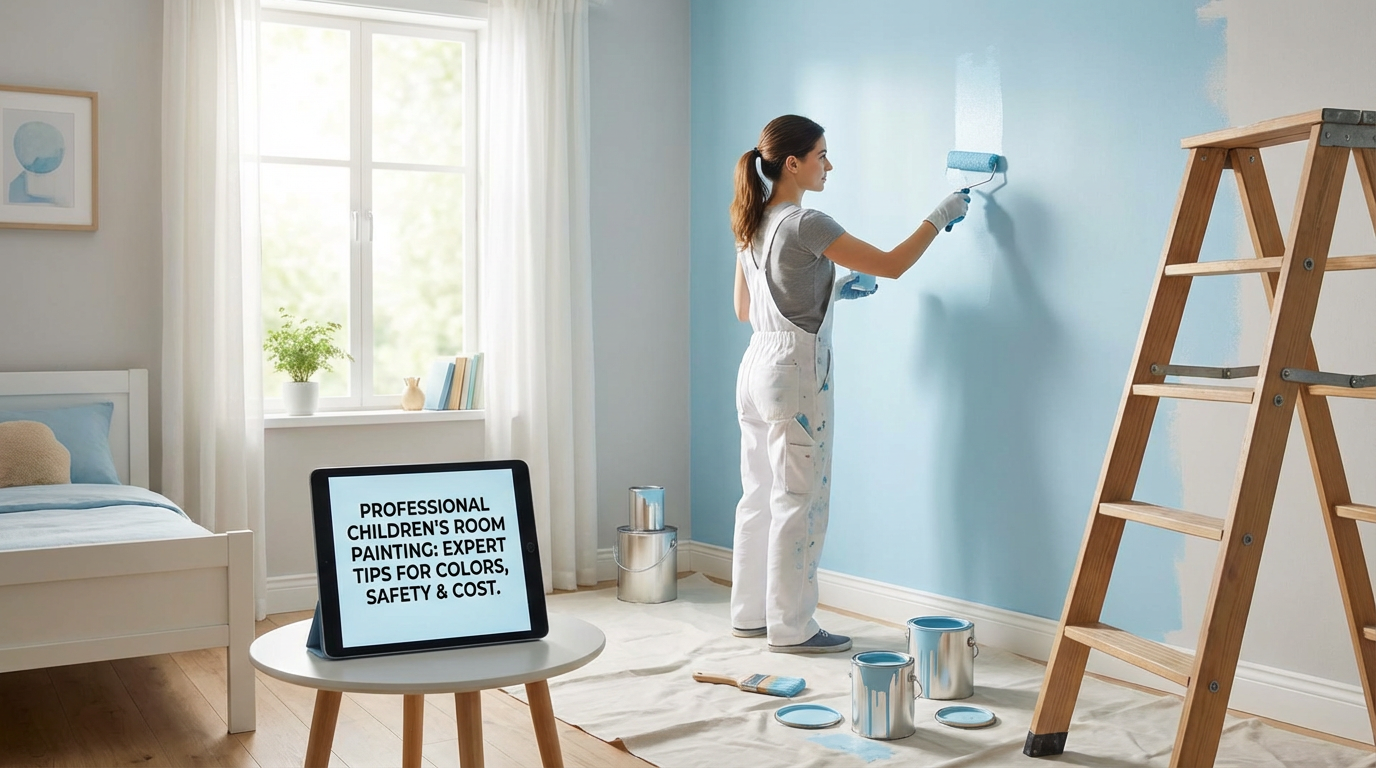
Expert guide to children's room painting with professional color tips, safety standards, creative ideas & cost factors. Transform kids' spaces safely.
Key Takeaways
- Choose child-safe, low-VOC paints in light, adaptable colors for lasting appeal
- Proper preparation and professional application ensure safety and quality results
- Creative features like magnetic paint add functionality while maintaining design flexibility
BizzFactor Quick Guide
The BizzFactor Standard: Always use certified low-VOC paints and professional-grade preparation for children's safety
Key Takeaways
The BizzFactor Standard
3 Non-Negotiable Requirements for Elite Workmanship
Certified Child-Safe Materials Only
All paints must be low-VOC, water-based, and certified safe for children's environments with proper ventilation during application.
Professional Surface Preparation
Complete room preparation including proper covering, surface cleaning, and repair work ensures lasting, professional-quality results.
Written Project Timeline & Warranty
Clear scheduling with minimal disruption to family routines plus warranty coverage for workmanship and material performance.
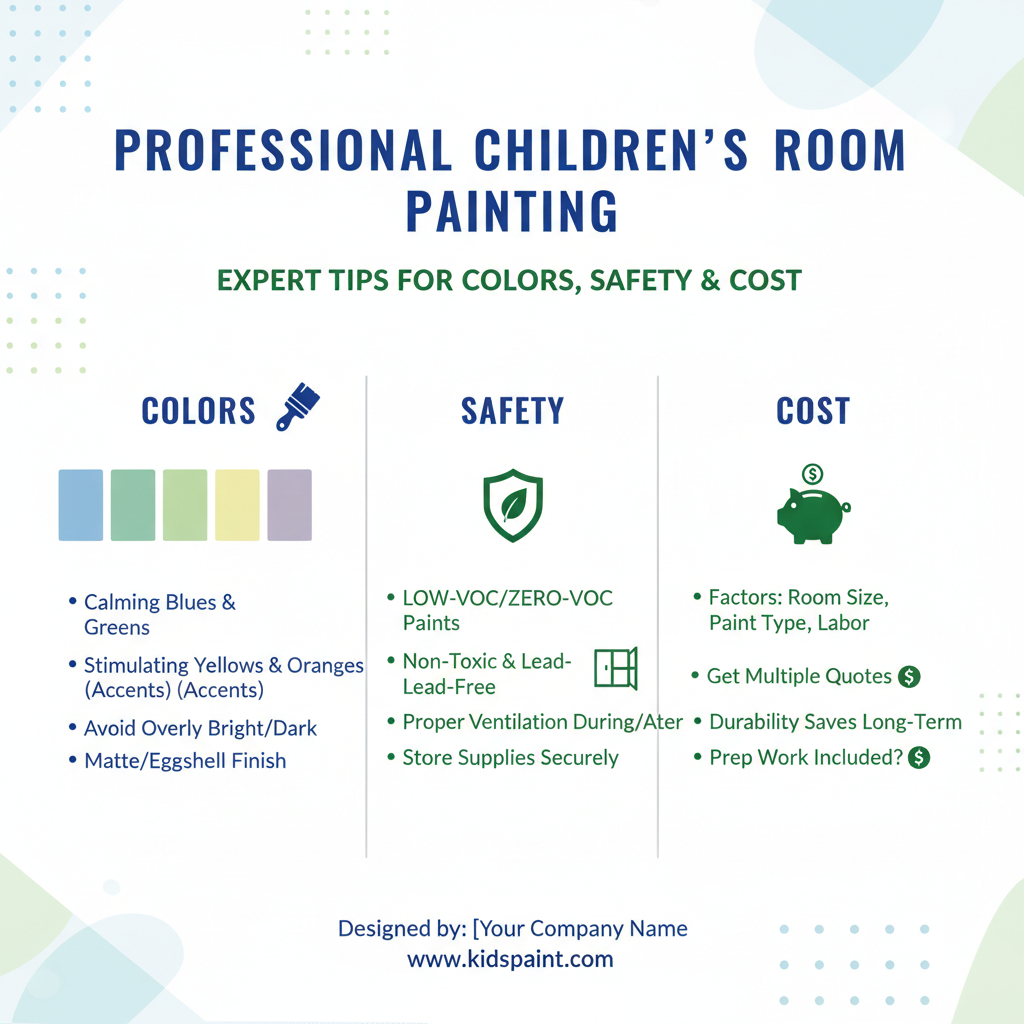
Professional Children's Room Painting: Expert Tips for Colors, Safety & Cost
A friend in Edgewater just paid $2,100 to repaint her daughter's room for the *third* time in four years. First time? Cotton-candy pink. Second? Neon turquoise. Now? She's gone with something that'll actually last. Painting a child's bedroom means more than just slapping on some color. You need to think about aesthetics, **child-safe materials that won't poison your kid**, preparation techniques that actually matter, and what this whole thing's gonna cost you. At BizzFactor, we've worked with enough families to know what actually holds up: light, calming shades paired with interactive features (think chalkboard walls, magnetic paint) create spaces that don't need a redo every 18 months.
This isn't just a paint job.
It's an investment in their comfort and development.
This guide will show you how to create a room that's healthy, inviting, and won't make you want to repaint it when your kid turns seven.
Choosing Colors That Won't Drive Everyone Crazy
Paint colors for kids' bedrooms? Way more complicated than you'd expect. You've got the "what looks cute now" angle competing with the "will this work when dinosaurs are suddenly lame and soccer becomes their entire personality" reality. **Light, neutral base colors** aren't boring — they're strategic. These shades let a room evolve without requiring a complete overhaul every time your child's interests shift.
Nobody wants to redo a whole room every two years. That's just wasteful (and expensive).
When we consult with families, we bring the kids into the conversation. But look — we gently steer them away from electric blue walls or fire-engine red accent walls that seem fun in theory. Those bold, saturated colors? They become a visual assault. This sensory overload genuinely messes with sleep quality and focus. Plus, try coordinating furniture with neon orange walls (I've seen it attempted in Albany Park — the parents regretted it within six months and spent $1,800 fixing their mistake). Don't fall into that trap.
Theme-Based Approaches: Crafting Spaces That Can Actually Evolve
Pick one theme — maybe celestial, ocean, jungle, sports, whatever clicks — and let that be your North Star. This gives you actual direction instead of that "everything's kinda related?" vibe where furniture and decor look like a yard sale exploded.
Look — look — accent walls work when you're strategic. Showcase the theme in one quadrant, get maximum impact, and here's the beauty: when interests change (and they will), you're repainting one wall instead of the entire room.
Your paint color should work *with* the stuff they've already picked out — the bedspread, the posters, those dinosaur decals. Not fight against it. A soft blue-grey makes a perfect backdrop for a space adventure theme. It just works.
**Embrace removable wall decals.** Seriously, these are your best friend. They let you update the design as your child's passions shift without requiring a full repaint. Discover more dynamic design tips in our comprehensive guide to [creative accent wall ideas](/house-painters/accent-wall-ideas).
The Psychology Behind Colors (Or: Why Your Kid Won't Sleep With Red Walls)
**Blue:** Soft blues can actually slow heart rate — there's legit research on this from Color Psychology Today. I'm talking Benjamin Moore's 'Palladian Blue' or Sherwin-Williams' 'Relaxed Blue.' Perfect for bedrooms where you want kids to wind down. My nephew's room? Palladian Blue on three walls. Kid sleeps like he's been drugged (he hasn't).
**Green:** Nature, calm, balance. Research from the University of Texas suggests green promotes feelings of stability and growth. Gender-neutral (parents love that), and it creates this grounded harmony that just *works*.
**Soft Yellow:** Basically optimism in a can. Stimulates creativity and warmth without tipping into overstimulation — you know, that "why is my kid bouncing off the walls at 9 PM" vibe. Journal of Environmental Psychology highlights yellow's ability to encourage communication and joy. Absolute winner for play areas.
**Purple (especially lavender):** Lighter versions — like Farrow & Ball's 'Lulworth Blue' (technically blue-grey with purple undertones) — give you sophisticated whimsy. It sparks imagination without the princess-castle intensity that makes you want to gouge your eyes out after six months. A touch of magic.
Here's the thing: in kids' rooms, I won't touch anything that isn't **low-VOC or zero-VOC paint**. BEHR, Sherwin-Williams, PPG — brands that meet strict chemical emission limits (Green Seal or Master Painters Institute certification). That's the real issue. This protects developing lungs and keeps indoor air quality where it should be. It's about peace of mind, plain and simple.
⚠️ The Step Everyone Skips (And Then Regrets): **The Large Sample Sign-Off**
A tiny paint chip is a liar.
It shows you almost nothing about how a color will actually look across an entire wall under different lighting conditions. Before you commit a single dollar, paint a big poster board (at least 2'x2') with your chosen color. That's the real issue. Stick it on the actual wall and live with it for 24 hours. Watch it in morning light, afternoon sun, and under evening lamps.
BOTH parents and the child should sign off.
You'd be shocked how many people skip this and then call me three days after the paint dries, furious that "it looked different on the chip." Yeah, it always does. That's why you test it big. It'll save you from expensive repaints and family arguments. It's a non-negotiable step for avoiding regret, as detailed in our guide to [successful painting projects](/house-painters/successful-painting-projects). Do it.
BizzFactor's Contractor Recommendation for Children's Spaces
Big corporate painting companies? They'll get the job done. All Covered Painting won't mess it up. American Painters probably has a decent price. But when you're dealing with a kid's room — where you need someone who actually *knows* low-VOC products and can do magnetic primer or chalkboard paint without screwing it up — most crews are out of their depth.
Now, i send people to **Arthur Cole Painting Corporation**. They cost more (probably 20-30% above average). Their prep work is obsessive, though, and they've mastered these specialty paints — magnetic walls, whiteboard finishes that actually last more than eight months. Their electrostatic sprayers create finishes so smooth you want to touch the walls. They can handle complex stuff like glow-in-the-dark constellations without the brush marks you'd get from cheaper crews. Seriously. For more insights on vetting contractors, see our guide on [hiring the best house painters](/house-painters/how-to-hire-the-best-house-painters).
Worth every penny.
The BizzFactor Insider Tip: Paint the Ceiling (Yes, Really)
Forget obsessing over accent walls. Look UP.
The ceiling — the 'fifth wall' — is a canvas most people ignore. Picture this: a deep navy blue, a brooding charcoal gray, or even a serene sky blue up top. This creates a cocoon effect that **can dramatically improve sleep patterns** by reducing perceived brightness (Lighting Research Center research backs this up — darker ceilings help melatonin production).
And here's the fun part: a dark ceiling makes the perfect backdrop for glow-in-the-dark stars or custom galaxy murals.
So yeah, my own son's room in Lincoln Park has a shimmering dark blue ceiling (we used Benjamin Moore's 'Hale Navy' mixed at 75% strength) — he calls it his "galaxy roof" and genuinely loves it three years later. It makes the room feel whimsical and surprisingly expansive by drawing the eye skyward, without any floor-level clutter. Explore more unconventional painting ideas in our [home painting trends report](/house-painters/home-painting-trends).
It's a game-changer.
Room Preparation and Child Safety Protocols (The Stuff That Actually Matters)
Solid prep does three big things: stops paint from getting contaminated with dust and debris, gives you that smooth finish everyone wants, and (this is the big one) **keeps kids safe** while you're working. Paint fumes plus curious toddlers? That's how you end up in the ER. Our team has strict protocols to protect both the space and the kid who's gonna live there.
You wouldn't skip medical prep, so don't skip paint prep.
Comprehensive Room Clearing & Protection:
- **Get every single piece of movable furniture out.** Everything. Dump it in the garage or another room. This prevents damage, yeah, but it also stops those VOCs from getting absorbed into fabrics. Those chemicals can hang out in upholstery for weeks. Not worth it.
- For stuff you can't move (built-in bookshelves, whatever), **wrap everything in thick plastic sheeting** — minimum 4-mil. Use painter's tape for an airtight seal. Once paint splatters dry on fabric or wood, good luck getting it off. This step is essential.
Floor and Surface Safeguarding:
- **Roll out canvas drop cloths or thick plastic sheeting.** I'm talking 6-mil minimum. Tape every single edge down so it doesn't shift when you're working. This is your floor's insurance policy. Don't cheap out.
- **Mask electrical outlets and switches** with quality painter's tape (FrogTape or 3M Delicate Surface). This isn't about looks — it's electrical safety. You don't want paint touching wiring. Common sense.
- **Take down ceiling fans and light fixtures** or wrap them completely. A clean finish depends on this, and you won't accidentally damage anything. It's part of our commitment to detail in [interior painting services](/house-painters/interior-painting-services).
Paint Selection Standards for Health & Durability:
- Always go with **water-based, low-VOC or zero-VOC paints** that are explicitly certified for interior residential use. Especially in kids' rooms. Hunt for
In-Depth Look
Detailed illustration of key concepts
Visual Guide
Infographic illustration for this topic
Sources & References
- A Pro Painter's Top House Painting Tips and Tricks | HGTV Home Tips
- Color Training – The Four Pillars of Color - CAMP CHROMA
- The Secrets of Pro Painters: Mastering Interior Painting Techniques
- STOP Picking the WRONG Paint Colors! Pro Painter's Essential Tips
- Best Interior & Exterior Paint Buying Guide
- Best Paint for Commercial Buildings
- Professional Quality Paint Products
- Best Industrial Painting Brands: A 2025 Comparison Guide
Frequently Asked Questions
Need Professional Help?
Find top-rated house painters experts in your area