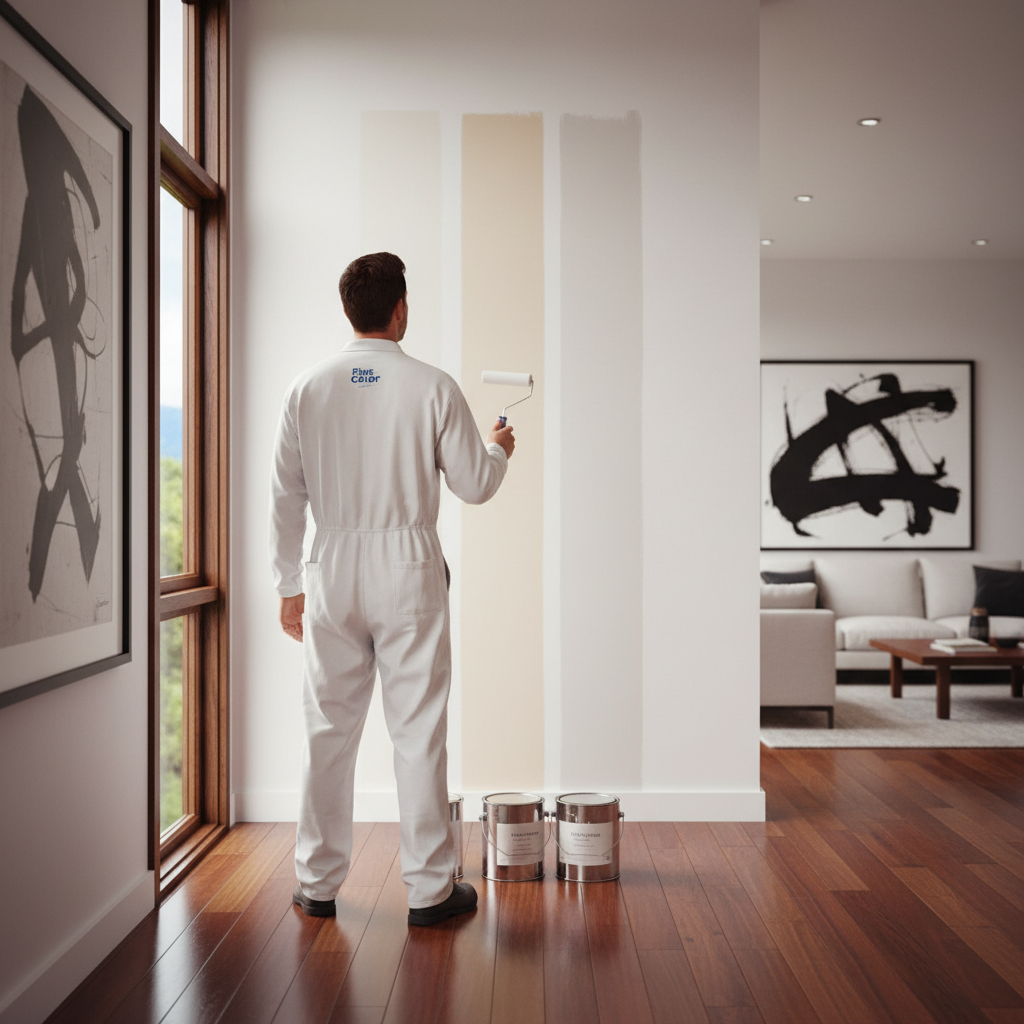
Don't just pick any white paint. Our pro painters break down lime vs. acrylic vs. synthetic options to help you choose the right finish for durability, washability, and your budget.
Key Takeaways
- It's about the chemistry
- The stuff that makes one $60 gallon last 15 years while another $30 option starts peeling in 18 months
- You wouldn't buy tires based only on how they look, right
- Look — look — in 20 years of doing this, I've ripped out way too many failed paint jobs that could've been avoided
Key Takeaways
Choosing White Paint: A Pro Painter's Guide to Lasting Finishes
Here's what nobody tells you upfront: picking white paint has almost nothing to do with the actual color. It's about the chemistry. The formulation. The stuff that makes one $60 gallon last 15 years while another $30 option starts peeling in 18 months.
I've watched homeowners agonize over "Chantilly Lace" versus "Simply White" for three weeks, then grab whatever's on sale without checking if it's acrylic, lime-based, or some hybrid thing. That's backwards. You wouldn't buy tires based only on how they look, right? Same principle here.
Look — look — in 20 years of doing this, I've ripped out way too many failed paint jobs that could've been avoided. The pattern's always the same: someone used latex in a damp basement. Or put cheap builder-grade stuff in a kitchen that gets scrubbed down weekly. That's the real issue. Or slapped modern acrylic over 120-year-old plaster walls that need to breathe. That's the real issue.
White paint's actually one of the trickiest calls you'll make. Sounds weird, but it's true. There are literally thousands of whites, and the differences aren't just aesthetic — they're functional. Pick wrong and your dream renovation feels sterile. Or worse, it fails outright.
We're gonna break down the three main categories, what they're actually good for, and where they'll let you down. No fluff. Just what works.
The Real Deal on Paint Types: Match the Job or Watch It Fail
Here's the thing most painters won't tell you: there's no "best" paint. There's only the right paint for your specific wall in your specific house with your specific problems. Seriously. I've seen gorgeous $95/gallon finishes fail in six months because someone thought expensive meant universal. It doesn't.
The substrate matters more than the brand. Always has.
Traditional Lime Paint: The 2,000-Year-Old Technology That Still Works
#### What It Actually Is
Here's the thing: so you take limestone — like, actual rock from a quarry — and burn it at around 900°C. What comes out is quicklime, this caustic powder that'll burn your skin if you're not careful. Seriously. Add water to it (and yeah, it gets seriously hot during this process, I'm talking steam and hissing), you get slaked lime. Calcium hydroxide. Mix that with more water, throw in some natural pigments if you want color. That's the whole recipe. Same one the Romans used 2,000 years ago.
The pH's insane — runs between 12 and 13.5. Know what can't survive in that alkaline environment? Nothing biological. Mold won't grow there. Mildew can't establish. Bacteria dies off. I walked into this 50-year-old basement in Alexandria last year that'd been damp the entire time — walls still looked perfect. No black spots, no musty smell, nothing.
But here's the wild part: it breathes. Like, genuinely breathes. We're talking 50+ perms of permeability. Your average latex? Maybe 5 perms. Probably less.
Why does that matter? Old houses — anything built before 1950, really — were designed to manage moisture through the walls. Brick absorbs water when it rains, releases it when it's dry. Plaster does the same thing. Then some contractor in 1985 comes along and seals everything with modern latex paint. Traps all that moisture inside. Ten years later, the plaster's crumbling behind the paint film.
We had a client in Old Town with a brick foundation from 1823. Persistent dampness, that musty smell, white powder (efflorescence) showing up every spring. Previous owner had painted it three times with standard latex. We stripped it all off, did a proper lime wash. Two years later? Dry. No odor. The wall's doing what it was built to do.
The carbonation process is genuinely cool if you're into this stuff. The calcium hydroxide in the paint absorbs CO2 from the air and converts back into calcium carbonate — limestone. It doesn't just sit on top of your wall, it becomes part of it. Compressive strength actually increases over decades.
#### Where It Wins
The mold resistance is real. High pH environment — nothing grows there. I don't care how damp your basement is.
Breathability prevents trapped moisture, which means no blistering, no efflorescence, no hidden rot behind the paint film. Critical for historic buildings.
Now, eco credentials are legit. Low VOCs (usually under 5 g/L, often zero), natural materials, and the curing process is carbon-neutral. If you're chasing LEED certification or Living Building Challenge, this qualifies.
The aesthetic's unique. Ultra-matte, soft, mineral depth that ages instead of deteriorating. You get this subtle texture that develops character over time. Some people love it. Others hate it. No middle ground.
#### Where It Loses
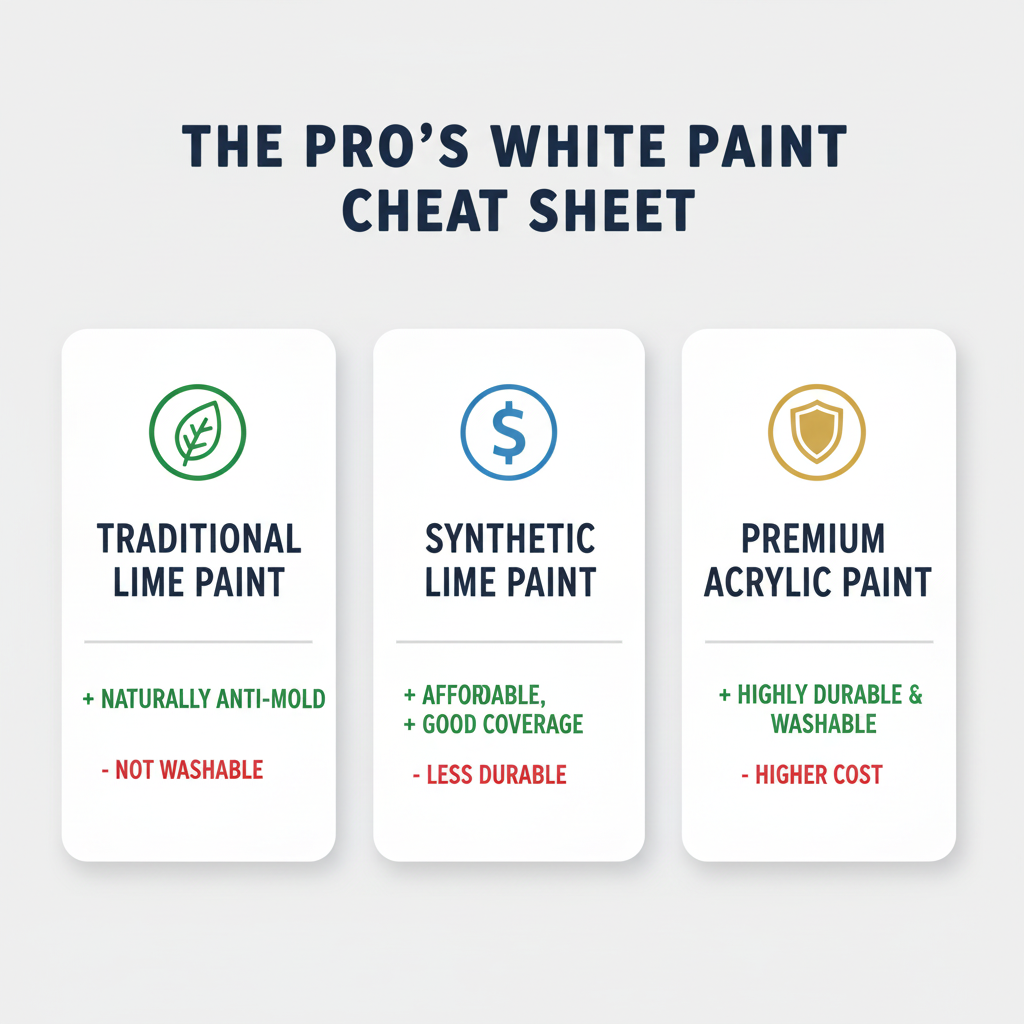
Don't scrub it. Seriously. Scrub resistance typically tests under 50 cycles on ASTM D2486. That's terrible. A damp cloth is fine. Anything more aggressive? You're removing material.
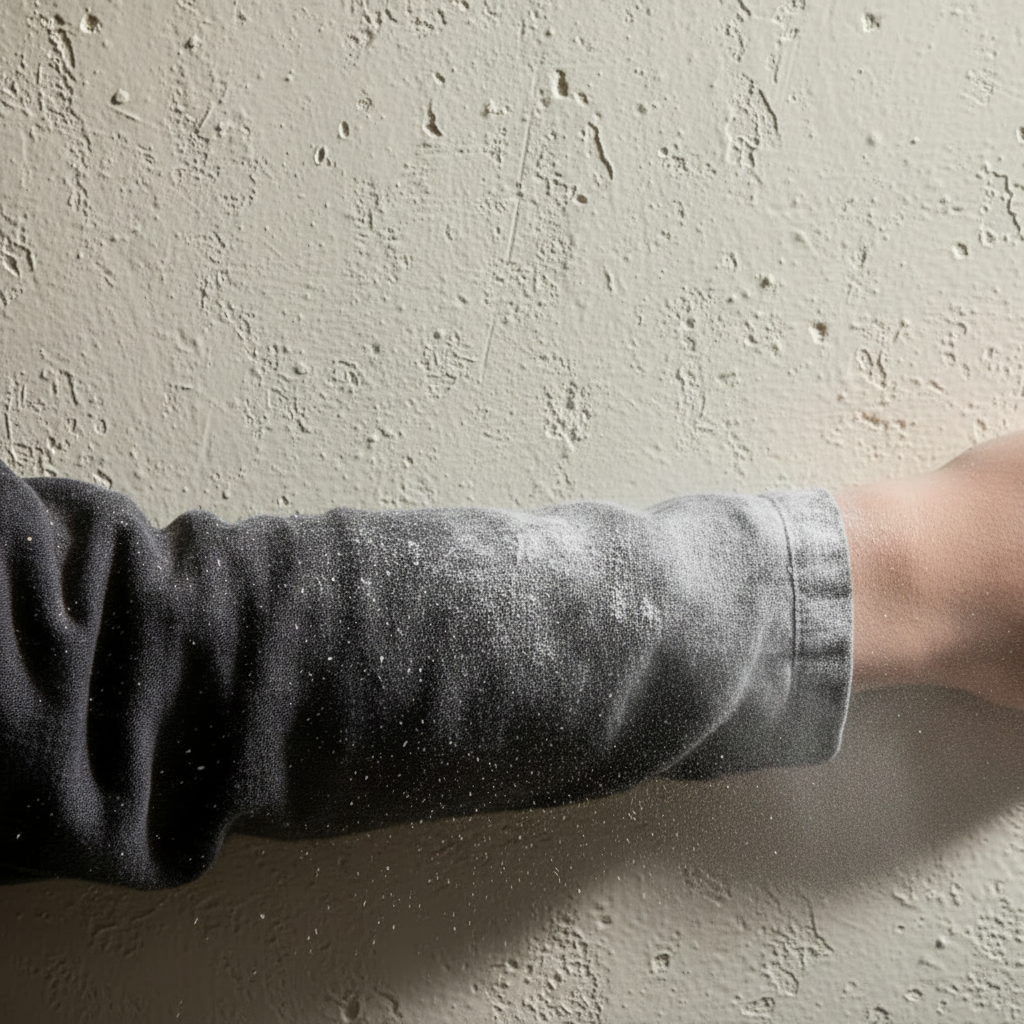
It can chalk. That powdery residue on your hand after you touch it? That's normal for lime. Some people like it. Most don't. You can seal it with a mineral-based fixative, but that reduces breathability.
Durability in high-traffic areas is nonexistent. Hallways, kitchens, bathrooms where people actually touch the walls — bad idea.
Application's specialized. You can't just roll this on over existing paint. Surface prep is intense. The substrate needs to be porous (bare plaster, masonry, or lime-compatible primer). Requires specific technique to prevent flash drying and cracking. Not a DIY weekend project unless you know what you're doing.
**Real-world applications:** I use this stuff constantly in historic restorations — like, that's probably 60% of where it goes. Also damp basements in old houses where nothing else has worked. Did a bunch of stucco exteriors in Orange County last year where the clients wanted authentic aging rather than that plasticky-looking acrylic finish. Sometimes upscale homes where the designer wants that raw, living aesthetic on low-traffic walls. Anywhere breathability and mold resistance trump washability.
It's a specialist product. But when it's the right call, nothing else comes close.
Synthetic Lime Paint: When You Want the Look Without the Drama
#### The Compromise Formula
So you're starting with regular lime — calcium hydroxide, same stuff that's been around since ancient Rome — but then manufacturers throw in maybe 5%, sometimes up to 15%, acrylic copolymers. Those polymers? They're doing a couple things. Better adhesion to questionable surfaces. More flexibility so the film doesn't crack as easily. And here's the big one: you're not spending three days prepping walls that have seventeen different layers of paint from seventeen different decades.
Last year we did this commercial building in downtown Chicago. Four stories. The walls were an absolute disaster — some spots had old latex from the '90s, other sections were oil-based enamel from God knows when, then there were these patches where they'd done repairs and it was just bare drywall. With straight-up traditional lime? We would've needed to strip all of that back to substrate. I'm talking weeks of prep. Probably $20K in labor just for the scraping and priming.
Synthetic lime? We cleaned the walls, hit them with 150-grit sandpaper (pretty light pass), rolled one coat of acrylic primer, then the synthetic lime went right over everything. Done a week early. Client saved somewhere around $15,000, and honestly the finish looked just as good as pure lime would've. Maybe 95% of the way there.
You lose some breathability — drops to maybe 10 or 20 perms instead of traditional lime's 50+ — but that's still miles better than standard latex. For most buildings? Totally fine. It's when you've got a genuinely historic structure with serious moisture management needs that you need the real deal.
#### The Upside
Cheaper than premium acrylics most of the time. Way cheaper than traditional lime when you factor in the prep work and specialized labor.
Tougher than pure lime. Scrub ratings typically hit 200-500 cycles. Still not great for kitchens, but acceptable for most residential walls.
Sticks to almost anything. Previously painted surfaces, drywall, plaster, even some wood applications. Much more forgiving.
You still get that matte, mineral aesthetic. Close enough that most people can't tell the difference from traditional lime.
Faster application. Works with standard rollers and brushes. Your average painter can handle it without special training.
#### The Downside
Less breathable than pure lime. If you're dealing with serious moisture issues in a historic building, this probably isn't enough.
The aesthetic's similar, not identical. Lacks that specific depth and patina development you get with traditional lime. If you're a purist, you'll notice.
Color palette's narrower than acrylics. Expanding, but still limited compared to the thousands of options you get with polymer paints.
**Real talk on where this gets used:** Commercial spaces with mixed substrates are probably the biggest category — I'd say that's 40% of our synthetic lime work. Then residential projects where clients dig the lime aesthetic but need something more durable, especially in hallways or spaces where people occasionally brush up against walls. New construction where breathability isn't critical but the look is. Budget-conscious historic renovations where traditional lime's just too expensive or labor-intensive. We've probably seen this category grow to like 30% of our specialty finish work over the last five years.
It's become probably 30% of our specialty finish work over the last five years. The market for it's growing.
Premium Acrylic Paint: The Workhorse 90% of Homes Actually Need
#### Why This Dominates Residential Work
I'll name names here: Benjamin Moore Advance is probably my go-to. Sherwin-Williams ProClassic runs a close second. Fine Paints of Europe if the client's got money and wants to feel fancy about it (though honestly, the performance difference doesn't justify the price gap for most jobs). These alkyd-modified acrylics — that's the technical term — they cure into this hard, resilient film that can actually handle how people live. Kids smearing peanut butter on walls. Dogs rubbing their wet fur everywhere. That one spot in the hallway everyone touches for some reason. The wall right behind the bathroom door that gets splashed every time someone steps out of the shower.
This category is roughly 90% of our residential work, and before you think we're just lazy or pushing whatever's easy — it's genuinely the right call for modern homes. The chemistry matches what most people need.
Now, so you've got a polymer dispersion — basically microscopic plastic particles suspended in water — that dries into this tough, flexible film. Tests for impact resistance (ASTM D2794, if you're into that sort of thing) come back excellent. The elongation ratings can hit 200% or even 300%, which in plain English means the paint stretches with your house instead of cracking every time the temperature swings and your framing expands or contracts by a fraction of an inch.
#### What Makes It Worth the Money
So the durability thing — it's not marketing. I've walked back into houses five, eight, ten years after we painted trim with ProClassic, and it still looks fresh. These paints genuinely resist chips and scratches and that general marring that happens when you actually live in a space. Don't skip this. There was this family in Vinings, three kids under seven, two dogs, total chaos. Their trim still looked perfect at the ten-year mark.
Washability's probably the feature that matters most to actual homeowners (not designers, not architects — people who live there). Scrub ratings exceed 1,000 cycles on the good stuff. Premium versions can hit 5,000+ cycles. You can take a sponge with actual cleaner — not just water, I mean like Mean Green or whatever — and wipe these walls down repeatedly. They don't degrade. Mud from soccer cleats, crayon from toddlers, spaghetti sauce from that dinner party — comes right off.
The color stays true, which sounds basic until you've seen what happens with cheap paint. UV resistance additives prevent fading near windows. Alkyd modifiers prevent that yellowing you get with straight latex (especially in whites and off-whites — super noticeable). What you see on day one is basically what you're seeing in year five.
VOC content's actually low on most premium lines now. We're talking under 50 g/L, lots of options at zero VOC. Meets Green Seal requirements, California CARB standards, LEED credits. You're not gassing out your house for three weeks.
Color options are basically infinite. Thousands of whites alone. Every sheen from dead flat (which I almost never recommend, but it exists) to high gloss.
And the hiding power's excellent — contrast ratio typically exceeds 0.98, which means you're usually looking at two coats max, even when you're covering something darker.
#### The Trade-Offs
Yeah, there are some. Can't breathe like lime does — permeability's way lower, usually under 10 perms. So if you've got an old house with moisture management issues built into the original design? This'll trap that water and cause problems down the road.
Initial cost is higher than builder-grade latex. You're looking at $60-$90 per gallon instead of $25-$35. But here's the thing — you're repainting every 10-15 years instead of every 3-5, so the math works out.
Application technique matters more than with cheap paint. You can't just slap it on. Needs proper surface prep, often a quality primer, and decent brushwork or you'll see lap marks and roller stipple.
Cure time's longer. Alkyd-modified acrylics can take 30 days to fully cure. You can use the room way before that, but it won't reach full hardness and chemical resistance for about a month.
**Where we actually use it (and I mean constantly):** Modern homes, period. That's the bulk of it. Kitchens and bathrooms where you need serious moisture resistance and cleanability. Trim work throughout the house — baseboards, crown molding, door frames, window casings. High-traffic areas like hallways, mudrooms, stairwells. Anywhere kids or pets are gonna make contact with the walls on a regular basis. Honestly, unless you've got a specific reason to use lime (historic building, serious breathability requirements, that particular aesthetic), this is what you should be using.
If I had to guess, probably 85-90% of our residential projects end up with premium acrylic on the majority of surfaces. There's a reason for that.
In-Depth Look
Detailed illustration of key concepts
Visual Guide
Infographic illustration for this topic
Side-by-Side Comparison
Visual comparison of options and alternatives

Sources & References
- How to Pick the Perfect White Paint Color for Your Space - Foyr Neo
- White Paint Colors: A Color Expert's Quick Guide - - Kylie M Interiors
- Best White Paints for Commercial Spaces: 2025 Trends Guide
- A Pro Painter's Top House Painting Tips and Tricks | HGTV Home Tips
- Best Interior & Exterior Paint Buying Guide
- Best Paint for Commercial Buildings
- INDUSTRY STANDARDS
- Best Industrial Painting Brands: A 2025 Comparison Guide
- Building Codes, Standards, and Regulations: Frequently ...
Frequently Asked Questions
Need Professional Help?
Find top-rated house painters experts in your area