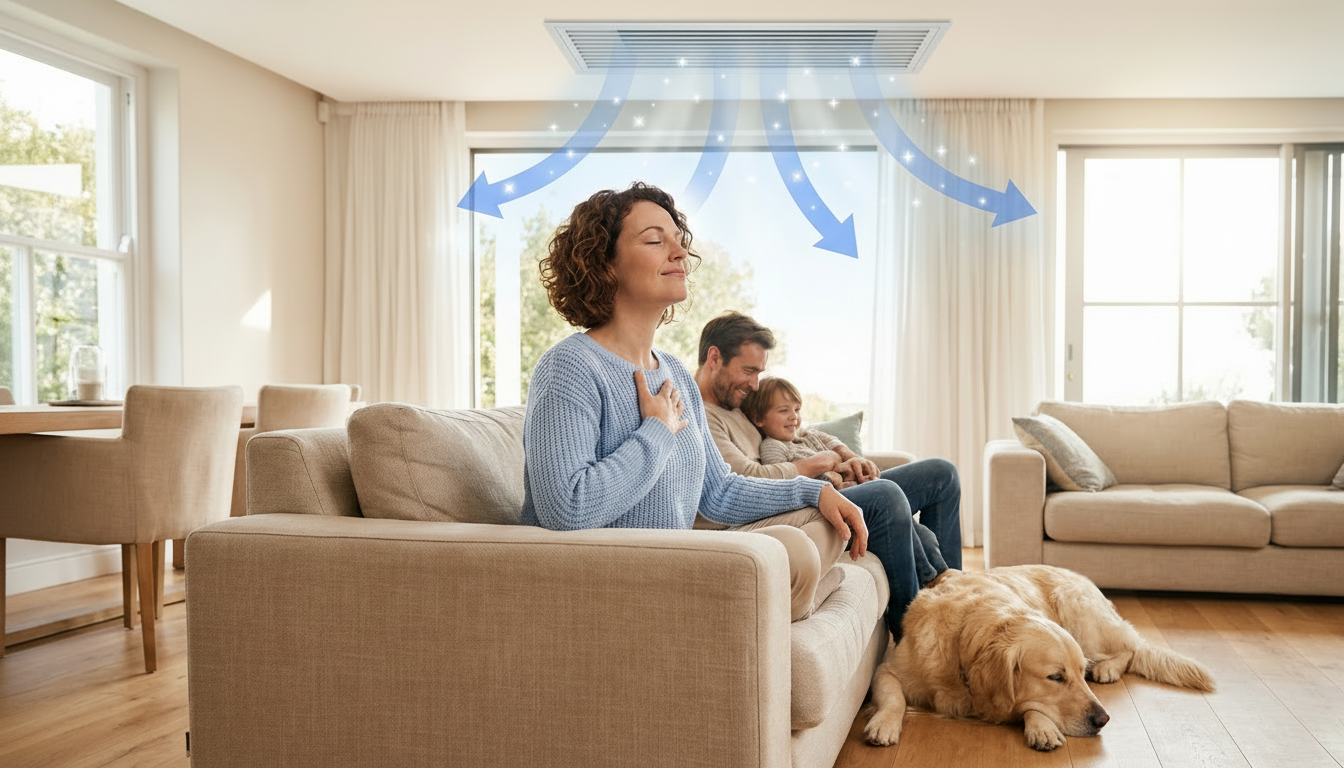
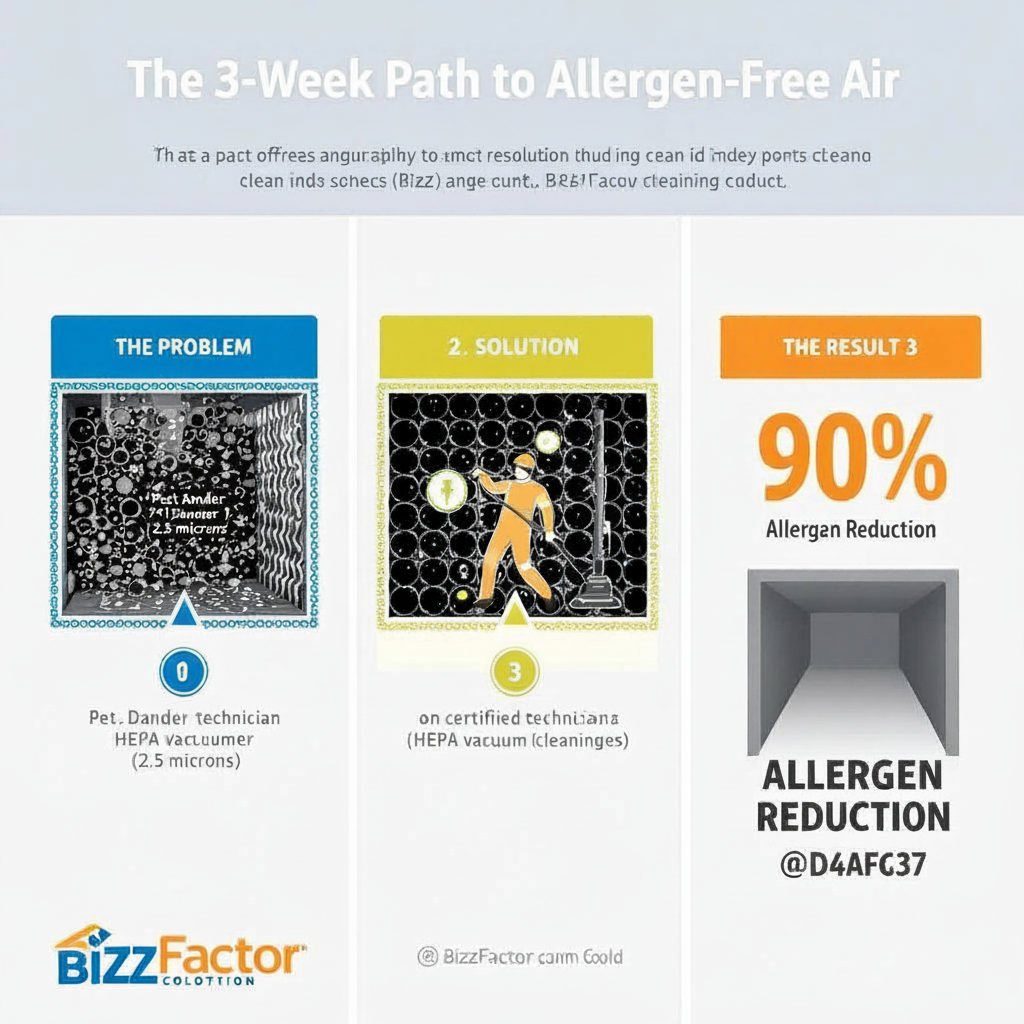
Stop pet allergies! Our HVAC cleaning service removes up to 90% of pet dander from your system, providing relief in 2-3 weeks.
Key Takeaways
- Mom cut her allergy meds down to maybe twice a week (from daily).
- Kids ditched the inhalers completely when they were home.
- The family reported around 70% improvement in symptoms overall.
- Got pets? Every 2-3 years. Not negotiable.
- Somebody in the house has asthma or serious allergies? Annual cleaning. Maybe even twice a year if symptoms are bad.
Key Takeaways
Pet Dander HVAC Cleaning: Stop Allergies in 3 Weeks
A family in Druid Hills called us last month. Mom was going through two boxes of Zyrtec a week. Dad slept on the couch because the bedroom triggered his asthma. Their pediatrician kept saying "maybe rehome the dogs?"
They'd tried everything except the one thing that actually works.
**HVAC cleaning** pulls about 90% of pet allergens out of your system — not from the air, from the *source*. We're talking about the ductwork that's been collecting dander for years, recirculating it every time your heat kicks on. Most families see real improvement within 2-3 weeks. Not placebo improvement. They cut their allergy meds in half. Kids stop needing rescue inhalers just to sleep in their own rooms.
Certified techs who know what they're doing can guarantee those results. Because when it's done right, it works.
what's Pet Dander and Why Does It Hide in Ducts?
Look — pet dander is basically microscopic skin flakes. We're talking 2.5 microns, which is about 30 times smaller than a human hair.
Your standard air filter? Might as well be a chain-link fence trying to catch sand.
Once these particles slip past (and they will), they set up camp in your ductwork for *years*. Every time your heat kicks on or the AC cycles, you're basically running a dander distribution system throughout your house.
And here's what gets me — they're so tiny they bypass most conventional filters without breaking a sweat. The mesh openings are just too big. So they slide through, settle into every crevice of your duct system, and wait.
Then your HVAC cycles. Boom. Fresh allergens delivered to every room.
Does this sound familiar? Because it should.
We inspected a house last year in Brookhaven where the new owners couldn't figure out why their allergies were going nuclear. Previous owners? Three cats. Those cats moved out over two years ago. But when we opened up those ducts, it looked like someone had packed them with felt. Pet dander from animals that didn't even live there anymore.
According to the EPA, pet dander can trigger reactions long after Fluffy's gone to the big litter box in the sky. It doesn't just vanish — it accumulates in places you can't reach with a vacuum or a damp cloth.
The Critical Mistake Most Cleaning Companies Make
Here's what drives me crazy: companies that show up, vacuum your ducts, and call it a day.
It's like power-washing your driveway but leaving the garage untouched. What's the point?
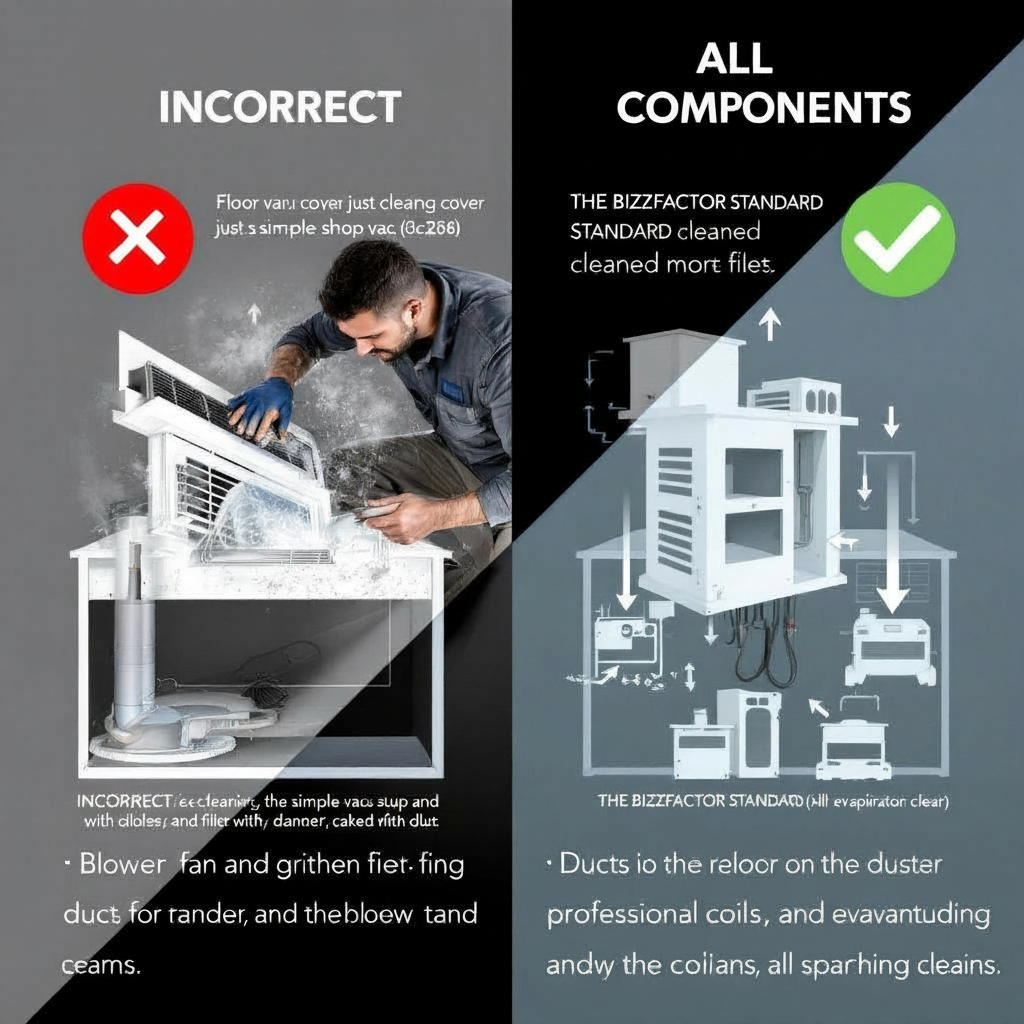
Most **duct cleaning services** miss what actually matters — your HVAC unit itself. I've seen blower fans so caked with dander-dust they looked like they'd grown fur. Evaporator coils? They're wet by design, which makes them allergen magnets. And air handlers can hide pounds (literally) of compacted pet dander.
Skip those components and your "cleaned" ducts will be re-contaminated within 48 hours. First cycle of the system and boom — right back where you started.
Look — at BizzFactor, we always insist on a comprehensive, full-system cleaning. No shortcuts. No excuses. This includes detailed attention to your [AC coil cleaning](/services/ac-coil-cleaning) and [furnace cleaning](/services/furnace-cleaning) needs to ensure all allergen sources are addressed.
How Do You Pick the Right HVAC Cleaning Service?
NADCA certification. You want to see it. Not negotiable.
The National Air Duct Cleaners Association sets actual standards for allergen removal — not just pushing dust around and calling it a day. I've seen too many weekend warriors show up with equipment that belongs in a garage, not a professional operation.
Real companies with NADCA credentials? They'll pull out their phones and show you video of your ducts *before* they touch anything. Then they'll show you after. No hide-the-ball nonsense. They stand behind what they do because they've got nothing to hide.
What's the Secret Most Guides Won't Share?
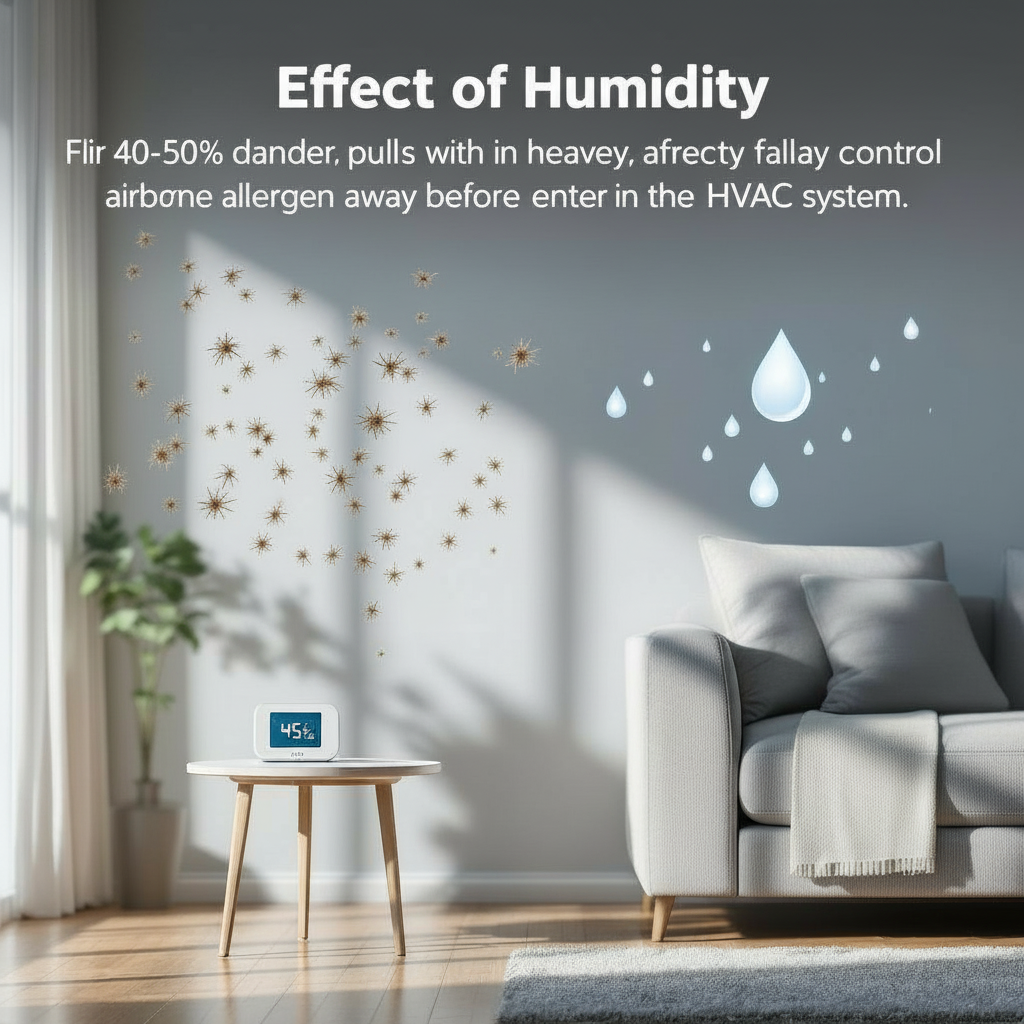
Consider increasing your home's humidity level to between 40-50%. This might sound counterintuitive, but here's why it works:
Higher humidity makes those floating dander particles absorb moisture. They get heavier. Instead of staying airborne for hours, they drop onto surfaces where you can actually vacuum them up *before* they get sucked into your return vents.
Don't go overboard, though. Push it past 55% and you're asking for mold problems. Get yourself a decent hygrometer from Amazon (they're like $15), and keep an eye on it.
How Professional Cleaning Eliminates Pet Allergens
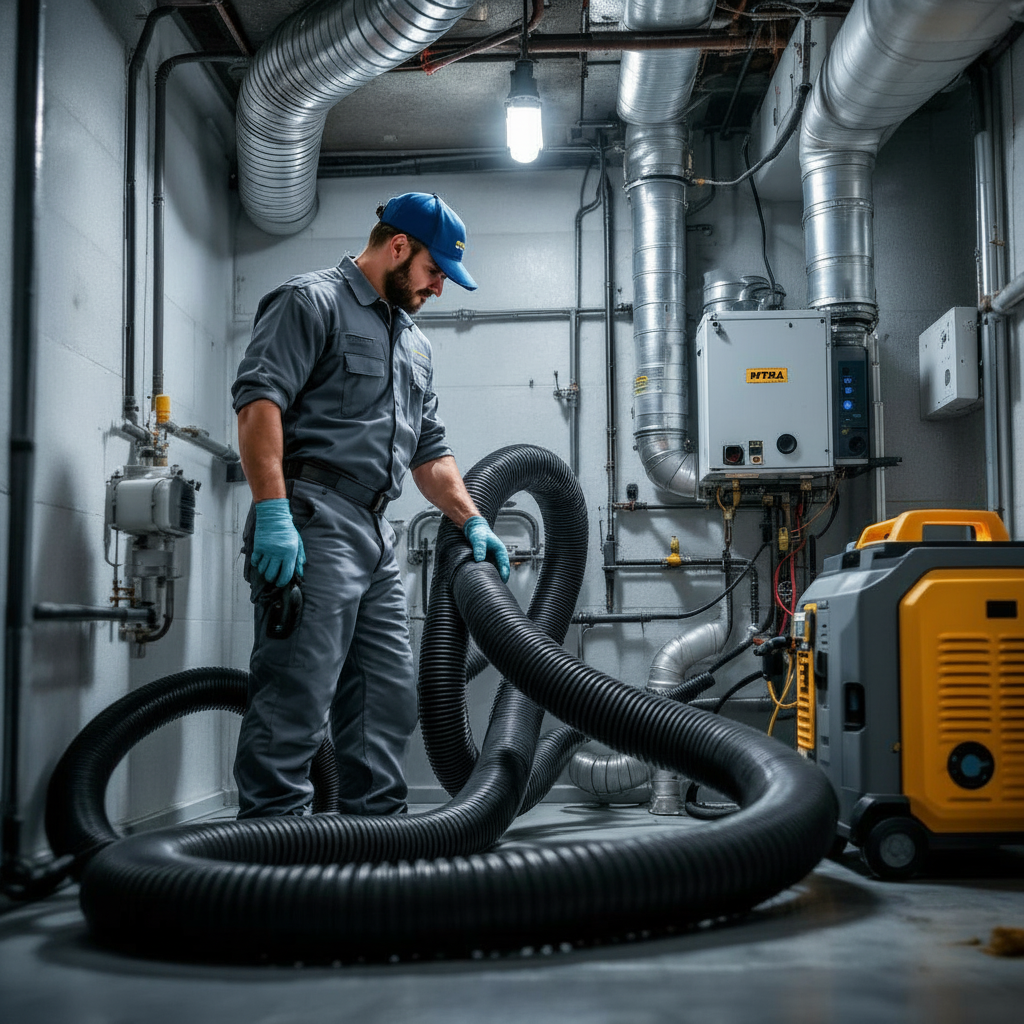
So we roll up with what basically looks like an industrial vacuum on steroids. Negative pressure systems paired with HEPA filtration. These things trap particles down to 0.3 microns — pet dander clocks in around 2.5, so yeah, we're grabbing everything that matters.
First thing? Video camera goes in. I want to see what we're dealing with. Is the worst buildup near where Bella sleeps under the hallway return vent? Are the trunk lines completely choked? Did the previous owner's Persian cat basically turn the air handler into a fur factory?
Each house tells a different story, and I'm not sending my guys in blind.
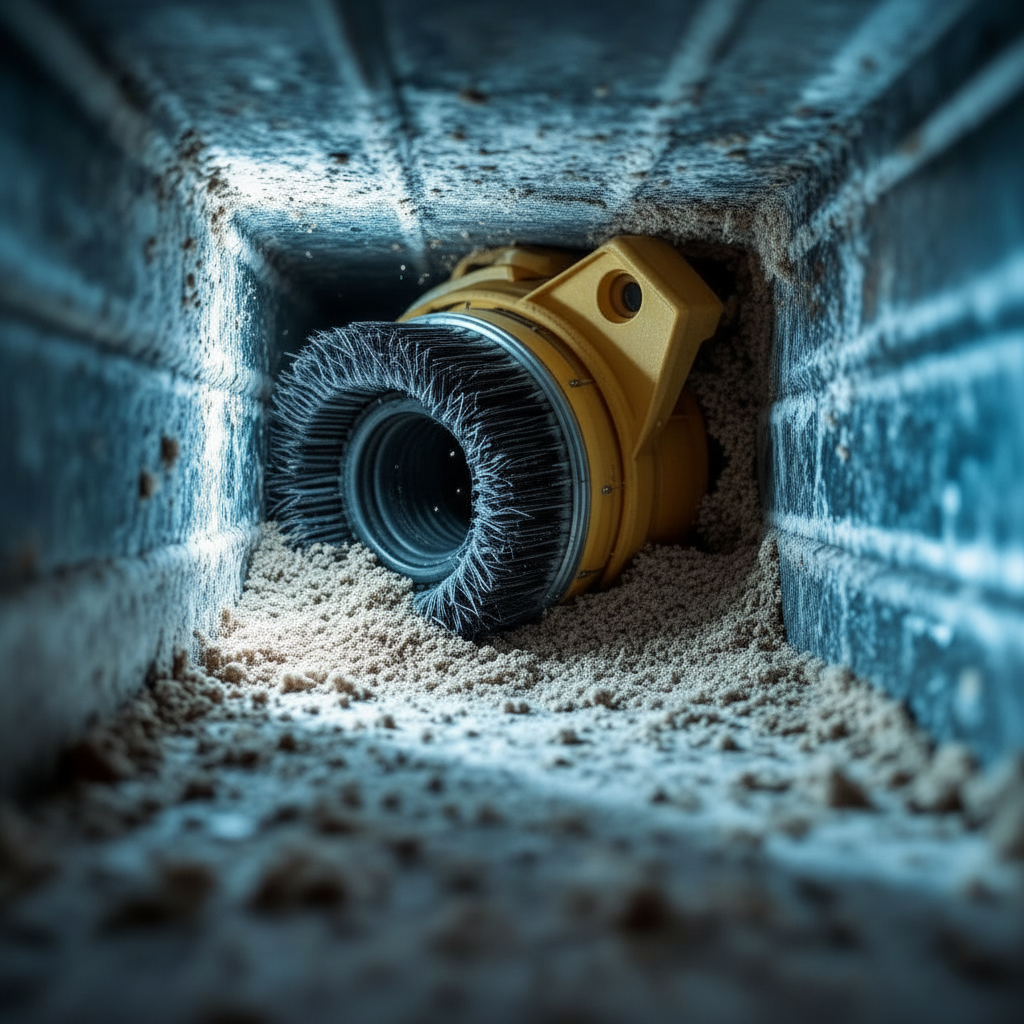
Here's what separates a real cleaning from the "$99 special" nonsense: **equipment that costs more than most people's cars.** We're running truck-mounted vacuums pulling 3,500 CFM (that's cubic feet per minute — basically hurricane-level suction). That's the real issue. We've got rotating brush systems that look like something from a sci-fi movie. And yeah, it's loud. Your neighbors will probably wonder what the hell is happening.
But that's what it takes to pull dander that's been baked onto duct surfaces for a decade.
IMC standards (that's International Mechanical Code, for anyone keeping score) require us to hit every single component. Not just the easy stuff you can reach from a hallway vent:
Here's the thing: 1. **Evaporator coils** — moisture traps dander like flypaper
2. **Blower fans** — usually the nastiest part of the whole system
3. **Air handler chambers** — hidden pockets where allergens love to hide
4. All ductwork — main trunks down to the smallest branch lines
The HEPA filtration during extraction? That's what actually matters. We're capturing particles as small as 0.3 microns while we work. Pet dander doesn't stand a chance.
Our certified techs guarantee this process because when it's done right, families see real improvement within a few weeks. Not "maybe" improvement. Real results.
Real Results: How One Family Beat Years of Allergies
Two golden retrievers. Beautiful dogs.
Also? Allergy machines.
This family in Sandy Springs had tried everything — bought a $400 Dyson air purifier, switched to those $30 filters at Home Depot, even started bathing the dogs weekly (which the dogs *hated*).
Mom was popping Claritin like Tic-Tacs. The kids needed their rescue inhalers just to sleep in their own bedrooms.
Now, when we showed up to inspect, I knew what we'd find before we even pulled the first vent cover. Return ducts near the dogs' favorite nap spots? Packed solid. Main trunk lines looked like someone had blown dryer lint through them for a decade straight.
Their system wasn't broken. It was just working against them — recirculating concentrated pet dander every single time the heat or AC kicked on.
We spent a full day on that house. Pulled everything apart.
Within two weeks:
- Mom cut her allergy meds down to maybe twice a week (from daily).
- Kids ditched the inhalers completely when they were home.
- The family reported around 70% improvement in symptoms overall.
You see this all the time when you actually remove the source instead of just medicating the symptoms. Pull the dander out of the system, and suddenly bodies stop reacting. It's not complicated — we just finally got rid of what was making them sick in the first place.
The best part? That family said their house "smells cleaner" now. Not like dog, not like whatever air freshener they'd been using to cover up the dog smell. Just... clean.
How Do You Choose Elite Duct Cleaning Services?
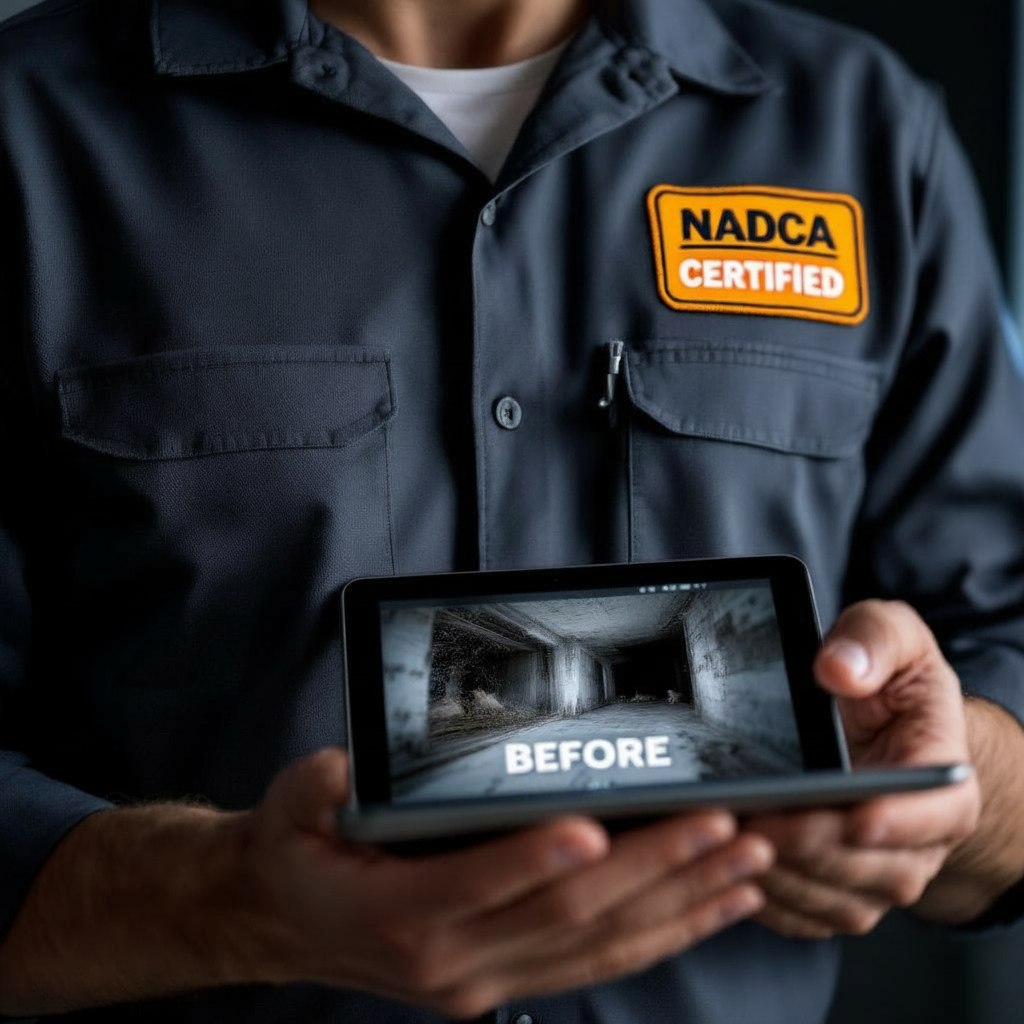
Real pros use video cameras. They've got NADCA credentials hanging on the wall. And they'll guarantee their allergen removal work in writing — not with weasel words, but with actual documented proof showing what your ducts looked like before and after.
Here's what separates the real pros from the guys with a van and a Shop-Vac:
**They'll show you video proof.** Not stock photos from their website — actual footage of *your* ducts before and after. No video? Walk away. Seriously.
**NADCA membership matters.** It means they've invested in training and equipment that meets actual industry standards. Non-members are basically winging it.
**Ask about their vacuum systems.** Professional rigs generate 3,000+ CFM of suction. Anything less won't pull embedded dander from duct surfaces. It'll just push it around.
**They clean EVERYTHING.** Ducts, coils, blower fans, air handlers — the whole system. If they're only quoting ductwork, they're missing half the problem.
**Get it in writing.** Legit companies guarantee their allergen removal work. Period.
You know those "$89 Whole House Cleaning!" mailers that show up around tax season? Here's what's really happening: they'll show up with a residential shop vac, run it through your main trunk lines for maybe 45 minutes, then hit you with a $1,200 "but we found mold!" upsell. Or they'll just do such a half-assed job that you're back to square one within a month.
Real pet dander removal takes time. And gear. My crew typically spends 4-6 hours on an average house (not counting really bad cases where we've gotta pull access panels or deal with flex duct that's basically disintegrated).
So — remember: you're making an investment in your family's health and well-being. The money spent on quality HVAC and **vent cleaning** can ultimately save you hundreds on allergy medications, doctor visits, and potential long-term health issues. Consider integrating this with [air purification solutions](/services/air-purification) for a holistic approach.
What's the Best Long-Term Strategy for Pet Dander Control?
Professional cleaning gets you to the starting line. Staying there? That takes a plan.
Monthly stuff (set a phone reminder):
1. Swap your air filter. MERV 11 minimum — yeah, they're $25 instead of $8, but we're not screwing around here.
2. Vacuum with a HEPA unit. Regular vacuums just blow fine particles back into the air. Learned that one the hard way.
3. Brush your pets outside. Seriously. My neighbor does this on his deck and it's cut his indoor dander by maybe 40%.
Once a year (usually spring):
Consider UV lights for your HVAC. They run about $400-600 installed, and they zap biological nasties between cleanings. Not magic, but they help. Just make sure whoever installs them actually knows what they're doing — I've seen units mounted backward (which does exactly nothing except waste electricity).
Professional cleaning schedule — this is where people usually mess up:
- Got pets? Every 2-3 years. Not negotiable.
- Somebody in the house has asthma or serious allergies? Annual cleaning. Maybe even twice a year if symptoms are bad.
- Just renovated? Had a roofing job that left dust everywhere? New puppy moved in? Schedule a cleaning.
The biggest mistake? Believing that a single cleaning will last indefinitely.
Pets shed constantly. Dander rebuilds faster than most people think. Stay ahead of it with regular maintenance, or you'll end up right back where you started — fighting symptoms instead of preventing them.
Here's the thing: families who stick to this plan don't need emergency cleanings. They're not constantly medicating. And they're definitely not dropping $40 a month on allergy meds at CVS.
Our warranty covers the work we do. But keeping your family breathing easy after that? That's on you to maintain. Do it right, and you'll probably forget what it was like when walking into your own house made your eyes water.
In-Depth Look
Detailed illustration of key concepts
Visual Guide
Infographic illustration for this topic
Side-by-Side Comparison
Visual comparison of options and alternatives
Sources & References
- Should You Have the Air Ducts in Your Home Cleaned? | US EPA
- The Comprehensive Guide to Air Duct Cleaning
- The Importance of Home Air Vent Cleaning for Allergy Relief
- How Can I Control Indoor Allergens and Improve Indoor Air Quality?
- Allergen-Free Home: Guide to Professional Duct Cleaning
- Building Codes, Standards, and Regulations: Frequently Asked ...
- [PDF] Building Codes Toolkit for Homeowners and Occupants - FEMA
- Building Codes | NAHB
- Building Codes and Standards - 101 Guide | ROCKWOOL Blog
- Model Building Codes - Smart Home America
Frequently Asked Questions
Need Professional Help?
Find top-rated hvac & air conditioning experts in your area