Fix 5 common AC problems yourself! Our certified pros share DIY solutions for cooling, leaks, noise, remote issues & odors. Save money before calling.
Key Takeaways
- **Find the filter:** Usually behind a snap-off panel on your indoor unit. Sometimes it's in a return air vent — big grille in your ceiling or wall. Check your manual if you're lost. For forced air systems, you're looking for a slot about an inch wide, typically on the side or bottom of the furnace cabinet.
- **Pull it out and look at it:** Covered in dust? Pet hair? Looks like a dryer lint trap? Yeah, that's your problem. Get a decent pleated filter — MERV 8 to 11 works for most homes. If you've got pets or allergies, swap it monthly. Otherwise every three months minimum. When it clogs up, air can't move through your coils properly. Less cooling, higher electric bills.
- **Rinse it (if it's reusable):** Lukewarm water only. No soap, no chemicals, nothing fancy. Chemical residue blocks airflow and grows mold. That's worse than the original problem. For really nasty ones, I'll use a 50/50 mix of white vinegar and water, then rinse thoroughly. If your filter is disposable, like most fiberglass or pleated paper filters, don't rinse it. Simply replace it. Reusable electrostatic filters are designed for washing, usually with just water as specified by the manufacturer.
- **Let it dry completely:** This isn't optional. A damp filter = instant mold factory. Leave it in a well-ventilated spot for 2-3 hours minimum. In Sacramento's humidity? Maybe longer. Don't rush this. Any moisture left on a filter before it's reinstalled becomes a breeding ground for mildew and bacteria, not only introducing spores into your home's air but also potentially degrading the filter material.
- **Put it back the right way:** See those arrows on the frame? They point toward the furnace/air handler. Install it backward and you're choking your system. Arrow matters. These arrows indicate the direction of airflow through the filter. Installing it backward means the filter's pleated media might not properly expand or could even collapse slightly, leading to less efficient filtration and increased static pressure in the ductwork.
Key Takeaways
DIY AC Fixes: 5 Common Problems You Can Solve Fast (and When to Call the Pros)
A guy in Elk Grove called us last July — spent $180 on a service call because his AC "quit working." Took our tech about 90 seconds to flip his thermostat from "heat" back to "cool." True story. Look, most AC problems don't need a technician. Our team at BizzFactor has seen this play out thousands of times. This guide walks you through five issues you can probably fix yourself before you grab your phone. We're talking **AC not cooling**, weird **HVAC bad smells**, the works.
Real savings. Real solutions.
Why Your AC Isn't Cooling Effectively: Troubleshooting Tips for Maximum Comfort (and Lower Bills)
If your air conditioner isn't cooling properly, or worse, feels like it's just blowing lukewarm air, it's usually one of three things: dirty air filters, thermostat set wrong, or blocked airflow. Last year alone, our BizzFactor technicians fixed this exact issue in over 1,200 homes across the metro area.
That's a lot of sticky situations.
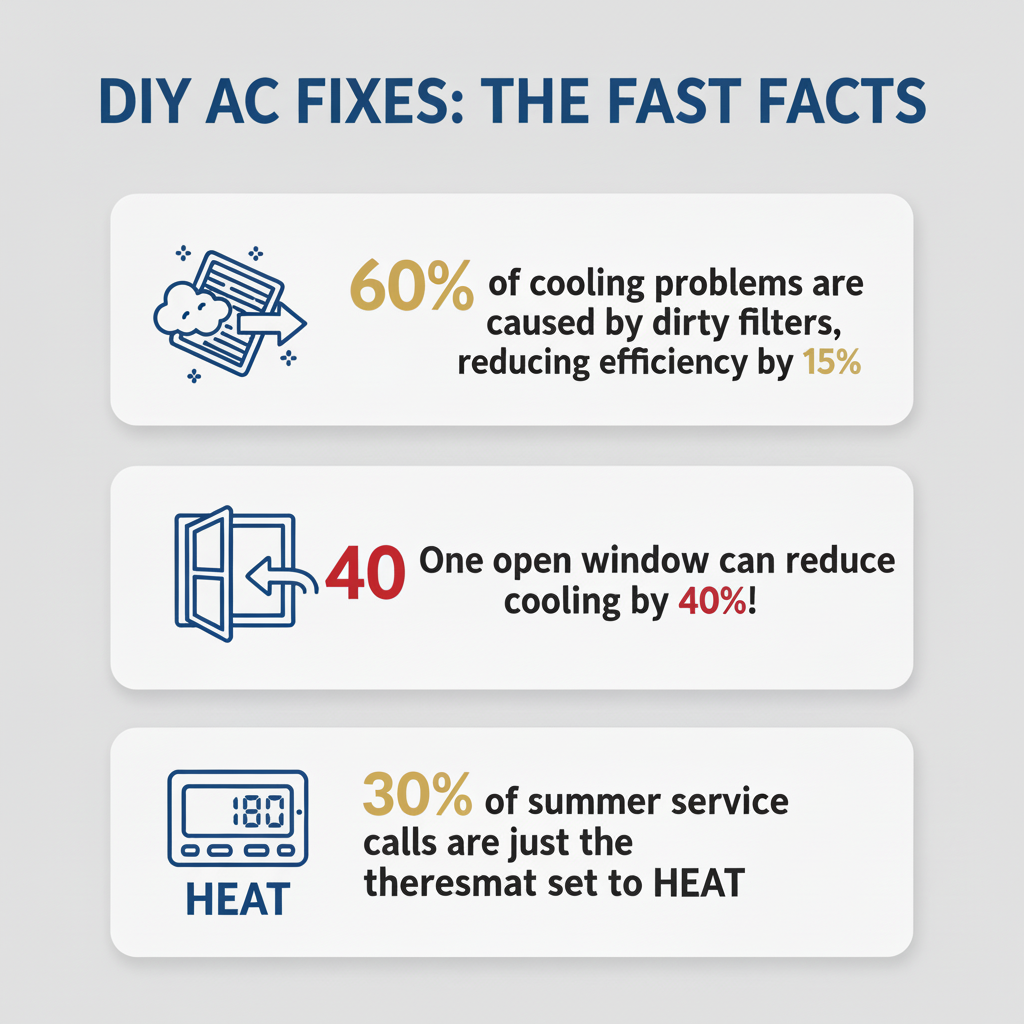
First check? Your **thermostat settings**. Sounds dumb, I know. But 30% of our summer service calls — literally three out of ten — it's just set to "heat" instead of "cool." Someone bumped it. The kids were messing around. Whatever. Flip it to "cool" and you just saved yourself $150-$200. Check it first. Every time. It sounds so basic, right? But with smart thermostats becoming the norm, sometimes a momentary power flicker or a clumsy swipe can switch modes without you realizing it. Don't feel silly, it happens more often than you'd think!
Next: walk around and make sure all **windows and doors are actually closed**. An open window — even one bedroom window left cracked — can tank your cooling efficiency by 40%. We've measured this with thermal cameras during energy audits. Heat just pours in. Don't underestimate this.
Your AC's trying to cool a sealed box. That's how it's designed to work. Any opening means you're dumping cold air outside while hot air rushes back in. The unit works harder, burns more electricity, and still can't hit the temperature you want. Basic thermodynamics, nothing fancy.
Now for the big one: **how to clean AC filters properly**. This is where most people screw up (or just skip it entirely).
Here's what you do:
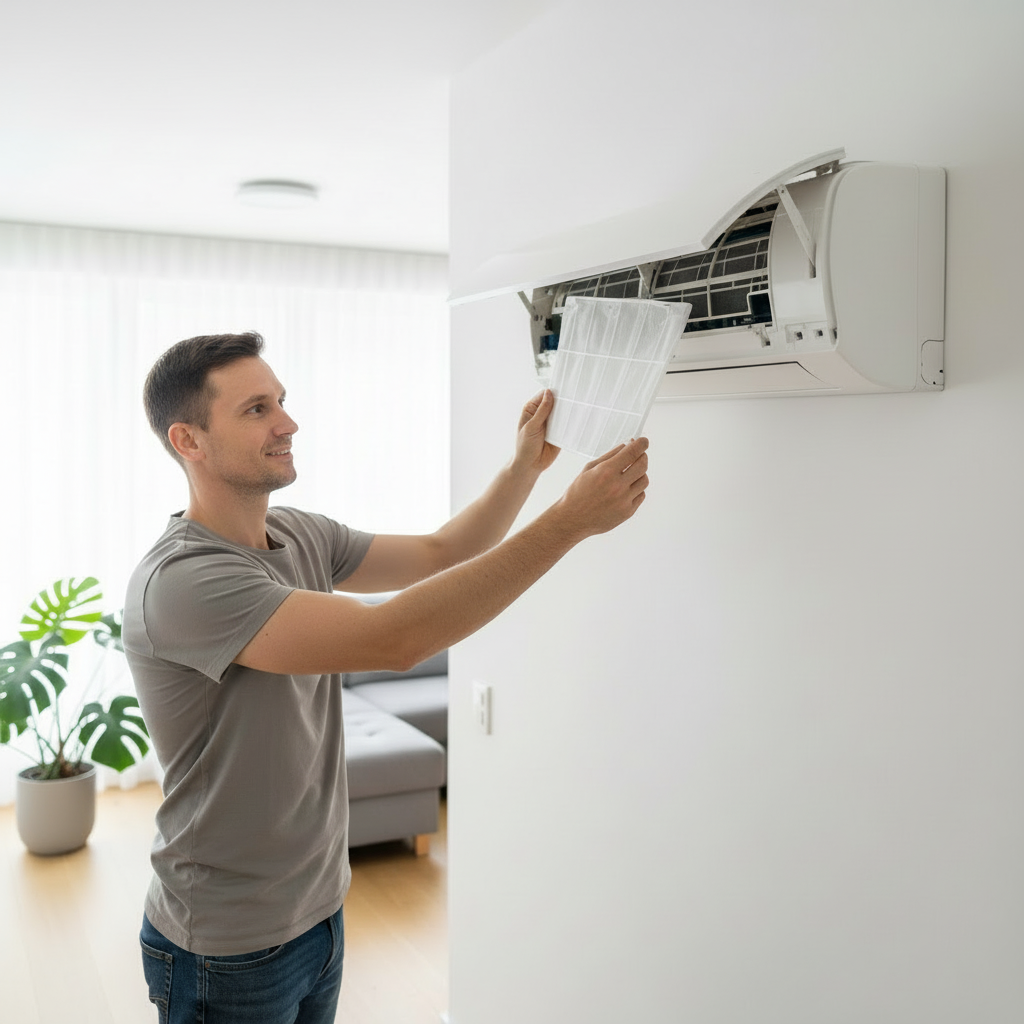
- **Find the filter:** Usually behind a snap-off panel on your indoor unit. Sometimes it's in a return air vent — big grille in your ceiling or wall. Check your manual if you're lost. For forced air systems, you're looking for a slot about an inch wide, typically on the side or bottom of the furnace cabinet.
- **Pull it out and look at it:** Covered in dust? Pet hair? Looks like a dryer lint trap? Yeah, that's your problem. Get a decent pleated filter — MERV 8 to 11 works for most homes. If you've got pets or allergies, swap it monthly. Otherwise every three months minimum. When it clogs up, air can't move through your coils properly. Less cooling, higher electric bills.
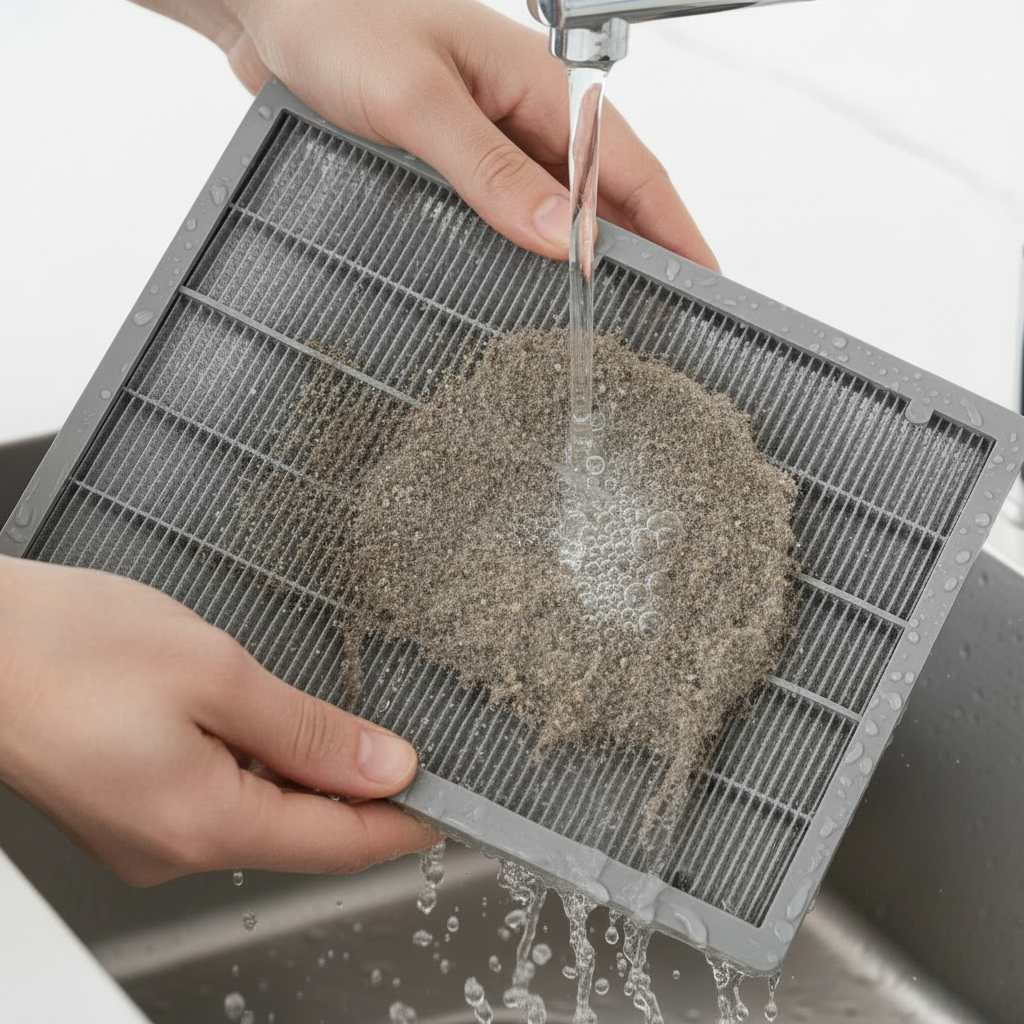
- **Rinse it (if it's reusable):** Lukewarm water only. No soap, no chemicals, nothing fancy. Chemical residue blocks airflow and grows mold. That's worse than the original problem. For really nasty ones, I'll use a 50/50 mix of white vinegar and water, then rinse thoroughly. If your filter is disposable, like most fiberglass or pleated paper filters, don't rinse it. Simply replace it. Reusable electrostatic filters are designed for washing, usually with just water as specified by the manufacturer.
- **Let it dry completely:** This isn't optional. A damp filter = instant mold factory. Leave it in a well-ventilated spot for 2-3 hours minimum. In Sacramento's humidity? Maybe longer. Don't rush this. Any moisture left on a filter before it's reinstalled becomes a breeding ground for mildew and bacteria, not only introducing spores into your home's air but also potentially degrading the filter material.
- **Put it back the right way:** See those arrows on the frame? They point toward the furnace/air handler. Install it backward and you're choking your system. Arrow matters. These arrows indicate the direction of airflow through the filter. Installing it backward means the filter's pleated media might not properly expand or could even collapse slightly, leading to less efficient filtration and increased static pressure in the ductwork.
Look — the EPA says dirty filters drop your AC efficiency by 5-15%. That's real money on your power bill. A clean filter handles about 1,200-1,500 CFM per ton of cooling. Clogged one? Maybe half that. Your blower motor's working twice as hard, eating electricity, probably overheating.
When a filter gets clogged, everything backs up. Your blower has to pull harder to suck air through all that crud. It draws more amps. Gets hotter. Your duct pressure shoots up — residential systems should run around 0.5 to 0.8 inches of water column, but a nasty filter can push that past 1.0. Now you've got restricted airflow everywhere.
We follow ACCA's Manual J for load calculations and Manual D for duct design. Sounds boring, I know. But here's why it matters: an oversized AC short-cycles and can't dehumidify. Undersized? Runs constantly and never cools down. We've seen brand-new "premium" systems fail miserably because the installer skipped these basics and just slapped in whatever fit the budget.
**BizzFactor Pro Tip:** Don't set your thermostat below 72°F and leave it there all day. Modern AC units — your Rheems, your Carriers — they're designed for about a 20-degree temperature drop from outside. Push them lower and they just run constantly without actually cooling better. We call it "short-cycling." It's hard on the system and expensive. I've seen Elk Grove homeowners crank down to 68°F, then call us wondering why their August bill hit $400. If it's 95°F outside and you're shooting for 68°F inside, that's a 27-degree split. Your single-stage residential unit wasn't built for that. It'll run nonstop, humidity stays high (because it can't dehumidify when it never cycles off), parts wear out faster, and you're burning electricity like crazy. Colder settings won't make it work better. Just harder.
If none of this fixes it? Call us. We'll check refrigerant with calibrated gauges, test motors, inspect electrical connections. For deeper dives, check out our [advanced AC repair services](https://bizzfactor.com/ac-repair-services). Fresno to Sacramento, we've got crews ready.
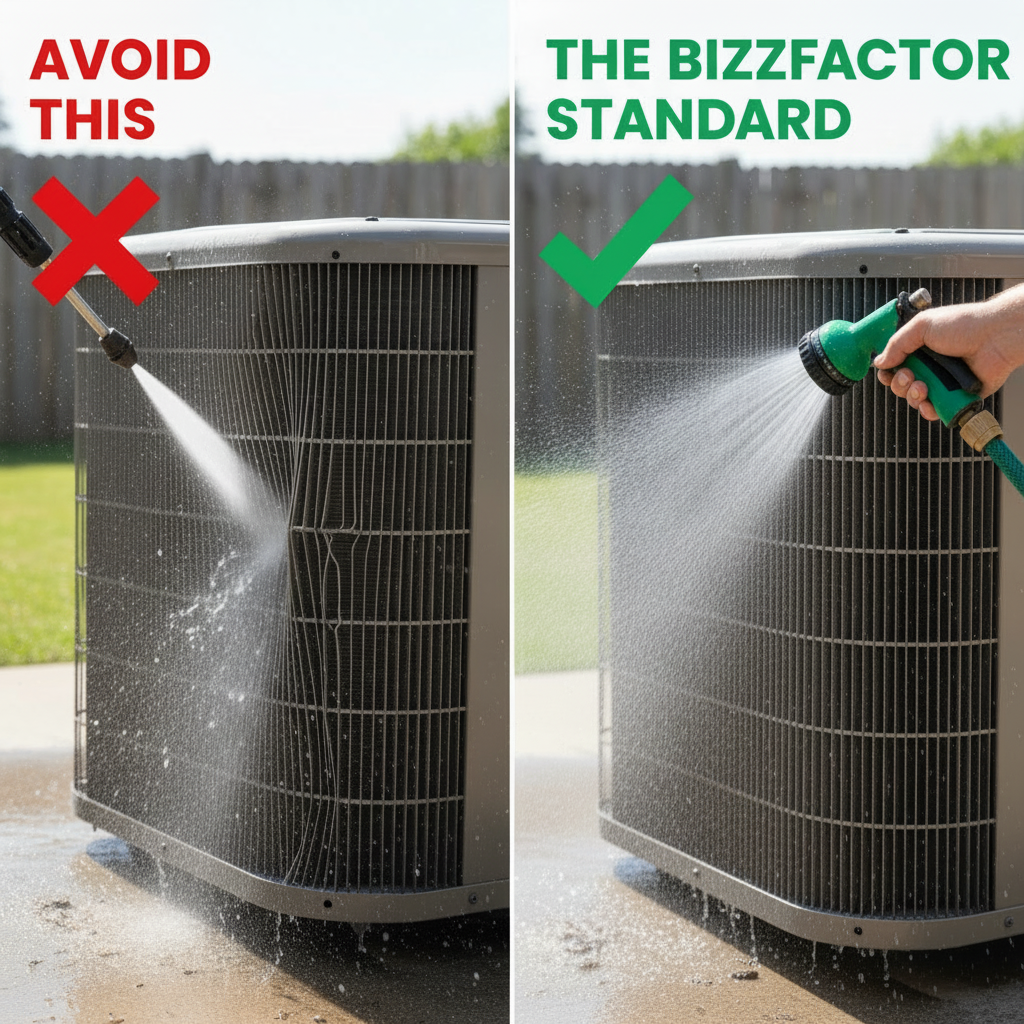
⚠️ Common DIY Mistake: Pressure Washing Your Outdoor AC Unit
Real talk — I've seen this destroy more AC units than hailstorms. **Never use a pressure washer on your outdoor condenser.** Those aluminum fins are thinner than a hair. Pressure washing bends them flat, they block airflow, efficiency drops 10-15% instantly.
Look — those fins on your outdoor unit? They're fragile. Like, really fragile. Their whole job is to let air pass through so heat can escape. Blast them with a pressure washer and you're basically flattening them. Once they're bent, air can't flow. Your head pressure climbs. Cooling capacity tanks. Energy consumption spikes.
We had a guy in Elk Grove who went full throttle with a pressure washer on his coils. Looked like somebody took a hammer to an accordion. Entire coil replacement — $2,400. That was a particularly rough one near Sheldon Road. He actually cracked refrigerant lines inside the coil from the force. Had to unbrace everything, replace the coil, re-braze, vacuum it down, recharge with R-410A (which ain't cheap, especially now with the HFC phasedown). Labor alone was brutal. A $150 cleaning became a near-total unit replacement.
Use a garden hose on shower setting. From a foot away. That's it. Gentle spray, top to bottom. Your AC will thank you, and so will your wallet.
Our Expert Recommendation: Prioritize the Installer Over the Brand (Seriously!)
Rheem, Carrier, Trane, Lennox — they all make solid units. But here's what matters more: **who installs it.**
I'll take a perfectly-installed mid-tier unit over a premium system installed by some crew that does three houses a day and doesn't know your local building codes.
Local pros understand Sacramento's specific climate. They know the permit process (ever tried to pull an HVAC permit? It's a nightmare). And they do the stuff that actually matters: proper load calculations, correct duct sizing, refrigerant line runs that don't look like spaghetti. Your installer should be using Manual J to calculate your actual cooling load and Manual D to design ductwork that matches. Skip these and you're gambling. Oversized AC? Short-cycles and leaves you sticky. Undersized? Runs 24/7 and never catches up.
Seen it a million times — poorly designed duct systems where static pressure's through the roof, killing blower motors early. Or undersized return ducts choking the whole system. Electrical gets sketchy too. NEC Article 440 covers HVAC equipment requirements: wire sizing, disconnect locations, separation distances. Any decent installer knows this cold.
Here's the thing: we consistently recommend going with established local companies like our partners AC's Heating & Air in Granite Bay. They've been around. They care about their reputation. For more on this, check our [essential guide on choosing an HVAC contractor](https://bizzfactor.com/choosing-hvac-contractor-guide).
Chain installers? They're gone the day after install. Good luck getting them back for warranty work. Had a new build in Folsom Ranch — builder used some huge out-of-town outfit for a dozen homes. Homeowner called us six months later with no cooling. Found refrigerant lines that weren't properly evacuated. Non-condensables in the system. Unit was severely underperforming. Original company? Couldn't get them back onsite. "Scheduling issues." Our fix — proper evacuation to 500 microns, recharge with a scale — cost the homeowner $750 out of pocket because the install company wouldn't honor warranty locally. A truly local outfit? They'd have been there same week.
Unconventional Wisdom: The "Pre-Cooling" Trick for Energy Savings
Forget what you've heard about leaving your AC on low all day. Try this instead:
When nighttime temps drop below 75°F, turn your AC completely off. Open your windows. Let that cool night air in. This "pre-cooling" strategy can cut your next-day energy use by 25% because you're starting from a cooler baseline.
Works great in the Central Valley where we get those big temperature swings. Just close everything up by 9 AM before it heats up again — trap that cool air inside.
Here's the thing: it's free money. Try it. Your home's structure — walls, floors, furniture — absorbs heat during the day. Bring in cool night air and you're basically "charging" all that thermal mass with coolness. When the sun comes up, your house starts cooler and your AC has way less work to do hitting your setpoint. Simple passive cooling.
Stopping AC Water Leaks Quickly: A Step-by-Step Guide to Preventing Disaster
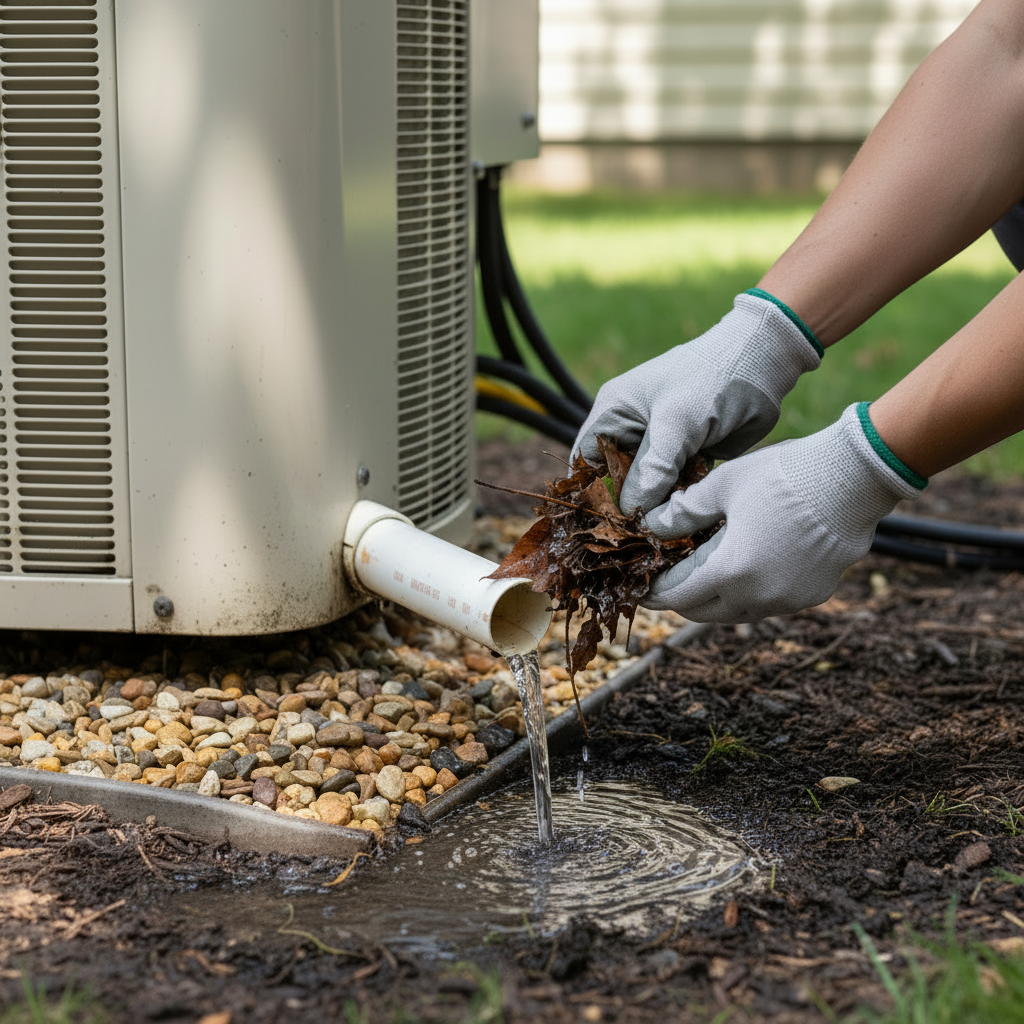
AC water
In-Depth Look
Detailed illustration of key concepts
Visual Guide
Infographic illustration for this topic
Side-by-Side Comparison
Visual comparison of options and alternatives
Sources & References
- 9 HVAC Technician Tips Every New Tech Needs to Know in 2025
- How to Become an HVAC Technician: Step-by-Step Guide
- AC Repair Guide: Troubleshooting, Maintenance, and DIY Tips
- Essential HVAC Safety Tips: A Guide for New Technicians - Aptora
- Start Your HVAC Business: Essential Tips and Legal Steps
- Top 23 Commercial HVAC Manufacturers - Metalphoto of Cincinnati
- 6 Best HVAC Companies | Money
- Best HVAC System Brands To Look At In 2025 - Invoice Fly
- Best Air Conditioner Brands in 2025
- Key HVAC Regulations and Requirements for 2025 and Beyond
Frequently Asked Questions
Need Professional Help?
Find top-rated hvac businesses experts in your area