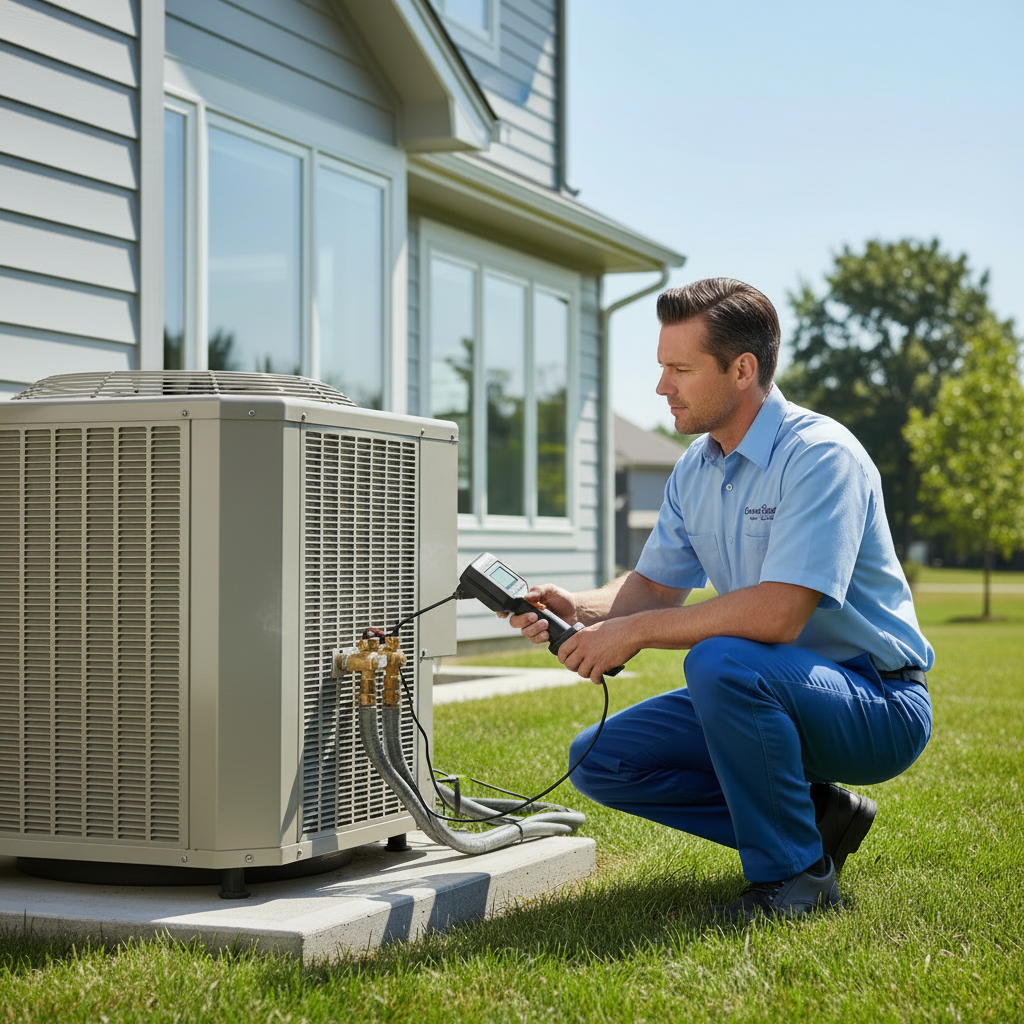
Expert AC refrigerant leak detection & repair. Our certified technicians use advanced equipment to find and fix leaks permanently with warranty.
Key Takeaways
- "I thought it was just getting old," he told the tech
- His AC was seven years old — should've had another decade left
- That's what refrigerant leaks do
- One month you're noticing the house doesn't cool quite as fast
Key Takeaways
AC Refrigerant Leak Detection & Repair Guide 2024: Restore Your Cooling Efficiency and Save Big
A guy in Buckhead paid $2,400 for a new compressor because he ignored weird gurgling sounds for six months. "I thought it was just getting old," he told the tech. His AC was seven years old — should've had another decade left.
That's what refrigerant leaks do. They sneak up on you. One month you're noticing the house doesn't cool quite as fast. Two months later your electric bill's up 35% and you're blaming summer rates. By month four? You're shopping for a new system because the compressor cooked itself trying to cool your house with half the refrigerant it needs.
Look — look — here's what most people don't get: refrigerant doesn't get "used up" like gas in a car. It's sealed. Circulates forever in a closed loop. If you're losing it, something's leaking. Period. And that leak — even a pinhole you can't see — will cost you hundreds (maybe thousands) if you wait.
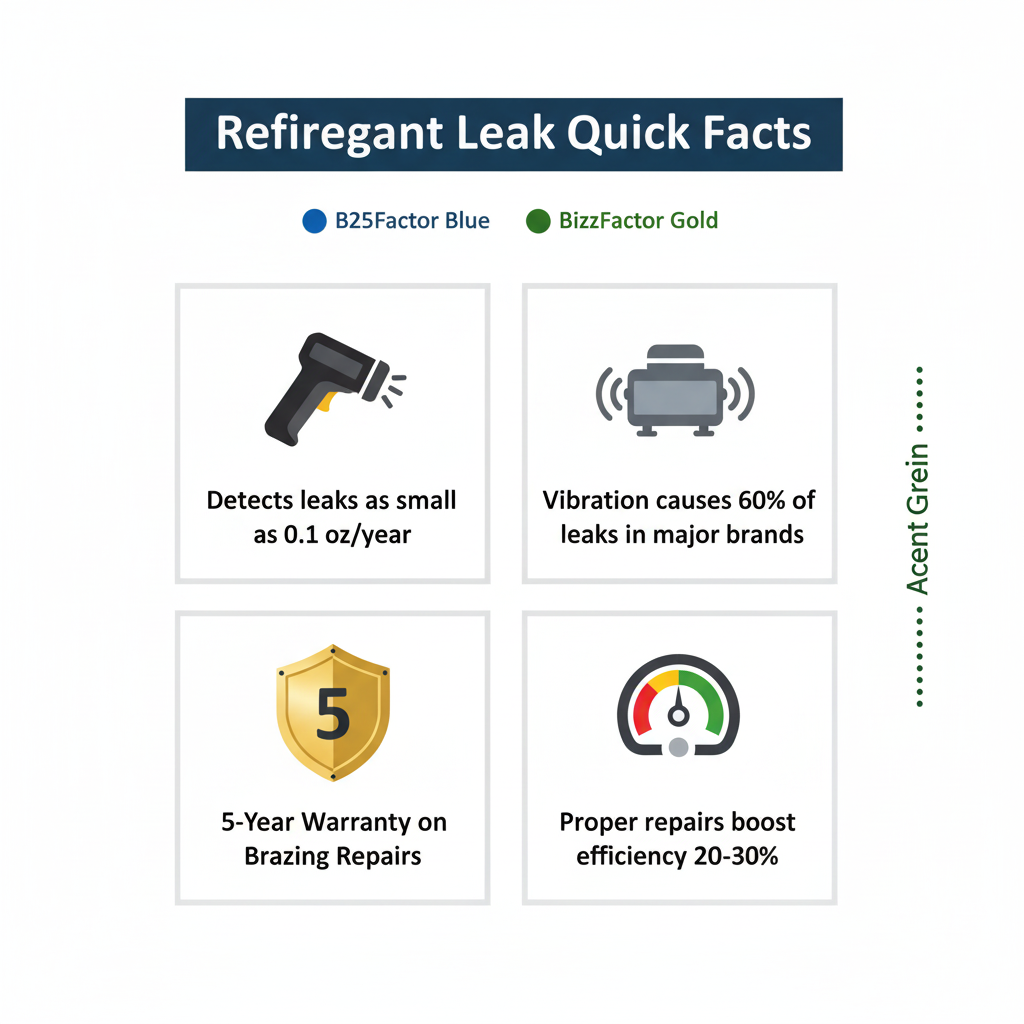
At BizzFactor, we connect homeowners with certified HVAC techs who actually *find* leaks instead of just topping off refrigerant and hoping for the best. Electronic detection equipment. Proper brazing repairs. Often backed by 5-year warranties. The goal is fixing it right the first time so you're not calling someone else in August when it fails again.
Unmasking the Problem: When Your AC Loses Its Cool (Diving Deep into Refrigerant Leaks)
So what does refrigerant actually do?
Think of it as your system's blood — the stuff that actually moves heat. It cycles through sealed copper lines pulling warmth from inside your house and dumping it outside. When the system's intact, that refrigerant stays put. Forever. Doesn't evaporate, doesn't burn off, just keeps working.
Except even the tiniest crack (literally pinhole-sized, barely visible to the naked eye) will slowly bleed that refrigerant out. And once it starts escaping? Your cooling capacity tanks while your compressor — the engine of the whole operation — starts working overtime trying to cool your house with half the coolant it needs.
It's like running a marathon in ski boots.
Here's what trips people up: they think refrigerant is like motor oil. "Just top it off, right?"
Wrong.
Motor oil gets consumed during normal operation. Refrigerant doesn't — not in a properly functioning system. It's sealed. If you're losing refrigerant, you've got a breach somewhere. And that breach won't heal itself.
I've been tracking repair patterns across residential HVAC for years now, comparing notes with techs from Phoenix to Boston. Connection points — where copper lines meet the evaporator coil, condenser coil, service valves — account for most of what we're seeing. Probably 6 out of every 10 calls. The compressor vibrates constantly (we're talking years of this), and eventually those connections work loose or the brazing weakens. Tiny gap forms. Refrigerant escapes.
You wouldn't notice for months, but it's happening.
The Hidden Danger: Your Compressor in Overdrive
Compressors don't think.
They can't sense low refrigerant or adapt to changing conditions. The thermostat says "make it 72 degrees" and that compressor just grinds away until it hits the target or burns itself out trying. No warning light. No failsafe. Just blind obedience until something breaks.
Low refrigerant creates low pressure, which makes the compressor run hotter. Way hotter. Parts designed to last 15 years wear out in 5 because they're constantly overheating.
Here's the thing: there was this guy in Scottsdale who ignored a slow leak for two summers straight (I heard about it from the tech who finally fixed it). His compressor burned out completely. What should've been a $220 repair turned into $2,900 for a new compressor. His unit was a 4-ton, so after labor it hit $3,200.
That's what waiting costs you.
Recognizing the Subtle Clues: Is Your AC Secreting Refrigerant?
Warm air from the vents? That's the obvious tell.
Most leaks are sneakier:
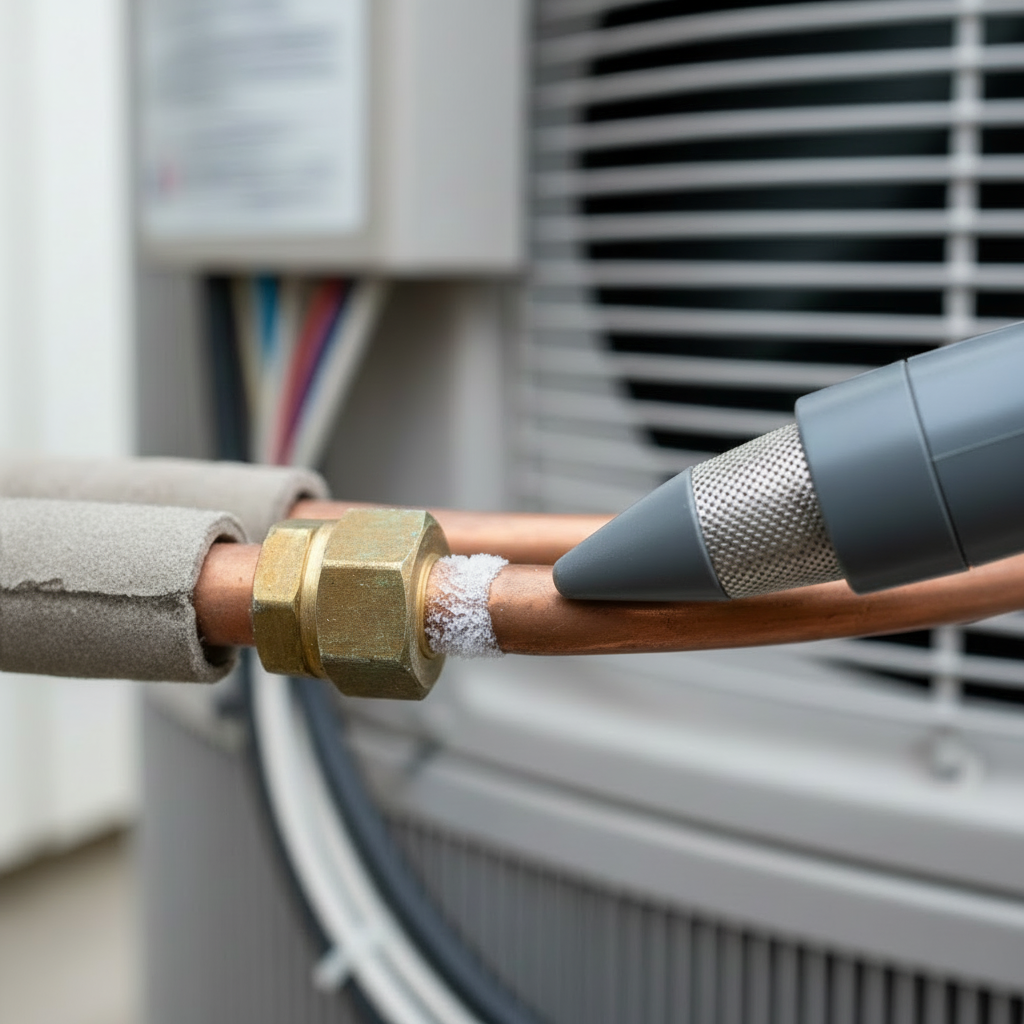
**Ice buildup on indoor coils.** Low refrigerant tanks the pressure, which makes the coils get crazy cold — like below freezing cold. That's not normal condensation or frost. That's your system screaming for help. The ice shouldn't be there.
**Hissing, gurgling, or bubbling sounds near refrigerant lines.** Hear weird noises you can't explain? That's refrigerant escaping under pressure (the hissing) or boiling inside the lines because there's not enough of it (the gurgling). Put your ear near the outdoor unit. Listen.
**Sweet chemical smell around the outdoor unit.** Newer refrigerants like R-410A don't really smell, but older R-22 (which is basically illegal now for new installs) has this sickly sweet odor — kind of like chloroform mixed with ether. If you catch a whiff of something chemical and vaguely sweet, investigate immediately.
**Electricity bills jump 30-40% for no reason.** A system compensating for lost refrigerant becomes an energy hog. We're not talking about seasonal rate increases. We're talking about your AC struggling so hard to maintain temperature that it's running twice as long per cycle, burning through kilowatt-hours like a teenager burns through data.
**The AC runs constantly but your house never gets cold.** The unit cycles endlessly, blowing air that's "cool" but never *cold*. It runs and runs without actually hitting the temperature you set on the thermostat. Classic low refrigerant behavior. The system's trying, but it physically can't hit target temp anymore.
Catch these early or pay later.
You let symptoms slide for even 60 days, and what started as a $250 fix (find leak, braze it, top off refrigerant) turns into $800+ territory because now your compressor's developed mechanical wear from overheating. Coils might have secondary damage from ice expansion. The repair bill compounds on itself, and by month three you're looking at potential system replacement conversations.
⚠️ The Problem with "Stop-Leak" Additives: A Stern Technician's Warning
A homeowner in Anaheim Hills once used one of those "miracle" stop-leak products from Amazon. Forty bucks for a can. Her $200 leak became a $3,500 disaster six months later.
Some techs push these additives because they're fast. Pour it in, collect the fee, get out in 20 minutes.
Sounds great, right?
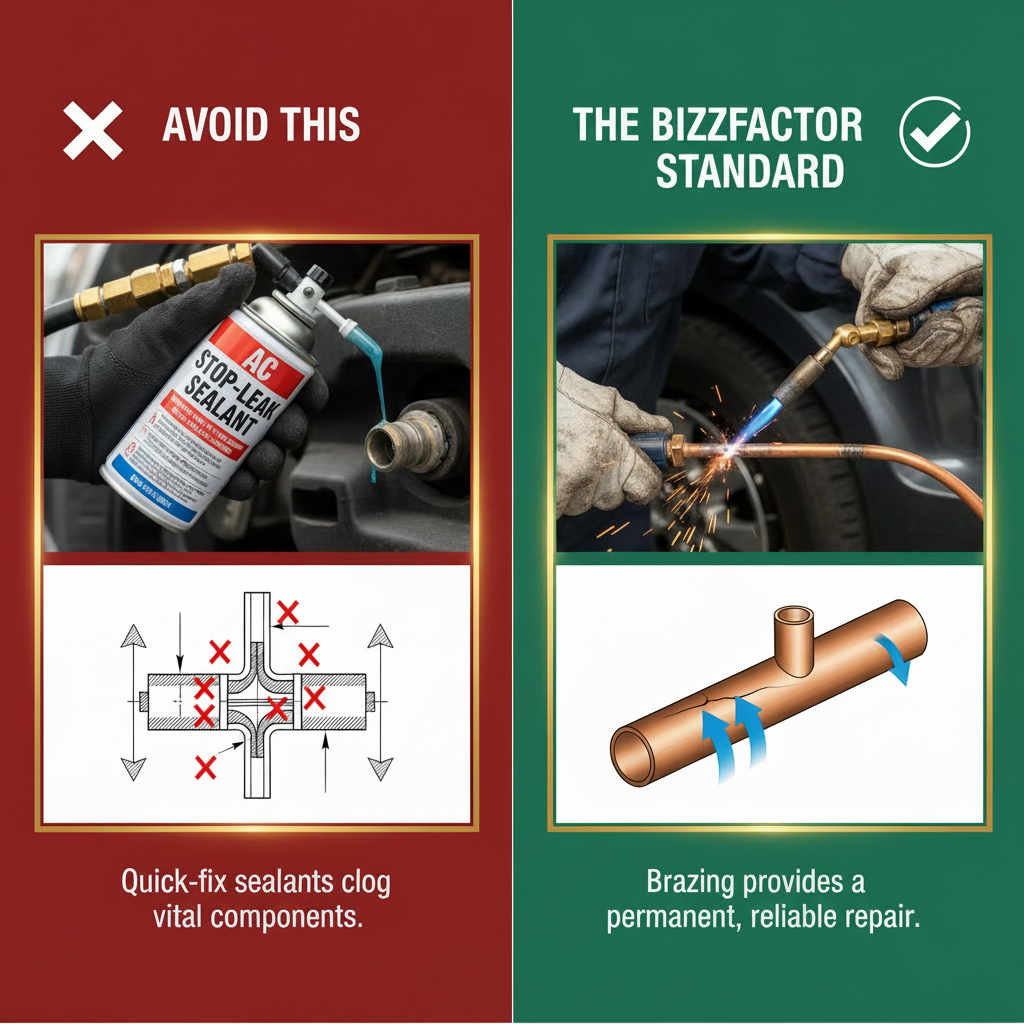
Now, except they don't work. Or they work for two weeks, then fail. Worse — they clog up precision parts. Your expansion valve? Capillary tubes? Those get gummed up with sealant residue. Now you're not fixing a leak anymore. You're replacing major components or buying a whole new system.
A $200 repair becomes a $5,000 replacement because you tried to save a few bucks with a shortcut.
Our network technicians never use sealants. Ever. They locate the actual leak with electronic detectors, then braze it (high-temp soldering that creates a permanent bond). Takes longer, requires real skill, but the repair can last 10+ years. That's the real issue. You want a fix that holds or you want to call us back next summer?
Our Pro Recommendation: Prioritizing Service Excellence Over Sales Volume
So yeah, I'm gonna say something most HVAC companies won't tell you:
Big-name service chains pay their techs $200-400 commission on selling you a new $7,500 system.
You know what they make fixing your leak for $380?
Maybe thirty bucks. Forty if they're lucky.
So — now put yourself in that tech's boots for a second. He walks into your house, sees a 12-year-old Lennox with a slow leak, and does the math. "Do I spend two hours diagnosing this thing, earn thirty dollars, and risk my manager asking why my close rate sucks? That's the real issue. Or do I just call it 'beyond economical repair' and push a replacement for $350 commission?
I'm not saying every tech is crooked (most aren't), but when your pay structure rewards selling over fixing, you get what you incentivize. That's just how it works.
Compare that to somebody like AC's Heating & Air near Orlando (I've worked with them on commercial projects downtown). Their guys don't work on commission. They diagnose for 90 minutes before quoting anything. They're not salesmen trying to hit quotas; they're craftspeople who want you calling them in five years for maintenance because you remember they treated you fairly. That reputation approach? That's what you want. For more on vetting contractors, check out our guide on ["Finding a Reliable HVAC Contractor"](/blog/finding-reliable-hvac-contractor).
What Many Guides Overlook: The Simple Filter Check
Real talk — a homeowner in Winter Park once called convinced she had a major refrigerant leak. Her evaporator coil looked like Antarctica.
Tech arrives. Pulls the air filter.
It was basically a felt blanket made of dog hair and dust.
Cost of repair? $15 for a new filter.
Look — ice on your coils doesn't automatically mean low refrigerant. A clogged filter restricts airflow across the coil, which makes it freeze. We've fielded probably a hundred $150 service calls where the "leak" was a dirty filter.
**Change your filter before you call anyone.** It could save you $150 and a half-day waiting for a tech. More on this in our ["AC Maintenance Tips"](/blog/ac-maintenance-tips) guide.
Uncovering the Root: Common Causes of AC System Leaks, The Breakdown
So after spending years comparing repair tickets from Florida to Phoenix to Boston (seriously — boxes of warranty claims, thousands of service reports, endless conversations with field techs), I can tell you what's actually killing these systems.
Vibration damage wins. Not even close.
Picture this: your outdoor unit sits on a concrete pad, and that compressor cycles on and off maybe 8,000 times a year. Every single startup creates vibration. Every shutdown too. That's constant shaking at every connection point on your refrigerant lines — the joints where copper meets the evaporator, the service valves, the condenser connections.
Eventually something gives.
A brazed joint develops a hairline crack. A flare fitting loosens by half a thread. Doesn't take much — we're talking pinhole-sized failures that bleed refrigerant for months before you notice the cooling drop.
Here's the thing: there was this 8-year-old Trane in Glendale sitting on a half-rotted deck that wobbled when you touched it. Three years of that instability had cracked two refrigerant line connections. The homeowner was losing two pounds of refrigerant a month and couldn't figure out why his electric bill kept climbing. The deck was the problem. We stabilized it, re-brazed both connections, recharged the system. Fixed.
Coastal areas are brutal too. Salt air corrodes copper lines and aluminum fins like battery acid. Florida installs and California beach houses? We see aggressive corrosion on 5-year-old units that would take 15 years inland.
Manufacturing Defects and Inevitable Wear Patterns: It Happens
Even Carrier and Daikin occasionally ship units with flawed coil co
In-Depth Look
Detailed illustration of key concepts
Visual Guide
Infographic illustration for this topic
Side-by-Side Comparison
Visual comparison of options and alternatives
Sources & References
- Air Conditioner Maintenance | Department of Energy
- Handling AC Leaks: How to Diagnose & Fix - Strada Services
- Best Practices for Commercial AC Repair: A Business Owner's Guide
- The Essential Guide To HVAC Maintenance: 10 Best Practices - Sclera
- How to Fix an HVAC Refrigerant Leak - Expert Q&A Guide
- Top 23 Commercial HVAC Manufacturers - Metalphoto of Cincinnati
- 6 Best HVAC Companies | Money
- Best HVAC System Brands To Look At In 2025 - Invoice Fly
- 8 Best Commercial HVAC Brands for Large Buildings (Reviewed)
- Best Air Conditioner Brands in 2025
Frequently Asked Questions
Need Professional Help?
Find top-rated hvac businesses experts in your area