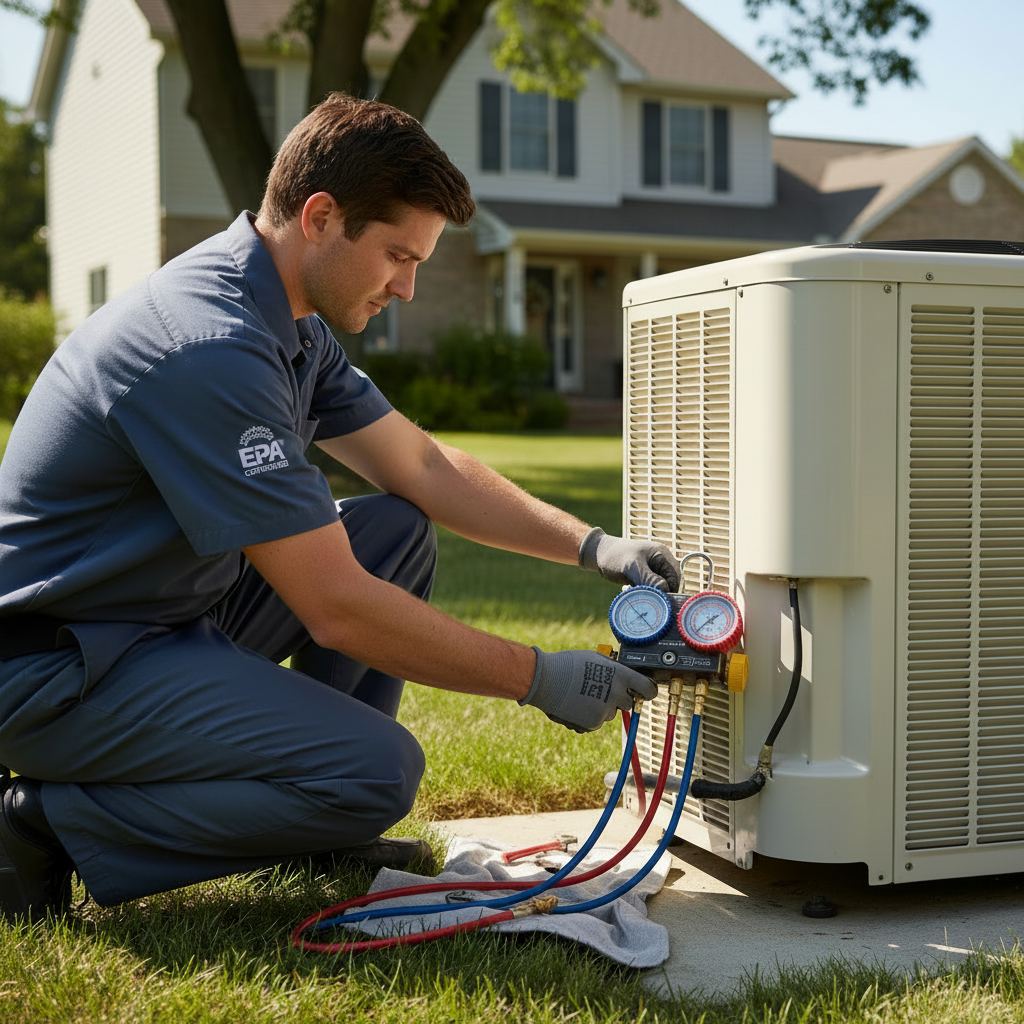
Learn about AC refrigerant recharge costs, professional process, and when your air conditioner needs coolant. Expert guide covers pricing, quality standards, and maintenance tips.
Key Takeaways
- Professional diagnosis identifies leaks before adding refrigerant to prevent repeat service calls
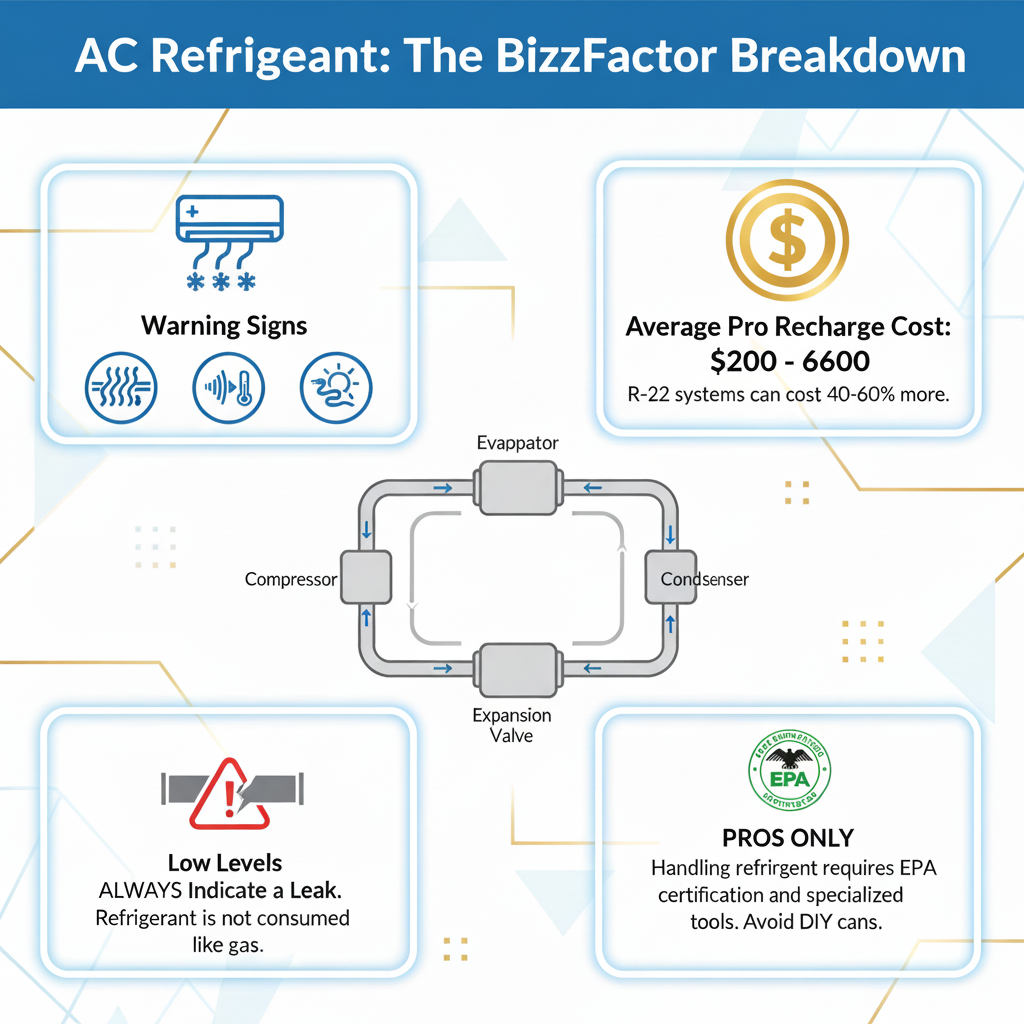
- Costs range $200-600 based on system size, refrigerant type, and required repairs
- Only EPA-certified technicians should handle refrigerant using calibrated professional equipment
BizzFactor Quick Guide
The BizzFactor Standard: Always require leak detection and EPA certification before any refrigerant service
Key Takeaways
The BizzFactor Standard
3 Non-Negotiable Requirements for Elite Workmanship
EPA Section 608 Certification
Technicians must hold proper certification for refrigerant handling and demonstrate current credentials
Comprehensive Leak Detection
Professional leak testing using electronic detectors and UV dye before adding any refrigerant
Written Documentation & Warranty
Detailed service records with refrigerant quantities, pressures, and written warranty coverage provided
AC Refrigerant Recharge: Professional Costs, Process & When You Need It
You know that feeling when your AC starts blowing lukewarm air during a Georgia heat wave? That's usually your refrigerant giving up the ghost. And before you Google "DIY AC recharge kit," just... don't.
Real technicians show up with digital manifolds, vacuum pumps that sound like jet engines, and recovery tanks that cost more than your first car. They're not just filling your AC with coolant — they're rebuilding pressure profiles, checking superheat numbers, and making sure the whole system won't grenade itself next Tuesday. This isn't a DIY job. Seriously, don't even think about it.
Why Your AC Might Be Thirsty: The Lowdown on Refrigerant Loss
People still call it Freon — technically that's just the old brand name for R-22, but whatever. Point is, this stuff acts as your cooling system's lifeblood. It's constantly moving between your indoor coil and the outdoor unit, grabbing heat from your house and dumping it outside like a very efficient bucket brigade.
When your refrigerant drops low enough? Your AC basically gives up. Won't hit the temperature you set. Runs these marathon cycles that never seem to end. And instead of that crisp, cold air you're paying for, you get this lukewarm disappointment that feels more humid than comfortable.
Your electric bill? Yeah, it's gonna spike hard.
You'll probably notice one of these things first — most folks call us after living with the problem for a week or two, often prompting an urgent need for professional [AC repair services](link to ac repair page):
- **Indoor temperatures won't meet thermostat settings:** Your smart thermostat proudly claims 72°F, but the living room thermostat stubbornly reads 78°F. Frustrating, right? This is your system fighting a losing battle.
- **Ice formation on evaporator coils or refrigerant lines:** This is a classic, almost unmistakable sign of critically low pressure within the system. You might even spot frost developing on the larger copper suction line entering your outdoor condenser unit, too. Don't touch it with your bare hands, please.
- **Hissing or gurgling sounds:** These unsettling noises can emanate from the outdoor unit, visible refrigerant lines, or even internal indoor connections. They often indicate refrigerant actively escaping or boiling inefficiently within the line sets. It's a sonic SOS.
- **Higher than normal electricity bills:** The AC is working overtime, ceaselessly attempting to compensate for an inefficient charge. It's literally burning through your hard-earned money. That's the real killer.
- **Warm air blowing from supply vents:** The most obvious, in-your-face sign that your system simply isn't cooling. What's the actual point of an AC system that blows warm air? It's just a fancy fan at that point.
Here's what consistently catches most homeowners off guard: unlike automotive motor oil or your car's windshield washer fluid, refrigerant exists within a sealed system and shouldn't naturally deplete. Ever. Period. If your AC system is low on refrigerant, it means only one critical thing: there's an active **leak** somewhere. This leak could hide in your system's coils (evaporator or condenser), the line sets connecting the indoor and outdoor units, or even microscopic pinholes in flared fittings and brazed joints that are hard to spot. Addressing the leak is absolutely paramount; a professional recharge without a thorough, verified repair is merely a temporary patch, not a genuine, lasting fix. It's like putting a tiny band-aid on a gushing arterial wound. Seriously, don't waste your well-earned money on a temporary fix that won't last.
War Story: The Elusive Leak in Brookhaven's Baffling Case
Look — we rolled up to this Rheem system in Brookhaven last month — nice house, frustrated homeowners. They'd already dropped probably $800 on refrigerant recharges from another company. Three times. Same summer.
I'm standing there thinking, "Nobody's looking for the actual leak, are they?"
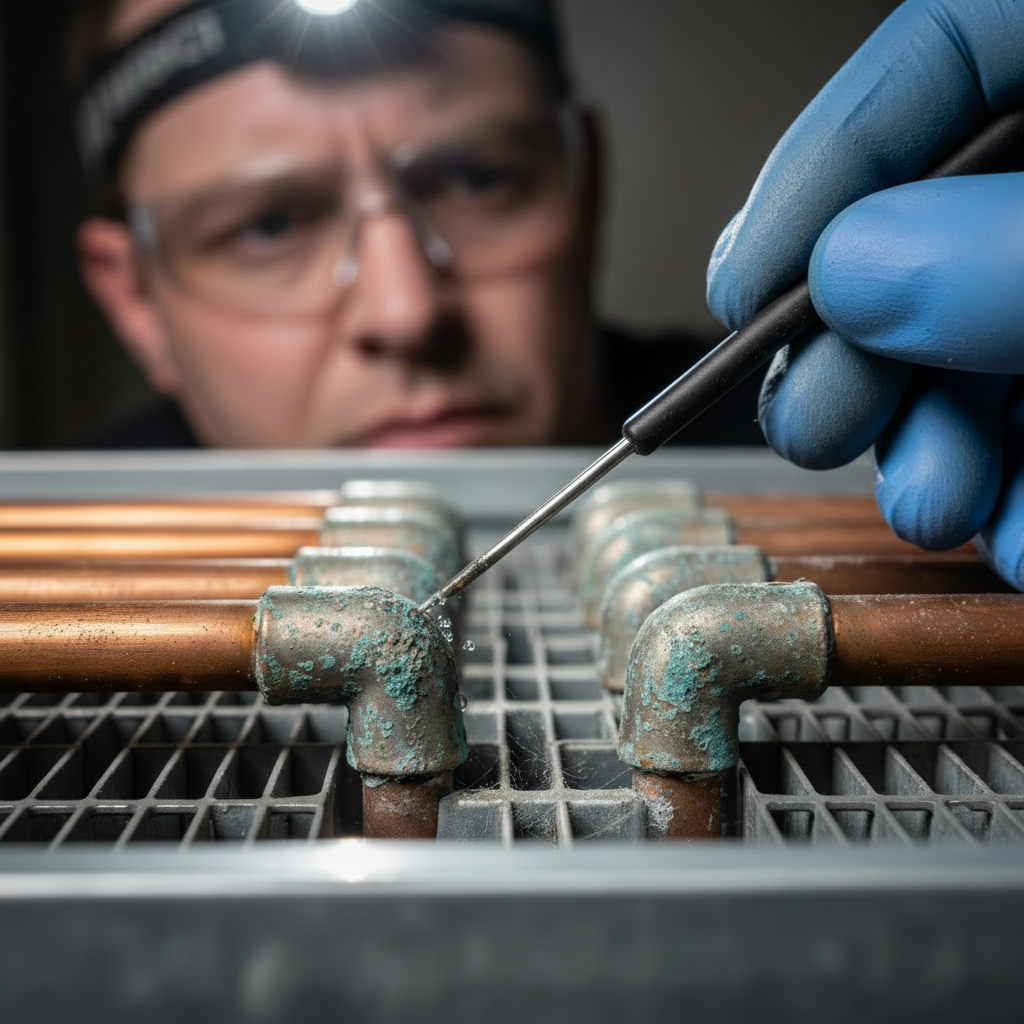
Using our YellowJacket P500 gauges and an Inficon sniffer (the good one, not the $40 Harbor Freight knockoff), we found multiple micro-leaks in corroded evaporator coil joints. The previous techs had completely missed them during their five-minute "inspections." Rather than recommending yet another costly refrigerant top-off, we advised a complete coil replacement, explaining the underlying issue. This decisive move saved the Brookhaven homeowners several thousand dollars in projected ongoing recharge costs and—critically—prevented future, stressful [AC emergencies](link to ac emergency services page). It also responsibly stopped the continued, wasteful venting of R-410A refrigerant into our atmosphere. See? Experience, advanced tools, and a commitment to thoroughness really do matter in this trade.
⚠️ Common Mistake to Avoid: The Perils of Overtightening Service Valve Caps
Even experienced pros mess this up. I've watched it happen more times than I can count.
Those little caps on your service valves? They're not just keeping dirt out. Inside each one there's this neoprene O-ring that creates the actual seal over the Schrader valve. Some tech gets eager with a wrench, cranks it down thinking tighter means better, and crushes that O-ring completely. That's the real issue. Now you've got a slow leak right at the service port (which, ironically, happens all the time).
Hand-tight, then maybe a quarter-turn with a wrench. That's it.
Sounds minor, but I've diagnosed probably two dozen "mystery leaks" this year that were just mangled service port O-rings from overtightening.
Our Pro Recommendation: Choosing the Right Service Provider
Here's the deal with picking who fixes your leak: brand loyalty doesn't matter much. Whether you've got a Rheem or a Carrier isn't the issue.
What matters? The tech's actual skills and whether the company's trying to sell you a new unit before they've even diagnosed the problem.
Big multi-trade companies (the ones doing plumbing, electrical, HVAC, probably landscaping too) often lack deep diagnostic expertise. I've seen it a hundred times — they show up, gauge the pressures for ninety seconds, and start pitching a $7,000 replacement. A dedicated [HVAC specialist](link to hvac specialist page) like BizzFactor Certified Pros, however, typically employs more experienced, focused technicians who live, breathe, and sleep refrigerant systems. Our pick is *always* the local, specialized HVAC contractor. They're far more likely to invest the necessary time in a proper nitrogen isolation test and a thorough, multi-method leak detection process rather than just pushing a new unit for a potentially perfectly fixable coil. This approach ensures long-term system health, preserves your existing investment, and ultimately saves you a lot of hard-earned cash.
What Most Guides Won't Tell You: R-22 System Pragmatism
So yeah, everybody says "a recharge is just a band-aid." And for R-410A systems? They're right.
But here's where I disagree with the textbook answer: got a 15-year-old R-22 unit losing half a pound a year through some microscopic leak? Sometimes paying $450 for one last recharge to limp through summer makes more sense than dropping $1,800 on a coil repair for a system you're replacing in October anyway.
R-22's expensive now (EPA phase-out), and scarce. If your unit's already past its prime, strategic band-aids aren't always bad decisions. They're practical ones. Just get a qualified opinion on whether the leak's slow enough to make this work — and plan that [AC replacement](link to ac replacement page) for fall when prices drop.
The Nitty-Gritty: Professional Refrigerant Recharge Process
So what actually happens when a certified tech shows up to recharge your system? And why can't you just grab one of those cans from the auto parts store?
EPA regulations, mostly. They'll fine you somewhere between $10,000 and $50,000 depending on their mood. Also you'll probably grenade your compressor, but the fine comes first.
Techs with Section 608 certification follow specific protocols — recover refrigerant instead of venting it, pull proper vacuums, weigh the charge precisely. The equipment alone (gauges, recovery machine, vacuum pump, refrigerant scale) runs north of $8,000. This isn't a homeowner job. Full stop.
Step 1: Comprehensive System Diagnosis and Precision Pressure Testing
We hook up manifold gauges to both service ports first thing. Tells us what's happening inside.
For R-410A, you're usually looking at 115-125 PSI low side, 250-400 PSI high side — but those numbers change dramatically based on outdoor temp and system load. On a 95-degree afternoon? High side might be pushing 380. At night when it's 70 out? Could be 220.
Using digital manifolds (Fieldpiece or YellowJacket, usually), we compare actual readings to the manufacturer's specs on your outdoor unit's data plate. Big gap between high and low pressures, or suction pressure way down? That's pointing toward low charge.
Step 2: The Critical Search — Rigorous Leak Detection Protocol
Before *any* new refrigerant is introduced into the system, experienced and ethical technicians perform comprehensive, multi-method leak checks. This isn't optional; it's absolutely mandatory under the BizzFactor Standard. We employ multiple, advanced methods to ensure no leak goes undetected:
- **Advanced Electronic Leak Detectors:** These incredibly sensitive sniffers, like the Inficon D-TEK Stratus or testo 557, can pinpoint even minute, otherwise undetectable leaks by sensing the presence of refrigerant molecules as tiny as 3 grams per year. They're astoundingly effective, a true marvel of modern technology.
- **Ultraviolet (UV) Dye Injection:** For those truly persistent, hard-to-find leaks that defy electronic detection, a special fluorescent UV dye is carefully injected into the system's refrigerant lines. After a few days of normal system operation, the dye will escape along with the refrigerant, making the exact leak location vividly visible under a powerful UV light. It's
In-Depth Look
Detailed illustration of key concepts
Visual Guide
Infographic illustration for this topic
Side-by-Side Comparison
Visual comparison of options and alternatives

Sources & References
- Charging Refrigeration Systems | HVAC Know It All
- Refrigerant Charging Basics for Air Conditioners and Heat Pumps
- How To PROPERLY Recharge Your Air Conditioner - YouTube
- Recharging AC Units - TruTech Tools
- Recharge Your Home AC: Costs & DIY Guide | AHS
- Top 23 Commercial HVAC Manufacturers - Metalphoto of Cincinnati
- 6 Best HVAC Companies | Money
- Best HVAC System Brands To Look At In 2025 - Invoice Fly
- Best Air Conditioner Brands in 2025
- Key HVAC Regulations and Requirements for 2025 and Beyond
Frequently Asked Questions
Need Professional Help?
Find top-rated hvac businesses experts in your area