Expert guide to AC refrigerant types, leak detection methods, and professional repair vs replacement decisions. Learn R-22 vs R-410A differences.
Key Takeaways
- # AC Refrigerant: Types, Leak Detection & Expert Repair Guide Your AC won't cool without refrigerant
- I don't care if you've got a brand-new Carrier system or a 15-year-old Rheem — no refrigerant means you're blowing hot air
- ## How Refrigerant Powers Your AC System: The Cooling Cycle Explained Look — look — refrigerant does one job
- Picks it up inside your house, dumps it outside
Key Takeaways
AC Refrigerant: Types, Leak Detection & Expert Repair Guide
Your AC won't cool without refrigerant. That's just physics. I don't care if you've got a brand-new Carrier system or a 15-year-old Rheem — no refrigerant means you're blowing hot air. Period.
How Refrigerant Powers Your AC System: The Cooling Cycle Explained
Look — look — refrigerant does one job. It moves heat. Picks it up inside your house, dumps it outside. Over and over, through pressure changes and phase shifts. No refrigerant means no cooling. You'll just get warm air blowing around. Doesn't sound like fun, does it?
The actual cycle breaks down like this:
**Compression:** The compressor squeezes the refrigerant gas hard. This pressure spike heats it up *fast* — we're talking 150-200°F and pressures around 250-450 PSI in an R-410A system. Think of it like a bicycle pump — forcing air into a smaller space heats it up. Same principle, different scale.
**Heat Rejection (Outdoor Unit):** That superheated gas flows to your outdoor unit, through the condenser coils. Fans blast outside air across those coils. The refrigerant cools down fast — heat transfers to the atmosphere — and turns back into liquid. Temperature drops to maybe 100-140°F, pressure stays high around 225-400 PSI. You can literally feel this heat if you stand near the outdoor unit while it's running.
**Expansion and Pressure Drop (Indoor Unit):** The liquid refrigerant then hits a metering device — usually an expansion valve (TXV) or fixed orifice. This thing controls the flow and *tanks* the pressure. Hard. That pressure drop cools the refrigerant way down — we're talking 40°F with pressure dropping to 60-150 PSI. It's like letting air out of a tire — it gets cold fast.
**Heat Absorption (Indoor Unit):** This super-cold, low-pressure liquid refrigerant flows into the indoor evaporator coils. Here, it absorbs heat from the warmer air circulating inside your home (blown across the coils by the indoor fan). While it's soaking up all that heat, the refrigerant boils and becomes a low-pressure gas again — which cools your space. This gas then returns to the compressor, and the whole thing starts over. It's a closed-loop system; the refrigerant is never consumed.
Look — I've been doing this for 22 years. Worked on everything from Rheem to Carrier to Trane systems across Houston. And I'll tell you what kills AC efficiency every single time: low refrigerant, dirty coils, or leaky connections. Usually all three. Probably 70% of the service calls we get trace back to refrigerant issues. The consequence? Your system labors harder, pulling excessive amperage, energy bills climb like a rocket, and your indoor comfort tanks. Nobody wants that. For comprehensive care, explore our [HVAC maintenance plans in Houston](https://www.bizzfactor.com/hvac-maintenance-plans-your-city).
Primary Refrigerant Types Used in Modern HVAC Systems
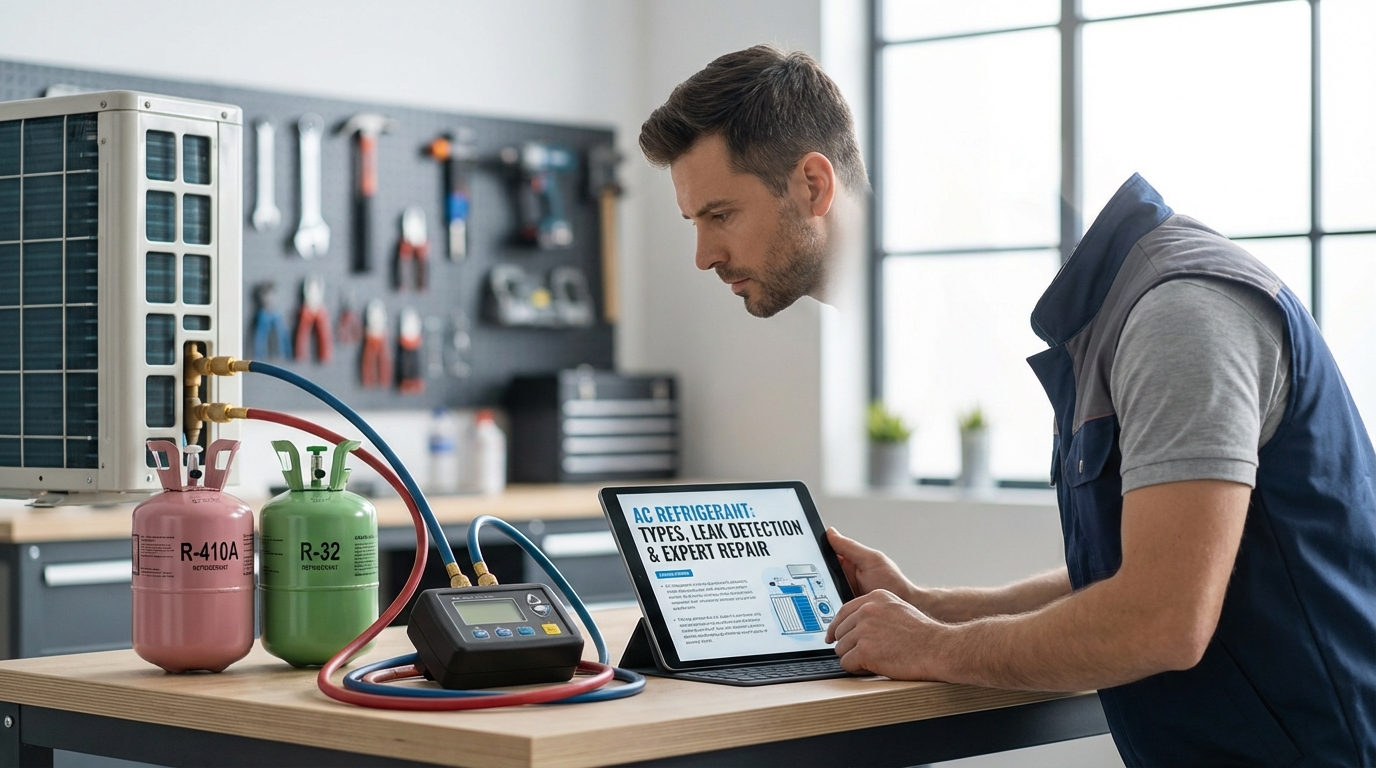
Here's the thing: two main players in residential AC: R-22 (the dinosaur getting phased out) and R-410A (what's in everything built after 2010). They're not compatible. Can't mix them. Can't swap one for the other without replacing half your system. Different chemistry. Different pressures. Different lubricants.
R-22 Refrigerant (Phasing Out & Legacy Systems)
You probably know it as "Freon" — that's DuPont's brand name. For decades, this was the only game in town. Every AC system made before 2010 ran on it. Then scientists figured out it was punching holes in the ozone layer (ODP of 0.05) and acting like a greenhouse gas (GWP of 1,810).
EPA banned production in January 2020. Done. No more manufacturing, no more imports.
You can still get recycled R-22, but you'll pay a fortune. Last month we had a guy in Arlington with a major leak in his R-22 unit. Just the refrigerant and labor would've cost him over $3,000. We told him straight up: replace the system. When you're looking at that kind of bill, replacement makes way more financial sense.
And here's why you can't just "convert" it: R-22 runs on mineral oil. R-410A needs POE synthetic oil. The pressures are totally different. Compressors aren't compatible. Metering devices won't work. You try to mix them and you'll destroy your compressor. Not an exaggeration — you'll literally blow it up. For more information on refrigerant phase-outs, please refer to the [EPA's Refrigerant Management Program](https://www.epa.gov/section608/refrigerant-management-program).
R-410A Refrigerant (Current Industry Standard)
You'll hear it called "Puron" (that's Carrier's name) or "Suva" (from DuPont). This has been the go-to for any AC system built after 2010. Big difference from R-22? Pressure. We're talking 50-70% higher — discharge pressures can hit 450 PSI. That means beefier compressors, thicker copper tubing, stronger components all around. You wouldn't put high-octane fuel in a car designed for regular, right? Same idea. R-410A has zero ozone depletion (ODP of 0) and a GWP around 2,088.
Now, systems built for R-410A just work better. Rheem, Lennox, all the major manufacturers designed their equipment around it. Tighter tolerances, better heat transfer, smaller footprint. My buddy Jake installed a 3-ton Carrier unit in West University last month — the homeowner's seeing about 18% lower energy bills compared to their old R-22 dinosaur. That's real money back in your pocket every month. For details on modern AC units, visit our service page for [AC installation in Houston](https://www.bizzfactor.com/ac-installation-your-city), where we only install R-410A compliant systems.
R-32 and Other Future Refrigerants
So yeah, the industry keeps evolving — mostly because we've got to stop cooking the planet. R-32 is probably the next big thing. Its GWP is around 675 compared to R-410A's 2088. That's massive. Still cools great, uses less refrigerant by volume, and most importantly, doesn't trash the environment as badly. As these become more prevalent, our [HVAC technicians in Houston](https://www.bizzfactor.com/hvac-technicians-your-city) will be fully equipped and certified to handle them, as they always are with emerging technologies. We stay ahead of the curve. Other alternatives include hydrofluoroolefins (HFOs) like R-1234yf, which have even lower GWPs, typically less than 1. You're gonna see more of these hitting the market over the next 5-10 years.
What Are the Definitive Signs of AC Refrigerant Leaks?
Your AC runs all day but your house stays 78 degrees. You wake up sweating at 2 AM. The thermostat says 68, but it feels like 75. That's usually low refrigerant.
Here's what else to watch for:
Ice building up on your indoor coils (yeah, ice — in the middle of summer). That happens when there's not enough refrigerant flowing through — the coils get too cold, moisture freezes right on them. That's the real issue. Eventually you'll have a solid block of ice, zero airflow, and the whole system shuts down. Or worse, the compressor burns out trying to push against that ice dam. Thing is, dirty filters can cause the exact same symptom, which is why you need a pro to actually diagnose it. Don't self-diagnose this one.
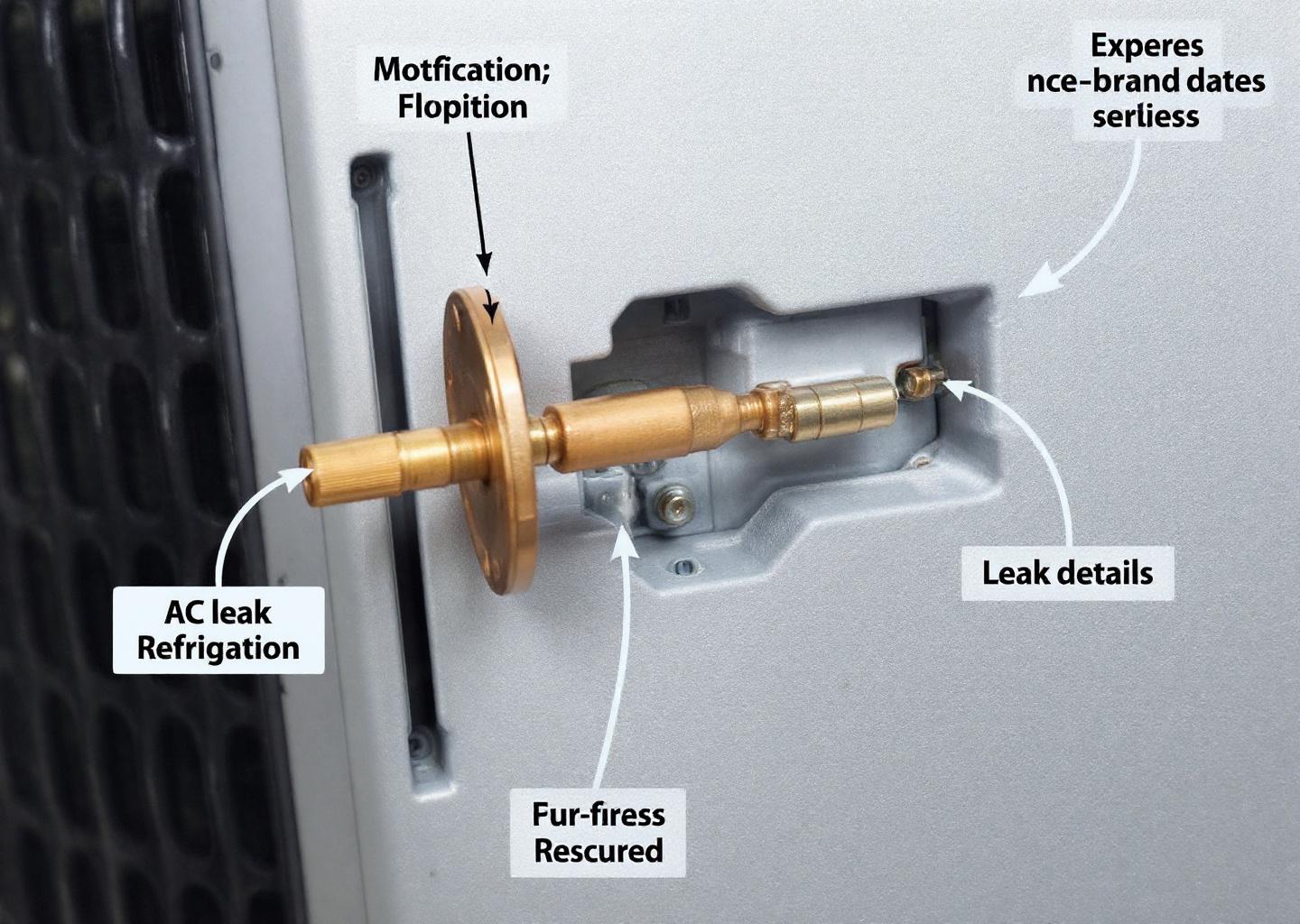
Hissing or bubbling sounds near the refrigerant lines. That's refrigerant escaping — same sound as air leaking from a tire. Sometimes you'll catch a sweet or chemical smell near the outdoor unit. That's the refrigerant itself. It's distinctive — kinda like chloroform mixed with car antifreeze.
And your electric bill jumps $50, $75, maybe $100 for no clear reason. That's your system working overtime trying to compensate for lost refrigerant. It's like trying to fill a leaky bucket.
Last week, our team found a leak in a single-family home in South Austin that was adding around $200 per month to the energy bill. We fixed it for $300. Paid for itself in two months. Does this sound familiar? If so, contact us for prompt [AC repair services in Houston](https://www.bizzfactor.com/ac-repair-your-city). Don't let your money leak away.
Common Causes of Refrigerant Loss in AC Systems
Here's the deal: refrigerant doesn't just disappear. When you've got low refrigerant, there's a leak somewhere. Period. Could be corrosion eating through the copper tubing. Could be vibration from the compressor working loose a fitting. Could be some guy didn't flare the connections properly during install. Most leaks? They show up somewhere between year 5 and year 10. EPA's got the data on that.
Corrosion and Metal Degradation
So — copper tubing moves refrigerant around the system. It's tough stuff — lasts for years. But it's not bulletproof. Gets exposed to moisture, household chemicals (bleach especially), coastal salt air if you're near the water — and over time it starts to break down. Little pinhole leaks develop.
In-Depth Look
Detailed illustration of key concepts
Visual Guide
Infographic illustration for this topic
Sources & References
- What is Commercial HVAC: Essential Guide & Best Practices
- Simple Guide to Commercial HVAC for Business Owners
- HVAC Employee Best Practices: Raising Standards in Heating ...
- The Essential Guide To HVAC Maintenance: 10 Best Practices - Sclera
- HVAC Installation Best Practices: Copper Lines, Equipment Prep ...
- Top 23 Commercial HVAC Manufacturers - Metalphoto of Cincinnati
- Full List: Top HVAC Manufacturers and Suppliers in 2026 - FieldPulse
- 6 Best HVAC Companies | Money
- 8 Best Commercial HVAC Brands for Large Buildings (Reviewed)
- Best Air Conditioner Brands in 2025
Frequently Asked Questions
Need Professional Help?
Find top-rated hvac businesses experts in your area