Expert AC repair guide from certified professionals. Learn warning signs, contractor selection, costs, and repair processes. 20+ years experience.
Key Takeaways
- **Strange, Acrid Odors from Vents:** "Burning plastic" or "gunpowder" smell usually means electrical problems—deteriorating wiring, overheating motor, something actively going wrong in the electrical components. Musty, damp smell? That's mold. Could be in the ductwork, could be colonizing your evaporator coil. Either way, you need a pro to diagnose it before it becomes a health hazard (or an actual fire). This isn't a Febreze situation.
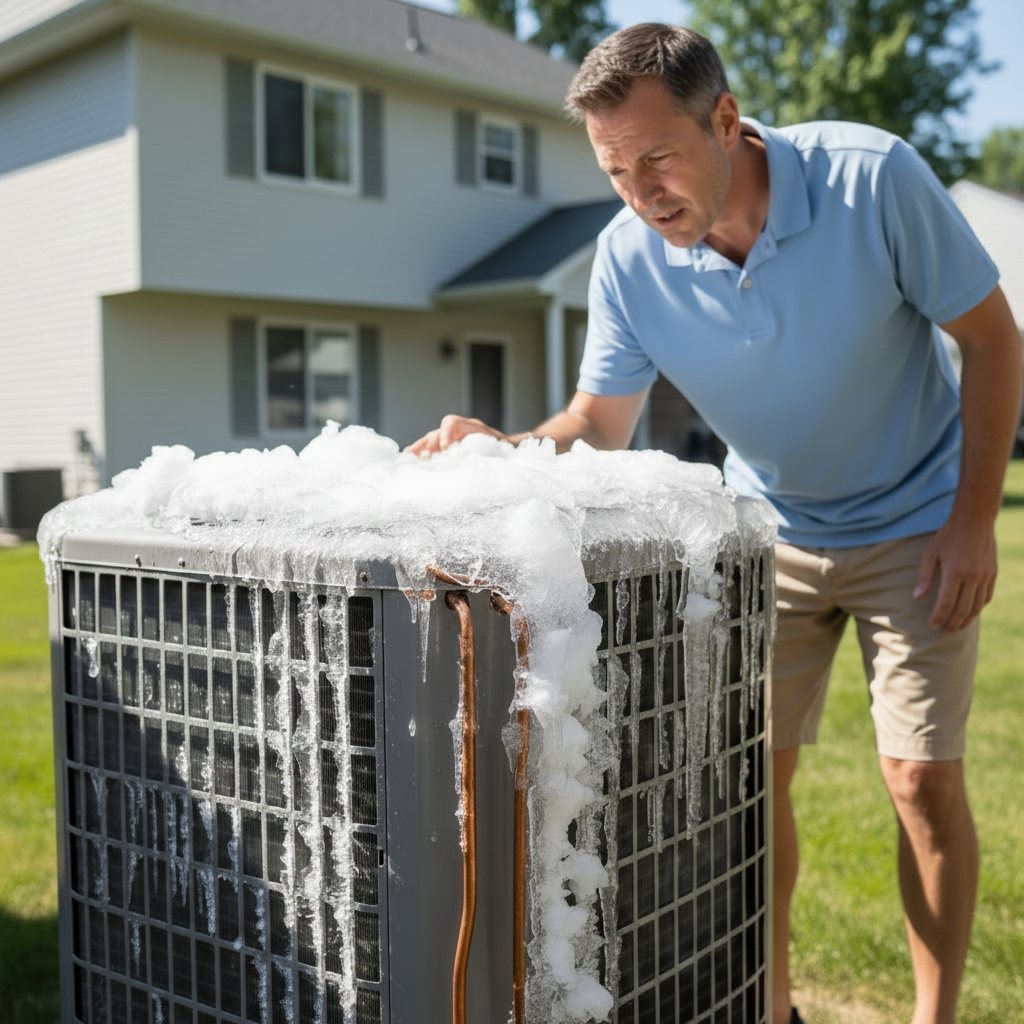
- **Ice Formation on Coils or Refrigerant Lines:** People see ice and think "hey, it's working extra hard to cool!" Nope. Ice means either critically low refrigerant (there's a leak somewhere) or severe airflow blockage (clogged filter, blocked return vent, dirty coil). The ice isn't helping—it's choking your system. Needs immediate attention, probably coil cleaning or leak detection with proper repair.
- **Water Pooling Around the Indoor Unit:** So here's what's supposed to happen. Your AC makes condensation when it runs—totally normal physics. That water's supposed to drain through a little PVC line that runs outside or into a drain. When you've got puddles forming around the indoor unit? Something's blocked. Usually the condensate line's clogged with algae (gross but common), or the condensate pump died, or the drain pan cracked. I've personally seen water damage blow past $15,000 in places like Houston where humidity's brutal and owners figured "eh, it's just a little water." Water doesn't wait for you to get around to it—it'll destroy drywall, rot subflooring, and wreck ceiling joists while you're busy "monitoring the situation."
- **Frequent Electrical Issues:** Circuit breaker tripping every time the AC kicks on? That's not a breaker problem. That's your system drawing way too many amps—electrical overload, short circuit, or a motor that's failing and pulling excessive current. This is a safety issue before it's a comfort issue. Electrical fires don't send reminder notices.
- **Complete System Shutdown / No Power:** The obvious emergency. Usually the result of ignoring all those earlier subtle warnings. Could be the thermostat, could be a blown fuse, could be your compressor finally gave up because you ignored the ice buildup for three summers. Needs immediate professional diagnosis. For fast response, check out companies in [BizzFactor's HVAC business directory](https://bizzfactor.com/categories/hvac-businesses)—they're vetted specifically for reliability and diagnostic accuracy.
Key Takeaways
AC Repair Guide: What Property Owners MUST Know in 2024
So your AC just died. Again.
Maybe it's clicking like a tap dancer with hiccups. Maybe half your house feels like a sauna while the other half's actually comfortable. Or maybe—and this is my favorite—your electric bill just jumped $200 and you have *no idea why*.
Look — look — I've been in this industry over two decades. BizzFactor's network has eyeballed thousands of failing systems across every climate zone you can imagine. That's the real issue. And here's what I've learned: most property owners wait way too long to call someone. That's the real issue. Whether you're running a 40-unit apartment complex in Atlanta or a single-family ranch in Tucson, a broken AC isn't just annoying.
It's an emergency dressed up as an inconvenience.
This guide cuts through the nonsense. Real-world experience, actual dollar figures, and the kind of advice that'll save you from becoming another "I should've called sooner" story. Your comfort's on the line. So's your wallet.
When Does Your AC System Scream for Professional Attention?
Grinding sounds coming from the outside unit?
That's not normal. Weak airflow from vents that used to blast cold air across the room? Red flag. You walk into rooms that used to stay 72° — now they're stuck at 79° while the thermostat insists everything's fine? Problem. Electric bill suddenly $150 higher even though you haven't changed a single thing about how you use the system?
Yeah. Something's broken.
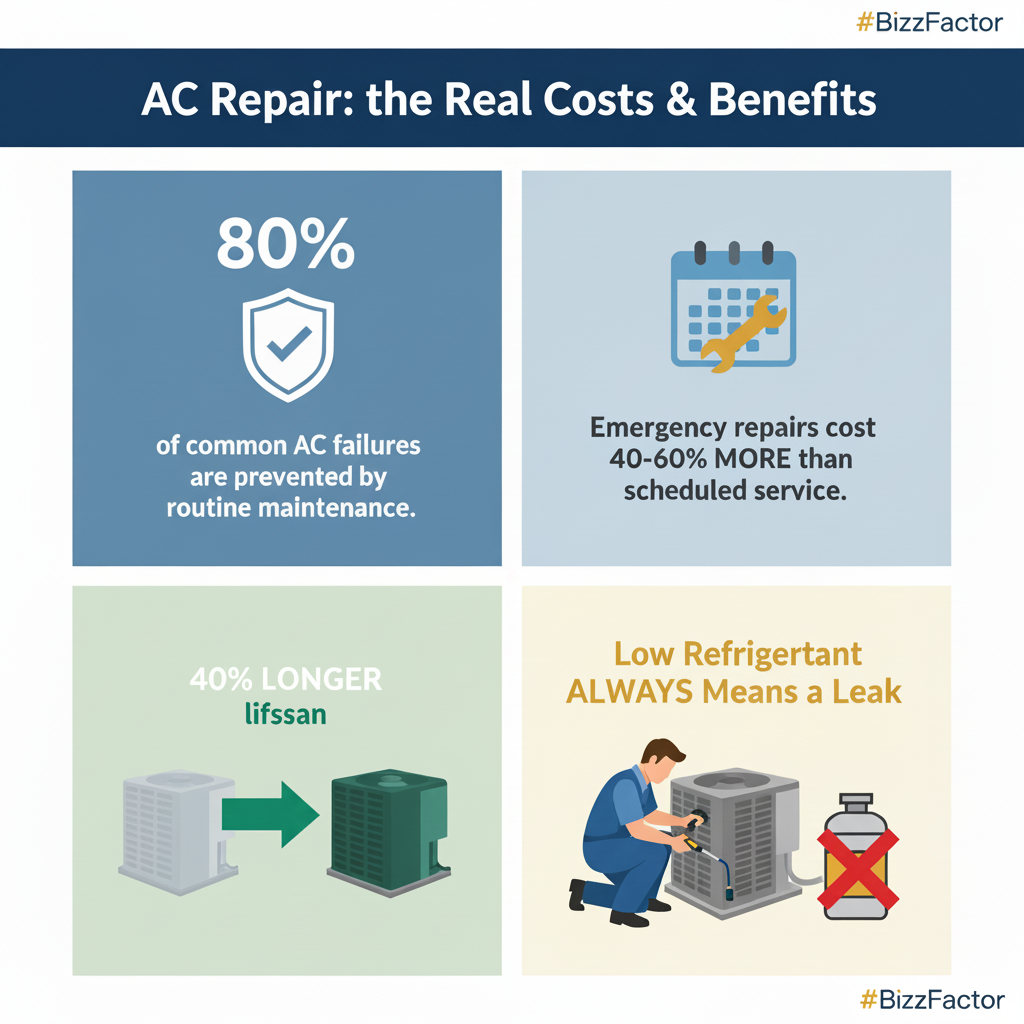
Don't wait on these. They're not "getting better on their own." What you're hearing (or smelling, or paying extra for) is your system actively failing — and every day you postpone the call, the repair bill climbs. I watched a landlord in Buckhead ignore a weird hissing sound for eight months because "it still cools, man." By the time he called us, the refrigerant leak had starved the compressor. $340 leak repair became a $6,800 compressor replacement.
Don't be that guy.
Critical AC Warning Signs That Can't Wait
A property manager in Phoenix—nice guy, owned three duplexes near Camelback Road—ignored what seemed like a tiny refrigerant leak for six months.
Didn't seem urgent. System still worked, right? By the time he finally called someone, the compressor had seized solid. Total replacement cost: $8,700. Could've been a $400 leak repair if he'd acted in week one.
That's the thing about waiting. It *always* gets worse.
So when you see these signals? Don't wait:
- **Strange, Acrid Odors from Vents:** "Burning plastic" or "gunpowder" smell usually means electrical problems—deteriorating wiring, overheating motor, something actively going wrong in the electrical components. Musty, damp smell? That's mold. Could be in the ductwork, could be colonizing your evaporator coil. Either way, you need a pro to diagnose it before it becomes a health hazard (or an actual fire). This isn't a Febreze situation.
- **Ice Formation on Coils or Refrigerant Lines:** People see ice and think "hey, it's working extra hard to cool!" Nope. Ice means either critically low refrigerant (there's a leak somewhere) or severe airflow blockage (clogged filter, blocked return vent, dirty coil). The ice isn't helping—it's choking your system. Needs immediate attention, probably coil cleaning or leak detection with proper repair.
- **Water Pooling Around the Indoor Unit:** So here's what's supposed to happen. Your AC makes condensation when it runs—totally normal physics. That water's supposed to drain through a little PVC line that runs outside or into a drain. When you've got puddles forming around the indoor unit? Something's blocked. Usually the condensate line's clogged with algae (gross but common), or the condensate pump died, or the drain pan cracked. I've personally seen water damage blow past $15,000 in places like Houston where humidity's brutal and owners figured "eh, it's just a little water." Water doesn't wait for you to get around to it—it'll destroy drywall, rot subflooring, and wreck ceiling joists while you're busy "monitoring the situation."
- **Frequent Electrical Issues:** Circuit breaker tripping every time the AC kicks on? That's not a breaker problem. That's your system drawing way too many amps—electrical overload, short circuit, or a motor that's failing and pulling excessive current. This is a safety issue before it's a comfort issue. Electrical fires don't send reminder notices.
- **Complete System Shutdown / No Power:** The obvious emergency. Usually the result of ignoring all those earlier subtle warnings. Could be the thermostat, could be a blown fuse, could be your compressor finally gave up because you ignored the ice buildup for three summers. Needs immediate professional diagnosis. For fast response, check out companies in [BizzFactor's HVAC business directory](https://bizzfactor.com/categories/hvac-businesses)—they're vetted specifically for reliability and diagnostic accuracy.
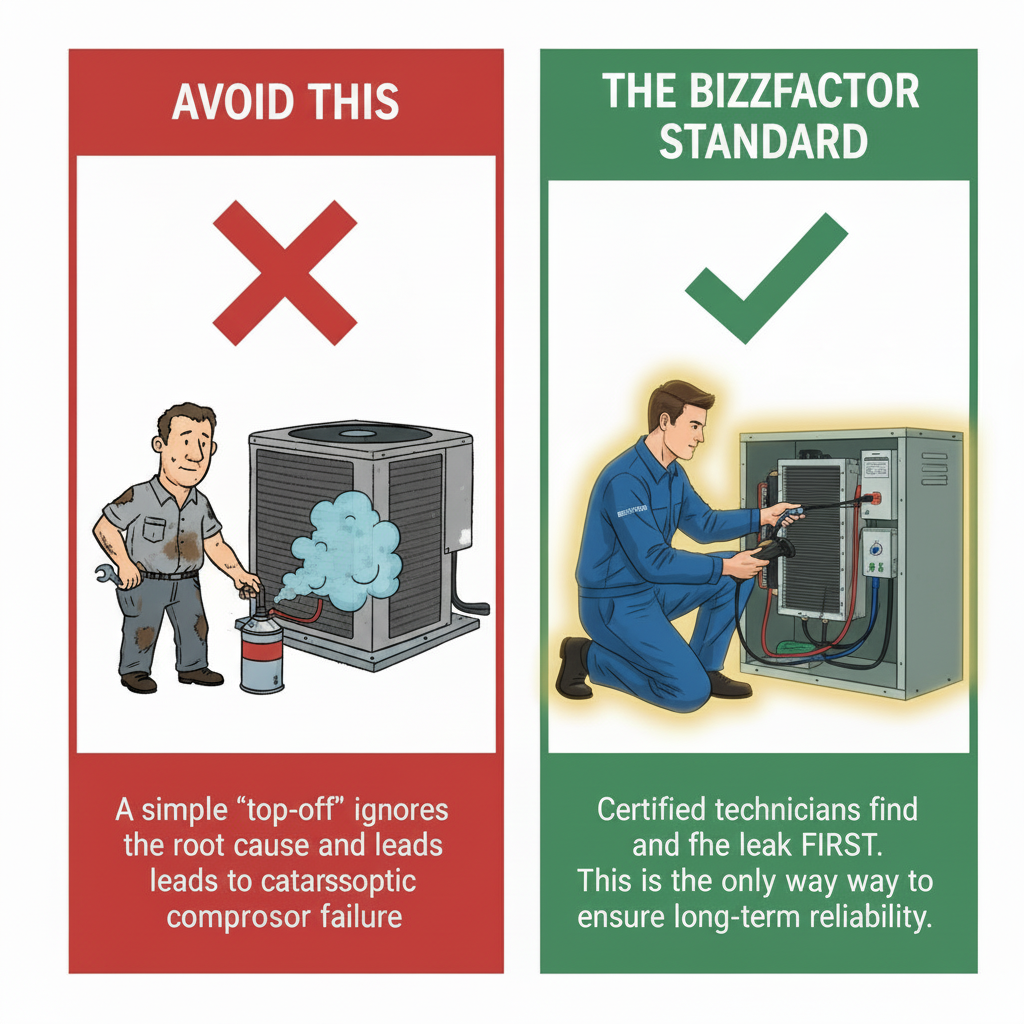
**Common Pitfall Alert:** Never accept a refrigerant "top-off" without leak detection and repair.
Never.
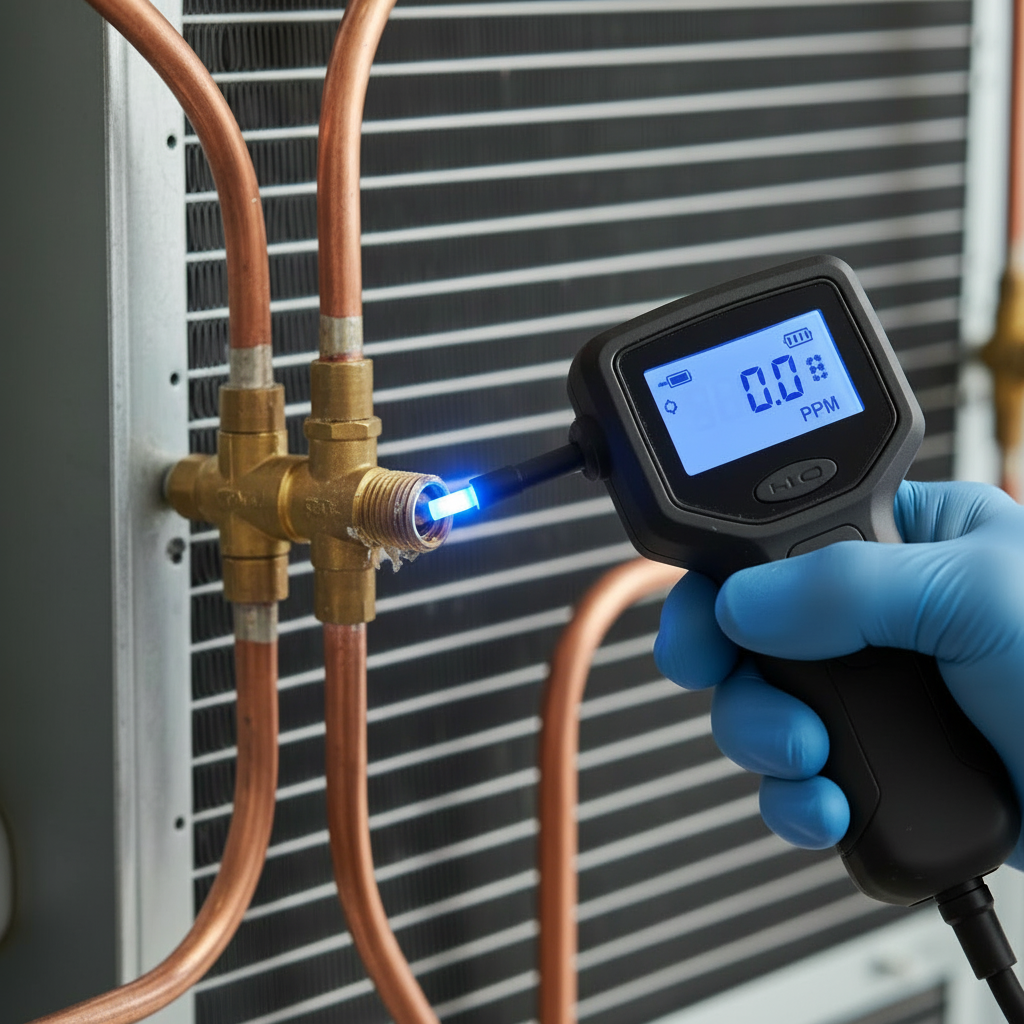
Your AC's a sealed system. Low refrigerant means there's a leak — every single time. It's like a car tire losing air. You don't just pump it full and drive away. You find the puncture.
A "top-off" without fixing the leak? Fast track to an $8,000+ compressor failure as the starved system overworks itself to death. Our network prioritizes proper electronic leak detection (heated diode detectors, ultrasonic equipment—the real stuff) and permanent repairs.
Not temporary band-aids.
Most "top-offs" without repair are technically illegal under EPA Section 608 regulations, by the way. Just saying.
One more thing while we're here: brand matters way less than you think. A perfectly installed Rheem will outlast a poorly installed Carrier every single time. I've seen $900 builder-grade units hit 18 years with zero major repairs because the installation was flawless and the maintenance was consistent. Meanwhile, someone's $7,500 Trane dies at year 9 because the installer didn't check the charge properly and the owner never changed the filter.
Installation quality beats brand name. Every. Single. Time.
How to Select Elite HVAC Contractors for Your AC Repair Needs?
Most people get this backwards.
They'll tell you "get three quotes." Play contractors against each other. Find the cheapest bid. And sure—for a full system replacement, maybe that makes sense. You're dropping $8K–$15K, shop around a little.
But for repairs? Maintenance? Ongoing service?
Find *one* thoroughly vetted contractor and stick with them. Build a relationship. I know that sounds old-school in the Uber-everything economy, but hear me out.
**Why loyalty beats bargain-shopping:**
- **Priority Emergency Service:** When it's 103° in July and every HVAC company's swamped with calls, guess who gets scheduled first? The customer they've been servicing for five years, or the random caller looking for the cheapest quote? During peak seasons, your relationship status gets you same-day service while everyone else waits four days.
- **Honest Diagnostics:** A contractor who knows your system's history (because they installed it, or they've maintained it annually) isn't guessing. They know what parts have been replaced, what quirks your particular unit has, what your usage patterns look like. They're invested in your long-term satisfaction, not just making a quick sale today. That means you get real recommendations, not aggressive upselling.
- **"Insider" Scheduling:** You bypass the weeks-long wait times. Your routine maintenance actually happens routinely. Your urgent repairs get handled urgently. The stress reduction alone is worth the relationship.
Now—what should you verify before hiring *anyone?*
What Should You Verify Before Hiring an AC Repair Technician?
These aren't suggestions.
They're the bare minimum for protecting yourself from incompetence, liability, or fraud. Check every single box before you hand over a deposit.
**Licensing and Insurance (Non-Negotiable Stuff)**
- **Current HVAC Contractor License:** Hit up your state's contractor licensing board website—most have public lookup tools where you can verify status in about 30 seconds. Active license means they've passed competency exams and they're legally allowed to touch your equipment. No license showing up? Walk away. I don't care how cheap their quote is.
- **General Liability Insurance:** You want at least $1M in coverage here. This protects your property if their tech accidentally puts a ladder through your skylight or floods your basement during a repair. Don't just take their word for it—ask for a current certificate of insurance directly from their carrier. "Oh yeah, we're totally insured" doesn't count. Paper or digital proof.
- **Workers' Compensation Insurance:** Here's a fun scenario nobody thinks about until it's too late. Uninsured tech falls off your roof, breaks his back. Guess who *might* be on the hook for his medical bills and lost wages? You. This isn't paranoia—it's basic liability protection for property owners.
- **EPA Section 608 Certification:** Anyone handling refrigerants has to have this. Federal law, no exceptions. If they can't show you their EPA card (or give you their cert number you can verify), they're breaking the law the second they crack open your system.
**Technical Expertise (The Stuff That Actually Matters)**
- **Manufacturer Certifications:** Factory training matters more than most people realize. A tech who's been through Carrier's factory courses knows those systems inside-out—all the quirks, the common failure points, the diagnostic shortcuts that only come from dedicated training. Same goes for Trane, Mitsubishi, Daikin, whoever made your equipment. Generic HVAC knowledge is fine for basic stuff. Complex diagnostics on variable-speed systems or multi-zone mini-splits? You want someone who's been to school specifically for your brand.
- **Advanced Diagnostic Equipment:** Pros measure. They don't guess. Look for combustion analyzers, digital manifold gauges, thermal imaging cameras (FLIR or similar), electronic leak detectors, wireless system analyzers (Testo, Fieldpiece). If they're diagnosing your $8,000 system with a screwdriver and a prayer, run.
- **Continuous Education Records:** The HVAC world changes constantly. New refrigerants keep replacing old ones (R-22's banned now, R-410A's getting phased out, R-32 and R-454B are coming in hot). Efficiency standards shift every few years. Control systems get smarter and more complicated. Ask about recent training—when's the last time their techs went to school for something? Good companies budget for ongoing education every year. Bad ones learned everything in 1997 and figured that's good enough forever.
- **Professional Association Memberships:** ACCA (Air Conditioning Contractors of America), NATE (North American Technician Excellence), RSES (Refrigeration Service Engineers Society). These aren't just logos for their website. They indicate commitment to higher standards and ethical practices.
Real talk: be extremely wary of contractors who can't (or won't) show proof when you ask. Legit pros are *proud* of their credentials. They'll email you copies of their license, their insurance certificate, their EPA card before you even finish asking.
Secrecy around qualifications? That's a red flag the size of a billboard.
You can verify most of this yourself—state licensing boards have online lookups, EPA maintains certification databases, manufacturers will confirm training if you call them directly. Don't just trust. Verify.
Our Pro Recommendation: Installation Quality Trumps Brand Names
While consumers obsess over Rheem versus Carrier versus Trane, here's what actually
In-Depth Look
Detailed illustration of key concepts
Visual Guide
Infographic illustration for this topic
Side-by-Side Comparison
Visual comparison of options and alternatives
Sources & References
- Best Practices for Commercial AC Repair: A Business Owner's Guide
- Guide to HVAC Work Orders: Tools, Types, and Best Practices
- Mastering HVAC Maintenance and Repair: The Ultimate ... - 1build
- A Guide to HVAC Business Model [Business Plan, Tips & More]
- Air Conditioner Maintenance | Department of Energy
- Top 23 Commercial HVAC Manufacturers - Metalphoto of Cincinnati
- 6 Best HVAC Companies | Money
- Best HVAC System Brands To Look At In 2025 - Invoice Fly
- Best Air Conditioner Brands in 2025
- Key HVAC Regulations and Requirements for 2025 and Beyond
Frequently Asked Questions
Need Professional Help?
Find top-rated hvac businesses experts in your area