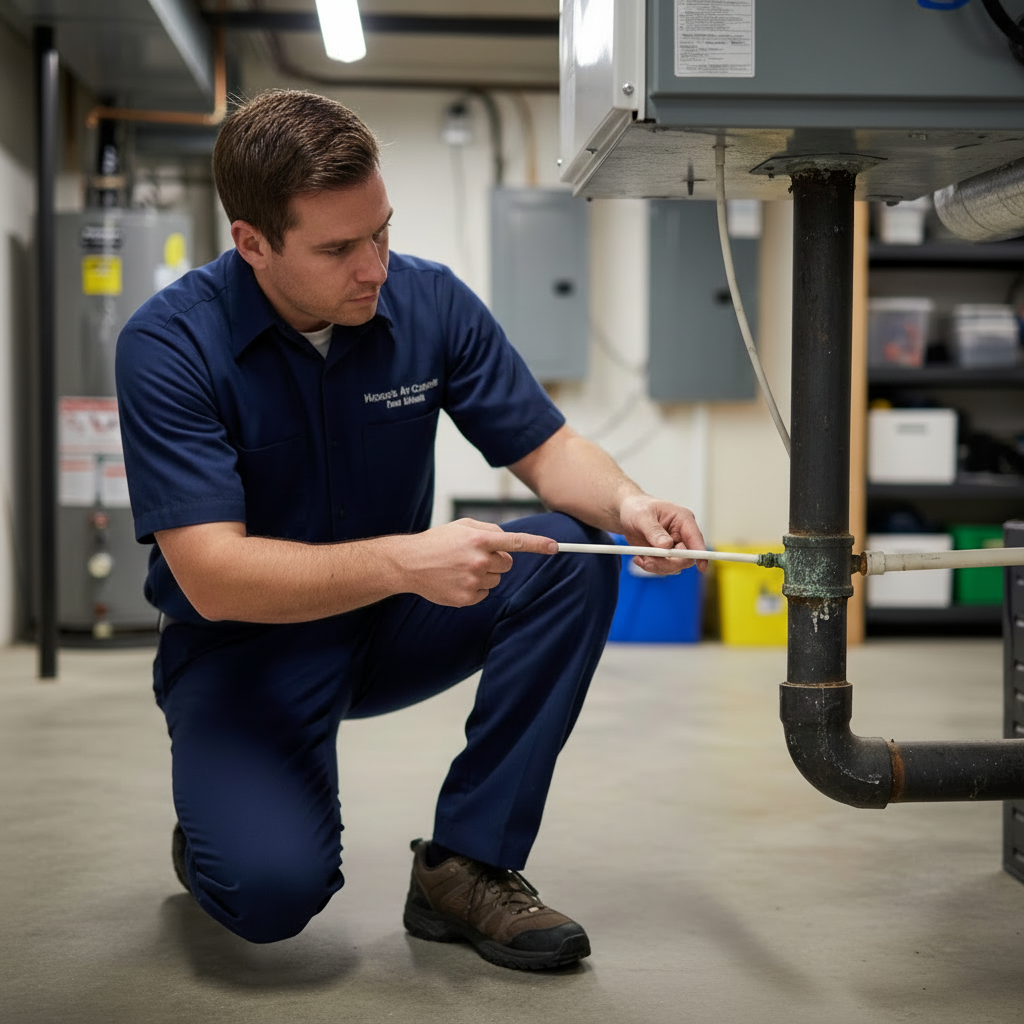
Eliminate sewer smells from your AC unit with professional solutions. Learn about P-trap issues, proper drainage, and essential installation requirements. Protect your home and health.
Key Takeaways
- **Temperature Range**: Keep it between 72-76°F for efficient dehumidification.
- **Longer Runtimes**: Let the system run in longer cycles instead of short-cycling every 10 minutes.
- **Humidity Control**: In coastal areas or humid climates, add a whole-home dehumidifier.
- **Monthly Monitoring**: Check indoor humidity — aim for 30-50%.
- **Drainage System Testing**: Visual inspection, flow checks, pressure testing on all condensate lines and P-traps.
Key Takeaways
Stop Sewer Smells from AC Unit: Professional Solutions for a Healthier Home
That sewer smell drifting out of your vents? It's not just disgusting — it's a warning sign. Your AC system might be pumping hydrogen sulfide and methane (yeah, actual sewer gases) straight into your bedrooms. The usual suspects: dried-out P-traps, botched drainage work, or a missing trap altogether. That's the real issue. Our certified techs see this stuff constantly, and we know exactly where to look.
Unmasking the Causes of AC Sewer Smells
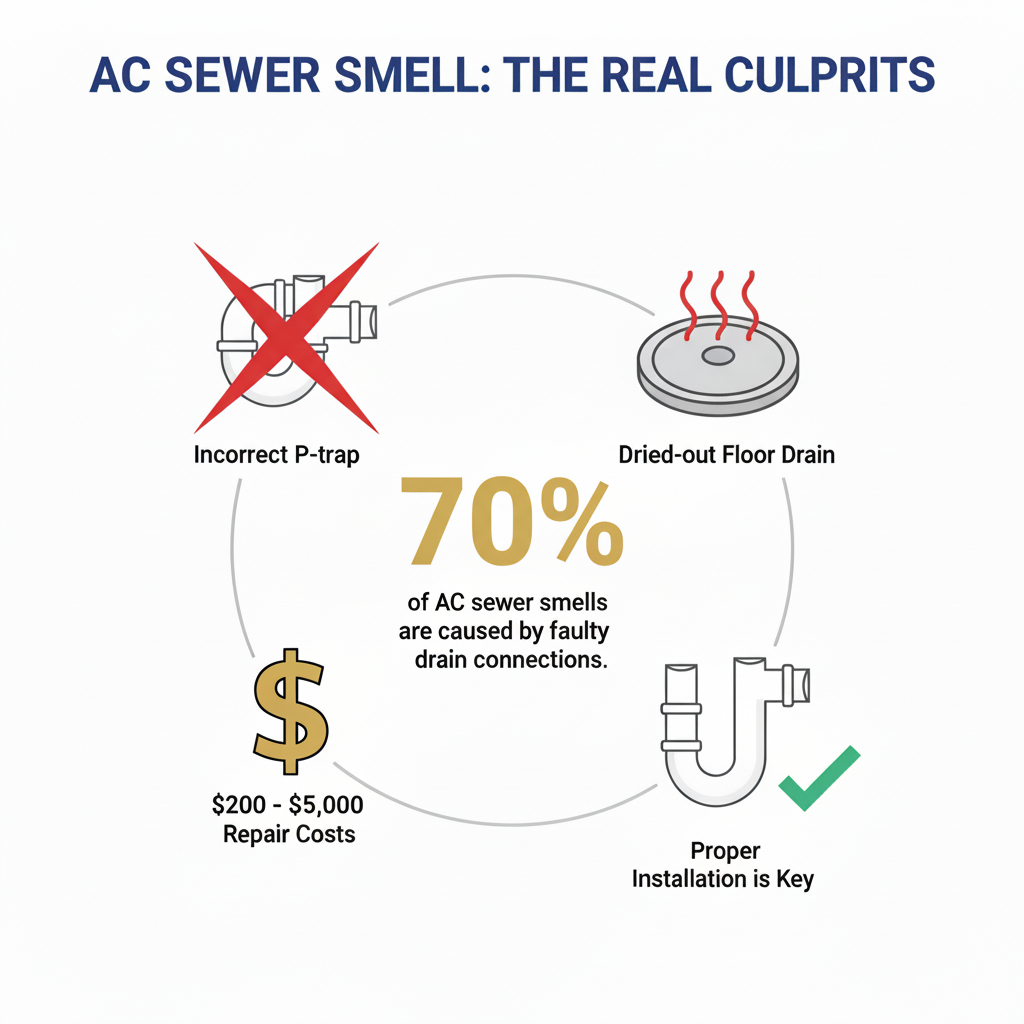
Look — look — the fundamental cause is usually a direct connection between your condensate drain and the sewer line with no barrier between them. Your AC creates condensate water (lots of it during summer). When that drain line doesn't have a proper P-trap, or the trap dries up, sewer gases just waltz right past and get sucked into your air handler. From there? Straight to every room in your house through the ductwork.
We inspect probably 30-40 systems a month, and missing P-traps show up in about half of them. I'm talking brand-new installs from "licensed" contractors who apparently skipped that day in trade school. These aren't subtle problems — you've got a direct highway for hydrogen sulfide (smells like rotten eggs) and methane to pour right into your return air. One house in Ansley Park last month tested at 8 ppm hydrogen sulfide in the master bedroom. OSHA's limit for continuous exposure is 10 ppm. That family was literally sleeping in borderline hazardous air.
Modern high-efficiency units (Rheem, Carrier, Trane) can produce several gallons of condensate per day. Ask me how I know. That's why drainage setup isn't optional — it's covered under the International Plumbing Code for a reason. Our licensed professionals are rigorously trained to follow these codes, prioritizing your family's health and safety.
Essential Setup Requirements for AC Condensate Drains
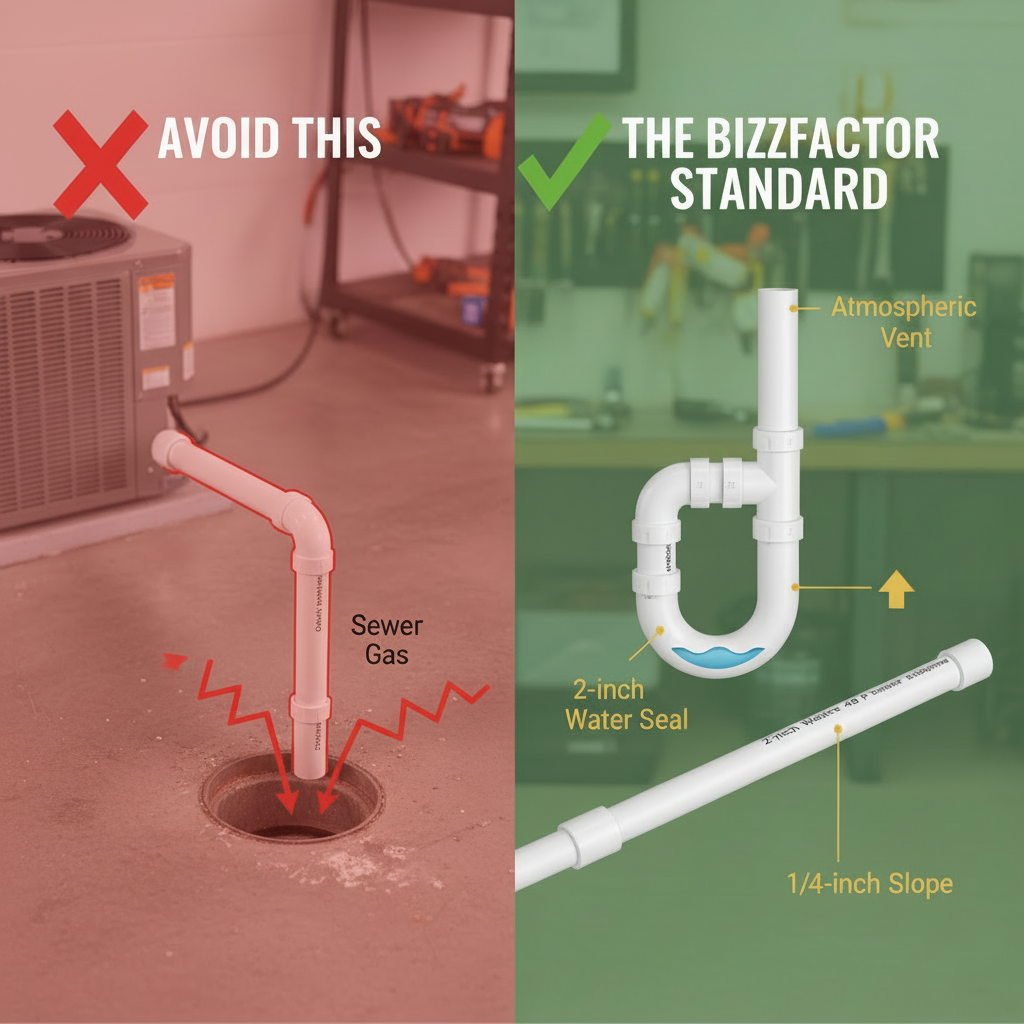
Installing a P-trap correctly involves specific measurements that actually matter:
1. **Trap Seal Depth**: You need at least 2 inches of standing water to block sewer gases.
2. **Proper Venting**: Atmospheric breaks prevent siphonage (which would empty your trap).
3. **Slope Requirements**: The condensate line must drop 1/4-inch per foot — otherwise water sits there and causes problems.
4. **Material Standards**: PVC Schedule 40 is standard. Don't cheap out with thinner pipe.
Reputable HVAC companies, like AC's Heating & Air, never compromise on these standards, and neither should homeowners.
The Unseen Culprit: Beyond Your AC Unit
Real talk — half the time, the smell isn't even coming from your AC. HVAC pros constantly find that dried-out floor drains (basement utility rooms, laundry areas) are the real problem.
Your air handler operates under negative pressure, drawing air from its surroundings. If a nearby floor drain's P-trap has dried out, this negative pressure can pull sewer gas into the return air ductwork, subsequently distributing it throughout your home. This scenario sometimes leads homeowners to incur unnecessary AC repair costs before identifying the actual problem.
**Before contacting an HVAC professional**, we recommend pouring a gallon of water into all floor drains and unused sink traps. Seriously, do this first. This simple step replenishes water seals and solves around 30% of sewer smell calls without anyone needing to show up.
Why Installation Expertise Outweighs Brand Prestige
Here's what nobody wants to admit: installation quality matters way more than brand prestige when preventing issues like sewer smells. I've seen $7,000 Rheem units installed so badly they stunk up a house within two weeks.
A guy I know runs a reputable outfit, and he won't even hire techs unless they've done at least 200 supervised installs. That's because getting the P-trap height right, setting the proper slope, installing vent breaks — all that stuff separates pros from hacks. You do it right the first time? System runs clean for 15 years. You skip the trap because you're in a hurry? Homeowner's calling you back in three weeks wondering why their house smells like a Porta-Potty. Plus they're facing early compressor failure because nobody checked refrigerant charge or airflow. That's the real issue. Proper installation isn't just about preventing sewer smells — it keeps the whole system from eating itself prematurely.
The Dangers of Bleach: An Alternative Approach
Stop pouring bleach down your condensate line. I'm begging you. It's corrosive, it eats away at metal drain pans, and it weakens PVC joints over time. You're creating future leaks to solve a temporary smell.
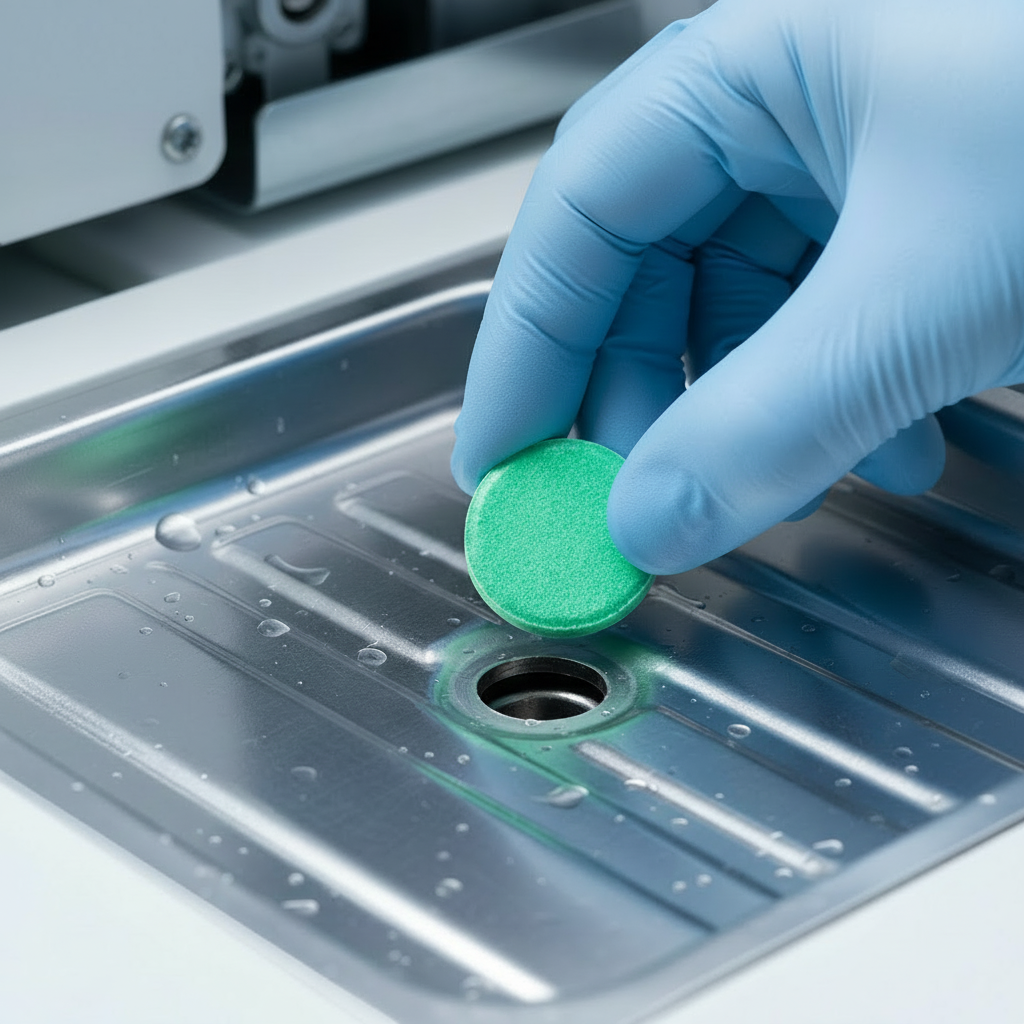
Here's the thing: here's the thing: professional techs use enzyme tablets instead — brands like Nu-Calgon's Pan-Pads. These dissolve organic gunk biologically without destroying your system. Drop one tablet every 30 days and you'll probably never have a condensate drain clog. Prevention beats dumping chemicals reactively.
Case Study: A 24-Unit Condominium Catastrophe
A property manager in Buckhead called us in a panic last July. All 24 units in his condo building smelled like a sewer during AC operation. Residents were complaining about headaches, nausea — some threatened to break their leases.
The root cause was a fundamental installation flaw: the original contractor had directly connected every condensate drain to the main sewer line, bypassing the inclusion of essential P-traps.
During peak summer, twenty-four Rheem units running simultaneously created negative pressure strong enough to pull sewer gases into every apartment. We had to retrofit the entire building — individual P-traps for each unit, secondary overflow pans, the works. Three days of work, $15,000 total cost.
This project, totaling $15,000, highlighted the critical cost implications of improper initial installation, which would have only cost approximately $2,000 to do correctly from the start.
Beyond Drainage: Other Sources of AC Odors
Drainage isn't always the villain. Sometimes the smell comes from stuff growing inside your system.
Biological Contamination in Ductwork
Excessive humidity plus poor maintenance equals mold city. Biofilm accumulates on evaporator coils, water sits in drain pans, and bacteria start throwing a party. The volatile organic compounds (VOCs) they produce? Smell exactly like sewer gas.
So here's what actually works when you've got biological contamination:
First thing — we install germicidal UV lights right above the coil. Not the cheap Amazon ones; commercial-grade REME HALO or Fresh-Aire units that actually put out enough UV-C to kill microbes. Then we hit the coils with EPA-registered antimicrobials (usually Sporicidin or something similar that won't corrode aluminum fins). Seriously. If the ductwork's contaminated, we'll fog the whole system — takes about 90 minutes and smells like chemicals for a day, but it works. And honestly? None of that matters long-term unless you sign up for quarterly maintenance. Biofilm comes back. It always does.
Unwanted Guests: Dead Animals in Ducts
This happens more than you'd think. Rodents or insects get into compromised ductwork, die in there, and... well, decomposition smells a lot like sewage.
Our technicians use specialized **duct inspection cameras** to locate such obstructions. Removal necessitates thorough cleaning and sanitization, followed by sealing all potential entry points to prevent future infestations. Proactive sealing is key to preventing this rather unpleasant issue.
How Temperature Settings Impact HVAC Odors
If you're running your thermostat above 78°F to save money, you might be creating a humidity problem that causes odors.
The Role of Dehumidification in Odor Prevention
When your thermostat is set above 78°F, the evaporator coil may not run long enough or cool sufficiently to effectively remove humidity from your indoor air. Humidity above 60%? That's ideal for mold and bacteria — direct contributors to musty or sewer-like smells.
Better strategy:
- **Temperature Range**: Keep it between 72-76°F for efficient dehumidification.
- **Longer Runtimes**: Let the system run in longer cycles instead of short-cycling every 10 minutes.
- **Humidity Control**: In coastal areas or humid climates, add a whole-home dehumidifier.
- **Monthly Monitoring**: Check indoor humidity — aim for 30-50%.
While running your AC at higher temperatures might seem like a cost-saving measure, the potential for complex odor issues and subsequent repair costs often outweighs any initial savings.
Professional Solutions for Eliminating AC Sewer Smells
Getting rid of sewer smells requires a methodical approach. We've been doing this for over two decades, and our process gets results.
Comprehensive HVAC System Check
We run through a multi-point diagnostic that covers everything:
- **Drainage System Testing**: Visual inspection, flow checks, pressure testing on all condensate lines and P-traps.
- **Airflow Analysis**: Static pressure measurements to identify restrictions or negative pressure zones.
- **Indoor Air Quality (IAQ) Tests**: VOC detection equipment pinpoints specific gas concentrations.
- **Equipment Performance Evaluation**: Full diagnostic of AC operation (refrigerant levels, electrical components, the works).
We use thermal cameras to spot hidden moisture (wet insulation shows up cold on infrared), and digital manometers tell us exactly what's happening with airflow pressure. You can't guess at this stuff. A .8" W.C. pressure drop across a coil might be fine or catastrophic depending on the system design. We measure everything.
Our Proven Protocol for Odor Elimination
Here's how we systematically eliminate the problem:
1. **Source Identification**: We pinpoint exactly where contamination is originating.
2. **Problem Containment**: Measures to prevent spread during cleanup.
3. **Professional Cleaning & Sanitization**: EPA-registered products for safe, effective cleaning of coils, drains, and ductwork.
4. **System Restoration**: Repair or replace damaged components (P-traps, drain lines, insulation).
5. **Verification and Testing**: Post-remediation air quality testing before we consider the job done.
We don't just spray some Febreze and call it good. You kill the odor sources, you fix whatever let them grow in the first place, and you test the air afterward to prove it's actually clean. Otherwise you're back to square one in six weeks.
Preventative Maintenance: Your Best Defense Against Odors
Look — regular maintenance is way cheaper than emergency repairs. Preventing problems beats fixing them every single time.
Monthly Homeowner Maintenance Tasks
You don't need to be an HVAC tech to do basic upkeep:
- **Replace Air Filters**: Use high-efficiency filters and change them every 30-60 days (more often if you have pets).
- **Inspect Drain Pans**: Check for standing water or slimy buildup monthly; clear blockages immediately.
- **Clear Outdoor Unit**: Keep at least 24 inches of clearance around your condenser.
- **Test Thermostat**: Make sure it's reading accurately and programmed correctly.
In-Depth Look
Detailed illustration of key concepts
Visual Guide
Infographic illustration for this topic
Side-by-Side Comparison
Visual comparison of options and alternatives
Sources & References
- Guide to Dealing with Foul Air Conditioner Smells in Dallas
- A Complete Guide on How to Stop Smells From Coming ...
- Why Does My Air Conditioner Smell Bad?
- How To Get Rid Of Bad Smell From Air Conditioner
- Top 23 Commercial HVAC Manufacturers - Metalphoto of Cincinnati
- 6 Best HVAC Companies | Money
- Best HVAC System Brands To Look At In 2025 - Invoice Fly
- Best Air Conditioner Brands in 2025
- Key HVAC Regulations and Requirements for 2025 and Beyond
Frequently Asked Questions
Need Professional Help?
Find top-rated hvac businesses experts in your area