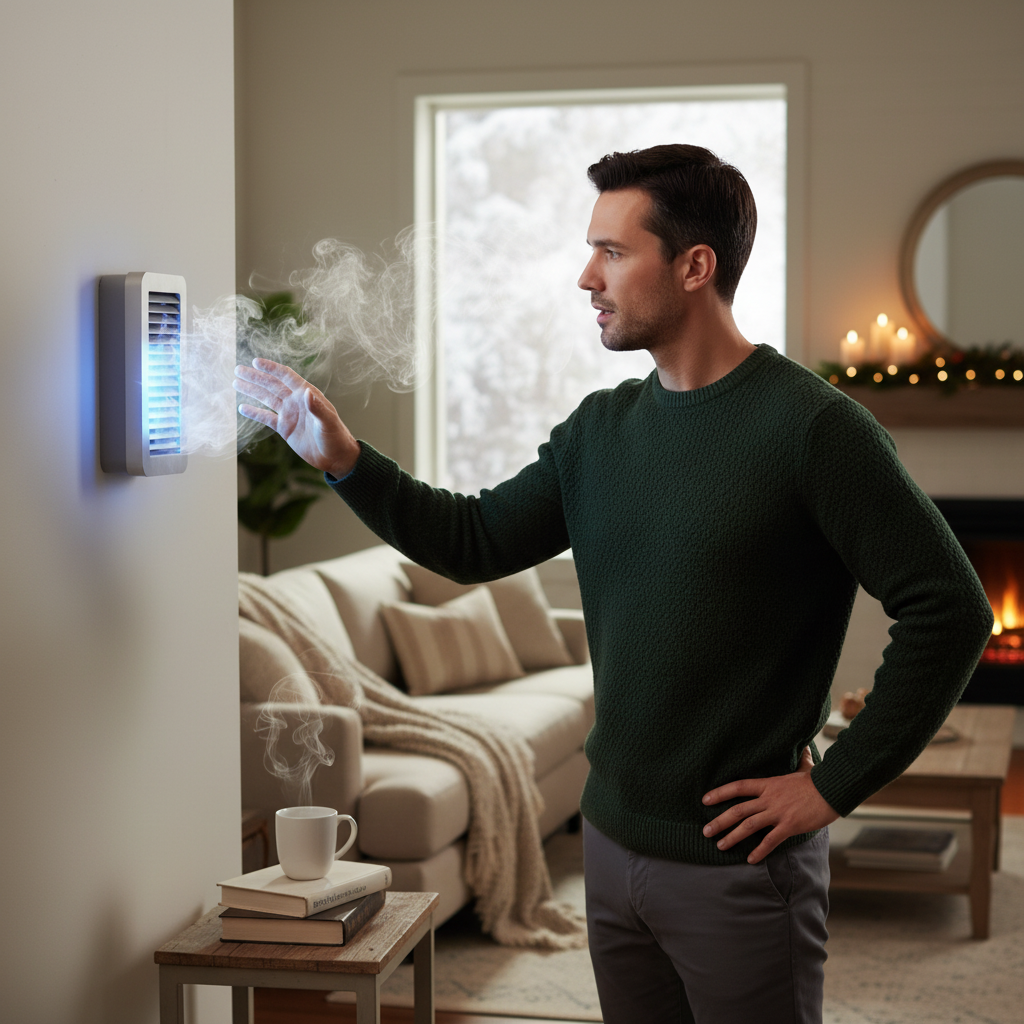
Your AC isn't heating? Learn why it's blowing cold air. We cover fast DIY fixes like thermostats and filters, plus pro repairs for a bad heat pump or refrigerant leak.
Key Takeaways
- **'COOL' Mode (❄️):** Actively pushes heat *out* of your home. If your AC is blowing cold air in what you *think* is "heat" mode, this is probably why. Common mix-up. Your system is doing exactly what it's told — just not what you want.
- **'FAN' Mode:** Just circulates existing air without heating or cooling. It moves air around. That's it. Basically an expensive ceiling fan.
- **'AUTO' Mode:** Tries to maintain your set temperature by switching between heating and cooling. If the room temp is too close to your target, it might not do anything at all. For reliable heating when it's actually cold outside, manually selecting 'HEAT' works better. Take control. Don't rely on automation when you're freezing.
- **Reduced or zero heat output.** Your home stays cold even though the system's running.
- **Overheating and safety shutdowns.** The unit gets too hot, trips a switch, and shuts down at the worst possible time.
Key Takeaways
AC Not Heating? Why Your Heat Pump or AC is Blowing Cold Air
If your **AC unit isn't heating** your home, it's usually something simple — a thermostat on the wrong setting, an air filter that's totally clogged, or maybe a reversing valve that's stuck. Look, I've seen it a hundred times at BizzFactor: you check the remote settings and swap the air filter, and boom — about 30% of these panic calls just disappear. No technician needed. What a relief when it's that simple!
Picture this: you flip your system to 'HEAT' on a cold Tuesday morning, expecting that cozy blast of warm air. Instead? Ice-cold air hits you in the face. Frustrating doesn't even cover it. Before you spiral, understand that some issues are genuinely DIY fixes, while others are screaming for professional help. After two decades of crawling through attics and diagnosing busted heat pumps, our BizzFactor team has seen every heating disaster imaginable. That's the real issue.
Look — we're walking you through the exact troubleshooting steps our certified technicians use — from the stuff you can handle yourself to the repairs that are frankly dangerous without proper training. Real answers here, not guesses.
First Steps: Check These Before You Call Anyone
Before you drop $150 on a service call, check your thermostat settings and pull out your air filter. These two things — I'm serious — fix over half of all heating complaints. Many homeowners miss one crucial detail: making absolutely sure the system is set to 'HEAT' and the filter isn't choking the life out of your airflow.
Don't skip this step.
1. Verify Your Thermostat and Remote Control Settings: The Command Center
This sounds almost insulting to mention, but incorrect thermostat settings cause more preventable service calls every winter than anything else. Modern smart thermostats, for all their bells and whistles, can be confusing as hell. Why can't they just be simple?
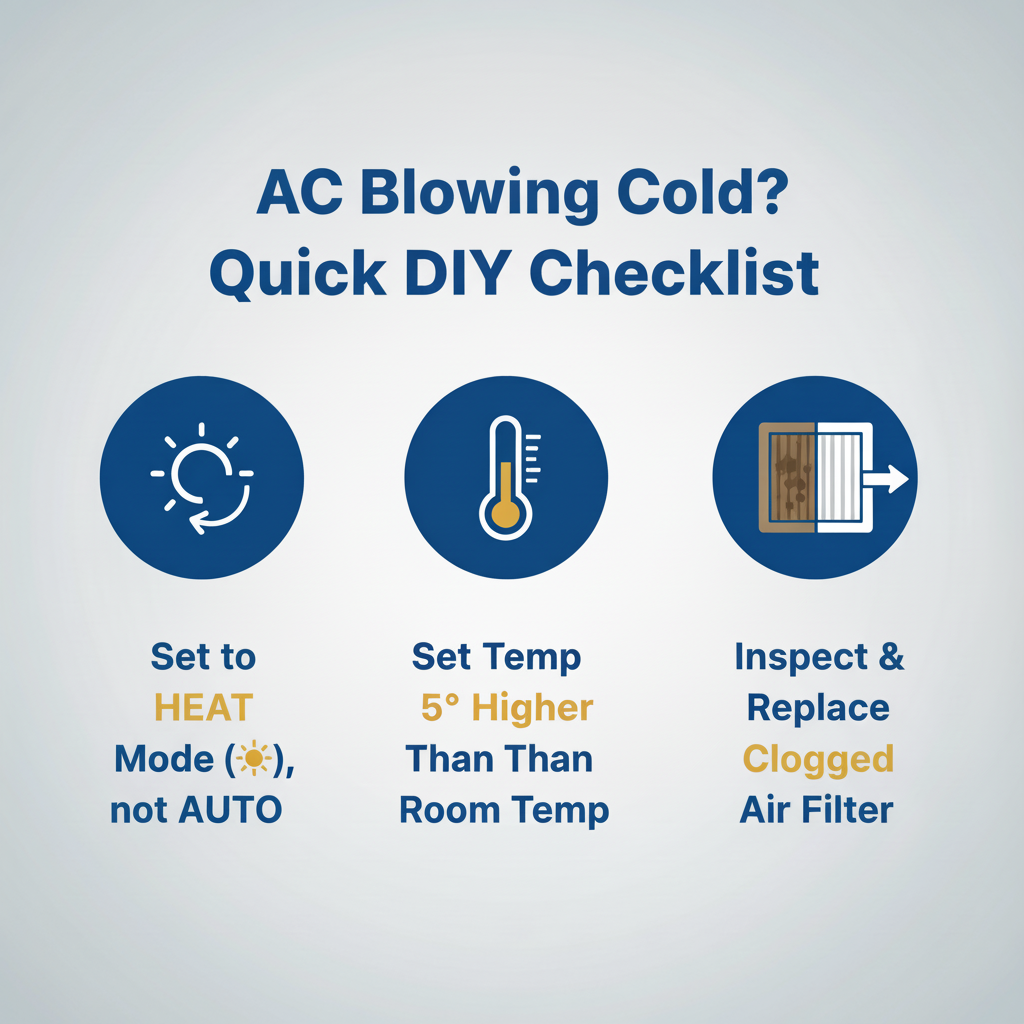
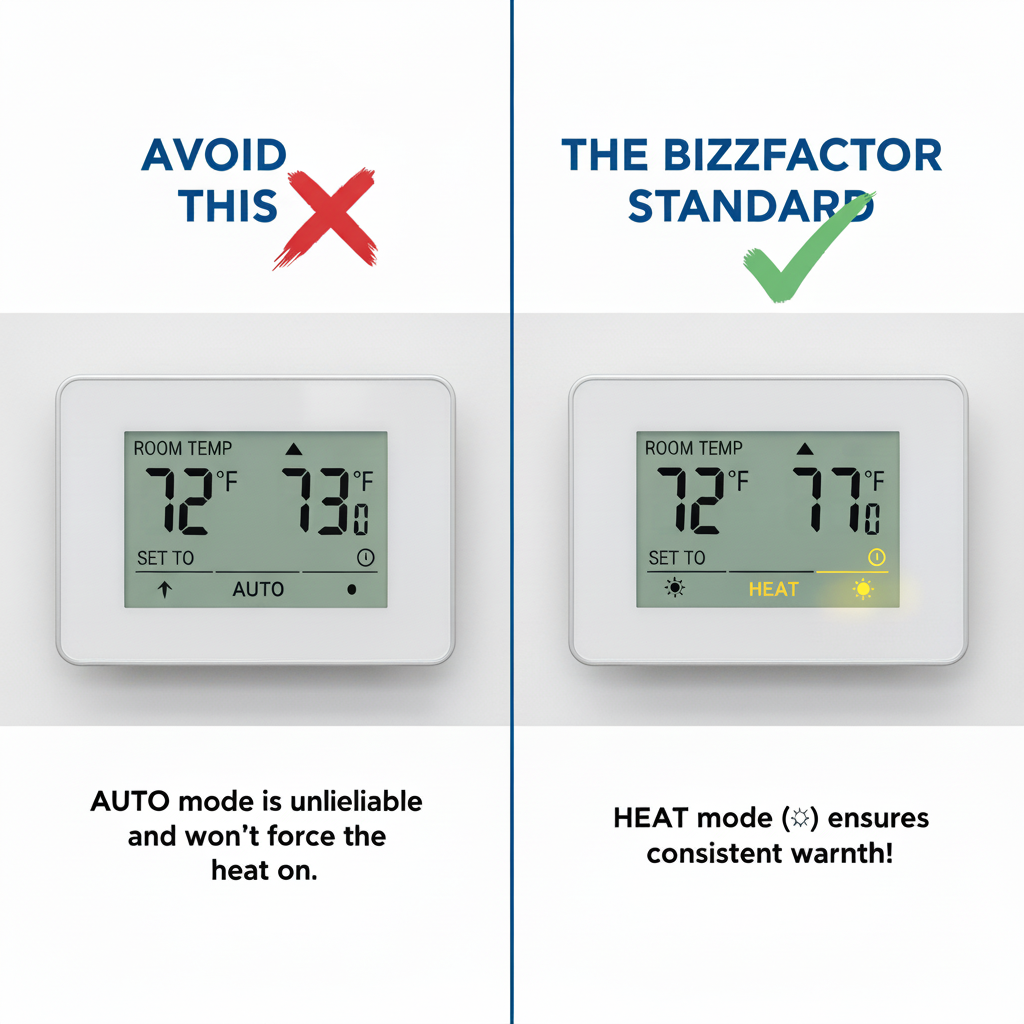
Confirm your system is in **'HEAT' mode** (usually a sun icon ☀️ or flame symbol). Check it twice.
Other modes that will *not* produce heat:
- **'COOL' Mode (❄️):** Actively pushes heat *out* of your home. If your AC is blowing cold air in what you *think* is "heat" mode, this is probably why. Common mix-up. Your system is doing exactly what it's told — just not what you want.
- **'FAN' Mode:** Just circulates existing air without heating or cooling. It moves air around. That's it. Basically an expensive ceiling fan.
- **'AUTO' Mode:** Tries to maintain your set temperature by switching between heating and cooling. If the room temp is too close to your target, it might not do anything at all. For reliable heating when it's actually cold outside, manually selecting 'HEAT' works better. Take control. Don't rely on automation when you're freezing.
**BizzFactor Pro Tip:** Set the thermostat at least 5 degrees higher than the current room temperature. This bigger differential tells the system, "Hey, I really mean it — heat up now!" Many systems won't kick on unless there's a 2-3 degree difference, so give it a clear signal.
2. Inspect and Replace Your Air Filters: The System's Lungs
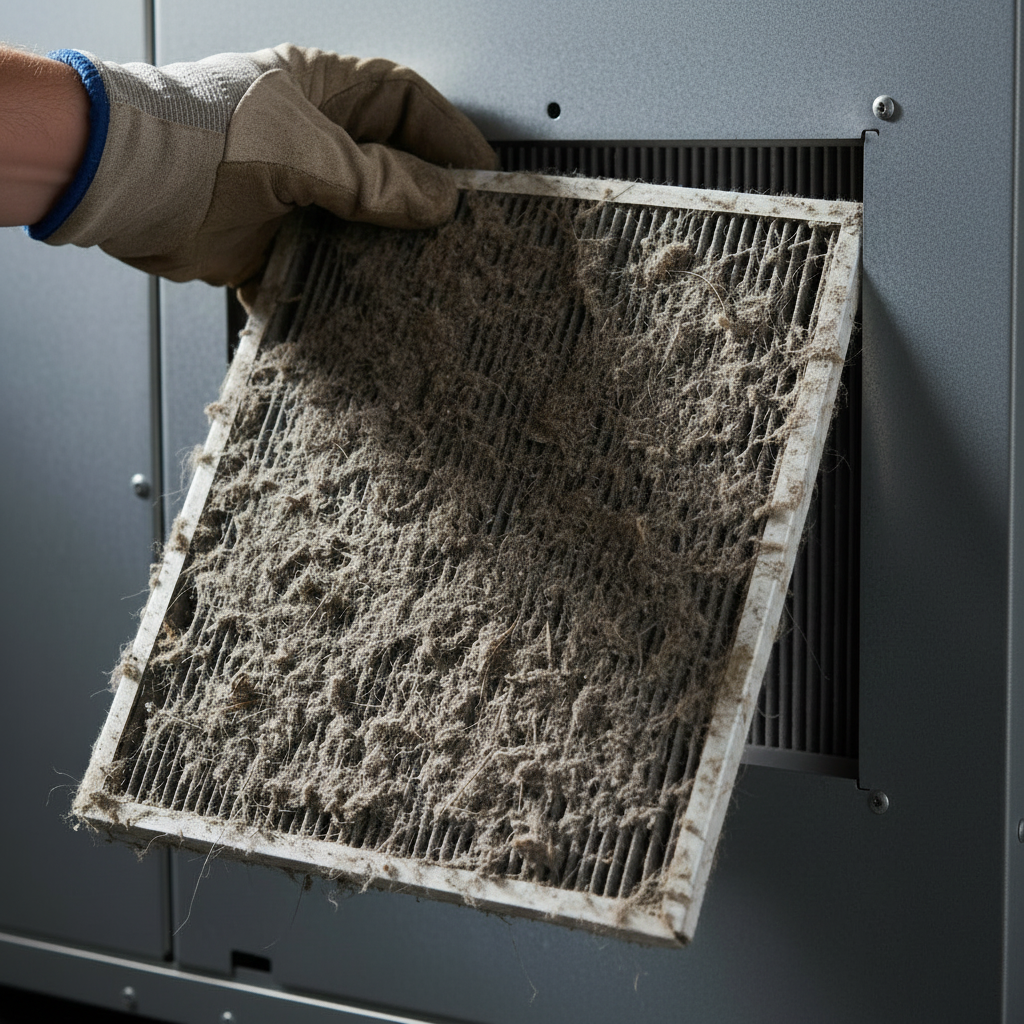
Look — a neglected air filter is the number one enemy of any HVAC system. Period. When it's clogged with dust, pet hair, and whatever else floats around your house, it chokes off airflow. Imagine trying to breathe through a dirty towel after running a marathon. That's your HVAC system right now.
It's suffocating. Don't ignore this.
A dirty air filter causes:
- **Reduced or zero heat output.** Your home stays cold even though the system's running.
- **Overheating and safety shutdowns.** The unit gets too hot, trips a switch, and shuts down at the worst possible time.
- **Long-term damage to expensive components** — compressor, heat exchanger, you name it. We're talking thousands of dollars in repairs down the line.
- **Higher energy bills:** System works harder to push air through the clog, burning more electricity for less heat.
- **Terrible indoor air quality:** Dirty filters stop filtering. Allergens and dust just circulate freely.
*How to check:* Find your return air vent or the filter slot on your indoor unit. Pull out the filter. If it's gray, fuzzy, or basically opaque with dirt, replace it immediately. A decent disposable filter costs $15-25. Such a small investment!
If you've got a washable filter, clean it thoroughly with mild soap and water, then make absolutely sure it's *completely* dry before putting it back. Mold is a whole other nightmare you don't want.
**BizzFactor Expert Advice:** Check filters monthly. Homes with pets, smokers, or allergy sufferers? Replace every 30-45 days, no exceptions. Standard pleated MERV 8 filters hit the sweet spot between catching particles and maintaining airflow. High MERV filters (11+) are great for air quality but need more frequent changes because of their tighter weave.
Make a schedule. Your wallet will thank you.
When You Need a Pro: Beyond DIY Territory
If you've verified the thermostat and swapped the filter with no luck, you're probably dealing with something more complex — refrigerant issues, electrical failures, or a broken reversing valve. These repairs require specialized tools (precision multimeters, refrigerant gauges, thermal cameras) and a licensed, NATE-certified technician who actually knows what they're doing. For reliable **HVAC repair in [Your City/Region]**, contact BizzFactor.
It's not worth guessing when safety and expensive equipment are on the line.
3. Refrigerant System Malfunctions: The Heart of the Problem
So here's the deal: refrigerant is the fluid that moves heat from outside into your home (or vice-versa in summer). If refrigerant levels are low, there's a leak somewhere. **Refrigerant doesn't get "used up" — it operates in a sealed, closed loop.** Think of it like blood in your veins. It shouldn't be disappearing.
Low refrigerant makes the system run inefficiently, stresses components, and eventually fails to deliver heat.
**The Reversing Valve:** This component controls refrigerant flow direction, determining whether your system heats or cools. When it malfunctions or gets stuck, your system can lock into one mode — often cooling — even when you're desperately requesting heat. Our BizzFactor technicians diagnose this by listening for specific sounds (a sudden clunk or persistent hiss), watching for mode-switching failures, or measuring line temperatures. A trained ear can catch it instantly.
**Low Refrigerant (The Leak Problem):** Be skeptical of any technician who suggests a simple 'recharge' or 'top-off' without finding and fixing the leak first. That's like refilling a flat tire without patching the hole. Temporary fix at best, and deceptive at worst.
Low refrigerant means there's a leak somewhere. Period.
Our NATE-certified technicians always perform a thorough nitrogen leak test using electronic detectors (and sometimes old-school soap bubbles) to pinpoint exactly where refrigerant is escaping. Just adding more R-410A or R-22 provides temporary relief but guarantees repeat service calls and escalating costs. Always insist on finding and repairing the leak — this is standard in our service warranty for **heat pump repair**. We believe in permanent solutions, not band-aids.
**Environmental Impact and Safety:** Refrigerants like R-410A and R-22 are potent greenhouse gases. Releasing them into the atmosphere (which happens with leaks or improper handling) contributes directly to climate change. Plus, handling refrigerants requires EPA Section 608 certification because of pressure and chemical safety concerns.
DIY attempts are dangerous to your health and property, and they're illegal under federal law. This isn't amateur hour. It's for certified professionals following strict environmental guidelines.
4. Electrical Component Failures: The Brains and Brawn
Your HVAC system depends on a complex network of electrical components — switches, contactors, circuit boards — to operate correctly. One failure can shut down the entire heating process.
Electricity is complicated and dangerous. Don't mess with it.
- **Failed Capacitor:** A capacitor stores energy and provides the surge needed to start compressor and fan motors. These fail all the time, especially after power surges or just from age. When a capacitor dies, motors might hum but not start, or run sluggishly. Replacing a faulty capacitor is usually an inexpensive repair for a qualified technician (around $150-250), but attempting it yourself risks electric shock or further damage. Capacitors store lethal voltage even when power is off.
- **Defective Contactor or Relay:** These switches control power flow to major components. When they fail (often from pitting or welding of contacts), the heating cycle won't initiate properly. A guy in Buckhead paid $2,400 last winter because a stuck contactor went undiagnosed for six months, causing his compressor to overheat and fail. Could've been a $200 fix. Instead, he needed a full compressor replacement.
- **Faulty Control Board:** This is the system's brain, managing all operations. Control board failures are less common but more expensive to repair (typically $400-800 for parts and labor). Symptoms include erratic behavior, random shutdowns, or complete system unresponsiveness. Diagnosing board issues requires specialized testing equipment and experience — not something you can eyeball.
- **Blown Fuses or Tripped Breakers:** Sometimes it's just a tripped breaker or blown fuse. Check your electrical panel first. If the breaker trips repeatedly after resetting, that's a sign of a deeper electrical issue (short circuit, failed component drawing too much current). Don't keep resetting it — call a professional. Repeated trips indicate something's wrong, and you could start a fire.
5. Defrost Cycle Issues (Heat Pumps Specifically)
Heat pumps extract warmth from outdoor air — yes, even when it's cold outside. But when outdoor temps drop below freezing (around 32-40°F depending on humidity), frost naturally builds up on the outdoor coil. That's normal.
Here's the thing: your system has a defrost cycle that periodically reverses to cooling mode briefly, melting accumulated frost. During defrost (which usually lasts 5-15 minutes), the system blows cool or room-temperature air indoors. If you notice this occasionally, don't panic — it's supposed to happen.
However, if your system seems stuck in defrost mode or enters it too frequently (more than once an hour), there's a problem:
- **Faulty Defrost Control Board or Sensor:** These components tell the system when to defrost. If they malfunction, the system might defrost unnecessarily or not at all. Ice buildup on the outdoor unit (a solid block of ice covering the coil) indicates the defrost cycle isn't working.
- **Stuck Reversing Valve (again):** If the valve won't switch back to heating mode after defrost, you'll get continuous cold air indoors. This requires professional valve replacement.
- **Low Refrigerant (again):** Low charge affects heat transfer efficiency, causing excessive frost buildup and triggering more frequent defrost cycles. Another reason to fix leaks properly.
If your outdoor unit looks like an ice sculpture, that's a red flag. Call BizzFactor for a proper diagnosis.
6. Outdoor Unit Issues: The Forgotten Half
Your outdoor unit (the condenser for traditional AC, or the compressor/condenser unit for heat pumps) does the heavy lifting. If it's not running properly, you won't get heat.
- **Dirty or Blocked Outdoor Coil:** Leaves, grass clippings, dirt, and debris clog the outdoor coil, restricting airflow and reducing efficiency. In heating mode, this makes it harder to extract heat from outdoor air. Clear debris regularly — at least twice a year. Gently spray the coil with a garden hose (no pressure washer, which can bend delicate fins). A coil cleaning costs around $100-150 professionally, or you can do it yourself carefully.
- **Failed Compressor:** The compressor is the heart of the system, circulating refrigerant under pressure. When it fails completely, there's zero heating or cooling. Compressor failure is expensive (often $1,500-3,000+ depending on system size and refrigerant type). If your compressor is dead and your system is over 10-12 years old, replacing the entire outdoor unit usually makes more financial sense than replacing just the compressor.
- **Frozen or Damaged Components:** Severe weather, hail, or physical damage can crack refrigerant lines, damage coils, or break fan blades. Always inspect your outdoor unit after storms. Bent fan blades create vibration and noise, and they reduce airflow. Replacement fans typically cost $200-400 installed.
- **Fan Motor Failure:** If the outdoor fan isn't spinning (but the unit is humming or buzzing), the fan motor or capacitor has likely failed. Without the fan, the outdoor coil can't release or absorb heat properly, and the system will overheat and shut down on safety limits. Fan motor replacement runs about $300-500.
Real talk — if your outdoor unit is silent and motionless when the thermostat calls for heat, that's a problem requiring immediate professional attention.
Auxiliary and Emergency Heat: What's the Difference?
Many heat pump systems have supplemental electric resistance heat (think giant toaster coils) to help when outdoor temps drop too low for efficient heat pump operation, or as backup during defrost cycles.
- **Auxiliary Heat (AUX):** Kicks in automatically when needed. You'll see "AUX" on your thermostat. This is normal when it's very cold outside (usually below 35°F, depending on your system's balance point). Aux heat costs more to run because electric resistance heat is expensive — roughly 2-3x the cost of heat pump operation. If you see AUX heat running constantly even in moderate weather (above 40°F), something's wrong with your heat pump.
- **Emergency Heat (EM HEAT):** This manually disables the heat pump and runs only the electric resistance strips. Use this *only* when the heat pump has completely failed and you need temporary heat until a technician arrives. Some thermostats have an "EM HEAT" switch or setting. Emergency heat is expensive to operate, so don't leave it on longer than necessary. It's a last resort, not a solution.
If your system runs on AUX or EM HEAT for extended periods, your electric bill will skyrocket. That's your cue to call for service.
Why Is Cold Air Coming from My Vents? Summary of Causes
Let's recap the most common reasons (in order of likelihood):
1. **Thermostat set to wrong mode** (COOL, FAN, or AUTO instead of HEAT) — check this first
2. **Dirty or clogged air filter** restricting airflow — replace immediately
3. **System in defrost mode** (heat pumps only, temporary) — wait 15 minutes
4. **Low refrigerant due to leak** — requires professional leak detection and repair
5. That's the real issue. **Faulty reversing valve** (heat pumps) — stuck in cooling mode, needs replacement
6. **Failed capacitor, contactor, or other electrical component** — professional diagnosis required
7. **Outdoor unit not running** (fan motor failure, compressor failure, dirty coil) — inspect and call for service
8. **Control board malfunction** — erratic behavior, professional repair needed
9.
The first two account for probably 50% of complaints. The rest require a trained technician with proper tools.
When to Call BizzFactor for Professional HVAC Repair
You should contact a licensed HVAC professional when:
- You've verified thermostat settings and replaced the filter, but still no heat
- The outdoor unit isn't running at all, or makes grinding/squealing noises
- You see ice buildup on the outdoor coil that doesn't melt after a defrost cycle
- The system repeatedly trips breakers or blows fuses
- You smell burning (shut off the system immediately and call)
- Aux or emergency heat runs constantly, even in moderate weather
- The system is more than 10 years old and experiencing frequent issues
At BizzFactor, our NATE-certified technicians have the experience, tools, and training to diagnose and repair heating issues correctly the first time. We believe in transparent pricing, permanent solutions, and educating homeowners so they understand exactly what's happening with their system.
We're not here to upsell unnecessary repairs. We're here to fix your heat pump or furnace properly, safely, and affordably.
For reliable **heat pump repair** and **HVAC service in [Your City/Region]**, contact BizzFactor today. We offer emergency service, upfront pricing, and a satisfaction guarantee on all repairs.
Stay warm out there.
In-Depth Look
Detailed illustration of key concepts
Visual Guide
Infographic illustration for this topic
Side-by-Side Comparison
Visual comparison of options and alternatives
Sources & References
- HVAC Not Blowing Warm Air: Common Issues and Fixes
- AC Blowing Warm Air? Essential Fixes Guide (2025)
- A Step-by-Step Guide for Troubleshooting HVAC Issues
- Commercial HVAC Troubleshooting: Tips and Advice - Lee Company
- Common HVAC Problems and How to Troubleshoot Them
- Top 23 Commercial HVAC Manufacturers - Metalphoto of Cincinnati
- Best HVAC System Brands To Look At In 2025 - Invoice Fly
- Best Air Conditioner Brands in 2025
- 6 Best HVAC Companies | Money
- 8 Best Commercial HVAC Brands for Large Buildings (Reviewed)
Frequently Asked Questions
Need Professional Help?
Find top-rated hvac businesses experts in your area