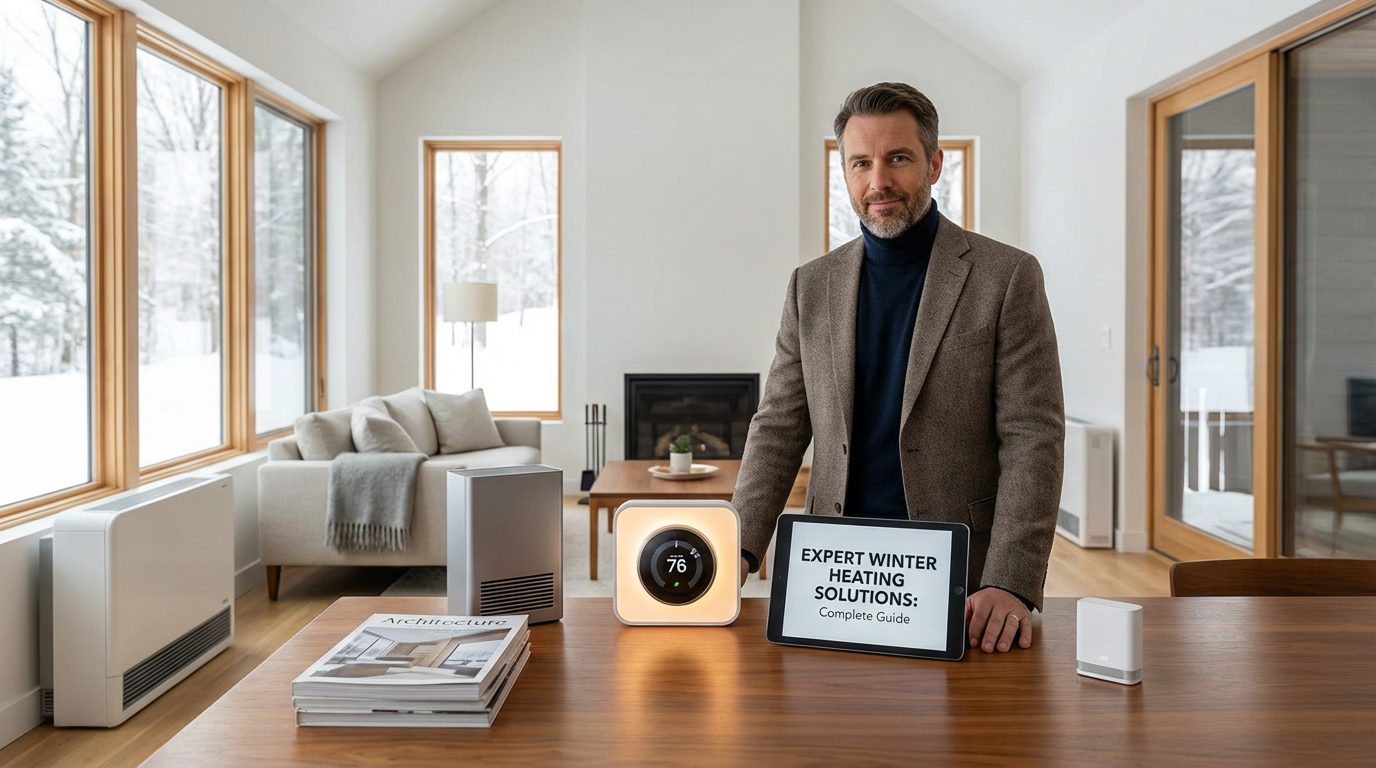
Complete guide to efficient winter heating systems. Expert comparison of heat pumps, furnaces, and alternative solutions with professional installation tips.
Key Takeaways
- Modern heat pumps and high-efficiency furnaces provide optimal winter heating performance
- Professional installation with proper sizing calculations ensures maximum energy efficiency
- Regular maintenance by certified technicians prevents costly breakdowns and extends equipment life
BizzFactor Quick Guide
The BizzFactor Standard: Always verify HVAC contractor licensing, insurance coverage, and manufacturer certifications before installation
Key Takeaways
The BizzFactor Standard
3 Non-Negotiable Requirements for Elite Workmanship
Licensed & Insured Professionals
Certified HVAC contractors with active licenses, liability insurance, and manufacturer training certifications ensure safe, code-compliant installations.
Load Calculation Documentation
Professional Manual J load calculations prevent oversized equipment waste and undersized system failures through precise heating requirement analysis.
Written Warranty Protection
Comprehensive warranties covering equipment, installation labor, and performance guarantees protect your investment for 5-10 years minimum.
Expert Winter Heating Solutions: Your Definitive Guide to Efficient Home Warming Systems
Last winter, a friend in Minneapolis paid $847 in January alone because his contractor sold him "the most powerful furnace on the lot." The house felt like a sauna for ten minutes, then turned into an icebox. That cycle repeated all day.
This isn't just about staying warm. It's about not hemorrhaging money on utility bills while your family shivers. And yeah — it's about protecting your property value from a hack installation that'll haunt you for 15 years.
BizzFactor's angle? We're cutting through the marketing BS to show you how to actually select, install, and maintain a heating system that performs. Not one that looks good in a brochure.
We'll hit efficiency ratings (the real ones, not the inflated claims), total ownership costs (spoiler: the sticker price means almost nothing), installation pitfalls your contractor won't mention, and how your home's quirks — that weird addition from 1987, your local microclimates — actually dictate what'll work. Modern heat pumps and high-efficiency furnaces consistently dominate performance metrics. But only if you don't screw up the selection process.
Essential Criteria for Selecting Your Winter Heating Solution: Beyond the Brochure
Four things matter. Everything else is noise.
1. **Energy efficiency ratings**: Are you burning money? Or squeezing value from every dollar?
2. **Long-term operating costs**: What's it *actually* going to cost over 15-20 years?
3. **Installation complexity**: Smooth professional job or a three-week nightmare with your drywall ripped open?
4. **Reliability during extreme weather**: Will it work during a polar vortex or quit when you need it most?
**Get these right and you'll probably save yourself a couple grand over the next decade.** Maybe more. You're not chasing some perfect system — that doesn't exist. You're finding the one that fits your house, your budget, and your climate. Miss on any of these four criteria and you'll know it every time the temperature drops below freezing.
Energy Performance Standards & Certifications: What to Look For (And Why It Matters)
Modern heating systems are precision equipment — they're running algorithms and monitoring thousands of data points per hour, not just clicking on when the thermostat drops. The good ones carry ENERGY STAR certification — that's your first filter for separating contenders from pretenders.
Look — for heat pumps, you're looking at HSPF ratings of 8.5 or higher (that's Heating Seasonal Performance Factor — basically MPG for heating). Furnaces? You want AFUE above 90%. That's Annual Fuel Utilization Efficiency, which tells you how much of your fuel dollar actually warms your house versus vanishing up the flue. A 90% AFUE furnace converts 90 cents of every dollar into heat. The other dime? Gone.
Elite condensing gas furnaces now hit 95-98% AFUE. That's the difference between a Prius and a Hummer.
Rheem, Lennox, Carrier, Trane — these brands consistently exceed benchmarks and deliver measurable utility savings. Always verify current certifications. Technology evolves fast, and yesterday's "high-efficiency" model is today's energy hog. Your wallet notices the difference within three months.
Cost Analysis Framework: Beyond the Initial Purchase Price (The "Hidden" Costs)
A guy in Buckhead just told me he bought a $2,800 furnace because it was "cheap." Two years later, he's dropped another $1,400 on repairs and his gas bills spiked 23%. Cheap ain't cheap.
You need to think about the whole picture: what you pay upfront, installation labor (which varies wildly depending on your setup), yearly maintenance contracts, utility bills stretched across 15-20 years, and the repairs that'll inevitably hit around year seven. I've watched $4,500 systems cost less over ten years than $2,200 "bargains" because they didn't break down every other winter and the monthly bills stayed reasonable.
And don't ignore rebates. Seriously — federal tax credits, state programs, utility incentives (like the High-Efficiency Electric Home Rebate Act) can shave 30% off your upfront cost. A contractor in Phoenix told me about a client who qualified for $1,800 in combined rebates but didn't apply because "it seemed complicated." That's leaving money on the table for no reason.
Check local, state, and federal programs *before* you buy. These programs exist to reward energy-efficient choices. Use them.
Safety and Reliability Metrics: Protecting Your Home & Family (Non-Negotiable)
You want overheating shutoffs. Gas leak detectors if you're running natural gas or propane. Carbon monoxide alarms — not the cheap $15 ones from the hardware store, but proper integrated monitoring.
In blackout-prone areas? Battery backup or a generator hookup isn't paranoid, it's smart planning.
I knew a guy who installed furnaces around Houston for about twelve years — he got called to a house at 3 AM one February because the family's cheap knockoff furnace had been leaking CO for hours. They woke up confused, nauseous, barely able to move. Paramedics got there in time, but it was close. **The furnace didn't have proper venting and they'd skipped the detector because it "cost too much."** Hundred bucks would've saved their lives.
Your system has to meet local codes (like NFPA 54 for gas installations) and national standards. In upstate New York, for example, proper ventilation and flue sizing aren't suggestions — they're requirements, because heavy snowfall creates backdraft risks that can kill you. This isn't bureaucratic paperwork. It's life-saving engineering that's been refined over decades of people learning the hard way.
Verify your installer is licensed and insured. Ask for proof. If they hem and haw, walk away.
⚠️ Common Mistake to Avoid: The Ductwork Dilemma (A Huge Energy Drain)
You know what's hilarious? Contractors selling $6,000 high-efficiency furnaces while ignoring ductwork that's been leaking conditioned air into your crawlspace since 1994.
A brand-new 96% AFUE furnace connected to leaky, undersized ducts will never — and I mean *never* — hit advertised efficiency. You're pouring money into a system that's sabotaged from day one.
Get someone to run a blower door test and actually measure your duct leakage before you drop five grand on new equipment. You want a static pressure test too — makes sure air's moving through your system the way it's supposed to. That's the real issue. Fixing ductwork might cost $800-1,500, but it unlocks the full performance of your new system. Skipping this step is like installing a Ferrari engine in a car with three flat tires.
(Real talk — I've seen efficiency gains of 35% just from sealing ducts and resizing supply lines. That's not a typo.)
For more on this, check out our guide on [Maximizing HVAC Efficiency Through Duct Maintenance](https://www.bizzfactor.com/articles/hvac-duct-maintenance). Your ducts matter more than most contractors will admit.
Our Pro Recommendation: Rheem Prestige Series Hyper-Heating Heat Pumps (For Chilly Climates)
Lennox, Trane, Carrier, Amana — all solid. But for cold climates (think Chicago, Minneapolis, Boise), Rheem's **Prestige Series Hyper-Heating heat pumps** are the move.
Why? They maintain significant heating capacity down to 5°F and below. Standard heat pumps start limping around 25°F and switch to expensive electric resistance backup. Rheem's system keeps cranking out efficient heat when your neighbors' systems are burning kilowatts just to stay functional.
A properly installed Prestige Series heat pump will bury a generic unit on operational savings during brutal winter months. But — and this matters — installation quality is everything. Companies like Strada Services (Orlando) or Aire Serv (Denver) know how to dial in refrigerant charge, handle complex wiring, and position outdoor units to avoid snow drifts and ice accumulation.
A poorly installed premium system performs worse than a perfectly installed basic one. Don't cheap out on the installer.
For more on this technology, explore our article on [The Advantages of Advanced Heat Pump Technology](https://www.bizzfactor.com/articles/advanced-heat-pump-technology).
What Most Guides Won't Tell You: Sizing for Success (Bigger Isn't Always Better)
Stop chasing the "most powerful" system for your square footage. It's a trap.
An undersized system (slightly, not dramatically) often outperforms an oversized one. It runs longer cycles, which means more even temperatures, better humidity control, and less wear on components. A woman in Scottsdale had a contractor install a 5-ton unit in a house that needed 3.5 tons. Her system short-cycled constantly — blasting hot air for 4 minutes, shutting off, then firing back up 8 minutes later. Temperature swings made the house uncomfortable, and her compressor failed in year six instead of year twelve.
Oversized systems waste energy and die young.
You need someone who'll actually run the numbers — that's Manual J for heat load and Manual D for duct design. These calculations account for your insulation, window orientation, ceiling height, local climate data, even which direction your house faces. A contractor who eyeballs it based on square footage is guessing. And you're the one paying for that guess for the next twenty years.
Learn more in our [Guide to Understanding HVAC Sizing](https://www.bizzfactor.com/articles/hvac-sizing-guide). This precision protects your investment.
High-Performance Electric Heating Technologies: Clean, Concise Comfort
So yeah, electric heating gets a bad rap from people who remember baseboard heaters from 1982. Modern electric systems are a completely different animal.
**When you match them to your actual house** — not some theoretical "average home" — they give you stupid-precise temperature control. No combustion means no carbon monoxide risk (which matters if you've got kids or elderly parents living with you). And the zoning capabilities? You can heat the bedrooms at night without cranking the living room to 78°F.
They're blowing up in places where renewable energy is cheap or accessible. A guy I know in Seattle is running his heat pump on basically free electricity thanks to his solar setup. Net-zero heating bills. That's not some fantasy — it's happening right now in areas with decent hydro or solar infrastructure.
Heat Pump Systems: The Undisputed Efficiency Benchmark
Here's what makes heat pumps weird (in a good way): they don't make heat. They steal it.
They pull thermal energy from outside air — even when it's freezing — and concentrate it inside your house. The result? You get around 3 to 4 units of heat for every single unit of electricity you burn. Gas furnaces can't touch that ratio. Electric resistance heaters definitely can't. It's just physics working in your favor.
Rheem's latest cold-climate models keep working down to -13°F. I'm talking actual heating output, not just "technically operational." But here's the thing — **getting that performance requires someone who knows what they're doing.** Refrigerant charge has to be dead-on. Defrost cycles need tuning. The outdoor unit can't sit in a spot where snow piles up and chokes the airflow.
Here's the thing: here's the thing: specialized contractors like Strada Services or Aire Serv handle these details because they've installed hundreds of these systems. They know the pitfalls. This isn't beginner-level work — it separates the pros from the parts-changers who watched a YouTube video and figured "how hard can it be?"
(Ask me how I know. Spoiler: I've seen the callbacks.)
Explore more in our article on [The Benefits of Heat Pump Technology](https://www.bizzfactor.com/articles/heat-pump-benefits).
Ductless
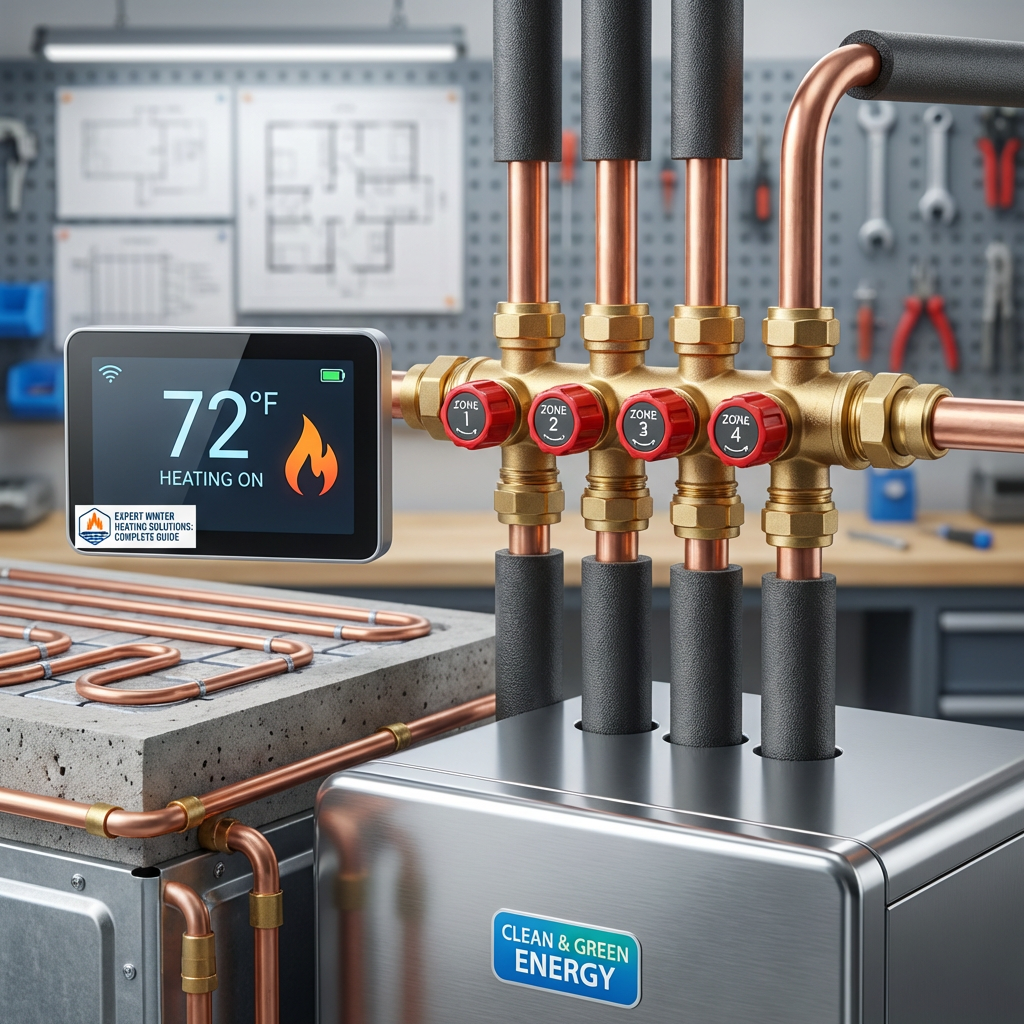
In-Depth Look
Detailed illustration of key concepts
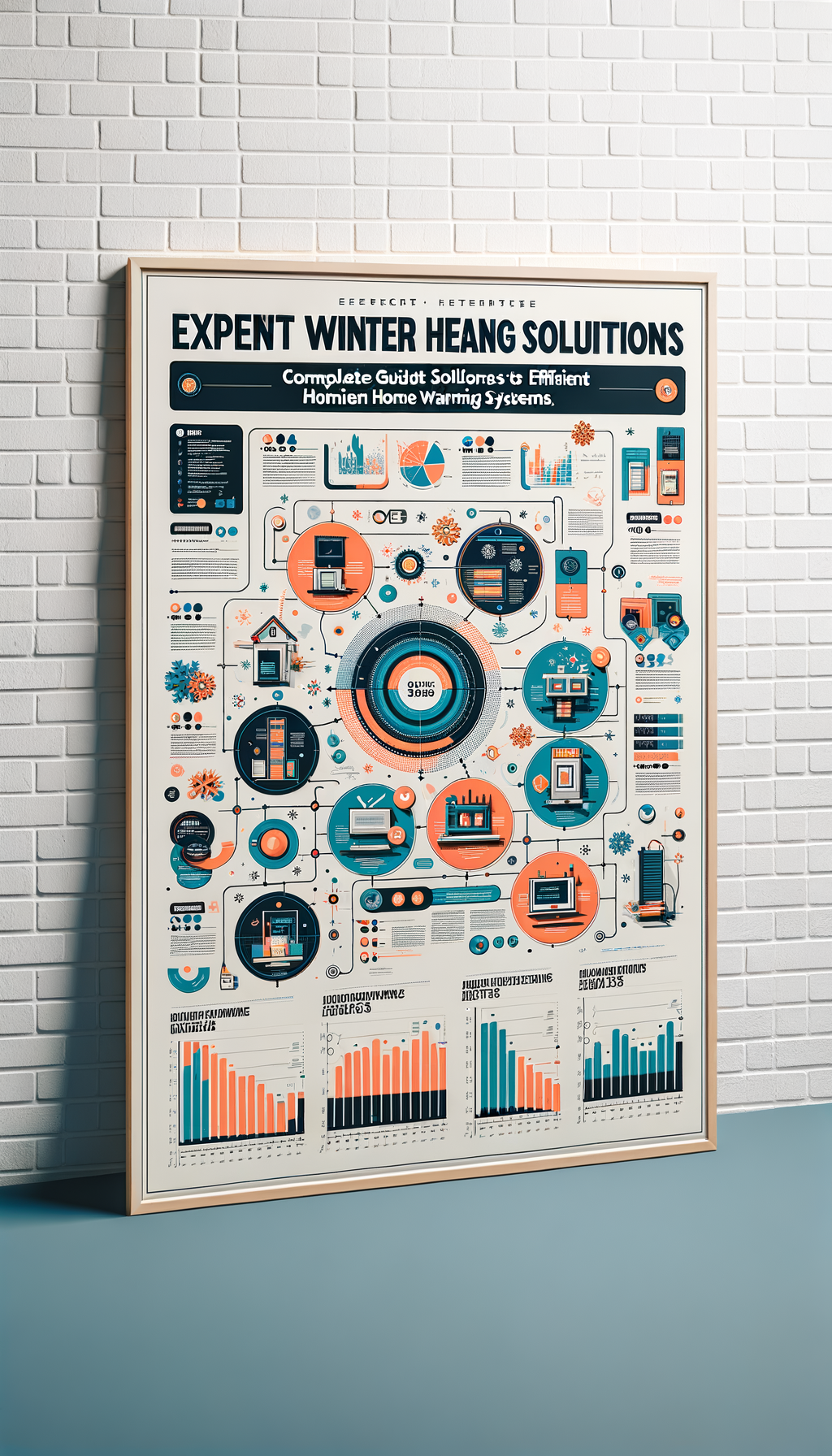
Visual Guide
Infographic illustration for this topic
Sources & References
- Simple Steps to Keep Your Home Warmer This Winter
- Winter HVAC Maintenance Tips for Commercial Businesses
- How HVAC Companies Ensure Proper Heating in the Winter | HBM
- Preparing Your HVAC System for Winter: A Comprehensive Guide
- A Homeowner's Guide to Preparing a Heating & Cooling System for ...
- Top 23 Commercial HVAC Manufacturers - Metalphoto of Cincinnati
- 6 Best HVAC Companies | Money
- Full List: Top HVAC Manufacturers and Suppliers in 2026 - FieldPulse
- Best Air Conditioner Brands in 2025
- 8 Best Commercial HVAC Brands for Large Buildings (Reviewed)
Frequently Asked Questions
Need Professional Help?
Find top-rated hvac businesses experts in your area