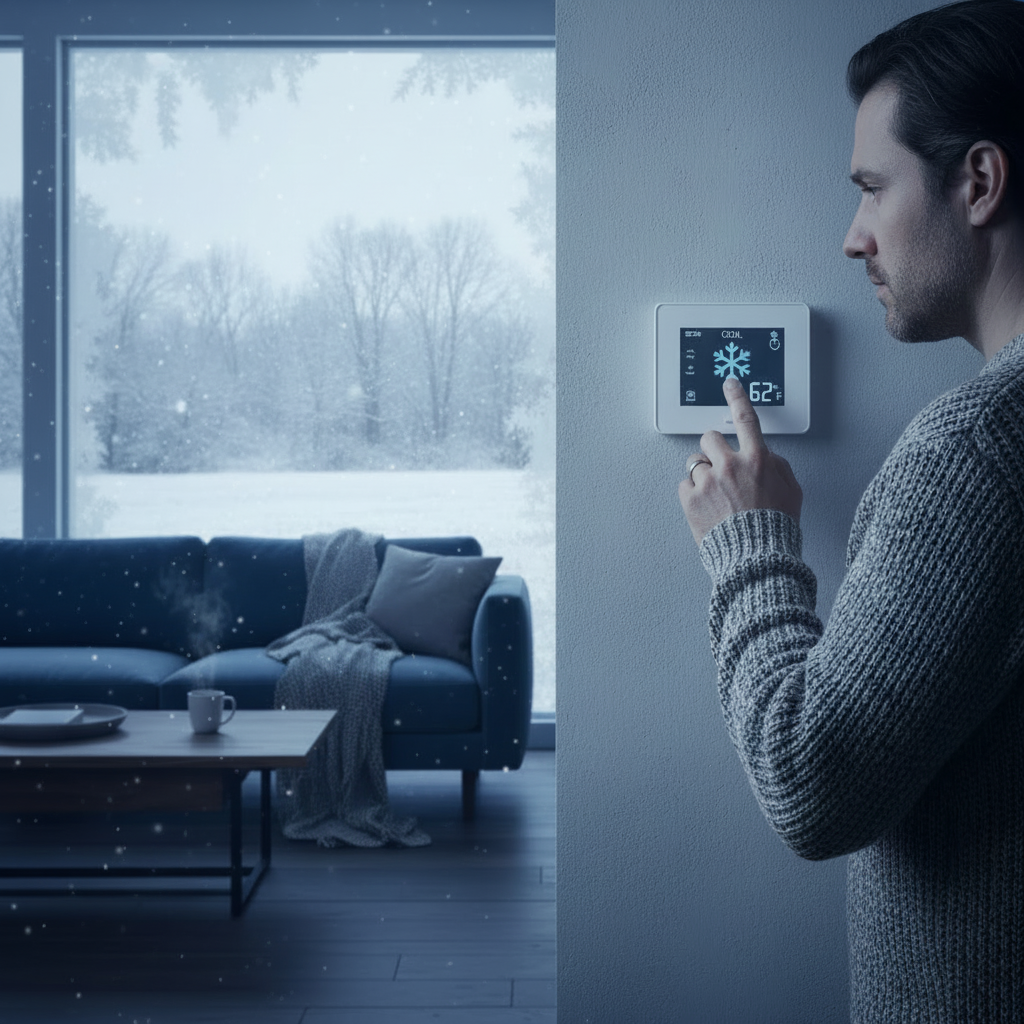
Heater not working? Discover common HVAC issues like thermostat settings, circuit breakers, and clogged filters. Learn DIY fixes and when to call a pro.
Key Takeaways
- Always check your thermostat settings and circuit breaker before calling for professional HVAC service.
- Dirty filters are a leading cause of system failure; replace them every 1-3 months.
- Complex issues like bad ignitors or refrigerant leaks require a certified technician for safe repair.
BizzFactor Quick Guide
The BizzFactor Standard: Always demand a technician find and fix the source of a refrigerant leak, not just recharge the system.
Key Takeaways
The BizzFactor Standard
3 Non-Negotiable Requirements for Elite Workmanship
NATE-Certified Technicians
Insist on NATE (North American Technician Excellence) certification. It's the industry's gold standard, ensuring the pro has proven real-world knowledge to diagnose and repair your system correctly.
Transparent, Itemized Pricing
An elite pro provides a clear, written estimate detailing all parts, labor, and fees *before* work begins. This prevents surprise charges and ensures you know exactly what you're paying for.
Provides a Written Warranty
A contractor who stands behind their work will always offer a written warranty on both parts and labor. This is your assurance of quality and protects your investment.
Why Your Heater Isn't Working: A Pro's Guide to Winter HVAC Problems
You wake up on a Monday morning, and your house feels like a walk-in freezer. The thermostat says 58 degrees. Your breath's fogging up. And you've got a sinking feeling that today's about to get expensive.
Yeah, I've gotten that 3 AM phone call more times than I can count. Sometimes it's a furnace blowing cold air like it's mocking you. Other times, the heat pump just... sits there. Dead.
Look — look — here's the deal: a non-functional heater isn't just uncomfortable — it's a problem that can escalate fast (frozen pipes, anyone?). But before you panic-dial an emergency HVAC service at their weekend rates, let's walk through what's actually happening. Most heating failures? They follow patterns. And a surprising number can be fixed without spending a dime.
Is Your Furnace or Heat Pump Not Working? Start Here!
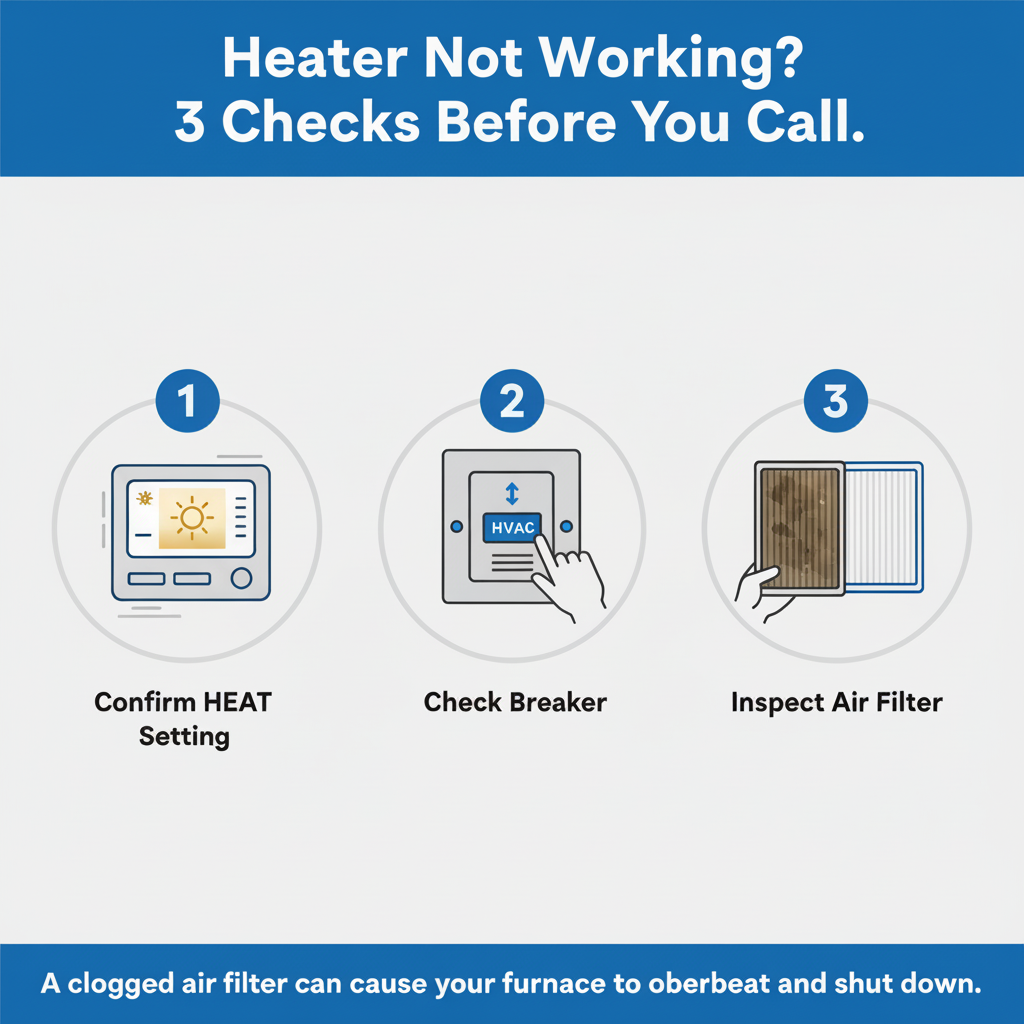
Before you drop $350 on an emergency service call, try these three things. Seriously — I've driven to homes in Brookhaven where the "broken" furnace just needed the thermostat flipped from Cool to Heat. Happens more than you'd think.
1. **Check Your Thermostat Settings:** I know, I know — you're not an idiot. But humor me. Is it set to "Heat" (the sun icon) or "Cool" (snowflake)? And is the target temperature at least 3-5 degrees higher than what your house currently reads? Because if it's set to 68 and your living room's already 69, nothing's gonna happen. That's the real issue. Also — and this might sound obvious — make sure nobody bumped it into "Off" mode. Kids, cleaning crews, that one friend who's always cold... it happens. If you want better control over your heating schedule (and you're tired of walking to the wall every time something feels off), upgrading to a programmable or WiFi thermostat might be worth it — Nest and Ecobee both let you adjust things from bed at 2 AM, which is when you'll notice the problem anyway. For more on optimizing your thermostat, see our guide on [Smart Home HVAC Integration](https://www.bizzfactor.com/articles/smart-hvac-integration).
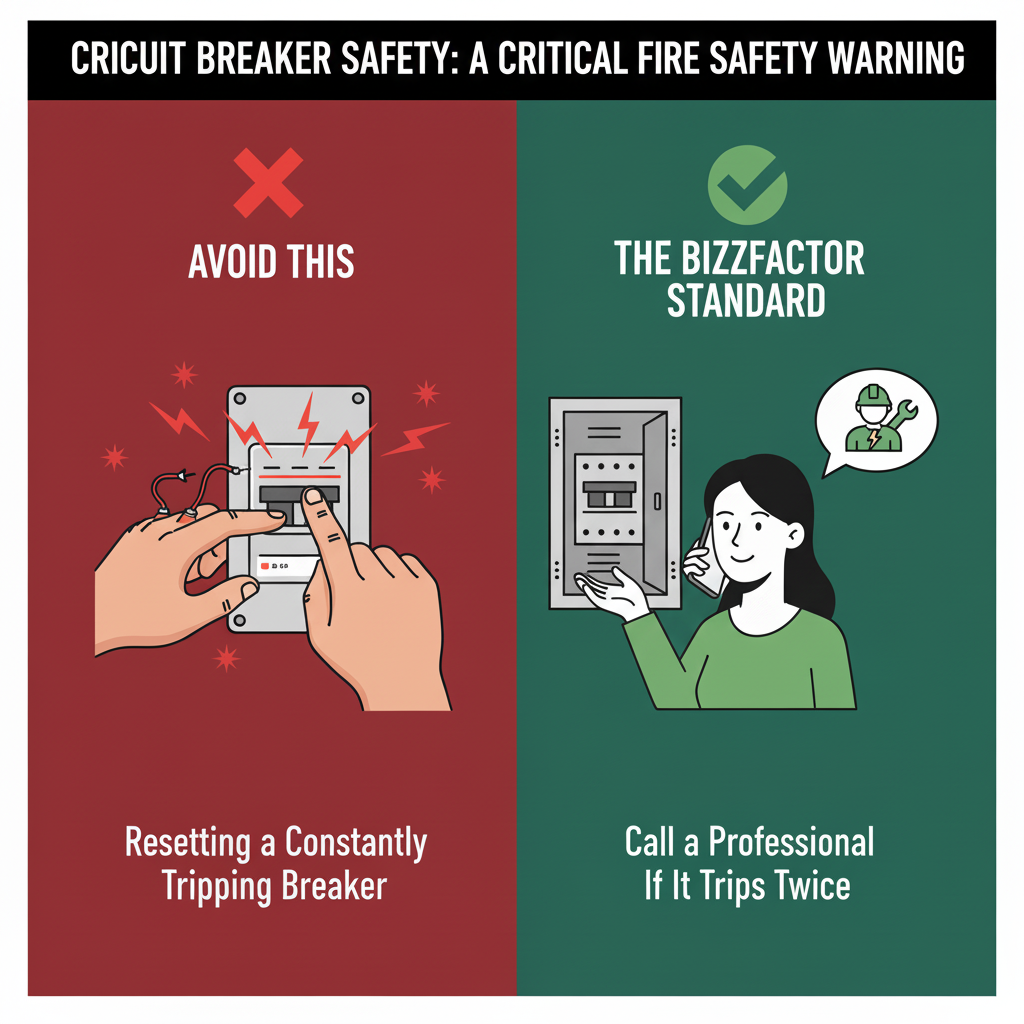
2. **Inspect the Circuit Breaker:** Your HVAC system pulls serious power — we're talking 15-30 amps depending on the unit. Head to your electrical panel and look for breakers labeled "Furnace," "Air Handler," or "HVAC." Tripped? It'll be sitting halfway between On and Off (or all the way to Off if you've got a newer panel). Reset it by pushing it firmly to Off first, then back to On. Trips again right away? Stop. Just stop. Don't play electrician roulette — repeated trips mean there's a short or a motor that's dying, and you need a professional before you start a fire.
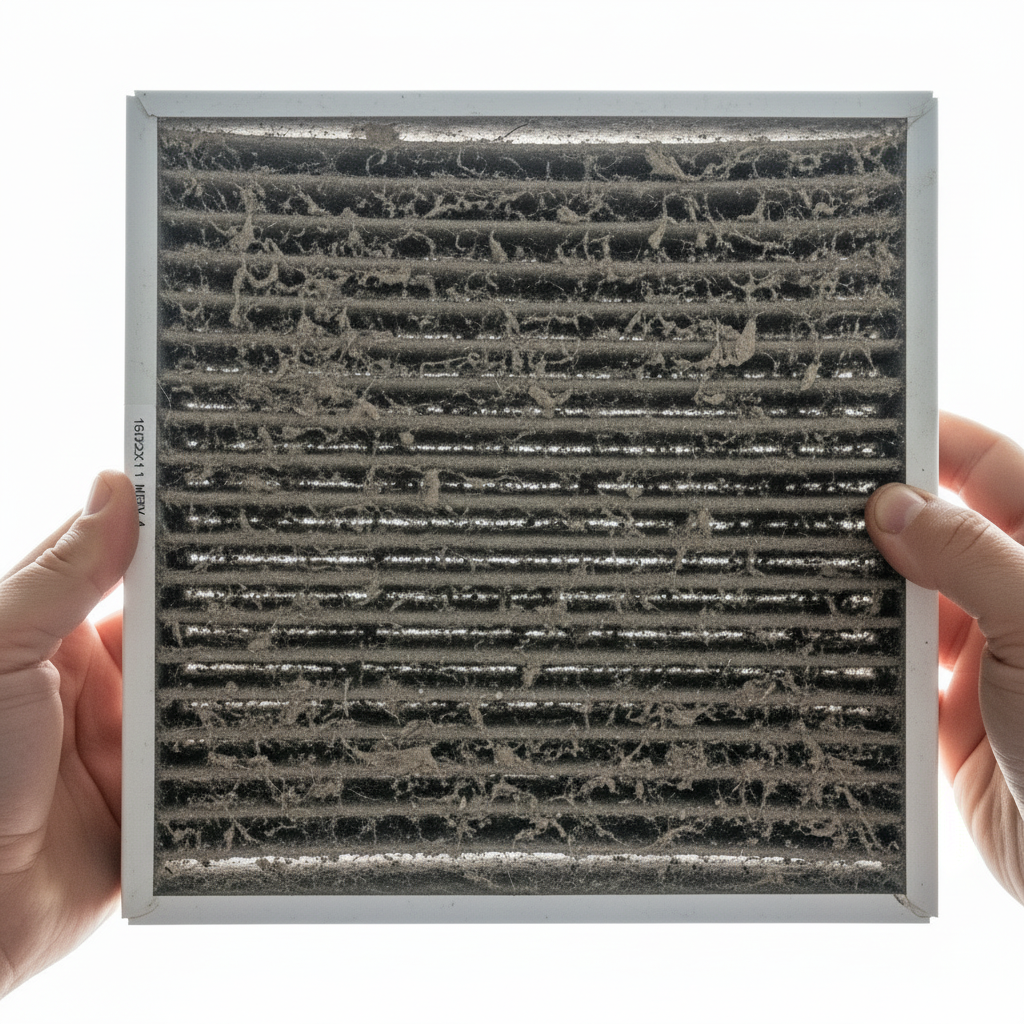
3. **Examine Your Air Filter:** Pull it out right now. Can you see light through it? No? Then it's choking your system. A clogged filter is probably the #1 reason furnaces overheat and shut down as a safety measure. The blower motor has to work twice as hard, heat builds up in the cabinet, and the limit switch kills power before anything melts. Those cheapo 1-inch filters? Change 'em every month if you're running heat constantly. Every 2-3 months if you're in a milder climate. I don't care what the package says about "90-day performance" — when it's January and your furnace is cycling 8 hours a day, that filter's done way before 90 days. Grab a MERV 8-11 if you can — keeps your air decent without strangling airflow.
⚠️ Critical Warning About Tripping Breakers
Don't be the person who resets a breaker five times in a row "just to see if it holds."
Here's the thing: here's the thing: a breaker that trips once, then again? That's your electrical system trying to save your house from something worse. Maybe it's a short in the wiring. Maybe a motor's seizing up and pulling triple the normal amps. Either way, forcing it back on over and over just gives whatever's wrong more chances to catch fire or fry your control board (which costs $400-$800 to replace, by the way). If a breaker trips more than once, leave it off and call someone who knows what they're doing — either a licensed electrician or a certified HVAC tech. Don't die trying to save $200.
Brand Names Don't Mean Squat If The Install's Bad
You know what nobody mentions in those glossy HVAC brochures? Installation quality beats brand reputation. Every. Single. Time.
I watched a Trane unit — supposedly top-tier equipment — crap out after three winters. Why? Some weekend warrior didn't vacuum the lines properly, left moisture in the refrigerant circuit, and walked away. Meanwhile my buddy in Roswell's still running a contractor-grade Goodman from 2006 (yeah, 18 years) because the original installer actually gave a damn. Checked airflow. Sealed the ductwork. Came back for the startup. That's what matters.
Carrier makes solid furnaces. So does Lennox. But you know what makes them *actually* work for 15+ years? A NATE-certified tech who treats your house like it's his own. Look for companies that'll put their labor warranty in writing (not just parts), who show up with combustion analyzers and digital gauges, and who don't pressure you into same-day decisions. For tips on choosing the right professional, read our guide on [Hiring a Reputable HVAC Company](https://www.bizzfactor.com/articles/hiring-reputable-hvac-company).
Overlooked Air Filter Hack for Short-Cycling Heaters
If your heating system powers on briefly and then shuts down (known as short-cycling), and you're using a high-efficiency 'allergy' filter (e.g., MERV 13+), try *downgrading* it. Those heavy-duty MERV 13-16 filters do amazing things for air quality if you've got asthma or allergies, but they also restrict airflow like crazy in some older systems. Your furnace can't breathe, heat builds up too fast, and the safety limit switch kills everything before temperatures hit dangerous levels. I've fixed this problem in at least a dozen homes in Alpharetta just by swapping in a standard MERV 5-8 filter — system stops cycling, house gets warm again, everybody's happy.
When to Call a Pro: Diagnosing Deeper Mechanical Problems
Okay, so you've checked the breaker. Thermostat's set right. Filter's clean. And your heater's still acting like it's on strike.
Now we're talking about actual mechanical or electrical failures. This is where things get real — and where DIY stops being smart and starts being dangerous. Gas furnaces? High-voltage components? Yeah, those aren't YouTube tutorial territory. You mess with refrigerant lines or gas connections without certification, and you're risking your house (and possibly your life). Call a qualified tech from companies like **Service Experts Heating & Air Conditioning** or **One Hour Heating & Air Conditioning**.
Heat Pump Malfunctions Explained
Your heat pump? It's basically an air conditioner running backward. Refrigerant flows one direction in summer (pulling heat out), flips around in winter (pushing heat in). Pretty clever until the thing that does the flipping breaks.
That would be the **reversing valve** — a solenoid-controlled valve about the size of a coffee mug. When it sticks (usually corrosion or a fried solenoid coil), you get cold air when you're expecting heat. Or sometimes it gets stuck halfway and you get... lukewarm disappointment. Either way, not a DIY repair — you're talking refrigerant recovery, brazing torches, vacuum pumps. Call someone.
The other winter killer? **Defrost control board** failure. Your outdoor coil collects frost naturally when it's cold out. The defrost cycle's supposed to melt that off every 30-90 minutes by temporarily switching back to cooling mode and routing hot refrigerant through the outdoor coil. But when that board dies, ice just piles up. I've seen units in Sandy Springs where the entire outdoor unit looked like a prop from Frozen — three inches of solid ice, zero airflow, heating capacity down around 30%. Learn more about heat pump efficiency in our article on [Optimizing Heat Pump Performance](https://www.bizzfactor.com/articles/optimizing-heat-pump-performance).
The Two Parts That Kill Most Gas Furnaces
Real talk — if your gas furnace won't stay lit, it's probably one of two things.
Now, the **hot surface ignitor** (that glowing orange rod) heats up to around 2500°F every time your furnace fires. Does that a few thousand times over a couple years, and eventually it just... cracks. They get brittle. I've pulled ignitors that crumbled in my hand like a stale cracker. Usually happens right before Thanksgiving, because of course it does. Replacement cost? Somewhere between $150-$250 depending on who you call.
Then there's the **flame sensor**. Skinny metal rod that sits right in the flame path. Its whole job is confirming "yep, there's actually fire here" so your furnace doesn't keep dumping unburned gas into your house. Problem is, it gets coated in carbon crud. Can't sense the flame anymore. So your furnace lights... runs for maybe 5 seconds... then shuts the gas valve as a safety precaution. You'll hear it trying over and over. Click, whoosh, silence. Click, whoosh, silence.
A good tech can clean it with fine steel wool in about 10 minutes. But if you're not comfortable pulling your burner assembly (and you probably shouldn't be), just call someone. That's the real issue. For critical safety information, review our guide on [Carbon Monoxide Safety Measures](https://www.bizzfactor.com/articles/carbon-monoxide-safety).
What You Don't Know About Refrigerant Is Costing You
Refrigerant doesn't just disappear. It's not like motor oil that burns off or gasoline that evaporates. Your system left the factory with a precise charge — sometimes measured down to half an ounce on newer variable-speed units. If it's low now, you've got a leak. Period.
Could be a pinhole in the evaporator coil from formicary corrosion (yeah, that's a real thing — formic acid from Chinese drywall or VOCs literally eats through copper). Could be a Schrader valve that's been weeping for three years. Could be a line set connection that wasn't brazed properly during install. Doesn't matter — if you're low, something's leaking.
And this is where you find out who actually knows their stuff: a real tech doesn't just hook up a jug of R-410A and top you off to 380 PSI. They *find the damn leak*. Nitrogen pressure test. UV dye injection. Electronic leak detector (the good ones run like $1,200, by the way). Then they fix it with proper brazing or a coil swap if it's toast.
Because topping off a leaking system? You'll be low again in six months. Maybe eight if you're lucky. You've solved exactly nothing — just paid $400-$600 for someone to kick the problem down the road while slowly venting potent greenhouse gases.
BizzFactor's Real-World Example: The Case of the Iced-Over Heat Pump
January 2022. Couple in Dunwoody calls me. Their heat pump's maybe 18 months old — practically brand new. Outdoor unit looks like an ice sculpture. House is sitting at 61 degrees. And they just got a Georgia Power bill for $340. One month.
First tech who came out? Quoted them $850 for a new defrost control board. "Classic failure on this model," he told them.
Except when I showed up and started digging, something didn't add up. I pulled the unit's service history on my phone — yeah, modern systems log everything. Defrost cycle had *never* triggered. Not once since installation. That's weird. Defrost boards don't usually fail by just... never working.
So instead of swapping the board, I started testing sensors. Outdoor ambient temp sensor came back reading 64°F when my handheld thermometer showed 27°F outside. There's your problem. That little $40 sensor — about the size of your thumb — was lying to the control board. System thought it was springtime. No wonder the defrost never kicked in.
Swapped the sensor. Forced a manual defrost cycle to melt the ice block. Had them back to normal heat in under an hour. Total bill? $180 including my service call.
That's $670 they didn't spend on a part they didn't need. And that's the difference between diagnostics and parts-swapping.
The Hallmarks of Elite HVAC Workmanship
So what does a real professional actually look like?
They don't just swap parts like they're playing appliance Jenga. They diagnose. They test. They explain what they found before they touch anything.
When we vet technicians for BizzFactor, here's what we're watching for: Are they using actual digital manifold gauges (not those ancient analog ones from 1987)? For gas furnaces, are they doing combustion analysis to make sure you're not getting carbon monoxide leaks? And — this is huge — can they explain what they found in plain English?
The best techs hand you an itemized proposal (often from professional software) that lays out your options: repair this part for $X, or here's what a new system would run. No pressure. No "I can only offer this price if you sign today" nonsense.
They show up on time. Answer their phone. And three years later when something else goes sideways? They still remember your system.
That's who you want in your house at 11 PM on a Saturday in February.
In-Depth Look
Detailed illustration of key concepts
Visual Guide
Infographic illustration for this topic
Side-by-Side Comparison
Visual comparison of options and alternatives
Sources & References
- Winter HVAC Maintenance Tips for Commercial Businesses
- Preparing Your HVAC System for Winter
- 7 Common HVAC Problems In Winter | Heating Experts
- Common HVAC Contractor Services to Consider in Winter
- Your Comprehensive HVAC Winter Prep Checklist
- Top 23 Commercial HVAC Manufacturers - Metalphoto of Cincinnati
- 6 Best HVAC Companies | Money
- Best Air Conditioner Brands in 2025
- Key HVAC Regulations and Requirements for 2025 and Beyond
- Best Central Air Conditioning Buying Guide - Consumer Reports
Frequently Asked Questions
Need Professional Help?
Find top-rated hvac businesses experts in your area