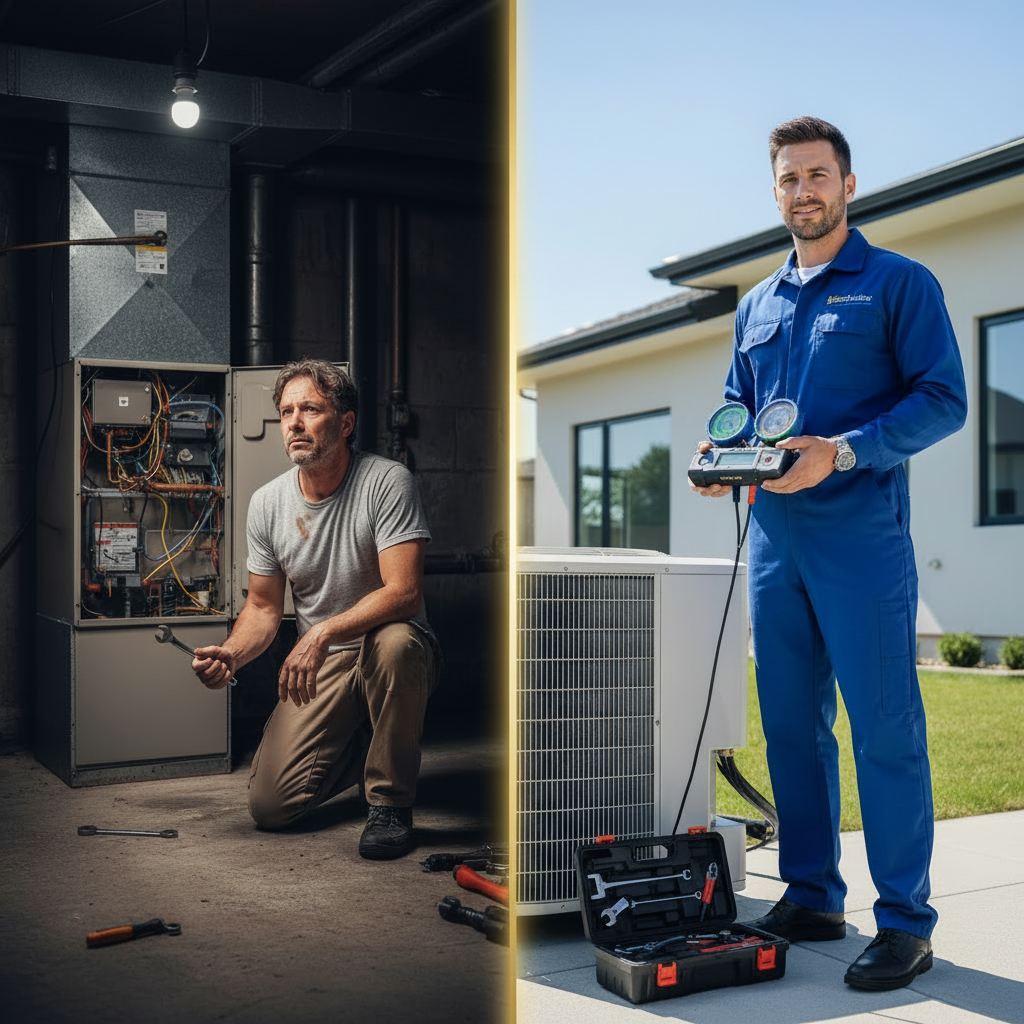
Professional HVAC repair guide: DIY vs certified service, real cost breakdowns, case studies, and when to call licensed technicians for safety.
Key Takeaways
- **Air Filter Replacement:** Change it every 1-3 months depending on your situation. Got three dogs shedding tumbleweeds across your hardwood? Monthly. Living downwind from that construction site on Maple? Same deal. Takes ninety seconds once you know where it's hiding (usually behind a return grille or in the air handler). For better indoor air quality, grab high-efficiency [HVAC filters](https://www.bizzfactor.com/hvac-filters-guide) — they cost more but actually trap stuff. Set a phone reminder because you'll absolutely forget otherwise.
- **Thermostat Battery Swaps:** Pop open the cover, swap the batteries (probably AAs or AAAs), close it back up. Once a year, maybe. Or whenever that chirping drives you insane at 2 AM. If your thermostat's older than your car, might be time to look into [smart thermostat installation](https://www.bizzfactor.com/smart-thermostat-installation) — they don't even need battery changes.
- **Checking Tripped Circuit Breakers:** Your outdoor condenser or indoor air handler can trip a breaker — quick diagnostic step before you call anyone. If it trips again immediately after you reset it? That's your cue to call us. Something's drawing too much current.
- **Clearing Area Around Outdoor Unit:** Keep at least 2 feet clear around your condenser. No weeds, no mulch piles, no storage bins leaning against the thing. Your AC needs airflow to dump heat — restrict that and you're asking for overheating and efficiency loss. Last summer we saw a unit in Plano completely buried in overgrown shrubs. Thing was running 24/7 and barely cooling. Homeowner couldn't figure out why her electric bill hit $380 in July.
- **Monthly Drain Line Maintenance:** Pour about 1 cup of white vinegar down the condensate drain, followed by water, every month during cooling season. Prevents algae and mold clogs that'll shut you down on the hottest day of the year (because Murphy's Law). A blocked drain line backs up, triggers the float switch (kills your AC instantly), or worse — causes water damage inside your walls. This simple step prevents bigger [AC repair](https://www.bizzfactor.com/ac-repair) headaches.
Key Takeaways
HVAC Repair: DIY vs. Professional Service (The Real Cost Breakdown & Smart Choices for Your Home)
Every homeowner hits this crossroads eventually: tackle that weird AC noise yourself, or call somebody who actually knows what they're doing? At BizzFactor, we get it — that itch to save money is powerful. But there's a massive gap between swapping an air filter and cracking open a refrigerant line.
Look, we handle the stuff that requires licensing and $15,000 worth of specialized equipment. You should own the simple maintenance. That's the smart split, and honestly? It'll save you thousands in the long run.
Look — this guide gives you the actual cost breakdown, the insider knowledge on what's safe versus dangerous, and the common disasters we see every week. Yeah, every week. Because people watch three YouTube videos and suddenly think they're certified HVAC techs.
Don't be that person.
When Should You Attempt DIY vs. Call HVAC Professionals? (Know Your Limits!)
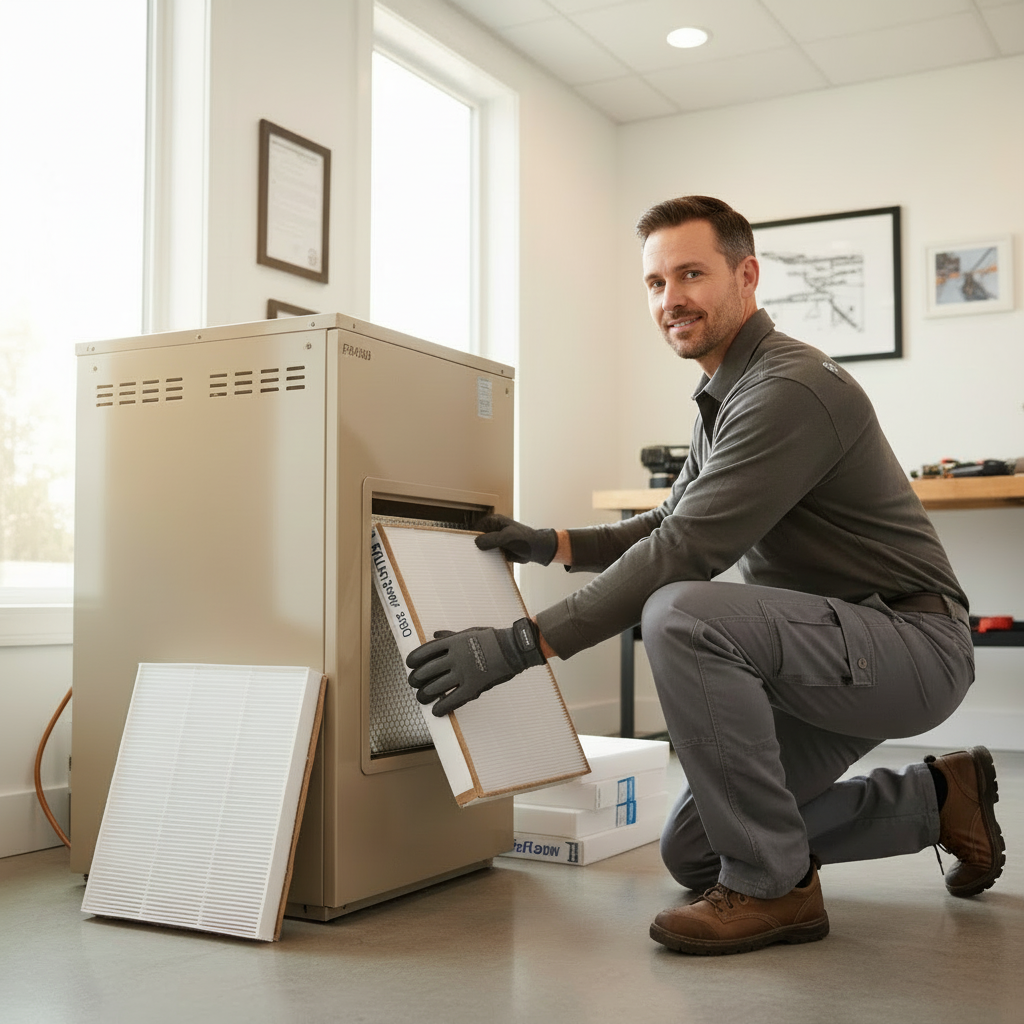
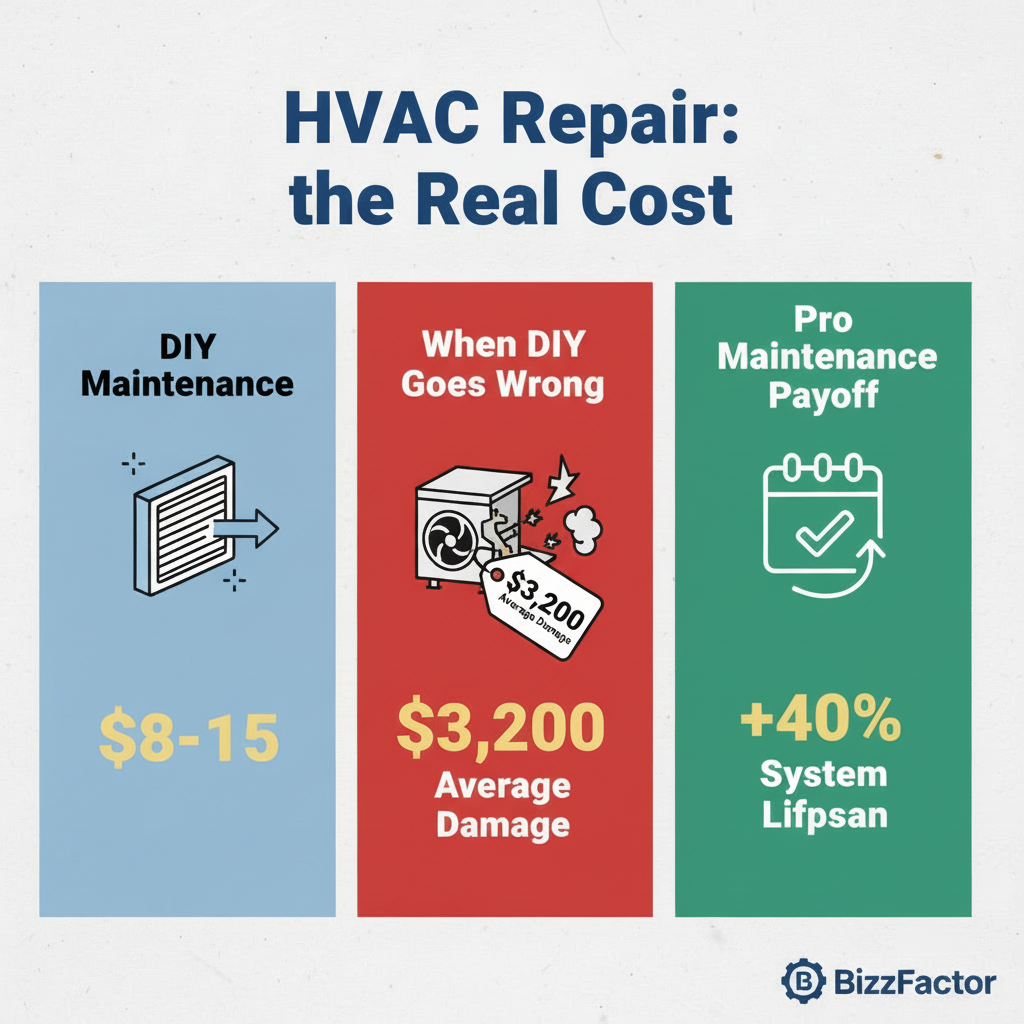
Changing your own air filters? Hell yeah. You're looking at maybe $8-15 for standard ones — the fancy MERZ 11 filters run closer to $25 if you're serious about air quality. Thermostat batteries? Even easier. Grab some AAs for three bucks and you're done in under five minutes.
But here's where I draw the line: refrigerant. Electrical work beyond flipping a breaker. Anything involving your compressor.
Full stop.
You can watch every tutorial on the planet — still won't prepare you for what happens when refrigerant flash-freezes your skin or an overcharged system grenades a compressor. These jobs need EPA licensing (that's federal, by the way), years of field experience, and equipment that costs more than most used cars. My service truck setup? North of $15,000. Without proper tools and certification, you're not saving money — you're gambling with your home's comfort, your safety, and possibly torching a $6,000 system.
We've fixed too many "I thought I could save $200" disasters that turned into $4,000+ nightmares.
Safe, Sanctioned DIY HVAC Tasks You Can Easily Handle
Alright — what can you actually touch without creating a catastrophe? More than you'd think, honestly. Start with the basics and work from there:
- **Air Filter Replacement:** Change it every 1-3 months depending on your situation. Got three dogs shedding tumbleweeds across your hardwood? Monthly. Living downwind from that construction site on Maple? Same deal. Takes ninety seconds once you know where it's hiding (usually behind a return grille or in the air handler). For better indoor air quality, grab high-efficiency [HVAC filters](https://www.bizzfactor.com/hvac-filters-guide) — they cost more but actually trap stuff. Set a phone reminder because you'll absolutely forget otherwise.
- **Thermostat Battery Swaps:** Pop open the cover, swap the batteries (probably AAs or AAAs), close it back up. Once a year, maybe. Or whenever that chirping drives you insane at 2 AM. If your thermostat's older than your car, might be time to look into [smart thermostat installation](https://www.bizzfactor.com/smart-thermostat-installation) — they don't even need battery changes.
- **Checking Tripped Circuit Breakers:** Your outdoor condenser or indoor air handler can trip a breaker — quick diagnostic step before you call anyone. If it trips again immediately after you reset it? That's your cue to call us. Something's drawing too much current.
- **Clearing Area Around Outdoor Unit:** Keep at least 2 feet clear around your condenser. No weeds, no mulch piles, no storage bins leaning against the thing. Your AC needs airflow to dump heat — restrict that and you're asking for overheating and efficiency loss. Last summer we saw a unit in Plano completely buried in overgrown shrubs. Thing was running 24/7 and barely cooling. Homeowner couldn't figure out why her electric bill hit $380 in July.
- **Monthly Drain Line Maintenance:** Pour about 1 cup of white vinegar down the condensate drain, followed by water, every month during cooling season. Prevents algae and mold clogs that'll shut you down on the hottest day of the year (because Murphy's Law). A blocked drain line backs up, triggers the float switch (kills your AC instantly), or worse — causes water damage inside your walls. This simple step prevents bigger [AC repair](https://www.bizzfactor.com/ac-repair) headaches.
***Listen carefully on this one:*** Don't touch refrigerant systems. Ever. Unless you're licensed with EPA certification, you'll void warranties instantly, create serious safety hazards (refrigerant causes cryogenic burns and can displace oxygen), and probably cause catastrophic damage. Our techs carry those certifications for a reason — these systems run under high pressure and are legitimately complex.
Here's the thing: here's the thing: too many homeowners, trying to save a couple hundred bucks, attempt repairs way beyond their skill level. Then we show up to fix the aftermath. It's like trying DIY brain surgery after watching some videos. Just... don't.
What *Absolutely* Requires Professional HVAC Expertise?
**Refrigerant stuff.**
Leaks, charging, recovery — all of it falls on us. You need manifold gauges that'll set you back $800. A vacuum pump that costs more than your lawnmower. Recovery equipment most people have never even seen. And that EPA certification isn't optional — it's federal law. System blowing warm air? Could be you're low on refrigerant. Or overcharged (which murders compressors faster than running it low). Can't diagnose this by feel. Brandon in Frisco tried "topping off" his R-410A system with a $40 can from Lowe's last June. Killed an $1,800 scroll compressor in three days. Just completely locked it up. This falls under regulated [HVAC maintenance](https://www.bizzfactor.com/hvac-maintenance) — there are actual laws here.
**Electrical work beyond flipping breakers.**
High voltage circuits that can kill you (240 volts, same as your dryer). Control boards that cost $600 to replace. Wiring that — if you screw it up — can burn your house down. There's a guy in Allen who thought swapping out a contactor looked simple enough. You know, "it's just that clicking relay thing with three wires." Shorted out his main electrical panel when he crossed the wrong terminals. $5,000 repair involving an electrician and us. Not exactly YouTube tutorial material.
**Compressor or condenser repairs.**
This is your system's heart. You need deep knowledge of refrigeration cycles. Brazing techniques with nitrogen purge (prevents oxidation inside the lines). Proper evacuation procedures to pull moisture down below 200 microns. Often requires specialized [HVAC tools](https://www.bizzfactor.com/hvac-tools) you won't find at Home Depot — or on Amazon, for that matter.
**Anything involving gas lines on furnaces.**
Real talk — gas work is how people die. Leaks you can't smell (because natural gas is odorless until they add mercaptan). Carbon monoxide buildup that puts your family to sleep permanently. Explosions that level houses. I've seen the aftermath photos from insurance claims. Gas licensing exists for a reason, and that reason is keeping people alive. For any furnace issues, use our licensed [furnace repair](https://www.bizzfactor.com/furnace-repair) services. Your family's safety isn't negotiable.
**Ductwork modifications or major repairs.**
Ducts need proper sizing, sealing, and balancing or your system can't perform. Even brand-new, high-efficiency equipment wastes energy and creates hot/cold spots with bad ductwork. We've measured this — poor ductwork kills 30% of efficiency. That's real money every month on your utility bill due to [energy waste](https://www.bizzfactor.com/hvac-energy-savings).
Here's the thing people miss: calling a licensed tech protects your investment. You wouldn't try removing your own appendix to save on surgery costs, right? Same logic applies here. Sometimes you need [emergency HVAC services](https://www.bizzfactor.com/emergency-hvac-services) — waiting just makes the damage worse and the bill higher.
What Happens When DIY Goes Horribly Wrong? A Real Case Study (This Isn't Fiction!)
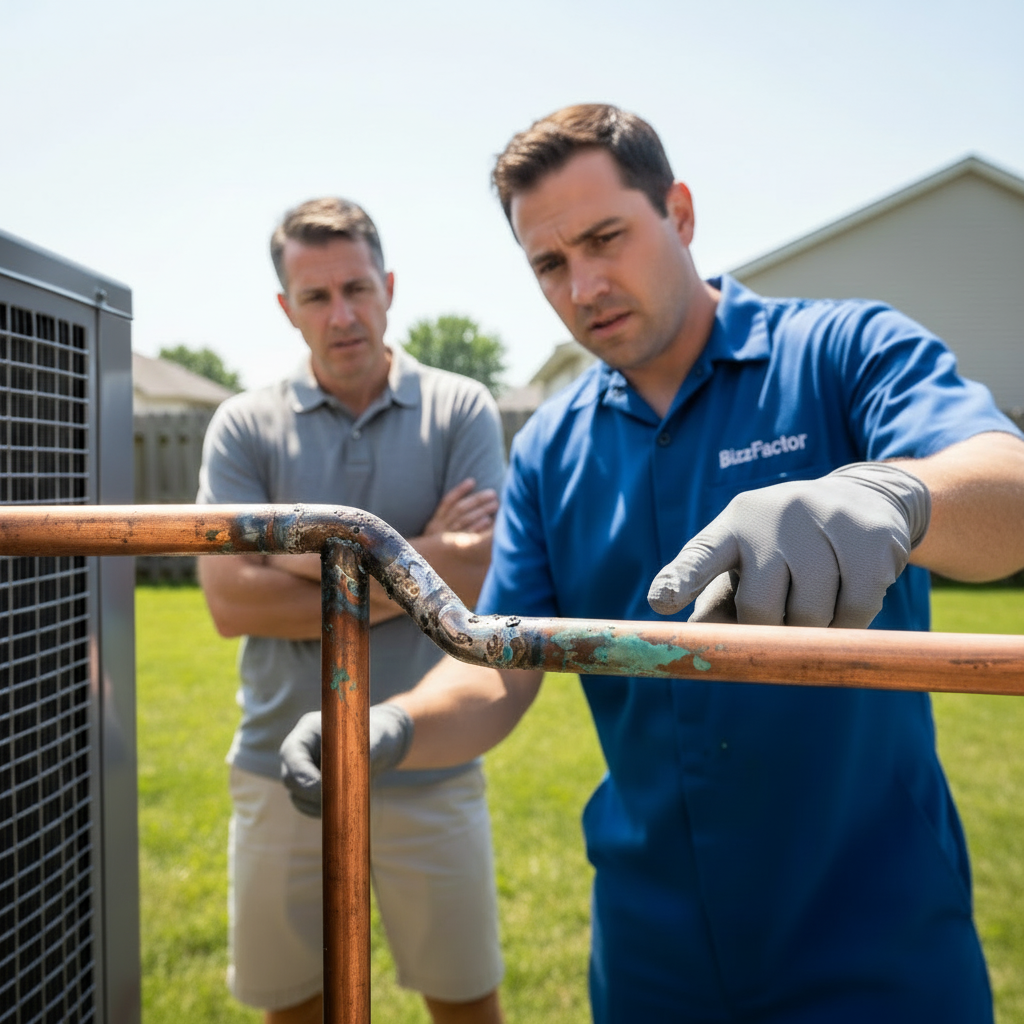
July in Dallas. 98°F outside, feels like 105°F with humidity. We get a call from a house in Preston Hollow — nice neighborhood, homeowner probably making decent money. His Carrier system quit cooling. AC just blowing room-temperature air.
Instead of calling us, he watched some YouTube tutorials. Bought one of those $45 "EZ-HVAC" refrigerant recharge kits from AutoZone (yeah, the car parts store). Grabbed a propane torch from his garage. Decided he'd fix a small leak he'd spotted on the suction line.
The guy paid $3,200 to fix what he broke.
We arrive and I'm already wincing before I even open the service panel. Amateur brazing job on the copper line — no nitrogen flowing through during the braze, which means he cooked oxidation and acid formation right into the pipes. Sloppy bead, flux everywhere, obviously his first time touching a torch. But that's not even the worst part.
He'd mixed air and moisture into the refrigeration circuit when he cracked it open. Then "recharged" it by weight (he said he "added two cans" — real specific). Contaminated the whole system with atmospheric junk and probably overcharged it by 40%.
So we hook up our two-stage Robinair pump and start pulling vacuum. Forty-five minutes. That's how long it took to get below 200 microns — the only way to suck out every molecule of moisture and contamination his little adventure introduced. You can't rush this or the compressor'll eat itself within months from acid formation.
Did a nitrogen pressure test at 150 PSI. Found six leaks — six separate pinhole leaks from his torch work. Had to replace the filter-drier (captures contaminants, protects the compressor). Not optional after contamination like this.
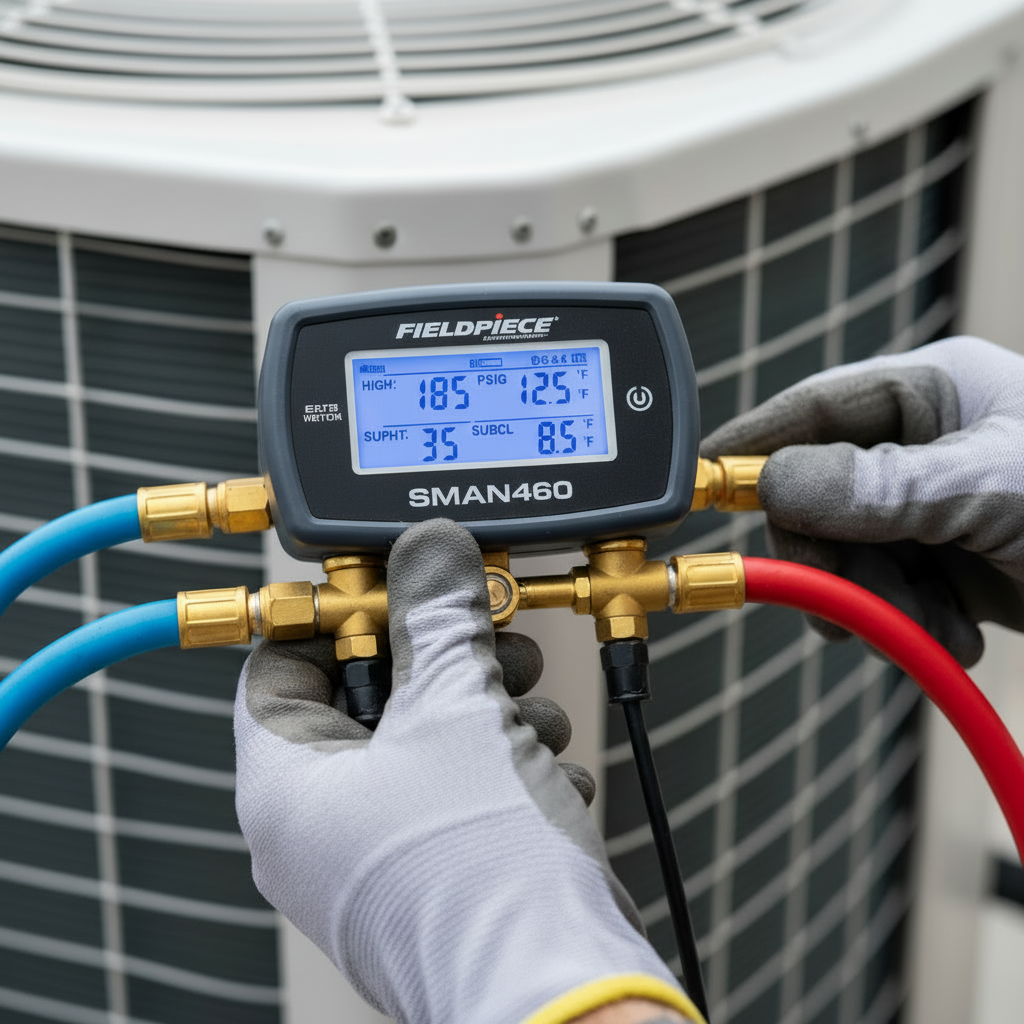
Now, here's the thing: properly charged the system with R-410A based on Carrier's actual superheat and subcooling specs — not "two cans" or whatever he thought made sense. Used our digital Testo manifold to dial it in precisely.
Then we verify everything's actually working. Run superheat calculations, check subcooling numbers, measure the temperature split across the evaporator coil. Compare compressor amp draw against the data plate specs. Test airflow. Make damn sure this thing won't crater the second we drive away.
**Professional repair: $3,200.** Know what would've saved him all that? An $85 diagnostic call from us. That's it. We would've found his actual leak (probably a $300 repair), brazed it correctly with nitrogen purge, recharged to spec, and been done in two hours.
Common DIY Mistakes We See Every Single Week
The disasters that keep us busy:
**Mixing refrigerant types.** Someone dumps R-22 into an R-410A system (or backwards) because they didn't check. Creates chemical sludge. Destroys the compressor. That $80 refrigerant can becomes a $2,500 mistake. Saw this twice in McKinney last month. Same week.
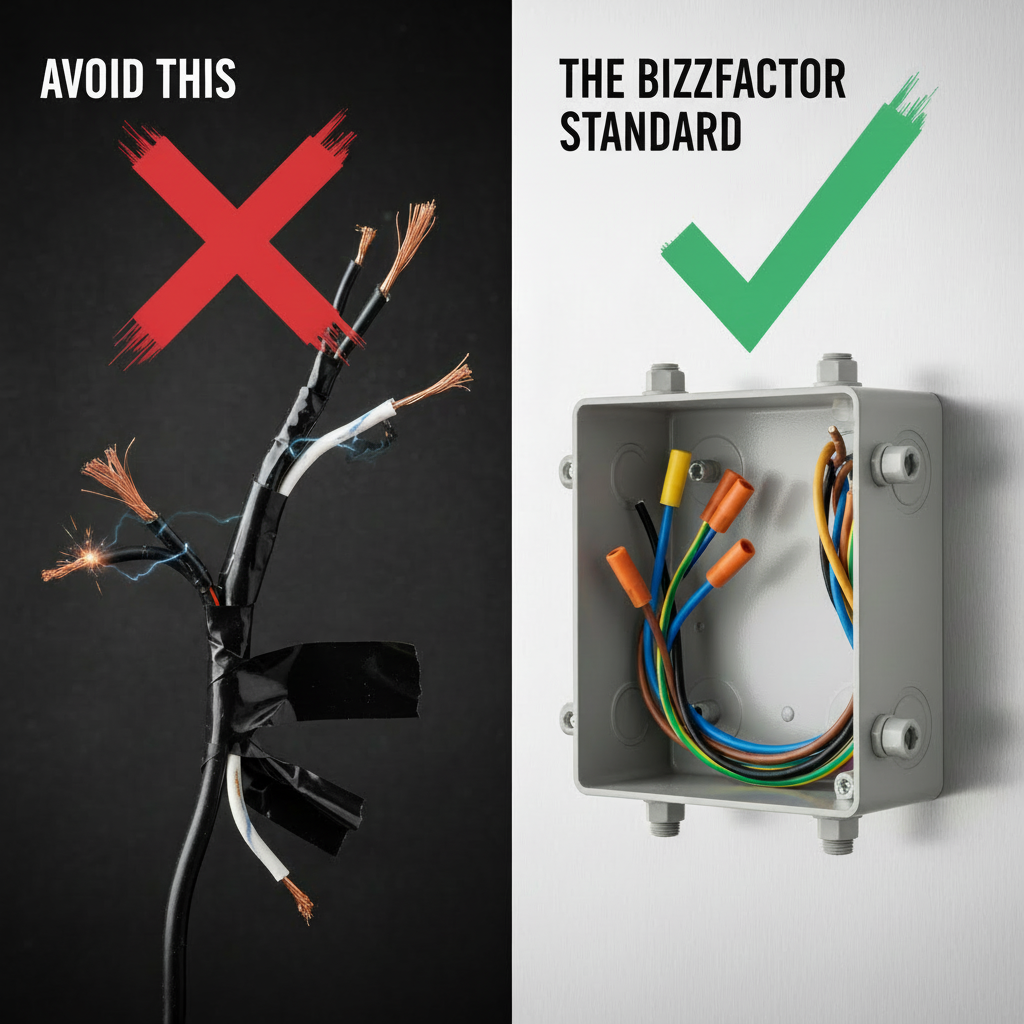
**Sketchy electrical connections.** Fire hazard central. Loose wire nuts. Wrong gauge wire for the load. Forgetting to kill power at the breaker (how are you still alive?). Insurance companies *love* hearing about your YouTube electrical education after your house burns down.
**Gorilla-grip on fittings.** Over-tightening strips threads, cracks flares, causes immediate leaks or slow ones that show up three weeks later. Every fitting has a torque spec. Don't own a torque wrench? You shouldn't be touching this.
**Wrong filter size.** Restricts airflow, tanks efficiency, freezes coils, cooks heat exchangers. One of many avoidable [HVAC problems](https://www.bizzfactor.com/blog/common-hvac-problems) created by well-meaning incompetence.
**Pressure-washing coils.** Using the wrong chemicals or too much pressure damages aluminum fins, causes refrigerant leaks, destroys efficiency. We use pH-balanced coil cleaners and soft brushes. Your pressure washer? Murder weapon.
Don't become our next cautionary tale. For more professional insights, check out our [blog on common HVAC problems](https://www.bizzfactor.com/blog/common-hvac-problems). Better yet, just call us before you start.
How Do You Prepare for Professional HVAC Service? (Save Time & Money!)

Proper preparation saves you money and gets your system fixed faster. When you're ready for
In-Depth Look
Detailed illustration of key concepts
Visual Guide
Infographic illustration for this topic
Side-by-Side Comparison
Visual comparison of options and alternatives
Sources & References
- The Essential Guide To HVAC Maintenance: 10 Best Practices - Sclera
- The Ultimate Guide to Commercial HVAC Maintenance
- Air Conditioner Maintenance | Department of Energy
- Heating And Cooling Specialists: Your Complete Guide To ...
- Essential Commercial HVAC Maintenance Guide & Tips
- 6 Best HVAC Companies | Money
- Top 23 Commercial HVAC Manufacturers - Metalphoto of Cincinnati
- 8 Best Commercial HVAC Brands for Large Buildings (Reviewed)
- Best Air Conditioner Brands in 2025
- Top HVAC Manufacturers and Suppliers (2025 Guide)
Frequently Asked Questions
Need Professional Help?
Find top-rated hvac businesses experts in your area