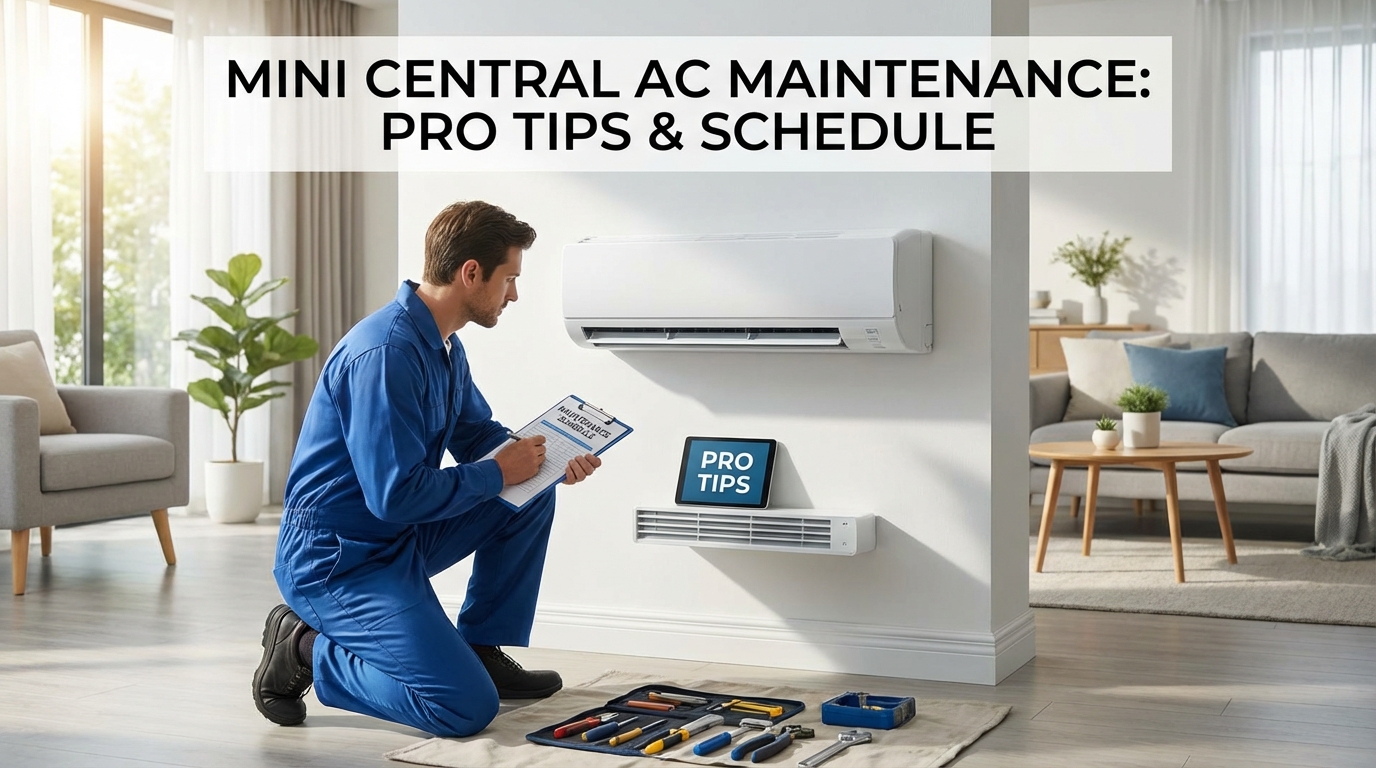
Optimize mini central AC performance & extend lifespan. Learn DIY tips, professional maintenance schedule, and how to prevent costly breakdowns.
Key Takeaways
- **Check Your Filters:** Every month. I don't care if you think it looks fine — pull it, inspect it under decent light, and decide. This affects airflow, efficiency, and the air you're breathing. No shortcuts here.
- **Check Visible Ducts:** Any ductwork you can actually see (attics, basements, crawl spaces) — look for disconnections, tears, or obvious leaks. Small gaps can be sealed with proper HVAC foil tape (not regular duct tape, which fails in 6-18 months).
- **Monitor for Water Leaks:** Look around the indoor unit and drain pan. See any moisture? Dripping? Standing water? That usually means a clogged condensate line, which can lead to thousands in water damage if ignored long enough. A tech I know spent three days on mold remediation because a homeowner ignored a "small drip" for two months.
- **Test Zone Dampers (if applicable):** If you've got manual zone controls, cycle them open and closed. They should move smoothly. If one's stuck, airflow gets unbalanced, and you're paying to cool spaces you're not using.
- **Listen for Unusual Noises:** Grinding, squealing, banging, hissing — none of these are normal. They're warning signs. A squealing blower motor bearing costs maybe $200 to fix. Waiting until it seizes completely? New motor, $800-$1,200.
Key Takeaways
Mini Central AC Maintenance: Pro Tips & Schedule for Optimal Performance and Extended Lifespan
A guy in Roswell paid $4,200 for a compressor replacement last summer. His filter? Hadn't been changed in 11 months. I'm not making that up.
Your mini-central air system represents a serious chunk of money — we're talking $5,000 to $15,000 for most installations. To protect that investment and keep it running for the full 15-20 years it's designed to last, you need a plan. That's the real issue. Monthly filter checks, professional tune-ups twice a year (refrigerant levels, electrical connections, the works), and smart zone management. This isn't just about avoiding breakdowns; it's about keeping your power bill under control and not replacing major components five years early.
Look — look — this guide breaks down exactly what maintenance *you* can handle and when you should call in certified HVAC professionals at BizzFactor. Real talk — proactive care costs maybe $300 a year. Emergency repairs? Try $1,500 to $5,000. You do the math.
Unpacking Mini-Central Air Systems: What Makes These Things Tick
So you've got an outdoor compressor — that big metal box humming away beside your house — connected to indoor handlers. Those handlers are usually buried in your attic, tucked in ceiling voids, or hiding in utility closets. They push cold air through ductwork you'll probably never see unless you're up there on a Saturday afternoon searching for Christmas decorations.
Why do people install these? Two reasons, really — efficiency and those July electric bills in Atlanta. I've seen brand-new Rheem units pull 30% less power than what they replaced. That's around $40-60 back in your pocket every month when it's 95° outside and your system's running from noon till midnight. Over a summer, we're talking $300-500 in real savings.
Unlike those bulky window units or the wall-mounted splits you see everywhere, mini-central systems stay hidden. Over two decades of installing HVAC systems at BizzFactor, I've noticed most homeowners have zero idea how complex the engineering is under the hood. Seriously. We install a lot of Rheem, Mitsubishi, and Daikin units — premium brands that use variable refrigerant flow (VRF) technology. VRF isn't marketing fluff; it actually delivers precise temperature control across different zones while cutting energy waste by 20-30% compared to older systems.
But here's the tradeoff: those handlers being out of sight means they're out of mind. You can't just pop one open and check the evaporator coil yourself. That's the real issue. So when people ask if they can DIY everything, the answer's usually no. Some tasks need a pro with the right tools and training.
The Anatomy of Your Mini-Central AC System: The Players You're Paying For
**Outdoor Condenser Unit:** The muscle. Houses your compressor (which circulates refrigerant) and condensing coil (where indoor heat gets dumped outside). Keep debris away from this thing — leaves, grass clippings, that weird mulch your landscaper loves. Airflow matters.
**Indoor Air Handler:** This is where the magic happens. Your evaporator coil sits in here absorbing heat, while the blower fan pushes cooled air through every duct in your house. When dust cakes onto that coil (and it will), your system starts working way harder than it should. We're talking 30% more effort just to hit the same temperature. I pulled a coil out of a Buckhead home last year that looked like a lint trap from a commercial dryer. Owner couldn't figure out why his power bill jumped $80 in two months.
**Refrigerant Lines:** Insulated copper tubes connecting indoor and outdoor units. Refrigerant cycles through these, changing from liquid to gas and back. Any leak here — even a tiny one — kills your efficiency and costs you hundreds in refrigerant recharges.
**Electrical Connections:** The nervous system. Powers everything. Frayed wires or corroded terminals? That's how you get system failures on the hottest day of July. (Ask me how I know.)
**Distribution Ducts:** Hidden airways delivering conditioned air to every room. Duct leakage — which happens in probably 70% of homes — can waste 20-40% of your cooled air into unconditioned spaces like attics. Money straight into the void.
**Zone Control Dampers:** These little guys deserve more credit than they get. They're what let you cool the bedrooms down to 68° while the kitchen stays at 72° (because who needs AC blasting while you're cooking dinner, right?). When they're adjusted properly, you can cut cooling costs by 15-25%. But if one gets stuck or miscalibrated? You're paying to refrigerate your garage.
Here's the deal: these components work as a system. When one fails, the others compensate — which means they wear out faster. A clogged filter forces the blower motor to work harder. That overworked motor pulls more amps. Those electrical connections heat up. Eventually something breaks.
And that's when you're looking at a bill that makes you wish you'd spent $150 on a maintenance visit instead of $3,500 on replacing a fried component. I've seen it happen too many times to count.
Your Mini-Central AC Maintenance Playbook: What to Do and When
Filter maintenance? Don't skip it. Ever.
Honestly, this is the difference between a system that lasts fifteen years and one that dies at year eight. We've tracked this across thousands of service calls at BizzFactor — roughly 80% of "my AC stopped working" calls during summer trace back to a filter that should've been changed months ago.
Those preventable service calls typically run $180-$350. A pack of good filters? Maybe $60 for a year's supply.
First, find your return air grille — usually in a hallway or main living area. Pop it open (most have simple clips or latches). Pull out the filter. Really look at it. Does it look like the inside of a vacuum cleaner bag? Is it gray instead of white? Can you see light through it, or is it basically opaque? That tells you everything.
If you've got a washable filter (smart move, by the way), rinse it thoroughly with warm water. Maybe use a tiny bit of mild dish soap if it's really grimy. Critical step: let it dry COMPLETELY before reinstalling. We've seen mold colonies growing in damp filters. Not fun.
For disposable filters, the rule's simple — if it looks dirty, it *is* dirty. Toss it. Get a new one. Consider upgrading to a MERV 8-11 filter for better air quality (just make sure your system can handle the slightly restricted airflow — not all can). For way more detail on this, check out our guide on [HVAC Filter Selection](https://www.bizzfactor.com/hvac-filter-selection).
Your Monthly Mini-Central AC Maintenance Checklist: The Non-Negotiables
- **Check Your Filters:** Every month. I don't care if you think it looks fine — pull it, inspect it under decent light, and decide. This affects airflow, efficiency, and the air you're breathing. No shortcuts here.
- **Check Visible Ducts:** Any ductwork you can actually see (attics, basements, crawl spaces) — look for disconnections, tears, or obvious leaks. Small gaps can be sealed with proper HVAC foil tape (not regular duct tape, which fails in 6-18 months).
- **Monitor for Water Leaks:** Look around the indoor unit and drain pan. See any moisture? Dripping? Standing water? That usually means a clogged condensate line, which can lead to thousands in water damage if ignored long enough. A tech I know spent three days on mold remediation because a homeowner ignored a "small drip" for two months.
- **Test Zone Dampers (if applicable):** If you've got manual zone controls, cycle them open and closed. They should move smoothly. If one's stuck, airflow gets unbalanced, and you're paying to cool spaces you're not using.
- **Listen for Unusual Noises:** Grinding, squealing, banging, hissing — none of these are normal. They're warning signs. A squealing blower motor bearing costs maybe $200 to fix. Waiting until it seizes completely? New motor, $800-$1,200.
Got a Mitsubishi or Daikin system with washable electrostatic filters? Fantastic for air quality, but you've gotta clean them monthly. I'm not exaggerating — we've measured efficiency drops of 15-25% within eight weeks when people skip this. The filters look fine to the naked eye, but under a loupe you can see them caked with microdust that blocks airflow.
**What actually happens when you ignore filter maintenance?** We've measured this. A severely clogged filter can increase static pressure by 40-60%, forcing your system to work that much harder just to move air. That translates to 20-30% higher energy consumption and accelerated wear on the compressor and blower motor — the two most expensive components to replace.
It's not just higher electric bills. You're literally cutting years off your system's life. Totally preventable.
Professional Mini-Central AC Service: When to Call the Pros
Twice a year. Spring and fall. No exceptions if you want this thing to make it past its tenth birthday.
Book a pro with EPA certification for spring service (April-May) before cooling season hits, and again in fall (September-October) for winterization — especially critical if you've got a heat pump system.
Here's the thing: look, I get it — you're handy, you can change a filter, maybe you even know which end of a multimeter to hold. But refrigerant leak detection? Measuring superheat and subcooling to 0.1° accuracy? Spotting electrical connections corroding inside junction boxes before they fail? That requires $8,000 worth of diagnostic equipment sitting in a service van. You're not buying tools — you're buying twenty years of pattern recognition from someone who's seen every failure mode three times.
**Spring maintenance** targets your cooling components before you actually need them. A good tech checks refrigerant charge with electronic manifold gauges (±0.1 PSI accuracy, not the cheap dial gauges from the hardware store). They'll inspect and torque every electrical connection to manufacturer spec. Clean condensate drains before they clog and overflow into your ceiling. For R-410A systems, we're targeting low-side pressures around 118-130 PSI at standard conditions — that's your efficiency sweet spot.
I had a guy in Sandy Springs call me in June — his second-floor bedrooms weren't cooling below 78° no matter how long the system ran. Turned out he'd skipped maintenance for three years straight. When we tested his unit, refrigerant was down 18% (slow leak we traced to a connection on the outdoor unit), two electrical terminals had visible corrosion, and his condensate drain was growing algae. The repair bill hit $890 — new Schrader valves, refrigerant recharge, electrical work, drain cleaning, the whole deal. If he'd paid for annual maintenance those three years? About $180 per visit, so $540 total. He spent an extra $350 because waiting seemed cheaper at the time.
**Fall service** shifts to heating components, absolutely critical for heat pump mini-central systems. We're testing the reversing valve — that's what switches your system from cooling to heating mode. If it fails mid-winter, you're without heat until a tech arrives (and winter emergency calls typically run $350-$500 just for the visit). We're also verifying defrost cycles work correctly, which prevents ice buildup that kills efficiency.
Our digital diagnostic tools measure electrical draw on
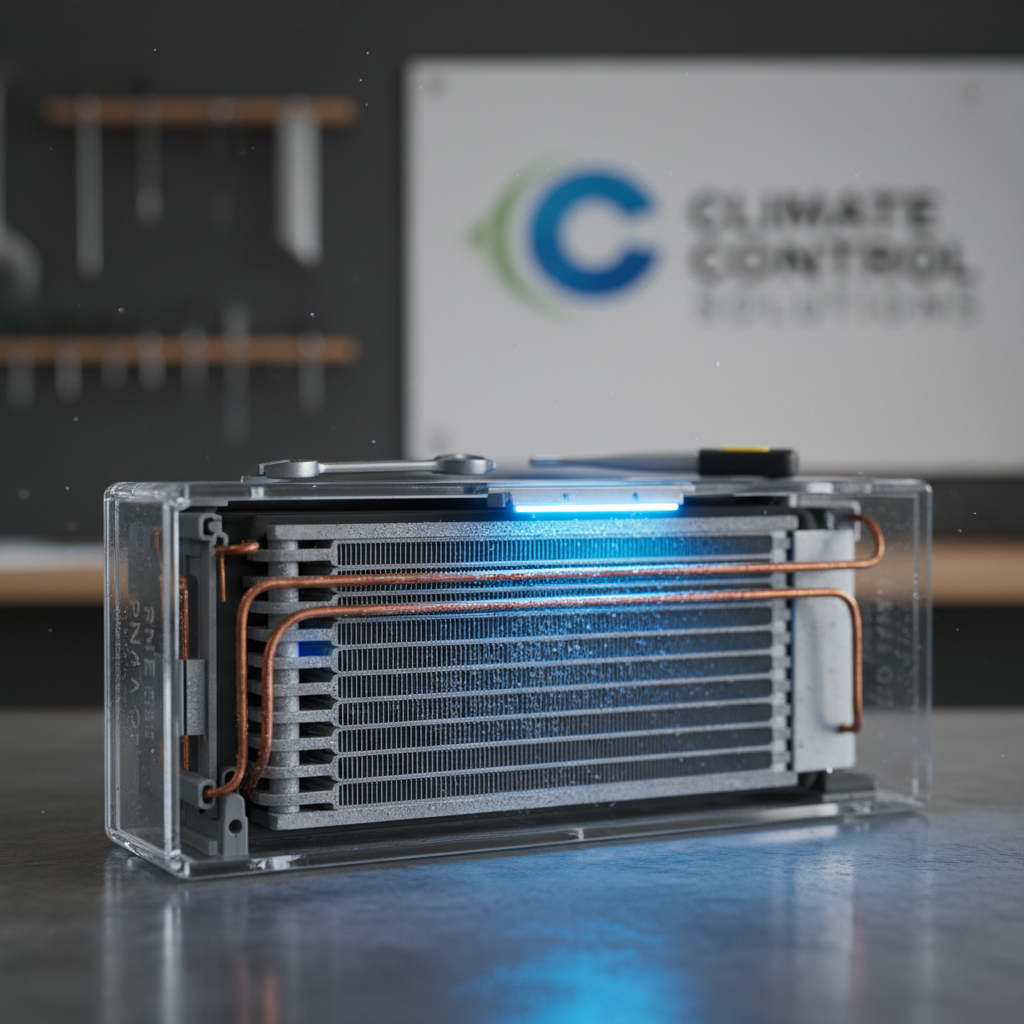
In-Depth Look
Detailed illustration of key concepts
Visual Guide
Infographic illustration for this topic
Sources & References
- The Practical Handbook of Inverter Mini Split Operation ...
- How to Clean Mini Split Indoor Units: Professional HVAC ...
- The Ultimate Guide to Ductless AC Maintenance
- Is Your Mini Split Slacking? Try These Maintenance Tips
- The Ultimate Guide To Central AC Repair: DIY Fixes Vs. ...
- Top 23 Commercial HVAC Manufacturers - Metalphoto of Cincinnati
- Full List: Top HVAC Manufacturers and Suppliers in 2026 - FieldPulse
- 6 Best HVAC Companies | Money
- Best Air Conditioner Brands in 2025
- Key HVAC Regulations and Requirements for 2025 and Beyond
Frequently Asked Questions
Need Professional Help?
Find top-rated hvac businesses experts in your area