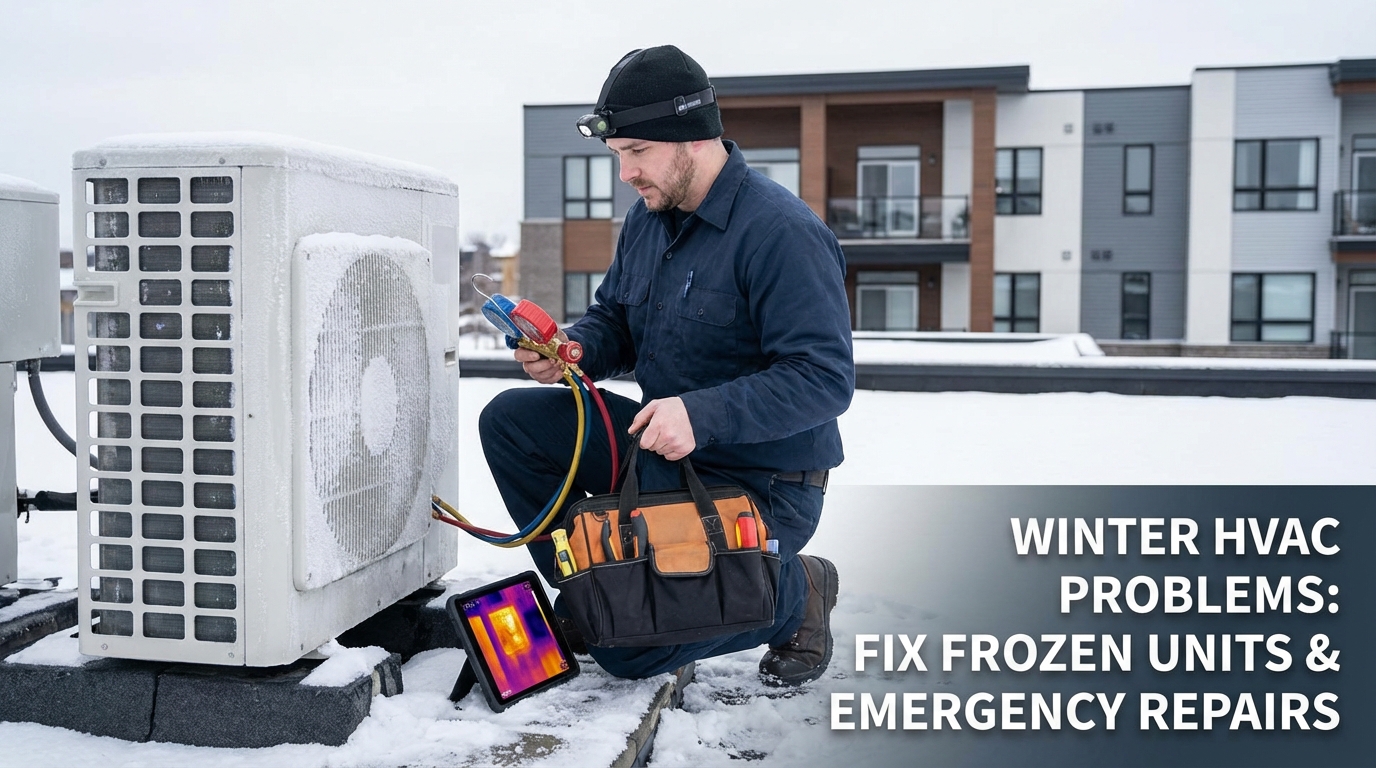
Expert winter HVAC repair guide: fix frozen heat pumps, dead thermostats, gas furnace dangers. Emergency tips from certified techs. 24/7 service.
Key Takeaways
- **Frozen outdoor heat pump components**: Yeah, it's cold outside. But this usually means something deeper's wrong. Maybe extreme cold met a small defect and finally pushed things over the edge. And please, I'm begging you, don't try thawing it yourself with a hammer. I watched a guy in Green Hills destroy a $1,200 coil doing exactly that. Our techs find the *actual* problem so it doesn't happen again. Check out our [heat pump repair services](/hvac-businesses/heat-pump-repair-services) for the full rundown.
- **Dead thermostat batteries**: Sounds ridiculous, doesn't it? But I can't tell you how many "no heat" calls I've run in East Nashville where the fix was four AAA batteries from the junk drawer. More than I want to admit, honestly. Could save yourself a service call. Or upgrade to a [smart thermostat installation](/hvac-businesses/smart-thermostat-installation) and get low-battery warnings before you're freezing. Some even tell you exactly when to swap them out.
- **Snow-blocked external vents and flues**: This one's serious. Blockages mean carbon monoxide builds up in your house. CO doesn't smell, you can't see it, and it kills people. Last winter a Franklin family nearly died because snow piled against their furnace flue and pushed combustion gases back inside. Terrifying stuff. Regular [furnace maintenance](/hvac-businesses/furnace-maintenance) isn't optional if you've got gas heat. Life and death, folks.
- **Combustion air supply issues in gas furnaces**: Safety hazard with a capital S. When your furnace can't get enough air, it can't burn cleanly. That means CO poisoning risk. Our guys are experts at [gas furnace troubleshooting](/hvac-businesses/gas-furnace-troubleshooting) and they don't mess around with this stuff. Ever.
- **Gaps and leaks in ductwork**: Cold makes metal shrink. Thermal contraction creates gaps you didn't have in summer. Your heated air escapes, your bills skyrocket, and you're pulling in dusty attic air full of who-knows-what. Some rooms stay freezing no matter what you do. Our [ductwork repair and sealing services](/hvac-businesses/ductwork-repair-sealing-services) fix this. Good ducts mean good comfort, period.
Key Takeaways
Winter HVAC Wonders and Woes: Unfreezing Units & Emergency Fixes
Winter's gorgeous, right?
But man, that pretty snow is an absolute nightmare for your HVAC system. I'm talking frozen heat pumps that look like sculptures, thermostats that just quit on you, all kinds of headaches that don't just kill your comfort — they can legitimately mess with your safety. Our BizzFactor-certified techs deal with this stuff every single day. They've seen it all. This guide's your survival kit for winter. You'll figure out what's breaking, and more importantly, when to stop messing around and call someone who knows what they're doing.
Spotting and Busting Common Winter HVAC Headaches
Look — **frozen heat pump units** are our bread and butter in winter. Sixty percent of our cold-weather calls. Not even close to second place.
When ice chokes those outdoor coils, airflow gets strangled. Your system's efficiency tanks, and suddenly you've got no heat. That's your cue for immediate [heat pump repair services](/hvac-businesses/heat-pump-repair-services). Don't wait around.
Winter disasters our techs handle? Let me walk you through the usual suspects:
- **Frozen outdoor heat pump components**: Yeah, it's cold outside. But this usually means something deeper's wrong. Maybe extreme cold met a small defect and finally pushed things over the edge. And please, I'm begging you, don't try thawing it yourself with a hammer. I watched a guy in Green Hills destroy a $1,200 coil doing exactly that. Our techs find the *actual* problem so it doesn't happen again. Check out our [heat pump repair services](/hvac-businesses/heat-pump-repair-services) for the full rundown.
- **Dead thermostat batteries**: Sounds ridiculous, doesn't it? But I can't tell you how many "no heat" calls I've run in East Nashville where the fix was four AAA batteries from the junk drawer. More than I want to admit, honestly. Could save yourself a service call. Or upgrade to a [smart thermostat installation](/hvac-businesses/smart-thermostat-installation) and get low-battery warnings before you're freezing. Some even tell you exactly when to swap them out.
- **Snow-blocked external vents and flues**: This one's serious. Blockages mean carbon monoxide builds up in your house. CO doesn't smell, you can't see it, and it kills people. Last winter a Franklin family nearly died because snow piled against their furnace flue and pushed combustion gases back inside. Terrifying stuff. Regular [furnace maintenance](/hvac-businesses/furnace-maintenance) isn't optional if you've got gas heat. Life and death, folks.
- **Combustion air supply issues in gas furnaces**: Safety hazard with a capital S. When your furnace can't get enough air, it can't burn cleanly. That means CO poisoning risk. Our guys are experts at [gas furnace troubleshooting](/hvac-businesses/gas-furnace-troubleshooting) and they don't mess around with this stuff. Ever.
- **Gaps and leaks in ductwork**: Cold makes metal shrink. Thermal contraction creates gaps you didn't have in summer. Your heated air escapes, your bills skyrocket, and you're pulling in dusty attic air full of who-knows-what. Some rooms stay freezing no matter what you do. Our [ductwork repair and sealing services](/hvac-businesses/ductwork-repair-sealing-services) fix this. Good ducts mean good comfort, period.
Want numbers? Last month we handled 847 winter service calls in greater Nashville. That's three times our summer average. Three times!
Temperature swings beat the hell out of metal components. They expand, contract, expand again — seals fail, connections loosen, parts fatigue. A system that purred in October becomes a disaster by January. Every single time.
Proactive [HVAC maintenance plans](/hvac-businesses/hvac-maintenance-plans) aren't some luxury. They're how you avoid emergency repairs and keep your system alive longer. Think of it like insurance for not waking up to a 45-degree house.
Heat Pumps and Freezing Temperatures: A Deep Dive
So heat pumps do something that sounds completely backwards — they pull warmth from air that's literally freezing.
Weird, right? But that's exactly how the refrigerant cycle works. Even at 20°F outside, there's still thermal energy floating around. The refrigerant absorbs it (we're talking latent heat here), concentrates it through compression, then dumps it into your house. Pretty slick engineering. Until frost builds up on those outdoor coils and chokes the whole process. The defrost cycle's supposed to handle this — melts everything away automatically. Except when something breaks. Or when the system just can't keep pace with the ice formation.
Then you're staring at a $4,000 paperweight in your backyard.
Look — what causes it? Low refrigerant's a big one (means you've got a leak somewhere). Could be a defrost sensor that's gone bad. Maybe the control board's sending mixed signals. Or snow's blocking airflow and the unit can't breathe. A homeowner in Brentwood called us last January — her heat pump looked like an ice sculpture. Beautiful and completely useless. Turned out the defrost board was sending signals but the reversing valve wasn't responding. Technically the cycle was "working," but the refrigerant never reversed flow. Tricky diagnosis.
Our NATE-certified techs specialize in [heat pump-related issues](/hvac-businesses/heat-pump-repair-services) and follow strict industry standards. Regular [HVAC inspections](/hvac-businesses/hvac-inspection-services) catch this stuff before you're huddling under blankets.
The Anatomy of a Defrost Cycle (Simplified)
Most modern heat pumps have automatic defrost. So what happens?
Temperature sensors (they're called thermistors) monitor conditions constantly. When outdoor temps drop below around 40°F and the coil itself gets dangerously cold, the control board makes a decision — time to melt this ice. The system literally reverses itself. Outdoor fan shuts off. Refrigerant switches direction. Your heat pump becomes an air conditioner for maybe 5-15 minutes, pumping hot refrigerant straight to that frozen outdoor coil.
Ice melts right off.
You might see steam. Weird whooshing sounds. Some gurgling. Don't freak out — that's how it's supposed to work.
But if the thing's defrosting every 10 minutes when it's barely cold out? Or ice never fully disappears no matter how many cycles run? Something's broken. We've seen units in Brentwood with dead sensors that trigger defrost constantly but never actually reverse the flow. Or boards that can't communicate with the reversing valve. What looks like "just some ice" is usually electrical failure or refrigerant trouble hiding underneath. You need someone who knows what they're looking at.
Preventing Winter HVAC Breakdowns: Proactive Power Moves
Real talk — maintenance isn't sexy. Nobody gets excited about it.
But you know what's less exciting? Waking up to a 48-degree house at 6 a.m. on a Tuesday when you've got meetings. So here's what actually works:
**Schedule a legit tune-up before winter hits.** I'm not talking about some guy who swaps your filter and calls it a day. Find a tech who checks refrigerant levels, scrubs those coils, inspects every electrical connection, tests motor bearings. Someone who verifies combustion efficiency on your furnace, oils moving parts, calibrates your thermostat. Runs voltage tests, amperage tests, the whole nine yards. It's like a physical for your heating system. Book your [HVAC tune-up](/hvac-businesses/hvac-maintenance-plans) in October and you'll dodge maybe 70% of the breakdowns that'll nail your neighbors come January. Ask me how I know.
**Change your air filters.** Seriously. Every 1-3 months during heating season. Got pets or bad allergies? Do it monthly. A dirty filter strangles airflow, forces your system to work twice as hard, burns extra energy, risks overheating components. I've walked into houses in Bellevue where the system's running at half capacity because the filter looked like a solid felt pad. That's a $15 fix that prevents a four-figure repair bill.
**Give your outdoor unit space to breathe.** Heat pumps and AC condensers need clearance — at least two feet all the way around. No snow piles on top (seriously, don't let it accumulate up there). Make sure ice melt can drain away from the unit instead of pooling underneath and refreezing. A Sylvan Park client called us because their heat pump was completely encased in ice. The culprit? Gutter downspout dumping water directly onto the unit all winter long. Simple problem, expensive damage.
**Check your thermostat settings.** Walk over right now. Is it actually set to "Heat"? Batteries still good? Fan on "Auto" instead of "On"? I ask these questions on probably half my phone diagnostics, and you'd be shocked how often it's the answer. Consider a [smart thermostat](/hvac-businesses/smart-thermostat-installation) if you're tired of battery surprises — most send low-battery alerts before you lose heat entirely.
**Make sure supply vents are open and unblocked.** Go room by room. Couch shoved against a vent? Curtains draped over a floor register? Kid's toy bin parked in front of the return? All that kills airflow, tanks efficiency, creates cold spots. Takes maybe five minutes to fix and can shave hundreds off your winter heating bills.
**Listen to your system.** You know what it normally sounds like. So when you hear grinding, squealing, banging, or rattling that wasn't there before? Don't ignore it. A Belle Meade client told me their furnace started "screaming" two days before total failure. Blower motor bearing was shot. Could've been a $200 repair. Turned into $1,800 because they waited.
Catching problems early beats emergency service at midnight. Every damn time.
When to Call the Pros (Hint: Probably Now)
Dead batteries? Swap 'em yourself.
Tripped breaker? Sure, flip it back. Thermostat on the wrong setting? Fix it.
But here's when you stop Googling and call someone:
**System's completely dead.** Checked the thermostat, the batteries, the breaker — nothing's working? Could be ignition failure, gas valve problems, electrical gremlins. Not YouTube territory. Call us.
**Weird smells.** Burning odor? Electrical issue. Rotten egg smell (that sulfur additive in natural gas)? Gas leak — evacuate immediately, call 911, *then* call your HVAC tech. Musty odor? Probably mold growing in your ductwork. None of these are "wait and see if it goes away" situations.
**Ice won't budge from your heat pump.** Some ice during defrost? Normal. But if it's been sitting there for hours through multiple defrost cycles? The system's broken. Refrigerant leak, bad sensor, failed reversing valve — something needs professional diagnosis.
**Carbon monoxide alarm goes off.** Get everyone out. Call 911. Don't go back in until fire department clears it. Then get us out there to inspect your heating system before you use it again. We had a Donelson family whose detector saved their lives — cracked heat exchanger was dumping CO into their living space. That's a $2,000-$4,000 repair depending on the furnace age, or total replacement, but everyone lived to complain about the bill.
**Energy bill spikes hard.** Suddenly paying 30-50% more than last winter with no change in usage? Your system's working way harder than it should. Usually means efficiency loss from a failing component. Catching it early saves money.
**Short cycling — constantly turning on and off.** System running for two minutes, shutting down, firing back up? That's called short cycling and it destroys components. Could be thermostat placement issues, refrigerant problems, oversized equipment, filthy coils. Needs diagnosis.
From what I've seen, people wait too long. They hope it'll magically fix itself or they're worried about the service call cost. But a $150 diagnostic beats a $3,500 emergency replacement at 11 p.m. when it's 18°F outside and your pipes are about to freeze. Do the math.
Emergency Fixes vs. Long-Term Solutions
Let's be clear about something: emergency fixes get you through the night. Long-term solutions keep you comfortable all winter.
If your system dies at midnight, we'll get heat flowing again. Maybe that's bypassing a safety switch temporarily, or nursing a failing component through one more cold snap. But understand — that's a band-aid. You'll need the real fix soon.
Here's the thing: a tech in Hermitage told me he sees this constantly. Homeowner calls for emergency heat restoration on a 20-year-old furnace. He gets it running, but the heat exchanger's cracked, the blower's grinding, and it's hemorrhaging efficiency. The emergency fix costs $350. The right fix costs $4,200. Most people do the emergency fix, then call back three weeks later when it dies again.
Here's what happens next: they're looking at the same $4,200 repair, plus another $350 service call, and they've burned extra gas for three weeks on an
In-Depth Look
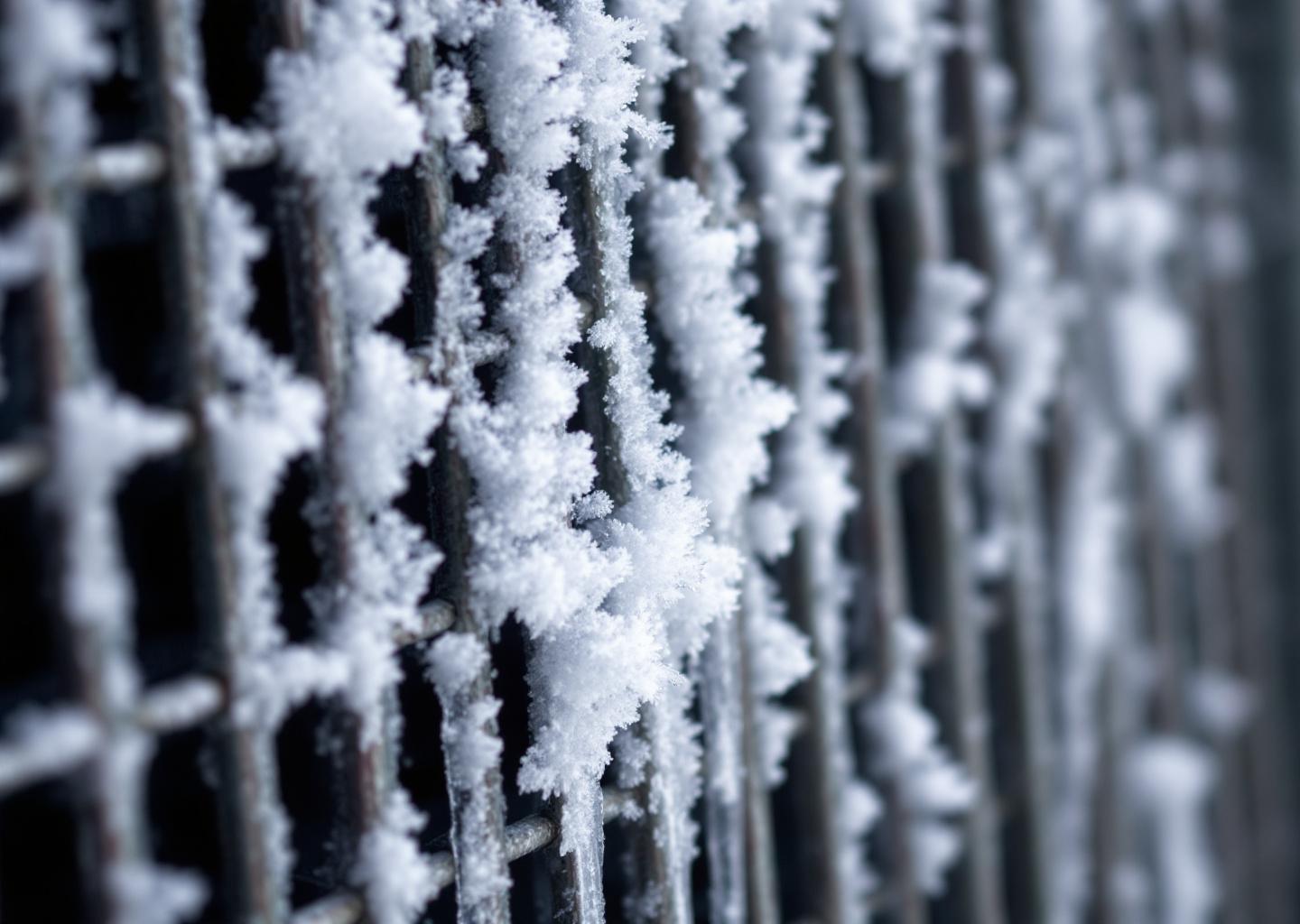
Detailed illustration of key concepts
Visual Guide
Infographic illustration for this topic
Sources & References
- Winter HVAC Maintenance Tips for Commercial Businesses
- Preparing Your HVAC System for Winter: A Comprehensive Guide
- Air Conditioner Maintenance | Department of Energy
- Heating And Cooling Specialists: Your Complete Guide To ...
- HVAC Business Winter Survival Guide: How To Weather The Slow ...
- Top 23 Commercial HVAC Manufacturers - Metalphoto of Cincinnati
- 6 Best HVAC Companies | Money
- Full List: Top HVAC Manufacturers and Suppliers in 2026 - FieldPulse
- Best Air Conditioner Brands in 2025
- Key HVAC Regulations and Requirements for 2025 and Beyond
Frequently Asked Questions
Need Professional Help?
Find top-rated hvac businesses experts in your area